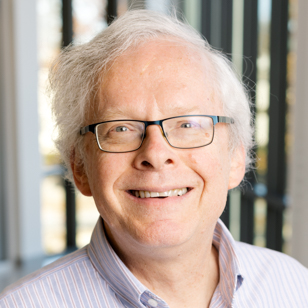
David Leake is a Professor of Computer Science at Indiana University's Luddy School of Informatics, Computing and Engineering, where he served as Executive Associate Dean from 2012-2021. He holds a Ph.D. in Computer Science from Yale University (1990) and is Editor in Chief Emeritus of AI Magazine after 17 years of service. His research focuses on artificial intelligence and cognitive science, including case-based reasoning, explanation generation, neuro-symbolic AI, intelligent information systems, and multistrategy learning. He has authored over 200 publications with 9,000+ citations. Recent publications demonstrate strong focus on integrating case-based reasoning with deep learning and large language models, particularly for explainable AI. Research spans hybrid AI systems, neural network implementations, and human-centered explanation methods. Scientific Awards: AAAI Distinguished Service Award (2014) Five-time best paper winner at International Conference on Case-Based Reasoning He advises graduate students and leads research funded by NSF, NASA, and ONR. Directs projects including SWALE (creative explanation) and the Stamping Advisor system. Maintains the IUCBRF Java framework and pedagogical resources for case-based reasoning.
Prof. Paolo Ferragina is a Full Professor at the Department of Computer Science, University of Pisa. He leads the Advanced Algorithms and Application Lab (Acube), focusing on algorithms for Big Data compression, indexing, and analysis. His work includes collaborations with MIT, Harvard, Google, and others. He has received prestigious awards like the ACM Paris Kanellakis Award (2022) and the ESA Test of Time Award (2023). Education: Laurea (summa cum laude, 1992) and PhD (1996) from the University of Pisa, Postdoc at Max-Planck Institute for Informatics (1997–1998). He has held roles such as Vice-Rector for ICT (2019–2022) and President of the PhD in Computer Science program (2017–2020). Research interests span compressed data structures, search engines, sports analytics, and DNA-based data storage. His work on the FM-index and TAGME system has had significant impact. He co-founded PlayeRank, a startup for soccer performance analysis. Grants and collaborations include Google Cloud Research Innovator (2022), Yahoo! Research Award (2007–2010), and projects with European Broadcasting Union and ST Microelectronics. He has authored over 180 papers and books like Computational Thinking and Pearls of Algorithm Engineering . Labs/Teams: Acube Lab at University of Pisa, collaborations with MIT’s Senseable City Lab, Harvard’s Pinello Lab, and industry partners like Bloomberg and ENEL.
Floriana Esposito is a Full Professor and current Director of the Department of Computer Science at the University of Bari, Italy. With a career spanning over 50 years since her 1974 appointment, she has held pivotal leadership roles including Dean of the Faculty of Computer Science (1997-2002) and Director of the Interdepartmental Center for Logic and Applications (1997-2001). She teaches core courses including Algorithms and Data Structures, Knowledge Engineering, and Machine Learning. Education: Degree in Electronic Physics from University of Bari (1970) First Academic Appointment at University of Bari (1974) Research Focus: Her work centers on Artificial Intelligence and Machine Learning with emphasis on logical/algebraic foundations. Initial research in statistical pattern recognition evolved into Intelligent Tutoring Systems and Machine Learning, now focusing on similarity-based learning, multistrategy approaches, and integration of symbolic/numeric methods. Major applications target Document Analysis and Understanding for paper-based systems, with significant contributions to symbolic data analysis and knowledge discovery. Publication Trends: Recent work shows strong continuity in multistrategy and incremental learning techniques applied to document processing and symbolic data analysis. Her research consistently bridges theoretical foundations (logical theories, concept drift handling) with practical implementations in spatial data mining, e-learning systems, and urban planning, demonstrating a 30-year trajectory from knowledge acquisition fundamentals to real-world AI deployment. Scientific Awards: No specific awards were mentioned in the source text. Advising & Grants: As founder of LACAM Laboratory (1986), she has mentored numerous PhD students and researchers. Her group secured extensive EU funding through ESPRIT, IST, and Framework programs including MLNet, KDNET, and DELOS Networks of Excellence, focusing on machine learning applications in document analysis, digital libraries, and spatial data mining across 15+ European collaborative projects. Labs & Teams: She chairs LACAM Laboratory (2 full professors, 3 associate professors, 5 assistant professors, multiple PhD students), which serves as a European hub for AI research. The lab has been integral to ESPRIT Intrepid (document processing), CONCERTO (digital document retrieval), COLLATE (historical archive systems), and SODAS (symbolic data analysis), maintaining continuous involvement in EU Networks of Excellence since the 1990s.