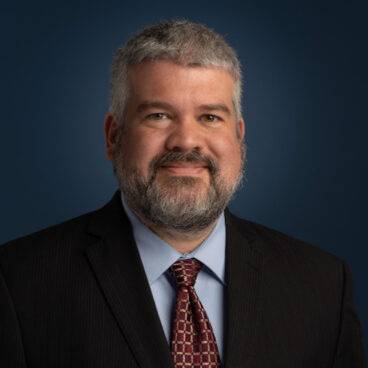
Joseph J. Beaman is Professor and Cockrell Family Dean's Chair in Engineering Excellence in the Walker Department of Mechanical Engineering at The University of Texas at Austin, where he has served since 1979 and chaired the department from 2000-2011. A pioneer in additive manufacturing, he coined the term Solid Freeform Fabrication (SFF) in 1987 and initiated academic research in the field in 1985, developing the foundational Selective Laser Sintering (SLS) process in his laboratory. His educational background includes: B.S.M.E. with high honors from The University of Texas at Austin (1972) Sc.D. in nonlinear control from Massachusetts Institute of Technology Professor Beaman's research spans additive manufacturing, control systems, and materials engineering, with seminal contributions to SFF technology that enabled rapid prototyping and manufacturing across medical, automotive, and industrial applications. His work encompasses materials processing, laser scanning, thermal control, direct metal fabrication, and biomedical applications, driving the emergence of a global industry. Analysis of his publications (2004-2012) reveals evolving focus from core SLS development to cross-disciplinary applications in metallurgical process control (electroslag remelting) and energy systems (fuel cell membrane modeling), while maintaining additive manufacturing as the central theme. Keywords consistently include materials science, control theory, and advanced manufacturing across diverse subfields. His distinguished honors include: National Science Foundation Presidential Young Investigator Award (1984, inaugural year) Distinguished Mechanical Engineer (2011) DuPont Young Faculty Award and Engineering Foundation Awards (1984, 1988) Multiple Best Paper Awards across engineering journals As an academic entrepreneur, Beaman co-founded DTM Corporation (now 3D Systems) and served as Advanced Development head (1990-1992), mentoring graduate students who became key inventors in SLS commercialization. His research has been supported by NSF and industry grants, while his leadership extended to chairing the World Technology Evaluation Center panel on Additive/Subtractive Manufacturing (2003) and serving on international assessment panels. His laboratory established UT Austin as the birthplace of academic SLS research, fostering industry-academia collaboration that directly enabled commercialization of rapid manufacturing systems now used globally for complex part production impossible with conventional methods.