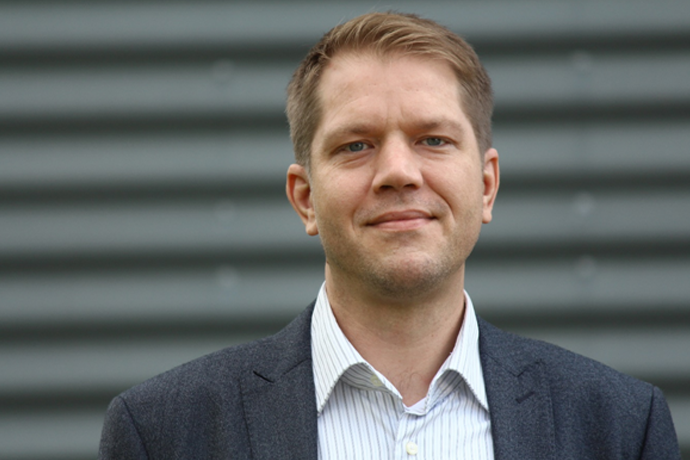
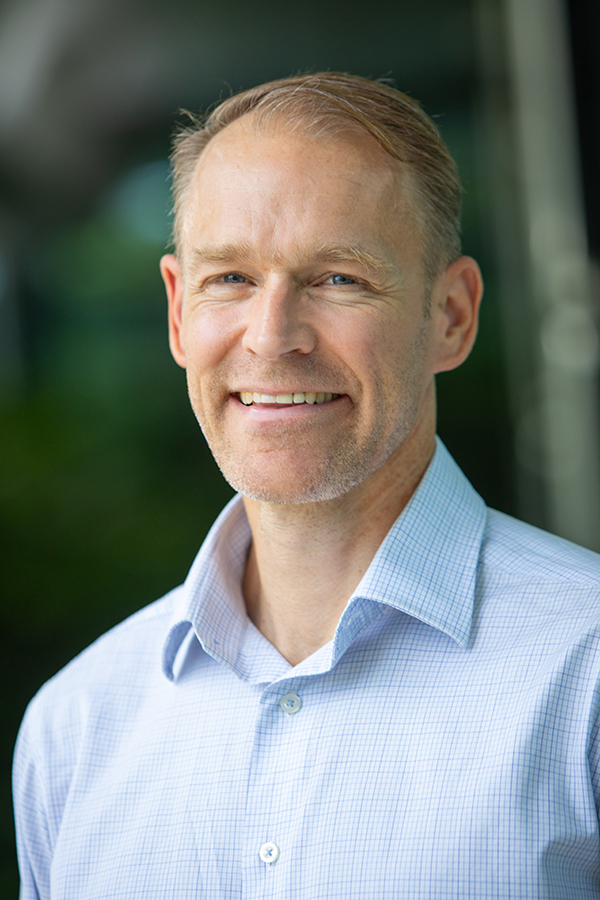
Martin Rogers is a machine learning researcher affiliated with the AI Lab at the British Antarctic Survey and the Department of Geography at the University of Cambridge . His work focuses on applying convolutional neural networks (CNNs) to detect and classify sea ice and coastal features in multispectral satellite imagery, including visible and Synthetic Aperture Radar (SAR) data. Research Interests Developing AI models for environmental monitoring Coastal vegetation edge detection Climate-related remote sensing applications Publications VEdge_Detector (2021), which automates coastal vegetation analysis using CNNs in satellite data.
Parth Bhatt serves as an Assistant Teaching Professor and Researcher at Michigan Technological University, concurrently directing the MGIS Online Program. His institutional affiliations include membership in the Ecosystem Science Center and MichiganView, alongside advisory roles for the Indian Students Association. His academic credentials feature: PhD in Forest Science, Michigan Technological University Graduate Certificate in Geoinformatics, Michigan Technological University MS in Geographical Information Science, Michigan Technological University MS in Environmental Science, The Maharaja Sayajirao University of Baroda Dr. Bhatt's research centers on advanced remote sensing and GIS applications, with emphasis on: Machine learning for ecological community classification 3D structural diversity modeling in forest ecosystems UAV-based monitoring of forest health and invasive species Digital image processing for dense vegetation analysis Natural habitat mapping using multispectral and hyperspectral data His publication record demonstrates consistent innovation in fine-scale ecological mapping, particularly through UAV-NAIP data fusion and machine learning approaches for forest and wetland conservation. Recent work shows increasing sophistication in 3D spectral modeling and reproducible research practices. Scientific Awards: No scientific awards documented in available sources Dr. Bhatt's grant portfolio includes: Keweenaw Inventory Project (2023-24), The Nature Conservancy Keweenaw Inventory Project Phase II (2024), The Nature Conservancy He actively contributes to the Ecosystem Science Center's mission through geospatial research and teaches specialized courses including Foundations in Geographic Information Science for Natural Resources and Python for Modern GIS and Remote Sensing via Michigan Tech Global Campus.
Dr. Alon Gorodetsky is an Associate Professor in the Department of Chemical and Biomolecular Engineering at the Samueli School of Engineering, University of California, Irvine. His research bridges biomolecular engineering, materials science, and bioelectronics with a specialized focus on cephalopod-inspired technologies for practical applications in camouflage, thermoregulation, and bioelectronics. Dr. Gorodetsky received his Ph.D. in Chemistry from the California Institute of Technology and dual undergraduate degrees in Materials Science and Engineering and Applied and Engineering Physics from Cornell University. His research program is organized around two major thrusts: Bioelectronic Applications: Leveraging cephalopod skin proteins like reflectin to program optical properties of mammalian cells and control cellular fate for regenerative medicine and engineered living materials Adaptive Materials: Developing squid skin-inspired thermoregulatory materials with applications in thermal camouflage systems and sustainable food packaging solutions Recent publications (2021-2025) reveal a strategic shift toward scalable manufacturing techniques and practical applications while maintaining strong fundamental science. His work spans optics, materials science, and biological engineering, with increasing emphasis on wearable technologies and sustainable materials that translate biological principles into engineering solutions. Dr. Gorodetsky leads the active Gorodetsky Group for Biomolecular Electronics, which has produced numerous publications in high-impact journals. His research has garnered significant media attention for its innovative approach to bioinspired engineering, with features discussing applications in military camouflage, sustainable packaging, and medical technologies. The research direction demonstrates strong interdisciplinary collaboration, bridging marine biology with cutting-edge materials engineering to solve practical problems in defense, healthcare, and sustainability sectors. His work on proton conduction in reflectin-based materials represents a unique contribution to the emerging field of biomolecular electronics.
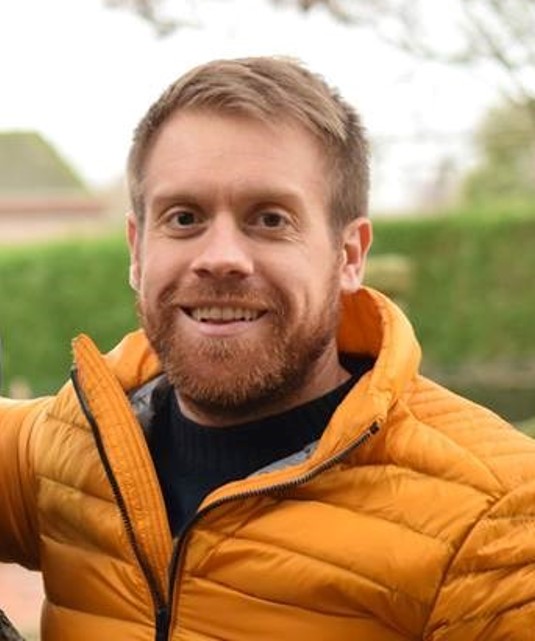
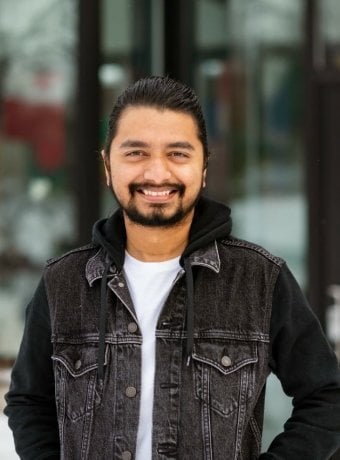
Professor Daniel Elson is a leading academic in Imperial College London's Faculty of Medicine , affiliated with the Hamlyn Centre for Robotic Surgery and the Department of Surgery and Cancer . As a Professor of Surgical Imaging and Biophotonics , his research focuses on advancing photonics technology for medical imaging applications in surgery. Research Interests: Multispectral Imaging for intraoperative diagnostics Fluorescence Spectroscopy in cancer surgery Polarization-Resolved Endoscopy for cancer detection Structured Lighting in endoscopic systems Robotic Guidance of optical probes Diffuse Reflectance Spectroscopy for margin assessment Research Trends & Article Analysis: The 15 most recent publications demonstrate a strong focus on real-time surgical diagnostics using machine learning and photonics . Key areas include colorectal cancer margin assessment, brain imaging with polarimetric techniques , and gastrointestinal cancer detection via diffuse reflectance spectroscopy . Current PhD Students: Zepeng Hu Kaizhong Deng Connor Daly Adam Tlemsani Research Group: Elson leads the Surgical Imaging and Biophotonics Group , which develops cutting-edge imaging systems for minimally invasive and robotic-assisted surgery . The group operates from the Bessemer Building (Room 415) at Imperial College's South Kensington Campus .
Lars Nolle is a Professor at the German Research Center for Artificial Intelligence (DFKI) in Oldenburg, affiliated with the Marine Perception department. His work focuses on applying machine learning and artificial intelligence to environmental and marine science challenges. Research Interests: Dr. Nolle specializes in optimizing machine learning models for environmental data analysis, particularly in reconstructing photosynthetically active radiation in marine environments and developing remote sensing systems for plastic waste identification. Recent Publications (Trends): His recent work involves neural networks for radiation prediction and multispectral imaging systems for environmental monitoring, presented at conferences like ECMS 2025 and AI-2024. Labs/Teams: He contributes to the Marine Perception research unit at DFKI, focusing on interdisciplinary applications of AI in marine contexts.
Prof. Dr.-Ing. Nick Rüssmeier is a Professor of Mechatronics at Jade University of Applied Sciences in Wilhelmshaven and a member of the Marine Environmental Perception research area at the German Research Center for Artificial Intelligence (DFKI) since 2020. His career spans both academic and industrial roles in sensor systems, medical analytics, and process engineering. Education: Doctorate (Dr.-Ing.) in Computer Science from the University of Oldenburg (2017), focusing on optical sensors for maritime environmental perception and optical flow measurement. Diploma in Environmental Process Engineering from Fachhochschule Wilhelmshaven (2006), with research on bioreactor degradation performance using fluorescence spectroscopy. Research Focus: Development and application of distributed mobile sensor systems and data stream management for situational awareness in marine and traffic monitoring. Key areas include multispectral measurement techniques, optical flow measurement, and optimization of environmental sensor networks. Article Trends: His recent publications highlight interdisciplinary work combining marine perception, sensor technology, and fluid dynamics. Topics include DIY sensor systems for citizen science, LSPIV for ocean current observation, and comprehensive perception frameworks for dynamic anchoring in marine environments. Labs & Teams: He works with the Marine Perception research group at DFKI and the Department of Mechatronics at Jade University. His projects involve collaborations with institutions like OFFIS e.V. and the University of Oldenburg.
Lewei Zhang serves as a Professor in the Department of Oral Biological & Medical Sciences at the University of British Columbia's Faculty of Dentistry. His research centers on oral potentially malignant disorders, with emphasis on molecular mechanisms driving malignant transformation in oral epithelial dysplasia and lichenoid lesions. Dr. Zhang's research program integrates molecular pathology , microbiome analysis , and advanced imaging techniques to develop risk assessment models for oral cancer progression. Key focus areas include E-cadherin/beta-catenin signaling pathways, p53 immunohistochemical patterns, and the diagnostic potential of oral microbiome profiling. His work bridges basic science with clinical applications through image cytometry and multiplexed immune microenvironment analysis. Analysis of his 15 most recent publications (2020-2025) reveals three dominant research trajectories: (1) molecular characterization of dysplasia progression using cell adhesion markers, (2) clinicopathological analysis of lichenoid lesions with dysplastic features, and (3) development of non-invasive diagnostic tools including microbiome-based predictors and multispectral imaging. Notable methodological innovations include brushing-based DNA ploidy analysis and quantitative pathology toolboxes for risk stratification. As a graduate supervisor in UBC's Craniofacial Science programs, Dr. Zhang mentors students in translational oral cancer research. His extensive publication record demonstrates sustained contributions to early detection protocols and molecular classification systems for oral potentially malignant disorders, with direct implications for clinical management guidelines.
Cosimo Arnesano serves as an Assistant Professor of Clinical Data Sciences and Operations at the University of Southern California's Marshall School of Business. He holds dual Ph.D. degrees in Energy and Environmental Engineering and Biomedical Engineering, complemented by an MBA specializing in business analytics and operations/supply chain optimization. His industry background includes strategic roles at ThermoFisher Scientific (Strategy Manager, 3 years) and Zeiss Microscopy (Account Manager, 1.5 years). Education Ph.D. in Energy and Environmental Engineering Ph.D. in Biomedical Engineering MBA with concentrations in Business Analytics and Operations/Supply Chain Optimization Research Interests Dr. Arnesano's expertise spans analytics, artificial intelligence, corporate strategy, healthcare analytics, machine learning, operations management, statistics, and stochastic modeling. His work bridges biomedical imaging techniques with business applications, focusing on data-driven solutions for healthcare operations and business process optimization. He develops analytical models for classification, clustering, and association problems while leveraging third-party big data to enhance business insights and decision-making. Publication Trends His 15 most recent publications (2012-2022) reveal an interdisciplinary trajectory from biomedical imaging methodology to clinical applications. Early works (2012-2016) established innovations in fluorescence lifetime imaging and digital signal processing, while recent research (2017-2022) applies these techniques to cancer metabolism, stem cell tracking, and retinal organoid characterization. A consistent thread involves developing non-invasive optical biomarkers for real-time cellular analysis, directly informing his business analytics focus on operational efficiency and healthcare optimization. Teaching and Operations Undergraduate: Applied Business Statistics (BUAD-310), Basics of Project and Operations Management (BUAD-315) Graduate: Spreadsheet Modeling (DSO-427), Business Decision Modeling (DSO-536), Blended Data Business Analytics (DSO-528)
Prof. Song Zhang is a Professor of Mechanical Engineering at Purdue University's West Lafayette campus, affiliated with the College of Engineering and School of Mechanical Engineering. His research focuses on multiscale 3D optical sensing, biophotonic imaging, and applications in virtual reality, human-computer interaction, and additive manufacturing. He leads the XYZT Lab and holds a B.S. from USTC (2000), M.S. and Ph.D. from Stony Brook University (2003/2005). Research areas include optical metrology innovations like structured light systems, high-speed profilometry, and error-correction algorithms. He has pioneered techniques for medical imaging (e.g., cardiac surface mechanics), forensic 3D evidence capture, and automotive industry applications. Award highlights include NSF CAREER Award (2012), SPIE Fellowship (2014), and multiple journal cover features/highlights. His work bridges fundamental optics research with practical applications in biomedical, manufacturing, and robotic systems. Advises students in advanced sensing technologies and has collaborated with NIJ for forensic imaging advancements. Grants include NSF and industry partnerships. The XYZT Lab focuses on real-time 3D sensing and metrology innovations.
Euiwon Bae is a Senior Lecturer and Senior Research Scientist at the School of Mechanical Engineering, Purdue University. He holds a Ph.D. (2006) from Purdue University, an M.S. (2001) from KAIST, and a B.S. (1998) from Korea University. His research focuses on light scattering, biomedical optics, and food safety instrumentation. He leads the Applied Optics Laboratory and the Laser Diagnostics Laboratory, developing optical sensing technologies for bacterial detection and characterization. Affiliations: Purdue University Roles: Senior Lecturer, Senior Research Scientist Research interests include discrete dipole approximation (DDA), optical characterization of soot, and instrument development for food safety. Notable awards include a 2009 Burton D. Morgan Business Plan Competition finalist status and a 1997 US Army commendation medal. Advises student Nan Bai on Ph.D. research in bacterial colony analysis. Research Highlights Bae’s work spans optical biosensors for pathogen detection (e.g., Listeria, Salmonella) and advanced light scattering models. Recent innovations include smartphone-integrated diagnostics and LIBS-based food authentication systems. His lab integrates machine learning with optical sensing for rapid, label-free pathogen identification. Awards & Grants Burton D. Morgan Business Plan Competition Finalist (2009) KAIST Graduate Fellowship (1999–2001) US Army Commendation Medal (1997) Labs & Teams Leads the Applied Optics Laboratory and Laser Diagnostics Laboratory , collaborating with industry on food safety and biomedical optics projects.
Dr. Jian Jin is an Associate Professor in the Department of Agricultural & Biological Engineering at Purdue University, part of the College of Engineering. His research focuses on developing next-generation plant phenotyping sensor systems, integrating machine vision, data science, and robotics for agricultural applications. Key areas include crop stress detection, automated phenotyping, and precision agriculture technologies. Education: Ph.D. in Agricultural Engineering from Iowa State University (2009), M.S. in Computer Engineering from Denmark Technical University (2005), and B.S. in Computer Science from Zhejiang University (2003). Research Interests: Plant phenotyping sensors, hyperspectral imaging, automated phenotyping robotics, and digital agriculture. His lab, the ABE Plant Sensor Lab, commercializes technologies like LeafSpec through LeafSpec LLC. Notably, LeafSpec LLC is the sole licensed entity for Purdue's handheld leaf-imaging technologies, with no affiliation to Leaf Tech Ag. Lab & Collaborations: The lab develops systems like PhenoBee (drone-based phenotyping), MISIRoot (root phenotyping robot), and LeafSpec devices. Recent advances include spatial-spectral fusion algorithms and automated calibration methods for field and greenhouse applications. Teaching & Training: Offers positions for PhD students and postdocs. Engages in educational outreach for precision agriculture tools at HBCU communities. Recent student milestones include Tianzhang Zhao's Ross-Lynn Scholarship and Tanzeel's faculty appointment at Auburn University. Key Contributions: Over 100+ peer-reviewed publications, patents on phenotyping systems, and innovations in crop stress detection, herbicide drift monitoring, and autonomous field robots. Research emphasizes bridging engineering principles with agricultural challenges to enhance sustainability and productivity.
Todd Zickler is the William and Ami Kuan Danoff Professor of Electrical Engineering and Computer Science at Harvard University's John A. Paulson School of Engineering and Applied Sciences (SEAS). His research focuses on modeling light-material interactions and developing computational techniques for visual data interpretation, with applications in autonomy, augmented reality, and computational imaging. He leads the Harvard Computer Vision Laboratory and is part of the Graphics, Vision, and Interaction Group. Education: B.Eng. (Honours Electrical Engineering), McGill University, 1996 Ph.D. (Electrical Engineering), Yale University, 2004 Research Interests: Computer Vision, Computer Graphics, Machine Learning Optical and Computational Imaging, Human Perception Applications in Robotics, AR, and Autonomous Systems Key Contributions: Developed novel depth sensors inspired by jumping spiders Advanced shape-from-texture and shading techniques Contributed to neural radiance fields (NeRF) and boundary detection algorithms Awards: NSF Career Award Alfred P. Sloan Research Fellowship Grants & Labs: Director of Harvard Computer Vision Lab Recipient of NSF AI Institute funding ($20M) for physics-driven AI research
Dr Sarah Bourke is a Senior Lecturer in the School of Earth and Oceans at the University of Western Australia (UWA), affiliated with the Centre for Water and Spatial Science. She holds a PhD in Hydrogeology from Flinders University and has extensive postdoctoral experience in Canada. Her research focuses on surface water-groundwater interaction, contaminant hydrogeology, and decolonizing hydrogeological practices with Indigenous communities. She leads the Master of Hydrogeology program and chairs the Western Australian chapter of the International Association of Hydrogeologists (IAH). Education: Bachelor of Earth Science (Flinders University) PhD (Flinders University, collaborative project with Rio Tinto) Postdoctoral Fellowship (University of Saskatchewan, Canada) Research Interests: Climate change impacts on groundwater systems Environmental tracers for hydrological processes Sustainable water management in arid zones Indigenous knowledge integration in hydrogeology Awards: Best Presentation Award (IAH Congress, 2013) UWA Vice-Chancellor's Award for Research Technical Support Excellence (2024) Grants & Collaborations: 10+ funded projects with government/industry partners Research on groundwater recharge dynamics, nitrate contamination, and climate adaptation Labs/Teams: Active in the UWA Centre for Water and Spatial Science, collaborating with government agencies (e.g., Department of Water and Environmental Regulation) and international networks.
Mariusz Martyniuk is an Associate Professor and Principal Research Fellow at the School of Engineering, Electrical, Electronic and Computer Engineering at The University of Western Australia (UWA). He leads the Microelectronics Research Group and manages the Western Australian Node of the Australian National Fabrication Facility (ANFF). His academic roles include overseeing advanced nanofabrication and microelectronics research. He is also a member of multiple university committees, including the Research Committee and Safety Committee, and serves as Lead for Engineering & Advanced Fabrication and Manufacturing. Dr. Martyniuk holds a PhD in Electrical and Electronic Engineering from UWA (2007), an M.A.Sc. in Engineering Physics from McMaster University (2002), and a B.Sc. (Hons.) in Physics from the University of Toronto (1998). His research expertise spans thin-film mechanics, MEMS, optoelectronics, and advanced manufacturing. His research focuses on thin-film materials for MEMS applications, infrared technologies, and optoelectronic devices. Notable contributions include innovations in tunable metamaterials for infrared filtering, nanoindentation analysis of semiconductor alloys, and MEMS-based sensors for hydrogen detection. His work aligns with UN Sustainable Development Goals, particularly in advancing clean energy and industrial innovation. Dr. Martyniuk has been recognized with the Australian Museum Eureka Prize (2008) for defense-related science. His research projects include leadership roles in the ARC Centre of Excellence for Transformative Meta-Optical Systems and the ANFF infrastructure initiatives. He actively mentors HDR students and supervises projects in MEMS, nanotechnology, and optoelectronics. His lab facilities include state-of-the-art nanofabrication tools and collaborate on global projects such as terahertz wave harnessing and adaptive infrared imaging systems.
Dr Chen Yang is an Honorary Senior Fellow in the School of Architecture, Design and Planning at The University of Queensland. His research focuses on digital documentation of cultural heritage sites, rural landscape analysis, and the application of advanced geospatial technologies such as LiDAR and point cloud visualization. He explores topics like UNESCO World Heritage management, authenticity of historic landscapes, and the integration of emotional and spatial dimensions in heritage preservation. Dr Yang's work combines technical innovation with theoretical inquiry, addressing challenges in preserving traditional villages, classical gardens, and intangible cultural heritage through interdisciplinary methodologies. His projects often involve collaboration with international institutions and utilize UAV-based remote sensing, 3D modeling, and social network analysis to capture spatial patterns and cultural narratives. Publications include studies on the impact of sustainable tourism on rural landscapes, digital characterization of classical garden rockery, and the dialectical authenticity of Chinese historic landscapes. He has contributed to journals like Landscape Research , Heritage Science , and Built Heritage , and presents at conferences such as the International Archives of the Photogrammetry.


/prod01/channel_3/media/images/people-list/180829-elson-daniel-005-tojpeg-1591262304362-x1_1609777271089_x4.jpg)