Maan Barua is a University Lecturer in Human Geography at the University of Cambridge's Department of Geography, affiliated with the Vital Geographies and Infrastructural Geographies research groups. His research focuses on urban ecologies, postcolonial environments, and the intersections of political economy with posthumanist thought. He leads the ERC Horizon 2020-funded 'Urban Ecologies' project (£1.23 million, 2018-2024) and has authored influential works like Lively Cities (2023) and Plantation Worlds (2024). Prior to Cambridge, Barua held a British Academy Postdoctoral Fellowship at the University of Oxford. His grants include major support from the Wellcome Trust, Leverhulme Trust, and British Academy. He collaborates internationally with institutions like SciencesPo (Paris) and Freie Universität Berlin, and serves as adjunct faculty at India's National Institute of Advanced Studies (NIAS). Research areas include urban metabolism, biocapital, and postcolonial environmental theory. Current projects examine urban wetlands, amphibious urbanism, and metabolic politics. His work bridges anthropology, ecology, and policy, including contributions to IUCN's Asian Elephant Specialist Group.
Jerry Zee is Assistant Professor of Anthropology and the High Meadows Environmental Institute at Princeton University. His research examines environmental emergence through political, meteorological, and geopolitical lenses, with focus on China's ecological transformations and transpacific entanglements. Publications analyze dust governance, aerosol politics, and racialized ecologies, employing interdisciplinary approaches from feminist STS and environmental humanities. Current work investigates planetary-scale infrastructural projects and necrotic politics.
Priti Narayan is an Assistant Professor in the Department of Geography at the University of British Columbia (UBC), Faculty of Arts. Her research and teaching focus on urban processes and politics in India, with an emphasis on state-society relations, feminist methodologies, and public scholarship. Prior to joining UBC, she was a postdoctoral fellow at Princeton University’s Mellon Initiative in Architecture, Urbanism, and the Humanities. PhD in Geography, Rutgers University (2019) Narayan’s research explores how marginalized communities in Chennai, India, negotiate slum evictions through collective action. She collaborates with the Pennurimai Iyakkam (“Women’s Rights Movement”) to document working-class activists’ lived experiences and theorize their contributions to urban studies. Her work bridges academic and activist knowledge, advocating for interdisciplinary approaches to environmental justice and labor rights. Recent projects examine urban development in Tamil Nadu, labor codes, and occupational health for construction workers. Her academic publications span journals like Gender, Place & Culture , Urban Studies , and Environment and Planning D: Society and Space , often co-authored with local activists. She emphasizes ethnography, archival analysis, and collaborative methods. Scientific Awards : SSHRC Insight Development Grant (2023) UBC PRE Fund Award (2023) CIHR Operating Grant (Co-PI, 2021-23) Hampton New Faculty Research Grant Narayan supervises graduate students in Geography and Interdisciplinary Studies, including Varun Panickar and Paroma Wagle (postdoctoral). She currently does not accept new supervisees. Her courses at UBC include topics like urban environmental politics and climate change.
Dr. Jonathan Skinner is a Reader (equivalent to Associate Professor) in English and Comparative Literary Studies at the University of Warwick's Faculty of Arts, where he researches and teaches ecocriticism, contemporary poetry, and creative writing. He founded and edits the journal ecopoetics , exploring intersections between writing and ecology. His research examines: Ecopoetic theory and environmental literature Intersections of sound studies and ethnopoetics North American avant-garde poetry (Olson, Kyger, Eigner) Translation and transnational poetics Third Landscape theory and urban wildness He leads a research network facilitating cross-cultural poetry exchanges along avian migration routes. Skinner's publications predominantly explore ecocritical frameworks through poetry analysis, with recent work examining climate change poetics, multispecies communication, and Anthropocene aesthetics. His scholarship connects literary studies with environmental science, acoustics, and landscape theory. He currently supervises five PhD students researching multispecies poetics and environmental literature through AHRC-funded projects, and has successfully supervised two doctoral candidates studying deindustrialization and extractive urbanism. Previously supervised MA theses span modernist poetry, ecocriticism, and creative writing.
Matthew Gandy is a Professor of Cultural and Historical Geography at the University of Cambridge and a Fellow of King’s College. He holds affiliations with the Infrastructural Geographies and Vital Geographies research groups. His work spans urban metabolism, epidemiology, critical landscape studies, and cinematic methodologies. Gandy earned a BA (First Class) from St. Catharine’s College, Cambridge, and a PhD in Geography from the London School of Economics. His research explores intersections of nature, culture, and infrastructure in cities like Mumbai, Berlin, and Lagos. Notable contributions include The Fabric of Space (2014) and Natura Urbana (2022), award-winning works analyzing urban water systems, biodiversity, and ecological constellations. He has held visiting roles at institutions including Columbia University and UCLA, and founded the UCL Urban Laboratory (2005–2011). Key honors include the AAG Meridian Award (2014), British Academy Fellowship (2016), and John Brinckerhoff Jackson Prize (2023). Gandy’s films, such as Liquid City (2007) and Natura Urbana (2017), blend documentary techniques with academic research. He is actively involved in urban biodiversity initiatives, including Hackney Biodiversity Partnership. Teaching focuses on global urbanism, cultural landscapes, and the Anthropocene. Editorial roles include co-editing The International Journal of Urban and Regional Research (2012–2018). His work addresses urban political ecologies, multispecies urbanism, and the socio-cultural dimensions of urban environments.
Tamara Fernando is an Assistant Professor in the Department of History at Stony Brook University, State University of New York (SUNY). She holds a PhD from the University of Cambridge (2022) and specializes in the environmental, labor, and scientific histories of the Indian Ocean world, with regional focus on Sri Lanka, the Persian Gulf, and South Asia during the 19th and 20th centuries. Her research interests include: Environmental History of the Indian Ocean Colonial Science and Knowledge Production Maritime Labor Systems Transregional and Global History History of Empire and Ecology Her current book projects are Shallow Blue Empire: Knowing the Littoral across the Indian Ocean , a transnational history of the pearling industry, and Submarine Futures: Science and Expertise in the Indian Ocean 1872–2004 , which explores shipwrecks, nuclear submarines, and deep-sea ports as sites of scientific and political engagement. Her work combines archival research with interdisciplinary methodologies from science and technology studies, environmental humanities, and postcolonial theory. Her recent publications in journals such as Past & Present , Comparative Studies in Society and History , and History of Science examine topics like the mapping of oyster beds, multispecies histories of pearl fisheries, and the entanglement of disease and labor under colonialism. She also engages in public scholarship through outlets like Hypocrite Reader , Himal Southasian , and Borderlines , where she writes on settler tourism, water governance, and colonial legacies in Sri Lanka. She has no listed scientific awards in the provided texts. She advises students, though no current advisees are named. Her collaborative work includes co-authored articles on mollusks and human difference, and evolution in South Asia. She is affiliated with: Stony Brook University, Department of History Personal website: tamarasfernando.com Twitter: @TamaraFernando3
Naisargi N. Dave is a Professor in the Department of Anthropology at the University of Toronto. Her work spans sociocultural anthropology, queer theory, and animal studies, with a regional focus on India. She is affiliated with the Centre for South Asian Studies and the Bonham Centre for Sexual Diversity Studies. PhD, University of Michigan (2006) Research interests include interspecies ethics, affect theory, and the politics of imagination in South Asia. Her ethnographic work explores how activists navigate legal systems, emotional exhaustion, and intersectional inequalities. She has published extensively on queer communities and animal rights in India, arguing for ethics of indifference and creative relationality. Key awards: 2024 Gregory Bateson Prize for Indifference , 2013 Ruth Benedict Prize for Queer Activism in India , and an honorable mention for the Ruth Benedict Prize for her latest book. Advises graduate students in queer anthropology and animal activism Teaches courses on animality, literary anthropology, and affect Current projects include a book titled Murder: The Social Life of Violent Death in Queer India , examining violence against queer communities.
Céline Clauzel is a Professor of Geography at the University of Paris 1 Panthéon-Sorbonne and a member of the Laboratory for Social Dynamics and Space Recomposition (LADYSS). She holds a Junior membership in the University Institute of France (IUF, 2023). Her research focuses on spatial modeling of ecological networks, biodiversity management, and human-wildlife interactions, with a geographic emphasis on France, China, and urban environments. Research Projects: Co-leader of the COOLSCHOOLS project (2022–2025) and leader of the INTERFACE project (2022–2023). Key roles in TRAMARE, REAUMUR, and ecological transparency studies for transportation networks. Administrative Roles: Member of LabEx DynamiTe Steering Committee, Scientific Council of the Foundation for Research on Biodiversity (FRB), and elected member of LADYSS laboratory council. Her work bridges ecology and urban planning, emphasizing decision-support tools for biodiversity management. Recent studies explore urban green spaces, wildlife corridors, and citizen science applications in biodiversity monitoring. Awards: Junior IUF membership (2023). Supervises doctoral students focusing on topics like railway permeability, school biodiversity engagement, and connectivity modeling in urban environments. Collaborates with institutions like SNCF, CDC Biodiversité, and the Morvan Regional Natural Park. Active in interdisciplinary initiatives, including co-creating platforms for researchers and practitioners to address ecological challenges in infrastructure and urban development.
Professor Peta Mitchell is a leading scholar in digital media and geographies at Queensland University of Technology (QUT), where she holds a Professorship in the School of Communication and the Digital Media Research Centre (DMRC). She leads the Urban Media and Digital Geographies Research Group and serves as Director of Research Training for QUT's Faculty of Creative Industries, Education, and Social Justice. In 2023, Professor Mitchell was appointed to serve a three-year term on the Australian Research Council's College of Experts, recognizing her significant contributions to research in digital media and geographies. Professor Mitchell earned her Doctor of Philosophy from the University of Queensland. Her academic journey has established her as a prominent voice in the interdisciplinary field bridging geography, media studies, and digital culture. She has received prestigious fellowships including a Vice Chancellor's Research Fellowship from QUT (2014-2018) and a visiting fellowship from the Institute for Advanced Studies in the Humanities at the University of Edinburgh (2009). Professor Mitchell's research explores the complex connections among space, place, society, and the digital. Her work focuses on digital and media geographies, everyday digital and data cultures, digital inclusion, and network contagion. She has made significant contributions to understanding how digital technologies reshape our relationship with space and place, particularly in urban environments. Her research examines how location-aware technologies influence social dynamics, cultural practices, and power relations, with particular attention to issues of inclusion, privacy, and justice in digital contexts. Professor Mitchell has investigated how digital media practices shape experiences of belonging, particularly among marginalized communities, and how geospatial data is produced, circulated, and contested in contemporary society. Her extensive publication record reveals a trajectory of increasingly interdisciplinary work that bridges humanities, social sciences, and spatial sciences. Recent publications show a growing focus on the intersection of digital technologies with environmental concerns, multispecies justice, and urban governance. Professor Mitchell's work has evolved to address emerging challenges related to generative AI, smart city technologies, and the ethical implications of location-aware applications. Her research consistently engages with questions of power, equity, and social justice in digital spaces, making significant contributions to both theoretical frameworks and practical applications in the field. Vice Chancellor's Research Fellowship, Queensland University of Technology (2014-2018) Faculty research fellowship, Centre for Critical and Cultural Studies, University of Queensland Visiting fellowship, Institute for Advanced Studies in the Humanities (IASH), University of Edinburgh (2009) Professor Mitchell has successfully supervised numerous doctoral students whose research explores diverse aspects of digital media and geographies. Her current and former students have investigated topics including smart urban governance, digital privacy, diaspora media practices, digital inclusion, and the cultural dimensions of location-based technologies. She has secured substantial research funding through competitive grants, including multiple ARC Discovery and Linkage Projects. Her current projects include "Generative AI and the Future of Academic Writing and Publishing" (2025-2028) and "Promoting Low-Income Parents' Digital Media Literacies" (2025-2028), demonstrating her ongoing commitment to addressing pressing contemporary issues at the intersection of technology, society, and space. As leader of the Urban Media and Digital Geographies Research Group within QUT's Digital Media Research Centre, Professor Mitchell fosters interdisciplinary collaboration among researchers examining how digital technologies reshape urban spaces and social relations. Her research group brings together scholars from geography, communication, design, computer science, and the humanities to investigate the spatial dimensions of digital culture. The group's work has particular relevance for understanding the implications of smart city technologies, location-aware applications, and digital inclusion initiatives in contemporary urban contexts.
Jonathon Turnbull is a cultural and environmental geographer affiliated with the Department of Geography at the University of Cambridge, where he is a PhD candidate. His research focuses on radioactive resurgence in the Chornobyl Exclusion Zone, exploring narratives of nature’s recovery and the ethical implications of nuclear ecologies. He is a member of the Vital Geographies research group and has held academic roles including Dissertation Supervisor (BA Geography, University of Oxford) and editorial roles with Routes: The Journal for Student Geographers . His work bridges environmental humanities, digital geographies, and post-humanist theory, with a focus on dogs, wolves, and human-nature relations in contested landscapes. Education: PhD in Geography (ESRC funded), University of Cambridge (2018–present); MSc (Distinction) in Nature, Society and Environmental Governance, University of Oxford (2017); BA (First Class) in Geography, University of Oxford (2015). Research Interests: More-than-human geographies, nuclear ecologies, digital ecologies, post-humanism, animal studies (dogs/wolves in Chernobyl), and the Ukrainian Environmental Humanities. He collaborates with filmmakers, artists, and international researchers to explore topics like contaminated care, weird ecologies, and pandemic-era human-animal relations. Awards: Over 15 grants and honors, including Cambridge Festival production grants, ESRC funding, and the AJ Pressland Prize for Ukrainian language excellence. His work has been featured in outlets like The Ecologist , BBC, and cultural festivals. Grants & Projects: Digital Ecologies (international research group), Ukrainian Environmental Humanities Network, Terraforming Terra (Norway), and The Dogs That Survived documentary. He has organized conferences on topics like digital animal encounters and serves on editorial boards for journals and magazines. Labs/Teams: Co-founder of Digital Ecologies research group; collaborator with the Clean Futures Fund’s Chernobyl dog project; affiliated with the National University of Kyiv-Mohyla Academy and Wageningen University.
Aníbal García Arregui is a Lecturer (Professor Lector) in the Department of Social Anthropology at the University of Barcelona, affiliated with the Faculty of Geography and History. He holds the prestigious Serra Húnter Program position, emphasizing research excellence. His work bridges environmental anthropology, multispecies ethnography, and urban ecology, focusing on human-nonhuman interactions in contexts like Amazonian communities and urban wild boar populations in Barcelona. Research interests include wild species dynamics, infrastructures of coexistence, and postcolonial ecological frameworks. Notable projects explore wild boar urbanization, Amazonian Quilombola movements, and the socio-political dimensions of aluminum mining. Publications span academic journals (e.g., American Ethnologist , Journal of the Royal Anthropological Institute ) and edited volumes, with a recent book Infraespecie challenging species categorizations. He coordinates the HOLB network (Human and Other Living Beings EASA Network) and is part of CINAF (Research Group on Nature Cultures). His work integrates fieldwork in Amazonia and Barcelona, addressing biosecurity crises (e.g., African Swine Fever) and urban wildlife governance. Collaborations with institutions like ResearchGate and ORCID highlight interdisciplinary engagement.
Joshua Trey Barnett is an Associate Professor in the Department of Communication Arts and Sciences at Penn State University. His work bridges environmental communication, ecocultural studies, and critical theory, focusing on the Anthropocene, ecological grief, and multispecies relationality. Affiliation: Penn State University Department: Communication Arts and Sciences Academic Rank: Associate Professor Research Focus: Barnett explores ecological care through interdisciplinary lenses, including the ethics of earthly coexistence, climate change narratives, and the affective dimensions of environmental crises. His scholarship interrogates how media, sentiment, and rhetoric shape responses to sustainability challenges, particularly in contexts like Harvard Forest and Lake Superior. Key Themes: Anthropocene ethics, multispecies mothering, environmental justice, and sustainable futures Methodologies: Phenomenological writing, rhetorical analysis, affect theory Recent Publications highlight trends in ecocentric communication, emphasizing the interplay between human and nonhuman systems. His work spans journals like Environmental Communication , European Journal of Cultural Studies , and Journal of Ecohumanism , addressing topics such as ecological moods, the Mother Tree metaphor, and the politics of edibility.
Dr. Elisa Fiore is an Assistant Professor of Urban Geography at Utrecht University's Department of Human Geography and Spatial Planning (Faculty of Geosciences). Her research focuses on social inequality, gender, and sensory experiences in urban contexts. Specializes in urban geography, gender studies, and sensory studies PhD from Radboud University Nijmegen (2021) Active member of Utrecht's Sectorplan for Social and Behavioral Sciences Fiore investigates how social exclusions manifest through embodied practices and sensory attunement, particularly in gentrified neighborhoods. Current projects examine reproductive politics in Dutch cities and sensory dynamics in Amsterdam's foodscapes. Her methodological expertise includes qualitative research and participatory methods. She teaches courses on inclusive cities and urban transformation while pursuing research aligned with Utrecht's Institutions for Open Societies themes.
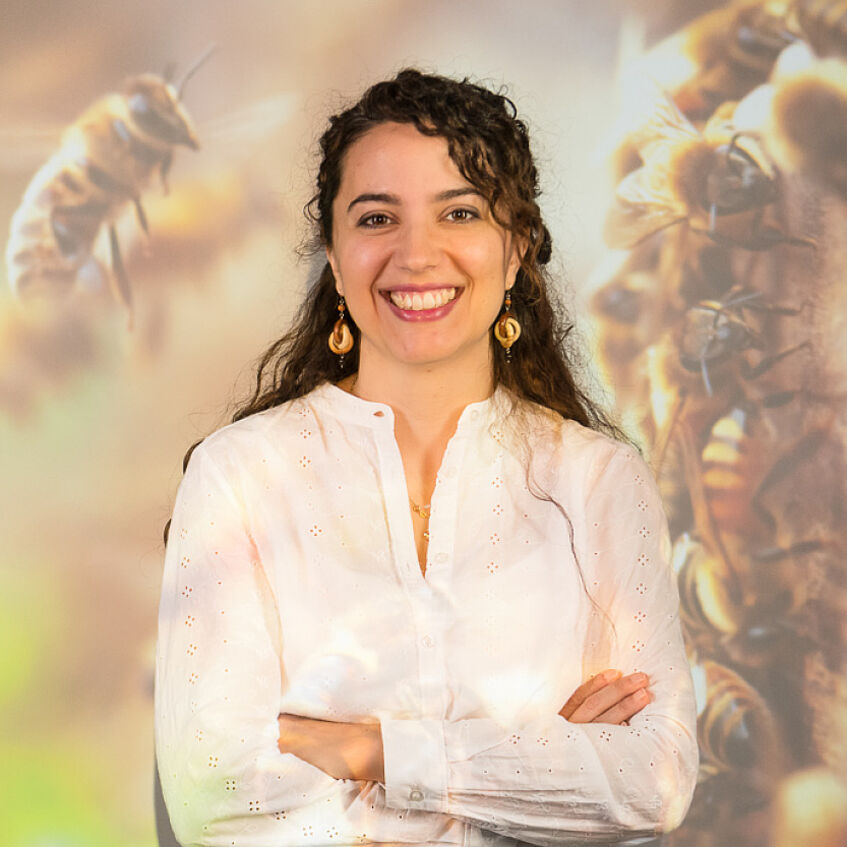
Dr. Greca Nathascia Meloni is a filmmaker and ethnographer at the University of Vienna's Institute for Cultural and Social Anthropology , specializing in multispecies relationships and environmental anthropology. Her work bridges academic research with public engagement through ethnographic films and blog platforms like fareapicoltura.net . Current research focuses on non-native plant studies and human-environment interactions Recipient of the Theodor Körner Prize for academic excellence (2021) Research Interests span five core areas: Multispecies Ethnography Visual Ethnography Environmental Anthropology Critical Plant Studies Anthropology of Cultural Heritage Her filmography including The Journey of the Bees (2022) demonstrates expertise in ethnographic filmmaking and environmental storytelling. Recent publications address climate impacts on apiculture, collaborative writing methodologies, and sociocultural dynamics in Mediterranean regions. Scientific Recognition : Theodor Körner Prize (2021) Fiorenzo Serra International Film Festival First Prize (2022) Maintaining strong academic connections through her university role while pursuing independent filmmaking projects, Meloni effectively combines research with creative dissemination.
Monica Tennberg serves as Research Professor at the University of Lapland's Arctic Centre and holds a Professor II position at The Arctic University of Norway since 2016. She leads the Sustainable Naturecultures and Multispecies Future (SuMu) thematic network under the University of the Arctic and contributes to the Critical Arctic Studies research team. Her research employs critical theoretical frameworks to examine: Power dynamics and governmentality in European Arctic governance Environmentality and human-nature entanglements Indigenous peoples' rights within sustainable development Everyday adaptation practices to climate change Recent publications reveal a methodological shift toward ethnographic studies of Arctic weather interactions, emphasizing how infrastructure limitations shape community resilience. Her work bridges political ecology with multispecies perspectives, particularly examining reindeer herding communities and Baltic Sea biopolitics. Major recognition includes: Knight, First Class of the Order of the White Rose of Finland (2018) Current research is funded by: POST-Bothnia: Post-anthropocentric water relations in the Bothnian Bay (2023-2027, Principal Investigator) ArMo: Low-carbon Arctic mobilities solutions (2022, Principal Investigator) TriArc: Arctic governance triangle analysis (2016-2020, Collaborative Investigator) Tennberg actively mentors graduate researchers and coordinates international collaborations through the UArctic Critical Arctic Studies network, organizing conferences that address emerging challenges in Arctic resource governance and climate security.