Parastoo Abtahi is an Assistant Professor in the Computer Science Department at Princeton University. She leads the Situated Interactions Lab (Ψ Lab) as part of the Princeton HCI Group, focusing on AR/VR and spatial computing. Prior to Princeton, she worked at Meta Reality Labs Research. PhD in Computer Science from Stanford University BSc in Electrical and Computer Engineering from University of Toronto (Engineering Science program) Her research explores wearable interactive technologies that augment human intelligence in physical contexts through: Input on-the-go: Low-effort, privacy-preserving multimodal interfaces Intelligent output: Timely, minimal multisensory systems Situated AI: Personalizable, predictable, safe physical-digital interaction Recent publications analyze: Drone-based haptic illusions for AR/VR Microgestures for mobile AR input Interactivity in explainable AI systems Temporal dynamics in VR haptics Awards include: 2025 Google Research Scholar Award CHI 2019 & 2018 Honorable Mentions She teaches courses like: COS 436: Human-Computer Interaction COS IW: AR Meets AI
Kevin M. Franks is an Associate Professor of Neurobiology at Duke University, where he investigates how the olfactory system forms neural representations of sensory environments. His work focuses on functional neural circuits in the olfactory bulb and piriform cortex, using techniques like in vivo recordings, optogenetics, and behavioral assays. His research explores Neural circuit dynamics and plasticity Odor coding mechanisms Role of recurrent circuitry Integration of sensory modalities Recent publications highlight his contributions to understanding cortical odor representations, developmental neural connectivity, and cross-modal interactions. Awards include the 2024 Don Tucker Finalist recognition. He teaches advanced neuroscience courses at Duke, including Neurobiology research and concepts in neuronal systems.
Dr. Heather Culbertson is an Assistant Professor in the Department of Computer Science at the University of Southern California, leading the HaRVI (Haptics Robotics and Virtual Interaction) Laboratory. Her research focuses on designing haptic hardware and algorithms to create intuitive human-robot interactions through touch, emphasizing realism in virtual environments and social connectedness. Key areas include mediated touch, wearable haptic systems, and multisensory integration in VR/AR applications. The lab's work spans robotics, human perception modeling, and cross-disciplinary solutions for healthcare and immersive technologies. Research interests revolve around tactile feedback systems, social robotics, and the psychological impact of haptic interfaces. Recent work explores real-time haptic texture rendering, affective communication via touch, and motion platforms for VR. Culbertson's projects often integrate human factors early in design to ensure usability and immersion. Publications highlight advancements in haptics coding standards, drone-human interaction, and emotion regulation systems. Her contributions bridge engineering and cognitive sciences, addressing challenges in wearable tech, surgical training simulations, and assistive robotics. The HaRVI Lab collaborates across disciplines to advance tactile interfaces for virtual reality, social robotics, and medical applications.
David Melcher is Professor of Psychology and Program Head in Psychology at New York University Abu Dhabi (NYUAD), where he also serves as a Global Network Professor. He is affiliated with the Division of Science and leads the Perception and Active Cognition Lab, focusing on the integration of perception, attention, memory, and action within a cognitive neuroscience framework. PhD in Psychology and Cognitive Science, Rutgers University (2001) Former researcher and professor in Italy and the UK Current leadership: Program Head, Psychology, NYUAD David Melcher's research centers on cognitive neuroscience , particularly how perception, attention, working memory, eye movements, and self-motion interact to shape cognition and behavior. His lab emphasizes active cognition —the idea that perception is not passive but dynamically shaped by action, context, and goals. He investigates how temporal dynamics in neural processing organize perceptual experiences and guide decision-making. His work spans both healthy and clinical populations, exploring individual differences in spatial and temporal processing across the lifespan. The 15 most recent publications reflect a consistent focus on temporal organization in cognition , perception-action coupling , and neural mechanisms of attention and memory . Keywords across these works include cognitive neuroscience, perception, and neuroimaging, with subfields ranging from eye movement research and neural synchrony to computational modeling and clinical neuropsychology. Collectively, they demonstrate a trajectory toward integrative models of brain function that bridge behavioral, neuroimaging, and computational approaches. Among his notable recognitions is the Distinguished Scientific Award for Early Career Contribution to Psychology from the American Psychological Association (2011), highlighting the early impact of his work in cognitive neuroscience. Distinguished Scientific Award for Early Career Contribution to Psychology, APA (2011) David Melcher has advised numerous students through capstone projects in psychology and computer science, fostering interdisciplinary research at the intersection of cognitive science and technology. His research has been generously supported by major funding agencies including the European Research Council , the US National Institutes of Health , the Italian Ministry of Research and Education , and the Chinese Ministry of Foreign Expert Affairs . He also contributes to the academic community as a member of the editorial boards of Journal of Vision , Psychonomic Bulletin & Review , Perception , and iPerception . He leads the Perception and Active Cognition Lab at NYUAD, which employs a multidisciplinary approach combining behavioral experiments, neuroimaging (fMRI, EEG, MEG), eye-tracking, computational modeling, and clinical assessments. The lab’s research aims to understand how the brain constructs stable percepts from dynamic sensory input, particularly during active engagement with the environment.
Jiajun Wu is an Assistant Professor of Computer Science and, by courtesy, of Psychology at Stanford University. He holds multiple affiliations including membership in Bio-X, Faculty Affiliate status at the Institute for Human-Centered Artificial Intelligence (HAI), and membership in both the Wu Tsai Human Performance Alliance and Wu Tsai Neurosciences Institute. Dr. Wu earned his Ph.D. and S.M. in Electrical Engineering and Computer Science from the Massachusetts Institute of Technology before joining Stanford. Dr. Wu's research program focuses on creating AI systems that understand and interact with the physical world through the integration of computer vision, machine learning, robotics, and cognitive science. His work emphasizes physics-based modeling combined with deep learning to develop systems capable of perceiving, reasoning about, and predicting physical interactions. Key research areas include 3D scene understanding, neurosymbolic AI approaches, multimodal perception (combining vision, sound, and language), and embodied intelligence for robotics applications. His lab develops novel frameworks that bridge the gap between neural networks and symbolic reasoning to create more interpretable and robust AI systems. Analysis of Dr. Wu's recent publications reveals a strong trajectory toward integrated multimodal understanding for embodied AI. His work increasingly combines vision, sound, and language processing with physical reasoning to create systems that can interact meaningfully with the physical world. There's a clear progression from foundational computer vision research toward practical robotics applications, with significant emphasis on foundation models for robotics, sim2real transfer techniques, and creating comprehensive datasets for embodied AI research. Dr. Wu's exceptional contributions have been recognized with numerous prestigious awards including the NSF CAREER award (2024), Young Investigator Programs from ONR (2024) and AFOSR (2023), the Okawa research grant (2024), and being named to IEEE Intelligent Systems' 'AI's 10 to Watch' (2024). He has received multiple best paper awards at leading conferences including ICRA (2024), SIGGRAPH Asia (2023), and CoRL (2023). Dr. Wu actively mentors a large cohort of students across multiple levels, serving as primary advisor for doctoral candidates, master's students, and numerous independent researchers. His research is supported by substantial funding from major technology companies including Google, Meta, Amazon, Samsung, and J.P. Morgan, as well as government agencies like NSF, ONR, and AFOSR, reflecting the significance and impact of his work in physical AI and multimodal perception systems. Dr. Wu leads a dynamic research group at Stanford that collaborates extensively with the Wu Tsai Neurosciences Institute and Institute for Human-Centered AI. Current projects include developing neurosymbolic models for computer graphics, creating multisensory datasets like OBJECTFOLDER 2.0 for sim2real transfer in robotics, and building foundation models for embodied intelligence that can understand and manipulate objects with human-like physical intuition.
Suresh Krishna is an Associate Professor in the Department of Physiology at McGill University's Faculty of Medicine. His research focuses on the neurophysiological and computational basis of sensory processing, attention, and eye movements, with applications to brain-machine interfaces and human health. He works with human subjects, non-human primates, and open datasets using in-vivo electrophysiology, eye-tracking, and computational modeling. Research interests include visual attention mechanisms, saccadic eye movement control, neural coding of motion perception, and the interplay between attention and decision-making. His work bridges basic neuroscience with translational applications such as improving neural prosthetics and understanding perceptual disorders. Recent work highlights how neural remapping processes during saccades underlie spatial perception, and how attention modulates neural activity patterns in visual cortex. The lab's publications reveal critical insights into the temporal dynamics of attentional shifts and their neural substrates, particularly in areas MT and MST. Dr. Krishna's team also investigates auditory temporal processing in the inferior colliculus, exploring correlations between neuronal responses to sound modulation. Their findings contribute to understanding how sensory systems encode temporal information across modalities. Research is conducted in the M2B3 Lab (http://m2b3.lab.mcgill.ca), which integrates experimental and computational approaches to study brain mechanisms underlying perception and action. No specific awards are listed, but ongoing work involves major contributions to primate neurophysiology and translational neuroscience.
Professor Julie Harris is a faculty member at the University of St Andrews, holding the position of Professor of Psychology within the School of Psychology and Neuroscience since 2005. She previously held academic posts at Newcastle University and the University of Edinburgh, and conducted postdoctoral research at the Smith-Kettlewell Eye Research Institute in California. Her research focuses on human visual processing, including vision and camouflage, depth perception, binocular stereopsis, and eye movements in natural environments. She earned a BSc in Physics from Imperial College London and a DPhil from Oxford University. Research interests include exploring how visual systems process environmental cues for depth and motion, with applications in camouflage design and stereo display technologies. Her lab employs psychophysical, behavioral, and computational methods. Notable projects address countershading camouflage effectiveness, motion-in-depth perception, and visual-motor interactions in driving scenarios. Selected grants include funding from BBSRC, Leverhulme Trust, and Medical Research Scotland. Collaborations span evolutionary biology, neuroscience, and applied vision science. She supervises PhD students Federico De Filippi and Rebecca Maguire. Awards include the Davida Teller Award Nomination and Fellowship in the Society of Biology. Labs/Teams: Julie Harris Lab (St Andrews), St Andrews Vision Labs, and the Institute of Behavioural and Neural Sciences. Current projects investigate warning signal design, visual perception in virtual environments, and the impact of visual processing on driving ability.
Professor Emily S. Cross is a cognitive and social neuroscientist holding dual appointments at the University of Glasgow's School of Psychology & Neuroscience (UK) and Western Sydney University's MARCS Institute (Australia). She directs the Social Brain in Action Laboratory (SoBA), specializing in how embodied experiences shape social perception. Cross earned a BA in psychology and dance from Pomona College, MSc from University of Otago as a Fulbright Fellow, and PhD in cognitive neuroscience from Dartmouth College, followed by postdoctoral training at University of Nottingham and Max Planck Institute. Her research explores experience-dependent plasticity through dance, robotics, and neuroimaging techniques (fMRI, TMS), focusing on four key areas: neural signatures of embodied expertise, neuroaesthetics, visual learning across lifespan, and social engagement with robots. This interdisciplinary work bridges neuroscience, performing arts, and robotics. Cross's research shows strong focus on human-robot interaction dynamics, cultural perceptions of robotics, and the neural correlates of aesthetic experiences. Recent work investigates how social experience shapes human-robot interaction, cross-cultural differences in robot acceptance, and computational approaches to movement analysis. Publications consistently demonstrate methodological innovation through VR, economic games, and large-scale motion capture libraries. Honors & Awards: Jacob Brownowski Award (British Science Association, 2017) Philip Leverhulme Prize in Psychology (2018) World's 50 Most Renowned Women in Robotics (2020) Elected member: Young Academy of Europe Elected member: Royal Society of Edinburgh's Young Academy of Scotland Her ERC Starting Grant funds groundbreaking work on human-robot interaction. Cross leads the Social Brain in Action Lab with focus on mentoring next-generation scientists and research ethics training. The lab employs neuroimaging, training paradigms, and diverse methodologies to study action observation across dance, music, and robotics domains.
James T. Enns is a Professor and Distinguished University Scholar in the Department of Psychology within the Faculty of Arts at the University of British Columbia. His research primarily focuses on the role of attention in human vision, with secondary interests in developmental psychology and human-machine interaction. Dr. Enns' research interests span perception, attention, vision, cognition, development, and human-machine interaction. His work explores how the human mind selects information, with particular emphasis on visual attention mechanisms. His laboratory research investigates the fundamental processes of visual perception and how attention modulates these processes across different contexts and developmental stages. Analysis of Dr. Enns' publication record reveals consistent engagement with visual perception, attentional mechanisms, and cognitive processing. His research demonstrates expertise in both theoretical frameworks and experimental methodologies related to visual attention, with applications spanning basic cognitive science to potential implementations in human-computer interaction systems. His work often bridges theoretical cognitive psychology with practical applications. Canadian Society for Brain, Behaviour and Cognitive Science Donald O. Hebb Distinguished Contribution Award (2013) Distinguished University Scholar, UBC (2004) Robert E. Knox Master Teaching Award (2004) Royal Society of Canada Fellow (2002) Killam Faculty Research Prize (1994) Killam Faculty Research Fellowship (1993) Society of Experimental Psychology Fellow Dr. Enns has served as Editor for the Journal of Experimental Psychology: Human Perception and Performance, and as Associate Editor for Psychological Science, Consciousness and Cognition, and Visual Cognition. His research has been supported by grants from NSERC, the Canadian Foundation for Innovation, the Australian Research Council, BC Health, and Nissan. He has authored textbooks on perception, edited research volumes on the Development of Attention, and published numerous scientific articles on vision, attention, and cognitive science. Dr. Enns is currently accepting graduate students and continues to mentor the next generation of cognitive scientists. Dr. Enns leads the UBC Vision Lab, which focuses on how the human mind selects information. The lab conducts research on visual attention, perception, and cognitive processes using a variety of experimental methodologies.
Rhonda Hadi is an Associate Professor of Marketing at the Saïd Business School, University of Oxford. She is also a Fellow of Green Templeton College and an Associate Editor at the Journal of Consumer Psychology , serving on editorial review boards for Journal of Consumer Research , Journal of Marketing Research , and Journal of the Academy of Marketing Science . Her research focuses on emerging technologies reshaping consumer experiences, including augmented reality, AI, and wearable/mobile computing. She explores crossmodal perception, cultural influences on consumer behavior, and sensory-driven decision-making. Rhonda teaches the Core Marketing course for the MBA programme and contributes to Executive MBA, Diploma in AI for Business, and executive education courses. Her engagements span industry collaborations with Fortune 500 firms, startups, and non-profits, emphasizing practical applications of her research. She is a key member of the Oxford Future of Marketing Initiative , fostering academic-industry partnerships for thought leadership. Her research interests prominently feature technology-augmented consumer behavior , particularly in multisensory interactions (e.g., haptics, temperature, scent) and how cultural contexts modulate these responses. She has pioneered studies on anthropomorphic products, chatbot ethics, and the psychological impact of digital tools like AR and the Metaverse. Rhonda received the John Elliot Teaching Award and regularly engages with media outlets like the BBC to disseminate her findings. She has delivered over 50 invited talks globally, addressing North America, Asia, Africa, and Europe. In advising and grants, she mentors students across MBA and executive programmes and secures funding via Oxford’s initiatives. Her work intersects with the Major Programme Management and Private Equity Institute , though direct grant references are not explicitly detailed. She actively participates in interdisciplinary teams at Oxford Saïd, such as the Oxford Future of Finance and Technology Initiative and the Social Thermoregulation Project , integrating insights from psychology, technology, and business strategy.
Ralf Haefner is an Assistant Professor in the Departments of Brain & Cognitive Sciences and Physics & Astronomy at the University of Rochester, holding this joint appointment since 2014. His interdisciplinary research bridges neuroscience and physics to investigate computational principles of perception and decision-making. Education and professional background: PhD, Oxford University, 1999 Visiting Research Fellow, Department of Neurobiology, Harvard Medical School Swartz Fellow, Sloan-Swartz Center for Theoretical Neurobiology, Brandeis University Haefner's research program centers on computational neuroscience , with primary focus on how the brain forms perceptual beliefs and uses them for decisions through Bayesian modeling . He employs machine learning tools to construct mathematical models explaining neural responses and behavior, particularly in the visual domain. His work addresses neural representation of uncertainty, causal inference mechanisms, and probabilistic computation in cortical circuits. Analysis of recent publications (2023-2025) reveals three dominant trends: (1) causal inference frameworks applied to motion perception and segmentation, (2) Bayesian modeling of perceptual biases and confidence computations, and (3) integration of generative and discriminative neural computations. His work extends beyond traditional neuroscience into scientific methodology through 'Generative Adversarial Collaborations' for improving research discourse. Honors and Awards: Swartz Fellowship, Sloan-Swartz Center for Theoretical Neurobiology NSF CAREER Award (2022) for 'Approximate inference at the intersection of neuroscience and machine learning' Haefner secured significant research funding through his NSF CAREER award, which supports foundational work on probabilistic inference at the neuroscience-ML interface. While specific students aren't listed, his active publication record and lab infrastructure suggest ongoing mentorship of graduate students and postdocs. His research has clinical relevance as shown by studies on perceptual abnormalities in autism spectrum disorder, indicating translational potential for understanding neurological conditions.
Gaetano Valenza is an Associate Professor of Bioengineering at the University of Pisa, Italy, where he leads the Neuro-Cardiovascular Intelligence Lab at the Enrico Piaggio Research Centre. He holds affiliations with the Neuroscience Statistics Research Laboratory at MIT and has served as a Research Fellow at Harvard Medical School and Massachusetts General Hospital. His academic work spans bioengineering, computational physiology, and affective computing. His research focuses on statistical and nonlinear biomedical signal and image processing , cardiovascular and neural modeling , and physiologically interpretable artificial intelligence . He develops wearable systems for physiological monitoring, with applications in autonomic nervous system assessment, brain-heart interactions, and mental health. His work has led to novel metrics such as the Sympathetic and Parasympathetic activity indices derived from ECG. The 15 most recent publications reflect a consistent trend in brain-heart interplay , complexity analysis of physiological signals , explainable AI in healthcare , and virtual reality applications in mental health . His work integrates advanced signal processing, nonlinear dynamics, and machine learning to decode emotional and cognitive states from physiological data. Dr. Valenza is a Senior Member of IEEE and serves on several technical committees. He is an active editorial leader, currently serving as Associate Editor for IEEE-EMBC , Plos One , Complexity , and Scientific Reports , and has guest-edited special issues in Philosophical Transactions of the Royal Society A and IEEE Journal of Biomedical and Health Informatics . He has led or participated in numerous international research projects, including FP7 and H2020 initiatives such as NEVERMIND and EXPERIENCE. He teaches courses in Biostatistics, Probability & Biostatistics, and Advanced Image Processing at the University of Pisa. As lab head and project coordinator, he leads a multidisciplinary team working on neuro-cardiovascular intelligence, wearable systems, and AI-driven mental health interventions.
Andrew Yonelinas is a Professor in the Department of Psychology at the University of California, Davis, where he directs the Human Memory Lab. He holds additional leadership roles as Associate Director of the Center for Mind and Brain and is an affiliated faculty member with the UC Davis Center for Neuroscience. His research bridges cognitive psychology and neuroscience to investigate fundamental memory mechanisms and their neural substrates. His educational background includes a Ph.D. in Experimental Psychology from McMaster University (1995) and a B.S. in Cognitive Science from the University of Toronto (1990). These foundational studies established his expertise in experimental methodologies and cognitive theory. Yonelinas specializes in dual-process models of memory, distinguishing between recollection (detailed contextual retrieval) and familiarity (vague recognition). His lab employs process dissociation, remember/know procedures, and ROC modeling alongside neuroimaging (fMRI, ERP) and clinical studies with amnesic and Alzheimer's patients. Recent work expands into auditory working memory, multisensory integration, and the impact of mental illness on cognitive processes, revealing hippocampal roles across memory systems. His research consistently addresses how memory fails in clinical conditions while developing unified theoretical frameworks. Analysis of his 2024-2025 publications shows a strong focus on memory mechanisms across sensory modalities, with increasing emphasis on clinical applications. Key trends include hippocampal contributions to visual/auditory working memory, EEG-based biomarkers for mental illness, and the interplay between schema knowledge and memory distortion in aging populations. His work demonstrates methodological innovation through model-based EEG phenotyping and multisite clinical collaborations. His scientific recognition includes: American Psychological Society’s Shahin Hashtroudi Memorial Award University of California Chancellor’s Fellow Award European Brain and Behavior Society International Lecture Award Yonelinas actively shapes his field through editorial roles at top journals including Proceedings of the National Academy of Sciences and Journal of Experimental Psychology, while serving as a grant reviewer for NIH, NSF, and international funding bodies. His Human Memory Lab trains next-generation researchers in memory theory and methodology, with recent projects examining stress effects on memory precision and neural mechanisms of action slips. The Human Memory Lab operates within UC Davis's neuroscience ecosystem, collaborating closely with the Center for Mind and Brain on projects involving clinical populations and neuroimaging. Current initiatives include the CNTRACS Consortium for EEG standardization in mental illness and investigations into how stress modulates memory binding through hippocampal mechanisms.
Lee Miller is a Professor in the Department of Neurobiology, Physiology, and Behavior at the University of California, Davis, College of Biological Sciences. His research integrates neural engineering, physiology, and computational methods to develop communication restoration technologies and investigate sensory processing mechanisms. His primary research interests include neural engineering for speech neuroprosthetics, electrophysiological analysis of speech production, auditory neuroscience, and geometric approaches to neuromuscular signal decoding. He employs surface electromyography (EMG), electroencephalography (EEG), and computational modeling to study brain-machine interfaces for speech restoration and multisensory integration. Recent publications reveal a dominant focus on EMG-based speech neuroprostheses, with geometric and topological analysis of neuromuscular signals emerging as a key methodology. His lab has pioneered non-invasive approaches to speech articulation decoding, created standardized EMG databases, and investigated neural mechanisms of attention in speech-in-noise processing. This work bridges engineering innovation with fundamental neuroscience to address communication disorders. Professor Miller leads the Miller Lab at UC Davis, which specializes in neural engineering for communication restoration. The lab develops real-time speech synthesis systems from neural signals and investigates the physiological basis of speech production and perception using multimodal recording techniques.
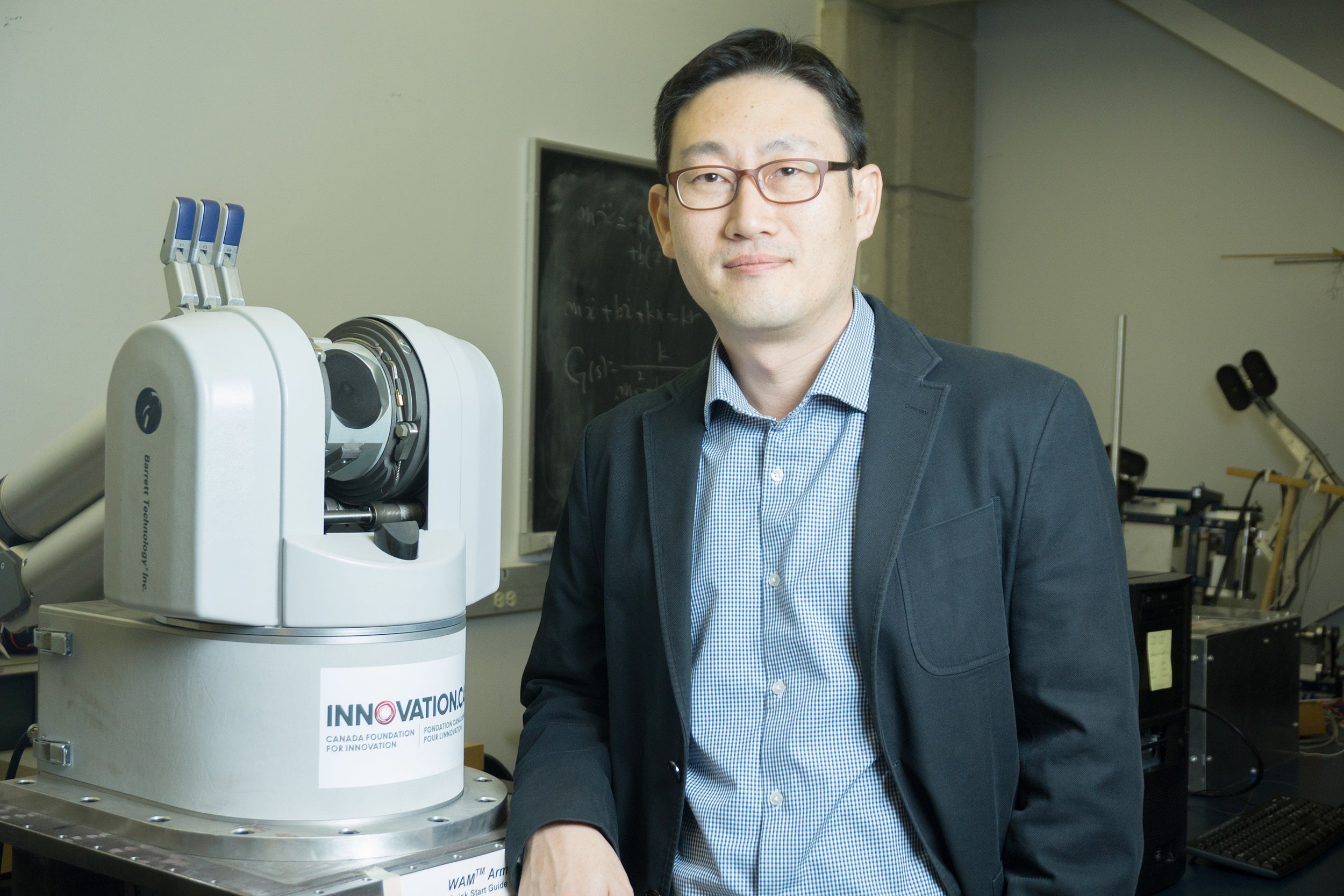
Soo Jeon is a Professor in the Department of Mechanical and Mechatronics Engineering at the University of Waterloo, part of the Faculty of Engineering. He holds a PhD from the University of California at Berkeley (2007) and prior degrees from Seoul National University. His research focuses on mechatronics, dynamic systems, and control, with applications in robotics, autonomous systems, and precision motion control. He has held roles as Assistant Professor (2009–2015), Associate Professor (2015–2024), and Full Professor (2024–present). Professor Jeon’s expertise includes intelligent sensing and control for mechatronic systems, nonlinear dynamics, and autonomous systems. He has received notable awards such as the 2022 Engineer of the Year Award (AKCSE/KOFST), 2015 NSERC Discovery Accelerator Supplement, and 2010 ASME Rudolf Kalman Best Paper Award. He serves as an Associate Editor for several journals, including the ASME Journal of Dynamic Systems and IEEE Transactions on Automation Science and Engineering. His research interests span robotics, control systems, and automation, with recent work on autonomous navigation, tactile exploration, and model predictive control. He supervises graduate students in MASc and PhD programs and teaches courses like ME 649 (Control of Machines and Processes) and ME 360 (Introduction to Control Systems). Jeon holds patents in areas like low-power magnetic locks and remote plasma source seasoning. His lab, the Waterloo Mechanical Systems & Control Laboratory (WMSCL), focuses on advanced mechatronics and robotics projects, including collaborations with international institutions such as the Korea Institute of Machinery & Materials (KIMM).