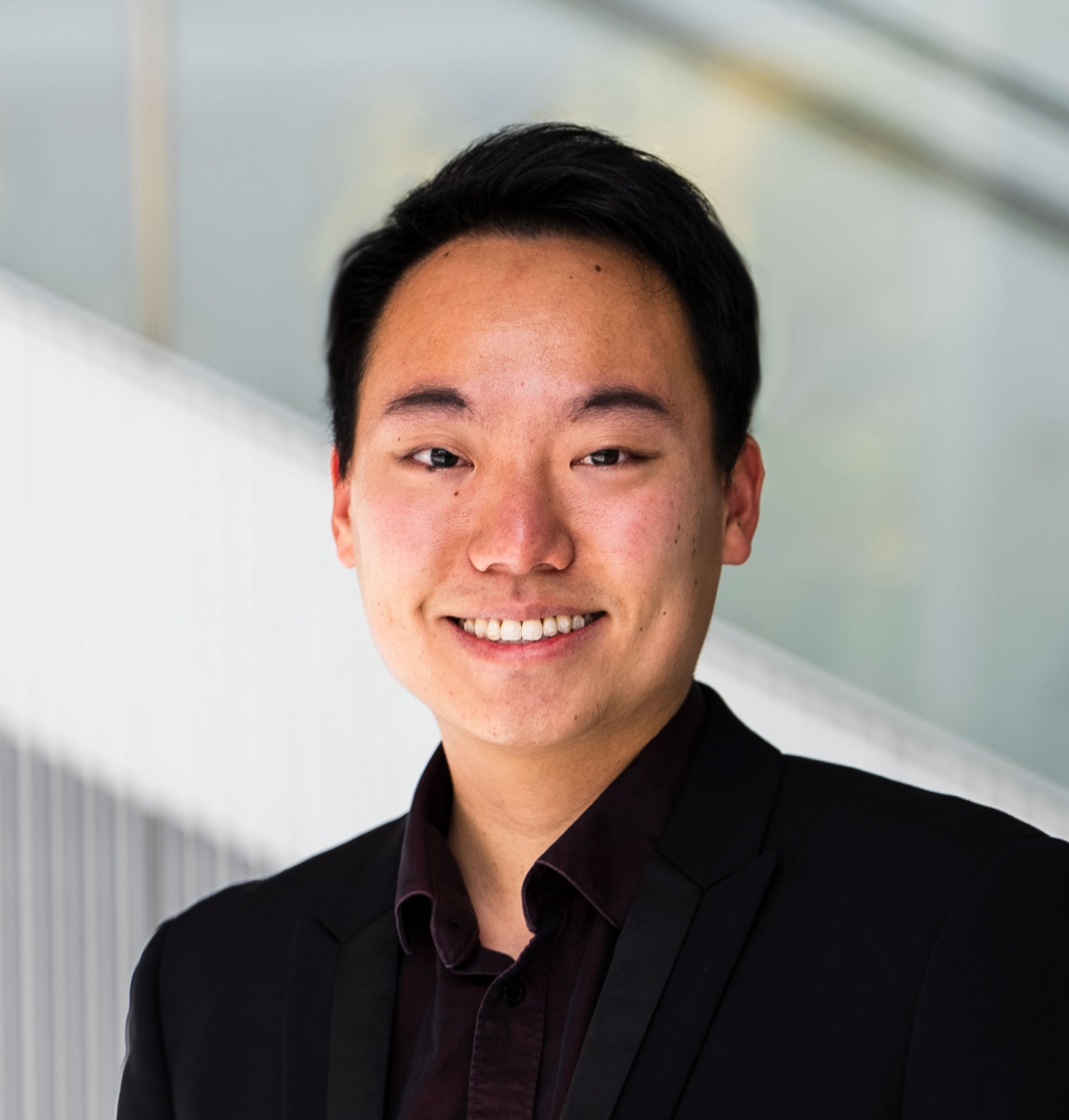
Professor Carlo Harvey is a creative technologist at the School of Digital Arts (SODA), Manchester Metropolitan University. His interdisciplinary research merges games , machine learning , virtual production , and cultural heritage reinterpretation . He leads industry collaborations with entities like Jaguar Land Rover and Epic Games, focusing on AI-driven interactive audio, real-time visualization, and accessibility solutions. Award-winning projects : TIGA, Innovate UK, and Epic Games MegaGrant for Accession Industry partnerships : Automotive sector, cultural institutions His research spans human-computer interaction , multisensory virtual environments , and acoustic-visual cross-modal perception . Recent publications address robotic simulations, motion alignment, and haptic feedback systems. Scientific recognition : TIGA Award, Innovate UK Funding, Epic Games MegaGrant Advocacy : Digital inclusion, creative collaboration, social impact of technology
Giulio Jacucci is a Professor in the Department of Computer Science at the University of Helsinki, affiliated with the Helsinki Information Technology Research Institute. He serves as a Supervisor in the Doctoral Programme in Computer Science, mentoring PhD candidates in human-computer interaction and related fields. His academic career spans over two decades with continuous research productivity from 2006 through 2025. Professor Jacucci's research interests center on Human-Computer Interaction , particularly focusing on Virtual Reality , Brain-Computer Interfaces , and Neuroadaptive Systems . His work explores how technology can adapt to users' cognitive and physiological states, with significant contributions to social virtual reality environments, embodied agents, and information retrieval systems. He investigates how virtual representations affect social behavior, time perception, and communication in digital spaces. His publication record shows a clear evolution from foundational work in information retrieval toward increasingly sophisticated neuroadaptive systems. Recent publications (2024-2025) demonstrate his leadership in examining social dynamics within virtual reality platforms, including votekicking mechanisms, mirror watching behaviors, and communication tools like mutes. His work bridges technical innovation with deep understanding of human social behavior in digital environments. Professor Jacucci currently leads multiple research projects funded by the Academy of Finland, including DataLit: Datalukutaito ja vastuullinen päätöksenteko (2023-2026) and MyModel: Selitettävyys suositusten hallinnassa (2023-2027). These projects focus on data literacy, responsible decision-making, and explainability in recommendation systems, reflecting his commitment to ethical and user-centered technology development. His research has received media attention, particularly around brain-computer interfaces and virtual reality applications, with coverage in outlets discussing how deep learning transforms mobile applications and sensor landscapes. He has presented his work at major conferences including CHI 2017 and continues to be an active contributor to the international research community.
Floyd Mueller is a Full Professor of Future Interfaces in the Department of Human Centred Computing at Monash University, where he also directs the award-winning Exertion Games Lab. His work bridges human-computer interaction, interaction design, and game and play design, with a focus on bodily engagement and physical activity through technology. He has held prior academic and research positions at RMIT University, the University of Melbourne, and CSIRO, and has been affiliated with elite institutions such as Stanford University, MIT Media Lab, and Microsoft Research Asia. PhD in Interaction Design – University of Melbourne (2011) MS in Media Arts and Sciences – Massachusetts Institute of Technology (2002) Diplom-Informatiker (Medieninformatik) – Hochschule Furtwangen (2000) BSc in Multimedia – Griffith University (1999) Floyd Mueller’s research centers on human-computer interaction with a strong emphasis on bodily interactions, exertion interfaces, and playful technologies. His work explores how digital systems can support physical activity, human values, and novel forms of expression through games, wearables, augmented reality, and immersive experiences. He employs methodologies such as design ethnography, autoethnography, and Research Through Design to investigate the phenomenology of human-computer integration. His recent publications (2024–2025) reflect a continued focus on the future of bodily interfaces, including lucid dream mediation, extended reality for fear reduction in water, sonic gastronomy, and shared bodily control in augmented human systems. These works are published in top-tier venues like CHI and Human-Computer Interaction journal, highlighting trends toward immersive, sensory-rich, and human-centered computing that challenge traditional boundaries between body and machine. His scientific awards include being an inaugural honouree of the Australian Design Honours, receiving 9 Best Paper Honorable Mentions and 2 Best Papers at CHI and CHI PLAY, and being recognized as a Fulbright Visiting Scholar and Microsoft Research Asia Fellow. His games have been featured by BBC, ABC, Discovery Science Channel, and New Scientist, and won a Media Star Award. Floyd Mueller actively supervises PhD students through the Exertion Games Lab and Supervisor Connect platform. He has secured major research grants, including Australian Research Council Discovery and Linkage Projects. His current projects include Advancing Australia’s hospitality industry through interactive food and Designing digital aquatic play to foster Australians' engagement with water . He also serves as associate editor for IMWUT and IJHCS, co-founded the CHI PLAY conference series, and was general co-chair for CHI PLAY’18 and CHI’20. He leads the Exertion Games Lab, an interdisciplinary research team focused on inventing the future of bodily play. The lab investigates how technology can support active lifestyles through exertion games, wearables, drones, and immersive environments. The lab’s work spans design, prototyping, user studies, and real-world deployment, often in collaboration with chefs, athletes, and underwater explorers.
Dr. Heather Culbertson is an Assistant Professor in the Department of Computer Science at the University of Southern California, leading the HaRVI (Haptics Robotics and Virtual Interaction) Laboratory. Her research focuses on designing haptic hardware and algorithms to create intuitive human-robot interactions through touch, emphasizing realism in virtual environments and social connectedness. Key areas include mediated touch, wearable haptic systems, and multisensory integration in VR/AR applications. The lab's work spans robotics, human perception modeling, and cross-disciplinary solutions for healthcare and immersive technologies. Research interests revolve around tactile feedback systems, social robotics, and the psychological impact of haptic interfaces. Recent work explores real-time haptic texture rendering, affective communication via touch, and motion platforms for VR. Culbertson's projects often integrate human factors early in design to ensure usability and immersion. Publications highlight advancements in haptics coding standards, drone-human interaction, and emotion regulation systems. Her contributions bridge engineering and cognitive sciences, addressing challenges in wearable tech, surgical training simulations, and assistive robotics. The HaRVI Lab collaborates across disciplines to advance tactile interfaces for virtual reality, social robotics, and medical applications.
Rhonda Hadi is an Associate Professor of Marketing at the Saïd Business School, University of Oxford. She is also a Fellow of Green Templeton College and an Associate Editor at the Journal of Consumer Psychology , serving on editorial review boards for Journal of Consumer Research , Journal of Marketing Research , and Journal of the Academy of Marketing Science . Her research focuses on emerging technologies reshaping consumer experiences, including augmented reality, AI, and wearable/mobile computing. She explores crossmodal perception, cultural influences on consumer behavior, and sensory-driven decision-making. Rhonda teaches the Core Marketing course for the MBA programme and contributes to Executive MBA, Diploma in AI for Business, and executive education courses. Her engagements span industry collaborations with Fortune 500 firms, startups, and non-profits, emphasizing practical applications of her research. She is a key member of the Oxford Future of Marketing Initiative , fostering academic-industry partnerships for thought leadership. Her research interests prominently feature technology-augmented consumer behavior , particularly in multisensory interactions (e.g., haptics, temperature, scent) and how cultural contexts modulate these responses. She has pioneered studies on anthropomorphic products, chatbot ethics, and the psychological impact of digital tools like AR and the Metaverse. Rhonda received the John Elliot Teaching Award and regularly engages with media outlets like the BBC to disseminate her findings. She has delivered over 50 invited talks globally, addressing North America, Asia, Africa, and Europe. In advising and grants, she mentors students across MBA and executive programmes and secures funding via Oxford’s initiatives. Her work intersects with the Major Programme Management and Private Equity Institute , though direct grant references are not explicitly detailed. She actively participates in interdisciplinary teams at Oxford Saïd, such as the Oxford Future of Finance and Technology Initiative and the Social Thermoregulation Project , integrating insights from psychology, technology, and business strategy.
Florian 'Floyd' Mueller is a Professor of Future Interfaces at Monash University in Melbourne, Australia, where he directs the award-winning Exertion Games Lab within the Department of Human-Centred Computing (ranked among the top 20 HCI departments globally). Previously, he held positions at RMIT University, Stanford, University of Melbourne, Microsoft Research, MIT Media Lab, Fuji-Xerox Palo Alto Labs, Xerox Parc, and Australia's CSIRO. Mueller is a member of the prestigious ACM SIGCHI Academy, an honorary group recognizing leaders who have made substantial contributions to Human-Computer Interaction (HCI). Professor Mueller's research focuses on the intersections between technology, the human body, and play. He originated the concept of "Exertion Interface," arguing that we should not just design "easy-to-use" interactions when "hard-to-use" interactions can also be beneficial. His work spans movement-based interactions, whole-body interfaces, uncomfortable interactions, somaesthetics, and exertion games. Mueller's research methodology often employs research through design, design ethnography, and autoethnography to explore these novel interaction paradigms, incorporating mixed-reality, augmented reality, virtual reality, electronic muscle stimulation, biosensors, wearables, and drones. His recent publications demonstrate a continued focus on bodily interactions and human-computer integration, with particular emphasis on emerging subfields like WaterHCI and SportsHCI, brain-computer interfaces, and gustosonic (taste and sound) experiences. Mueller's work has evolved from foundational exertion game concepts to more sophisticated explorations of human-computer integration where technology becomes seamlessly woven into the fabric of human experience. Professor Mueller's contributions have been widely recognized with numerous awards including: Inaugural honouree of the Australian Design Centre's Design Honours Tall Poppy award for "intellectual and scientific excellence" 10 "Best Paper Honorable Mentions" (top 5%) from premier HCI conferences 2 "Best Paper" awards (top 1%) at CHI PLAY and CHI Shortlisted for the European Innovation Games Award (alongside Nintendo's WiiFit) Nokia Mindtrek Ubimedia Award Mueller has successfully secured some of Australia's largest and most competitive research grants, achieving a remarkable 14% success rate on Australian Research Council Discovery Project applications. He has served as General co-Chair for CHI PLAY'18 and CHI'20, becoming the first Australian-based researcher to spearhead HCI's highest-ranked publication outlet, and is currently General co-Chair for CHI'24. He is Associate Editor for tier A journals including Elsevier's IJHCS (International Journal of Human-Computer Studies) and ACM's IMWUT (Interactive, Mobile, Wearable and Ubiquitous Technologies). As director of the Exertion Games Lab, Mueller leads a research team whose innovations have been experienced by over 20,000 users across 3 continents and featured on the BBC, ABC, Discovery Science Channel, and Wired magazine. The lab has produced groundbreaking work in bodily interfaces, co-founding the CHI PLAY conference series and establishing new research directions in SportsHCI and WaterHCI through recent "Grand Challenges" papers. Mueller's lab continues to push boundaries with projects exploring brain-to-brain interfaces, lucid dreaming induction, and novel gustosonic experiences.
Miguel Ángel Bernal Merino serves as a Part-Time Lecturer in the Department of Modern Philology, Translation and Interpretation at the University of Las Palmas de Gran Canaria. Concurrently, he acts as convener of the MA in Translation at the University of Roehampton in London, managing its Specialised Translation, Audiovisual Translation, and Intercultural Communication pathways since 2005. His academic profile bridges theoretical research and industry application in localization disciplines. PhD in The Localisation of Video Games, Imperial College London MSc in The Localisation of Multimedia Interactive Entertainment Software, Imperial College London Certificate in Software Localisation, University of Limerick CELTA, University of Cambridge MPhil in Lip-Synched Dubbing, Universidad de Alicante MA in Hispanic Literature, University of Rhode Island BA in English & Spanish Linguistics, Universidad de Alicante Bernal Merino's research pioneers the expansion of Translation Studies into interactive media domains. His work on video game localization examines interactivity, cultural adaptation, glocalisation, and playability, while his audiovisual translation research investigates creativity in lip-synched dubbing, subtitling, and audiodescription. He extends these frameworks into gaming-based language learning through haptic environments and multisensory reinforcement, exploring physiological aspects of multilingual cognition and polysemiotic neural networks. This multidisciplinary approach fundamentally challenges traditional boundaries in translation theory. His publication trajectory reveals evolving industry-academia integration, shifting from foundational game localization frameworks (2008-2015) toward user-centered research and educational applications (2018-2024). Recent work emphasizes measurable business impacts through quality localization, regional market adaptations, and crowd-sourced methodologies, demonstrating consistent influence on professional standards across gaming and translation sectors. Fellow of the Higher Education Academy Bernal Merino supervises doctoral research on mobile game localization, transmedia fan experiences, and historical game content translation while developing industry-academia pipelines through projects like AHRC's Media Across Borders. His funded initiatives—including Maximising ROI through Quality Game Localisation and Video Games for Language Learning—bridge theoretical innovation with commercial implementation, focusing on glocalisation strategies, interactivity metrics, and playability optimization. These collaborations connect European universities, gaming studios, and localization service providers. As chair of the IGDA Localization SIG and member of GIR Discourse, Communication and Society, he directs international forums for game localization discourse. His work with Routes into Languages promotes audiovisual media in language education, while REF-readiness collaborations enhance research excellence across European institutions through his professional network spanning industry conferences like GDC Summit and Game Global.
Pieter Desmet serves as Professor of Design for Experience at Delft University of Technology's Faculty of Industrial Design Engineering, specifically within the Department of Human-Centered Design. He directs the Delft Institute of Positive Design, focusing on advancing knowledge for designing human flourishing. His research centers on emotional design mechanisms, particularly how product design evokes emotions and contributes to individual and community well-being. Key interests include Positive Design frameworks, mood-regulation interventions, AI-emotion alignment, and multisensory experiences in packaging and museum contexts. Recent work explores liminal spaces in exhibits, autoethnography ethics, and group mood dynamics in workplaces. Analysis of his 275+ publications reveals consistent focus on emotional design theory with expanding applications in AI, healthcare, and sustainability. His work bridges academic research with practical design tools for emotional well-being. No scientific awards are documented in the provided materials. Desmet actively supervises doctoral candidates (evidenced by PhD thesis datasets) and secures research grants through institutional collaborations. His leadership in organizing major conferences like IASDR 2023 and Design & Emotion events demonstrates significant academic influence. He leads the Delft Institute of Positive Design research group, which investigates user experience aspects through interdisciplinary projects integrating psychology, design, and technology.
Prof. Yon Visell is an Associate Professor at the University of California, Santa Barbara (UCSB) with appointments in the Department of Bioengineering, Department of Electrical and Computer Engineering, and Department of Mechanical Engineering. He directs the RE Touch Lab, which focuses on haptics, robotics, and interactive technologies, including sensorimotor augmentation, soft robotics, and virtual reality applications. The lab is affiliated with the Media Arts and Technology Program, Communication and Signal Processing group (ECE), Dynamic Systems and Control group (ME), California NanoSystems Institute, Center for Polymers and Organic Solids, UCSB Research Center for Virtual Environments and Behavior, and UCSB Robotics Group. Education: PhD in Electrical and Computer Engineering from McGill University, MA in Physics from University of Texas, Austin, and BA in Physics from Wesleyan University His research spans robotics, haptics, biomechanics, and soft electronics, aiming to advance human-computer interaction and wearable technologies. Recent work includes light-driven tactile displays, biomechanical filtering in tactile encoding, and haptic systems for VR and healthcare. The lab has received numerous awards at IEEE Haptics Symposium, World Haptics Conference, and EuroHaptics Society events. 2025 Best Demonstration Awards at IEEE World Haptics Conference 2024 Best Paper at IEEE Haptics Symposium 2023 Best Journal Paper at IEEE Transactions on Haptics Visell's group has pioneered wave-based haptic rendering, tactile holography, and soft wearable robotics. They have developed tools like SkinSource for tactile biomechanics simulation and collaborated with institutions in North America, Europe, and Japan. Current projects involve photonics-driven tactile systems, soft robotics for therapy, and next-generation haptic interfaces while mentoring students like Gregory Reardon (2024 EuroHaptics Best Dissertation), Max Linnander (IEEE Haptics awards), and Neeli Tummala (SWE Intel Scholar). Research Grants: Funded by NSF, tech, and healthcare industries Lab: RE Touch Lab at California NanoSystems Institute Collaborations: with TU Dresden, Northwestern University, NC State, UCLA, and others
Paul Pu Liang is an Assistant Professor at the Massachusetts Institute of Technology (MIT) Media Lab and Department of Electrical Engineering and Computer Science (EECS). He directs the Multisensory Intelligence research group, focusing on building AI systems that integrate diverse sensory inputs to enhance human-AI symbiosis. His work spans theoretical foundations, large-scale resources, and neural architectures for multisensory learning. Education: PhD in Machine Learning (Carnegie Mellon University), MS in Machine Learning (Carnegie Mellon), BS with University Honors in Computer Science and Neural Computation (Carnegie Mellon) Research Interests: Multimodal machine learning, human-AI interaction, clinical AI, generative models, and responsible deployment of AI systems Key Contributions: MultiBench, HEMM evaluation framework, CLIMB clinical data foundations, and multimodal transformer architectures Recent publications emphasize multimodal foundation models , clinical applications , and socially responsible AI . His work has been recognized with multiple best paper awards and fellowships from Siebel, Facebook, and other institutions. Scientific Awards Siebel Scholars Award Waibel Presidential Fellowship Facebook PhD Fellowship Center for ML and Health Fellowship Rising Stars in Data Science Four best paper awards Paul teaches courses on machine learning and multimodal AI at MIT and CMU. He mentors students across multiple programs including Media Arts & Sciences, EECS, and IDSS, with former advisees now at institutions like OpenAI, UC Berkeley, and Princeton.
Edwin van der Heide is a part-time Lecturer and researcher at Leiden University, affiliated with the Leiden Institute of Advanced Computer Science (LIACS) and the Academy for Creative and Performing Arts (ACPA). His work bridges sound, space, and interaction through installations, performances, and environments. Key roles include: Co-head of ArtScience Interfaculty (Royal Conservatoire & Royal Academy of Art, The Hague) until 2016 Edgard Varèse Guest Professor at TU Berlin (2009) Invited artist at Le Fresnoy (France) and HKB Bern University of the Arts (2019) Research Interests: Spatial sound composition, audience interaction, interdisciplinary art, and the intersection of technology with auditory perception. Notable projects include Whispering Wind (permanent installation at Leiden University) and Spiral of Time (MACBA, Barcelona). Recent Articles & Exhibitions (2023–2024): Focus on large-scale installations like Pneumatic Sound Field and Spiral of Time , emphasizing public engagement and spatial acoustics. Awards: Witteveen+Bos Art+Technology Award (2009), Best Paper Award for BAI (摆) (2018). Grants & Labs: Collaborations with institutions like NCCA (Russia), MAXXI (Italy), and involvement in projects like Evolving Spark Network (global sound art initiatives).
Catherine Guastavino is a Professor at McGill University's School of Information Studies (within the Faculty of Arts) and an Associate Member at the Schulich School of Music. She also contributes to the Centre for Interdisciplinary Research in Music Media and Technology (CIRMMT). Her roles include leading research projects and supervising graduate students in music technology and related fields. She holds a PhD in Psychoacoustics from Université Pierre et Marie Curie (Paris VI), an MSc from IRCAM (France), and a BSc in Mathematics from McGill University. Her research focuses on auditory perception, soundscape analysis, human-computer interaction, and urban acoustics. Notable projects include the 'Sounds in the City' partnership addressing urban noise policy and the development of immersive soundscape simulation tools. She leads or co-leads grants from SSHRC, NSERC, and MITACS, emphasizing interdisciplinary approaches to sound in urban environments. Guastavino's work bridges academic research with practical applications, such as designing sound installations for public spaces and improving acoustic environments in transportation and performance venues. She collaborates with city planners, musicians, and engineers, reflecting her commitment to making cities sound better through evidence-based strategies. Key Projects: SSHRC Partnership Grant for urban soundscape management (2018-2023) NSERC Discovery Grant on auditory localization (2019-2024) MITACS projects on Montreal festival soundscapes and noise policy Labs & Partnerships: Multimodal Interaction Laboratory (MIL) Collaborations with Ville de Montréal and Quartier des Spectacles Education: PhD: Psychoacoustics (Paris VI) MSc: Computer Science & Music Technology (IRCAM) BSc: Mathematics (McGill) Her teaching includes courses like Music Information Retrieval, integrating computational methods with artistic and scientific applications.
Mischa Billing is a Senior Lecturer at Örebro University specializing in Culinary Arts and Meal Science. She is actively involved in research on sensory experiences, wine studies, and food pairing. Her work spans across multiple disciplines including haptics, olfaction, and culinary traditions. Her research interests focus on the intersection of sensory perception and culinary practices. Billing explores how sound affects taste perception, develops haptic attribute models for food design, and investigates improved sensory experiences for the elderly. Her work in sommelier training and critical attribute techniques bridges traditional culinary knowledge with scientific approaches to sensory evaluation. Analysis of her publications reveals a strong focus on practical applications of sensory science in culinary contexts. Her work spans from theoretical explorations of wine tasting as embodied knowledge to practical guides for food and beverage pairing. The recurring themes include sensory integration, cultural contexts of food consumption, and innovative methods for enhancing meal experiences. Gastronomic Academy's Silver Medal Wine Profile of the Year Nose of the Year Honorary Truffle of the Year Billing has served as general secretary of the International Sommelier Association (ASI) and is a member of the Wine Academy in Sweden. She has extensive experience in evaluating diverse products including Swedish tap water and apple juice. Her media presence includes serving as a jury member on TV4's Sweden's Master Chef and delivering radio talks for Sveriges Radio. She leads several research initiatives including the Sense Lab, which focuses on future sensory experiences, and participates in research groups examining meals from social and cultural perspectives. Her projects like 'Rewine The World' demonstrate interdisciplinary approaches to reducing food waste through innovative culinary methods.
Desmond Elliott is an Associate Professor in the Natural Language Processing section at the Department of Computer Science, University of Copenhagen (UCPH). His research focuses on multimodal and multilingual models with specific emphasis on vision-language integration and tokenization-free NLP approaches. He teaches Bachelor and Master's level courses including Advanced Topics in Natural Language Processing (since 2019), Grundlæggende Data Science (since 2023), and previously Data Science (2021-2023). His research interests center on building and understanding multimodal and multilingual models , particularly exploring vision and language interactions through billion-parameter systems. Current work investigates cultural representation disparities in vision-language models, parameter-efficient captioning, and multimodal distributional semantics across diverse domains including food culture and medical imaging. His methodology emphasizes real-world applicability in non-English contexts and ethical considerations in multimodal systems. Elliott's recent publications (2025) demonstrate leadership in multimodal NLP, with significant contributions to vision-language pretraining, multilingual evaluation frameworks, and clinical NLP applications. His work spans theoretical advancements in model architectures and practical implementations addressing challenges in low-resource languages and domain adaptation. Best Long Paper Award at EMNLP 2021 Best Poster Award at COLING 2019 As an active educator, Elliott contributes to courses on Fair and Transparent Machine Learning and previously taught Information Retrieval. His research collaborations span international institutions with particular focus on European and non-English language contexts, reflecting UCPH's recognition as Europe's #1 institution for HCI research over the past decade.
Ana Serrano is an Associate Professor at Universidad de Zaragoza, Spain, where she is affiliated with the Graphics & Imaging Lab in the EINA (Edificio Ada Byron) school. She earned her PhD at the same institution under the supervision of Prof. Diego Gutierrez and Prof. Belen Masia, and completed a postdoctoral fellowship at the Max-Planck-Institute for Informatics under Prof. Karol Myszkowski. Her research focuses on visual computing , particularly in computational imaging , material appearance perception and editing , and virtual reality . She is especially interested in developing perceptually-driven methods that leverage knowledge of the human perceptual system to enhance user experiences and assist content creation in immersive environments. Her recent publications (2023–2025) span top-tier venues such as SIGGRAPH, CVPR, IEEE TVCG, and Eurographics. These works explore topics like saliency prediction in 3D and 360° video, crossmodal perception in VR, gloss modeling, radiance fields, and perceptual evaluation of immersive content. The research demonstrates a strong integration of machine learning, human perception, and computer graphics to solve real-world problems in visual computing. She has received several prestigious awards, including: Eurographics 2023 Young Researcher Award VGTC VR 2024 Significant New Researcher Award Eurographics 2020 PhD Award Adobe Research Fellowship (honorable mention, 2017) NVIDIA Graduate Fellowship (2018) Ana Serrano actively supervises PhD and Master’s students and has taught courses such as Virtual Reality, Computational Imaging, and Deep Learning applications. She serves as an Associate Editor for Computer Graphics Forum , ACM Transactions on Applied Perception , and Computers and Graphics , and has held leadership roles in major conferences including Eurographics (Tutorials co-chair, 2023), ACM SAP (Program co-chair, 2022), and CEIG (Program co-chair, 2022). Her professional service includes extensive program committee and reviewer roles for SIGGRAPH, IEEE VR, ISMAR, and others. She leads a vibrant research group focused on human perception in virtual environments, with current projects on computational models of attention and perception, integrated with physiological signals. Her lab, the Graphics & Imaging Lab, fosters interdisciplinary collaboration and innovation in visual computing.