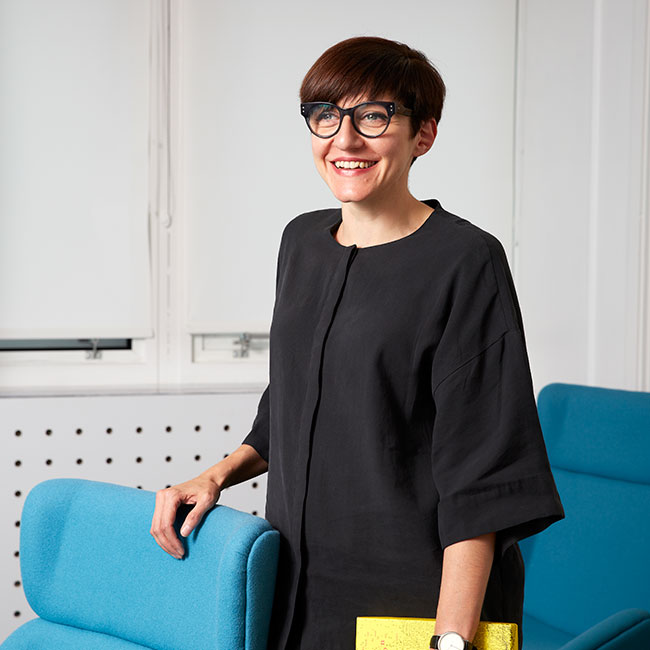
Susanne Narciss is a Professor at the Psychology of Learning and Instruction department of Technische Universität Dresden, leading the Center of Tactile Internet with Human in the Loop (CeTI). Her research focuses on error processing in educational contexts, with 15 recent publications analyzing error climates, feedback strategies, and motivational frameworks. Key Research Areas : Learning from errors/failure, instructional feedback design, affective-motivational responses, error-related metacognition. Methodological Scope : Combines longitudinal studies, experimental designs, and qualitative analyses across K-12, university, and informal learning settings (museums, home contexts). Her work emphasizes context-specific interventions for educators, parents, and students, including error-competency training programs and metacognitive scaffolding tools. Current projects examine vibrotactile feedback systems for motor learning and cultural responsiveness in psychology education. Collaborative Networks : Works with international teams on the International Competences for Undergraduate Psychology model and cyber-physical system pedagogy. Recent Trends : 2025 articles focus on collaborative error processing, scenario-based human-machine interaction, and generative learning tasks in digital environments.
Joost Raessens is Professor of Media Theory at Utrecht University's Faculty of Humanities, Department of Media and Culture Studies, where he leads research in Media and Performance Studies. He coordinates the Horizon Europe-funded project STRATEGIES: Sustainable transition for Europe's game industries (2024-2028), focusing on how games, AI, and extended reality impact the climate crisis. His research spans several interconnected areas focused on the intersection of digital media, gaming, and environmental sustainability. Raessens explores how immersive experiences like Games and XR for Change contribute to advancing UN Sustainable Development Goals through his Green Media Studies framework. His work examines the environmental impact of the gaming industry while investigating how games can foster ecological citizenship and climate awareness. He has pioneered research on "ecogames" - games designed to engage players with climate crisis issues through playful perspectives. Raessens' recent publications reveal a clear trend toward examining gaming's dual role in the climate crisis - as both a contributor to environmental problems and a potential solution. His work analyzes how games like Collapsus, SpaceBuzz, and Symbiosis create meaningful engagement with ecological issues, while also addressing the carbon footprint of the gaming industry itself. This research sits at the intersection of game studies, environmental humanities, and digital media theory. His notable recognition includes: Incentive for the development of an International Master Degree Game Studies (2011) Raessens actively supervises multiple PhD projects including 'The becoming-playful of warfare in the Netherlands' (2021-2025) and 'Experiencing the past: Bridging art, history, and young people's media environment through multisensory XR engagement' (2022-2026). He leads significant research initiatives including the NWO-funded project on "Long-term consumer and community empowerment in energy applications through inclusive Game design, Artificial Intelligence and system Modelling" (2022-2026) and previously directed the Utrecht University Graduate Programme "Game Research" (2015-2021). He co-founded and directed the Utrecht Center for Game Research (2014-2024), creating a hub for interdisciplinary game studies that connected humanities scholars with computer scientists. This center facilitated numerous collaborative projects examining the societal impact of games, from persuasive gaming to citizen science applications.
Ian Pitt is a Lecturer in Usability Engineering and Interactive Media at University College Cork (UCC). He leads the Interaction Design, E-Learning and Speech (IDEAS) Research Group, focusing on multimodal human-computer interaction, auditory interfaces, and accessibility solutions for visually impaired users. Pitt holds a D.Phil from the University of York, followed by research fellowships at Otto-von-Guericke University in Germany before joining UCC in 1997. His research interests include speech-based interfaces, e-learning systems, and accessibility technologies for blind users. Key projects include the EU-funded ENABLE Network (2011–2014) and prototype development for UniWink. He has secured significant grants, including €72,009 from IRCSET for voice analysis research and €19,478 from the EU for ICT-supported learning initiatives. Pitt has advised numerous PhD students, including Flaithri Neff (2011), Emma-Kate Crowley (2014), and current candidates Aine Kearns and Patrick Egan. His publications span journals like International Journal of Game-Based Learning and conferences such as ICCHP and ACM SIGACCESS. He has contributed to committees for conferences like CHI and the Irish HCI conference. Teaching modules include Usability Engineering, Human-Computer Interaction, and Digital Media Development. His work emphasizes inclusive design principles, with projects addressing navigation systems for blind students and adaptive e-learning frameworks. Recent research trends focus on ICT-delivered aphasia rehabilitation, emotional BCI interfaces, and multimodal learning systems. Collaborations include international partners through EU grants, reflecting his global impact in accessibility and educational technology.
Anders Kalsgaard Møller is an Associate Professor in the Department of Culture and Learning at Aalborg University's Faculty of Humanities and Social Sciences. He is actively engaged in research and innovation in learning design, digital technologies, and artificial intelligence in education. His work is centered around the L-ILD (IT and Learning Design), Green Society, and MASSHINE Xlab – Design, Learning and Innovation research environments. His research interests span Learning Design , Computational Thinking , Artificial Intelligence in Education , Human-Robot Interaction , and Environmental Literacy . He investigates how emerging technologies can be integrated into educational practices to enhance collaborative learning, literacy development, and sustainable thinking. His work often involves participatory and co-design methods with educators and children. The recent publications of Anders Kalsgaard Møller reflect a strong trend toward the application of generative AI, robotics, and digital tools in language and primary education. His scholarly output emphasizes interdisciplinary collaboration, technological innovation, and real-world educational impact, particularly in K-12 and higher education contexts. Principal Investigator, 'Using artificial intelligence in English teaching at upper secondary schools' (2023–2026) Co-PI, 'Co-Designing Robot-Assisted Learning for Children' (ongoing) Co-PI, 'Labor market-oriented AI skills at cand.it.' (2024–2026) Co-PI, 'Understanding and fostering future consumers' environmental literacy' (2024–2025) Anders Kalsgaard Møller has been involved in media outreach, including coverage on children's interactions with social robots and discussions on AI in education. He has also contributed to academic leadership through conference organization and editorial roles, such as in the DLI conference series. He is affiliated with key research labs including: L-ILD – IT and Learning Design Green Society MASSHINE Xlab – Design, Learning and Innovation These labs focus on digital innovation, sustainability, and human-centered design in educational contexts.
Troy McDaniel is an Assistant Professor at Arizona State University's School of Manufacturing Systems and Networks, specializing in haptic interfaces and assistive technologies for people with disabilities. With over 50 peer-reviewed publications and two authored books, his work bridges engineering, computer science, and healthcare to develop innovative rehabilitation solutions. Ph.D. from Arizona State University His research focuses on haptic perception and human augmentation through wearable technologies, with emphasis on assistive devices for motor and cognitive rehabilitation. Key areas include vibrotactile communication systems, social robotics for elderly care, and machine learning applications for activity recognition. His work prioritizes user-centered design for real-world disability challenges. Recent publications (2023-2025) demonstrate strong trends in haptic neuro-spatial rehabilitation, executive function therapy apps, and social robot companionship systems. His research increasingly integrates privacy-preserving AI for smart city health applications while maintaining clinical validity through partnerships with institutions like Mayo Clinic. Multiple Top 5% teaching awards for faculty at the Ira A. Fulton Schools of Engineering Dr. McDaniel advises graduate students in manufacturing systems and robotics through dissertation committees (MFG 799, CSE 799), with recent projects spanning haptic training simulations to PERACTIV activity monitoring systems. His research funding includes significant NSF grants like the IGERT program on person-centered technologies for disabilities and collaborations with Intel Corp on smart stadium applications. He contributes to ASU's Smart Living Research initiative, developing haptic neuro-spatial rehabilitation devices and social robotics frameworks within interdisciplinary teams focused on translating lab innovations to community health solutions.
Lung-Pan Cheng is an Associate Professor in the Department of Computer Science and Information Engineering at National Taiwan University, where he leads the Human-Computer Interaction Laboratory. His research focuses on bridging the gap between physical and virtual realities through innovative interface technologies. Cheng's research expertise spans human-computer interaction, augmented/virtual reality, and tactile feedback systems. His work explores how people exist across three types of reality: physical reality governed by physics, imagined realities where things act by wishes, and programmable virtual realities. By examining the mismatches between these realities, Cheng develops novel interfaces, techniques, and devices that extend and interface these realities toward an ultimate unified experience. His recent publications reveal strong trends in haptic feedback systems, procedural generation in VR, and tangible interaction techniques. Cheng's work often involves creating physical props and mechanisms that enhance virtual experiences, with a particular focus on how humans can interact with and manipulate virtual objects through physical interfaces. His research has significant implications for VR training, gaming, and therapeutic applications. Best Paper Award at CHI 2022 for AirRacket: Perceptual Design of Ungrounded, Directional Force Feedback to Improve Virtual Racket Sports Experiences SIC People's Choice Award at UIST 2022 for Garnish into Thin Air Cheng has secured numerous research grants supporting his work in VR and haptic interfaces, with collaborations spanning multiple institutions. His laboratory develops working prototypes that demonstrate practical applications of his theoretical concepts, often resulting in award-winning publications at top HCI conferences. Current projects appear to focus on advanced fabrication techniques for interactive objects, perceptual illusions in VR, and novel haptic feedback mechanisms that don't require traditional grounded hardware. The Human-Computer Interaction Laboratory under Cheng's direction consists of graduate students and researchers working on various aspects of tangible and virtual interfaces. The team frequently publishes in premier venues like CHI, UIST, and IEEE VR, demonstrating consistent productivity and impact in the field. Current research directions include density-varying soft fabrication, polarized light mosaics, and systems for creating infinite virtual spaces within limited physical environments.
Professor Alice Bell is a Professor of English Language and Literature at Sheffield Hallam University, affiliated with the Sheffield Creative Industries Institute, Humanities Research Centre, and Culture and Creativity Research Institute. She holds a BA, MSc, PGcertHE, and PhD. Her work focuses on digital fiction, narratology, and stylistics, with a particular emphasis on how digital technologies shape narrative forms and reader engagement. Her research explores stylistics, literary-linguistics, and narratology, with a focus on born-digital fiction such as hypertext, app-based stories, and VR narratives. Key areas include interactivity in digital environments, cognitive processing of digital texts, and ontological boundaries between fiction and reality. She has led major projects like the AHRC-funded Reading Digital Fiction (2014-2017) and collaborates on preservation initiatives like the Digital Fiction Curios project. Recent work examines postdigital themes, empirical reader responses in VR fiction, and the interplay between fact and fiction in contemporary narratives. These studies often bridge narrative theory, cognitive poetics, and digital media analysis. Professor Bell has secured significant funding, including a £349,957 AHRC/DFG grant (2023) as PI for Reading Post-Postmodernist Fictions of the Digital . She supervises postgraduate students in areas like cognitive poetics, digital fiction, and experimental writing, including projects such as Alternate Realities: Possible Worlds Theory and Counterfactual Historical Fiction and ‘Digesting Creepypasta’: A Genre Analysis of Social Media Horror Fiction . Her collaborations include work with the One-to-One Development Trust on digital preservation and co-editing projects like Possible Worlds Theory and Contemporary Narratology (2019) and a special issue on fact-fiction dynamics in the European Journal of English Studies .
Manon Jones is a Professor in Psychology and Director of Research at Bangor University's School of Psychology and Sport Science. She directs the Miles Dyslexia Centre, a research hub providing assessment services and professional development for practitioners, and leads the RILL project—a bilingual literacy program for primary schools funded by UKRI, Nuffield Foundation, and Welsh Government. Her research explores cognitive and neurocognitive foundations of reading, dyslexia, and bilingualism. Key themes include: Cross-modal learning in dyslexia Orthographic processing across languages Remote literacy instruction efficacy Neurodivergent cognition models Syntax acquisition in bilinguals Analysis of her 15 most recent publications (2014–2025) reveals dominant foci on dyslexia mechanisms (9 papers), bilingual language processing (7 papers), and literacy intervention design (4 papers). Methodologies include eye-tracking, ERP, and randomized controlled trials, with increasing emphasis on computational modeling since 2021. She leads multiple grants including: RILL randomized control trial (Welsh Government, 2022–2026) Welsh literacy scale-up project (2024–2025) Neurodevelopmental disorder screening tool development (2022–2023) COVID-19 remote teaching research (2020–2022) She directs the Reading Brain lab and collaborates with NHS services to translate research into clinical/educational practice.
Kyle B. Reed serves as an Associate Professor in the Department of Mechanical Engineering at the University of South Florida's College of Engineering. His academic career at USF has progressed from Assistant Professor (2009-2016) to his current position as Associate Professor (2016-present), following postdoctoral research at Johns Hopkins University. He teaches specialized courses including Haptics (EML 4593/6594), Mechanical Controls, and Advanced Engineering Mathematics. Dr. Reed earned his Ph.D. (2007) and M.S. (2004) in Mechanical Engineering from Northwestern University, and his B.S. in Mechanical Engineering from the University of Tennessee-Knoxville (2001). Prior to his faculty position, he completed postdoctoral research at Johns Hopkins University's Laboratory for Computational Sensing and Robotics (2007-2009) and worked as a researcher at Los Alamos National Laboratory (1998-2001). His research focuses on rehabilitation engineering, haptics, human-robot interaction, and medical robotics, with applications in medical devices and rehabilitation technologies. The REED Lab (Rehabilitation Engineering and Electromechanical Design Lab), which he directs, develops innovative solutions for human motion analysis and assistive technologies. His work bridges fundamental engineering principles with clinical applications, particularly in stroke rehabilitation and assistive device development. Analysis of his publication record shows consistent contributions to haptics research, human-robot interaction, and rehabilitation engineering. His work spans theoretical investigations of human motor control to practical applications in medical devices, with publications appearing in venues like IEEE Transactions on Haptics, EMBC, and Haptics Symposium. Recent work emphasizes wearable haptic devices, rehabilitation robotics, and human factors in medical technology. Developed the Gait Enhancing Mobile Shoe (GEMS) prototype during postdoctoral work Created minimally invasive steerable needle system for biopsies at Johns Hopkins Established REED Lab focusing on rehabilitation engineering and haptic technologies Developed innovative haptic devices for communication, rehabilitation, and education Dr. Reed actively mentors students through the REED Lab, supervising both graduate and undergraduate researchers. His teaching philosophy emphasizes building intuition while providing frameworks for logical problem-solving. He incorporates substantial project components into his courses, with students regularly developing haptic devices and robotics applications that sometimes lead to publications. The lab maintains strong outreach connections, working with K-12 students to promote engineering education. The REED Lab, located in the Interdisciplinary Research Building Room 114 on USF's Tampa campus, serves as the hub for his research activities. Current projects include wearable haptic devices for communication, diagnostic tools for Parkinson's disease, and rehabilitation technologies for gait analysis. The lab maintains strong connections with both clinical partners and industry, facilitating translational research from concept to application.
Eiling Yee is an Associate Professor in the Department of Psychological Sciences at the University of Connecticut. She holds a Ph.D. from Brown University (2005) and leads the Yee Lab, focusing on cognitive and neural representations of concepts. Her research explores semantic memory, spoken word recognition, and how perceptual experiences shape language processing. Research areas include the relationship between sensory input and conceptual processing, with emphasis on the anterior temporal lobe and angular gyrus roles in semantic networks. She employs neuroimaging and eyetracking methods to study abstract vs. concrete concepts, embodiment of knowledge, and lexical-semantic activation in aphasia. Her work bridges cognitive neuroscience, linguistics, and developmental psychology. Notable contributions include studies on manual experience shaping object representations, distributional semantics models, and autism-spectrum traits influencing embodied cognition. The lab's interdisciplinary approach addresses questions about how context and sensory experience shape meaning representation.
Korydon Smith is a Professor and Chair of the Department of Architecture at the University at Buffalo (SUNY), leading the School of Architecture and Planning. He also serves as founding co-director of UB's Community for Global Health Equity. His work bridges architecture, urban planning, and social equity, focusing on marginalized communities through interdisciplinary collaboration. Smith holds an EdD in Higher Education Leadership and an MArch from UB. Research interests include disability-inclusive design, global health equity, and socially responsible architecture. He has pioneered projects in Rwanda and Sub-Saharan Africa, emphasizing participatory design for vulnerable populations. Notable awards include the Gary Day Outstanding Teacher Award (2014) and Global Awards for Excellence in Urban Design (2013). Smith’s teaching philosophy emphasizes collaborative learning, mentoring students on refugee settlement design and housing for homeless populations. He previously served as associate dean for academic affairs (2014-2018) and has extensive international teaching experience. His work integrates rural skills like resourcefulness and sensory awareness into architectural practice. Key contributions include frameworks for ethical humanitarian architecture, urban design for social equity, and universal design methodologies. Current initiatives address disability rights through cross-cultural collaborations and policy advocacy.
Jiaxiang Zhang is Professor of Artificial Intelligence in the Department of Computer Science at Swansea University's Faculty of Science and Engineering. He holds a PhD in Computational Neuroscience from the University of Bristol and previously held positions at the University of Birmingham, MRC Cognition and Brain Sciences Unit (Cambridge), and Cardiff University where he founded the Cognition and Computational Brain Lab. Zhang's research integrates computational modeling, machine learning, brain imaging (MEG/EEG/fMRI), and experimental approaches to study human cognition, aging, and neurological disorders. Key focus areas include: Neural mechanisms of decision-making and problem-solving Computational models of cognitive processes AI applications in healthcare diagnostics and neuroimaging Brain network dynamics in neurological conditions Recent publications emphasize deep learning models for neural data, multimodal brain connectivity, decision-making impairments in Parkinson's disease, and neuroinformatics tools. His work shows strong clinical translation through epilepsy biomarker development and emergency department outcome prediction. Zhang has led research grants from ERC, MRC, BBSRC, and Wellcome Trust. As primary investigator for multiple projects, he oversees significant computational neuroscience initiatives. He is available for postgraduate supervision.
Casey O'Callaghan is a Professor of Philosophy and Director of the Philosophy-Neuroscience-Psychology (PNP) Program at Washington University in St. Louis. He holds a PhD from Princeton University and specializes in the philosophy of perception, metaphysics, and multisensory integration. His research focuses on auditory perception, speech perception, and the nature of perceptual objects, emphasizing how cross-modal interactions shape understanding of perception. Key works include A Multisensory Philosophy of Perception (2019) and Beyond Vision (2017), exploring non-visual perception and multisensory consciousness. He has held a National Endowment for the Humanities Fellowship and lectures globally on perception, cognition, and consciousness. Teaching spans philosophy of mind, cognitive science, and historical topics in modern philosophy. Education: PhD in Philosophy, Princeton University Affiliations: Department of Philosophy, PNP Program, Arts & Sciences at Washington University His research integrates empirical findings with philosophical analysis, challenging visual-centric theories of perception. Recent articles address perceptual expertise, multisensory evidence, and the nature of senses as capacities. He has contributed to debates on perceptual content, epistemic justification, and the metaphysics of sound.
Gigi Luk is Professor and Program Director for M.Ed. Concentrations in Educational Psychology and Human Development within the Department of Educational and Counselling Psychology at McGill University's Faculty of Education. Her research program investigates the cognitive consequences of bilingualism across the lifespan, bridging scientific understanding with practical educational applications to cultivate inclusive environments for linguistically diverse learners. Her educational background includes: Ph.D. in Psychology (Developmental and Cognitive Processes) from York University M.A. in Psychology (Developmental and Cognitive Processes) from York University Specialized Honors B.A. in Psychology from York University Dr. Luk's research centers on bilingualism's cognitive and neural mechanisms, with three interconnected thrusts: (1) characterizing bilingualism beyond English proficiency in communities, (2) examining cognitive skills supporting language/literacy outcomes, and (3) establishing neural correlates of learning in diverse language learners. Her work integrates cognitive neuroscience with educational practice to address real-world challenges in multilingual classrooms, emphasizing culturally responsive pedagogy that respects linguistic diversity. This dual focus on basic science and practical implementation defines her contributions to understanding how bilingual experiences shape cognitive development and educational equity. Analysis of her 15 most recent publications (2022-2024) reveals consistent interdisciplinary investigation of bilingualism through cognitive, neural, and sociocultural lenses. Her work spans educational psychology, cognitive neuroscience, and sociolinguistics, with growing emphasis on neural correlates of language processing, methodological rigor in bilingual assessment, and equity implications of bilingual research. Key trends include examination of multilingual children's cognitive development, critical reframing of the "bilingual advantage" discourse, and innovative approaches like music-based literacy interventions. Scientific recognition includes: National Academy of Education/Spencer Postdoctoral Fellowship (2013-2014) Dr. Luk actively supervises graduate students (accepting new students for 2025-2026) and secures competitive research funding, currently supported by the Natural Sciences and Engineering Research Council of Canada (NSERC) and Fonds de recherche Société et culture (FRQSC). Her grant portfolio demonstrates sustained commitment to advancing understanding of bilingual cognition and its educational applications through rigorous empirical work. She directs the Bilingualism.Experience.Education Lab, which functions as an interdisciplinary hub for investigating how language experiences shape cognitive development and educational outcomes. The lab employs diverse methodologies including neuroimaging, behavioral experiments, and classroom-based research to address questions about bilingualism's cognitive effects and practical implications for educators.
Christian Grefkes-Hermann serves as Professor of Neurology at Goethe University Frankfurt's Faculty of Medicine, based at University Hospital Frankfurt's Center of Neurology and Neurosurgery. His research targets stroke-induced brain network disruptions and develops novel rehabilitation strategies using non-invasive brain stimulation to restore motor function. His work focuses on neural plasticity, brain connectivity, and stroke rehabilitation through multimodal approaches including structural/functional MRI, EEG, transcranial magnetic stimulation (TMS), and machine learning. He investigates how interhemispheric network reorganization enables functional recovery and develops biomarkers for personalized rehabilitation protocols. Analysis of his publication history reveals an evolution from foundational studies on crossmodal processing (2002) to clinical applications in stroke recovery, with recent work emphasizing individualized biomarkers and frontoparietal connectivity as predictors of motor recovery. This trajectory demonstrates a consistent translation of basic neuroscience into clinical neurorehabilitation. Professor Grefkes-Hermann leads a research team within the Center of Neurology and Neurosurgery dedicated to bridging neural network science with practical rehabilitation solutions for stroke survivors, addressing Germany's challenge of 200,000 annual stroke cases where over 50% experience permanent disability.