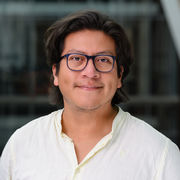
Dr. Tyler Meng is a Postdoctoral Research Associate working in the Radar Lab at Washington University in St. Louis under the guidance of Roger Michaelides. His research focuses on cryosphere dynamics and planetary surface processes, particularly utilizing geophysical methods to study glacial/periglacial terrains and climate change impacts. He holds a Ph.D. in Planetary Sciences from the University of Arizona, where his dissertation investigated surface processes of planetary rock glaciers using terrestrial analogs. His current work involves characterizing uncertainty in remote surface change measurements. Research publications predominantly explore cryospheric geophysics through multisensor monitoring, subsurface investigations using drone-based technologies, and comparative analyses of Earth/Mars glacial systems. Article trends show strong emphasis on geophysical instrumentation development, planetary analog studies, and debris-covered glacier dynamics.
Dr. Pablo Rodolfo Baldivieso Monasterios is a Lecturer in AI and Data Science at the School of Electrical and Electronic Engineering, University of Sheffield. He holds a Ph.D. in Robust Distributed Control (2018) from the same university, an MSc in Control Systems from the University of Sheffield, and degrees in Electronic Engineering (Escuela Militar de Ingeniería, Bolivia) and Pure Mathematics (Universidad Mayor de San Andrés, Bolivia). His research focuses on control systems, distributed control, model predictive control (MPC), and their applications in power systems and energy networks. He has contributed to advancements in DC microgrids, nonlinear control architectures, and coalitional MPC frameworks. Dr. Baldivieso Monasterios has held postdoctoral roles at the Control and Power Systems (CAPS) laboratory and the University Technology Centre (UTC) at the University of Sheffield. His work integrates AI with engineering challenges, emphasizing robustness and scalability in cyber-physical systems. His recent publications (2021–2024) explore neural network integration with MPC, decentralized control for meshed networks, and plug-and-play features in coalitional systems. Education: Ph.D. in Robust Distributed Control, University of Sheffield (2018) MSc in Control Systems, University of Sheffield Bachelor's Degree in Electronic Engineering, Escuela Militar de Ingeniería, Bolivia Bachelor's Degree in Pure Mathematics, Universidad Mayor de San Andrés, Bolivia Teaching: ACS234: Systems Engineering Mathematics II ACS6124: Multisensor and Decision Systems His research interests span distributed control systems, MPC optimization, and AI-driven solutions for energy infrastructure. He has collaborated on projects involving DC microgrids, peer-to-peer negotiation frameworks, and autonomous cyber-physical systems.
Dr. Yuanbo Nie is a Lecturer in Control and Systems Engineering at the School of Electrical and Electronic Engineering, University of Sheffield, and serves as the Employability Lead for the Global Engineering Challenge. He holds a Ph.D. in Aeronautics from Imperial College London (2021), with previous roles including a postdoctoral position at Rolls-Royce and research at the German Aerospace Center (DLR). His research focuses on numerical methods for dynamic optimization, optimization-based control, and aerospace systems control, particularly in trajectory optimization, energy management for aircraft, and upset recovery simulation. Education: MSc in Aerospace Engineering, Delft University of Technology MSc in Advanced Computational Methods, Imperial College London Ph.D. in Aeronautics, Imperial College London (Thesis: Numerical Optimal Control with Applications in Aerospace) Research Interests: Dr. Nie’s work emphasizes developing advanced numerical techniques for dynamic optimization, including integrated residual methods and optimization-based control strategies. He explores applications in aerospace systems, such as optimal flight trajectory design, hybrid-electric aircraft energy management, and next-generation flight simulators. His methods aim to bridge theoretical rigor and practical implementation for engineers. Professional Activities: He is a member of IEEE, the IFAC Optimal Control Technical Committee, and the EPSRC Automatic Control Engineering Network. His teaching includes courses on multisensor systems and aerospace system modeling. Labs & Groups: Involved in the Control Theory research group and collaborations with Rolls-Royce’s University Technology Centre.
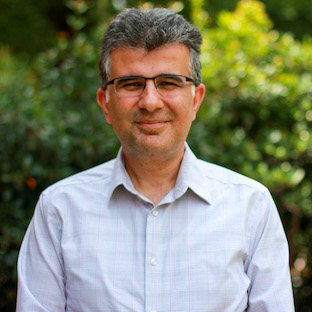
Dr. Abderrahim Halimi is an Associate Professor and Royal Academy of Engineering Research Fellow at Heriot-Watt University's School of Engineering and Physical Sciences. His research focuses on Bayesian statistical methods for signal and image processing, with applications in remote sensing, single-photon imaging, and medical imaging. His current projects develop algorithms for depth imaging, hyperspectral unmixing, and X-ray data quantification. He serves as Associate Editor for Digital Signal Processing and holds senior membership in IEEE, contributing to signal processing theory and multisensor systems.
Julia Dobrosotskaya is an Associate Professor at the Department of Mathematics, Applied Mathematics, and Statistics, College of Arts and Sciences, Case Western Reserve University. Her research focuses on harmonic analysis, partial differential equations (PDE), variational methods, sparse representations, and signal/image processing. She specializes in developing mathematical models for image analysis with applications in biomedical imaging, remote sensing, and computational vision. Her work integrates theoretical mathematics with practical challenges in data science, emphasizing multiscale analysis, wavelet-based techniques, and variational calculus. Notable research includes modeling retinal photo-bleaching kinetics, hyperspectral image classification, and PDE-free variational methods for image segmentation. Her publications span applied mathematics, signal processing, and biomedical imaging, addressing topics from optical flow velocimetry to data-adaptive multiscale representations. She collaborates across disciplines, bridging pure mathematics with engineering and medical applications.
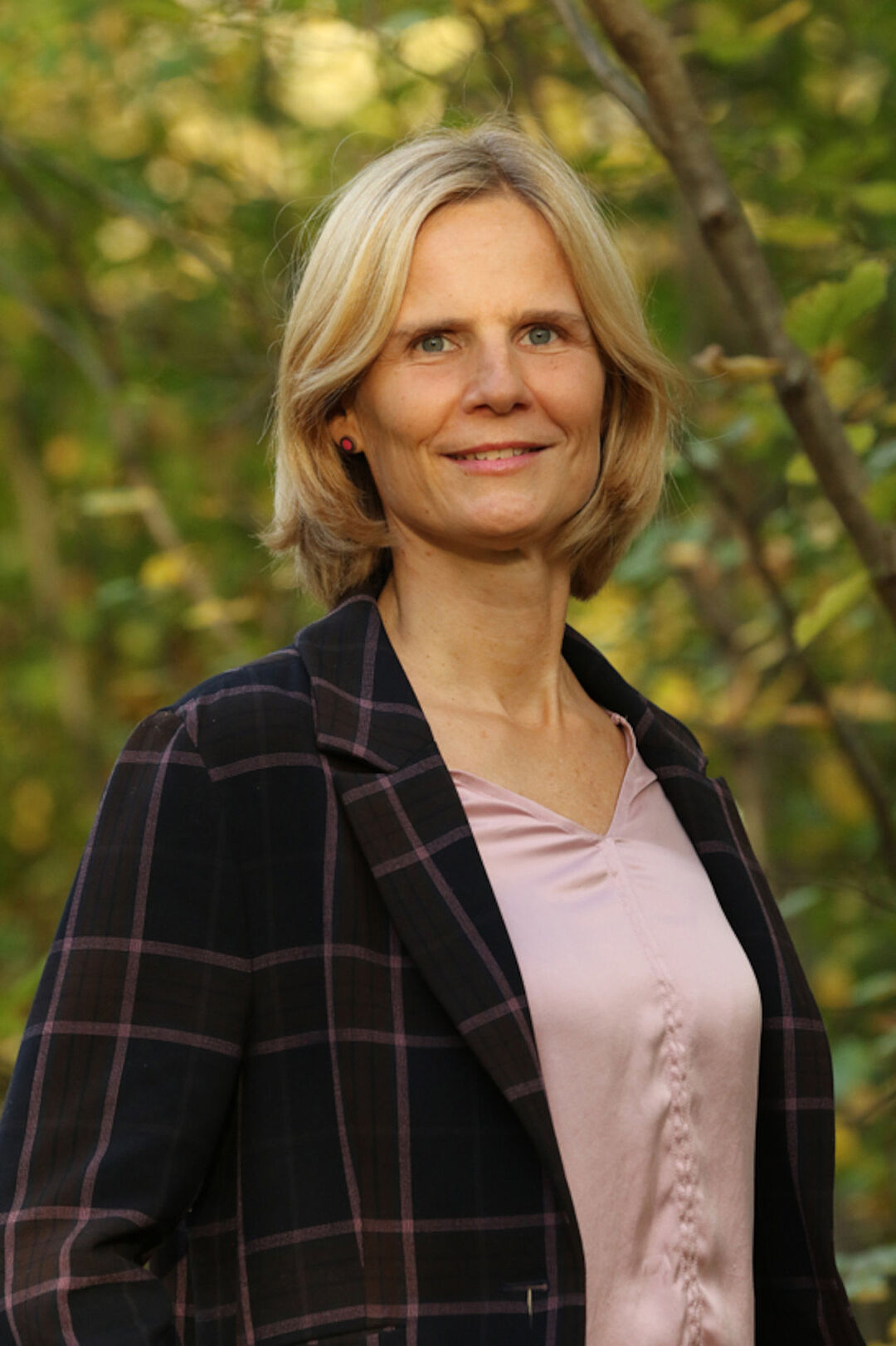
Prof. Birgit Kleinschmit is a Professor and Head of the Department of Geoinformation in Environmental Planning at Technische Universität Berlin. Her research focuses on remote sensing applications for analyzing human-environment systems, particularly in the context of climate and land-use changes. She leads projects on spatio-temporal modeling of landscapes, drought impacts, and wildfire dynamics using AI and satellite data. Member of the Scientific Advisory Board for Forest Policy (Bundesministerium) Co-Speaker of the DFG Urban Water Interfaces Research Group Recipient of the 2024 '100 Most Influential Minds in Berlin Science' award Her work integrates multisensor data (e.g., Sentinel-2, SAR) with machine learning to assess forest health, wildfire susceptibility, and urban evapotranspiration. Recent studies include drought responses in Central Europe, wildfire driver analysis, and sustainable land-use strategies. Publications emphasize environmental monitoring innovations, with over 20 peer-reviewed articles since 2022. Active in policy advising through Geo.X Research Network and federal committees.
Asgeir Johan Sørensen is a Professor of Marine Control Systems at NTNU's Department of Marine Technology, Faculty of Engineering. He also serves as an adjunct professor at UiT the Arctic University of Norway. His roles include Director of NTNU VISTA CAROS and former Director of NTNU AMOS (2013-2023). Sørensen holds an MSc (1988) and PhD (1993) in Marine Technology and Engineering Cybernetics from NTNU. He has extensive industry experience, co-founding companies like Marine Cybernetics AS, Eelume AS, and Zeabuz AS. His research focuses on marine robotics, autonomous systems, and hybrid power systems. He leads labs such as the Marine Cybernetics Laboratory (MC-Lab) and Applied Underwater Robotics Laboratory (AUR-Lab), emphasizing innovation and entrepreneurship. Over 280 publications and 153 students (41 PhDs) reflect his scholarly impact. Current projects include Oppdrag Mjøsa, aiming to map freshwater ecosystems via autonomous systems. Education: MSc (Marine Technology, NTNU, 1988), PhD (Engineering Cybernetics, NTNU, 1993) Research: Autonomous marine operations, underwater robotics, marine cybernetics, and zero-emission propulsion systems Labs: MC-Lab, AUR-Lab, NTNU AMOS His work bridges fundamental research with practical applications, driving advancements in marine autonomy and sustainability.
Dr. Sorin Popescu is a Professor in the Department of Ecology and Conservation Biology (ECCB) at Texas A&M University, affiliated with the College of Agriculture & Life Sciences. He serves as Principal Investigator on NASA’s ICESat-2 mission team, focusing on lidar remote sensing of vegetation structure and UAS applications. His research integrates spatial sciences and remote sensing to address environmental challenges like forest biomass estimation, carbon sequestration, and habitat conservation. Education : Bachelor’s in Forest Engineering from Transylvania University, Romania PhD in Forestry from Virginia Polytechnic Institute and State University (Virginia Tech) Postdoctoral study at Virginia Tech Research Interests : Remote sensing of vegetation structure, lidar and UAS technologies, forest biophysical parameters (e.g., biomass, tree height), land-use change, and environmental monitoring. He develops algorithms and software tools for multisensor data fusion and lidar analysis. Recent Research Trends : Articles emphasize ICESat-2 applications in canopy height mapping, biomass estimation, and climate change impacts. Studies include hurricane damage assessment, sea level rise effects on habitats, and agricultural precision technologies. Awards : 2018 Dean’s Outstanding Achievement Award 2017 ESSM Excellence Award 2014 ASPRS Outstanding Workshop Instructor 2008 NASA New Investigator Award Teaching & Advising : Teaches remote sensing courses (ESSM 444/655/656) and co-develops UAS curriculum. Advised 16 graduate students (7 doctoral) since 2003. Active in interdisciplinary research and graduate education. Labs & Teams : Leads the Lidar Applications for the Study of Ecosystems with Remote Sensing (LASERS) Lab, collaborating on global environmental projects with NASA and international partners.
Dr. Mark Holton is a Research Officer at Swansea University, affiliated with the School of Biosciences, Geography and Physics, and the Colleges of Engineering and Science. His work focuses on data logging systems, sensor circuit design, and biotelemetry technologies, particularly for animal monitoring and Human-Computer Interaction (HCI) devices. He has contributed to projects involving animal behavior analysis, environmental framing studies, and the development of algorithms for big data visualization and categorization. His research spans disciplines such as ecology, marine biology, and biomechanics, with applications in wildlife conservation, animal welfare, and technology integration. Key research areas include: animal movement tracking via accelerometers and magnetometry, biotelemetry for behavioral studies, and sensor-based solutions for non-invasive wildlife tagging. Holton has collaborated on projects analyzing the effects of tourism on whale sharks, reptile behavior, and the impact of environmental cues on animal navigation. His work often bridges engineering and ecology, emphasizing practical applications such as multisensor collar design and orientation sphere visualization tools. Notable publications highlight innovations in dead-reckoning algorithms, energy expenditure modeling in terrestrial animals, and the use of angular velocity metrics for metabolic analysis. While no formal awards are listed, his contributions to biotelemetry and animal behavior research have been widely cited in ecological and engineering journals. Holton’s research extends to HCI, including tactile feedback systems and sustainable technology prototyping with everyday materials.
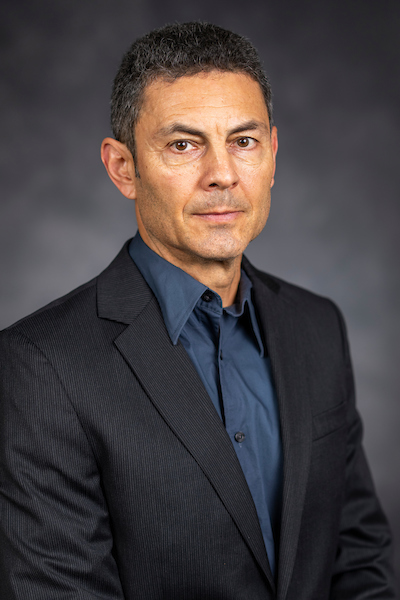
Professor Graham Heinson is a leading geophysicist at the University of Adelaide's School of Physics, Chemistry and Earth Sciences, within the Faculty of Sciences, Engineering and Technology. He holds a Professorial appointment and specializes in magnetotellurics (MT), with a focus on crustal structure imaging and mineral exploration. His research group operates the national AuScope MT facility and leads initiatives like the AusLAMP mapping program. Notable achievements include Eureka Awards recognition and an Australian Innovation Challenge win for mineral exploration innovations. Research interests span continental tectonics, geothermal systems, and hydrocarbon development. He pioneered the National Exploration Undercover School (NExUS), a national training program for minerals industry students. Key projects involve 4D monitoring of subsurface fluids and defining lithospheric boundaries using MT data. His work bridges geophysics with practical applications in resource discovery and energy systems. Awards: Eureka Awards finalist (Land and Water), Australian Innovation Challenge Winner (2013) Key Projects: AuScope MT Facility, AusLAMP, NExUS Summer School Expertise: Magnetotelluric imaging, crustal conductivity modeling, mineral system exploration His publications extensively cover MT applications in continental-scale studies, subsurface fluid dynamics, and geothermal systems. Current work emphasizes interdisciplinary approaches to unravel lithospheric architecture and fluid pathways critical for resource exploration.
Francisco Javier Acevedo Rodríguez is an Associate Professor at the University of Alcalá's Department of Signal and Communications Theory. Specializing in Robotics, Artificial Intelligence, and Sensor Systems , his research focuses on bioanalysis, multisensory integration, assistive technologies, and embedded AI systems . He leads the BAB_Group (Bioanalysis and Biosensors Group) and GRAM (Multisensorial Recognition and Analysis Group). He holds a PhD in Signal Processing from the University of Alcalá (2009), with a thesis on signal processing techniques for gas/liquid sensor systems. His work bridges theoretical signal processing with practical robotics applications, emphasizing real-world deployments in healthcare and navigation domains. Key technical contributions include semantic navigation systems, action recognition algorithms, and low-cost assistive robots for neurodevelopmental disorder patients. His research has addressed challenges in indoor localization, fall detection, and real-time video processing using ROS and AI-driven perception frameworks. He has published extensively in robotics, computer vision, and sensor systems since 2000. Notable work includes the SEMNAV navigation framework (2025) and a validated assistive robotics platform for daily living support (2021-2022).
Mehmet Kurum is an Associate Professor in the School of Electrical & Computer Engineering at the University of Georgia and holds the Paul B. Jacob Endowed Chair. He concurrently serves as an Adjunct Professor at Mississippi State University (MSU). His roles include academic leadership, research, and teaching in electrical engineering and remote sensing. Dr. Kurum earned his B.S. from Bogazici University (Turkey), M.S. and Ph.D. from George Washington University (USA), followed by postdoctoral work at NASA Goddard. He previously served as Assistant and Associate Professor at MSU from 2016 to 2023. His research focuses on microwave remote sensing , particularly using satellite and UAS-based systems for environmental sustainability in agriculture. Key projects involve NASA missions (SMAP, SNOOPI, NISAR, CYGNSS) and developing spectrum-efficient technologies to address modern challenges like soil moisture estimation under forest canopies and RFI mitigation. Dr. Kurum has secured grants from DOD, NASA, NSF, and USDA. His work emphasizes GNSS reflectometry , LiDAR integration , and deep learning for precision agriculture and environmental monitoring. Awards include the NSF CAREER Award for innovative spectrum recycling research. His recent efforts include the SNOOPI CubeSat mission for P-band remote sensing and the SWIFT-SAT project addressing radiometer/communication coexistence. He collaborates with interdisciplinary teams on forest canopy modeling, soil moisture retrieval algorithms, and UAS-based sensor development.
RICCARDO LO BIANCO is a Full Professor of Agricultural, Food and Forestry Sciences at the University of Palermo, affiliated with the Department of Agricultural and Environmental Sciences. His research focuses on precision agriculture, plant water stress responses, fruit tree physiology, and sustainable agronomic practices in Mediterranean environments. He teaches courses such as GENERAL ARBORICULTURE, PRECISION TREE CROPS MANAGEMENT, and TECHNICAL ENGLISH FOR AGRICULTURE, reflecting his expertise in both technical and educational domains. His work emphasizes innovative irrigation strategies, remote sensing applications, and cultivar-specific management practices. Key research themes include optimizing water use efficiency, understanding drought stress mechanisms in olive, mango, and citrus, and developing precision tools for real-time crop monitoring. He has pioneered studies on cultivar-sensitive approaches to water status sensing and high-density planting systems for olives. His publications span over 20 years, with recent emphasis on AI applications for developing nations and cross-cultivar stress responses. He actively contributes to international symposia on precision agriculture and has edited textbooks like "Technical English for Agriculture".
David Messinger is a Professor and the Xerox Chair at the Chester F. Carlson Center for Imaging Science within RIT’s College of Science. He served as Center Director (2014-2022) and led the Digital Imaging and Remote Sensing Lab (2007-2014). His dual appointment as Visiting Professor at Durham University’s Institute of Medieval and Early Modern Studies highlights his interdisciplinary expertise. With $8M in research funding, he advises over 35 graduate students and focuses on spectral imaging applications across national security, archaeology, and cultural heritage. Ph.D. in Physics, Rensselaer Polytechnic Institute B.S. in Physics, Clarkson University His research integrates hyperspectral/multispectral imaging , AI-driven pigment mapping , and virtual artifact restoration , with recent work on convolutional networks and spectral fusion techniques. Publications span journals like Heritage Science and IEEE Transactions , emphasizing technical rigor and cultural applications. Fellow of SPIE Over $8M in external research funding Key projects include the MISHA imaging system for cultural institutions, National Missile Defense Program collaboration, and SHARE 2012 data campaign leadership. His teaching portfolio includes courses on Imaging Systems Analysis and Cultural Heritage Imaging , reflecting his technical and humanities-oriented contributions.
Dr. Sarah Cang is a Senior Lecturer (Education) in Mathematics and Statistics at Brunel University London, within the College of Engineering, Design and Physical Sciences. She has extensive experience in both industry and academia, having worked for a leading UK software company, a UK Government Research Laboratory, Central Government Department as Senior Statistician, and at Exeter University and Bournemouth University prior to joining Brunel. Her educational background includes: PhD in Applied Mathematics (UK) MSc in Mathematics (Distinction) (UK) BSc (Hons) in Mathematics (First Class) (China) PG Cert in Research Degree Supervision (UK) PG Cert in Education Practice (UK) (Fellowship of the Higher Education Academy) PG Cert in Computer Software (UK) Dr. Cang's research focuses on Digital Healthcare & Wellbeing, particularly for the ageing society, promoting healthy living for senior citizens. She applies advanced techniques in Artificial Intelligence (data mining, machine learning, pattern recognition) and Big Data to address challenges in activity recognition, assistive technologies for dementia care, and tourism demand forecasting. Her work bridges mathematical statistics with real-world applications in health and tourism. Analysis of her recent publications reveals a strong emphasis on interdisciplinary research at the intersection of healthcare technology and data science. Key trends include the development of wearable sensor systems for elderly activity monitoring, the application of machine learning for feature selection and classification in multi-sensor environments, and innovative approaches to tourism demand forecasting using copula-GARCH models and ensemble methods. Her work consistently targets improving quality of life for the elderly through technological solutions. Her scientific achievements have been recognized with: World's Top 2% scientists by Stanford University (2020-present) Fellowship of the Higher Education Academy Dr. Cang has supervised numerous PhD students on topics ranging from activity recognition systems for assisted living to tourism demand forecasting and robotic control. She has secured substantial research funding as Principal Investigator, including multiple EU projects such as H2020-MSCA-ITN (€2.7M), CHARMED (€2.2M), Erasmus Mundus cLINK (€2.5M), FUSION (€3.05M), SMOOTH (€0.9M), and RABOT (€310.8K), all addressing challenges in digital health tourism and elderly well-being. She collaborates with researchers including Dr. Fang Wang, Mr. Tianhao Wang, Dr. Mayo Adetoro, Mr. Amir Ashrafi, and Dr. Zoi Krokida on projects related to digital healthcare, ageing society, and forecasting, forming a dynamic research team focused on innovative solutions for societal challenges.