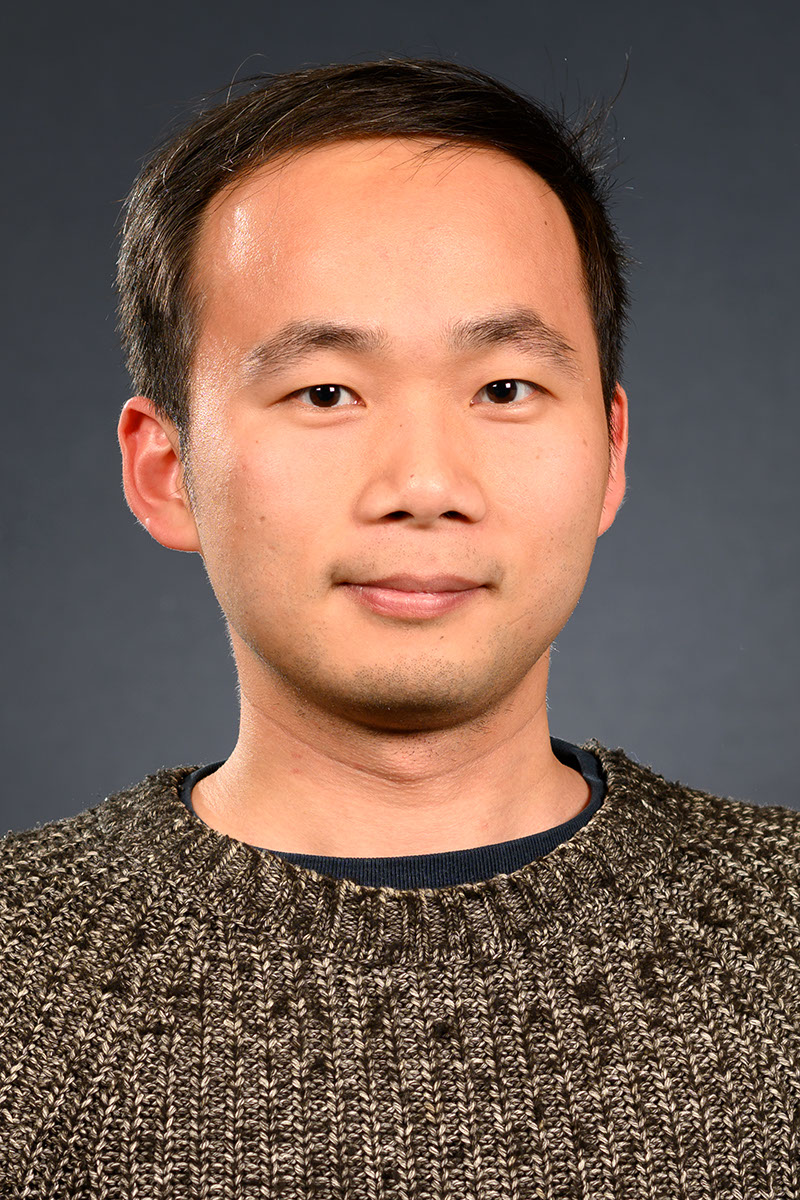
Dr. Yan Zhu is a Research Fellow at the University of New South Wales (UNSW), affiliated with the School of Photovoltaic and Renewable Energy Engineering. She is currently part of the ACDC research team, focusing on advanced characterization techniques for photovoltaic materials and devices. Dr. Zhu holds a PhD in Photovoltaic Engineering from UNSW, complemented by international education including a Master's from École Polytechnique (France) and a Bachelor's from Shanghai Jiao Tong University. Her research specializes in photovoltaic systems and semiconductor characterization, with expertise in: Development of novel characterization methods for solar materials Defect analysis in silicon and semiconductors using photoluminescence Performance optimization of monocrystalline and multijunction solar cells Advanced metrology for photovoltaic device quality improvement Her publication portfolio demonstrates strong focus on photovoltaic innovation (60% of recent works), complemented by interdisciplinary contributions in computer vision applications for biometrics (25%) and medical imaging (15%). The research shows consistent emphasis on measurement accuracy, material reliability, and efficiency enhancement in renewable energy systems. Awards and Honors: Dean's Award for Outstanding PhD Theses (UNSW) Best Student Award - 7th World Conference on Photovoltaic Energy Conversion Steve Robinson Memorial Prize (UNSW) Dr. Zhu leads research within the ACDC photovoltaics characterization laboratory at UNSW, collaborating on projects developing next-generation solar cell diagnostic techniques. Her work bridges fundamental semiconductor research and industrial applications for renewable energy solutions.
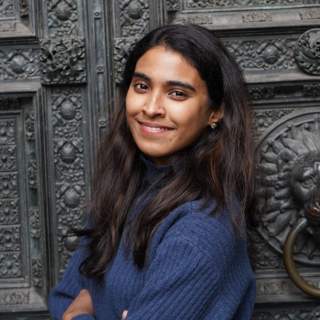
Tahiya Chowdhury is an Assistant Professor of Computer Science at Colby College. Her research focuses on intersections of machine learning, computer vision, and human-centric AI applications. She teaches courses including CS166 (Computational Thinking: Computer Vision), CS232 (Computer Organization), and CS343 (Neural Networks). Her work emphasizes ethical AI, multimodal interaction analysis, and sustainable technology solutions. Research interests span feature reliability in open-source tools, autism interaction studies using non-verbal cues, and urban policy compliance monitoring via vision-language sensing. Her projects include semantic segmentation frameworks for environmental monitoring and frameworks for marine debris cleanup without human labels. She explores user-centric approaches in street view image quality ranking and child-centered AI ethics. Her publications from 2021-2025 reflect a trend toward applied AI in healthcare (e.g., Medbuds medication tracking), environmental sustainability (atoll imagery analysis), and pandemic-era communication studies. Despite prolific output, no scientific awards are listed in the provided materials. Advising and grant information are not documented here. Her work integrates hardware-software systems like the Maestro ambient sensing platform, emphasizing practical deployments in smart environments while addressing privacy challenges. Key themes include reducing labeling efforts in IoT systems and designing socially responsible AI interfaces for diverse user groups.
Arlene John is an Assistant Professor at the Biomedical Signals and Systems (BSS) group within the Faculty of Electrical Engineering, Mathematics and Computer Science at the University of Twente. She holds a Ph.D. in Electrical and Electronic Engineering from University College Dublin (2022), with prior academic experience including a bachelor’s degree in Electrical and Electronics Engineering from the National Institute of Technology, Calicut (2017) and research internships at the Indian Institute of Science (2016) and Beijing University of Technology (2019). Bachelor: Electrical and Electronics Engineering, National Institute of Technology, Calicut (2017) Ph.D.: School of Electrical and Electronic Engineering, University College Dublin (2022) Her research focuses on biomedical signal processing, machine learning, explainable AI, and multisensor data fusion for wearable health monitoring devices. She has industry experience as a Project Manager at Bosch India Ltd. and a Machine Learning Mathematics Engineer at ASML Netherlands B.V., bridging technical sales, engineering strategy, and computational modeling. Recent publications emphasize language testing frameworks, CEFR alignment, and psychometric modeling for vocabulary and grammar assessment. These works span interdisciplinary themes in education, linguistics, and standardized evaluation systems.
Jacob Nelson is a Project Group Leader at the Max Planck Institute for Biogeochemistry in the Department of Biogeochemical Integration. He leads the Cross-Scale Terrestrial Ecophysiology (XTE) project group within the Global Diagnostic Modeling team, focusing on plant water use and interactions between carbon and water cycles across diverse ecosystems. Research Focus: Data-driven approaches using machine learning, guided by physiological understanding, to estimate transpiration and improve global models of terrestrial fluxes. Collaboration: Active member of the FLUXCOM team, advancing next-generation global carbon, energy, and water flux estimates. His work bridges ecophysiological principles with computational modeling, emphasizing the impacts of climate extremes (e.g., droughts) on ecosystem function. Recent publications highlight methodological innovations in eddy covariance data analysis, remote sensing integration, and multiscale carbon-water flux partitioning. Current research trends include: Development of post-hoc corrections for flux tower measurements Exploration of deep learning for evapotranspiration upscaling Integration of satellite data with ground-based observations Studies on nitrogen/phosphorus availability effects on water use efficiency Analysis of drought legacy impacts on carbon exchange Key methodologies involve the TEA algorithm (Transpiration Estimation Algorithm), FLUXCOM-X extensions, and multisensor data fusion. His team investigates ecosystems ranging from Mediterranean savannas to European forests, addressing energy balance closure gaps and enhancing climate policy frameworks.
Professor Matthias Braun is a distinguished academic in the field of physical geography, specializing in remote sensing and GIS applications for glaciology and polar research. He holds a professorship at the Institute of Geography at Friedrich-Alexander University Erlangen-Nuremberg (FAU), where he leads the Chair of Geography (Remote Sensing and GIS) and serves as Chairman of the Examination Board for B.Sc./M.Sc. Physical Geography and BA/MA Cultural Geography since 2022. His research focuses on monitoring glacier dynamics, ice sheet changes, and climate impacts in polar and mountainous regions using advanced remote sensing techniques. Professor Braun has held several significant leadership positions including Chairman of the International Doctoral Program 'Measuring and Modelling Mountain Glaciers in a Changing Climate' in the Bavarian Elite Network funded by the Bavarian Ministry of Science & Art since 2022, and Coordinator of the DFG SPP Antarctic Research since 2017. His academic journey includes an Associate Professor position at the University of Alaska Fairbanks (2010-2011) and extensive field experience leading multiple Arctic and Antarctic expeditions since 1994/95, with research stays in Alaska, South America, West & East Africa, Himalaya & Karakorum. His research interests span glaciology, remote sensing, geographic information systems, climate change impacts, land use change, polar regions, and high mountain environments. Professor Braun's work integrates microwave and optical remote sensing data from satellite and airborne platforms to derive geobiophysical parameters and their spatiotemporal variations. He employs advanced digital image processing, pattern recognition, SAR interferometry, and polarimetry techniques in his research. His laboratory maintains active participation in major research initiatives including the TanDEM-X and TanDEM-L Science Teams since 2010. Professor Braun's extensive publication record demonstrates a clear progression from foundational work on glacier monitoring to sophisticated applications of machine learning and deep learning for glacier feature extraction. His recent work focuses on calving front detection using SAR imagery, glacier velocity mapping, and integration of multi-sensor data for comprehensive glaciological analysis. Key research themes include glacier mass balance, ice sheet dynamics, supraglacial hydrology, and climate change impacts on cryospheric systems across diverse regions including Antarctica, Patagonia, the Himalayas, and the European Alps. Among his notable recognitions is the 2009 Science Award for Physical Geography from the Prof. Dr. Frithjof Voss Foundation for Geography and his Habilitation at the Mathematical-Natural Science Faculty of the University of Bonn in 2009. He serves as an Associate Editor for Frontiers in Earth Sciences – Cryospheric Sciences and reviews for numerous peer-reviewed journals. Professor Braun has mentored numerous doctoral students to completion, with recent graduates including Dr. Christian Sommer (2022), Dr. David Farias Barahona (2021), Dr. Stefan Lippl-Seifert (2020), and Dr. Peter Friedl (2019). Several students are currently completing their dissertations under his supervision. His research is supported by various funding mechanisms including the Bavarian Elite Network, DFG research programs, and international collaborations. He maintains strong connections with national and international research institutions including membership in the International Glaciological Society (IGS), German Society for Photogrammetry, Remote Sensing and Geoinformation (DGPF), German Society for Polar Research (DGP), and German Society for Geography (DGfG).
Dr. Andjin Siegenthaler is a researcher at the University of Twente's Faculty of Geo-Information Science and Earth Observation (ITC), specializing in environmental DNA (eDNA) applications for biodiversity monitoring. Their work integrates remote sensing technologies with molecular tools to advance ecosystem analysis across terrestrial and marine environments. Affiliation: Department of Natural Resources, University of Twente Key methodologies: eDNA analysis, remote sensing, big data analytics Research focuses on Earth observation techniques for environmental diversity profiling, particularly through next-generation molecular approaches. Current work explores satellite-based biodiversity prediction models and spatial variation analysis in forest ecosystems. Their publication record demonstrates expertise in environmental DNA, soil microbiology, and hyperspectral remote sensing technologies. Collaborative projects involve international partners across Europe, with emphasis on temperate forest biodiversity and soil health assessment. Active contributions to UN Sustainable Development Goals include environmental monitoring frameworks and ecological data integration. Professional activities span peer-review for Ecological Indicators and oral presentations at scientific conferences.
Prof. Dr. Thorsten Uphues is a Professor at Coburg University of Applied Sciences, Faculty of Applied Natural Sciences and Health. He specializes in applied sensor technology and acoustics research, with current leadership in the KonDispUS project (2024-2026) developing ultrasonic multisensor systems for concentration analysis in liquid dispersions. His research focuses on: Acoustic measurement principles Ultrasonic sensor design Multisensor data fusion Concentration quantification in complex liquids Non-invasive industrial analytics Contact: Thorsten.Uphues@hs-coburg.de | ORCID iD: 0000-0003-3423-4510