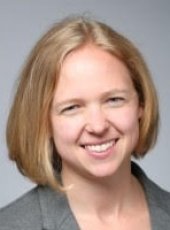
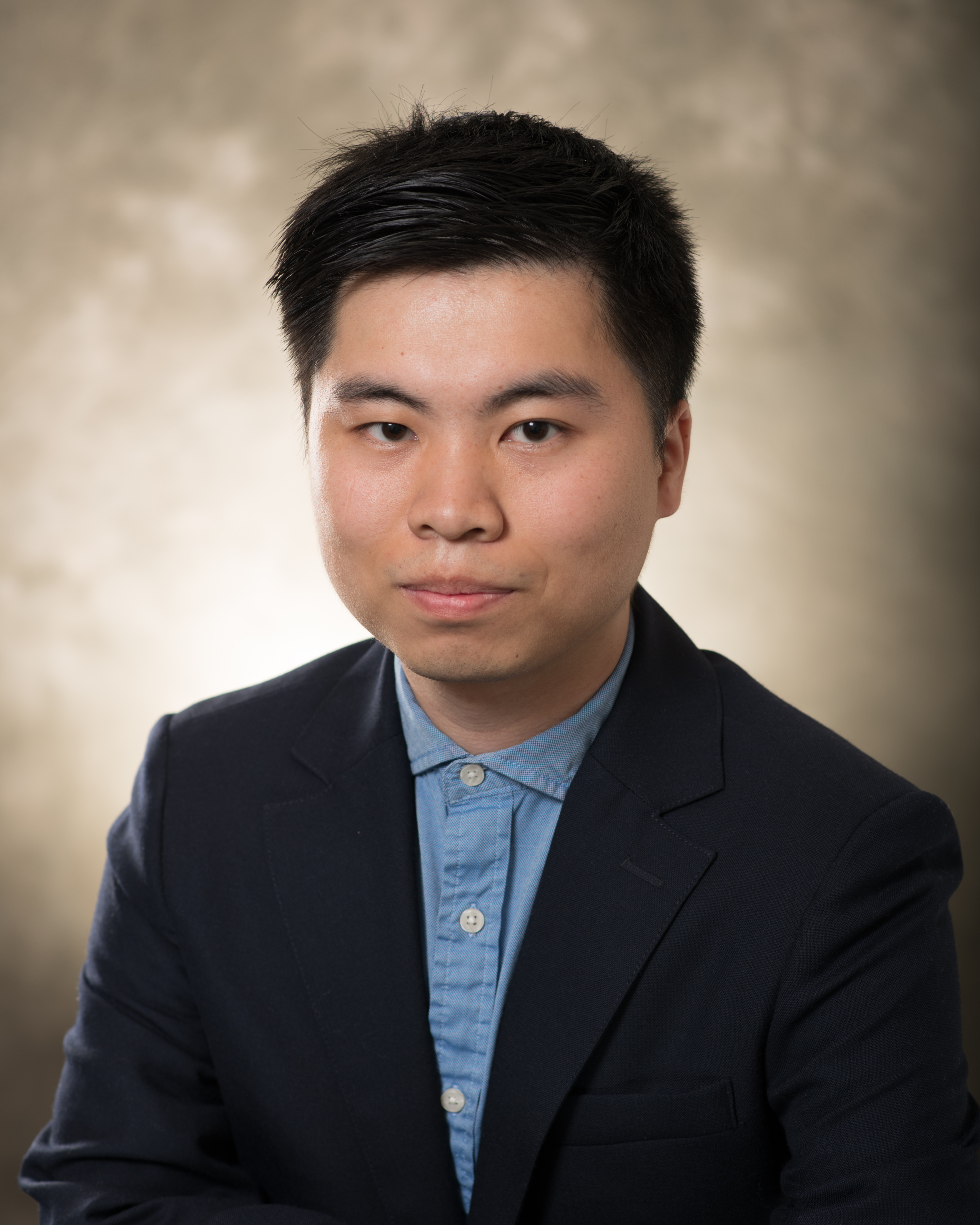
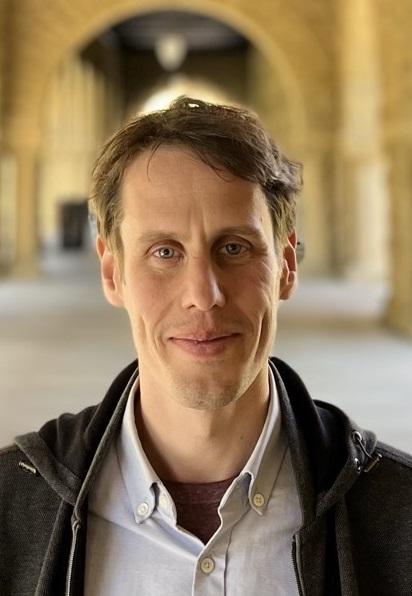
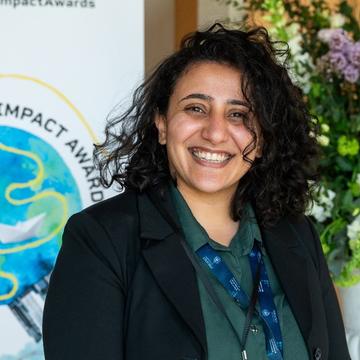
Ana Dyreson is an Assistant Professor in Mechanical and Aerospace Engineering at Michigan Technological University and Associate Research Director at the Center for Innovation in Sustainability & Resilience (CISR). She leads the Great Lakes Energy Group, focusing on climate change impacts on electric power systems , energy transitions in cold climates , and thermal power plant modeling . Her work bridges solar photovoltaic design , electricity grid operational modeling , and the energy-water nexus . Education : PhD in Mechanical Engineering, University of Wisconsin–Madison (2018) MS in Mechanical Engineering, Northern Arizona University (2014) BS in Engineering Mechanics, University of Wisconsin–Madison (2011) Research emphasizes climate-resilient energy systems , particularly solar energy in cold climates and grid-scale modeling . Her 2025-2022 publications investigate snow mitigation on PV panels , heat pump adoption , floating solar-hydropower hybrids , and climate stressor impacts on thermoelectric plants . She develops inclusive teaching methods and advises on renewable energy deployment through initiatives like the Tech Forward Initiative on Sustainability and Resilience . Her team collaborates on multisector dynamics and energy-water-climate research in the Great Lakes region.
Rachel Hall-Clifford, PhD, MPH, MSc, is an Associate Professor in the Department of Sociology and the Center for the Study of Human Health at Emory University. Her work focuses on global health equity, particularly in marginalized populations and post-genocide contexts. She has conducted fieldwork in Guatemala for 15 years, addressing healthcare access and health systems strengthening. Dr. Hall-Clifford directs the NAPA-OT Field School in Guatemala and co-founded safe+natal, an initiative advancing equitable health solutions. She serves as President of the National Association for the Practice of Anthropology, advocating for applied anthropological practices. Her education includes a PhD in Anthropology from Boston University (2009), an MSc in Medical Anthropology from the University of Oxford (2002), and a BA in Anthropology from the University of the South (2001). Her research integrates medical anthropology with public health, emphasizing ethical fieldwork methodologies and co-design approaches in global health. Key research areas include childhood diarrheal disease management, maternal health in resource-limited settings, and AI-driven solutions for healthcare challenges. Her book Underbelly critiques power dynamics in global health through the lens of Guatemalan healthcare systems. Recent publications explore AI applications, mental health interventions for infertile couples, and equity in US healthcare systems. Dr. Hall-Clifford collaborates with NGOs and international partners to develop sustainable health technologies, such as mobile health (mHealth) systems for antenatal care. She emphasizes community-led approaches and ethical fieldwork practices, addressing issues like gender-based violence and human rights in global health contexts. Her work bridges academia and practice, with a focus on training future global health professionals through field schools and applied research initiatives. Current projects include leveraging international partnerships to enhance early childhood development and advancing equity in hospital systems through workforce training.
Dr. Zhonghua Zheng is an Assistant Professor (tenured) in Data Science & Environmental Analytics at the Department of Earth and Environmental Sciences, The University of Manchester. He leads the Manchester Environmental Data Analytics Lab (MEDAL) and serves on editorial boards of journals like Atmospheric Chemistry and Physics . His research focuses on data-driven approaches to urban climate modeling, aerosol science, and environmental systems analysis. Education : PhD in Environmental Engineering (UIUC, 2020) MCS in Computer Science (UIUC, 2022) MS in Agricultural & Biological Engineering (UIUC, 2016) BEng in Biosystems Engineering (Zhejiang University, 2015) Research Interests : Dr. Zheng integrates data science (AI, ML) with Earth system modeling to address challenges in urban climate adaptation, air quality, and agricultural-environmental nexus. Key themes include: Urban heat stress projections using machine learning Aerosol mixing state characterization via foundation models Climate adaptation strategies for net-zero cities Agricultural emissions modeling in Southeast Asia Recent Article Trends : His 2025 publications emphasize machine learning applications in urban climate and aerosol science, including pollen fragmentation dynamics and black carbon mixing effects. Earlier work (2024) focuses on model improvements for urban surface albedo and gas-phase chemistry. Awards : 2025: Aerosol Science Career Development Grant 2024: Best Student Poster Award (AOGS) 2023: City Brain Open Research Youth Scholar Advising & Grants : Supervises 10+ PhD students (e.g., Yuan Sun, Fei Jiang) and has secured grants including a Royal Society AI + Air Quality award. Leads interdisciplinary projects with NERC, The Alan Turing Institute, and Yunqi Academy. Labs & Teams : Runs MEDAL lab collaborating with global institutions (MIT, NCAR, Columbia). Active in initiatives like UK Atmospheric Chemistry Conference and Open Data Computing Workshop.
Eric Wade is an Assistant Professor in Coastal Studies at East Carolina University's Integrated Coastal Programs. His work focuses on interdisciplinary coastal and marine resource management, with a strong emphasis on small-scale fisheries, climate justice, and marine renewable energy. Dr. Wade holds a B.S. in Marine Biology from the University of North Carolina Wilmington and advanced degrees (M.S./Ph.D.) in Fisheries Science from Oregon State University. His research interests include fisheries governance, food security, socio-ecological systems, and the social dimensions of marine energy development. He has led or co-led over a dozen research initiatives funded by NSF, Sandia National Laboratories, and state agencies, exploring topics like marine spatial planning, cognitive biases in fishery risk perceptions, and community impacts of emerging ocean technologies. Key grants include the NSF-funded EAGER:PBI project (2024-2026) and collaborative ocean energy research with Sandia National Labs. His publications highlight trade-offs in fishing strategies, pandemic impacts on island food systems, and innovative methods for assessing stakeholder perspectives in resource management. Education : B.S. Marine Biology, UNC Wilmington M.S. Fisheries Science, Oregon State University Ph.D. Fisheries Science, Oregon State University Grants & Awards : NSF EAGER:PBI (2024-2026) Sandia National Labs WEC Design Projects Vesta Climate Justice Grant (2023-2025) Wade's work bridges natural and social sciences, addressing challenges at the intersection of human communities and marine ecosystems. He collaborates with the Atlantic Marine Energy Center and actively engages in policy-relevant research to support equitable coastal development strategies.
Professor Jennifer Smith-Merry is an ARC Laureate Fellow and Professor of Health and Social Policy at the University of Sydney, within the Sydney School of Health Sciences. She has held roles such as Director of the Centre for Disability Research and Policy (CDRP) and leads the Disability Inclusive Policy Development stream. Her work integrates research, policy, and practice to address systemic challenges in mental health and disability care, with a focus on equity and lived experience insights. Education: PhD in Social Policy (University of Queensland) BA (Honours) Graduate Certificate in Applied Law Graduate Certificate in Educational Studies (Higher Education) Research Interests: Jen’s research emphasizes disability-inclusive policy development, mental health service design, and the ethical inclusion of people with disability in research. She explores the intersection of policy implementation, lived experience expertise, and systemic reforms, particularly in the context of the NDIS and global health initiatives. Her work critiques ableism in academia and healthcare while advocating for participatory, equity-driven frameworks. Grants and Collaboration: Jen has secured over 50 grants, including ARC and NHMRC funding, and leads projects evaluating policy and service delivery for disability and mental health. She collaborates with governments and NGOs, such as the National Disability Insurance Agency, and engages with service users to inform policy. Recent projects include a global workforce training framework for integrated care and exploring mechanisms of religious trauma in queer communities. Awards: Australian Research Council (ARC) Industry Laureate Fellow (2023-2028) Labs and Affiliations: She is affiliated with multiple interdisciplinary centers at the University of Sydney, including the Sydney Centre for Healthy Societies, Sydney Policy Lab, Sydney Southeast Asia Centre, Brain and Mind Centre, and Charles Perkins Centre. Her international collaborations span Malaysia, Singapore, and the UK, focusing on disability research capacity and mental health policy.
Cristiana Dias de Almeida is an Assistant Professor and Director of the Bachelor's degree in Social Work at Lusofona University's Faculty of Economics, Social and Business Sciences. She holds a PhD in Social Work (2022) from the Portuguese Catholic University and University of Coimbra, with a thesis analyzing network governance in social care policies. Her academic career includes roles at Miguel Torga Higher Institute, Catholic University of Braga, and as a Guest Lecturer at the University of Coimbra. Education includes a PhD (2022), Master's in Sociology (2009), and Bachelor's in Sociology (2002). Her research focuses on social policies, network governance, homelessness intervention, domestic violence, and aging in prison populations. She is affiliated with Intrepid Lab - CETRAD, exploring transdisciplinary development studies. Her articles critically examine Portugal’s welfare state challenges, policy-practice gaps, and innovative social interventions. Key contributions include studies on poverty, homelessness, and governance effectiveness. Awards include a FCT-funded Doctoral Fellowship (2017-2022). Advising includes directing social work programs and supervising research on social care systems. Grants and fellowships highlight her sustained academic engagement. Her work bridges policy analysis with grassroots implementation, emphasizing equity and institutional collaboration. Labs/Teams: Active in Intrepid Lab - CETRAD, focusing on transdisciplinary research for societal development challenges.
Hilary Seligman, MD, MAS is a Professor at the University of California San Francisco (UCSF) with joint appointments in the Departments of Medicine and Epidemiology and Biostatistics. She leads critical initiatives such as the Food Policy, Health, and Hunger Research Program at UCSF’s Center for Vulnerable Populations and directs the CDC’s Nutrition and Obesity Policy Research and Evaluation Network (NOPREN). Dr. Seligman also co-leads the IMPACT Program, fostering evidence-informed policy collaboration across sectors. She founded the EatSF/Vouchers for Veggies program, providing healthy food vouchers to low-income residents, and directs the National Clinician Scholars Program (NCSP) at UCSF’s School of Medicine, training future health equity leaders. Her education includes a BA in Biology from Williams College, MD from Baylor College of Medicine, and a Master of Advanced Studies in Clinical Research from UCSF. She holds a Fellowship in the American College of Physicians. Research interests focus on food insecurity’s health impacts, federal nutrition programs (SNAP, WIC), and policy advocacy. Her work bridges clinical care and public health, addressing diabetes management, nutrition security, and healthcare system reforms. Dr. Seligman’s articles explore produce prescription programs, food insecurity’s effects on chronic disease, and policy solutions to health disparities. Key awards include the American College of Physicians Fellowship. She advises organizations like the San Francisco-Marin Food Bank and has shaped policy through roles on the Food Security Task Force. Her grants and collaborations involve multisector partnerships to advance ‘Food is Medicine’ initiatives and improve healthcare access. Ongoing projects include evaluating EHR data for program impact and expanding nutrition security interventions.
Prof. Silke Gillessen Sommer is a Full Professor at the Università della Svizzera italiana (USI) and Head of the Department of Medical Oncology. She holds an Honorary Professorship at the University of Manchester and directs the Institute of Oncology of Southern Switzerland (IOSI). Her expertise focuses on precision oncology and genitourinary cancers, particularly prostate cancer. She has led major clinical trials and co-founded the Advanced Prostate Cancer Consensus Conference (APCCC). Education: Trained at Universities of Basel, St. Gallen, and the Dana-Farber Cancer Institute. Leadership roles include past presidency of the SAKK GU group and chairmanship of the EORTC Genitourinary Cancers Group. She contributes to ESMO and EAU guideline panels. Research emphasizes metastatic prostate cancer treatment optimization, biomarker-driven trials, and microbiota’s role in cancer resistance. Awards include the 2011 SAKK/Pfizer Award for clinical research excellence.
Jo Ivey Elizabeth Boufford, M.D., is a Clinical Professor of Global Health at the New York University School of Global Public Health and Clinical Professor of Pediatrics at the NYU School of Medicine. She holds leadership roles as President Emeritus of The New York Academy of Medicine and Immediate Past President of the International Society for Urban Health. Previously, she served as Dean of the Robert F. Wagner Graduate School of Public Service (1997–2002), Principal Deputy Assistant Secretary for Health in the U.S. Department of Health and Human Services (1993–1997), and President of the New York City Health and Hospitals Corporation (1985–1989). Education: BA in Psychology (Magna Cum Laude), University of Michigan MD (with distinction), University of Michigan Medical School Research Focus: Boufford’s work centers on urban health systems, global health equity, aging populations, and health policy. She has pioneered initiatives like the Better Hearts Better Cities program and contributed to the Lancet Commission on Pollution and Health. Key Awards: Member, US National Academy of Medicine (1992) Member, National Academy of Public Administration (2015) Multiple honorary doctorates from institutions including Pace University and SUNY Advisory Roles: Currently serves on the Boards of the United Hospital Fund, National Hispanic Health Foundation, and Health Effects Institute. She chairs the Public Health Committee of the NYS Public Health and Health Planning Council. Labs/Teams: Collaborates with global health networks like the International Society for Urban Health and the World Health Organization (WHO), where she represented the U.S. from 1994–1997.
Grant Allan is a Professor in the Department of Economics at the University of Strathclyde, where he has been since 2002, initially joining as a Research Assistant at the Fraser of Allander Institute. He currently serves as Director of the MSc in Applied Economics and MSc in Economics and Finance, and was Director of Postgraduate Teaching in the Department from 2016 to 2024. He teaches postgraduate courses in economic modelling and energy economics and leads modules in the CDT in Wind and Marine Energy Systems and the Industrial Doctoral Centre in Offshore Renewable Energy (IDCORE). PhD, University of Strathclyde (2016) MSc, University of Edinburgh BA, University of Strathclyde Grant's research centers on energy-economy-environmental modelling , applied regional economic analysis , and renewable energy policies . He employs multisectoral models such as input-output and computable general equilibrium (CGE) frameworks to analyze the economic and environmental impacts of energy and environmental policies, particularly at regional and city levels. His work frequently addresses tourism economics, water use, and climate change mitigation strategies. The recent publications reflect a strong trend in regional and city-level environmental-economic modelling , with a focus on decarbonization, renewable energy (especially offshore wind), sustainable food systems, water resource management, and the blue economy. His methodological strengths include satellite accounting, hypothetical extraction analysis, and behavioural macroeconomic modelling. He has received recognition for his teaching excellence: Effective and sustained contribution to the student learning experience award (30 May 2024) Grant actively supervises PhD and MSc students and leads or contributes to major research projects funded by ESRC, UK Energy Research Centre, Scottish Government, and other public and third-sector bodies. His research has direct policy impact, particularly in Scotland and Europe, enhancing analytical capacity for regional policy-making. He is involved in the Strathclyde Global Environmental Measurement and Monitoring (GEMM) centre and collaborates with institutions like ICLEI Europe on air quality monitoring (GEMINOA project). He is a member of research teams including the Fraser of Allander Institute and participates in professional activities such as workshops, conferences, and public engagement events.
Dr. Emily Harville is a Professor and Program Director of the PhD in Epidemiology at Tulane University's School of Public Health and Tropical Medicine. Her research focuses on perinatal epidemiology, health disparities, and the life course perspective, particularly how reproductive and pregnancy-related factors influence long-term health outcomes. She serves as co-director of the Southern Center for Maternal Health Equity (SCMHE) and leads the PrePARED Consortium for preconception health studies. Her work integrates environmental health, disaster response, and maternal-child health, with a strong emphasis on addressing racial disparities. Education: PhD, Epidemiology, University of North Carolina-Chapel Hill MSPH, Epidemiology, University of North Carolina-Chapel Hill BA, Biology, Oberlin College Dr. Harville has contributed extensively to understanding the impact of disasters (e.g., Hurricane Katrina, Deepwater Horizon oil spill) on reproductive health and has published over 150 articles. Her recent work examines links between reproductive history and cognitive aging, highlighting the emerging field of neuro-obstetrics . She teaches advanced epidemiological methods and courses on health disparities. Her research includes collaborations with international teams, such as the Bogalusa Heart Study and Young Finns Study , and she employs metabolomics, epigenetics, and population-level data to uncover mechanisms behind health inequities. Dr. Harville also emphasizes community-based interventions and policy development to improve maternal health in the Gulf South.
Dr. Christian Klassert is a researcher at the Department of Economics, Helmholtz Centre for Environmental Research (UFZ) in Leipzig, Germany, where he serves as co-speaker of the Working Group Social-Science Water Research. His work spans international water security projects focusing on Jordan, India, and Germany. Current Position: Postdoctoral Researcher, Department of Economics, UFZ (since 09/2021) Previous Positions: Researcher at UFZ (2017-2021), Researcher at Leipzig University (2014-2017), Research Assistant at UFZ Bioenergy Department (2011-2014), Visiting Postdoctoral Scholar at Stanford University (2022-2023) Dr. Klassert holds a PhD in Economics from Leipzig University (2021), where he received summa cum laude honors for his thesis on decentralized private water service provision in intermittent supply systems in Jordan. He also earned a European Master in Law and Economics and LL.M. from the Universities of Hamburg, Ghent, and Haifa, and a German academic law degree from Mainz University where he ranked second in his state-wide examination. His research combines coupled human-natural systems modeling, agent-based modeling, and econometrics to assess water security impacts of unequal urban water access and agricultural droughts. Klassert contributes to major international projects including the Jordan Water Project, FUSE Project in India's Upper Bhima Basin, and agricultural drought adaptation research through UFZ Graduate Schools AGRI-TRANSFORM and Thirsty Cities. His interdisciplinary approach integrates economic, social, and environmental dimensions of water security challenges. Analysis of his publication record reveals a strong focus on urban water security, particularly examining informal water markets, household water demand under intermittent supply, and the water-energy nexus. His work increasingly incorporates climate change impacts on water resources and agricultural systems, with a growing emphasis on equity dimensions of water access and infrastructure planning. The geographic scope of his research spans the Middle East (particularly Jordan), South Asia (India), and Europe (Germany). Dr. Klassert received the UFZ Research Award in 2022 for his interdisciplinary work assessing future water crisis risks in Jordan. He serves as a reviewer for prestigious journals including Nature Water, One Earth, and Water Resources and Economics, and co-chairs the Working Group Human Systems Modeling within the MultiSector Dynamics community of practice. His research is supported through multiple international projects including the UFZ Graduate Schools AGRI-TRANSFORM and Thirsty Cities, Future Earth project NexusFootprints, Belmont Forum projects FUSE and Jordan Water Project, and BMUB project JordanCap. These projects involve extensive international collaboration with research institutions in Germany, the United States, Jordan, and India. Klassert's work is conducted within the Department of Economics at UFZ, which focuses on interdisciplinary environmental economics research. His projects often involve close collaboration with stakeholders through workshops and participatory approaches, particularly in the Food-Water-Energy Nexus research in Amman, Jordan and Pune, India.
Professor Garrett Wallace Brown is a Chair in Political Theory & Global Health Policy at the University of Leeds' School of Politics and International Studies, part of the Faculty of Social Sciences. He holds dual appointments as Co-Lead for the University of Leeds Health Theme and Chief Editor of the Oxford Dictionary of Politics and International Relations. His research bridges political theory, global health policy, and international relations, with a focus on global justice, cosmopolitanism, and institutional design. Education: BA and Jurisprudence from University of California, Berkeley; MSc and PhD in Political Theory from LSE. Awards include the McKenzie Prize and Barker Prize for his dissertation on Kant's cosmopolitan theory. Research Interests: Cosmopolitanism, global health governance, deliberative democracy, humanitarian intervention (R2P), and global health financing. Current projects include a Medical Research Council grant on health financing in African systems and collaborations with ministries in Zimbabwe, Mozambique, and regional bodies like EQUINET Africa. Key Contributions: Authored 'Grounding Cosmopolitanism,' edited the 'Handbook of Global Health Policy,' and published widely on global health diplomacy, BRICS partnerships, and Kantian legal theory. Active in policy engagement with African governments and global health institutions. Professional Memberships: International Studies Association, European Centre for the Responsibility to Protect Teaching: Leads Global Justice modules and supervises UG/MA/PGR students Grants: Current MRC-funded project on health systems strengthening
Peter Lloyd-Sherlock is Professor and Research Associate at the School of Global Development, University of East Anglia. He is a member of the research groups on Health and Disease and Life Course, Migration and Wellbeing. His work focuses on the intersection of social policy, health, and ageing in developing countries, with extensive fieldwork in Latin America, sub-Saharan Africa, and Southeast Asia. PhD in Social Policy, London School of Economics (1994) MA in Area Studies (Latin America), London School of Economics (1991) BA in Geography, University of Oxford (1988) His research interests include social protection, non-communicable diseases, long-term care, and the economic and social impacts of population ageing. He has led major projects using WHO SAGE and 10/66 Dementia Research Group data, analyzing how pensions, healthcare access, and social policies affect older adults’ wellbeing. He is particularly known for his work on care dependence and health equity in low- and middle-income countries. The most recent articles highlight a consistent focus on health systems, ageing, and equity, particularly in the context of the COVID-19 pandemic. Themes include vaccine ethics, integrated care models, and the socioeconomic burden of chronic illness. His research spans public health, development studies, gerontology, and policy analysis, with strong emphasis on empirical, cross-national comparisons. Scientific Awards and Recognition Primary author of the United Nations Report: Guide to the National Implementation of the Madrid International Plan of Action on Ageing (2008) He has supervised numerous research students and collaborated with international agencies including the World Health Organization, the UN, and UK government departments. His projects have been funded by the Medical Research Council, Economic and Social Research Council, and UK Research & Innovation. He is Joint Director of Research for the School of International Development and contributes to policy debates on ageing and development. His research groups include Ageing and Development, Health Policy and Practice, and the HIV and Development Group, reflecting interdisciplinary engagement with global health and development challenges.
Dr Mona Ibrahim is a Research Fellow at the University of Oxford's Department of Social Policy and Intervention and an Associate Fellow of Nuffield College, serving as Strategic Policy Lead for high-impact collaborations with UN agencies, governments, and civil society in fragile and conflict-affected contexts. Her work focuses on evidence-based policy to strengthen social protection and public health systems across sub-Saharan Africa, with recent leadership in re-imagining humanitarian-development-peace nexus programming. Her educational foundation includes a medical degree from Sudan, providing frontline clinical experience in conflict zones that directly informs her research approach. This background enables unique integration of clinical insights with policy design for vulnerable populations. Dr Ibrahim's research centers on building age-sensitive, gender-transformative social protection systems in crises, with six core pillars: Community-led mutual aid models for social assistance Adolescent-friendly health services integration Cash 'plus' interventions for HIV and food security Violence prevention in welfare systems Gender-responsive programming in conflict settings Health system resilience during political transitions Her Sudan-focused portfolio navigates fragmented governance to develop ground-up protection mechanisms. Analysis of her 15 most recent publications reveals consistent emphasis on social protection as a cross-cutting enabler for health and development goals in conflict zones, particularly highlighting how food security interventions reduce HIV vulnerability among adolescents and how community-based surveillance systems function amid health system collapse. Key geographic focus remains Sudan and sub-Saharan Africa with strong methodological diversity including capture-recapture mortality studies and systematic reviews of HIV responses. Recognition for her contributions includes: Two departmental awards for excellence (2024) Highly commended for the 2025 Social Science Impact Awards She leads a major funded portfolio on Sudanese social protection systems through the Centre for Evidence-Based Intervention, convening high-level dialogues with the African Union and WHO to reframe social assistance in conflict zones. Her partnerships with WFP, WHO, and UNDP translate research into regional frameworks for adolescent health and cash programming. Based at Oxford's Centre for Evidence-Based Intervention, Dr Ibrahim co-leads the CEBI research groups on Child and Family Welfare, Public Health, Social Inequality, and Violence Prevention. She actively shapes global policy through advisory roles in the WHO Partnership for Maternal, Newborn and Child Health, Inter-agency Task Team on HIV in Emergencies, and African Union’s Calestous Juma Executive Dialogues.