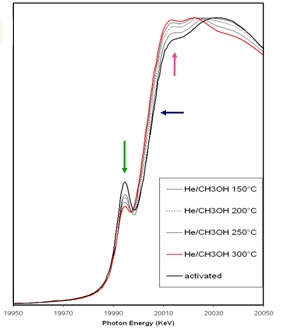
Sylvain Cristol is a Professor at the University of Lille within the Heterogeneous Catalysis department and the Modeling and Spectroscopy (MODSPEC) group. He teaches quantum chemistry, chemical bonding, statistical physics , and X-ray absorption spectroscopy at the university’s European Master’s program. PhD in Molecular and Organic Chemistry (1997-2000, Université de Provence) Postdoctoral work at Davy-Faraday Research Lab, Royal Institution of Great Britain (2000-2002) His research focuses on modeling hydrodesulfurization and hydrodeoxygenation catalysts for biomass valorization, supported by ANR-PNRB project ECOHDOC (with Caen, Poitiers, and TOTAL). He pioneered operando X-ray absorption spectroscopy for characterizing supported oxides (Mo/Re on alumina/anatase) via the ANR SAXO project (Paris VI, Grenoble, SOLEIL). Collaborative work with Francesco Mauri (Paris VI) advanced NMR parameter modeling in solids. Publications span DFT studies , XANES spectroscopy , and solid-state NMR applied to catalysis. Scientific awards include the UCCS Thesis Prize (highest honors) for his work on dibenzothiophene reactivity on molybdenum sulfide.
Grethe Winther is a Professor and Head of Section in the Department of Civil and Mechanical Engineering at the Technical University of Denmark (DTU), specializing in Materials and Surface Engineering. Her research is centered on the analysis and modeling of microstructure and mechanical properties of metals, with a strong emphasis on dislocation structures, deformation textures, and recrystallization processes. Her research interests include: Dislocation structures and boundary analysis in deformed metals Crystal plasticity modeling using synchrotron data (3DXRD) Orientation relationships in recrystallization Prediction of mechanical properties in industrial metal forming Multiscale modeling of plastic deformation and surface roughening The recent articles (2025) highlight a consistent focus on advanced characterization techniques like dark-field X-ray microscopy and discrete dislocation dynamics simulations. These works explore the formation of geometrically necessary boundaries, dislocation cell evolution, and multiscale surface deformation, reflecting a strong integration of experimental and computational methods in materials science. Key themes include plastic deformation mechanisms, microstructure evolution, and predictive modeling in metallic systems. Grethe Winther actively supervises multiple PhD projects, including those on dislocation dynamics, X-ray microscopy, and ductile failure simulations. She collaborates extensively with researchers such as H.F. Poulsen and C.V. Nielsen. Her work is supported by ongoing research projects at DTU, focusing on fundamental and applied aspects of metal deformation and microstructure. She is affiliated with the Materials and Surface Engineering section at DTU, where she leads research efforts combining advanced experimental techniques with theoretical modeling to understand and predict metal behavior under deformation.
Jason Trelewicz is a Professor at Stony Brook University’s Department of Chemical & Molecular Engineering and holds joint faculty status at Oak Ridge National Laboratory. His research focuses on interface-engineered materials for extreme environments, leveraging advanced processing, characterization tools, and multiscale modeling. He received his Ph.D. in Materials Science from MIT (2008) and previously served as Research Director at MesoScribe Technologies. His work emphasizes fusion materials, nanocrystalline alloys, additive manufacturing, and radiation effects. Awards include the DOE Early Career Award (2017), NSF CAREER Award (2016), and multiple best paper awards (2022). His lab, the Engineered Microstructures and Radiation Effects Laboratory, explores topics like ceramic composite moderators and plasma-facing materials. Education: Ph.D., Materials Science & Engineering, MIT (2008) Affiliations: Oak Ridge National Laboratory (Joint Faculty) Key research areas include thermal-mechanical evaluation of fusion reactor components, alloy design for additive manufacturing, and radiation tolerance of nanocrystalline materials. He has pioneered studies on helium bubble dynamics in tungsten and stability of doped nanocrystalline alloys. Awards: DOE Early Career Award, NSF CAREER Award, 2022 Best Paper Awards in Nuclear Materials and Asian Ceramics. Grants/Projects: Supported by DOE, NSF, and collaborative initiatives with Japan (FRONTIER). His group investigates corrosion behavior in 3D-printed steels and develops novel composite moderators for high-temperature reactors. Ongoing work includes multiscale modeling for fusion materials and in-situ TEM studies of irradiation effects.
Marat I. Latypov serves as Assistant Professor in the Department of Materials Science and Engineering at the University of Arizona's College of Engineering. He is also a member of the Applied Mathematics Graduate Interdisciplinary Program and leads the Materials Informatics Lab. His research spans computational materials science, sustainable alloy design, and machine learning applications for materials development. Dr. Latypov holds a PhD in Materials Science and Engineering from Pohang University of Science and Technology (POSTECH, South Korea, 2014) and a Dipl.-Ing. in Engineering Physics from Ufa State Aviation Technical University (Russia, 2011). His postdoctoral training included appointments at Georgia Tech/CNRS in France and the University of California, Santa Barbara. His research focuses on materials informatics , physics-informed machine learning , and sustainable structural alloys . Key methodologies include graph neural networks for polycrystal mechanics, vision transformers for microstructure representation, and adaptive experimental design for materials optimization. Recent work emphasizes circular economy applications through construction waste recycling and copper mine tailings valorization. Analysis of his publication record reveals strong emphasis on computational microstructure-property linkages (35% of recent work), machine learning for materials design (30%), and sustainable materials processing (25%), with growing integration of large language models for materials knowledge extraction. NSF CAREER Award (2025) : For damage control in recycled aluminum alloys ISTI Distinguished Faculty Scholar (2024) : At Los Alamos National Laboratory Novelis Hackathon First Prize (2021) : Computer vision application Acta Materialia Outstanding Reviewer (2018) Young Researcher Award (2017) : NanoSPD7 Conference Dr. Latypov advises PhD students including Herbold Fellow Zhuocheng Huang and leads projects funded by NSF and the Grantham Foundation. Current initiatives include chalcopyrite leaching optimization for copper mining and graph neural network development for fatigue prediction. His Materials Informatics Lab maintains collaborations with Los Alamos National Laboratory, MIT, and industry partners including Novelis. The lab operates at the intersection of metallurgy , machine learning , and high-performance computing , with capabilities spanning deep learning, Bayesian inference, and cloud-based computational infrastructure. Recent news highlights participation in CODAS-HEP summer school and publication of vision transformer work in Acta Materialia.
Professor Paul Luckham is a leading academic in the Department of Chemical Engineering at Imperial College London , holding the title of Professor in Particle Technology . He is affiliated with the Centre for Doctoral Training (CDT) in Chemical Biology and the Institute of Chemical Biology Materials Laboratory , where he contributes as a supervisor. Education : PhD in Physical Chemistry (University of Bristol, 1980), BSc in Chemistry (University of Bristol, 1978). Research Interests focus on controlling suspension properties through particle interactions using atomic force microscopy (AFM) and molecular dynamics simulations. His work spans rheology , polymer adsorption , and cell/protein adhesion to surfaces, with applications in oil & gas, environmental science, and materials engineering. Recent Publications highlight studies on shake gels , polymer-calcite systems , viscoplastic fluid mixing , and environmental impact modeling . These works emphasize nanoindentation , scattering techniques , and multiscale characterization . Professional Experience includes roles as Professor (1996–present), Reader (1992–1996), and Lecturer (1983–1992) at Imperial College London, and a Research Associate at the Cavendish Laboratory, Cambridge University (1981–1983). Labs & Teams : Associated with the Materials Laboratory at Imperial College, focusing on AFM-based particle interaction measurements and polymer retention mechanisms.
Dr Yulai Zhang is a researcher in the Department of Materials Physics at the Australian National University . His work focuses on advanced imaging techniques for material and geological analysis. Expertise: X-ray micro-computed tomography (μCT), pore-scale and multiscale modeling, coal seam and ore characterization Collaborations: International partnerships in coal bed methane, mineral liberation, and rock failure analysis His research applies 4D/X-ray tomography to study dynamic processes in copper ores, shale, and coal, including fragmentation, diffusion, and fracture networks. Recent publications highlight innovations in super-resolution imaging , feature extraction methods , and in-situ studies of mineral behavior under stress. Dr Zhang actively supervises students and contributes to ore beneficiation, CO2 geo-sequestration, and unconventional reservoir characterization. Collaborative projects involve institutions in Australia and Indonesia, with a focus on digital rock physics and microstructural evolution .
Jie Xu is a Scientist at Argonne National Laboratory and a CASE Affiliated Scientist at the University of Chicago, Pritzker School of Molecular Engineering . Her research focuses on engineering durable, scalable, and sustainable polymer semiconductors for skin-like electronics and autonomous material discovery. Education : PhD in Chemistry (Nanjing University), Postdoctoral Fellow (Stanford University) Her research bridges polymer physics , self-driving laboratories , and AI-guided material synthesis to address challenges in stretchable electronics, recyclable polymers, and energy-efficient manufacturing. She pioneered polymer circuits that remain conductive under extreme deformation and developed the first roll-to-roll mass-production method for stretchable semiconductors. Her 15 most recent articles highlight advancements in AI-driven polymer discovery , biodegradable electronics , and multi-modal energy dissipation . Key themes include autonomous experimentation , hydrogen-bonded polymer systems , and machine learning for conjugated polymers , with applications in wearable medical sensors , soft robotics , and human-computer interfaces . Scientific accolades include the Materials Research Society Postdoctoral Award , MIT Technology Review’s Innovators Under 35 , and recognition as a Scialog Fellow . She serves on editorial boards for APL Machine Learning and Flexible Electronics , and her team at Argonne includes postdocs and students working on self-driving labs and degradable polymers .
J. Tyler Mefford is an Assistant Professor in the Department of Chemical Engineering at the University of California, Santa Barbara , where he leads the Mefford Group. His research focuses on electrochemical engineering, materials science, and renewable energy technologies. Education : BS in Chemistry from Stanford University (2012), PhD in Chemistry from the University of Texas at Austin (2016). The Mefford Group develops redox-active polymers and inorganic electrode materials for applications in electrochemical energy conversion , storage , and chemical separations . Their work integrates material design , operando spectroscopy , microscopy , and computational modeling to study charge transfer at electrified interfaces. Recent publications highlight advancements in aqueous battery technology , bifunctional electrocatalysis , and mixed-conducting polymer electrodes . The group emphasizes interdisciplinary approaches and diversity in research environments. Scientific Awards : 2020 Best In-situ and Operando Characterization Presentation Award, MRS 2016 Excellence in Renewable & Clean Energy Research Award, UT Energy Institute 2016 Nano Portfolio Presentation Award, University of Texas at Austin
Dr. Olga Zinovieva is a Lecturer in Mechanical Engineering and Program Coordinator at UNSW Canberra's School of Engineering and Technology. Her research focuses on computational modeling in metal additive manufacturing, particularly on processing-microstructure-property relationships. She has held research positions at the University of Bremen, Russian Academy of Sciences, and Tomsk Polytechnic University, and visiting roles in Australia, Germany, Brazil, and France. Research Interests: Modeling for additive manufacturing Multiscale methods Computational materials science Computational mechanics Microstructure evolution in 3D printing Mechanical behavior under dynamic loading Recent research trends from her publications emphasize predictive modeling of mechanical properties in additively manufactured metals, microstructure simulation, and digital solutions for advanced manufacturing. Her work integrates ICME approaches and high-performance computing to optimize alloy performance and process parameters. Scientific Awards and Grants: ARC Discovery Early Career Researcher Award (2025–2028) NSW DIN Pilot Project (2024–2025) CSIRO ON Prime Performance Bonus (2024) UNSW Start-up Grant (2022–2024) DFG-RFBR Project (2017–2022) Multiple travel and research grants from RFBR, University of Bremen, and Tomsk State University Supervision and Grants: Dr. Zinovieva actively supervises PhD and undergraduate research students in projects related to additive manufacturing modeling. She has secured over 20 grants as a Chief Investigator, including leadership in international collaborations between Germany and Russia. She mentors students through UNSW’s HDR programs and industry-linked research initiatives. Labs and Teams: She leads computational research in metal additive manufacturing at UNSW Canberra, utilizing high-performance computing resources. She collaborates with international teams at the University of Bremen and participates in editorial and advisory roles for journals such as Metals and Journal of Materials Informatics .
Majid Bahrami is a Professor and Graduate Student Supervisor in the School of Mechatronic Systems Engineering at Simon Fraser University (SFU) , part of the Faculty of Applied Sciences . He holds the Tier 1 Canada Research Chair in Alternative Energy Conversion Systems and is a Fellow of ASME and Fellow of CAE . His research focuses on sustainable thermodynamic energy systems, waste-heat utilization, energy storage, and advanced thermal technologies. Education: - Ph.D., University of Waterloo, Canada (2004) - M.Sc., Amir Kabir University of Technology, Iran (1995) - B.Sc., Sharif University of Technology, Iran (1992) Research Interests: - Sorption-based thermal energy storage and heat pumps - Waste-heat recovery systems - Multiscale transport phenomena in functional materials - Biomimetic heat transfer enhancement - Advanced materials for energy applications Recent Contributions: - Developed novel sorption heat exchangers and graphite-based heat sinks. - Pioneered atmospheric water harvesting technologies (HAWGen system). - Authored over 150 peer-reviewed articles and holds multiple patents. - Collaborates with industries like Watergenics and AFCC . Awards & Recognition: - Canada’s Clean50 (2016, 2017) - Innovate BC Award (2018) - RBC Award (2024) - Inducted into Canadian Academy of Engineering (2019) Lab & Teams: - Lab for Alternative Energy Conversion (LAEC) : Focuses on sustainable energy systems. - Supervised over 50 graduate students, many securing academic and industry roles. - Active in NSERC CREATE HyTEM and Hybrid Thermal Electric Microgrid initiatives.
Ioanna Kakoulli is a Professor in the Department of Materials Science and Engineering at the University of California, Los Angeles (UCLA), affiliated with the Henry Samueli School of Engineering and Applied Science. She leads the Molecular & Nano Archaeology Lab, focusing on interdisciplinary research at the intersection of materials science and cultural heritage preservation. Her work spans archaeological materials characterization, forensic imaging techniques, and conservation science. Education: D.Phil. (PhD) in Archaeological Science from the University of Oxford (1999). Key research interests include ancient pigment technologies, materials diagenesis, and the analysis of Hellenistic/Roman painting. She pioneered studies on Egyptian blue pigments and cross-cultural material exchanges via trade routes like the Silk Road. Awards include membership on the CAARI Board of Trustees, Visiting Fellowship at ICCROM, and multiple research awards from the A.G. Leventis Foundation and Overseas Research Scheme. Her lab collaborates with international institutions (e.g., Homeland Security Investigations) on looted antiquities and integrates cutting-edge imaging technologies (multispectral/hyperspectral) for non-destructive analysis. Guides students like Xuanyi Wu (SCSMM award winner), Aileen Shin, Lindsey Perry, and others in the Archaeomaterials Group. Research highlights include revealing asbestos use in Byzantine murals and identifying arsenic exposure in pre-Columbian Chilean mummies. Active in developing sustainable preservation strategies for rock-cut tombs and globigerina limestone monuments.
Junhong Chen is the Crown Family Professor of Molecular Engineering at the University of Chicago's Pritzker School of Molecular Engineering and Lead Water Strategist at Argonne National Laboratory. His research focuses on hybrid nanomaterials, 2D materials, sensors for chemical/biological molecules, and energy devices. He has pioneered innovations in real-time water sensing and energy storage, with applications in environmental sustainability and healthcare. Chen holds a PhD from the University of Minnesota (2002) and a postdoc from Caltech (2003). He previously directed the NSF Industry-University Cooperative Research Center on Water Equipment & Policy and served as a NSF program director. Education: PhD in Mechanical Engineering (2002, University of Minnesota), Postdoc in Chemical Engineering (2002–2003, Caltech) Research Interests: Nanomaterials, Sensors, Energy Storage, Water Pollution Control Awards: Fellow of National Academy of Inventors, ASME, IAAM Medal, Wisconsin Innovation Award (2016) Chen's lab group develops nanosensors and energy devices using molecular engineering, with a focus on scalable manufacturing and AI integration. Recent work includes graphene-based sensors for real-time water monitoring and novel battery technologies. His research also addresses global challenges like PFAS contamination and sustainable manufacturing.
Matthew Libera is a Professor of Material Science and Engineering at Stevens Institute of Technology, affiliated with the Charles V. Schaefer, Jr. School of Engineering and Science. He leads the Laboratory for Multiscale Imaging (LMSI), a shared facility for advanced imaging and analysis. His work focuses on biomaterials, hydrogels, infection-resistant surfaces, and electron microscopy techniques. Libera has held roles including Associate Dean of Engineering and Science (2013–2018) and has been a visiting professor at institutions like the University of Rhode Island (2021–2022). He chairs the Stevens Conference on Bacteria-Material Interactions and has authored numerous publications on antimicrobial surfaces and material characterization. His research interests span biomaterials-associated infections, directed self-assembly of polymers, and cryo-electron microscopy applications. He pioneered microgel-based antimicrobial coatings and developed molecular beacon technologies for diagnostics. Libera’s awards include the Morton Professorship for Teaching Excellence (2010–2011) and the Jess N. Davis Award for Research (1998). His work integrates nanotechnology, material science, and biomedicine to address challenges in infection prevention and biomaterial design. Libera’s publications highlight advancements in microgel functionality, surface patterning via electron-beam lithography, and antimicrobial delivery systems. His lab’s capabilities in multiscale imaging enable detailed studies of biomaterial-bacteria interactions. Ongoing efforts aim to optimize self-defensive materials for medical implants and diagnostic tools.
Olivier FARGES is a Senior Lecturer and HDR (Habilitation à Diriger des Recherches) holder at the University of Lorraine, affiliated with ENSGSI (École Nationale Supérieure de Géologie et Sciences Industrielles) within the Groupe INP. He serves as Director of Industrial Partnerships at ENSGSI and is part of the LEMTA Laboratory (CNRS-University of Lorraine), focusing on multiphysics and multiscale modeling of heat transfer in complex environments. His academic roles include teaching courses such as Heat and Mass Transfer, Fluid Mechanics, Scientific Computing Modeling, and Renewable Energy. Dr. FARGES holds a Ph.D. in Energy and New R&D (2014) and an Engineering degree in Energy Engineering (2010), both from the École de Mines Albi. His research emphasizes coupled conductive-radiative heat transfer in porous media, thermal property characterization of heterogeneous materials, and Monte Carlo-based computational methods for energy systems. He has contributed to advancements in photovoltaic system modeling, solar thermal power optimization, and urban climate studies. His work bridges theoretical and applied thermal engineering, with applications in sustainable energy systems, material science, and industrial partnerships. Key research themes include radiative transfer modeling, multiphysics simulation frameworks, and the development of innovative tools for thermal property measurement and energy performance assessment.
Amir Asadi is an Associate Professor in the Department of Engineering Technology and Industrial Distribution at Texas A&M University, holding the Corrie & Jim Furber '64 Faculty Fellow position. His research focuses on scalable manufacturing of multifunctional composites, structural energy systems, and advanced materials design. He leads the Polymer Composites Advanced Manufacturing (PCAM) Lab, which explores bottom-up fabrication techniques and additive manufacturing processes. Asadi holds a Ph.D. in Mechanical and Manufacturing Engineering from the University of Manitoba (2013), an M.S. in Mechanical Engineering from Iran University of Science & Technology (2006), and a B.S. in Mechanical Engineering from the same institution (2004). His work bridges molecular-level interactions with macroscale material performance, targeting applications in aerospace, e-mobility, and energy storage. Key research interests include structural battery/supercapacitor composites, additive manufacturing of polymer composites, and fast-rate manufacturing of thermoplastics. He has pioneered methods like supercritical CO₂-assisted atomization and cellulose nanocrystal-enabled interface tailoring to enhance composite performance. Asadi has received the NSF CAREER Award (2022) and has been an invited speaker at major conferences such as the Brazilian Conference on Composite Materials (2021) and Chalmers University’s “Materials for Tomorrow” event (2020). His lab’s innovations aim to revolutionize lightweight, multifunctional materials for industrial sectors. His research outputs include over 50 peer-reviewed articles, covering topics from nanocomposite interfaces to 3D-printed structural batteries. He collaborates with industry partners like the Air Force Research Lab and focuses on translating lab-scale innovations into scalable manufacturing solutions.