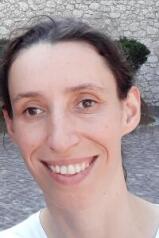
Dr. Agnes Lamacz-Keymling is a researcher at the University of Duisburg-Essen in the AG Optimal Control of Partial Differential Equations. Her research focuses on analysis of PDEs, multiscale problems, homogenization, and wave phenomena. PhD in Mathematics (2011) and Diploma in Mathematics (2008) from TU Dortmund Her work spans homogenization of periodic structures, wave propagation in heterogeneous media, negative index meta-materials, and multiscale modeling. She has received third-party funding through a DFG project on wave propagation in periodic structures and negative refraction. Recent publications highlight trends in Bloch wave homogenization, dispersive wave models, and photonic crystal analysis. Her teaching includes Mathematics E3 and E4 in the winter semester 2021/22. Third-party funding: DFG project on wave propagation in periodic structures and mechanisms of negative refraction (2014)
Dr. Abel Chuang is an Associate Professor in Mechanical Engineering at the University of California, Merced. His research focuses on advanced electrochemical energy technologies including fuel cells, electrolyzers, and battery systems, with emphasis on multiphysics modeling, materials development, and performance optimization. Chuang's work integrates experimental characterization techniques like neutron radiography with computational modeling to understand fundamental transport phenomena and reaction mechanisms in electrochemical devices. His recent investigations center on green hydrogen production, lithium-ion battery safety, and catalyst design for sustainable energy conversion. Publications demonstrate consistent focus on improving energy device efficiency through innovations in electrode architecture, membrane engineering, and system integration. Current projects address critical challenges in renewable energy storage, CO2 utilization, and sustainable materials recycling for circular economy applications.
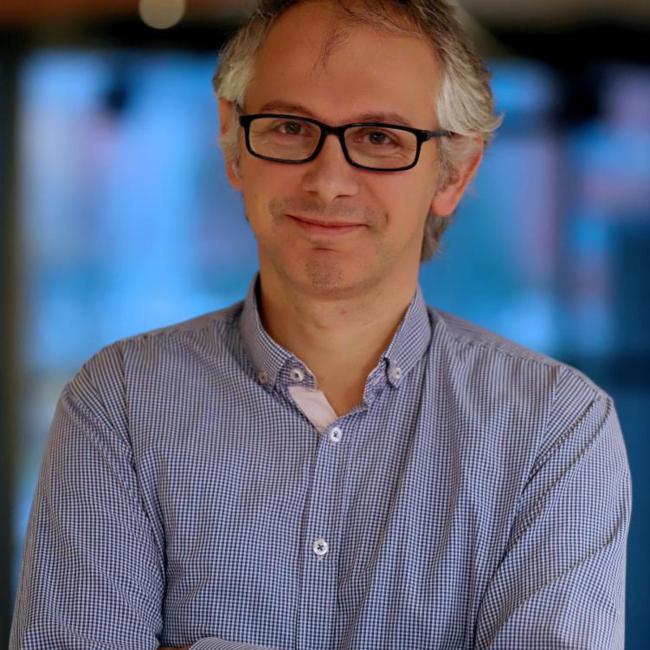
Adrian Muntean is a full Professor of Mathematics at Karlstad University, Sweden, specializing in mathematical modeling with a focus on multiscale analysis, partial differential equations, and applications in materials science and crowd dynamics. He holds editorial roles in journals such as Applied Mathematics in Science and Engineering and ROMAI Journal . His research integrates asymptotic methods, homogenization theory, and interacting particle systems to address challenges in civil engineering, logistics, and soft matter physics. Education: MSc from Babeș-Bolyai University (1999), Dr. rer. nat. from Universität Bremen (2006), Habilitation (2011). Prior roles include Assistant Professor at Eindhoven University of Technology (2007–2015). He has held visiting positions at University of Rome La Sapienza, Gran Sasso Science Institute, and University of Milan. Research interests include: Multiscale modeling of materials (concrete, steel) and their defect-induced behaviors Crowd dynamics and pedestrian flow simulations Asymptotic analysis of PDEs Measure-valued evolution equations Teaching: Courses on Fundamental Analysis, Multiscale Analysis (Homogenization), and Partial Differential Equations. Leads the Master Program in Industrial and Computational Mathematics at Karlstad University. Collaborations: Active projects with institutions like Gran Sasso Science Institute (Italy), Kanazawa University (Japan), and the Centre for Societal Risk Research (Karlstad University). Labs/Teams: Involved in interdisciplinary teams addressing energy systems, industrial mathematics applications, and morphology formation in materials.
Dr. Alberto Coccarelli is a Senior Lecturer in Mechanical Engineering at Swansea University's Faculty of Science and Engineering, School of Aerospace, Civil, Electrical and Mechanical Engineering. He maintains an active research program at the intersection of vascular mechanobiology and computational medicine, with laboratory facilities at the Bay Campus Engineering North building. His research focuses on: Computational modeling of arterial blood flow dynamics Multiphysics and multiscale tissue simulations Bio-heat transfer mechanisms in physiological systems Vascular mechanobiology and hemodynamic analysis In silico medicine approaches for clinical applications His recent publications (2021-2025) demonstrate strong focus on: Cerebral hemodynamics and vascular tone regulation Novel computational frameworks for blood flow quantification Machine learning applications in biophysical systems Microvascular function assessment techniques Pathogen transmission modeling Current PhD supervision includes: Computational modelling of haemodynamic forces across cerebral vasculature Embodied AI algorithms with advanced spatial understanding Optimal design for inverse problems in biomedical engineering He teaches undergraduate and postgraduate modules including Thermodynamics, Heat Transfer, Thermofluids, and Mechanical Engineering Practice.
Dr. Saikat Datta is a Senior Lecturer in Mechanical Engineering at Swansea University's Faculty of Science and Engineering. He holds a PhD from the Indian Institute of Technology Kharagpur (2018) and completed postdoctoral research at the University of Edinburgh. His research focuses on micro/nanofluidics, multiphase flow, and multiscale modeling using molecular dynamics and computational fluid dynamics. He has published in top-tier journals like Nano Letters and received the Leverhulme Trust Early Career Fellowship (2021) for his work on vibration-driven de-icing. Education: PhD in Mechanical Engineering, IIT Kharagpur (2018) Postdoctoral Research Associate, University of Edinburgh (2018–2021) Research Interests: Molecular dynamics simulations of nanoscale fluid behavior Computational fluid dynamics (CFD) for multiphase systems Vibration-driven de-icing and anti-icing technologies Mesopore transport in unconventional energy systems Acoustothermal effects on surface phenomena Advising & Grants: Principal Investigator: EPSRC Tier-2 Cirrus Service grant for ultrahigh-frequency vibration studies (2023–2024) Co-PI: UKRI ARCHER2 HPC grant for freeze-desalination research (2024) Awards: Leverhulme Trust Early Career Fellowship (2021)
Sébastien Brisard is a Professor in Mechanical and Materials Engineering at Gustave Eiffel University, affiliated with the Navier Laboratory. He specializes in theoretical and numerical homogenization, plate and shell mechanics, and non-destructive material characterization using advanced imaging techniques like X-ray tomography and small-angle X-ray scattering. His teaching includes plate and shell theory at the École Nationale des Ponts et Chaussées. Research focuses on multiscale modeling of heterogeneous materials, granular media mechanics, and stress-gradient composites. He has contributed to FFT-based numerical homogenization methods, poromechanics, and material microstructure analysis. His work bridges materials science and engineering through advanced computational techniques. Recent publications emphasize variance reduction strategies, fiber-reinforced composites, and pore structure analysis in cementitious materials. His methods are implemented in open-source tools like 'spam' for materials analysis. Brisard actively collaborates with institutions such as the Laboratory of Mechanics and Acoustics and the Multiscale Modeling group. Labs/Teams: Navier Laboratory (Gustave Eiffel University), Multiscale Modeling and Experimentation for Heterogeneous Solids group.
Professor Klaus Regenauer-Lieb is a leading academic in the School of Minerals, Energy and Chemical Engineering at Curtin University. His research focuses on multiscale, multiphysics processes in subsurface systems, including geothermal energy, fluid-rock interactions, and porous media dynamics. He holds a professorial position and contributes to the Office of the Provost. His work integrates computational modeling, experimental techniques, and theoretical frameworks to address challenges in energy, environmental, and geological systems. Key research areas include the thermodynamics of geological processes, compaction band formation, and the mechanics of deformation in porous media. He has pioneered studies on reaction-diffusion waves as precursors to earthquakes and developed innovative models for geothermal energy storage. His publications span interdisciplinary topics such as shale pore structure analysis, carbon sequestration, and nanoscale sorption mechanisms. Collaborations include projects on geothermal batteries for renewable energy storage, subsurface fluid dynamics, and advanced materials characterization. He actively contributes to international initiatives in geophysics and energy systems, emphasizing the application of multiscale modeling to real-world engineering and environmental problems.
Shimin Liu is a Professor of Energy and Mineral Engineering and Mining Engineering at Pennsylvania State University, holding the Deike Chair Professorship. He serves as the Associate Department Head for Graduate Education. His research focuses on geomechanics and fluid dynamics applied to unconventional resources, carbon sequestration, and mine safety. He leads the Liu’s Unconventional Geomechanics Lab (UGL), which specializes in multiscale rock characterization under in-situ conditions, supporting industry stakeholders in coalbed methane and shale gas sectors. Education: Ph.D., Engineering Science, Southern Illinois University (2012) M.S., Mineral Processing Engineering, China University of Mining & Technology (2007) B.S., Environmental Engineering, China University of Mining & Technology (2005) His research interests include reservoir assessment of coal/shale resources, geomechanical modeling, ground control for mines, and nanoscale rock imaging. Recent work emphasizes CO2 sequestration, hydrogen storage in unconventional reservoirs, and coal gasification via bio-seeding. His lab employs advanced techniques like neutron scattering and micro-CT for detailed rock analysis. Publications reflect a focus on gas storage mechanisms, CO2 sequestration, and shale mechanics, with contributions to journals like Fuel and Heliyon. Key awards include the 2017 Freeport-McMoRan Grant and recognition for early-career excellence at Penn State. Grants and Industry Collaboration include funded projects on coal mine gas management, hydraulic fracturing optimization, and carbon capture. His lab’s services are sought by energy companies for reservoir characterization and geomechanical solutions. Labs/Teams: The Unconventional Geomechanics Lab (UGL) at Penn State, specializing in multiscale rock characterization under simulated in-situ conditions.
Prof. Dr.-Ing. habil. Jörg Schröder is a full Professor of Mechanics at the University of Duisburg-Essen, Faculty of Engineering, Department of Civil Engineering, and leads the Institute of Mechanics. He has held significant leadership roles, including Vice-Rector for Research and Knowledge Transfer, and is currently Vice-President (2023–2025) and former President (2020–2022) of the International Association of Applied Mathematics and Mechanics (GAMM). He is a member of acatech and the Academy of Sciences and Literature, Mainz. PhD and Habilitation, Universität Stuttgart Professor since 2001, University of Duisburg-Essen Spokesperson, DFG Priority Programme 1748 and Research Unit 1509 Editor-in-Chief, Archive of Applied Mechanics His research centers on computational and continuum mechanics, with a focus on constitutive modeling, finite element methods, and multiscale simulations of materials such as dual-phase steels, high-performance concrete, and magneto-mechanical systems. He employs advanced numerical techniques including mixed and hybrid finite elements, phase-field modeling, and least-squares formulations. His work spans theoretical development and practical applications in manufacturing, civil engineering, and material science. The recent publications demonstrate a strong emphasis on multi-physics problems, including thermo-elastoplastic analysis in laser welding, micromagnetic simulations, sea ice dynamics, and fracture modeling in fiber-reinforced concrete. There is a clear trend toward high-fidelity, multi-scale simulations integrating microstructural details with macroscopic behavior, often using phase-field and reduced-order modeling approaches. Notable scientific recognitions include: Member of the Senate of the German Science Foundation (DFG) Selection Committee, Alexander von Humboldt Foundation Member of acatech and the Academy of Sciences and Literature, Mainz Leadership roles in GAMM Prof. Schröder leads major research initiatives funded by the DFG, serves on editorial boards of leading journals, and collaborates extensively with national and international researchers. He advises numerous doctoral candidates and postdoctoral researchers, though specific student names are not listed in the source text. His team conducts research in areas such as computational inelasticity, multiscale modeling, and simulation of coupled physical phenomena.
Markus Holzner is an Associate Professor at the Institute of Hydraulic Engineering and River Research, University of Natural Resources and Life Sciences, Vienna (BOKU). His research focuses on environmental fluid dynamics , with emphasis on turbulence, particle transport, and biomedical applications. Previously, he led the Environmental Fluid Mechanics group at the Swiss Federal Research Institute WSL (2019-2023) and held an SNSF Professorship at ETH Zurich (2013-2019). He received his education in Environmental Engineering (MSc, University of Trento) and a PhD from ETH Zurich. His research integrates experimental and computational approaches to study: Turbulent flows in natural and engineered systems Microplastics transport in aquatic environments Cardiovascular fluid mechanics and medical device design Novel drag-reduction technologies using magnetic fluids Analysis of recent publications reveals strong emphasis on: Advanced experimental techniques (3D printing, particle tracking) Multiscale modeling of fluid-particle interactions Environmental applications (oil spill remediation, microplastic dynamics) Interdisciplinary work spanning biomechanics, materials science, and climate impacts Scientific awards include: SNSF Professorship (2013) EU Marie-Curie Fellowship (2009) ETH Medal (2007) European Leonardo Da Vinci Award (2007) He has supervised 10 doctoral students and 11 postdocs, with current projects funded by international institutions: Flow-structure interaction in non-Newtonian fluids (2023-2026) Ferrofluid applications for drag reduction in medical stents (2022-2026) He leads a research group at BOKU's RiverLab facility focusing on experimental hydraulics and environmental flows.
Prof. Jingjie Yeo is an Assistant Professor in the Sibley School of Mechanical and Aerospace Engineering at Cornell University and the Principal Investigator of the J² Lab for Engineering Living Materials. His research integrates computational modeling, machine learning, and biomaterials to design sustainable, adaptive materials for healthcare and environmental applications. He is also a co-instructor at Station1, a nonprofit advancing socially-directed STEM education. Ph.D. and B.Eng., Nanyang Technological University, Singapore Postdoctoral training, Tufts University and Massachusetts Institute of Technology Research Scientist, Institute of High Performance Computing, Singapore Prof. Yeo’s research focuses on computational design of engineered living materials , particularly bacteria-based systems and biopolymers. His lab employs multiscale simulations —from quantum mechanics to continuum modeling—and integrates machine learning and materials informatics to accelerate discovery. Key areas include nanomechanics of mucus-bacteria interactions, mucoadhesive biomaterials, sustainable materials, and living materials for gut health and infrastructure. The lab pioneers AI-driven frameworks for materials-by-design, aiming to advance a "Materials 4.0" paradigm. The lab’s recent publications reveal a strong trend in AI-enhanced materials discovery , bio-inspired soft materials , and biomechanical modeling of biological systems . Themes include antimicrobial surfaces, solid electrolytes, hydrogels, and sustainable carbon materials. The work is highly interdisciplinary, combining physics, biology, and computation. Notable scientific awards include: NSF CAREER Award (2024) Dennis G. Shepherd Excellence in Teaching Award, Cornell College of Engineering (2023) ASME Rising Star in Mechanical Engineering Emerging Investigator, Journal of Materials Chemistry B (2020) Multiple NSF grants including EFRI and Convergence Accelerator awards Prof. Yeo has advised numerous PhD, MS, and undergraduate students , including the lab’s first PhD graduates, Drs. Haoyuan Shi and Tianjiao Li. His research is supported by NSF, Cornell, and international seed grants . He serves on editorial boards for STEM Education and International Journal of AI for Materials and Design , reflecting his dual commitment to research and education innovation. The J² Lab is part of the Cornell Engineered Living Materials Institute and collaborates with researchers at MIT, Montana State University, Zhejiang University, and others. The lab emphasizes interdisciplinary teamwork, computational rigor, and socially impactful science.
Jean-Michel PEREIRA is a Professor at École nationale des ponts et chaussées, serving as Deputy Chairman of the Civil Engineering and Construction Department and a researcher at the Navier Laboratory. He holds a Doctorate in Civil Engineering (2005) and a Habilitation to Supervise Research (2014). His expertise lies in geomechanics, focusing on energy production-related challenges such as geotechnical heat exchangers, CO2 geological storage, and hydrocarbon production. He teaches soil and rock mechanics, emphasizing advanced geotechnical studies. His research explores coupled thermal-hydro-mechanical behaviors of soils, with applications in energy geotechnics and sustainable infrastructure. Recent studies include experimental and numerical analyses of energy piles, frost heave dynamics, and multiphase flow in porous media. Collaborations involve advanced imaging techniques (MRI, X-ray tomography) to study material behavior at microstructural scales. Key contributions include advancing understanding of geothermal systems, CO2 storage mechanics, and structural responses under thermal cycling. His work bridges fundamental geomechanics with practical engineering solutions for energy transition challenges.
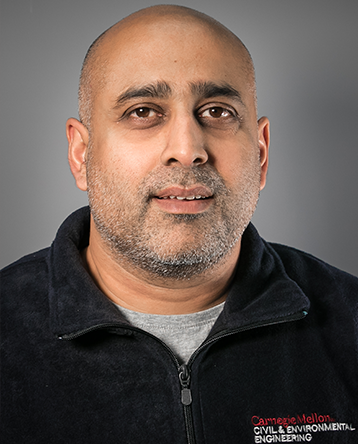
Kaushik Dayal is a Professor in the Department of Civil and Environmental Engineering at Carnegie Mellon University's College of Engineering. He leads the Multiscale Mechanics Research Group and is affiliated with several interdisciplinary centers including the Center for Nonlinear Analysis, the Center for the Mechanics and Engineering of Cellular Systems, the NextManufacturing Center, and the Wilton E. Scott Institute for Energy Innovation. His research bridges theoretical and computational mechanics with applications in materials science, energy, and environmental systems. Ph.D., Mechanical Engineering, California Institute of Technology (2007) M.S., Aeronautics, California Institute of Technology (2001) B.Tech., Naval Architecture, Indian Institute of Technology Madras (2000) His research focuses on theoretical and computational multiscale methods , particularly in modeling the behavior of materials across atomic to continuum scales. Key areas include non-equilibrium response , electromagnetic effects , phase-field modeling of fracture , poroelasticity , soft active materials , and data-driven inverse design . He investigates phenomena such as microstructure evolution, dislocation dynamics, surface growth, and material behavior under extreme conditions. His work integrates mechanics with chemistry, robotics, and climate resilience, often leveraging machine learning and Bayesian inference. His recent publications reveal a strong trend in computational mechanics of heterogeneous and functional materials , with emphasis on phase-field models, multiscale homogenization, and instability exploitation in soft electromechanical systems. Many studies involve collaboration with national labs and cross-departmental teams, reflecting a highly interdisciplinary approach. McGaw Graduate Fellowship in Mechanical Engineering Army Research Laboratory Journeyman Fellowship Adamson Fellowship Bushnell Doctoral Fellowship Mao Yisheng Outstanding Dissertation Award MIT Postdoctoral Fellowship for Engineering Excellence Center for Machine Learning and Health Fellowship Dowd Doctoral Fellowship Steinbrenner Doctoral Fellowship Dunlap Awardee Dayal has advised numerous PhD students, many of whom have gone on to postdoctoral positions at institutions such as Caltech, MIT, Johns Hopkins, and Los Alamos National Laboratory. His research is supported by major grants from the Department of Defense (MURI program), Air Force Research Laboratory, and other federal agencies. He actively promotes education through teaching assistant awards and participation in Rising Stars workshops. He leads the Multiscale Mechanics Research Group , a vibrant team engaged in cutting-edge research on material modeling, soft robotics, energy materials, and environmental mechanics. The group emphasizes open scientific exchange, interdisciplinary collaboration, and innovation in computational methods.
Professor Constantinos Theodoropoulos is a leading academic in Chemical and Biochemical Systems Engineering at the University of Manchester's Department of Chemical Engineering. His research integrates advanced computational modeling, optimization, and experimental approaches across multiple scales for bioprocess and energy system design. Education: BSc in Mathematics (Aristotle University of Thessaloniki), MSc and PhD in Chemical Engineering (SUNY Buffalo), Post-doctoral Associate (Princeton University) Academic Affiliation: University of Manchester (Permanent), National Technical University of Athens (Visiting Professor) His research focuses on multi-scale modeling of complex chemical and biological systems, particularly in industrial biotechnology and sustainable energy. Key areas include solid oxide fuel cells , microalgal biorefineries , and model reduction techniques for system optimization. His recent publications highlight innovations in: Electrochemical system design at pore-scale Multiscale fuel cell modeling Bioreactor optimization for biochemical production Parameter identifiability in biological systems Robust control methodologies Scientific recognition includes: 2011 IChemE Innovation and Excellence Award for Bioprocessing Fellow of the Royal Society of Chemistry (FRSC) Membership in professional bodies: Institute of Chemical Engineers (AMIChemE), American Institute of Chemical Engineers Teaching responsibilities encompass Process Control (undergraduate), Reaction Systems Design (MSc), and previously included courses on computer-aided design and process safety. He actively supervises research students and leads projects funded by EPSRC , BBSRC , InnovateUK , and EU initiatives.
Jamie Foster McMaster is an Adjunct Associate Professor in the Department of Mathematics and Statistics at McMaster University. His scholarly activity integrates mathematical modeling, computational physics, and interdisciplinary applications in energy storage, biomedical engineering, and astrophysical phenomena. He has collaborated extensively on studies related to lithium-ion battery optimization, perovskite solar cells, and respiratory disease research. Key Research Areas: Mathematical modeling of electrochemical systems, computational fluid dynamics, astrophysical jets, and biomedical applications. Notable Contributions: Development of fast solvers for battery models, studies on adherence behavior in asthma patients, and experimental-validation frameworks for energy materials. Recent Publications: Focused on lithium-ion battery degradation, espresso brewing dynamics, and perovskite solar cell performance optimization. While no explicit awards or student advisement information is available in the provided data, his extensive publication record across diverse fields highlights his interdisciplinary expertise. His work bridges theoretical mathematics with practical applications in renewable energy and healthcare diagnostics.