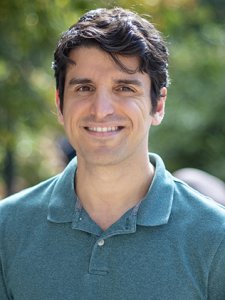
Christoph Schrank is an Associate Professor at QUT's School of Earth and Atmospheric Sciences, specializing in structural geology and rock physics. His research combines field studies with synchrotron-based experimental techniques to investigate deformation processes in tectonic settings. Research focuses on: Synchrotron analysis of rock deformation Tectonic modeling of fault systems Geothermal energy applications Pattern formation in porous media Publication analysis shows emphasis on experimental rock physics (40%), microstructural analysis (30%), and Precambrian tectonics (20%). His work frequently integrates advanced imaging techniques with mechanical modeling. Funded projects include ARC DP170104550 (pressure waves in earthquake mechanics) and DP140103015 (finite strain modeling). Coordinates Honours program for Earth Science and teaches structural geology field methods.
Alfio Grillo is a Full Professor at the Department of Mathematical Sciences (DISMA) of Politecnico di Torino, with research interests in biomechanics, continuum mechanics, and mathematical physics. His expertise spans classical mechanics and multiscale modeling of biological tissues. Research Focus: Grillo's work integrates analytical mechanics with nonholonomic constraints, fractional calculus applications, and multiscale modeling of growth/remodeling phenomena in biological systems. Recent articles emphasize poroelasticity, viscoelastic composites, and bi-phasic material behavior. Scientific Contributions: Editorial roles in leading journals since 2014 Member of INdAM-GNFM since 2009 Recipient of National Scientific Qualification in 2017 €128,609 PRIN grant for multiscale biological modeling Academic Leadership: Supervises PhD students in Civil Engineering, Mathematics, and Mathematical Engineering. Teaches advanced courses in Differential Varieties, Variational Methods, and Porous Media Mechanics.
Professor Chuanzeng Zhang is a renowned academic currently serving as Professor (C4) and Chair of Structural Mechanics at the Department of Civil Engineering, University of Siegen, Germany. He has held leadership roles including Head of the Department of Civil Engineering (2015–present) and Director of the Institute of Structural Engineering (2007–2010). With a habilitation from Technical University Darmstadt and a PhD from Northwestern University, his research spans acoustic wave propagation, computational mechanics, and multifunctional materials. Education : PhD (Dr.-Ing.) from Northwestern University (USA), Habilitation from Technical University Darmstadt (Germany), Diploma (Dipl.-Ing.) from Technical University Darmstadt. Key Roles : Guest Professor at multiple Chinese institutions (Harbin Institute of Technology, Tongji University), Vice-President of the International Chinese Association for Computational Mechanics. Research interests include: Mechanics of smart materials and structures Wave propagation in phononic crystals Fracture mechanics in composite materials Computational methods for anisotropic solids Surface and interface effects in nanomaterials Multifunctional and functionally graded materials Recent Publications : His work focuses on advanced computational methods for wave propagation, fracture analysis, and smart materials, with applications in phononic crystals, piezoelectric composites, and functionally graded structures. Honors & Awards : 2015: Du Qinghua Medal for Computational Methods 2015: Member of European Academy of Sciences and Arts 2015: Honorary Doctorate from Slovak University of Technology 2014: Member of European Academy of Sciences Leadership & Collaborations : Led Senate Commissions, Research Advisory Committees, and DVM Working Groups. Maintains strong academic ties with institutions in China and Germany.
Hüsnü Dal is a Professor at Middle East Technical University (METU) in Ankara, Turkey, specializing in computational mechanics of materials. His research bridges engineering and biomedical applications through advanced computational modeling techniques. Education: Bachelor's Degree, Middle East Technical University, 2001 Master's Degree, University of Stuttgart, 2005 PhD, Dresden University of Technology, 2011 Research Focus: Prof. Dal's work centers on computational micromechanics, multiscale and multifield problems, and materials theory. He investigates fracture in multiphysics media with applications in lithium-ion batteries and tissue mechanics, developing novel constitutive models for complex material behaviors under extreme conditions. His research integrates thermomechanical coupling, viscoplasticity, and data-driven approaches to solve engineering challenges in both synthetic polymers and biological systems. Publication Trends: Recent publications (2023-2025) reveal a dominant focus on data-driven constitutive modeling and phase-field fracture methods. His work spans rubber mechanics, polymeric foams, biological tissues, and battery materials, characterized by strong interdisciplinary connections between materials science, biomechanics, and computational engineering. Key themes include anisotropic hyperelasticity, thermo-viscoplastic fracture, and spatial property variations in additively manufactured materials.
Shawn Litster is a Professor in the Department of Mechanical Engineering at Carnegie Mellon University, where he leads cutting-edge research in sustainable energy conversion technologies. He is affiliated with the Wilton E. Scott Institute for Energy Innovation and serves as a Scott Institute Energy Fellow, contributing to major national initiatives in hydrogen and fuel cell systems. His work is supported by significant funding from the U.S. Department of Energy (DOE), ARPA-E, and the Office of Naval Research. Education: Ph.D. in Mechanical Engineering, Stanford University (2008) Master of Applied Sciences, University of Victoria (2005) Bachelor of Engineering, University of Victoria (2004) His research focuses on micro- and nanoscale transport phenomena in electrochemical energy systems such as fuel cells, batteries, and electrolyzers. Key interests include electrochemistry, multiphase flow in porous media, microfluidics, catalytic gasification, and computational fluid dynamics . He pioneers innovations in ionomer-free electrodes, high-oxygen-permeability materials, and low-iridium anodes to improve efficiency, durability, and cost-effectiveness. His recent publications (2021–2025) reveal a strong trend toward advanced diagnostics, operando characterization, machine learning integration, and multiscale modeling of fuel cell and electrolyzer systems. These works emphasize performance optimization, degradation analysis, and material innovation for heavy-duty and transportation applications. Scientific Awards: George Tallman Ladd Research Award, Carnegie Mellon University National Science Foundation CAREER Award Lieutenant Governor’s Silver Medal, University of Victoria Best Paper/Presentation Award, The Electrochemical Society Best Paper/Presentation Award, American Society of Mechanical Engineers (ASME) Litster has secured over $50 million in research funding as a sub-awardee in DOE hydrogen projects and led a $3.2M ARPA-E OPEN 2021 project on disruptive fuel cell electrodes. He is an inventor on two U.S. patents related to fuel cell design. He advises graduate students and leads the Laboratory for Transport Phenomena in Energy Systems , where his team develops novel materials and diagnostics for next-generation energy technologies.
Eduardo Gildin is a Professor of Petroleum Engineering and Associate Department Head for Graduate Studies at Texas A&M University's College of Engineering. He holds the L.F. Peterson '36 Professorship and directs the university's graduate studies in petroleum engineering. His research focuses on reservoir modeling, control optimization, model reduction techniques, and CO2 sequestration. Gildin has pioneered data-driven approaches for reservoir simulation, integrating machine learning and physics-based models to enhance efficiency and accuracy. Education: Ph.D. in Aerospace Engineering, University of Texas at Austin (2006) M.S. in Mechanical Engineering, University of São Paulo, Brazil (1998) B.S. in Mechanical Engineering, Faculdade de Engenharia Industrial, Brazil (1995) Research Interests: Model reduction of large-scale dynamical systems Control and optimization of reservoir operations CO2 storage and geological carbon sequestration Machine learning applications in reservoir engineering and drilling automation Geomechanics and compaction damage evaluation Key Awards: 2020: William O. and Montine P. Head Memorial Research Award 2017-2018: Dean of Engineering Excellence Award 2013-2019: Energi Simulation Chair in Robust Reduced Complexity Modeling 2021: Distinguished Membership in Society of Petroleum Engineers Grants and Advising: Gildin has secured major funding for projects on reservoir simulation, drilling automation, and CO2 storage. He advises graduate students on topics such as surrogate modeling and reinforcement learning applications in petroleum systems. His lab collaborates with industry partners to translate research into practical tools for reservoir management and subsurface operations. Labs and Teams: He leads the Reservoir Simulation and Control Lab, focusing on advanced computational methods for reservoir optimization. His team develops open-source drilling models and collaborates globally on projects like the DREAMS (Drilling and Extraction Automated System) initiative.
Travis B. Thompson, Ph.D. is an Assistant Professor in the Department of Mathematics and Statistics at Texas Tech University, leading the TM4 (Texas Tech Translational and Theoretical Mathematical Modeling and Machine Learning in Medicine) research group. His academic journey includes postdoctoral work at Rice University, Simula Research Laboratory, and the University of Oxford, focusing on mathematics applied to neurodegenerative diseases. Education: Ph.D. in Mathematics from Texas A&M University (2013) Dr. Thompson develops theoretical mathematical models and applies scientific computing and machine learning to study neurological pathologies, particularly Alzheimer’s disease. His work explores complex biological processes on networks, translational healthcare applications, and nutritional security implications. Current research trends integrate neuroimaging data with finite element simulations to model tau progression , amyloid beta dynamics , and glymphatic clearance in age-related diseases. Scientific awards and honors were not explicitly mentioned in the provided materials. Dr. Thompson’s interdisciplinary approach connects computational neuroscience with biomedical engineering , utilizing techniques like diffusion tensor imaging and level set methods to analyze pathological protein spread and brain tissue mechanics . The TM4 research group focuses on network neurodegeneration , personalized medicine , and machine learning diagnostics . Their work spans from microfluidic cancer detection to computational modeling of brain clearance mechanisms , addressing challenges in both neurodegenerative diseases and biomedical engineering through rigorous mathematical frameworks.
Dr. Yassin A. Hassan is a Professor at the College of Engineering , Texas A&M University , with joint appointments in Nuclear Engineering and Mechanical Engineering . He holds the L.F. Peterson '36 Chair II , is a University Distinguished Professor , and directs the Center for Advanced Small Modular and Microreactors (CASMR) . Ph.D., Nuclear Engineering, University of Illinois – 1980 M.S., Nuclear Engineering, University of Illinois – 1975 B.S., Engineering, University of Alexandria in Egypt – 1968 His research interests include: Computational & Experimental Thermal Hydraulics Reactor Safety Fluid Mechanics Two-Phase Flow Turbulence & Laser Velocimetry Imaging Techniques His recent publications focus on: Thermal hydraulics of heat pipes and microreactors AI integration in nuclear thermal-fluid systems Flow regime transitions in wire-wrapped fuel assemblies CFD validation for pebble bed and molten salt reactors Uncertainty quantification in reactor simulations Flow visualization techniques under elevated pressures Scientific awards include: American Nuclear Society Seaborg Medal (2008) James N. Landis Medal (ASME, 2017) Akiyama Medal (ICONE 24, 2016) Arthur Holly Compton Award (ANS, 2003) Texas A&M TEES Research Impact Award (2018-2019) Honorary professor, Bangor University, UK Dr. Hassan leads the Thermal-Hydraulics Research Laboratory and has pioneered advancements in reactor safety, digital twin technologies, and AI-driven thermal-fluid simulations.
Igor Jankovic is an Associate Professor in the Department of Civil, Structural and Environmental Engineering at the University at Buffalo's School of Engineering and Applied Sciences. His research focuses on groundwater flow and contaminant transport in heterogeneous aquifers, with particular emphasis on the impact of aquifer heterogeneity on solute movement and transport modeling. Education: PhD in Civil Engineering, University of Minnesota (1997) MS in Civil Engineering, University of Minnesota (1993) BS in Civil Engineering, University of Split, Croatia (1990) His work addresses critical issues in groundwater hydrology including: Advective transport mechanisms in heterogeneous media Breakthrough curve prediction and analysis Effective hydraulic conductivity modeling Upscaling of flow and transport parameters Application of the Analytic Element Method (AEM) for complex aquifer simulations Comparison of transport models (CTRW, MRMT) in heterogeneous environments Research trends in his publications reveal a focus on: Three-dimensional heterogeneous aquifer modeling Non-Fickian and anomalous transport behavior Impact of spatial variability on contaminant migration Development of numerical algorithms for large-scale groundwater simulations Validation of stochastic transport theories against field experiments (e.g., MADE and Borden aquifers) Interaction between physical and chemical heterogeneity in reactive transport
Anna Ghazaryan is a Professor and Department Chair in the Department of Mathematics at Miami University. She holds a Ph.D. in Mathematics from The Ohio State University, with postdoctoral research at the University of North Carolina and the University of Kansas. Her research focuses on applied dynamical systems, nonlinear waves, and reaction-diffusion systems, with applications in ecological models, combustion theory, and fluid dynamics. She has organized international conferences on Dynamical Systems and Applications in 2016, 2019, and 2023, supported by the NSF and Miami University. Her collaborative work includes co-authoring the textbook Introduction to Traveling Waves (2022) and securing grants such as the NSF DMS-1311313 and Simons Foundation Collaboration Grant (2012–2017). Prof. Ghazaryan mentors undergraduate and graduate students in research projects, including studies on disease spread modeling, mussel population dynamics, and malaria transmission. Her research has led to publications in journals like Studies in Applied Mathematics , SIAM Journal on Applied Mathematics , and Physica D . She actively engages in academic leadership, including roles at Miami University’s Undergraduate Research Awards and professional societies such as the Association for Women in Mathematics (AWM). Her work bridges theoretical analysis and applied problems, emphasizing interdisciplinary collaboration.
Bo Guo is Associate Professor of Hydrology and Atmospheric Sciences at the University of Arizona, with joint appointment in Applied Mathematics. His research develops computational models for fluid flow and contaminant transport in geological systems. Research focuses on subsurface hydrology, particularly PFAS contamination mechanisms, multiscale porous media flow, and environmental remediation strategies. Recent work advances machine learning approaches for flow simulation and interfacial contaminant behavior in vadose zones. Publications address practical environmental challenges including groundwater contamination, carbon sequestration, and shale gas production. Research integrates experimental validation with computational modeling across scales from pore-level to field applications.
Roger Beckie is a Professor in the Department of Earth, Ocean & Atmospheric Sciences at the University of British Columbia (UBC), part of the Faculty of Science. His research focuses on physical, geochemical, and biological processes in environmental systems, particularly in hydrogeology, mine drainage, and groundwater contamination. He holds a B.A.Sc. from the University of Waterloo and a Ph.D. from Princeton University, and is a Professional Engineer (P.Eng.). Key research areas include fugitive gas migration from energy wells, mine waste rock geochemistry, and groundwater hydrology. His work addresses challenges such as acid rock drainage prediction, metal attenuation mechanisms, and the impacts of subsurface gas migration in petroleum development regions. He collaborates with industry and government to advance environmental management strategies and has contributed to large-scale field experiments, including controlled gas release studies in northeastern British Columbia. Beckie supervises graduate students in interdisciplinary projects, emphasizing field investigations and numerical modeling. He is affiliated with UBC's Institute of Applied Mathematics and teaches advanced courses in groundwater hydrology and contamination. His research integrates hydrological, geochemical, and isotopic tools to address complex environmental systems, with applications in mining, oil and gas, and groundwater sustainability.
Professor Tiina Roose is a leading academic in biological and environmental modeling at the University of Southampton. She holds a faculty position as Professor in the Bioengineering Group and is affiliated with interdisciplinary research groups including the Nature-Based Ocean Solutions and Southampton Marine and Maritime Institute. Her work integrates engineering principles with environmental and agricultural sciences to address challenges in soil science, plant-microbe interactions, and sustainable agriculture. Research focuses on rhizosphere dynamics, soil mechanics, and biofilm modeling. Active in collaborative projects with industry and international partners, funded by BBSRC, EPSRC, and EU Horizon programs. Develops advanced imaging techniques like synchrotron X-ray CT and microdialysis for in situ soil analysis. Her research interests emphasize agricultural sustainability, environmental adaptation, and precision agriculture technologies. Recent work includes studies on Xylella fastidiosa plant pathogens, nutrient dynamics in soil, and digital twins for fertilizer management. She has led projects such as 'Rhizosphere by Design' and 'fertilAIser', contributing to innovative solutions for food security and soil health. Key collaborations span biomaterials engineering, environmental microbiology, and computational modeling, with outputs published in journals like Plant and Soil , Soil Biology and Biochemistry , and New Phytologist .
Yashar Mehmani is an Assistant Professor in the Leone Family Department of Energy and Mineral Engineering at Pennsylvania State University. His research focuses on porous media flow and mechanics, with an emphasis on multiscale computing to bridge microscale physics and macroscale observations. Applications include subsurface energy systems, CO2 storage, and groundwater contamination. He holds a faculty position within the College of Earth and Mineral Sciences and is affiliated with the IEE (Institute for Energy and the Environment). His research interests span computational geomechanics, multiphase flow modeling, and pore-scale to continuum upscaling. Recent work includes developing machine learning-enhanced preconditioning methods for porous media simulations and kinetic theories for bubble dynamics in subsurface systems. He has received a NSF CAREER Award (2022) for integrating computational and experimental approaches in porous material studies. Key Projects: Impact of CO2 Mineralization on Microstructure Evolution, Multiscale Preconditioning Algorithms Grants: NSF CAREER Award (2022), IEE Seed Grants (2023) Dr. Mehmani collaborates with interdisciplinary teams on energy transition challenges. His lab develops advanced numerical tools for simulating subsurface processes at multiple scales, with applications in carbon sequestration and geothermal energy systems.
Brandon Karchewski is an Associate Head (Undergraduate) and Teaching Professor in the Department of Earth, Energy and Environment at the University of Calgary. He earned his PhD in Civil Engineering from McMaster University and teaches courses including Engineering Geology, Computational Methods, and Natural Disasters. His research program focuses on: Computational methods in geophysics and geomechanics Geoscience education innovation Climate change impacts on frozen soils Inverse modeling applications Karchewski has pioneered virtual field experiences and developed open-source tools for modeling climate impacts on permafrost. His educational research examines metaphor use in geoscience communication and field pedagogy. Recent computational work includes Python-based permafrost modeling and stochastic inversion methods for biogeochemical transport. He leads the geophysics field school program emphasizing team-based learning. Award recognition includes: Geoscience Teaching Award (2019) Best Poster Award for teaching innovation research (2018) Team Teaching Excellence award (2016) Multiple teaching assistant awards