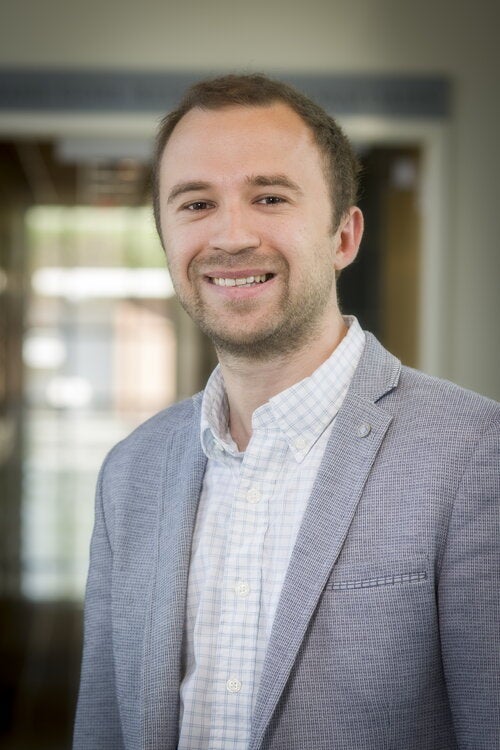
Meike Sievers is a Research Fellow at the Laboratory for Multiscale Bioimaging , part of the Center for Life Sciences at the Paul Scherrer Institute (PSI) in Switzerland. Her work focuses on advanced imaging techniques across multiple scales.
Patrick Le Tallec is a Professor of Mechanics at École Polytechnique in France, where he currently serves as Dean of the Bachelor Program and is a member of the M3DISIM project. His distinguished academic career spans multiple institutions including Université Paris Dauphine, INRIA (French National Institute for Research in Digital Science and Technology), and international universities such as Stanford University, University of Wisconsin, and Shanghai Jiao Tong University. He has held leadership positions including Vice President for Education and Head of the Laboratory of Solid Mechanics at École Polytechnique. His educational background includes: Graduate from École Polytechnique Ph.D. in Engineering Mechanics from The University of Texas at Austin (1980) Thèse d'Etat in Applied Mathematics from Université Pierre et Marie Curie in Paris (1981) Professor Le Tallec's research focuses on computational mechanics and applied mathematics with expertise in nonlinear mechanics, domain decomposition methods, and multiscale modeling. His work bridges theoretical mathematics with practical engineering applications, particularly in material science and fluid-structure interactions. He has developed advanced numerical methods for elasticity, viscoelasticity, and fluid dynamics with applications in industrial manufacturing and biomedical engineering. His recent publications demonstrate progression from foundational numerical methods to sophisticated multiscale approaches addressing complex engineering challenges in material science. The research shows particular emphasis on rubber mechanics, fatigue analysis, and computational methods for nonlinear structures, reflecting his ongoing commitment to solving real-world engineering problems through mathematical innovation. His scientific honors include: CISI award in Scientific Computing Prize Blaise Pascal of the French Academy of Sciences Chevalier des Palmes Académiques Chevalier de la Légion d'Honneur Officier de l'Ordre National du Mérite Professor Le Tallec has directed over 40 Ph.D. students from 10 different nationalities, demonstrating significant impact in academic mentoring. His research has been supported through extensive collaborations with industrial partners including Michelin, PSA Group, and Dassault Aviation, as well as scientific advisory roles at the French Alternative Energies and Atomic Energy Commission. He has served as president of the French Society of Applied and Industrial Mathematics and held editorial positions with leading journals in his field. His laboratory work centers around computational mechanics research, particularly through the M3DISIM project at École Polytechnique. His research team brings together mathematicians, engineers, and computer scientists to develop innovative solutions for complex problems in material science and structural mechanics, with applications ranging from industrial tire manufacturing to biomedical engineering.
Gerhard Wellein is a Professor for High Performance Computing at the Department of Computer Science of Friedrich-Alexander-Universität Erlangen-Nürnberg (FAU). He is the head of NHR@FAU (Erlangen National Center for High Performance Computing) and a member of the board of directors of the German NHR-Alliance. Since 2024, he has also served as a Visiting Professor for HPC at the Delft Institute of Applied Mathematics, Delft University of Technology. He holds a PhD in theoretical physics from the University of Bayreuth and has over two decades of experience in HPC education and research. Research Interests: His research focuses on performance modeling and engineering, architecture-specific code optimization, novel parallelization techniques, and the development of hardware-efficient building blocks for sparse linear algebra and stencil solvers. His work bridges computer science, applied mathematics, and computational physics, aiming to maximize efficiency on current and future HPC architectures, including exascale systems. Publication Trends: His recent publications emphasize analytical performance modeling (e.g., Roofline, oscillator models), energy efficiency, GPU optimization, and scalable linear algebra. They reflect a strong focus on both theoretical modeling and practical implementation, with applications in CFD, quantum physics, and molecular dynamics. Scientific Awards: 2011 Informatics Europe Curriculum Best Practices Award (shared with Jan Treibig and Georg Hager) for outstanding teaching contributions in HPC. Grants and Advising: He has led numerous third-party funded projects from the EU, BMBF, and DFG, including EoCoE-III, ESSEX, EXASTEEL, and ProPE. These projects focus on exascale software, performance engineering, fault tolerance, and multiscale simulation. He has mentored multiple researchers and students, contributing to the development of tools such as LIKWID, ClusterCockpit, and GEOPM. Labs and Teams: He leads the HPC research group at FAU and is deeply involved in national and international HPC initiatives. His team collaborates extensively on open-source HPC software and performance tools, fostering a strong community-driven approach to performance engineering.
Professor Tomasz Puzyn is affiliated with the University of Gdańsk , where he serves as Head of the Laboratory of Environmental Chemoinformatics within the Faculty of Chemistry and the Department of Environmental Chemistry and Radiochemistry. His research focuses on advancing predictive models for nanomaterial and chemical safety through chemoinformatics, machine learning, and Adverse Outcome Pathways (AOPs). Research Interests: Environmental Chemoinformatics Nanotoxicology QSAR/QSPR Modeling Machine Learning in Risk Assessment Endocrine Disruption Mechanisms Safe-by-Design Nanomaterials Recent Work Trends: Development of in silico New Approach Methods (NAMs) for nanomaterial genotoxicity and endocrine disruption Integration of transcriptomic data with AOPs for predictive toxicology Adsorption mechanisms of PFAS using modified biochar and metal oxides Quantum chemistry applications for environmental fate prediction Machine learning frameworks for drug delivery nanocarriers Harmonization of data reporting for regulatory acceptance Laboratory: Laboratory of Environmental Chemoinformatics Collaborative projects: CompSafeNano, HBM4EU
Dr. Elliot Carr is a Senior Lecturer in the School of Mathematical Sciences at Queensland University of Technology (QUT), Faculty of Science. He holds a PhD in Mathematics from QUT and has been a faculty member since 2015, progressing from Lecturer to his current rank. His research and teaching focus on applied and computational mathematics, with strong interdisciplinary applications. Education: PhD in Mathematics, Queensland University of Technology, 2009–2012 Bachelor of Applied Science (Honours) in Mathematics, QUT, 2008 Bachelor of Mathematics, QUT, 2005–2007 Elliot Carr's research lies at the intersection of applied mathematics and real-world physical systems. His work centers on developing and analyzing mathematical models of advection, diffusion, and reaction processes, particularly in heterogeneous media. He employs both deterministic (PDE-based) and stochastic (random walk) frameworks, contributing to analytical solutions, multiscale modeling, surrogate models, and numerical methods such as finite volume and Newton-Krylov techniques. His research has been applied to diverse fields including groundwater contamination, drug delivery, heat transfer, and tumor spheroid modeling. The latest publications reflect a consistent focus on transport phenomena in complex geometries and heterogeneous environments. Key themes include dual-grid mapping for contaminant transport, analytical modeling of drug release from spherical capsules, thermal diffusivity in shell geometries, and stochastic models of biological systems. His methodological contributions span analytical, numerical, and statistical approaches, demonstrating versatility across applied mathematics. Scientific Awards and Recognitions: JH Michell Medal, ANZIAM (2022) ARC DECRA Fellowship (2015) QUT Outstanding Doctoral Thesis Award (2012) University Medal, QUT (2008) Dean’s Award for top graduate in both Honours and Bachelor programs Keynote and plenary speaker at major conferences including ANZIAM and Forum “Math-for-Industry” Dr. Carr actively supervises PhD and Masters students, with completed and ongoing projects on diffusive transport, tumor modeling, and sports analytics. He has secured competitive research funding, including an ARC Discovery Project on multiscale modeling. His teaching includes computational mathematics, linear algebra, and differential equations, with a focus on MATLAB-based implementation. He is a member of the Australian Mathematical Society (AustMS) and ANZIAM. Research Labs and Teams: While not explicitly tied to a named lab, Carr is part of the broader Applied Modelling and Computation research environment at QUT. He collaborates extensively with researchers such as Ian Turner, Matthew Simpson, and Chris Drovandi, contributing to interdisciplinary teams in mathematical biology, environmental modeling, and statistical computation.
Franceschiello Benedetta is an Associate Professor at HES-SO Valais-Wallis School of Engineering, specializing in Technical and IT disciplines. She holds a PhD in Mathematical Neuroscience from Université Pierre et Marie Curie (Paris). Her work bridges applied mathematics, computational neuroscience, and neuroimaging, with a focus on visual perception modeling, MRI techniques, and neural dynamics. Teaching: Linear Algebra courses across multiple engineering bachelor programs Expertise: Combines mathematical modeling with neuroscientific applications to study optical illusions, brain connectivity, and ophthalmic diagnostics Key Affiliations: ISMRM, Organization for Human Brain Mapping (OHBM), Association for Research in Vision and Ophthalmology (ARVO) Research Interests: Computational modeling of visual cortex mechanisms underlying geometric optical illusions Development of MRI-based methods for eye structure segmentation and axial length estimation Analysis of brain network reliability through standardized MRI protocols Optimization techniques for medical imaging reconstruction (e.g., weighted LASSO problems) Recent Work Trends: Focus on integrating psychophysical experiments with computational models to elucidate perceptual mechanisms, emphasizing synergistic interactions between physical stimulus parameters. Active in advancing MRI applications for both clinical diagnostics and fundamental neuroscience research.
Prof. Julija Zavadlav is an Assistant Professor of Multiscale Modeling of Liquid Materials at the Technische Universität München (TUM), affiliated with the TUM School of Engineering and Design. Her research integrates physical modeling with machine learning and Bayesian techniques to develop multi-scale simulation frameworks for diverse applications in bioinformatics and engineering. Education: She earned her PhD in Physics from the University of Ljubljana (2015) and conducted postdoctoral research at ETH Zurich (2016–2019), where she received an ETH Postdoctoral Fellowship. Since 2019, she has held her current position at TUM. Research Interests: Her work focuses on advancing machine learning potentials, Bayesian uncertainty quantification, and multi-scale modeling for complex systems like ionic liquids, metal-organic frameworks, and biomolecules. Her ERC Starting Grant (2022) supports the SupraModel project, emphasizing scalable and interpretable models. Awards: Golden Teaching Award 2022 (Best Lecture), ERC Starting Grant 2022, and ETH Postdoctoral Fellowship. Her recent publications emphasize neural network potentials, transfer learning, and computational tools like JaxSGMC for Bayesian analysis. Grants and Labs: While specific lab names are not mentioned, her ERC grant underscores active funding. No formal student advisee list is provided, but her collaborative work suggests involvement in training next-generation computational scientists.
Gregory B. Olson is a Professor at the Massachusetts Institute of Technology (MIT) in the Department of Materials Science and Engineering, holding the Thermo-Calc Professor of the Practice title since 2020. He specializes in computational materials design, particularly in Integrated Computational Materials Engineering (ICME), which revolutionized industrial materials design. His research focuses on fracture resistance, high-performance alloys, and computational modeling of materials like steels, ceramics, and composites. Education: Bachelor of Science (1970) from MIT Doctor of Philosophy (1974) from MIT, advised by Morris Cohen Research Interests: Olson’s work bridges computational modeling and material innovation. He develops design methodologies for alloys, including transformation-toughened titanium alloys and ICME-driven steel designs. His contributions to materials genomics and additive manufacturing have advanced aerospace and defense applications. He pioneered Questek Innovations, applying ICME to industrial challenges like computational steel design. Awards & Honors: 2013: Foreign Member, Royal Swedish Academy of Engineering Science 2012: Member, American Academy of Arts and Sciences 2010: Member, National Academy of Engineering 2010: Gold Medal, ASM International 2001: Fellow, The Minerals, Metals & Materials Society Lab & Collaborations: He leads the Olson Research Group at MIT, focusing on computational materials design. His work integrates atom probe tomography, finite element modeling, and multiscale simulations to predict material behavior under extreme conditions.
Dr. Dazhi Jiang is a Professor at Western University's Department of Earth Sciences and a Distinguished Professor at Northwest University, China. His research focuses on linking structural geology with tectonics through microstructural analysis, numerical modeling, and fieldwork. He develops self-consistent micromechanical models to study multi-scale deformation in Earth's lithosphere, with applications to regions like the Canadian Shield and North China Craton. His work integrates field observations, lab experiments, and computational methods to understand large-scale tectonic processes. His research interests include deformation mechanisms, fabric development, and rheological heterogeneity. Key contributions include studies on metamorphic core complexes, quartz flow laws, and viscous inclusion dynamics. Dr. Jiang teaches courses in structural geology, field mapping, and continuum micromechanics at Western and collaborating institutions. Scientific recognition includes his Distinguished Professor title at Northwest University. He actively supervises graduate students and seeks candidates for projects in the Canadian Cordillera and East China, focusing on microstructure evolution and cratonic thinning mechanisms. Publications emphasize numerical modeling, tectonic deformation, and rheological analysis. His lab, the Structural Geology & Tectonics Laboratory, supports advanced research in deformation mechanics and lithospheric dynamics.
Michael W. Jenkins is a Professor of Biomedical Engineering at the Case Western Reserve University School of Medicine and a member of the Cancer Imaging Program at the Case Comprehensive Cancer Center. His research focuses on developing biomedical optics tools for studying congenital heart disease and peripheral nervous system disorders. Key techniques include optical coherence tomography (OCT), light-sheet microscopy, and infrared neuromodulation. The Jenkins Lab specializes in advancing 3D imaging modalities for real-time tissue analysis, aiming to reduce surgical delays and improve diagnostic accuracy. Research interests include rapid 3D tissue visualization to replace traditional frozen-section pathology, optical pacing of cardiac tissues, and corneal nerve imaging. His work bridges engineering and medicine, with applications in ophthalmology, cardiology, and neurology. Recent innovations include label-free microscopy techniques (e.g., MUSE imaging) and AI-driven segmentation tools for neural anatomy analysis. Publications highlight advancements in corneal crosslinking assessment, vagus nerve microanatomy characterization, and cardiac tissue imaging. The lab collaborates with industry to translate optical tools into clinical settings, emphasizing precision and real-time diagnostics. Teaching and mentorship are integral to his role, fostering interdisciplinary training in biomedical optics. Ongoing projects address unmet clinical needs in neural modulation therapies and regenerative medicine through optical platforms.
Dr. Alexander Mironenko is an Assistant Professor of Chemical & Biomolecular Engineering and Faculty Affiliate in Chemistry at the University of Illinois at Urbana-Champaign. His research focuses on computational catalysis and quantum chemistry, with a long-term goal of designing catalytic sites for sustainable chemical processes. He leads the Mironenko Virtual Catalysis and Quantum Chemistry Lab, which develops quantum mechanical methods to study heterogeneous catalyst mechanisms and materials. His work emphasizes catalyst stability, activity, and environmental impact. Research Interests include computational modeling of catalytic systems, electronic structure analysis, and reaction mechanisms for sustainable energy applications. Key projects involve studying ReOx/SiO2 catalysts for methanol carbonylation, MoC electrocatalysts, and planar chiral metallopolymers for enantioselective separations. The lab’s multiscale approaches bridge quantum mechanics and coarse-grained simulations for practical catalyst design. Recent achievements include a 2025 study on surface oxygen effects in α-MoC catalysts and a 2024 breakthrough on methanol carbonylation mechanisms. Collaborations with ACS Petroleum Research Fund and academic partners highlight his interdisciplinary impact. Advising Neil Tran (PhD student) and mentoring graduate teaching assistant Banhee reflect his commitment to student development. The lab’s cultural activities, like karaoke nights, foster teamwork alongside scientific rigor. Publications span ACS Catalysis, JACS, and Reaction Chemistry & Engineering, with over 40 articles advancing computational catalysis. Ongoing work explores data-driven and physics-based methods for catalyst discovery, aiming to address global energy and sustainability challenges.
Jan Huisken is a Humboldt Professor for Multiscale Biology at the Georg-August-Universität Göttingen, affiliated with the Johann Friedrich Blumenbach Institute of Zoology and Anthropology. His research focuses on advanced light sheet microscopy techniques for biomedical and developmental biology applications. Role: Humboldt Professor University: Georg-August-Universität Göttingen Department: Johann Friedrich Blumenbach Institute of Zoology and Anthropology Research interests include light sheet microscopy , biomedical imaging , and developmental biology with a strong emphasis on zebrafish models. He develops tools for tissue clearing , image processing , and 3D microscopy . The 15 most recent publications analyze innovations in light sheet microscopy, tissue clearing protocols, and computational methods for image restoration. These works span fields such as optical imaging , developmental cardiology , computational biology , and biomedical instrumentation . Huisken contributes to open-source microscopy systems like 'Flamingo' and 'BigFUSE,' aiming to democratize access to advanced imaging technologies. His work integrates engineering, computer science, and biology to solve complex imaging challenges.
Prof. Dr. Peter Sollich is a Professor of Theoretical Physics at Georg-August-Universität Göttingen, affiliated with the Institute for Theoretical Physics. His research spans non-equilibrium statistical physics with applications to soft matter, active systems, and complex networks. He maintains a small part-time appointment at King's College London. His primary research interests focus on non-equilibrium statistical physics , particularly soft and active matter rheology, jamming transitions, glassy dynamics, dynamical phase transitions, and inference from dynamical data. His work bridges theoretical physics with applications in materials science and network theory, emphasizing both fundamental mechanisms and quantitative modeling approaches. Analysis of his recent publications reveals strong thematic consistency in studying glassy dynamics and active matter systems , with increasing integration of machine learning techniques for network analysis. Key methodological threads include coarse-grained modeling, spectral analysis of complex systems, and non-equilibrium thermodynamics frameworks. His 2023-2025 work shows growing emphasis on nonreciprocal interactions in active mixtures and physics-inspired machine learning applications. Prof. Sollich actively supervises Bachelor's, Master's, and PhD students, welcoming thesis inquiries in theoretical physics. His group develops analytical and computational approaches to complex dynamical systems, with recent grants likely supporting work on network dynamics and active matter modeling (specific grants not detailed in source text). His research group operates within the Institute for Theoretical Physics at Göttingen, focusing on computational and analytical modeling of disordered systems. Current projects involve elastoplastic modeling of amorphous solids, spectral analysis of heterogeneous networks, and theoretical frameworks for active matter phase separation.
Josie Geris is a Reader in Hydrology at the School of Geosciences , University of Aberdeen, holding a 0.8 FTE position since 2022. Her work bridges monitoring, modeling, and environmental tracer analysis to understand catchment processes under environmental change. Education : PhD in Civil Engineering and Geosciences (2012) from Newcastle University; MSc and BSc in EcoHydrology and Earth Sciences from VU University Amsterdam. Research Interests center on: • Vegetation-soil-water linkages in water storage and transmission • Nature-based solutions for flood and drought management • Multiscale catchment hydrology and land use impacts • Stable isotope tracing and water resource modeling. Publications highlight applications in agroforestry, river woodlands, and data-limited environments across Scotland, Europe, and tropical regions. Recent grants focus on nature-based water supply management , FARM TREE integration in agriculture, and Scottish water resilience under climate change. Scientific Grants (2016–2024): £100K (PI) - Surface water-groundwater connections in nature-based solutions £505K (PI) - FARM TREE: Balancing farm and landscape demands £220K (Co-I) - UK-China Critical Zone science tools £250K (Co-I) - Limpopo basin drought-flood governance She supervises PhD students in hydrological modeling, isotopic studies, and agroforestry impacts, while co-supervising interdisciplinary projects with the School of Biological Sciences. Her collaborative work involves institutions like the Northern Rivers Institute and the Centre of Expertise for Waters (CREW) .
Samantha McBirney is an engineer and Professor of Policy Analysis at the RAND School of Public Policy within the RAND Corporation. Her work bridges engineering expertise with policy analysis, focusing on emerging technologies, military acquisition, and biotechnology. She holds a B.S. in Bioengineering from UC Berkeley, M.S. and Ph.D. in Biomedical Engineering from USC, and an MSc in Global Health Policy from the London School of Hygiene & Tropical Medicine. Her research emphasizes national security applications of biotechnology, medical readiness, and the impact of emerging technologies on defense strategies. Notable areas include blast injury mitigation, counterfeit pharmaceuticals in global health, and future military technologies like electric vertical takeoff aircraft. McBirney serves on the Pardee RAND Graduate School Faculty Committee on Curriculum and Appointment (FCCA), reflecting her academic leadership role. Her interdisciplinary approach combines technical expertise with policy analysis to address complex challenges in defense, health, and technology.