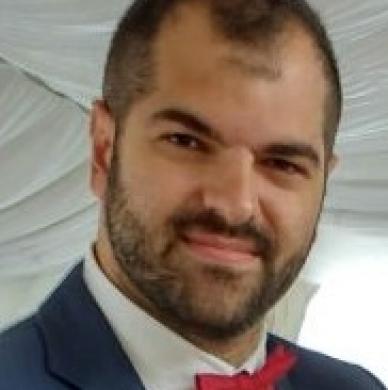
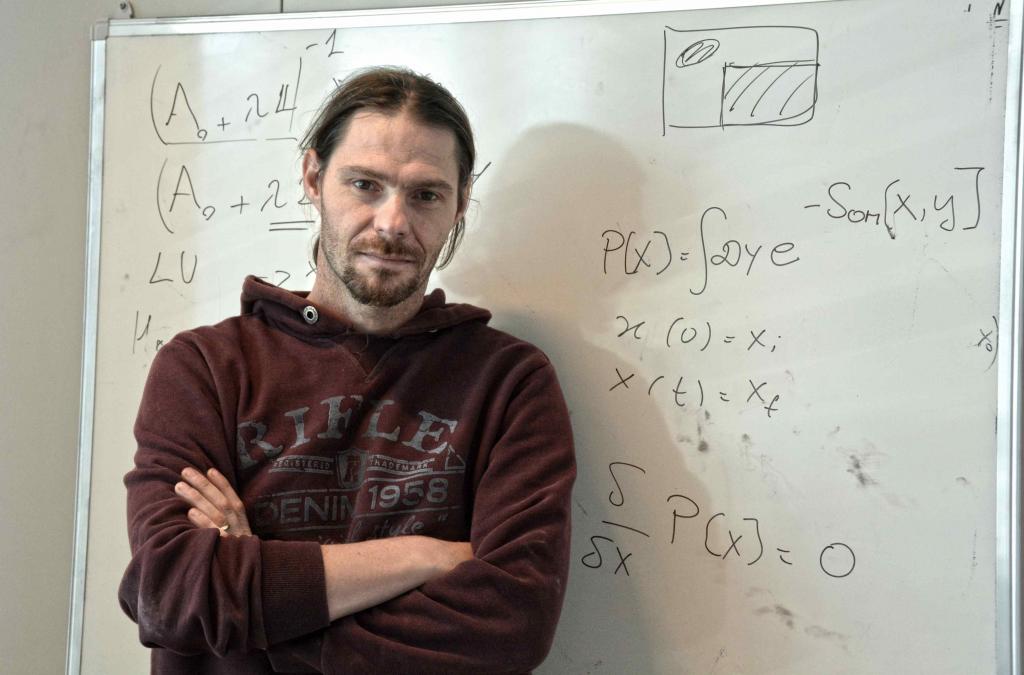
Carmine Putignano is an Associate Professor at the Politecnico di Bari , affiliated with the Department of Mechanics, Mathematics & Management . His research focuses on contact mechanics, tribology, and viscoelasticity, with applications in polymer bearings, hydrogels, and surface engineering. Recent work includes advancements in viscoelastic contact modeling, lubrication of soft materials, and laser-induced surface texturing. These studies address challenges in friction reduction, material durability, and biomedical applications like articular cartilage lubrication. His 15 most recent publications (2023–2025) span topics such as viscohydrodynamic lubrication, micro-indentation techniques, and multi-laboratory benchmarks for surface topography characterization. The research emphasizes numerical simulations, experimental validation, and energy-based methodologies.
Dr. Mario Milazzo is a researcher at the BioRobotics Institute of Sant'Anna School for Advanced Studies , with a current appointment at Massachusetts Institute of Technology (USA). His work bridges robotics, biomaterials, and computational modeling through interdisciplinary projects. He earned a PhD in BioRobotics (2016) from Sant'Anna School for Advanced Studies after completing his Mechanical Engineering degree at the University of Pisa (2010). Research Areas: Multiscale modeling, industrial robotics, biomaterials, and bioinspired design using deep learning. Industry Collaborations: Ge Oil&Gas, Brembo, Magneti Marelli, Piaggio. His recent publications highlight trends in industrial robotics (autonomous platforms, path planning, electro-hydraulic systems) and biomedical applications (bone regeneration, protein nanostructures, tympanic scaffolds). Key methodologies include sonification, molecular modeling, and AI-driven material design. Scientific Awards : Marie Skłodowska-Curie Individual Fellowships (MSCA-IF-GF) with MIT, University of Antwerp, Tufts, and University of Pisa He has co-authored 25+ international journal papers , 9 patents , and 24 conference contributions , while serving as a reviewer for 20+ journals and guest editor for Polymers (MDPI). His leadership roles in industry projects and symposium organization demonstrate his translational research focus.
Andrea Tridello is an Associate Professor in the Department of Mechanical and Aerospace Engineering at the Polytechnic University of Turin, Italy, and a member of the Interdepartmental Center J-Tech@PoliTO. His academic work focuses on mechanical design, fatigue analysis, and additive manufacturing technologies with significant contributions to Very High Cycle Fatigue (VHCF) research. Dr. Tridello's research spans multiple areas including Additive Manufacturing , Composite Materials , Fatigue Behavior , and Machine Learning applications for predicting material responses. His work addresses critical challenges in non-destructive testing methodologies for damaged composites, fatigue analysis of additively manufactured components, and the mechanical behavior of lattice structures. He has developed machine learning algorithms specifically for predicting mechanical behavior of structural materials. His recent publications demonstrate a strong focus on the intersection of additive manufacturing and fatigue analysis, with particular attention to defect characterization, statistical modeling of fatigue data, and development of predictive algorithms. His research also extends to composite materials, exploring impact damage assessment and non-destructive evaluation techniques across aerospace and automotive applications. Young Researcher Award from VHCF8 conference (2021) Steering Committee member of European Structural Integrity Society (ESIS) (2024-) Steering Committee member of Italian Fracture Group (2023-) Editorial Board member of FRACTURE AND STRUCTURAL INTEGRITY (2023-) Editor-in-Chief of MATERIAL DESIGN & PROCESSING COMMUNICATIONS (2023-) Dr. Tridello actively supervises PhD students Alessio Centola (39th cycle) and Rujun Li (38th cycle). He leads and participates in significant research projects including ML4FatigueDesign (statistical software for fatigue data analysis), FAAST (Fatigue on Additive Alloys Speedy Technique), and PLEIADES (advancing aerospace composites). His work has practical applications across aerospace, automotive, and industrial sectors. He is a key member of the Mechanics of Materials and Joints research group within DIMEAS, focusing on fatigue, impact, and testing methodologies for advanced materials and structures, contributing to both theoretical frameworks and practical engineering solutions.
Carmelo De Maria is an Associate Professor in Bioengineering at the Department of Information Engineering, University of Pisa. His research focuses on biofabrication, 3D/4D printing of sustainable biomaterials, and development of advanced medical devices for regenerative medicine. He leads projects in the Enrico Piaggio Research Center, emphasizing applications in tissue engineering, biomedical instrumentation, and low-resource healthcare solutions. Key research areas include: Bioprinting of self-deployable scaffolds for endoluminal tissue regeneration Development of in vitro microphysiological systems for disease modeling Sustainable biomaterials from biomass-derived polymers Open-source medical technologies for global health equity Recent work includes innovations in robotic-based in situ bioprinting, mechanical stimulation of cell cultures, and defect detection in additive manufacturing. His interdisciplinary approach bridges robotics, materials science, and clinical applications to address challenges in musculoskeletal, cardiovascular, and neural tissue engineering. Collaborative projects focus on international cooperation to enhance access to safe, affordable medical technologies in low-resource settings. He actively publishes in high-impact journals and contributes to regulatory frameworks for open-source medical devices.
Andrea De Martino is an Associate Professor at the Department of Applied Science and Technology (DISAT) , Polytechnic University of Turin , and a member of the SmartData@PoliTO Big Data and Data Science Laboratory. He works at the physics-biology interface , focusing on disordered systems, statistical mechanics, theoretical biology, and interdisciplinary applications. Scientific Branch: PHYS-02/A - Theoretical Physics of Fundamental Interactions, Models, Mathematical Methods ERC Skills: PE1_21 (Mathematics in Sciences), PE2_18 (Statistical Mechanics), PE3_16 (Physics of Biological Systems), PE3_15 (Statistical Physics and Complex Systems) Research Interests include disordered systems, critical phenomena, equilibrium/non-equilibrium statistical mechanics, theoretical biology (information processing, population dynamics, ecosystems), and interdisciplinary applications at the physics-biology interface. His work explores collective behavior, heterogeneity-fitness relationships, and metabolic strategies under environmental variability. Articles Trends reflect expertise in statistical mechanics applied to biological systems, with focus areas spanning RNA networks , microbial metabolism , phenotypic heterogeneity , gene regulation , and multi-cellular coordination . Recent publications address out-of-equilibrium dynamics in ceRNA systems, metabolic diversity analysis, and growth rate optimization in fluctuating environments. Research Projects include SIMBAD (2023-2027) - a Marie Skłodowska-Curie Action on statistical inference for multiscale biological data. He participates in EU-funded research under Horizon Europe , focusing on MSCA Excellent Science initiatives. Teaching encompasses Physics I/II and Electromagnetism modules for Computer, Aerospace, and Automotive Engineering programs. He serves on doctoral colleges for Physics PhD programs at both Polytechnic University of Turin (2014-2025) and Sapienza University of Rome (2014-2016). Laboratories include the Statistical Physics and Interdisciplinary Applications (DISAT) research group and affiliation with the Condensed Matter Physics and Complex Systems Institute (DISAT) at Polytechnic University of Turin.
Mattia Utzeri is a Researcher in the Department of Industrial Engineering and Mathematical Sciences at Università Politecnica delle Marche (UNIVPM) in Italy. His work focuses on mechanical design, machine construction, and advanced materials research, with particular expertise in additive manufacturing, mechanical testing, and computational modeling of advanced structures. Dr. Utzeri's research interests span multiple areas of mechanical engineering and materials science: Mechanical design and machine construction Additive manufacturing technologies and applications High strain rate material characterization Lattice and architected materials Piezoresistive and smart materials Multiscale mechanical analysis Dynamic testing methodologies His publication record demonstrates significant contributions to the understanding of mechanical behavior in advanced materials, particularly in the areas of 3D printed structures, high strain rate phenomena, and multiscale modeling. His recent work has focused on developing innovative testing methodologies like the 90-meter split Hopkinson tension-torsion bar and exploring the potential of topology-engineered piezoresistive lattices for sensing applications. The research trends show increasing focus on autonomous sensing capabilities and the integration of mechanical properties with electrical response in architected materials. Dr. Utzeri maintains regular office hours on Fridays at 11:00 in office Q180 at Via Brecce Bianche - Monte Dago campus, and can be contacted at m.utzeri@staff.univpm.it or by phone at 071 220 4488.
Alberto Tibaldi is an Associate Professor at the Department of Electronics and Telecommunications (DET) of Politecnico di Torino. He belongs to the College of Electronic, Telecommunications and Physics Engineering and the Microwave and Optoelectronics Group (MOG) at DET. His work focuses on physics-based modeling of semiconductor devices, with participation in international projects like EU MIRACLE and the Collaborative Research Alliance (CRA) for electronic materials modeling. Key Research Areas: Efficiency/reliability of LEDs and UV-LEDs Far-infrared image sensors Multiphysics CAD of VCSELs Si and III-V photonic integrated circuits His publications span optoelectronic device modeling, including NEGF-drift-diffusion approaches and plasmonic-organic hybrid modulators. Awards include the Premio 'Optime' (2012) and NEMO2014 Honorable Mention (2014). Scientific Affiliations: National Research Council (CNR-IEIIT) (2019-) Multiscale Modeling of Electronic Materials (MSME) (2016-) EU MIRACLE Project (2021-)
Emanuele MACCA is a permanent researcher at the Department of Mathematics and Computer Science, University of Catania, specializing in Numerical Analysis. He holds a fixed-term RTD-a contract and focuses on developing efficient numerical schemes for simulating physical phenomena. Education Graduated with honors from University of Catania (2018) PhD in Mathematics and Computational Sciences from University of Palermo (2022) Research Interests His research centers on: Modeling hyperbolic systems with conservation laws Designing finite-difference, IMEX, and finite-volume schemes Simulating environmental/geophysical phenomena like shallow water systems Multiscale simulation techniques for complex systems He investigates benchmark problems (e.g., Sod shock problem) to validate numerical methods while addressing coastal evolution, sedimentation, and wave dynamics in estuaries. Grants & Awards Marie Curie pre-doctoral fellowship at University of Malaga (2019-2020) Research grant at University of Catania (2022-2023) Contact Office: 236 bis Phone: 095 7383201 Office hours: Mondays 10:00-12:00 (via email or Teams)
Fulvia Arfelli is an Associate Professor at the Department of Physics , University of Trieste. She actively participates in the Department Council, Course of Study Recommendations, and Doctoral Colleges for multiple Physics cycles (XXIX to XXXIX). Her research focuses on Medical Physics and Biophysics within the Innovative Synchrotron Radiation Imaging Techniques group. Research Leadership : Scientific manager for projects like "Fully-digital 3D imager for gamma and hard-X rays" and participant in "A compact multimodal X-ray system for 3D micro-imaging of soft tissue." Collaborations : Works closely with INFN, ELETTRA Synchrotron, and local institutions like the Trieste University Hospital. Research Themes : Her work bridges synchrotron radiation , phase-contrast imaging , and medical diagnostics , with applications in Alzheimer’s early detection , neuroimaging , and cultural heritage preservation . She explores advanced imaging methods to improve clinical specificity and reduce radiation doses. Scientific Contributions : Recent publications highlight 3D corrosion analysis, pulmonary fibrosis characterization, and fetal skeletal studies. Her projects, such as the MUST initiative funded by the Ministry of University and Research, focus on integrating spectral and phase-contrast X-ray techniques. Teaching & Mentorship : Involved in graduate education as a member of doctoral college committees. Technical Expertise : Develops detector technologies for X-ray and gamma ray imaging, emphasizing time-to-digit converters.
Claudio Chiastra is an Associate Professor at the Department of Mechanical and Aerospace Engineering (DIMEAS) at the Polytechnic of Turin, where he is also a member of the Interdepartmental Center PolitoBIOMed Lab - Biomedical Engineering Lab. His academic career spans multiple institutions including the Polytechnic University of Milan and Erasmus Medical Center, demonstrating his expertise in cardiovascular biomechanics and medical device development. Dr. Chiastra's research focuses on biomechanics, cardiovascular system modeling, computational approaches to coronary artery disease, digital twin technology, endovascular device design, and multiscale modeling of vascular systems. His work integrates optical coherence tomography with stent technology to advance cardiovascular interventions. His research lines include multiscale modeling of vascular adaptation processes, design and optimization of endovascular devices, 3D reconstruction of vascular geometries through multimodal imaging integration, and studying relationships between morphometric, mechanical and hemodynamic descriptors in vascular diseases. His recent publications reveal a strong emphasis on computational modeling of coronary interventions, stent design optimization, plaque analysis, and hemodynamic assessment. These works demonstrate his leadership in applying advanced computational techniques to solve clinical cardiovascular challenges, particularly in coronary artery disease treatment and prevention. GNB (National Bioengineering Group) Doctoral Award (2014) Dr. Chiastra actively mentors PhD students including Francesca Rossi, Mariachiara Arminio, Graziana Maria Ragonese, and Sara Zambon. He leads significant research projects including RESET (REthinking femoral artery Stents) and PREDICT (Adverse cardiovascular events in coronary Plaques), demonstrating his leadership in securing competitive research funding. His editorial roles as Associate Editor for Frontiers in Medical Technology, Frontiers in Cardiovascular Medicine, and Scientific Reports highlight his recognition in the field. As a member of the PolitoBIOMed Lab, Dr. Chiastra contributes to a collaborative research environment focused on biomedical engineering solutions. His work bridges engineering principles with clinical cardiovascular applications, particularly in the development and optimization of endovascular devices and computational models for personalized medicine approaches.
Sonia Lucia Fiorilli is a Full Professor at the Department of Applied Science and Technology (DISAT) at Polytechnic University of Turin. She is affiliated with multiple research laboratories including 3D Fabrication Lab, Vibrational Spectroscopy Lab, and Ceramics Recycling Facility. Research interests: Biofabrication, Biomaterials, Tissue Engineering, Drug Delivery Systems, Nanostructured Materials ERC Skills: PE5_7 (Biomaterials), PE5_6 (Advanced Materials), PE5_3 (Surface Modification) SDG Contributions: Goal 3 (Health), Goal 7 (Clean Energy), Goal 12 (Responsible Consumption) Her recent publications (2022-2025) focus on: 3D bioprinting for biomedical applications Electrospun polymer matrices for drug delivery Recycling of solid oxide cell components CO2 conversion using nanostructured catalysts Biomass-derived chemical processes Bone regeneration scaffolds Scientific Awards: National Scientific Qualification Band II (2013) Inventor of national patent for nucleic acid diagnostics device Advising: Supervised 5 PhD candidates in Materials Science & Biomedical Engineering. Research projects include BEST4Hy (hydrogen recycling) and ZODIAC (bone regeneration materials).
Rodica Toader is an Associate Professor in the Department of Mathematics, Computer Science and Geosciences at the University of Trieste. Her research focuses on fracture mechanics, calculus of variations, and mathematical analysis of material behavior. She has collaborated extensively with researchers like Gianni Dal Maso and Gianni Lazzaroni, contributing to models of crack propagation, viscoelastic systems, and damage mechanics. Her work integrates theoretical analysis with applications in solid mechanics and nonlinear elasticity. Key research interests include energy-dissipation balances in dynamic systems, homogenization of free discontinuity functionals, and the mathematical modeling of rate-independent processes. She has organized notable conferences such as the 2024 'Frontiers of the Calculus of Variations' and 2021 'Advanced Variational Methods for Solid Mechanics.' Her publications emphasize rigorous mathematical frameworks for crack evolution, including studies on visco-energetic solutions, quasi-static models, and the interplay between plasticity and fracture. While no formal awards are listed, her extensive collaboration network and high-impact papers reflect her significant contributions to applied mathematics and mechanics.
Elisa Davoli is a Full Professor at TU Wien's Institute for Analysis and Scientific Computing, leading the Multiscale Calculus of Variations research group. Her work focuses on materials science, calculus of variations, and partial differential equations, with applications in solid mechanics, plasticity, and magnetoelasticity. She has been awarded the Richard von Mises Prize (2020) and the FWF START Prize (2020). Her research bridges theoretical analysis with practical applications, including homogenization theory, phase transitions, and optimal control in material systems. Key research interests include multiscale modeling, variational methods for material failure, and mathematical aspects of metamaterials. Recent projects address high-contrast materials, nonlocal denoising models, and magnetic skyrmions. Davoli has organized workshops on fracture mechanics, calculus of variations, and imaging challenges. She teaches courses in mathematical analysis, partial differential equations, and elasticity theory, and has mentored students in applied mathematics and mechanics. Grants: FWF START Project (Tunable materials), Elise Richter Grant (Plasticity and magnetoelasticity), GAČR Joint Project (Large Strain Challenges). Events: Organized Bio-PDE Days (2024), 3rd Austrian Calculus of Variations Day (2023), GAMM Microstructure Seminar (2023).
Pietro Faccioli is an Associate Professor at the Physics Department of the University of Trento and a permanent member of the Trento Institute for Fundamental Physics and Applications (INFN-TIFPA). His research focuses on the theoretical physics of biological matter, including quantum and statistical field theory, stochastic dynamics, and enhanced sampling algorithms applied to protein folding and conformational transitions. He is part of the Statistical and Biological Physics (SBP) group, contributing to projects like NET4EXA and exploring neural network modeling. Research interests include: Quantum and statistical field theory applications in biology Stochastic dynamics in biological systems Protein (mis-)folding mechanisms Neural network learning dynamics Recent work highlights advancements in multiscale modeling, low-resolution neural activity analysis, and confinement effects on topological defects. His team actively participates in collaborative projects like NET4EXA, aiming to bridge theoretical physics and computational biology. Contact: pietro.facciolii@unitn.it , Department of Physics, University of Trento, Via Sommarive 14, 38123 Trento, Italy.
Giovanni Maizza is a Full Professor at the Department of Applied Science and Technology (DISAT) at Politecnico di Torino, Italy. He leads research in advanced materials processing, multiphysics modeling, and additive manufacturing, with applications in aerospace, automotive, and industrial tooling. He has held leadership roles in EU and Italy-Japan collaborative projects and serves on international standards committees. Full Professor, DISAT, Politecnico di Torino Scientific Director of multiple national and commercial research projects Coordinator, Italy-Japan Network of Excellence on Nanomaterials Member, ISO/TC 164 and UNIMET standards committees Guest Editor, MATERIALS (2020–2022) Research Interests: Giovanni Maizza specializes in the development of multiphysics and multiscale methodologies for designing and optimizing materials and manufacturing processes. His work emphasizes reducing experimental burden through advanced simulation and modeling. Key areas include additive manufacturing (especially EBM of Ti6Al4V), spark plasma sintering, laser-based deposition and repair, powder metallurgy, and the processing of nanostructured and superhard materials. His research is highly interdisciplinary, combining computational modeling with experimental validation. Publication Trends: His recent publications focus on spark plasma sintering of ceramics and composites, microstructure modeling in aluminum alloys, and the development of transparent or superhard materials. There is a strong emphasis on process-structure-property relationships, with frequent use of finite element and particle-based simulations to understand thermal, mechanical, and microstructural evolution during processing. Scientific Awards and Recognitions: Fellow, UNIMET (2021–present) Fellow, ISO/TC 164 – Mechanical Testing of Metals (2021–present) Permanent Member, UNI/CT 026/GL 03 – Mechanical Testing of Metallic Materials Guest Editor, MATERIALS journal (2020–2022) Advising and Grants: While specific student names are not listed, Maizza has supervised numerous research projects funded by industry and public grants. He has served as Scientific Director for projects funded by Danieli SpA, KEMEX Ltd, AVIO GE SPA, and Punch Torino SPA. His work includes EU-funded initiatives and collaborations with Japanese laboratories (NIMS, AIST). He has developed custom simulation codes and utilized commercial software for industrial clients. Labs and Research Teams: He is affiliated with the Center of Modelling and Design of Materials and Processes (DISAT), where he leads research integrating computational modeling, experimental testing, and industrial application. His team works on developing self-consistent multiphysics codes using Fortran, MATLAB, and C++, and applies tools like ANSYS, COMSOL, and LS-DYNA.