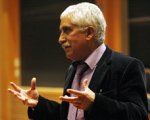
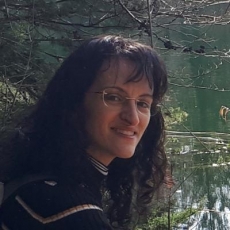
Christoph Lhotka is an Assistant Professor in the Department of MATHEMATICS FOR ECONOMICS AND FINANCE at the University of Rome Tor Vergata. His academic career includes teaching Calculus and Mathematics courses across Bachelor’s programs. His research focuses on celestial mechanics, orbital dynamics, and space plasma physics, with particular emphasis on charged dust behavior, interplanetary magnetic fields, and resonance phenomena in planetary systems. Key research areas include the analysis of Lagrange points, tidal effects on planetary systems, and solar wind interactions with dust particles. He has contributed to studies using spacecraft data from missions like BepiColombo and MMS to explore Mercury’s environment and solar wind turbulence. Recent work highlights include investigations into co-orbital dust dynamics near Venus and Jupiter, stability of resonant systems, and the role of electromagnetic transport in heliospheric environments. His publications often bridge theoretical models with observational data, addressing fundamental questions in astrophysics and dynamical systems. No scientific awards or grants are explicitly mentioned in the provided texts. He has not listed advisees or students, though his teaching roles suggest involvement in academic mentorship.
Nicola Bellomo is a Distinguished Professor at the University of Granada and holds the title of Professor Emeritus at the Polytechnic University of Torino. He specializes in Mathematical Physics and Applied Mathematics, focusing on complex systems and their modeling. His academic roles include editorial leadership as Editor-in-Chief of the Mathematical Models and Methods in Applied Sciences and EMS Surveys in Mathematical Sciences . Research Interests: His work spans mathematical frameworks for complex systems, including active particles methods, immune competition modeling, vehicular traffic dynamics, crowd behavior analysis, and swarm theory. He has pioneered interdisciplinary approaches to biological and social systems, with notable contributions to tumor dynamics and pandemic modeling. Scientific Awards: Recognized as a Highly Cited Mathematician since 2014 and honored with the Third Level Honor by the Italian President. He delivered prestigious lectures such as the Shank Lecture (2009) at Vanderbilt University and a special lecture at an Oberwolfach workshop (2014). Advising & Grants: Led EU-funded projects like SAFECITI (crowd safety) and EVACUATE (evacuation systems). Collaborated through ERASMUS MUNDUS and FP7 initiatives addressing genetic diseases, social conflicts, and health research. Served as work-package leader in multiple EU projects (2008–2017). Affiliations & Boards: Former President of the Italian Society of Industrial and Applied Mathematics (SIMAI, 2009–2016). Current President of Gruppo2003. Member of scientific boards for INdAM and G.N.F.M., and academic senate roles at Politecnico di Torino. Europe coordinator for oncology-related research networks (2000–2008).
Silvia Marconi is a Researcher at the Department of Methods and Models for Economy, Territory, and Finance at Sapienza University of Rome. She teaches the Basic Mathematics Course for Economics and Finance students and coordinates doctoral tutoring services. Her academic background includes a PhD in Mathematical Models and Methods for Technology and Society from Sapienza University. Her research spans applied mathematics with focus areas in: Biomedical modeling of cardiovascular and pulmonary systems Computational approaches to stem cell therapy and tissue regeneration Image processing techniques for digital forensics Signal processing and frequency analysis Marconi's recent publications demonstrate strong interdisciplinary collaboration, particularly in developing computational models for medical applications. Her work frequently combines mathematical theory with clinical problems, especially in cardiology and medical device simulation. The research outputs show consistent focus on developing numerical solutions for physiological systems. She has held multiple research positions including at the National Research Council (CNR) and has collaborated on projects investigating cardiovascular modeling, stem cell behavior, and image processing algorithms. Her teaching experience includes courses in Mathematical Analysis for Engineering programs at both undergraduate and doctoral levels.
Luigi Preziosi is a Full Professor in the Department of Mathematical Sciences "GL Lagrange" (DISMA) at Politecnico di Torino , where he conducts interdisciplinary research at the intersection of mathematics, biology, and engineering. He is a member of the Interdepartmental Center PolitoBIOMed Lab and actively contributes to doctoral programs in Complex Systems for Quantitative Biomedicine at both Politecnico di Torino and the University of Turin. Research Interests: Mathematical modeling of cancer, focusing on tumor growth, cell invasion, and vascular network formation. Mechanics of cell aggregates, tissue growth, and multiphase modeling incorporating adhesion and stress relaxation. Biomechanics of cellular systems, including cell motility, durotaxis, and response to mechanical stretch. Engineering applications such as windblown sand mitigation, avalanche dynamics, soil mechanics, and composite materials manufacturing. His recent publications highlight a strong trend in multiscale and multiphase modeling , particularly in simulating tumor spheroids, cellular reorientation under mechanical stimuli, and the role of the extracellular matrix in cancer progression. These works integrate biomechanics with kinetic and continuum models to understand complex biological behaviors. Scientific Recognition: Fellow, Accademia dei Lincei (2016–present) Corresponding Member, Interuniversity Center for Mathematics Applied to Biology (CIMAB) (2010–present) Editorial and Academic Service: He holds editorial positions in several leading journals, including Mathematics in Engineering (President of Editorial Committee), PLOS ONE , Journal of Theoretical Biology , and Mathematical Medicine and Biology . He has led major research projects funded by the Italian PRIN and EU H2020 programs, such as SMaRT and DERMA. Advising and Research Leadership: He has supervised PhD students including Gabriele Fioretto and Claire Claude Yvonne Alamichel , and leads research groups focused on mathematical physics and biomedical modeling. His work bridges theoretical development with practical applications in oncology and environmental engineering. Laboratories and Research Networks: He is affiliated with the PolitoBIOMed Lab and has participated in international research networks such as M3CS-TU TH, SMaRT, and mcrtn, fostering collaboration in mathematical biosciences.
Annachiara Colombi is a fixed-term researcher at the Department of Mathematical Sciences "GL Lagrange" (DISMA), Politecnico di Torino, Italy. Her work lies at the intersection of mathematical physics, biophysics, and environmental modeling. She is affiliated with multiple academic colleges, including the College of Mathematical Engineering (Member), College of Architecture and Design (Member), and College of Environmental and Land Engineering (Invited member), reflecting her interdisciplinary contributions. Her research focuses on developing and analyzing mathematical models to understand complex biological and environmental systems. Key interests include cell migration under mechanical stimuli , non-local modeling in biological contexts , global sensitivity analysis for model validation , and applications in cancer-on-chip experiments and agricultural system modeling . She employs tools from mathematical physics and computational modeling to address problems in biophysics and sustainability. The recent publications demonstrate a strong trend in applying advanced mathematical techniques—particularly non-local integro-differential equations and stochastic particle models—to real-world biological systems. Her work spans from cellular-level phenomena (e.g., cell reorientation, collective migration) to macro-scale environmental models (e.g., cropping systems), unified by the use of sensitivity analysis and rigorous mathematical frameworks. She has made significant contributions through peer-reviewed journal articles and book chapters in prestigious publications, often in collaboration with leading researchers such as Luigi Preziosi and Marco Scianna. Fixed-term researcher, Law 240/10 art.24-A Scientific disciplinary sector: MATH-04/A - Mathematical Physics Active teaching roles in Aerospace Engineering, Architecture, and Mathematical Sciences Annachiara Colombi actively teaches across various programs, serving as Course Lecturer, Instructor, and Collaborator in courses such as Linear Algebra and Geometry , Mathematical Principles , and Global Sensitivity Analysis at both undergraduate and PhD levels. There is no public information on advised students or research grants. She is a member of the Models and Methods of Mathematical Physics research group within DISMA, which supports her theoretical and applied work.
Umberto Morbiducci is Full Professor of Industrial Bioengineering at the Department of Mechanical and Aerospace Engineering (DIMEAS) , Politecnico di Torino , Italy. He holds a Master's degree in Electronic Engineering from University of Rome La Sapienza and a PhD in Mechanical Engineering from Università Politecnica delle Marche, Ancona. He serves as Coordinator of Biomedical Engineering BS/MS programs and heads the Biomedical Simulations Unit since 2012. Research Interests focus on cardiovascular fluid mechanics , computational hemodynamics , digital twin , and in silico medicine . His work spans Prosthesis and artificial organ design Multiscale modeling (from atomistic to continuum) Dynamic culture devices (bioreactors) for tissue engineering Transport phenomena in biomedical systems Recent Articles highlight trends in hemodynamic risk assessment , stent design optimization , and AI-driven cardiovascular diagnostics . Key topics include coronary plaque stability, YAP mechanoactivation in vascular grafts, and CPAP device mechanics. Scientific Awards : Jack Perkins Prize (IPEM, 2018) ASME Swiss Section Young Engineer Award (2013) ESB Travel Award (2012) TERMIS Travel Award (2012) Editorial Roles : Associate Editor, Annals of Biomedical Engineering (2013-) Associate Editor, Frontiers in Cardiovascular Medicine (2017-) Associate Editor, Journal of Biomechanics (2022-) Editorial Board, Computers in Biology and Medicine (2021-) Labs & Collaborations : Board member, PoliToBIOMed Lab (80+ researchers) Bilateral agreements with Beihang University (China) and Cyprus University of Technology Scientific Director for projects with Istituto Superiore di Sanità
Alberto Milazzo is Full Professor of Aerospace Structures at University of Palermo's Engineering department. His research develops computational methods for aerospace structures, composite materials, and fracture mechanics. Teaching responsibilities include Aerospace Construction, Aerospace Structures, and Materials courses. Research advances numerical methods for structural analysis including discontinuous Galerkin formulations, boundary element techniques, and homogenization approaches for complex materials. Published work demonstrates applications in UAV design, morphing structures, and hydrogen storage systems for sustainable aviation. Recent projects involve European collaborations on multiscale analysis of aircraft structures.
Daniele Padula serves as an Associate Professor in the Department of Biotechnology, Chemistry and Pharmacy at the University of Siena, where he teaches Applied Computational Chemistry, Organic Chemistry, and Heterocyclic Organic Chemistry for Chemistry, Biotechnology, and Pharmacy degree programs. His institutional contact details include office location (II lotto, III floor, room B_03_86) and direct communication channels through university email and phone systems. Padula's research integrates computational and organic chemistry methodologies to investigate fundamental properties of organic electronic materials. His primary focus areas include quantum-mechanical modeling of charge transport mechanisms, design of chiral photoluminescent systems with inverted singlet-triplet gaps, development of accurate force fields for molecular simulations, and computational exploration of photoswitches and organic semiconductors. This interdisciplinary work bridges theoretical chemistry with practical applications in optoelectronics and materials science. Analysis of his 15 most recent publications (2024-2025) reveals three dominant research thrusts: (1) Advanced computational protocols for quantum-mechanically derived force fields (evident in JOYCE3.0 development), (2) Fundamental studies of chiral phenomena in organic materials for circularly polarized luminescence applications, and (3) Multiscale modeling of charge and exciton transport mechanisms in organic semiconductors. His work increasingly incorporates machine learning techniques to accelerate materials discovery while maintaining quantum chemical accuracy. Scientific awards: No awards or fellowships were documented in the provided materials. Advising and grant activities: The available documentation does not specify doctoral students, postdoctoral researchers, or externally funded research projects. His teaching portfolio indicates supervision of graduate and undergraduate theses within his computational chemistry courses. Research infrastructure: While specific laboratory facilities aren't detailed, his publication record suggests active participation in computational research groups with access to high-performance computing resources, likely through the University of Siena's computational chemistry infrastructure and potential collaborations with experimental groups for validation studies.
Paolo Manfredi is a Full Professor at the Department of Electronics and Telecommunications (DET) of Politecnico di Torino, Italy. He actively contributes to the EMC Group (Electromagnetic Compatibility) and serves as an Associate Editor for journals including IEEE Journal on Multiscale and Multiphysics Computational Techniques and International Journal of Circuit Theory and Applications. His research focuses on uncertainty quantification in circuits, surrogate modeling , machine learning applications, and signal integrity analysis . He leads projects on compact dynamical modeling of complex systems and stochastic analysis of interconnects. Recent publications highlight advancements in active learning for PCB line uncertainty quantification, connector degradation impacts on microwave signals , and SPICE-compliant IC model compression , reflecting his expertise at the intersection of electrical engineering and data science . Scientific Awards: Best Paper Award EPEPS (2010, 2013) Premio Optime (2010) URSI Young Scientist Award (2011) Honorable Mention - IMS (2011) He supervises PhD students in projects spanning 5G/6G metasurfaces , power cable corrosion assessment , and neural network applications in circuit design.
Marco Ernesto Vallone is a Fixed-term Assistant Professor at the Department of Electronics and Telecommunications (DET) at Politecnico di Torino (PoliTO), where he is also a member of the PhotoNext Interdepartmental Center for Applied Photonics. His academic appointments include membership in the College of Electronic, Telecommunications, and Physics Engineering. He holds national scientific qualifications for Associate Professor positions in Electronics (09/E3), Theoretical Physics of Matter (02/B2), and Experimental Physics of Matter (02/B1). Dr. Vallone's research spans multiple areas of optoelectronics and semiconductor physics, with a particular focus on infrared detectors, light-emitting diodes, silicon photonics, and photodetectors. His work combines theoretical modeling with practical applications, specializing in multiphysics CAD of vertical-cavity surface-emitting lasers (VCSELs), efficiency and reliability of visible and UV LEDs, multiscale physics-based modeling of optoelectronic devices, far-infrared image sensor design, and Si and III-V photonic integrated circuits. His research addresses critical challenges in high operating temperature (HOT) infrared detectors, germanium-on-silicon waveguide photodetectors, and plasmonic structures for enhanced optoelectronic performance. His extensive publication record from 2022-2025 demonstrates a consistent research trajectory focused on advancing infrared detection technology, photodetector design, and semiconductor device modeling. His work shows a progression from fundamental quantum mechanical investigations to practical engineering applications, particularly in collaboration with industry partners like Cisco, Huawei, and AIM Infrarot-Module. The research consistently bridges theoretical physics with practical device engineering, with increasing emphasis on plasmonic enhancement techniques and high-temperature operation of infrared detectors. Scientific Qualifications: National Scientific Qualification as Associate Professor in Electronics (09/E3), since November 2020 National Scientific Qualification as Associate Professor in Theoretical Physics of Matter (02/B2), since May 2021 National Scientific Qualification as Associate Professor in Experimental Physics of Matter (02/B1), since May 2021 Dr. Vallone serves as a PhD co-supervisor and Master's thesis co-supervisor, notably guiding Matteo Giovanni Carmelo Alasio's doctoral research on "Ge-on-Si photodetectors for silicon photonics: multiphysics modeling and design." His research funding includes multiple industrial contracts as Principal Investigator with AIM Infrarot-Module, Cisco Systems, and Huawei, focusing on infrared detector design, silicon photonics integration, and laser development. He has also participated in international research collaborations with Boston University, University of Cambridge, University of Padova, and University of Modena and Reggio Emilia, particularly studying GaN/InGaN multi-quantum well LEDs. As a member of the Microwave and Optoelectronics Group (MOG) at DET, Dr. Vallone contributes to the department's research infrastructure while maintaining active industry partnerships that translate academic research into practical applications for telecommunications, defense, and astronomical imaging systems.
Prof. Vittorio Romano (b. 1966) is a Full Professor of Mathematical Physics at the Department of Mathematics and Computer Science, University of Catania, Italy. He obtained his Laurea Magna cum Laude (1989) and PhD in Mathematics (1994) from Catania. His research focuses on charge/phonon transport modeling in semiconductors and graphene , non-equilibrium thermodynamics , and numerical methods for hyperbolic systems . Research areas include relativistic fluid dynamics, nonlinear wave propagation, stability of shock waves, and applications in cosmology. He has led major EU projects like COMSON (FP6) and AMBEATION (MSCA-RISE), and developed MEP-based hydrodynamic models for nanoscale devices. Scientific leadership : Director of A.M. Anile Interdepartmental Center, ECMI Council member, GNFM Co-Chair Key publications : 24 (Scopus) and 35 (Google Scholar) H-index with over 3900 citations International collaborations : Autonomous University of Barcelona, Kaiserslautern University, ST-Microelectronics, Synopsys He has supervised 9 PhD students in topics ranging from quantum transport to Monte Carlo simulations, and organized conferences like SCEE 2018 and ICTT 2015. His editorial roles include associate editor for Frontiers in Applied Mathematics and Statistics and guest editor for Entropy.
Corsini Alessandro is a Full Professor at the Department of Engineering, Sapienza University of Rome, specializing in renewable energy systems, computational fluid dynamics, and turbomachinery. His research focuses on optimizing offshore wind energy systems, hydrogen storage, and sustainable energy communities. He leads projects on wind turbine aerodynamics, fluid-structure interaction, and machine learning applications in engineering. Key research areas include wake dynamics in offshore wind farms, adaptive turbine blade design, and the integration of renewable energy technologies into urban and island systems. His work addresses challenges in energy efficiency, environmental impact mitigation, and innovative solutions for sustainable power generation. Recent studies explore technology roadmaps for energy sectors, desalination in renewable energy communities, and predictive modeling of material erosion in turbines. He collaborates on experimental testing of wave energy converters and machine learning-driven analysis of energy systems. Corsini has contributed to advancements in computational fluid dynamics, including variational multiscale methods and surrogate modeling for noise prediction. His interdisciplinary approach bridges engineering, environmental science, and data-driven innovation.
Gianni Dal Maso is a Full Professor at SISSA Trieste. His research focuses on Calculus of Variations, Partial Differential Equations, and their applications in Fracture Mechanics, Material Science, and Homogenization. He has contributed to foundational work on Γ-convergence, free discontinuity problems, and variational models of brittle fracture. His recent studies explore dynamic viscoelasticity, cohesive zone models, and nonlocal functionals. He actively organizes international conferences and workshops in these fields, such as the 2025 Frontiers in Calculus of Variations and the 2022 STAMM conference. His work bridges theoretical advancements with applications in engineering and physics. Research Interests: Γ-convergence and homogenization techniques Free discontinuity problems in mechanics Dynamic and quasistatic fracture models Nonlocal and vectorial functionals Variational methods in elasticity and plasticity Key Themes in Publications (2020–2025): Energy balance in viscoelastic systems with memory effects Integral representations of Γ-limits for nonlocal functionals Homogenization of cohesive surface terms in heterogeneous materials Dynamic crack propagation and island motion in thin films He has not been awarded specific scientific prizes mentioned in the text but maintains leadership in organizing academic events and mentoring research groups in SISSA's Mathematics Department.
Francesca Matrone is a Fixed-term Assistant Professor in the Department of Environment, Land and Infrastructure Engineering (DIATI) at Politecnico di Torino, Italy. Her work bridges geomatics, artificial intelligence, and cultural heritage conservation, with a focus on 3D modeling, GIS, and HBIM integration for urban and historical environments. Her research interests include Geomatics, Cultural Heritage Digitization, AI in Geospatial Analysis, Drone-Based 3D Modeling, Semantic Segmentation of Point Clouds, and Smart Cities . She applies advanced technologies like UAVs, deep learning, and BIM-GIS integration to enhance the documentation, maintenance, and resilience of built heritage. The recent publications highlight a strong trend in using AI and machine learning for semantic segmentation of 3D heritage models, integration of HBIM with GIS using standards like IFC and CityGML, and drone-based photogrammetry for urban and territorial planning. These works reflect a multidisciplinary approach combining computer science, civil engineering, and digital heritage. Francesca Matrone is actively involved in research projects such as: HERITALISE (2025–2028, EU-funded): Digitization and cloud visualization of heritage buildings ACLIMO (2024–2026): Research collaboration with APAM on protected areas COGNITIO-FORT (2025–2026): Scientific Director for a project with Unione Montana Valle Stura She teaches across multiple programs: PhD : GeoAI for advanced urban analyses; Drones for 3D modeling (Main Teacher) Master’s : GIS Modeling for City and Land; Knowledge of Built Heritage under Climate Change Bachelor’s : GeoAI: Artificial Intelligence and Geospatial Data; Topography (Course Collaborator) She is a member of the Teaching Colleges for Civil and Building Engineering and Electronic, Telecommunications and Physics Engineering. She also holds a Learning to Teach (L2T) Open Badge from Politecnico di Torino, demonstrating her commitment to pedagogical excellence. Francesca is a co-inventor of the MAIN10ANCE PLATFORM , a national software patent aimed at enhancing the maintenance and conservation of historical built heritage through integrated HBIM-GIS systems.
Qi He is an Associate Professor at the College of Information Technology, Shanghai Ocean University, serving as a master's tutor and member of the Shanghai Branch of the Chinese Computer Society (CCF). Her academic career bridges computer science and marine applications through interdisciplinary research. Her educational background includes: Ph.D. in Computer Software and Theory from Fudan University Her research focuses on marine big data storage , workflow and business process management , service computing , and cloud computing . She pioneers applications of deep learning in ocean informatics, developing novel frameworks for sea surface temperature forecasting, coastal change detection, and ocean front analysis using multimodal data fusion and transformer architectures. Recent publications (2024-2025) reveal a consistent trend toward transformer-based models and ensemble networks for oceanographic time series prediction and remote sensing. Key contributions address subseasonal forecasting (10-30 day horizon), multiscale periodic pattern recognition, and multimodal entity extraction, demonstrating strong integration of computer vision with marine science challenges. As a master's tutor, she mentors graduate students in ocean informatics. Her active publication record in high-impact journals (including IEEE JSTARS and Applied Sciences) indicates sustained research funding in marine big data infrastructure and computational oceanography, though specific grant details aren't provided in source materials.