Dr. David Farò serves as a Postdoctoral Researcher at the Leibniz Institute of Freshwater Ecology and Inland Fisheries (IGB Berlin) within the Department of Fish Biology, Fisheries and Aquaculture. His work centers on river revitalization and sediment dynamics in freshwater ecosystems, contributing to sustainable aquatic resource management. His primary research domains include: Fish Biology and Fisheries Management Sustainable Aquaculture Systems River Ecology and Restoration Ecology Hydrological Processes and Sediment Transport Current research focuses on multiscale sediment dynamics during reservoir flushing operations, revealing critical interactions between water management practices and river morphology. This work informs river revitalization strategies by modeling sediment behavior under operational scenarios. Dr. Farò actively collaborates within IGB Berlin's River Revitalization research group, developing interdisciplinary approaches to rehabilitate degraded river systems through empirical field studies and computational modeling.
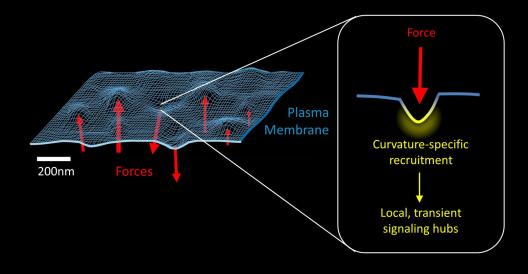
Milos Galic is a University Professor at the Institute of Medical Physics and Biophysics at the University of Münster, Germany, where he leads the Galic Lab: Nanoforces in Cells. He is actively involved in the "Cells in Motion" cluster of excellence and serves as a supervisor in the CiM-IMPRS Graduate Programme. His research spans multiple collaborative projects including CRC 1348 and CRC 1450. Dr. Galic's educational background includes: 1996-2002: Studies in Biology at the University of Zürich, Switzerland 2002-2007: PhD in Neurobiology at the University of Basel, Switzerland (summa cum laude) 2007-2012: Postdoctoral Fellow in Chemical & Systems Biology at Stanford University, USA 2012-2013: Research Associate in Chemical & Systems Biology at Stanford University, USA Dr. Galic's research focuses on understanding how curvature-dependent self-organization impacts single and collective cell dynamics. His work investigates how mechanical forces applied to cellular membranes cause deformations that trigger enrichment of curvature-sensitive proteins and lipids, forming transient signaling hubs. This mechano-chemical signal translation is crucial for cell architecture (particularly neuronal arborization), directionality and speed of cell migration, and collective cell behavior. His lab employs an interdisciplinary approach combining cell and neurobiology with biophysics, nanofabrication, and computational analysis of microscopic images. His recent publications reveal a consistent focus on membrane curvature, protein-membrane interactions, and how mechanical forces are translated into biochemical signals. The work spans from fundamental biophysical principles to applications in neuronal development and cell migration. His research has increasingly incorporated advanced microscopy techniques including lattice light-sheet microscopy, correlative light-electron microscopy, and super-resolution microscopy. As a mentor, Dr. Galic supervises students in the CiM-IMPRS Graduate Programme and has guided numerous PhD projects focused on spatio-temporal analysis of curvature-dependent protein/membrane interactions, analysis of curvature-dependent regulation of actin-based forces, and investigation of curvature-dependent regulation of neuronal architecture. Dr. Galic's lab, the Galic Lab: Nanoforces in Cells, is part of the Multiscale Imaging Centre at the University of Münster. The lab employs cellular model systems (neurons, immune cells, and vascular cells) and biomimetic approaches to study how curvature-induced signaling circuits form and function. The team uses advanced microscopy techniques, quantitative image analysis, nanomaterials, biophysical approaches, and numerical modeling to uncover the core principles through which curvature-dependent self-organization regulates cellular physiology and development in health and disease.
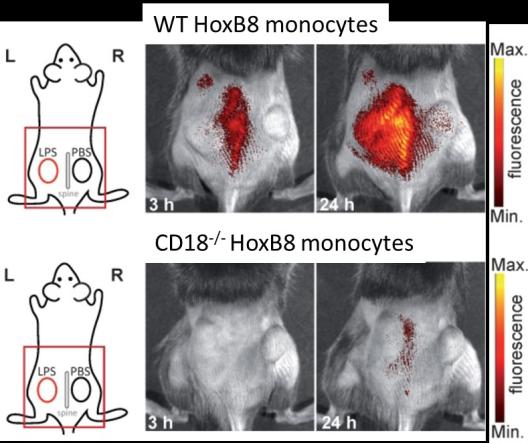
Prof. Dr. Michael Schäfers is a Full Professor of Technology and Imaging at the University of Münster and Head of the European Institute for Molecular Imaging (EIMI), operating within the Multiscale Imaging Centre (MIC). His research focuses on multimodal molecular imaging of inflammation using advanced in vivo methodologies across diverse disease models. His educational background includes: 1987-1994: Study of Medicine at the University of Münster 1994-1995: Postdoctoral research at MRC Cyclotron Unit, Imperial College School of Medicine, London 1995-1999: Postdoctoral work in Department of Nuclear Medicine, University Hospital Münster Schäfers' research centers on developing imaging techniques to visualize molecular and cellular dynamics in inflammation. His team identifies targets like matrix-metalloproteinases and S100A8/A9, develops high-affinity ligands labeled with radioactive isotopes or fluorescent dyes, and applies these in disease models including biopellet inflammation, autoimmune arthritis, and myocardial infarction using PET/CT, SPECT/CT, optical, and photoacoustic imaging systems. Analysis of his 2016-2018 publications reveals a strong focus on cardiovascular and neurological inflammation imaging. Key themes include MMP activity in atherosclerosis plaque phenotyping, leukocyte penetration in multiple sclerosis blood-brain barrier, CRISPR/Cas9-modified monocyte tracking, and novel probe development for MMP-13 inhibition, demonstrating integration of molecular biology with advanced imaging technologies. No specific scientific awards were mentioned, though Schäfers has held leadership roles as Coordinator of DFG CRC 656 'Cardiovascular Molecular Imaging' (2011) and Co-Coordinator of DFG Cluster of Excellence EXC 1003 'Cells in Motion' (2012). He supervises PhD students in interdisciplinary projects combining molecular imaging with immunology and genetics, supported by major DFG grants. His group provides comprehensive training in state-of-the-art imaging technologies and disease modeling approaches. The Schäfers lab comprises an interdisciplinary team with in-house chemistry capabilities for probe synthesis, operating high-resolution small animal PET/CT, SPECT/CT, optical, photoacoustic, and ultrasound systems alongside molecular biology and surgical facilities for integrated in vivo studies.
Professor Igor Schapiro is a Research Professor at the Faculty of Physics, Technical University of Dortmund. His office is located in room P2-02-422 at Otto-Hahn-Str. 4, 44227 Dortmund, Germany. Professor Schapiro's research focuses on the theoretical and computational description of light-induced processes in condensed matter. His work spans both application and method development: Application: studying excited state reactions in solvated molecules and chromophore-protein complexes as they occur in nature Method development: creating advanced multireference methods for accurate description of electronic wavefunctions at critical points His research group specializes in handling degeneracies of electronic states, particularly conical intersections, which are pivotal in photochemical reaction pathways. They employ multiscale simulation techniques capable of modeling systems with thousands of atoms, bridging quantum mechanical accuracy with computational feasibility for complex biological and chemical systems. Professor Schapiro maintains an active research presence within the Condensed Matter Physics research focus area at TU Dortmund, collaborating with other faculty members in the department. His group's work contributes to fundamental understanding of light-matter interactions with potential applications in photobiology, materials science, and quantum chemistry. For more information about his research activities and group members, visit the Schapiro Group website at https://cmt.physik.tu-dortmund.de/schapiro-group/ .
Professor Luise Kärger serves as faculty at Karlsruhe Institute of Technology (KIT), where she leads the Lightweight Technology Division within the Institute for Vehicle System Technology. Her research focuses on advancing computational and experimental methodologies for lightweight composite structures in automotive applications. Her primary research domains include: Lightweight Construction methodologies for vehicle systems Computational Mechanics of disordered fiber-reinforced materials Manufacturing Process Simulation (injection molding, overmolding, infiltration) Structural Analysis of composite damage mechanisms Fiber-Reinforced Polymer processing optimization Resource-efficient composite manufacturing digitization Professor Kärger maintains an active research portfolio with seven ongoing DFG projects through 2025, demonstrating sustained funding leadership. Her current work bridges multiscale simulation with experimental validation to solve critical challenges in composite material behavior during manufacturing and service life. Her scientific recognition includes: Prestigious DFG Heisenberg Grant for digitizing composite manufacturing processes As a supervisor, she provides students with hands-on experience in advanced simulation techniques and experimental mechanics through industry-collaborative projects. Her group specializes in developing physics-based process models that integrate data analytics with expert knowledge for structural process improvements. The Lightweight Technology Division operates as KIT's specialized hub for composite material innovation, combining high-fidelity manufacturing simulation with structural performance validation to advance next-generation lightweight vehicle components.
Matthias Kaschube is a Professor in the Faculty of Computer Science and Mathematics at Goethe University Frankfurt and a Senior Fellow at the Frankfurt Institute for Advanced Studies (FIAS). His research group focuses on understanding how the brain forms efficient representations of sensory environments and internal states through dynamic neural processes. He maintains active collaborations with leading neuroscience institutions including the University of Minnesota, Max Planck Florida Institute for Neuroscience, and Technion. Dr. Kaschube completed his physics studies at Goethe University Frankfurt and Georg-August-University Göttingen, graduating in 2000 and earning his doctoral degree in physics in 2005. His doctoral work was conducted at the Max Planck Institute for Dynamics and Self-Organization under Fred Wolf and Theo Geisel. He then held a Bernstein Fellowship before becoming a Theory Fellow at Princeton University's Lewis Sigler Institute from 2006-2011. In 2011, he joined Goethe University as Professor for Computational Neuroscience. His research spans four primary areas: the developmental emergence of cortical representations, flexible representations underlying learning and creativity, cognitive maps and representational spaces, and analysis methods for neural data. His group combines dynamic models of neural circuit function with neural data modeling techniques in close collaboration with experimental groups, creating an interdisciplinary interface between computer science, physics, biology, and AI. Notably, his work has revealed highly structured cortical networks prior to sensory experience that share similar architectural principles across sensory and association cortices. Analysis of his recent publications shows a consistent focus on understanding how endogenous neural activity patterns develop into reliable cortical representations through experience. His work spans multiple scales from molecular and cellular mechanisms to whole-brain functional organization, with particular emphasis on developmental processes in visual and auditory cortices. His methodological contributions include advanced techniques for analyzing chronic imaging data, tracking chromatophores in cuttlefish, and characterizing latent spaces in deep neural networks. Lewis Sigler Theory Fellowship (2006-2011) Bernstein Fellowship (2005) Professor Kaschube actively mentors a large group of PhD students including Lorenzo Butti, Jonas Elpelt, Santiago Galella, Deyue Kong, Maurycy Miekus, Ana Pamela Osuna Vargas, and Sigrid Trägenap. His research has been supported by multiple grants including NIH grants EY011488 and EY026273, Bernstein Focus Neurotechnology grant 01GQ0840, and BMBF project D-USA-Verbund: SpontVision. His group currently pursues three major research directions: the origin of distributed modular activity in neocortex, quantitative growth models for cuttlefish based on physical models, and the role of self-organization in linking endogenous cortical networks to sensory input.
Prof. Dr. Susanne Herold serves as Professor of Internal Medicine, Infectious Diseases, and Pulmonary Research and Director of Department of Medicine V at Justus Liebig University Giessen, where she oversees clinical operations and research initiatives focused on infection control. She additionally holds the leadership position of Deputy Partner Site Speaker for the Gießen-Marburg-Langen research consortium, coordinating collaborative efforts in emerging infections across multiple institutions. Her research program centers on pathogen-induced lung injury mechanisms, with specialized expertise in respiratory tract infections and pulmonary complications of emerging pathogens. This work integrates clinical practice with translational research to address critical gaps in infection control protocols and therapeutic interventions for severe pulmonary infections. Department of Medicine V operates as a multidisciplinary hub comprising specialized professorships in Pathogen-Induced Lung Injury and Repair, Translational Microbiology, Immunology of Respiratory Infections, and Lung Organoid Modeling, supported by core facilities including a Multiscale Imaging Platform and dedicated research groups focused on advanced disease modeling and therapeutic development.
Smita Krishnaswamy is an Associate Professor of Genetics and Computer Science at Yale University with joint appointments in both departments. She is affiliated with multiple interdisciplinary programs including the Applied Mathematics Program, Computational Biology and Bioinformatics Program, Yale Center for Biomedical Data Science, Yale Cancer Center, and the Wu Tsai Institute. Her research bridges computational methods development with biomedical applications, focusing on unsupervised machine learning approaches for high-dimensional data analysis. Associate Professor of Genetics, Yale School of Medicine Associate Professor of Computer Science, Yale University Affiliated Faculty, Applied Mathematics Program Affiliated Faculty, Computational Biology and Bioinformatics Member, Yale Center for Biomedical Data Science Member, Yale Cancer Center Member, Wu Tsai Institute Dr. Krishnaswamy's research focuses on developing unsupervised machine learning techniques, particularly manifold learning and deep learning methods, to analyze high-dimensional biomedical data. Her lab creates algorithms for non-linear dimensionality reduction, data geometry learning, denoising, imputation, and inference of multi-granular structures from complex datasets. These methods are applied to diverse data types including single-cell RNA-sequencing, mass cytometry, electronic health records, and connectomic data across multiple biological systems. Her work spans several key application areas including immunology and immunotherapy, cancer research, neuroscience, developmental biology, and health outcomes analysis. The lab employs approaches from geometric deep learning, multiscale graph signal processing, and topological data analysis to extract meaningful biological insights from complex datasets. Recent publications demonstrate the lab's leadership in developing methods for spatial transcriptomics, brain-state trajectory modeling, and organ donation prediction. Excellence in Science Early-Career Investigator Award from FASEB (2022) Yale Cancer Center Class of '61 Cancer Research Award (2025) Dr. Krishnaswamy maintains active collaborations across Yale and secures research funding supporting her work in computational biomedicine. She advises students through multiple programs including Genetics, Computer Science, and the Biological and Biomedical Sciences Graduate Program, fostering interdisciplinary training at the intersection of computation and biomedicine. The Krishnaswamy Lab operates at the forefront of computational biomedicine, developing mathematical approaches that enable new biological discoveries from complex datasets.
Dr. Joel Mieres Pérez is a researcher at TU Dortmund University's Department of Computational Bioengineering, where he investigates chemical processes through computational modeling. His work focuses on reactive intermediates, biocatalysis mechanisms, and drug design methodologies. Research Focus Dr. Mieres Pérez specializes in computational approaches to chemical and biological systems, with core interests in: Reactive intermediate characterization Biocatalysis and chemical reaction modeling Free energy calculation methods Multiscale simulation frameworks Computational drug discovery pipelines He conducts this research through the Computational Chemical Reactivity group at TU Dortmund.
Prof. Dr. Janina Kneipp is a Professor (W3) of Physical Chemistry at Humboldt-Universität zu Berlin, where she has led an active research group since 2012. She previously held positions as Assistant Professor at HU Berlin/BAM (2008-2012), Junior Researcher at BAM (2005-2008), and research appointments at Harvard Medical School, Princeton University, and Erasmus Universiteit Rotterdam. Education: Dr. rer. nat. (summa cum laude), Freie Universität Berlin (2002) Undergraduate/Graduate Studies in Biology & Physics, Freie Universität Berlin (1992-1998) Research Focus: Her interdisciplinary work bridges physical chemistry and biospectroscopy, with particular emphasis on: Surface-enhanced Raman scattering (SERS) for complex sample analysis Plasmonic catalysis and hot electron chemistry Multiphoton-excited vibrational spectroscopy Nanoscale biochemical mapping in plant and animal systems Development of advanced plasmonic substrates Publication Trends: Recent work demonstrates strong focus on multimodal spectroscopy applications, with studies combining SERS, hyper-Raman, IR, and synchrotron techniques to address questions in catalysis, nanoparticle-cell interactions, plant biochemistry, and biosensing. Publications frequently incorporate advanced nanomaterials, electrochemical methods, and machine learning-assisted spectral analysis. Scientific Awards: Fellow, European Academy of Sciences (2020) Caroline von Humboldt Professorship (2019) Wilhelm Ostwald Fellow, BAM (2012) Bunsen-Kirchhoff Award, GDCh (2010) ERC Starting Grant (2010) Academic Leadership: Currently advises 5 PhD students and leads multiple collaborative initiatives. Serves as Board Member of Einstein Center Catalysis (since 2019), Head of Chemistry Department (2014-2016), and Speaker of Graduate School SALSA (since 2012). Secured funding through DFG, EU networks, and ERC grants supporting spectroscopy infrastructure development. Lab & Team: Leads the KneippLab research group with 2 postdoctoral researchers, 5 graduate students, and technical staff. Research focuses on developing spectroscopic methods for interrogating biological and chemical processes at nanoscale resolution using plasmonic enhancement strategies.
Dr. Ariane Nunes Alves is a Junior Group Leader at Technische Universität Berlin's Institute of Chemistry, leading the Theoretical Structural Biology group . Her research bridges computational chemistry and biophysics, specializing in protein-ligand binding kinetics, enzyme catalysis in crowded cellular environments, and machine learning applications in drug design. Research Focus: Her lab develops methods to predict binding/unbinding pathways using molecular dynamics (e.g., tauRAMD) and AI models. Key areas include: Kinetics of protein-ligand interactions Effects of macromolecular crowding on enzymes Structure-based drug design with QSKR models Machine learning for hydrogenase pathway identification Awards & Fellowships: HITS Award for Women in Science (2020) Capes-Humboldt Research Fellowship (2019) CellNetworks Postdoctoral Program (2018) Fapesp Ph.D. Fellowship (2014) Teaching: She instructs graduate courses on applied machine learning in chemistry and computational drug design at TU Berlin. Her lab investigates substrate dissociation in hydrogenases, cellular environmental impacts on catalysis, and ML-based kinetic predictions.
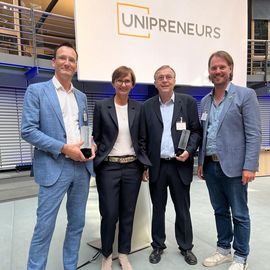
Prof. Dr. Reinhard Schomäcker is a Professor at the Technical University of Berlin's Institute of Chemistry and a Group Leader at UniSysCat. His research bridges catalysis, reaction engineering, and sustainable chemistry, with applications in CO₂ utilization, photocatalytic hydrogen production, and hydrocarbon conversion. He leads the Reaction Engineering Group, focusing on catalyst design and process optimization. Research Interests: His work spans heterogeneous catalysis, kinetic studies, membrane reactors, and techno-economic assessments. Key areas include: Development of tandem catalytic systems for CO₂ hydrogenation Photocatalytic hydrogen evolution using advanced materials Design of nanocatalysts for industrial processes Awards & Recognition: Innovation Award of German Gas Industry (2016) UNIPRENEURS Award for entrepreneurial contributions (2023) Lab & Resources: He directs the Reaction Engineering Group ( www.reaction-engineering.tu-berlin.de ), which collaborates extensively within UniSysCat. The lab specializes in operando catalyst characterization and reactor design.
Dr. Lukas Stelzl is a Junior Group Leader at ReALity and IMB Associate Group Leader at the Institute of Molecular Biology (IMB), Johannes Gutenberg University Mainz. He serves as Principal Investigator at the Mainz Institute of Multiscale Modeling (M3ODEL) and Junior Faculty Member at Max Planck Graduate Center. His research employs multi-scale simulations to study biomolecular phase separation mechanisms. Research Focus: The Stelzl Lab investigates how liquid-liquid phase separation regulates cellular processes including: Transcriptional control in health vs. age-related diseases Post-transcriptional regulation during germ cell development Molecular specificity in disordered protein interactions Methodologically, the group develops simulation techniques bridging atomic-scale dynamics and mesoscale condensate formation. Key Collaborations: SFB/TRR 146: Multiscale soft matter simulations ReALity: Resilience and longevity research Max Planck Graduate Center training initiatives Lab website: Stelzl Lab
Dr. Paco Lopez Dekker is an Associate Professor at Delft University of Technology's Department of Geoscience and Remote Sensing and Group Leader at the German Aerospace Center (DLR) Microwaves and Radar Institute. His research focuses on advanced radar remote sensing , particularly Synthetic Aperture Radar (SAR) systems for Earth observation. Key areas include: Bistatic/multistatic SAR configurations Ocean surface current and wave dynamics Land ice deformation monitoring Satellite mission design (e.g., ESA's Harmony mission) Radar signal processing innovations He leads the Satellite Radar Lab at TU Delft, developing cutting-edge techniques like super-resolution PSI and multi-satellite interferometry. His recent publications (2023-2025) emphasize: CubeSat-based radar altimetry systems Physics-guided ML for agricultural remote sensing Cryosphere applications of bistatic SAR Harmony mission performance analysis Ocean topography retrieval methods With 275+ publications and ongoing leadership in ESA missions, Dr. Dekker significantly advances satellite remote sensing capabilities for geoscience applications.
Professor Alexander Mielke is a leading applied mathematician at the Weierstrass Institute for Applied Analysis and Stochastics (WIAS) in Berlin, with extensive involvement in Germany's premier mathematical research initiatives. His career centers on developing rigorous mathematical frameworks for complex physical phenomena, particularly through leadership roles in major DFG-funded programs including Priority Programmes and Collaborative Research Centers. His research spans critical areas of modern applied mathematics: Multiscale modeling of material behavior Mathematical theory of plasticity and hysteresis Continuum mechanics of multifield systems Pattern formation in coupled differential equations Variational methods for rate-dependent processes Professor Mielke's scientific leadership is demonstrated through his role as speaker of Priority Programme SPP 1095 'Analysis Modeling and Simulation of Multiscale Problems' and Collaborative Research Center SFB 404 'Multifield Problems in Continuum Mechanics'. Currently, he drives research as a participating scientist in the Cluster of Excellence MATH+ and sub-project manager for multiple Collaborative Research Centers, maintaining WIAS's prominence in mathematical research. His work consistently addresses fundamental challenges in connecting microscopic mechanisms to macroscopic material properties. Through the Berlin Mathematical School and MATH+, Professor Mielke actively mentors the next generation of applied mathematicians while securing sustained DFG funding for cutting-edge research. His collaborative approach spans theoretical development, numerical implementation, and physical application, particularly in materials science and engineering contexts.