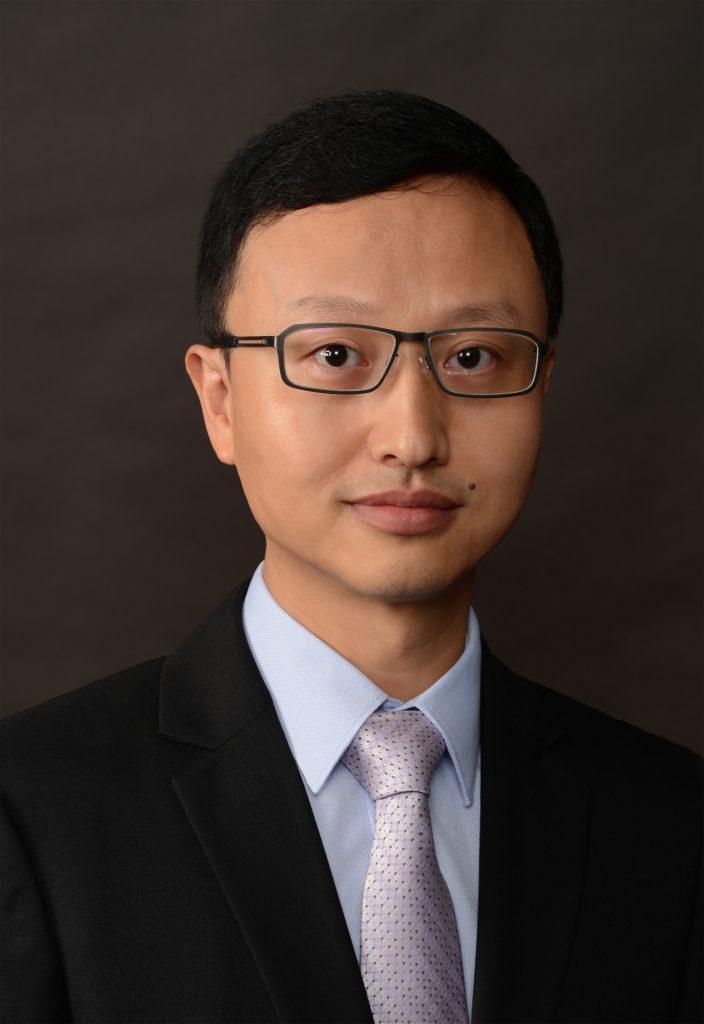
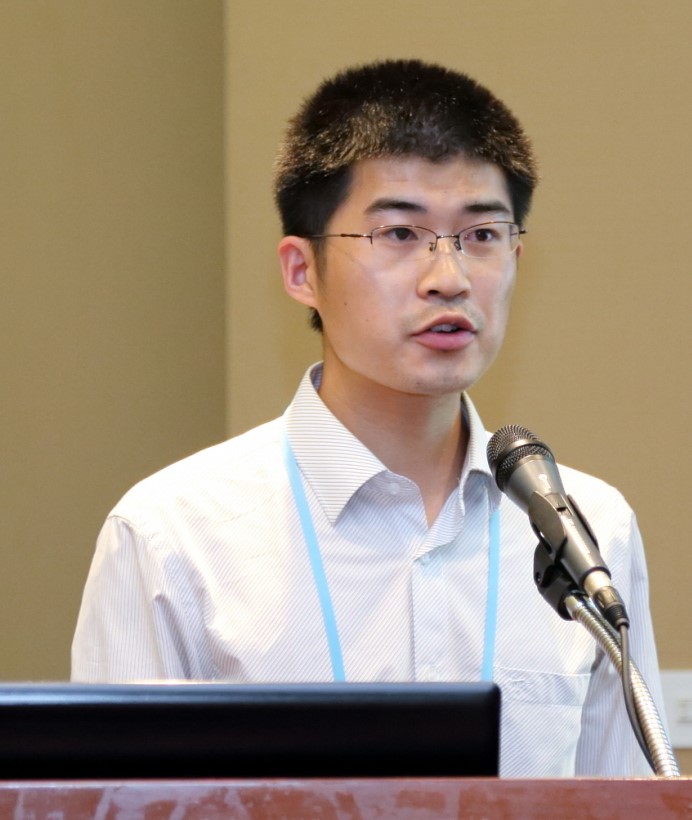
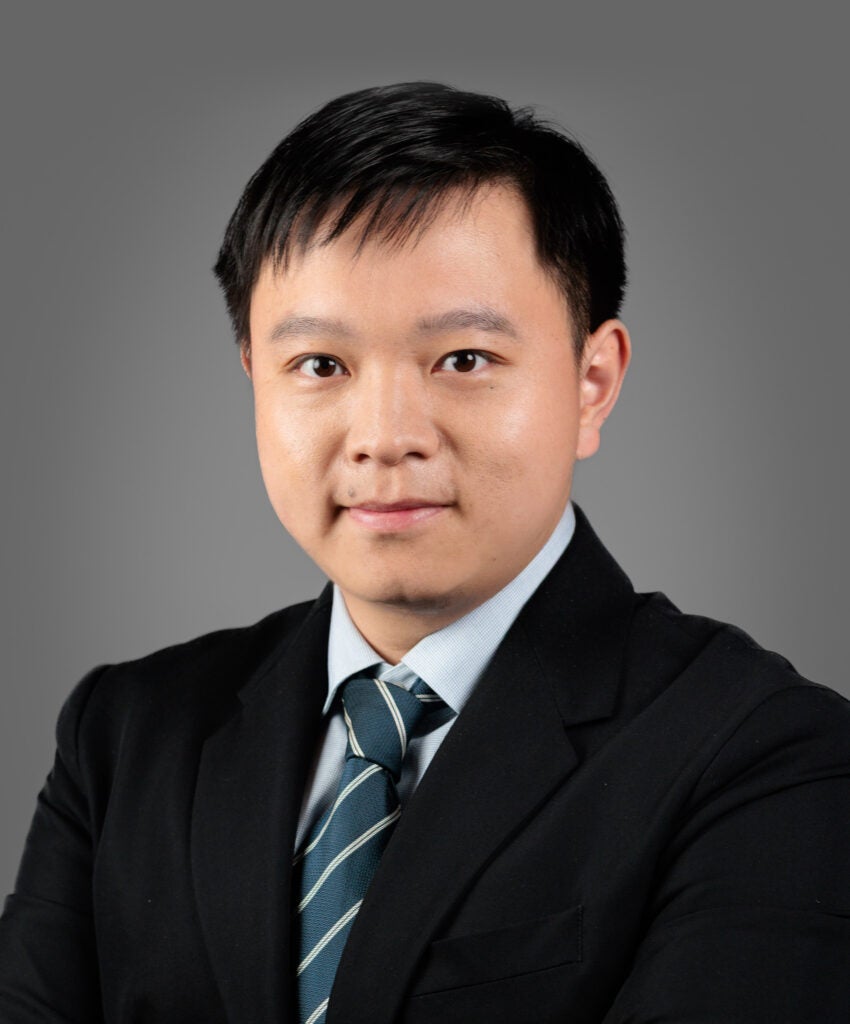
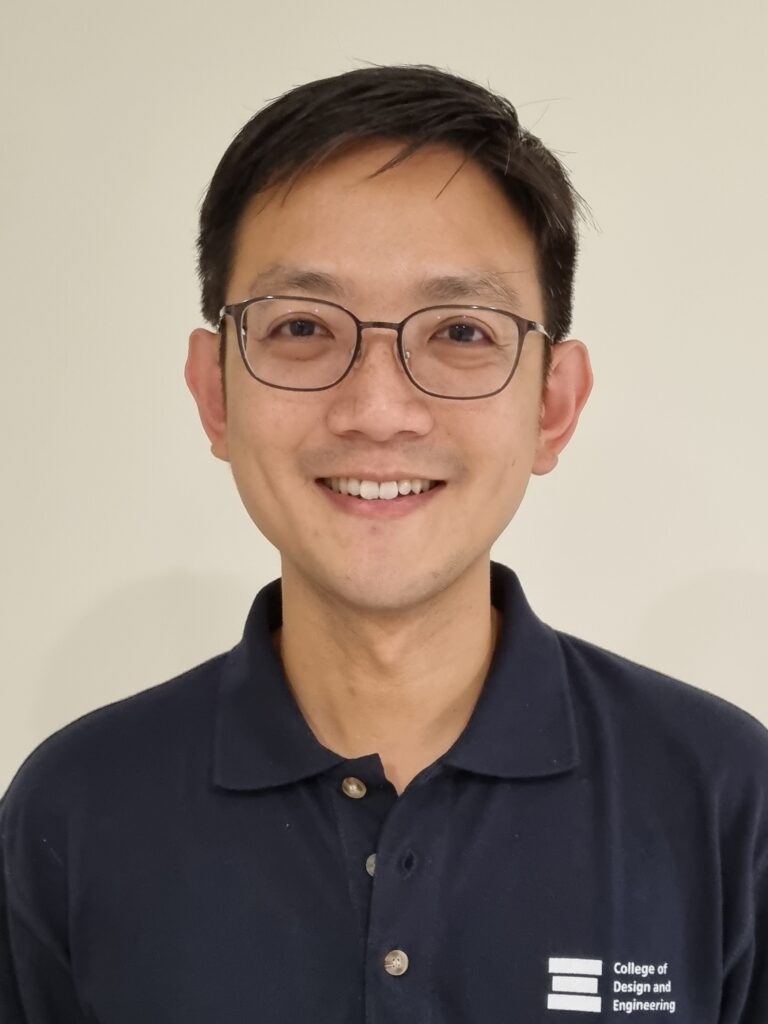
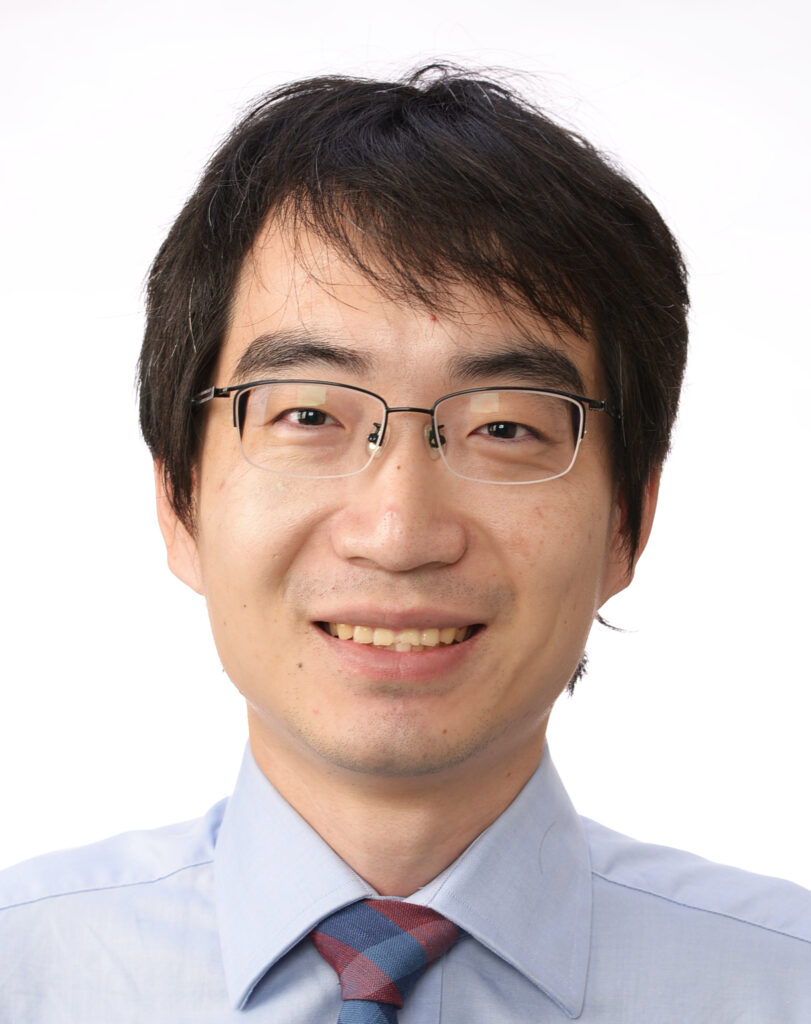
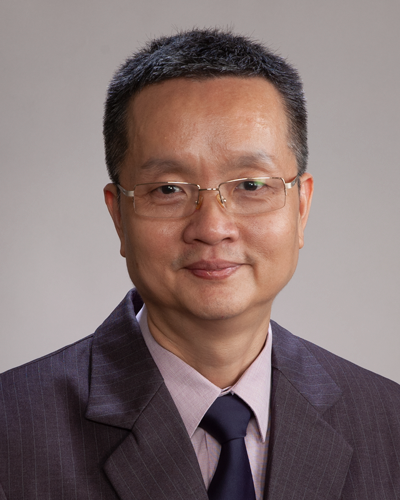
Assoc Prof Ng Teng Yong is an Associate Professor at the School of Mechanical & Aerospace Engineering (NTU), specializing in numerical modeling and simulation. With a background as Research Manager at A*STAR Institute of High Performance Computing, his work spans materials science, nanotechnology, and aerospace engineering. Current focus on graphene-based desalination membranes Expertise in molecular dynamics simulations Investigates nanoscale fluid mechanics and structural dynamics Recent publications highlight advancements in energy-efficient electrodialysis, smart robotics, and nonlinear vibration analysis. His interdisciplinary approach integrates computational methods with experimental validation in additive manufacturing and soft material mechanics.
SHEN Lei is a researcher at the National University of Singapore (NUS), affiliated with the Department of Physics. With a PhD in Physics from NUS, he specializes in Multiscale Modeling and Simulation and Materials Informatics , leveraging machine learning and computational methods for advanced materials discovery. Research Focus: Density functional theory, molecular dynamics, finite element analysis, and data-driven design of materials. Teaching: Modules include Mechanics and Waves (PC1433), Applied Quantum Mechanics (PC2130B), and Mechanical Properties of Materials (ESP2109). His work spans spintronics, ferroelectricity, and energy storage materials, with recent publications on interatomic potentials, sliding heterostructures, and battery anodes. He has received the Teaching Commendation Award and declined the Lee Kuan Yew Postdoctoral Fellowship . Notable Trends: Recent articles emphasize machine learning in materials science, van der Waals heterostructures, quantum transport, and medical image analysis. Subfields include Rashba spin-orbit coupling, piezoelectric tensor modeling, and defect-informed neural networks. Scientific Awards: Teaching Commendation Award (AY15/16; AY16/17) Lee Kuan Yew Postdoctoral Fellowship (2014) (declined)
Professor Li Hua is a faculty member at the School of Mechanical & Aerospace Engineering, Nanyang Technological University (NTU), Singapore. He holds a Ph.D. in Mechanical Engineering from the National University of Singapore (1999) and has been recognized as a Fellow of the American Society of Mechanical Engineers (ASME) since 2019. His academic journey includes postdoctoral research at the University of Illinois at Urbana-Champaign (2000-2001), a visiting scientist role at Johns Hopkins University (2005), and research scientist positions at A*STAR’s Institute of High Performance Computing (2001-2006). Research Interests: Professor Li specializes in multiphysics modeling of soft matters (e.g., smart hydrogels in BioMEMS and biological cell microscale dynamics), machine learning-based prediction for 3D printing process-microstructure-property correlation, numerical computational methodologies (meshless and multiscale algorithms), sustainable energy simulations (building efficiency and fuel cells), and structural dynamics of high-speed rotating shells and composites. His work bridges computational mechanics, materials science, and biomedical applications. Publications & Collaborations: With over 200 peer-reviewed journal articles, he has authored/co-authored monographs such as Smart Hydrogel Modelling (Springer) and Rotating Shell Dynamics (Elsevier). His research is funded by agencies like NRF, EDB, SMI, and industry partners including Rolls-Royce, Emerson, and ABB. Scientific Awards: Fellow of ASME (2019) ICCM Investigator Award (2018) SMI Top Project Winner (2015) IBM & IHPC Silver Award (2003) Advising & Grants: He has advised Ph.D. students like Meng Zhang (awarded Best Student Paper at ICMFM XIX, 2018) and secured grants for computational BioMEMS, sustainable buildings, and advanced manufacturing projects. His industrial collaborations span aerospace, maritime, and energy sectors. Labs & Teams: Professor Li leads a research group at NTU, focusing on interdisciplinary projects with institutions like Imperial College, Technische Universität Dresden, and Johns Hopkins University. He contributes to academic governance as an NTU Senator and active member of professional societies.
Dr. YAN Wentao is an Associate Professor at the Department of Mechanical Engineering, National University of Singapore (NUS), where he joined in August 2018. He holds a PhD from Tsinghua University (2017) and a Bachelor's degree from the same institution (2012). Prior to NUS, he was a postdoctoral fellow at Northwestern University and a guest researcher at the National Institute of Standards and Technology. His research focuses on Additive Manufacturing and Computational Mechanics , specifically developing multi-scale models for process-structure-property relationships in metal 3D printing. His work integrates experimental validation with high-fidelity simulations to optimize manufacturing processes. Analysis of his 15 most recent publications (2016-2021) reveals a strong emphasis on: Powder dynamics and defect mechanisms in laser/electron beam processes Multi-physics modeling of melt pool behavior and microstructure evolution Data-driven approaches for process optimization and quality control Novel applications in functional materials and composites Awards include: 9 awards in the 2022 AM-Bench Simulation Challenges Materials Research Letters Impact Award (2022) He has supervised doctoral students to graduation, including Dr. Chen Fan. Leads the Yan Research Group at NUS, which collaborates internationally and has hosted visiting scholars like Dr. Shinji Sakane.
Dr. Zeyu Deng (Jerry) is an Assistant Professor in the Department of Materials Science and Engineering at the National University of Singapore (NUS). His research focuses on computational materials science, multiscale modeling, and high-performance computing, particularly for renewable energy applications such as energy storage devices and CO2 capture technologies. He holds a Ph.D. (2019) and M.Phil. (2015) in Materials Science from the University of Cambridge, where his doctoral work centered on halide perovskites for photovoltaics. After postdoctoral research at NUS exploring clean energy materials, he joined NUS as faculty in 2024. Dr. Deng’s research interests include computational design of battery materials, solid-state electrolytes, and porous materials for CO2 capture. His work integrates machine learning, data science, and first-principles methods to address challenges in clean energy technologies. Key contributions include the development of kMCpy , a Python package for simulating ion transport in solids, and studies on aluminum formate (ALF) for CO2 capture. Awards: MRS Graduate Student Award (2019), Lee Kuan Yew Postdoctoral Fellowship (2022) Teaching: Courses on materials informatics and big data applications in materials science Lab: Located at NUS E4-07-11, his group actively recruits researchers in clean energy materials Recent work highlights include advancements in NaSICON solid electrolytes, machine learning-driven thermodynamic stability predictions, and scalable CO2 capture materials. His interdisciplinary approach bridges computational modeling with experimental validation, enabling innovations in sustainable energy systems.
Mu Yuguang serves as Associate Professor at Nanyang Technological University's School of Biological Sciences since 2006, following his Lee Kuan Yew Fellowship (2003-2006) at the same institution. His interdisciplinary work bridges Biomedical Sciences, Chemistry, Computer Science, and Physics with core expertise in Structural Biology and computational modeling. His research centers on biomolecular simulations and molecular dynamics, specifically investigating membrane biophysics (including lipid bilayer responses to solvents), protein dynamics, and computational drug design. He develops simulation methodologies to analyze microbial membrane interactions and viral protein targets, with strong emphasis on translating computational findings into biomedical applications. Recent publications (2018-2019) reveal consistent application of molecular dynamics to membrane-related challenges—from butanol-induced disorder in microbial membranes to conjugated oligoelectrolyte interactions—and antiviral drug discovery targeting dengue virus. This work demonstrates integration of physics-based modeling with biological problem-solving across multiple scales. Scientific recognition includes: Lee Kuan Yew Postdoctoral Fellowship (2003-2006) Alexander von Humboldt Research Fellowship (1999-2000)
Hortense Le Ferrand serves as Associate Professor with a joint appointment between the School of Mechanical & Aerospace Engineering and the School of Materials Science & Engineering at Nanyang Technological University (NTU), Singapore. She holds the prestigious Provost's Chair in Mechanical and Aerospace Engineering, reflecting her significant contributions to the field. Her research group operates at the intersection of sustainable manufacturing and bioinspired design, developing innovative materials with applications ranging from thermal management to biomedical implants. Ingénieur Degree from ESPCI Paris, France MSc and PhD in Materials Science from ETH Zürich, Switzerland Visiting scholar at Purdue University, USA Postdoctoral visiting scholar at Center for Biomimetic Sensor Science at NTU Professor Le Ferrand's research focuses on developing sustainable materials through bioinspired approaches. Her group combines additive manufacturing techniques with abundant, eco-friendly building blocks and water-based solvents to create composites with complex microstructures that mimic nature's designs. These materials exhibit unusual combinations of properties that enable applications in thermal management for electronics and architecture, biomedical implants, protective ceramics, and sustainable construction materials. Her most notable work involves mycelium-based composites with elephant skin-inspired textures that provide passive cooling for buildings in tropical climates. Analysis of her recent publications reveals a strong emphasis on sustainable materials development, particularly mycelium composites and bioinspired ceramics. Her research demonstrates a clear trajectory toward practical applications in construction, electronics cooling, and biomedical fields. The interdisciplinary nature of her work is evident through collaborations with institutions worldwide including Purdue University, ETH Zurich, and various Singaporean research centers. MIT Innovators Under 35 list (2023) Nature Award: Inspiring Women in Science, Scientific achievement category (2023) Nanyang Research Award, Young Investigator World's Top 2% Scientists List Identified by Stanford University Listed among top 50 Asia Women Tech Leaders Singapore Women in Tech list curated by Singapore Computer Society Professor Le Ferrand actively mentors numerous PhD and Master's students while collaborating with industry partners to translate laboratory discoveries into real-world applications. Her research group has filed four patent applications in the past five years, with growing industry interest in scaling their sustainable manufacturing processes. She frequently engages in outreach activities, including workshops with pre-university students and collaborations with organizations focused on sustainable design and biomimicry in policy contexts. The research group maintains strong laboratory facilities for additive manufacturing and materials characterization, with particular expertise in magnetic-assisted 3D printing technologies. They collaborate extensively with the Future Cities Laboratory and have established partnerships with BioSEA Ltd and Mykilio for developing mycelium-based building materials. The group's work on elephant-skin inspired mycelium tiles has been installed at NTU's North Spine as a real-world test in Singapore's tropical climate.
Assoc Prof Viet Ha Hoang is an Associate Professor and Assistant Chair (Academic) in the School of Physical and Mathematical Sciences (SPMS), Division of Mathematical Sciences at Nanyang Technological University (NTU). He holds a PhD in Mathematics from the University of Cambridge and has extensive research experience in multiscale modeling and numerical analysis. His work focuses on stochastic processes, partial differential equations, and applications in computational science. Education: Bachelor of Mathematics, University of Wollongong, 1996 PhD in Mathematics, University of Cambridge, 2000 Research interests include multiscale problems , probabilistic PDEs , and numerical methods , with contributions to homogenization theory, Bayesian inversion, and computational fluid dynamics. Current grants support his work on multiscale systems and stochastic modeling. Key achievements include pioneering finite element methods for multiscale equations and developing Bayesian frameworks for inverse problems. His lab collaborates on interdisciplinary projects in mathematical physics and biomedical engineering.
Dr. Poh Leong Hien is an Associate Professor in the Department of Civil and Environmental Engineering at the National University of Singapore (NUS). He holds a Ph.D. from NUS and Eindhoven University of Technology (2011), following B.Eng. (2003) and M.Eng. (2005) degrees from NUS. His research focuses on multi-scale material modeling, damage mechanics, and higher-order continua, with applications in engineering materials and structures. Education: Ph.D., National University of Singapore & Eindhoven University of Technology, 2011 M.Eng. (Accelerated Master’s Programme), NUS, 2005 B.Eng. (First Class Honours), NUS, 2003 Research Interests: Mechanics of materials and damage mechanics Multi-scale methods and homogenization Higher-order continuum theories Computational material modeling His recent publications emphasize advanced materials under extreme conditions, such as metallic glasses and ultra-high-performance composites, alongside computational methods like isogeometric analysis and machine learning-driven homogenization. Key contributions include optimizing auxetic structures and improving failure prediction in heterogeneous materials. Awards include the Lee Kong Chian Graduate Scholarship (2006–2010) and the Institution of Engineers Singapore Gold Medal (2004). Advising and grants: While specific student/advisor details are not listed, his research group likely focuses on computational mechanics and material science. No grants are explicitly mentioned. Labs/Teams: No specific lab affiliations are noted in the provided text.
Cui Yue is a Researcher at the Institute of High-Performance Computing (IHPC), part of the Agency for Science, Technology and Research (A*STAR). He holds a BEng (First Class Honours) in Civil Engineering from the National University of Singapore (2014), an M.S. in Civil Engineering (2015), and a PhD in Aerospace Engineering (2022) from the University of Illinois at Urbana-Champaign. His research focuses on computational mechanics, leveraging multiscale modeling, machine learning, and supercomputing to study structural materials. Key areas include atomistic stress analysis, fracture mechanics, additive manufacturing, and nanostructured materials. He collaborates with industry leaders like Rolls-Royce, Boeing, and Honeywell. Cui Yue's work emphasizes data-driven approaches and computational tools to bridge quantum-mechanical, atomic, and continuum scales. His publications reflect expertise in materials behavior, porosity effects, and grain boundary properties. Key Awards: Aerospace Engineering Alumni Advisory Board Fellowship (2021) Aerospace Engineering Outstanding Graduate Student Fellowship (2020) MSc Class of 1977 Silver Medal (2014) Teaching & Mentoring: Promotes critical thinking through undergraduate and graduate engineering education, emphasizing lifelong learning. Labs/Teams: Leads IHPC initiatives in computational materials science, integrating industry partnerships for applied research.
LEE Heow Pueh is a Provost’s Chair Professor at the Department of Mechanical Engineering, National University of Singapore. His academic journey includes first-class honours from the University of Cambridge and a PhD from Stanford University. He has extensive experience in research, having served as Deputy Director for Research and later Deputy Executive Director at A*STAR’s Institute of High Performance Computing (2002–2007). His research focuses on acoustics and vibration, metamaterials, computational methods, and mechanics in medicine. He has over 530 peer-reviewed publications and holds multiple patents, including innovations in biofouling prevention and noise mitigation technologies like the 'Sonic Window' and 'Sonic Cage'. LEE has led or co-led numerous grants, such as the 'Sonic Structure Project' (NRF L2NIC) and 'Dynamic Profiling of Locomotion in Marine Creatures' (MOE Tier 1). He is a frequent invited speaker at international conferences, addressing topics like computational otolaryngology and noise barrier design. Professional highlights include keynote roles at ICCM 2014 (Cambridge) and ICVE 2015 (Shanghai), as well as chair positions at institutions like Universidad Carlos III de Madrid. His work bridges mechanics with medicine, contributing to advancements in cardiovascular modeling and facial injury analysis.
Vincent Tan is a Dean’s Chair Professor and Deputy Head (Admin & Finance) at the Department of Mechanical Engineering, National University of Singapore. He holds a PhD in Mechanical Engineering from Northwestern University (1998), and BEng/MEng degrees from NUS (1994). PhD, Northwestern University (1998) BEng and MEng, National University of Singapore (1994) His research focuses on computational homogenization , multiscale modeling , bioinspired composites , failure of composite materials , impact mechanics , and ballistics . He explores how microstructural features influence macroscopic material behavior under extreme conditions. The 15 most recent publications highlight his work on Direct FE2 methods, bioinspired helicoidal laminates, multiscale damage progression, and polymer friction modeling. These articles span computational mechanics, materials science, and biomimetics, emphasizing finite element techniques, composite material design, and nanoscale simulations. Scientific recognition includes: Fellow of the Association for Computational Mechanics (Singapore) He has secured grants from the US Air Force Office of Scientific Research, A*STAR, Defence Science Organization, Ministry of Education, Vestas, and Airbus. Vincent Tan co-chaired the 23rd International Workshop on Computational Mechanics of Materials in Singapore (2013) and serves on editorial boards of journals like Composites Part B and Mechanics of Materials .
Lai Changquan is an Assistant Professor at Nanyang Technological University (NTU), holding positions in both the School of Mechanical & Aerospace Engineering and the School of Materials Science & Engineering. He is the Principal Investigator for the Advanced Materials Design and Synthesis (AMDS) Lab, which he established in November 2017, and received the prestigious Nanyang Assistant Professorship in 2022. Education: B.Eng in Mechanical Engineering, National University of Singapore (2009) M.Eng in Materials Science and Engineering, Massachusetts Institute of Technology (2010) Ph.D. in Advanced Materials for Micro- and Nano- Systems, National University of Singapore (2014) Dr. Lai's research spans multiple interdisciplinary fields with a focus on functional structural materials and waste valorization for circular economy applications. His work integrates design, materials science, and manufacturing innovation to engineer novel structures and surfaces. Key research areas include additive manufacturing, nanomaterials, metamaterials, structural batteries, sustainable materials, and machine learning applications in materials science. His lab has made significant contributions to the development of architected materials with exceptional mechanical properties and sustainable manufacturing processes, including turning wastepaper into battery anodes which was featured by the World Economic Forum. Analysis of Dr. Lai's recent publications reveals a strong focus on advanced materials design, particularly in structural metamaterials, additive manufacturing of metals and composites, and sustainable energy applications. His research increasingly incorporates machine learning techniques for materials prediction and optimization while maintaining experimental validation. There's a clear progression toward practical applications in renewable energy, particularly in battery technologies and sustainable manufacturing processes that align with circular economy principles. Scientific Awards: Nanyang Assistant Professorship (2022) Temasek Labs - Best Research Award (Bronze) (2021, 2022, 2023, 2024) Singapore Teaching and Academic Research Talent Scholarship (2021) Temasek Research Fellowship (2016) SMART Postdoctoral Fellowship (2015) Dr. Lai actively mentors a diverse group of graduate students and postdoctoral researchers in the AMDS Lab, including Po-Ju Chiang who became the lab's first PhD graduate in 2024. His research is supported by multiple grants through the HP-NTU Digital Manufacturing Joint Lab and other industry partnerships. He has successfully guided several PhD students through their research on topics including site-specific control of alloy properties through binder jet 3D printing and structural battery development. The Advanced Materials Design and Synthesis Lab maintains strong industry collaborations and has received significant media attention for its innovative work. The lab's research on sustainable materials has been featured in numerous international outlets including The Straits Times, Science Daily, and The Engineer (UK), demonstrating the real-world impact of their work on waste valorization and sustainable manufacturing technologies.