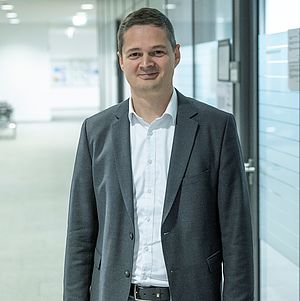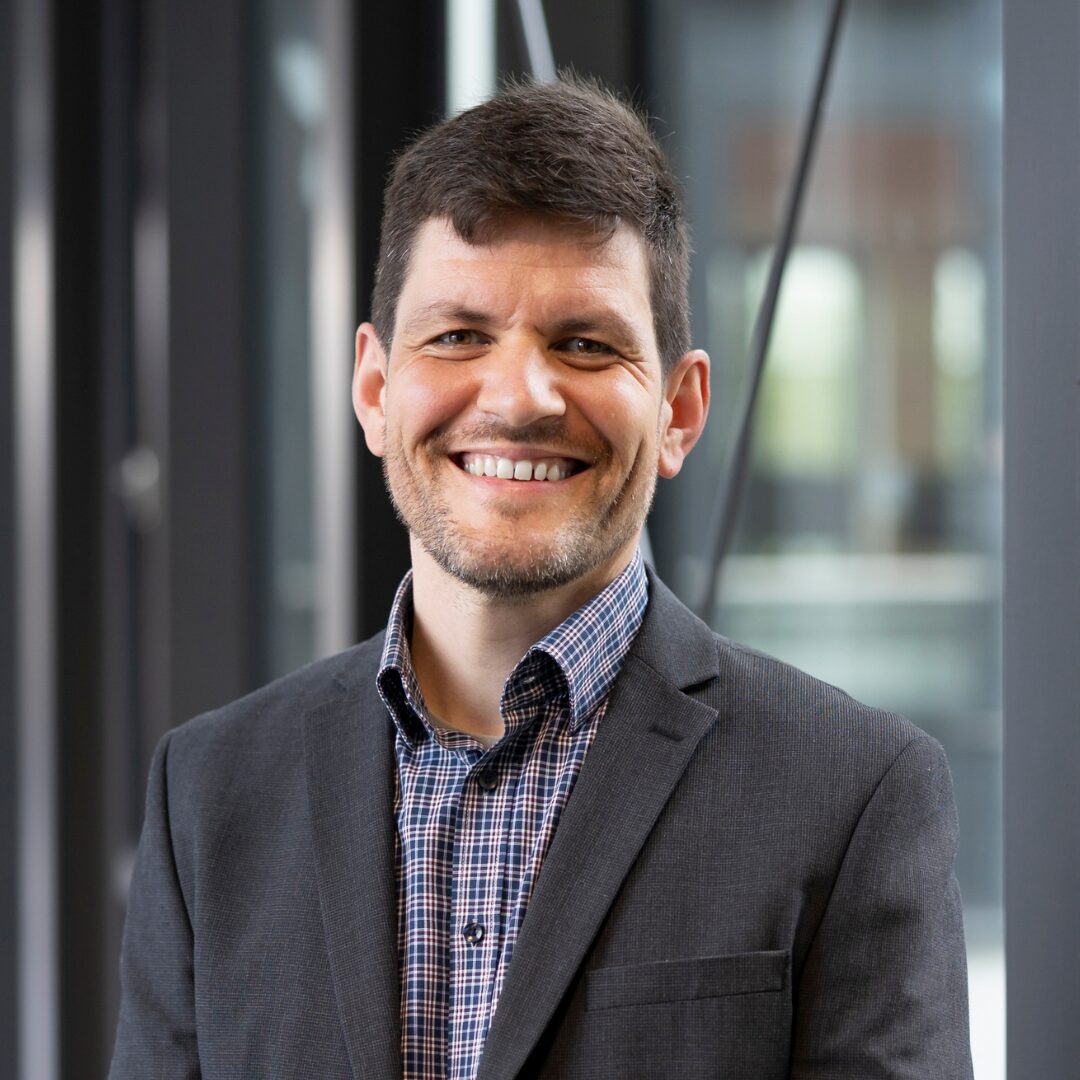
Prof. Christian Liebscher is a Professor of Advanced Transmission Electron Microscopy at the Ruhr University Bochum , affiliated with the Faculty of Physics and Astronomy and the Research Center Future Energy Materials and Systems (RC FEMS). His work focuses on developing cutting-edge TEM techniques to understand energy-related materials' atomic-scale structure-functionality relationships. He combines aberration-corrected scanning TEM (STEM), 4D-STEM, and in-situ microscopy with machine learning to analyze complex material datasets. Education and Career: 2000–2006: Study of Materials Science at the University of Bayreuth. 2006–2010: PhD at the University of Bayreuth (summa cum laude) with a thesis on phase and dislocation analysis in superalloys. 2011–2014: Postdoc at the University of California, Berkeley, and the National Center for Electron Microscopy (Lawrence Berkeley National Laboratory). 2014–2015: Staff scientist at the University of Duisburg-Essen. 2015–2024: Group leader at the Max Planck Institute for Sustainable Materials in Düsseldorf. Research Interests: Prof. Liebscher’s research bridges microscopy innovation and materials understanding. He emphasizes atomic-scale characterization of interfaces, defects, and grain boundaries in metals and alloys using advanced STEM and 4D-STEM. His work addresses how structural features—like segregation, strain, and phase transitions—impact material properties. He also pioneers machine learning tools to automate data analysis from microscopy and tomography, advancing materials dataspaces. Key topics include energy materials (e.g., PEM fuel cells), high-entropy alloys, and nanomaterials for applications like semiconductors and electromagnetic absorption. Scientific Contributions: His publications highlight trends in grain boundary phase transitions, microstructure-property correlations, and integration of AI into microscopy. For example, recent work explores how grain boundary complexions affect mechanical strength in alloys and how in-situ TEM reveals deformation mechanisms under realistic conditions. He has contributed significantly to methodologies like scanning precession electron diffraction tomography and unsupervised machine learning for atomic-resolution datasets. Labs and Collaborations: Prof. Liebscher leads the Advanced Transmission Electron Microscopy group at RUB, building on his previous leadership at the Max Planck Institute. His lab collaborates with institutions like the Lawrence Berkeley National Laboratory and integrates interdisciplinary approaches combining experimental microscopy with computational modeling.