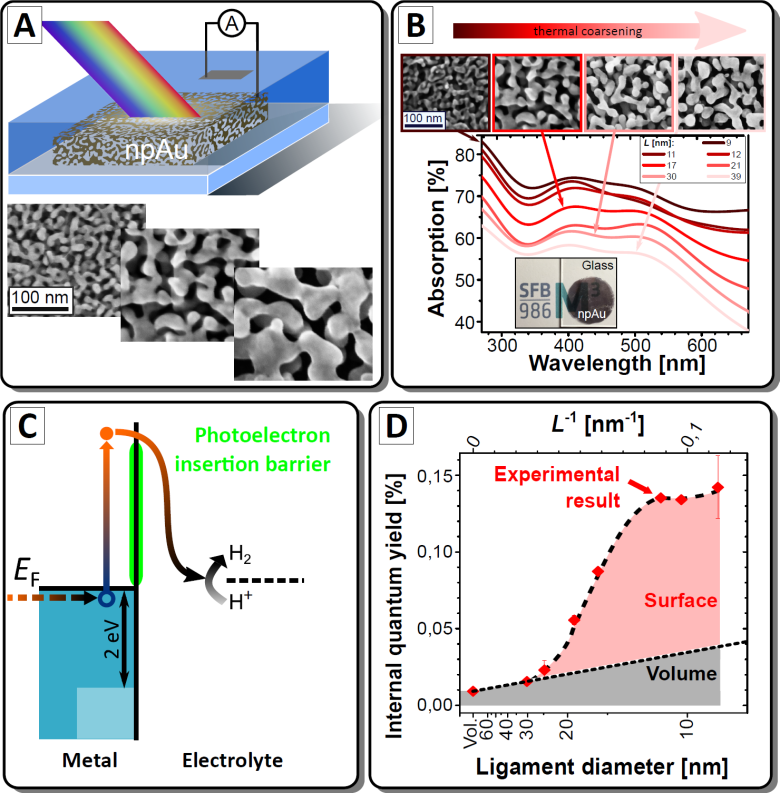
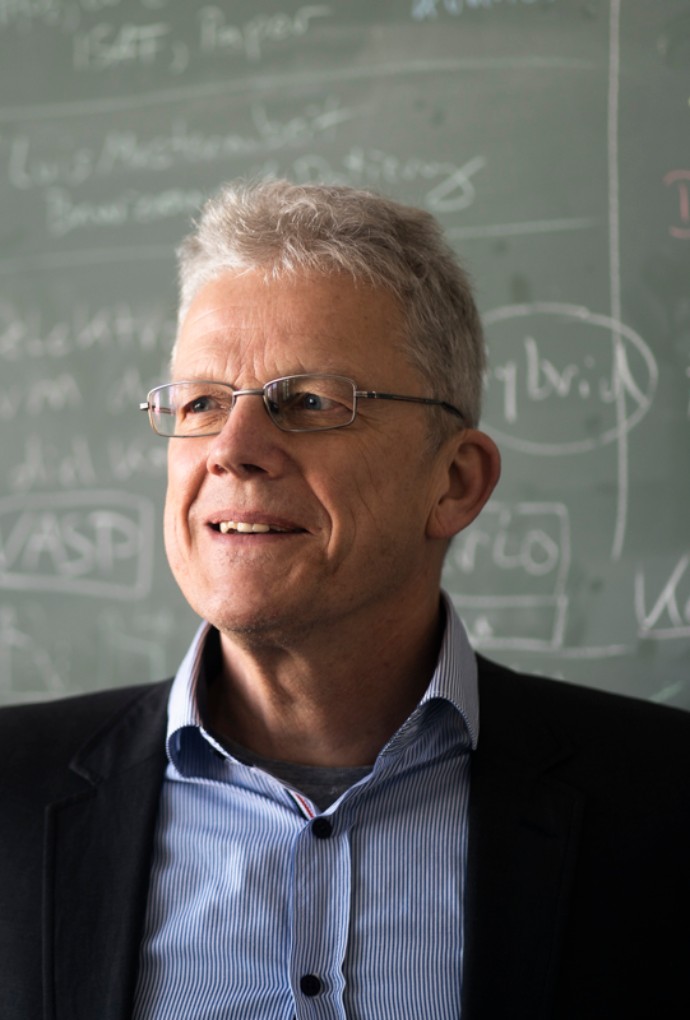
Prof. Dr. Manfred Eich is a faculty member affiliated with the Institute for Materials Technology at Helmholtz-Zentrum Hereon and the Institute for Optical and Electronic Materials at Hamburg University of Technology . His research focuses on optical metamaterials and plasmonics for energy applications, particularly in photoelectrochemical water splitting and thermophotovoltaics . Key research areas include: Developing nanoporous gold as a broadband absorber and electrochemical catalyst for hydrogen generation Designing refractory metamaterials with hyperbolic dispersion for high-temperature selective thermal emission Investigating hot carrier injection mechanisms in metallic nanostructures Characterizing microstructural stability of materials at extreme temperatures His recent publications highlight work on: Non-thermal contributions to plasmon-enhanced electrochemical reactions (2020) Hot electron generation and injection efficiency in nanoporous gold (2018–2019) High-temperature (>1400°C) metamaterial emitters for thermophotovoltaic systems (2016–2019) Collaborations include researchers from TUHH , University of Hamburg , DESY , and international institutions. Current projects emphasize tailor-made multiscale material systems under the DFG Collaborative Research Center 986 .
Claude Leiner is a researcher at JOANNEUM RESEARCH working within the MATERIALS – Institute for Sensorics, Photonics and Production Technologies. His primary focus is on Light and Optical Technologies, where he conducts research on visible light positioning systems, micro-optical elements, and optical simulation. Dr. Leiner's research interests center on optical engineering with emphasis on visible light communication, micro-optics fabrication, and light management systems. His work bridges theoretical optical simulation with practical applications in positioning technology, illumination systems, and renewable energy. Recent publications demonstrate expertise in freeform optical design, laser lithography techniques, and multiscale optical simulation methods. Analysis of Dr. Leiner's publication record from 2014-2022 shows consistent contributions to the field of optical engineering, with particular emphasis on practical applications of micro-optical elements. His work spans visible light positioning systems, photovoltaic efficiency improvements, and advanced optical simulation techniques, demonstrating both theoretical depth and practical implementation focus. Dr. Leiner maintains active research collaborations within JOANNEUM RESEARCH, working with colleagues across multiple projects related to photonics and optical technologies. His research appears to be well-integrated within the institution's focus on applied research and technology development. His laboratory work focuses on the Light and Optical Technologies research group, where he contributes to the development of advanced optical elements using techniques like laser lithography and roll-to-roll manufacturing processes for micro-optical components.
Dr. Sebastian Brandstäter serves as Lecturer at the Institute for Mathematics and Computer-Based Simulation, Bundeswehr University Munich since 2022. His academic trajectory includes research associate positions at Hamburg University of Technology (2021) and Technical University of Munich (2016-2021). His research focuses on: Scientific Machine Learning for biomechanical systems Uncertainty Quantification and Bayesian Inference Global Sensitivity Analysis of complex models Multi-Physics & Multi-Scale Modeling of biological tissues Open-source scientific software development Dr. Brandstäter's work centers on gastrointestinal biomechanics, particularly computational modeling of gastric electromechanics and motility. He has pioneered applications of Gaussian-process metamodelling for sensitivity analysis in vascular and gastric systems, and develops open-source frameworks (QUEENS, 4C) that enable efficient multi-query analysis of large-scale models. He actively supervises student theses on patient-specific modeling and computational biomechanics, teaches advanced numerical methods courses, and contributes to the scientific community through conference organization, peer review, and international collaborations. His recent work demonstrates increasing emphasis on data-driven surrogate modeling and solver-independent computational frameworks for biomedical applications.
Prof. Alfred Kersch is a Professor leading research in computational physics and semiconductor materials at an institution in Munich. He directs the Technical Physics study program and serves on the Bachelor Engineering Physics and Data Science working group. As Master User of the Leibniz Supercomputing Centre (LRZ), he leverages high-performance computing for materials research. His research integrates: Fundamental physics and quantum phenomena Multiscale materials simulation Machine learning for semiconductor optimization Defect engineering in hafnium/zirconium oxides Ferroelectric material design He leads significant externally funded projects including: SIDFEM (2025-2028): Ferroelectric optimization in HfZrO₂ CHIPS of Europe (2024-2028): Semiconductor industry-academia partnerships KI SPEED (2024-2028): AI-driven SiC power electronics D3PO (2022-2026): Defect physics in oxide devices ALPHA (2025-2027): Physics education technology He directs the Laboratory for Modeling and Simulation, focusing on computational approaches to materials science challenges.
Prof. Dr. Ralf Kornhuber is a faculty member at the Freie Universität Berlin , affiliated with the Department of Mathematics and Computer Science and the Numerical Analysis of Partial Differential Equations institute. His research focuses on advanced numerical methods for multiscale problems and applications in geosciences, biomechanics, and materials science. Education: Dr. rer. nat. in Mathematics (1986) and Diploma in Mathematics (1979), both from TU Berlin. Academic Career: Senior Professor at Freie Universität Berlin (since 2023), Full Professor (C4) at the same institution (1998-2022), and prior roles at University of Stuttgart, WIAS Berlin, and TU Berlin. Research Interests: He specializes in adaptive finite element methods, subspace correction techniques, and multiscale modeling of partial differential equations (PDEs). His work addresses nonsmooth elliptic/parabolic problems, geometric PDEs, and domain decomposition strategies, with applications spanning geoscience simulations, biomechanics, and material science. Scientific Boards & Committees: Chair of CRC 1114 Scaling Cascades in Complex Systems (2021-2022), leadership roles in MATH+, Berlin Mathematical School, and Helmholtz Research School GeoSim, alongside editorial positions at journals like SIAM Journal on Multiscale Modeling and Simulation . Recognition: Awarded the International Multigrid Prize in 2022 for collaborative contributions to multigrid methods.
Friederike Schmid is a Professor (W3) of Theoretical Physics at the Institute of Physics, Johannes Gutenberg University Mainz (JGU). Her research group focuses on statistical physics and soft matter theory, with affiliations including the Collaborative Research Center CRC-TRR 146 'Multiscale simulation methods for soft matter systems' where she serves as spokesperson. Education includes a Habilitation (1997) and PhD (1991) from the University of Mainz under Kurt Binder, and a Diploma in Physics from Heidelberg University/LMU Munich (1989). Research spans multiscale modeling , nonequilibrium phenomena , and biological physics . Key interests include: Polymer dynamics and self-assembly Lipid membranes and nanomaterial design Biological interfaces and phase transitions Advanced simulation methods for soft matter Her publications demonstrate strong emphasis on computational approaches to polymer physics, biomolecular systems, and interfacial phenomena, with recent work exploring RNA delivery systems and biomolecular condensates. Honors include: APS Fellow (2023) JGU Teaching Award (2021) DFG Gerhard Hess Award (1998) Heisenberg Fellowship (1998) She leads the Schmid Group and coordinates major grants including DFG-funded projects. Editorial roles include Senior Editor for The Journal of Physical Chemistry and Divisional Associate Editor for Physical Review Letters . Her laboratory conducts interdisciplinary research in soft matter theory, collaborating with experimental groups and maintaining computational infrastructure for large-scale simulations.
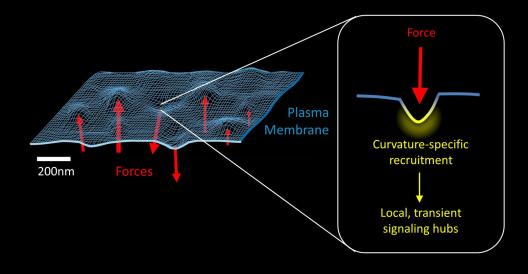
Milos Galic is a University Professor at the Institute of Medical Physics and Biophysics at the University of Münster, Germany, where he leads the Galic Lab: Nanoforces in Cells. He is actively involved in the "Cells in Motion" cluster of excellence and serves as a supervisor in the CiM-IMPRS Graduate Programme. His research spans multiple collaborative projects including CRC 1348 and CRC 1450. Dr. Galic's educational background includes: 1996-2002: Studies in Biology at the University of Zürich, Switzerland 2002-2007: PhD in Neurobiology at the University of Basel, Switzerland (summa cum laude) 2007-2012: Postdoctoral Fellow in Chemical & Systems Biology at Stanford University, USA 2012-2013: Research Associate in Chemical & Systems Biology at Stanford University, USA Dr. Galic's research focuses on understanding how curvature-dependent self-organization impacts single and collective cell dynamics. His work investigates how mechanical forces applied to cellular membranes cause deformations that trigger enrichment of curvature-sensitive proteins and lipids, forming transient signaling hubs. This mechano-chemical signal translation is crucial for cell architecture (particularly neuronal arborization), directionality and speed of cell migration, and collective cell behavior. His lab employs an interdisciplinary approach combining cell and neurobiology with biophysics, nanofabrication, and computational analysis of microscopic images. His recent publications reveal a consistent focus on membrane curvature, protein-membrane interactions, and how mechanical forces are translated into biochemical signals. The work spans from fundamental biophysical principles to applications in neuronal development and cell migration. His research has increasingly incorporated advanced microscopy techniques including lattice light-sheet microscopy, correlative light-electron microscopy, and super-resolution microscopy. As a mentor, Dr. Galic supervises students in the CiM-IMPRS Graduate Programme and has guided numerous PhD projects focused on spatio-temporal analysis of curvature-dependent protein/membrane interactions, analysis of curvature-dependent regulation of actin-based forces, and investigation of curvature-dependent regulation of neuronal architecture. Dr. Galic's lab, the Galic Lab: Nanoforces in Cells, is part of the Multiscale Imaging Centre at the University of Münster. The lab employs cellular model systems (neurons, immune cells, and vascular cells) and biomimetic approaches to study how curvature-induced signaling circuits form and function. The team uses advanced microscopy techniques, quantitative image analysis, nanomaterials, biophysical approaches, and numerical modeling to uncover the core principles through which curvature-dependent self-organization regulates cellular physiology and development in health and disease.
Professor Igor Schapiro is a Research Professor at the Faculty of Physics, Technical University of Dortmund. His office is located in room P2-02-422 at Otto-Hahn-Str. 4, 44227 Dortmund, Germany. Professor Schapiro's research focuses on the theoretical and computational description of light-induced processes in condensed matter. His work spans both application and method development: Application: studying excited state reactions in solvated molecules and chromophore-protein complexes as they occur in nature Method development: creating advanced multireference methods for accurate description of electronic wavefunctions at critical points His research group specializes in handling degeneracies of electronic states, particularly conical intersections, which are pivotal in photochemical reaction pathways. They employ multiscale simulation techniques capable of modeling systems with thousands of atoms, bridging quantum mechanical accuracy with computational feasibility for complex biological and chemical systems. Professor Schapiro maintains an active research presence within the Condensed Matter Physics research focus area at TU Dortmund, collaborating with other faculty members in the department. His group's work contributes to fundamental understanding of light-matter interactions with potential applications in photobiology, materials science, and quantum chemistry. For more information about his research activities and group members, visit the Schapiro Group website at https://cmt.physik.tu-dortmund.de/schapiro-group/ .
Professor Luise Kärger serves as faculty at Karlsruhe Institute of Technology (KIT), where she leads the Lightweight Technology Division within the Institute for Vehicle System Technology. Her research focuses on advancing computational and experimental methodologies for lightweight composite structures in automotive applications. Her primary research domains include: Lightweight Construction methodologies for vehicle systems Computational Mechanics of disordered fiber-reinforced materials Manufacturing Process Simulation (injection molding, overmolding, infiltration) Structural Analysis of composite damage mechanisms Fiber-Reinforced Polymer processing optimization Resource-efficient composite manufacturing digitization Professor Kärger maintains an active research portfolio with seven ongoing DFG projects through 2025, demonstrating sustained funding leadership. Her current work bridges multiscale simulation with experimental validation to solve critical challenges in composite material behavior during manufacturing and service life. Her scientific recognition includes: Prestigious DFG Heisenberg Grant for digitizing composite manufacturing processes As a supervisor, she provides students with hands-on experience in advanced simulation techniques and experimental mechanics through industry-collaborative projects. Her group specializes in developing physics-based process models that integrate data analytics with expert knowledge for structural process improvements. The Lightweight Technology Division operates as KIT's specialized hub for composite material innovation, combining high-fidelity manufacturing simulation with structural performance validation to advance next-generation lightweight vehicle components.
Prof. Dr. Janina Kneipp is a Professor (W3) of Physical Chemistry at Humboldt-Universität zu Berlin, where she has led an active research group since 2012. She previously held positions as Assistant Professor at HU Berlin/BAM (2008-2012), Junior Researcher at BAM (2005-2008), and research appointments at Harvard Medical School, Princeton University, and Erasmus Universiteit Rotterdam. Education: Dr. rer. nat. (summa cum laude), Freie Universität Berlin (2002) Undergraduate/Graduate Studies in Biology & Physics, Freie Universität Berlin (1992-1998) Research Focus: Her interdisciplinary work bridges physical chemistry and biospectroscopy, with particular emphasis on: Surface-enhanced Raman scattering (SERS) for complex sample analysis Plasmonic catalysis and hot electron chemistry Multiphoton-excited vibrational spectroscopy Nanoscale biochemical mapping in plant and animal systems Development of advanced plasmonic substrates Publication Trends: Recent work demonstrates strong focus on multimodal spectroscopy applications, with studies combining SERS, hyper-Raman, IR, and synchrotron techniques to address questions in catalysis, nanoparticle-cell interactions, plant biochemistry, and biosensing. Publications frequently incorporate advanced nanomaterials, electrochemical methods, and machine learning-assisted spectral analysis. Scientific Awards: Fellow, European Academy of Sciences (2020) Caroline von Humboldt Professorship (2019) Wilhelm Ostwald Fellow, BAM (2012) Bunsen-Kirchhoff Award, GDCh (2010) ERC Starting Grant (2010) Academic Leadership: Currently advises 5 PhD students and leads multiple collaborative initiatives. Serves as Board Member of Einstein Center Catalysis (since 2019), Head of Chemistry Department (2014-2016), and Speaker of Graduate School SALSA (since 2012). Secured funding through DFG, EU networks, and ERC grants supporting spectroscopy infrastructure development. Lab & Team: Leads the KneippLab research group with 2 postdoctoral researchers, 5 graduate students, and technical staff. Research focuses on developing spectroscopic methods for interrogating biological and chemical processes at nanoscale resolution using plasmonic enhancement strategies.
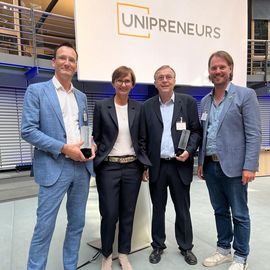
Prof. Dr. Reinhard Schomäcker is a Professor at the Technical University of Berlin's Institute of Chemistry and a Group Leader at UniSysCat. His research bridges catalysis, reaction engineering, and sustainable chemistry, with applications in CO₂ utilization, photocatalytic hydrogen production, and hydrocarbon conversion. He leads the Reaction Engineering Group, focusing on catalyst design and process optimization. Research Interests: His work spans heterogeneous catalysis, kinetic studies, membrane reactors, and techno-economic assessments. Key areas include: Development of tandem catalytic systems for CO₂ hydrogenation Photocatalytic hydrogen evolution using advanced materials Design of nanocatalysts for industrial processes Awards & Recognition: Innovation Award of German Gas Industry (2016) UNIPRENEURS Award for entrepreneurial contributions (2023) Lab & Resources: He directs the Reaction Engineering Group ( www.reaction-engineering.tu-berlin.de ), which collaborates extensively within UniSysCat. The lab specializes in operando catalyst characterization and reactor design.
Professor Alexander Mielke is a leading applied mathematician at the Weierstrass Institute for Applied Analysis and Stochastics (WIAS) in Berlin, with extensive involvement in Germany's premier mathematical research initiatives. His career centers on developing rigorous mathematical frameworks for complex physical phenomena, particularly through leadership roles in major DFG-funded programs including Priority Programmes and Collaborative Research Centers. His research spans critical areas of modern applied mathematics: Multiscale modeling of material behavior Mathematical theory of plasticity and hysteresis Continuum mechanics of multifield systems Pattern formation in coupled differential equations Variational methods for rate-dependent processes Professor Mielke's scientific leadership is demonstrated through his role as speaker of Priority Programme SPP 1095 'Analysis Modeling and Simulation of Multiscale Problems' and Collaborative Research Center SFB 404 'Multifield Problems in Continuum Mechanics'. Currently, he drives research as a participating scientist in the Cluster of Excellence MATH+ and sub-project manager for multiple Collaborative Research Centers, maintaining WIAS's prominence in mathematical research. His work consistently addresses fundamental challenges in connecting microscopic mechanisms to macroscopic material properties. Through the Berlin Mathematical School and MATH+, Professor Mielke actively mentors the next generation of applied mathematicians while securing sustained DFG funding for cutting-edge research. His collaborative approach spans theoretical development, numerical implementation, and physical application, particularly in materials science and engineering contexts.
Professor Uta Helbig is a Professor of Crystallography and X-ray Methods at the Faculty of Materials Science at Nuremberg University of Applied Sciences since 2013. She serves as Women's Representative and Commissioner for Science and Technology Transfer at the institution. Her research focuses on nanomaterials for PEM fuel cells and cultural heritage protection and conservation. Professor Helbig completed her mineralogy studies at universities in Würzburg and Leipzig (1992-1998), followed by a PhD at the Fraunhofer Institute for Silicate Research. She has held research positions at the University of Würzburg and Fraunhofer Institute before joining Nuremberg University. Her primary research interests include nanomaterials for fuel cell technology, crystallography, X-ray diffraction techniques, and cultural heritage conservation. She investigates carbon-doped titania nanotubes, proton-conducting membranes, and materials for hydrogen fuel cells. Her work bridges fundamental materials science with practical applications in energy technology and cultural preservation. Professor Helbig's recent publications demonstrate expertise in nanomaterials synthesis, characterization, and application. Her work spans computational modeling of nanotube networks, charge carrier dynamics in doped titania, microencapsulation for phase change materials, and corrosion mechanisms in cultural artifacts. Her research shows consistent focus on nanomaterials for energy applications and cultural heritage protection. DATEV eG 2016 Award for Damage Analysis of a Historical Silver Object from the Collection of the Germanisches Nationalmuseum (Catalogue No.: Med7053) (Bachelor's Thesis by Julia Hoppe) Professor Helbig supervises Master's and Bachelor's theses on fluorine-free polymer membranes and alternative solvents for fuel cell membranes. She leads multiple research projects including "DuraFuelCell" (2024-2029), "Replacing Perishable Chemicals in Proton-Conducting Membranes" (2024-2025), and "Micro- and Nanostructured Functional Materials" (2022-2025), with funding from DFG, STAEDTLER Foundation, and Bavarian State Ministry. She is affiliated with the Institute for Chemistry, Materials and Product Development (OHM-CMP) and collaborates with researchers across Germany on nanomaterials for energy applications and cultural heritage conservation.
Professor Michael Kaliske is a leading researcher at Dresden University of Technology's Institute of Statics and Dynamics of Structures, where he conducts cutting-edge research in computational mechanics and structural engineering. His work bridges theoretical developments with practical applications across civil, mechanical, and materials engineering disciplines. Professor Kaliske's research focuses on computational mechanics with particular expertise in finite element methods, multiscale modeling, and material behavior under various loading conditions. His work spans diverse application areas including concrete technology, wooden structures, elastomeric materials (particularly tires), and uncertainty quantification in structural design. He has developed sophisticated numerical frameworks for analyzing complex structural behaviors, especially in contexts where traditional analytical methods fall short. His research demonstrates strong interdisciplinary connections between civil engineering, mechanical engineering, and computational science with practical applications in infrastructure durability and material design. His publication record shows consistent advancement in computational methods for structural analysis, with recent work emphasizing multiscale approaches, uncertainty quantification, and experimental validation. The research themes demonstrate progression from fundamental material modeling to increasingly complex system-level analysis, particularly in infrastructure durability and tire-road interaction phenomena. His work increasingly incorporates data-driven approaches and uncertainty modeling to address real-world engineering challenges. Professor Kaliske actively leads multiple research projects funded by the German Research Foundation (DFG), including ongoing Priority Programs and Material Grants. His project portfolio demonstrates significant contributions to both theoretical developments in computational mechanics and practical applications in civil infrastructure and industrial manufacturing. His research has particularly strong connections to industrial applications in tire manufacturing and road infrastructure design.