Carmine Putignano is an Associate Professor at the Politecnico di Bari , affiliated with the Department of Mechanics, Mathematics & Management . His research focuses on contact mechanics, tribology, and viscoelasticity, with applications in polymer bearings, hydrogels, and surface engineering. Recent work includes advancements in viscoelastic contact modeling, lubrication of soft materials, and laser-induced surface texturing. These studies address challenges in friction reduction, material durability, and biomedical applications like articular cartilage lubrication. His 15 most recent publications (2023–2025) span topics such as viscohydrodynamic lubrication, micro-indentation techniques, and multi-laboratory benchmarks for surface topography characterization. The research emphasizes numerical simulations, experimental validation, and energy-based methodologies.
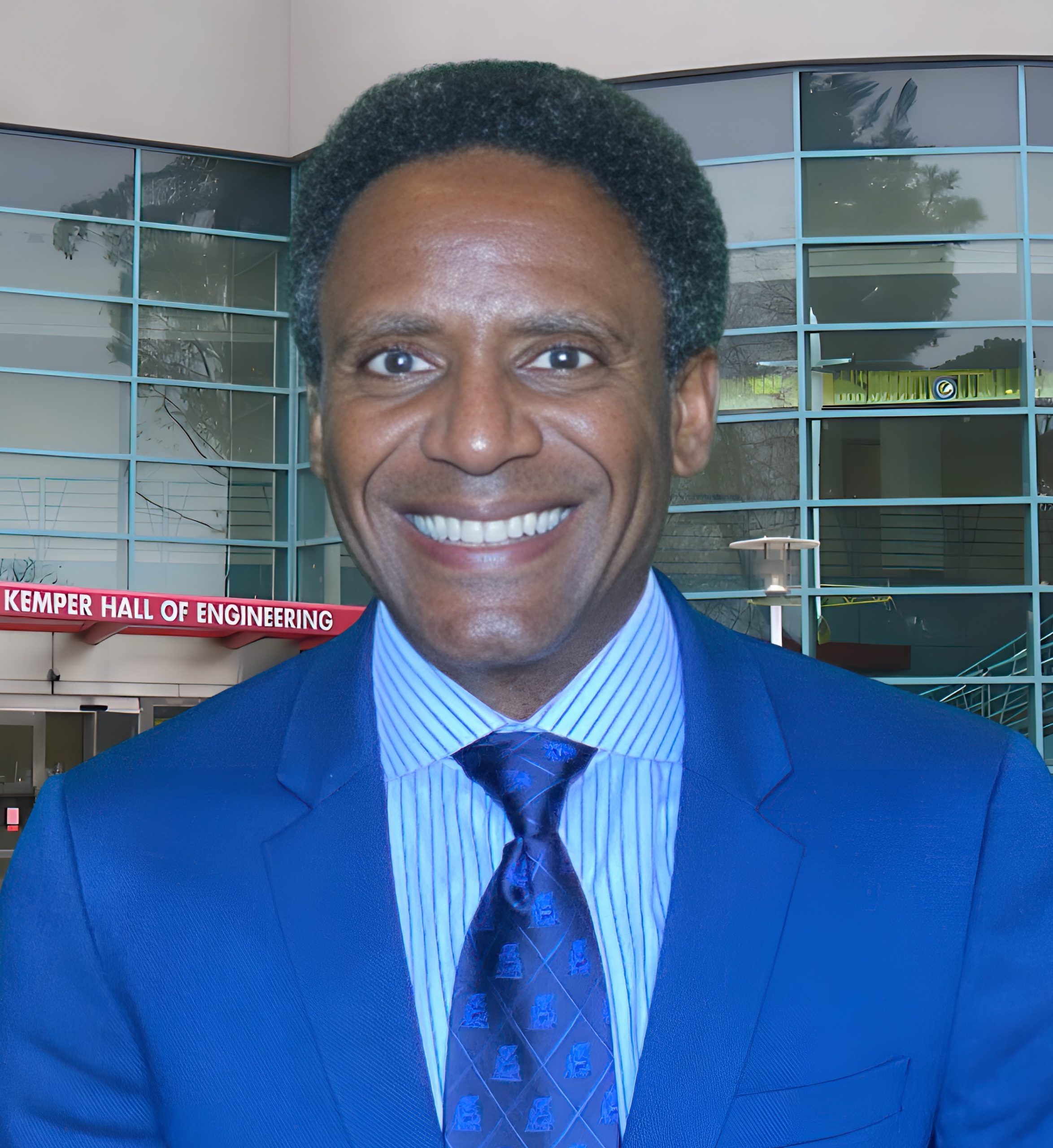
Ralph Aldredge is a Professor in the Department of Mechanical and Aerospace Engineering at the University of California, Davis, and serves as Executive Associate Dean for the College of Engineering, overseeing undergraduate studies and facilities planning. His leadership encompasses enrollment management, academic advising, retention programs, ABET accreditation, and strategic capital projects for engineering facilities. He earned a Bachelor of Science in Mechanical Engineering and French from Carnegie-Mellon University (1985), a Master of Arts in Mechanical and Aerospace Engineering from Princeton University (1988), and a Doctor of Philosophy in the same field from Princeton University (1990). Dr. Aldredge's research focuses on combustion, fluid dynamics, and bio-transport , with dual emphases on bio-fluid dynamics (vascular blood flow) and front propagation in biological tissues (avascular-tumor dynamics) and reacting gases (flame propagation). His work integrates computational modeling to solve complex problems in energy and biomedical systems, including the development of the Level-Set app for flame propagation simulation. Analysis of his recent publications reveals a consistent interdisciplinary trajectory bridging combustion engineering and biomedical applications. Key themes include flame propagation modeling in complex flows, tumor growth dynamics influenced by extracellular matrix components, and optimization of medical devices for drug delivery and cancer treatment. His research demonstrates how fluid dynamics principles can be applied across energy systems and healthcare innovation. No scientific awards were explicitly documented in the source materials. Dr. Aldredge advises graduate students in combustion and bio-fluid dynamics while driving systemic improvements in engineering education. His administrative leadership has shaped holistic-review undergraduate admissions policies adopted system-wide across the University of California, significantly impacting enrollment management and academic support structures. As Associate Dean for Facilities and Capital Planning, he directs strategic development of engineering spaces and resources, ensuring alignment with academic priorities while maintaining safety compliance and operational efficiency for the College of Engineering.
David Richter is a Professor at the University of Notre Dame in the Department of Civil and Environmental Engineering and Earth Sciences , with a concurrent appointment in the Department of Aerospace and Mechanical Engineering . He serves as the Frank M. Freimann Collegiate Professor of Environmental Fluid Dynamics and leads the Richter Lab , focusing on multiphase turbulent processes in environmental systems. Education: Ph.D. in Mechanical Engineering, Stanford University (2011) M.S. in Mechanical Engineering, Stanford University (2011) B.S. in Mechanical Engineering, University of Massachusetts (2006) Appointments: 2025–Present: Professor, University of Notre Dame 2019–2025: Associate Professor, University of Notre Dame 2013–2019: Assistant Professor, University of Notre Dame 2011–2013: Postdoctoral Fellow, National Center for Atmospheric Research Richter’s research spans computational fluid dynamics , air-sea interactions , and geophysical flow modeling , addressing challenges in hurricane boundary layer dynamics , sediment transport , and cloud microphysics . His work employs direct numerical simulations (DNS) and large-eddy simulations (LES) , integrating physics-informed machine learning for predictive models. Recent projects include storm surge forecasting in Alaska and air-sea flux studies via NSF and ONR grants. Scientific contributions include 101 publications, with recent articles analyzing marine fog microphysics , tropical cyclone intensification , and microplastic transport . His 15 most recent articles (2021–2025) emphasize turbulent flow modeling , particle-laden systems , and environmental impact prediction . Awards: 2025: Frank M. Freimann Collegiate Professor 2021: Outstanding Teacher, University of Notre Dame Engineering Office of Naval Research Young Investigator Award Richter mentors graduate students in atmospheric and oceanic sciences , with lab alumni pursuing academic and industry roles. His collaborative projects extend to institutions like McGill University , University of Chile , and Michigan Tech .
Laurent Delannay is a Professor at the Catholic University of Louvain and a Research Director at the Institute of Mechanics, Materials and Civil Engineering (iMMC) within the Louvain Polytechnic School (EPL) . His work focuses on materials science and mechanical engineering , particularly in microstructural modeling , strain heterogeneity , and plasticity . Key research areas: Plasticity, Finite Element Modeling, Microstructure Analysis, Residual Stress, Crystal Plasticity Recent publications analyze aluminum films, tungsten deformation, and biomedical materials Affiliated with the Applied Mechanics and Mathematics (MEMA) research unit Email: laurent.delannay@uclouvain.be His work combines experimental data with computational simulations to understand material behavior under stress, thermal shocks, and mechanical processing. Research trends include grain boundary effects , texture evolution , and multiscale modeling . Teaching activities include courses on Mechanics of Materials , General Mechanics , and Durability of Materials . He leads research in the MEMA laboratory and contributes to projects related to nuclear materials and biomedical applications.
Doron Levy is a Professor of Mathematics and the current Chair of the Department of Mathematics at the University of Maryland, College Park. He also serves as Director of the Brin Mathematics Research Center and co-director of the NCI-UMD Partnership for Integrative Cancer Research. His academic affiliations include membership in the Maryland BioPhysics Graduate Program and the Applied Mathematics, Statistics, and Scientific Computation (AMSC) Graduate Program. Levy received his Ph.D. in Applied Mathematics from Tel-Aviv University in 1997, following an M.Sc. (summa cum laude) in 1994 and B.Sc. in Mathematics and Physics (cum laude) in 1991. Prior to joining the University of Maryland, he held positions at Stanford University, UC Berkeley, Lawrence Berkeley National Lab, and institutions in Paris including the University of Paris 6 and the Ecole Normale Superieure. As an applied mathematician, Levy focuses on biomedical applications of mathematics, particularly cancer dynamics, drug resistance, immunology, imaging, and cell motility. His research is highly collaborative, working with clinicians, experimentalists, and researchers from medical schools and research centers. His mathematical approaches integrate differential equations, computational modeling, and statistical analysis to address complex biological systems and therapeutic challenges. Levy's publications demonstrate a consistent focus on mathematical oncology and immunology, with recent work examining T cell exhaustion, cancer-immune interactions, tumor evolution, and treatment optimization. His research bridges theoretical mathematics with practical clinical applications, particularly in understanding resistance mechanisms and developing more effective cancer therapies. Fellow of the American Mathematical Society (2024) Fellow of the John Simon Guggenheim Memorial Foundation (2014) Distinguished Scholar-Teacher at University of Maryland (2013) National Science Foundation Career Award (2002) Haim Nessyahu Prize for Best Ph.D. Thesis in Mathematics in Israel (1998) Levy has secured substantial research funding including Simons Foundation grants for mathematical modeling of cancer dynamics (2021-2026), multiple UMD-NCI seed grants, and NSF funding for quantifying propagation of resistance to chemotherapy in cancer (2017-2020). His research group collaborates extensively with the National Cancer Institute and medical researchers, focusing on translating mathematical insights into clinical applications. The Brin Mathematics Research Center under his directorship serves as a hub for interdisciplinary mathematical research with biomedical applications.
Professor Bryan Scotney is a faculty member at Ulster University 's School of Computing , holding the title of Professor of Informatics. His research spans over three decades with a focus on digital image processing , computer vision , pattern recognition , and statistical databases , applied to healthcare informatics , biomedical sciences , and telecommunications network management . He has extensive experience in interdisciplinary projects and research management , leading the university's Computer Science Research Institute from 2005 to 2015. Key research areas: data integration , distributed processing , healthcare technologies Major funded projects: EU FP5 , EPSRC NETWORK , India-UK Advanced Technology Centre , ESRC Design for Ageing Well , EU H2020 DESIREE and ASGARD Recent publications include advancements in video anomaly detection , IoT encryption , face recognition , and medical image processing . His work contributes to UN Sustainable Development Goals through AI for healthcare and secure smart environments . Scientific Awards and Recognition : Shortlisted for BCS & Computing UK IT Industry Awards - Security Innovation of the Year Digital Innovation of the Year (Highly Commended) for 5G-Enabled Edge Compute Highly Commended for Emerald Literati Network Awards TM Forum awards for Catalyst Innovation and Use of TM Forum Assets His research emphasizes collaborative projects across academic , government , and commercial sectors, with significant contributions to EU Framework Programmes and UK Research Councils funded initiatives.
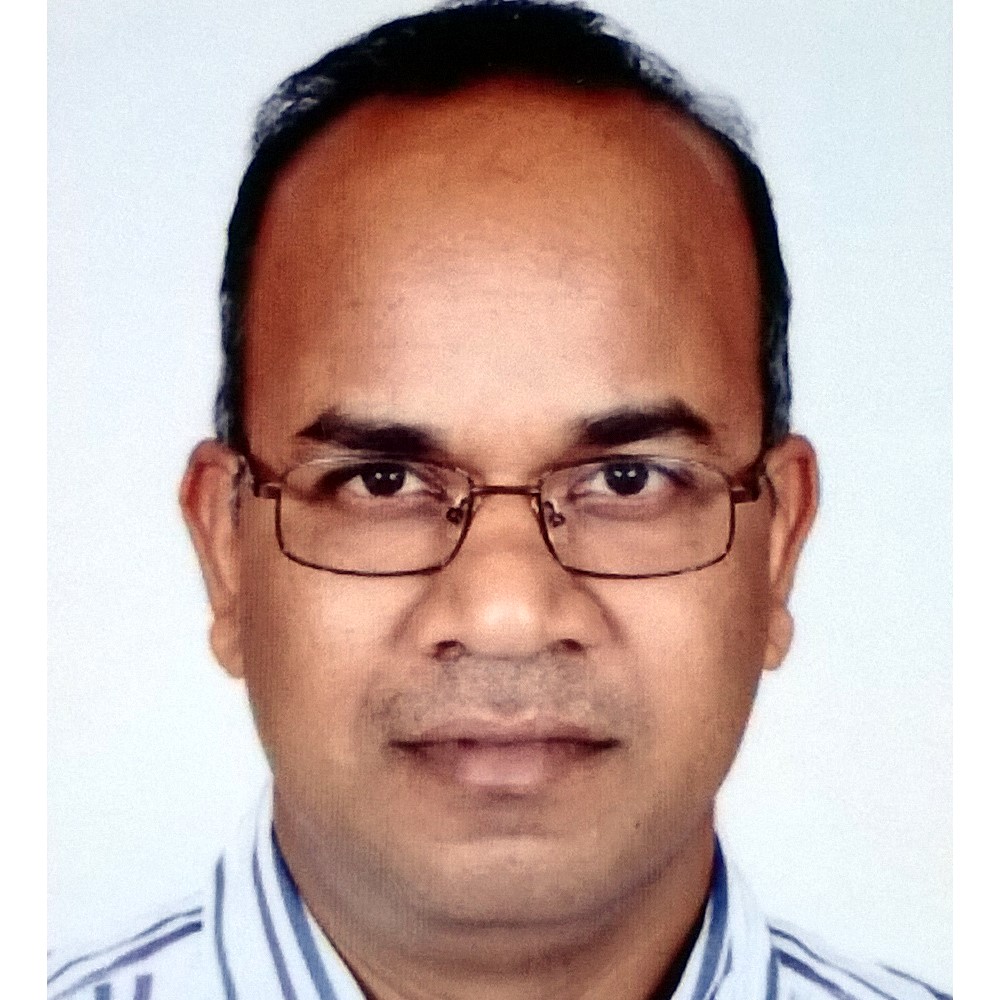
Bhabani Shankar Mallik is a Professor in the Department of Chemistry at the Indian Institute of Technology Hyderabad . His research focuses on Computational Chemistry , Molecular Dynamics , and First Principle Calculations for energy materials and catalysis. He leads the BSM Lab , which utilizes High-Performance Computing (HPC) resources like ParamSeva@IITH (838 TFLOPS, 7500 cores). Research Areas : Structure/Dynamics of Ionic Liquids, Catalysis (Homogeneous/Heterogeneous), Energy Materials, Microkinetic Theory, Machine Learning in Chemistry, Vibrational Spectroscopy His recent publications analyze ionic transport mechanisms in solid-state electrolytes, electrocatalytic processes for nitrogen reduction, and proton transfer dynamics in aqueous systems. He teaches courses like Modern Simulation Methods and Principles of Quantum Chemistry .
Rathinavelan Thenmalarchelvi is a Professor in the Department of BioTechnology at the Indian Institute of Technology Hyderabad. His research spans diverse areas including Bacterial Glycobiology, Transition State Structures of Proteins, DNA-protein Interaction, DNA Structure and Dynamics, Multiscale Modelling, AI/ML, Optics/Photonics/Spectroscopy, Disease/Toxicity Mechanisms, Drug Discovery, Drug Target Validation and Preclinical Testing, and Molecular Virology.
Dr. Fei Fang is an Assistant Professor at the Icahn School of Medicine at Mount Sinai, holding dual appointments in the Department of Orthopedics and the Department of Cell, Developmental & Regenerative Biology. BA in Mechanical Engineering, Huaqiao University MS in Mechatronic Engineering, Zhejiang University MS and PhD in Mechanical Engineering, Washington University in St. Louis Her research focuses on musculoskeletal mechanobiology and cell niche interactions, particularly tendon biology and regenerative medicine. Key areas include: Tendon mechanobiology and developmental biology Tissue engineering for musculoskeletal regeneration Stem cell applications in tendon repair Biomechanical analysis of tendon structures Enthesis healing and Hedgehog signaling pathways Single-cell analysis of immune-mesenchymal interactions Dr. Fang's recent publications emphasize multiscale mechanical evaluation of tendons, Hedgehog signaling mechanisms, and translational approaches for tendon-to-bone healing. Her work combines biomechanical engineering with regenerative medicine to address musculoskeletal disorders. She leads the Fang Laboratory for Musculoskeletal Mechanobiology and Cell Niche at Mount Sinai, located in the Annenberg Building (20th Floor, Room 20-72A), advancing novel therapies for tendon, ligament and meniscus regeneration through mechanobiological insights.
Yuto Otoguro is an Associate Professor (non-tenure-track) at Waseda University's Faculty of Science and Engineering, Department of Modern Mechanical Engineering, and also serves as a Researcher at the Institute for Frontier Fluid-Structure Interaction Analysis. He earned his PhD, M.Eng, and B.Eng in Modern Mechanical Engineering from Waseda University in 2018, 2016, and 2014 respectively. His academic career focuses on advanced computational methods for fluid dynamics and structural mechanics. Dr. Otoguro's primary research interests lie in Fluid Engineering, Computational Fluid Dynamics (CFD), and Isogeometric Analysis (IGA). His work centers on developing and applying space-time computational methods with isogeometric discretization for complex flow problems. He has made significant contributions to element length calculation in B-spline and T-spline meshes, stabilization parameters for variational multiscale methods, and general-purpose NURBS mesh generation techniques for complex geometries. His research has important applications in turbomachinery, wind turbine analysis, fluid-structure interaction, and computational aerodynamics. His publication record shows a strong focus on computational methods development, with particular emphasis on isogeometric analysis applications. His work on local-length-scale calculation in complex geometries, hyperelastic shell models, and space-time computational flow analysis represents cutting-edge research in computational mechanics. His papers frequently address challenges in representing complex geometries and handling moving boundaries in fluid flow simulations. Among his scientific achievements, Dr. Otoguro received the JSCES 20th Anniversary Scholarship Award. He has been actively involved in research projects including 'On new developments of Isogeometric Analysis (IGA) for highly accurate and efficient fracture mechanics analysis' funded by the Japan Society for the Promotion of Science, and 'Compressible-flow engine-valve analysis with response motion and contact' as part of the Early-Career Scientists program. As an educator, Dr. Otoguro teaches multiple courses at Waseda University including Fluid Dynamics, Engineering Thermodynamics, Material Mechanics, and Mechanical Engineering Laboratory courses. He has also organized workshops on isogeometric analysis to promote this emerging computational method within Japan's research community. His academic service includes participation in the Team for Advanced Flow Simulation and Modeling (T*AFSM), where he contributes to advancing computational methods for fluid-structure interaction problems.
Dr. Robert (Rob) G. Belleman is a Lecturer and researcher in the Computational Science Lab at the Informatics Institute, Faculty of Science, University of Amsterdam. He concurrently serves as Director of the university-wide College of Informatics (CoI), manager of the Visualisation Lab at Science Park, and head of the Education Group, consolidating teaching, research, and infrastructure leadership roles. Education details are not disclosed in the supplied text. His research integrates large-scale scientific computing with immersive visualisation. Core themes encompass GPU-accelerated simulations—from gravitational N-body dynamics to flood modelling—interactive visual analytics for criminal and biological networks, 3-D morphological analysis of marine organisms, sign-language lexicon technologies, and in-silico oncology platforms that fuse multiscale cancer models with clinical IT workflows. Recent articles (2022-2024) emphasise interdisciplinary visual analytics: uncovering cocaine-trafficking scenarios, discriminating coral species via 3-D quantification, and constructing 3-D sign-language lexicons. Earlier work advanced GPU computing for astrophysics and MD simulations, hybrid socio-genetic network modelling of HIV spread, and grid-enabled oncosimulation for nephroblastoma therapy planning. No scientific awards are listed in the provided source. Belleman leads educational innovation through the College of Informatics and the Education Group, while infrastructural oversight of the Visualisation Lab supports numerous UvA research teams. No explicit grant amounts or named PhD advisees appear in the text. He heads the Visualisation Lab facility at Science Park and coordinates the Education Group within the Computational Science Lab, fostering cross-disciplinary collaboration among computer scientists, life scientists, and physicists.
Dr. Suhaib Ardah is a Postdoctoral Research Associate at the Department of Mechanical Engineering, Imperial College London, specializing in advanced computational modeling for fluid-solid interactions across multiple scales. His work bridges atomic-level phenomena with macroscopic behaviors to inform sustainable engineering solutions. Current roles: Research Associate (since 2023) and Assistant Supervisor (since 2024) at Imperial College London. Core research focus: Multiscale tribology, lubrication systems, and computational modeling under extreme conditions. Education: PhD in Mechanical Engineering (Imperial College London, 2019-2023) and MEng in Mechanical Engineering (Cardiff University, 2015-2019). Certifications: Fundamentals of Accelerated Computing with CUDA Python (NVIDIA) and Computational Contact and Fracture Mechanics (IMT Institute for Advanced Studies). Dr. Ardah contributes to the EPSRC-funded InFUSE Prosperity Partnership (2024-present), a multidisciplinary collaboration with Shell and Diamond Light Source targeting net-zero emissions through interface behavior analysis. His PhD research, supervised by Professor Daniele Dini and Dr. Tom Reddyhoff, developed a coupled Reynolds-based computational framework for lubricated systems, integrating hydrodynamics, lubricant rheology, and interfacial heat generation. His MEng at Cardiff University explored temperature effects on lubricated interfaces under elliptical contact conditions.
Siddiqui Gohar Ali is a Researcher at the Technische Universität München (Technical University of Munich), affiliated with the TUM School of Computation, Information and Technology and the Associate Professorship of Simulation of Nanosystems for Energy Conversion led by Prof. Alessio Gagliardi. His work focuses on computational methods, machine learning, and energy conversion systems. Research Areas : Machine Learning, Multiscale Modelling, Energy Conversion, Electrocatalysis, Organic Solar Cells, Catalyst Modeling Teaching : Collaborates in lectures and seminars on computational nanoelectronics and quantum engineering Recent research highlights include applying machine learning to enhance metadynamics for drug interaction studies and optimizing configuration space sampling techniques. He is actively involved in projects under the DFG e-Conversion Cluster and EU-funded initiatives.
Dr. Emine Sümeyra Turalı-Emre is an Assistant Professor at the Institute of Biomedical Engineering, Bogazici University, where she joined in 2024. She combines expertise in nanotechnology, biomedical engineering, and data science to solve critical healthcare challenges. Previously, she was a Postdoctoral Research Fellow in Chemical Engineering at the University of Michigan (2021-2024) and completed her PhD in Biomedical Engineering from the same institution in 2021. Her educational background includes: PhD in Biomedical Engineering, University of Michigan, 2021 MSc in Biomedical Engineering, University of Michigan, 2015 BSc in Molecular Biology and Genetics, Istanbul University, 2008 Dr. Turalı-Emre's research focuses on engineering inorganic nanoparticles for applications such as drug and gene delivery, antibacterial and anticancer treatments, bone regeneration, and extracellular vesicle capturing for diagnostics. Her work spans chiral nanoparticles, antibacterial nanoparticles, extracellular vesicle capturing, AI-driven nanoparticle-protein interactions, drug and gene delivery systems, cancer therapies, and translational nanotechnology. She approaches biomedical challenges through multidisciplinary collaborations that bridge engineering, life sciences, and computer science. Her recent publications in leading journals like Advanced Materials, Matter, and PNAS demonstrate strong trends in chiral nanomaterials for diagnostics and therapeutics, antibacterial applications against biofilms and antibiotic-resistant bacteria, and the integration of artificial intelligence with nanotechnology. Her work shows a clear progression from fundamental nanoparticle synthesis to translational applications in healthcare. Scientific awards and recognitions include: BioInterfaces Research Community Innovator Award, 2024 Full Member, Sigma Xi, The Scientific Research Honor Society, 2024 Women in Science and Engineering, Cinda Sue Davis STEM Equity Leadership Award (Nominee), 2024 Women in Science and Engineering, Willie Hobbs Moore Achievement Award (Nominee), 2024 Selected Participant, AI in Science & Engineering Summer Academy, 2023 And several other prestigious awards and recognitions Dr. Turalı-Emre is actively involved in mentoring students and fostering interdisciplinary collaboration. She currently leads a TÜBİTAK-BİLGEM project developing an AI-driven database to optimize antibacterial nanoparticles for diagnostics and treatments, in collaboration with Dr. Betül Özateş from the Institute of Data Science and Artificial Intelligence. She has also contributed to Coulter Translational Research Partnership projects focused on extracellular vesicle capture, optimizing RNA isolation from biofilms, and developing antibacterial surfaces using chiral nanoparticles. Her laboratory provides a vibrant environment for undergraduate, graduate, and non-traditional students from various fields, including engineering, life sciences, and computer science, to conduct impactful research and contribute to transformative innovations in healthcare.
Wiyao Azoti is a Lecturer at the National Institute of Applied Sciences of Toulouse (INSA Toulouse), where he is a member of the Composite Materials and Structures group (MSC). His work focuses on the mechanics of composite materials and structures, with particular expertise in multi-scale modeling and micromechanics. Dr. Azoti's educational background includes: PhD in Materials Science from University of Lorraine, France (2012) MSc in Mechanical Engineering from University of Lorraine, France (2009) Engineering degree in Mechanical Engineering from ENSI, Togo (2008) His research interests center on the mechanics of materials, with emphasis on linear, nonlinear, and computational aspects; rate-independent and rate-dependent plasticity; micromechanics and mean-fields homogenization techniques; multi-scale modeling of composite materials; damage and fracture behaviors of composite materials; and multiphysics coupling of thermomechanical fields. His work bridges fundamental mechanics with practical applications in automotive, aerospace, and biomedical fields. Dr. Azoti has published extensively in the field of composite materials, with over 50 scientific contributions. His recent work shows a strong trend toward the application of multi-scale modeling techniques to graphene-reinforced composites, biocomposites, and advanced materials for automotive and aerospace applications. He has made significant contributions to understanding the electromechanical behavior of polymer composites, thermomechanical properties of natural fiber composites, and the crashworthiness of hierarchical composite structures. Professional memberships include: African Society of Eco-Materials (ECOMAT-AFRICA) American Society of Mechanical Engineers (ASME) European Mechanics Society (EUROMECH) Dr. Azoti teaches several courses at INSA Toulouse, including Design of Mechanical Systems, Materials Science and Heat Treatment, Automation of Mechanical Systems, Machine Elements and Eco-design, Eco-design and Innovation, and Composite Materials' Projects. His teaching reflects his research expertise, emphasizing sustainable materials and advanced composite technologies.