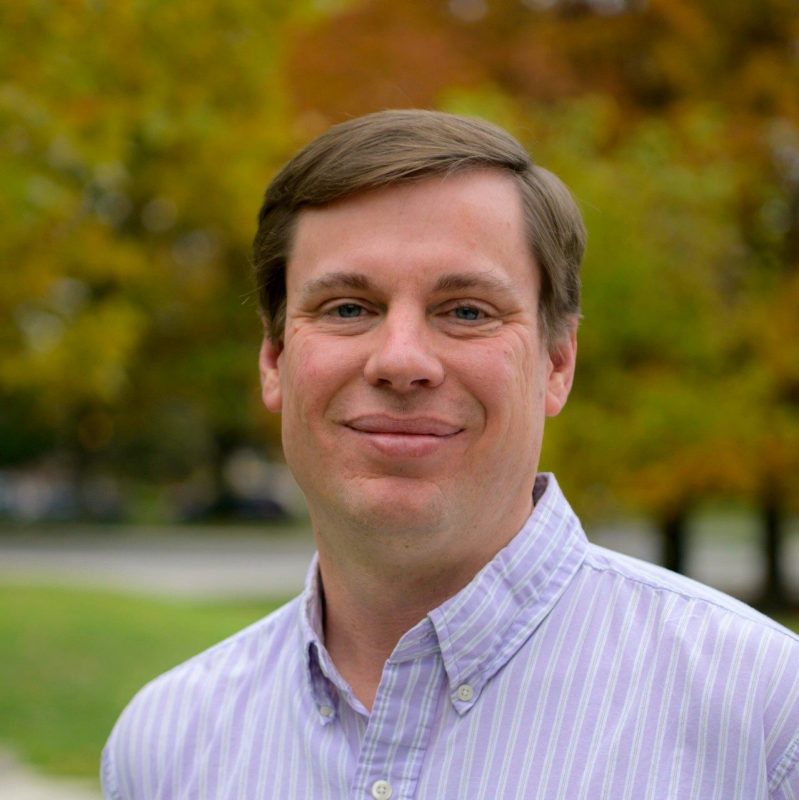
Vanessa Wood is a Professor at ETH Zürich in the Department of Mechanical and Process Engineering. She specializes in understanding structure-performance relationships in complex, heterogeneous systems, particularly lithium ion batteries, using advanced imaging techniques like electron and x-ray microscopy to address performance limitations and guide material improvements. Research Interests: Investigating nanoscale structure and surface chemistry in battery materials Studying electrolyte infilling and lithium transport dynamics Developing computational methods for multiscale material analysis Integrating machine learning to overcome experimental challenges Designing volumetric imaging approaches for energy storage systems Research Affiliations: Affiliated with the Microstructure Physics and Alloy Design group and Interdepartmental & Partner Research Groups at ETH Zürich. Her work bridges experimental and computational disciplines to improve energy technologies.
Martin Berzins is a Professor of Computer Science at the University of Utah, affiliated with the School of Computing and the Scientific Computing and Imaging (SCI) Institute. His research focuses on parallel scientific computing, numerical methods for partial differential equations, and high-performance computing frameworks. He is a leading developer of the Uintah framework, a scalable simulation tool used for large-scale engineering and scientific problems. Research Interests : Parallel algorithms, adaptive mesh refinement, material point method (MPM), exascale computing, computational fluid dynamics, and performance portability. His work emphasizes scalable software solutions for complex multiscale and multiphysics simulations, with applications in environmental modeling, explosive detonation analysis, and computational mechanics. Recent articles highlight advancements in Uintah's portability to exascale systems, error estimation in MPM, and high-order numerical methods. Berzins has contributed significantly to the development of task-based parallelism strategies and heterogeneous computing optimizations. His research bridges theoretical numerical analysis with practical large-scale computational challenges. Collaborations include DOE projects on hazard analysis and exascale computing. He has pioneered the integration of runtime systems like Hedgehog with Uintah to enhance scalability on modern architectures. His work ensures computational frameworks remain viable for emerging hardware trends, emphasizing both algorithmic innovation and software engineering rigor.
Sandra Keiper is a Lecturer at the Institute of Mathematics within Faculty II - Mathematics and Natural Sciences at Technical University of Berlin. She has held academic positions since at least 2011, including roles as Tutor, Assistant, and Lecturer, with teaching responsibilities in Analysis, Linear Algebra, and Partial Differential Equations for both mathematicians and engineers. Research interests include: Compressed Sensing and Sparse Signal Recovery Numerical Linear Algebra with applications to high-dimensional data Wavelet and curvelet transforms for geometric multiscale analysis Approximation theory for finite-valued and cartoon-like functions Deep learning and graph approximation techniques Professional activities : Active in teaching since 2011 (Analysis I-III, Functional Analysis, Integral Transforms) Supervising theses since 2015 on topics like Compressed Sensing and Deep Learning Invited lectures at Caltech, ETH Zurich, and Alan Turing Institute Research stays at Hausdorff Institute, ETH Zurich, and Duke University
Christian Engwer is a full Professor at the University of Muenster in the Institute for Applied Mathematics, specializing in Analysis and Numerics. He leads the Engwer Group focused on Applications of Partial Differential Equations and is actively involved in the Cells in Motion initiative as a supervisor in the CiM-IMPRS Graduate Programme. His research centers on developing numerical methods for partial differential equations, particularly addressing challenges in complex geometries and multi-physics applications. He specializes in Unfitted Discontinuous Galerkin methods, which allow simulations on complex geometries without requiring domain-fitted meshes. His work spans porous media modeling, biological systems, and bioelectromagnetism applications, with significant contributions to EEG/MEG forward modeling in neuroscience. Analysis of his recent publications reveals a strong focus on model order reduction techniques, stabilized numerical schemes for cut-cell meshes, and applications in bioelectromagnetism. His work demonstrates a consistent trajectory toward developing robust, efficient numerical methods applicable to real-world problems in medical imaging and biological modeling, with increasing emphasis on high-performance computing implementations. Professor Engwer actively supervises doctoral students, with recent completions including Lukas Renelt (2025), Michael Wenske (2021), and Maria Carla Piastra (2019), among others working on topics related to numerical methods and biomedical applications. He leads several major research projects including BrainStorm: Highly Extensible Software for Advanced Electrophysiology and MEG/EEG Imaging (NIH-funded since 2019), multiple EXC 2044 Cluster of Excellence projects through 2025, and the InterKI interdisciplinary teaching program on machine learning and artificial intelligence. His group develops several important software packages including DUNE (Distributed and Unified Numerics Environment), duneuro (for bioelectromagnetism applications), and TPMC (Topology Preserving Marching Cubes). These tools support research in numerical methods and their applications to complex scientific problems.
Gerald Quon is an Associate Professor in the Department of Molecular and Cellular Biology at the University of California, Davis. He is affiliated with the Genome Center and participates in multiple graduate programs, including Integrative Genetics and Genomics, Neuroscience, Computer Science, Biostatistics, and Biomedical Engineering. Education: PhD in Computer Science from the University of Toronto (2012) MSc in Biochemistry from the University of Toronto (2006) Research Interests: Dr. Quon applies computational approaches to genetics and genomics problems, focusing on the genetics of human disease , models of cell population dynamics , and neurogenomics . His lab builds neural network models to understand how genetic variation affects disease risk through molecular and cellular phenotypes, with applications to obesity, Alzheimer’s disease, psychiatric disorders, and Rett syndrome. Recent Research Trends: Recent publications highlight work in neuroplasticity , single-cell multimodal analysis , brain evolution , morphological variation modeling , and microbiome-based classification . His team combines sequencing and imaging technologies to model cellular interactions and gene expression dynamics. Scientific Awards: NIH New Innovator Award (2021) Grants & Collaborations: He received NSF funding (2019) for computational tools in single-cell analysis and collaborates across disciplines, including neuroscience, biomedical engineering, and computational biology. His lab develops software like scProjection , siVAE , and scAlign .
Professor Dan Balint is the Head of the Mechanics of Materials Division in the Department of Mechanical Engineering at Imperial College London. He holds a Ph.D. in Engineering Sciences from Harvard University (2003), an S.M. in Applied Mathematics from Harvard (2001), and a B.S. in Engineering Mechanics from Michigan State University (1998). Prior to joining Imperial in 2006, he was a Research Associate at the Cambridge Centre for Micromechanics. His research spans theoretical and computational solid mechanics, with focus areas including: Micromechanics of crystalline materials (metals/ceramics) Dislocation-defect interactions and failure mechanisms Discrete dislocation plasticity methods Nuclear cladding materials and zirconium hydrides Thin film failure and metal forming processes Fracture mechanics and material size effects Recent publications (2022-2025) predominantly explore dislocation dynamics, zirconium alloy behavior under nuclear conditions, computational modeling of microstructural stresses, and machine learning applications in materials science. Common themes include thermomechanical degradation, crack initiation mechanisms, and multi-scale modeling approaches. Professor Balint serves as Associate Editor of the European Journal of Mechanics - A/Solids and consults for industrial partners including Rolls Royce, BP, and the US Air Force.
José Alvarado is an Assistant Professor of Physics at the University of Texas at Austin, affiliated with the College of Natural Sciences. His research focuses on biophysics, soft matter, and active matter, particularly exploring mechanical design principles in biological systems. He investigates topics such as planar cell polarity (PCP), actomyosin networks, and morphogenetic processes. Alvarado’s work integrates experimental and theoretical approaches, often involving collaborations with centers like the Center for Nonlinear Dynamics and Texas Robotics. His studies address questions about how biological systems achieve mechanical efficiency and how active matter principles apply to biological actuation and control. Key themes in his research include the nonlinear mechanics of actomyosin gels, the role of PCP in tissue shaping during convergent extension, and the design of biomimetic actuators for robotics. He has also contributed to understanding fluid dynamics in microscale systems, such as hairy surfaces and colloidal liquid crystals.
Fabio Zanini is an Associate Professor at the University of New South Wales (UNSW) , leading a research group focused on computational biology , single-cell approaches , and transcriptomic analysis across diseases like severe dengue , neonatal lung disease , cancer , and marine biology . He previously conducted postdoctoral research at Stanford University (2016-2019) and earned a PhD in Bioinformatics from the Max Planck Institute for Developmental Biology and the University of Tuebingen (2015). Current Affiliation: Group leader, UNSW Previous Training: Postdoc (Stanford), PhD (Max Planck/University of Tuebingen) His research spans single-cell RNA sequencing , computational virology , developmental cell biology , and bioinformatics tool development , with recent work on: Severe dengue progression (viral-host interactions, immune signatures) Lung development (endothelial cell diversity, hyperoxia-induced injury) Cancer genomics (mutant HSC clones, AZA therapy response) Marine biology (plankton transcriptomics, evolutionary analysis) Bioinformatics (HTSeq 2.0, northstar algorithm) Recent scientific awards include grants from the Chan Zuckerberg Initiative ($270,000), NIH R01 (multiple), ARC Discovery Grant , and NHMRC Ideas Grant . Notable contributions include: Northstar - Cell classification algorithm SpectralSeq - Hyperspectral-transcriptomic integration Tabula Muris - Mouse aging atlas He has supervised research into hematopoietic stem cell regulation , lung vascular development , and autophagy in viral infections , with collaborations across Stanford , University of Sydney , and Harvard .
George Vosselman is a Full Professor at the University of Twente, Faculty of Geo-Information Science and Earth Observation (ITC), specializing in Geo-Information Extraction with Sensor Systems. Educated with honours at Delft University of Technology (1986) and PhD in Photogrammetry from Rheinische Friedrich Wilhelms University of Bonn (1991), he has held academic roles at the University of Stuttgart, University of Washington, and Delft University of Technology (1993–2004). Since 2004, he has been a key figure at ITC, serving as department head (2012–2018, 2023–). Education: Delft University of Technology (BSc with honours, 1986), Rheinische Friedrich Wilhelms University of Bonn (PhD with honours, 1991) His research focuses on leveraging sensor technology advancements for large-scale geo-information production. Key expertise includes quality analysis of laser altimetry data, point cloud segmentation/classification, 3D building/road modeling, and model-driven imagery analysis. He has published over 220 papers and co-edited the textbook Airborne and Terrestrial Laser Scanning (2010). Recent work integrates deep learning with geospatial data, addressing semantic segmentation, visual question answering, and drone-based mapping. Recent publications (2025–2023) highlight trends in deep learning for remote sensing , including multimodal question answering benchmarks (HRVQA), vectorized building extraction (RoIPoly), latent diffusion for road modeling (LDPoly), and drone obstacle avoidance systems. His work bridges photogrammetry , computer vision , and robotic mapping , with applications in urban planning, disaster management, and informal settlement monitoring. Scientific Awards : Hansa Luftbild (1993), ISPRS Otto von Gruber (2000), Schwidefsky Medal (2012), Karl Kraus Medal (2012), ASPRS Fairchild Award (2015), ISPRS Fellow (2020) As an educator, Vosselman has taught photogrammetry, remote sensing, and laser scanning at Delft University of Technology and globally. He chaired the ITC Examination Board (2015–2023) and modernized geo-information education in Asia/Africa. His software for point cloud processing is commercialized in Europe, and he currently leads ISPRS working groups on point cloud methodologies. Labs/teams include the Earth Observation Science Chair Group at ITC, collaborating on UAV-based datasets (UAVid, UAVPal) and indoor laser scanning systems. Recent activities (2025) involve invited talks on pulse matching limitations in laser scanning and deep learning for point cloud classification.
Mauro Maggioni is a Professor in the Departments of Mathematics and Applied Mathematics and Statistics at Johns Hopkins University. His research focuses on the mathematical foundations of Data Science, with applications in molecular dynamics, hyperspectral imaging, and reinforcement learning. He employs techniques from Harmonic Analysis, Approximation Theory, and Probability to develop scalable algorithms, particularly multiscale methods for analyzing high-dimensional data. Maggioni’s work bridges theoretical mathematics and practical applications, including cardiac electrophysiology modeling, unsupervised segmentation of hyperspectral images, and reduced-order modeling of complex systems. Education: B.S. in Mathematics from Università degli Studi in Milan, Italy; Ph.D. in Mathematics from Washington University in St. Louis. He held a Gibbs Assistant Professorship at Yale before moving to Duke University and later becoming a Bloomberg Distinguished Professor at JHU. Research Interests: Mathematical foundations of Data Science, Machine Learning, Partial Differential Equations, and their applications in physical and biological systems. Notable contributions include diffusion wavelets, interaction kernel learning, and multiscale geometric analysis of molecular dynamics data. Scientific Awards: Popov Prize in Approximation Theory (2007), NSF CAREER Award and Sloan Fellowship (2008), Fellow of the American Mathematical Society (2013), Simons Fellowship (2020). Advising & Grants: Maggioni mentors postdocs and students in areas like stochastic systems and signal processing. His group’s work is supported by Simons Foundation grants, NSF funding, and collaborations with institutions like MINDS and CIS at JHU. Labs/Teams: Leads a research group focused on data-driven discovery in mathematics and applied sciences, emphasizing interdisciplinary collaboration across computational methods, statistics, and domain-specific applications.
Dr. Hung Yew Mun is an Associate Professor and Interim Head of the Mechanical Engineering program at Monash University Malaysia’s Malaysia School of Engineering. His expertise spans heat transfer, thermodynamics, and fluid dynamics, with a focus on micro-scale phenomena, phase-change heat transfer, and graphene-based materials. He teaches courses including MEC3454/MEC4408 (Thermodynamics and Heat Transfer) and MEC4416 (Momentum, Energy & Mass Transport). Dr. Hung’s research addresses advanced cooling solutions for electronics, energy storage, and sustainable materials. Education: PhD in Mechanical Engineering from University of Multimedia, Malaysia (2010). Research Interests: Micro-scale heat transfer, phase-change mechanisms, graphene nanostructures, and applications in thermal management. His work contributes to UN SDG goals related to affordable and clean energy (SDG7) and industry innovation (SDG9). Recent Projects: Includes studies on MXene-biochar composites for energy storage, graphene-enhanced devices for electronics cooling, and multiscale modeling of postharvest fruit water transport. He has led/co-investigated 12 projects since 2013, emphasizing interdisciplinary collaboration. Publications: Over 100 peer-reviewed articles, with recent focus on graphene-mediated heat transfer enhancement, plasma-activated cooling, and nanofluid applications. His work addresses both fundamental mechanisms and industrial applications. Labs/Teams: Active in thermal engineering and nanomaterials research groups, collaborating with institutions globally on sustainable energy and advanced materials.
Marat I. Latypov serves as Assistant Professor in the Department of Materials Science and Engineering at the University of Arizona's College of Engineering. He is also a member of the Applied Mathematics Graduate Interdisciplinary Program and leads the Materials Informatics Lab. His research spans computational materials science, sustainable alloy design, and machine learning applications for materials development. Dr. Latypov holds a PhD in Materials Science and Engineering from Pohang University of Science and Technology (POSTECH, South Korea, 2014) and a Dipl.-Ing. in Engineering Physics from Ufa State Aviation Technical University (Russia, 2011). His postdoctoral training included appointments at Georgia Tech/CNRS in France and the University of California, Santa Barbara. His research focuses on materials informatics , physics-informed machine learning , and sustainable structural alloys . Key methodologies include graph neural networks for polycrystal mechanics, vision transformers for microstructure representation, and adaptive experimental design for materials optimization. Recent work emphasizes circular economy applications through construction waste recycling and copper mine tailings valorization. Analysis of his publication record reveals strong emphasis on computational microstructure-property linkages (35% of recent work), machine learning for materials design (30%), and sustainable materials processing (25%), with growing integration of large language models for materials knowledge extraction. NSF CAREER Award (2025) : For damage control in recycled aluminum alloys ISTI Distinguished Faculty Scholar (2024) : At Los Alamos National Laboratory Novelis Hackathon First Prize (2021) : Computer vision application Acta Materialia Outstanding Reviewer (2018) Young Researcher Award (2017) : NanoSPD7 Conference Dr. Latypov advises PhD students including Herbold Fellow Zhuocheng Huang and leads projects funded by NSF and the Grantham Foundation. Current initiatives include chalcopyrite leaching optimization for copper mining and graph neural network development for fatigue prediction. His Materials Informatics Lab maintains collaborations with Los Alamos National Laboratory, MIT, and industry partners including Novelis. The lab operates at the intersection of metallurgy , machine learning , and high-performance computing , with capabilities spanning deep learning, Bayesian inference, and cloud-based computational infrastructure. Recent news highlights participation in CODAS-HEP summer school and publication of vision transformer work in Acta Materialia.
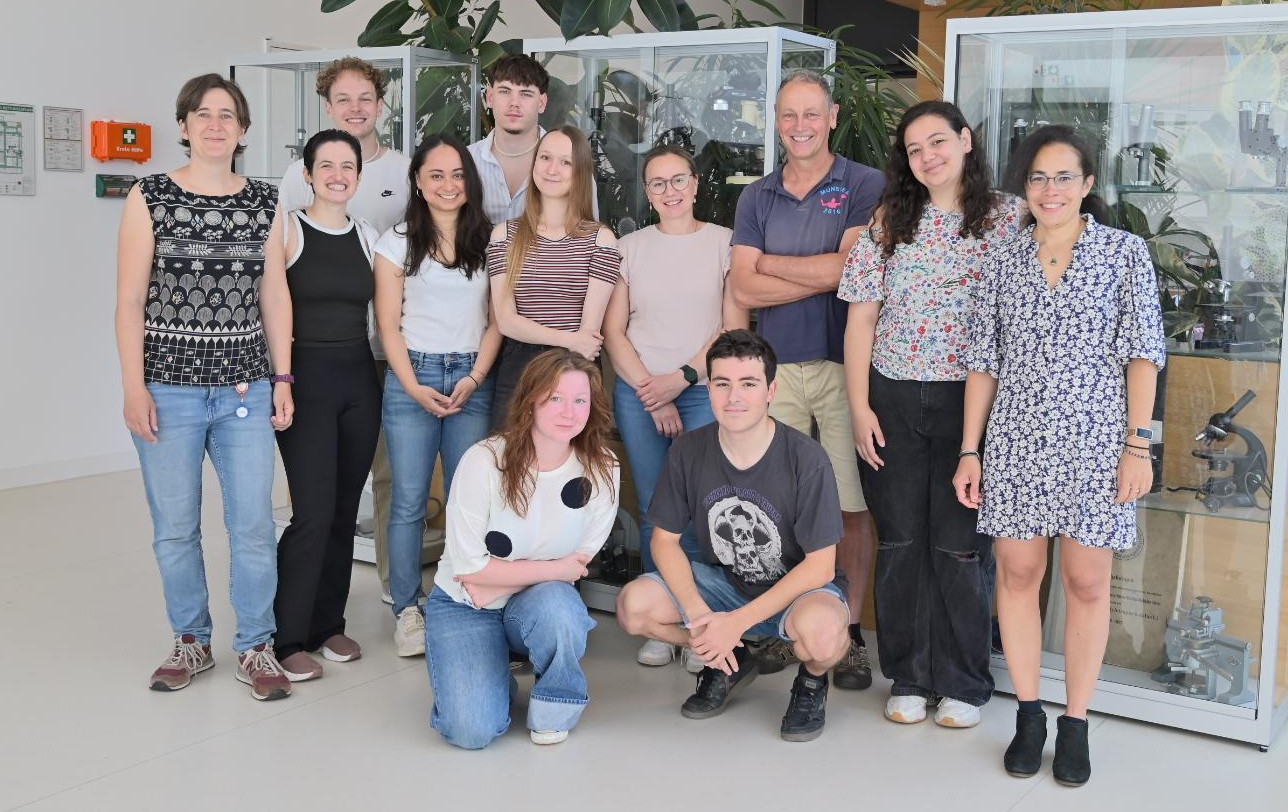
Professor Ralf Stanewsky leads the Stanewsky Group at the Institute of Neuro- and Behavioral Biology, University of Münster. His research focuses on the molecular mechanisms of circadian rhythms in Drosophila melanogaster , particularly how environmental cues like light and temperature reset the circadian clock. The group employs genetic, molecular, histological, and behavioral approaches to study sensory pathways and their integration in central clock neurons. Member of the Multiscale Imaging Centre (MIC) and Imaging Network – Microscopy Current lab members: Ph.D. students Anna Katharina Eick, Angelica Coculla, Maia Zabel Barroso Technical assistants Regina Hube and Ume Aiman Research Themes Light and temperature synchronization of circadian clocks Temperature compensation mechanisms in biological timing Neuronal integration of environmental signals Evolutionary aspects of circadian regulation Professor Stanewsky’s work spans molecular clock components (e.g., cryptochromes, timeless gene variants) to broader ecological implications of temporal niche choice. His lab investigates how clock gene expression responds to seasonal changes and environmental stressors, while also exploring novel synchronization pathways beyond classical photoreceptors. Publication Trends Recent articles emphasize temperature-dependent clock regulation , evolutionary capacitance via Hsp90 , and non-canonical phototransduction in circadian systems. Key subfields include nuclear transport dynamics, kinase evolution, and computational modeling of periodic patterns across species. Contact Information Institute of Neuro- and Behavioral Biology, University of Münster MIC | Röntgenstraße 16, D-48149 Münster, Germany Email: stanewsky@uni-muenster.de Phone: +49 251 8321029
Doug Bowman is the Frank J. Maher Professor in the Department of Computer Science at Virginia Tech and Director of the Center for Human-Computer Interaction. His work focuses on advancing virtual reality (VR), augmented reality (AR), and 3D user interfaces, with a strong emphasis on human-computer interaction and immersive environments. Education: Ph.D., Computer Science, Georgia Institute of Technology (1999) M.S., Computer Science, Georgia Institute of Technology (1997) B.S., Mathematics and Computer Science, Emory University (1994) Research Interests: Bowman explores the design and evaluation of immersive technologies, including VR/AR interfaces, 3D interaction techniques, and the application of these technologies in fields like healthcare, education, and collaborative work. His work often addresses challenges in spatial awareness, gaze-driven systems, and context-aware interfaces. Recent publications highlight trends in collaborative AR/VR systems, glanceable interfaces, and adaptive techniques for immersive analytics. His research emphasizes real-world applications, such as medical training through AR and improving productivity in virtual workspaces. Lab Affiliation: Director of Virginia Tech’s Center for Human-Computer Interaction, which focuses on interdisciplinary research in interactive technologies.
Claire Acevedo is an Assistant Professor in the Department of Mechanical and Aerospace Engineering at the University of California San Diego (UCSD), affiliated with the Jacobs School of Engineering. Her lab, the Fracture and Fatigue of Skeletal Tissues Laboratory (F² Lab), focuses on understanding mechanisms of deformation, fracture, and biological responses in skeletal tissues and biomaterials across molecular to macro scales. She holds a Ph.D. from the Swiss Federal Institute of Technology Lausanne (EPFL) and completed postdoctoral research at UC San Francisco and UC Berkeley/Lawrence Berkeley National Laboratory. Dr. Acevedo’s research is funded by the National Science Foundation (NSF), National Institutes of Health (NIH), and the Advanced Light Source. Her work bridges biomechanics, materials science, and high-energy X-ray physics to address bone fragility in aging and diabetes. Key projects include investigating collagen cross-linking effects on bone mechanics and developing novel imaging techniques like deep learning-enhanced synchrotron micro-CT. Education: Ph.D., Swiss Federal Institute of Technology Lausanne (EPFL) Postdoctoral Research: UC San Francisco & UC Berkeley/Lawrence Berkeley National Lab Previous Faculty Position: University of Utah (Mechanical Engineering) Recent contributions include the NSF CAREER Award for studying fracture mechanisms in fragile bones and an NIH R21 grant to explore collagen-level diabetes impacts. Her lab collaborates with the University of Utah Tanner Dance Program to develop K-12 educational initiatives linking dance with biomechanics. Publications span topics like synchrotron imaging innovations, diabetes-induced bone fragility, and collagen nanomechanics. Students in her lab have contributed to advancements in fatigue testing, cross-link analysis, and imaging algorithms. Awards: NSF CAREER Award (2024) NIH R21 Grant (2023) Alice L. Jee Award (2022) Nikon Small World Image of Distinction (2024) The F² Lab hosts a dynamic team with ongoing projects on glycemic effects, synchrotron techniques, and biomaterial design. Future work emphasizes translating findings into clinical fracture prevention strategies and educational outreach.