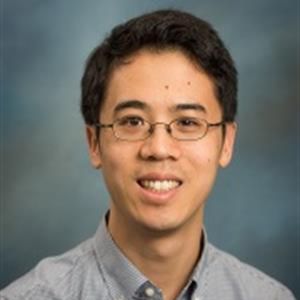
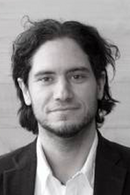
Shaun Lui is Professor and Head of Mathematics at the University of Manitoba's Faculty of Science. His research develops advanced numerical methods for partial differential equations with applications in fluid dynamics and electromagnetics. Education includes B.Sc./M.Sc. from University of Toronto and Ph.D. from Caltech. Research focuses on spectral collocation methods in space-time, domain decomposition, and finite volume schemes. Recent work establishes spectral accuracy for Stokes flows and matrix singularity bounds. Supervises graduate students in numerical PDE projects.
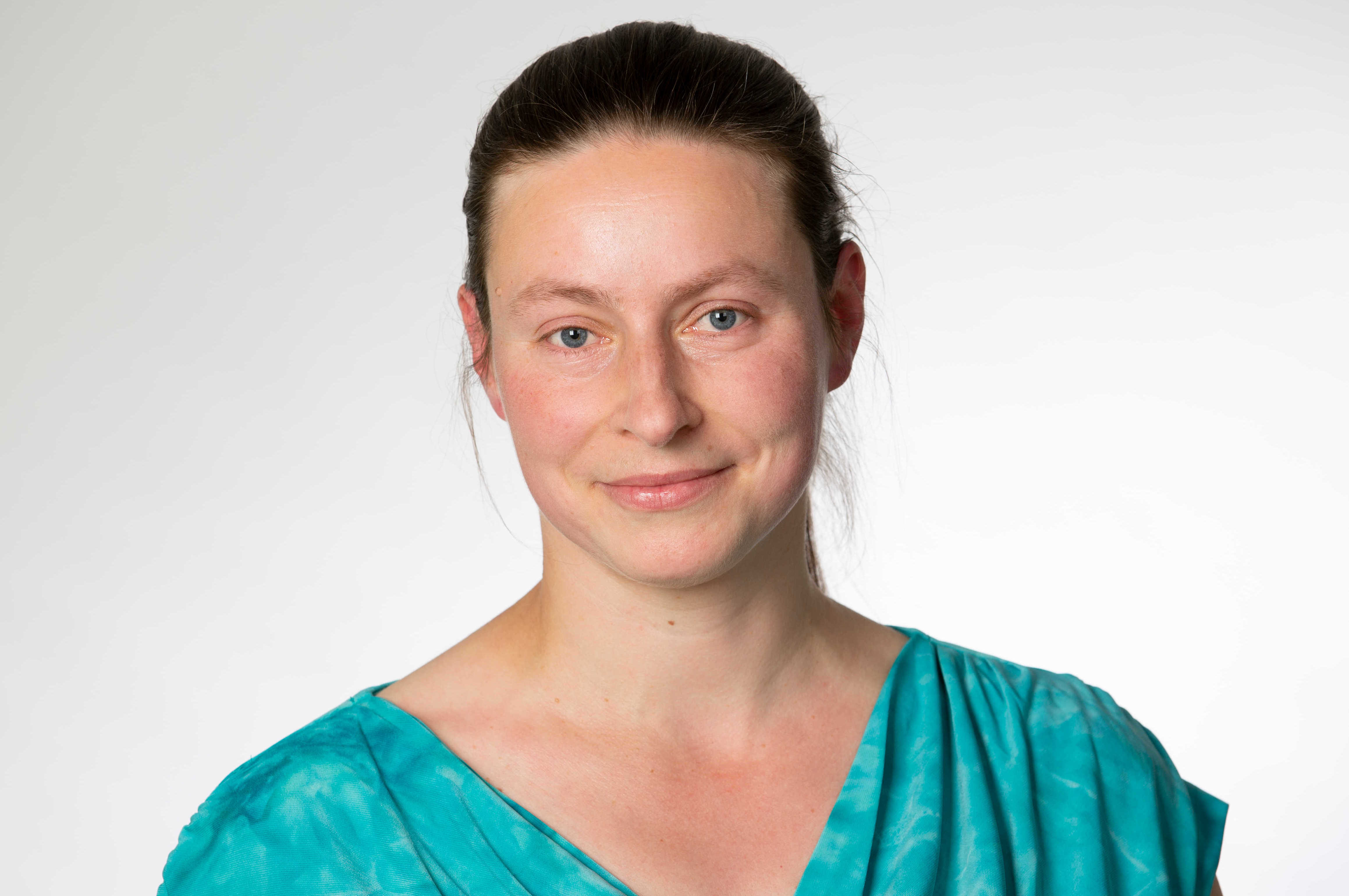
Anne Kværnø is a Professor in the Department of Mathematical Sciences at NTNU. Her research focuses on numerical analysis, particularly stochastic differential equations, Runge-Kutta methods, and geometric integration. She has made significant contributions to the development of high-order numerical schemes for stochastic systems, including exponential integrators and Lawson schemes. Her work emphasizes preserving invariants and stability properties in stochastic and deterministic systems. Key research areas include multirate methods for coupled systems, differential-algebraic equations, and applications in energy storage modeling. She has collaborated extensively on projects involving aquifer thermal energy storage (ATES) systems and groundwater flow analysis. Her publications span prestigious journals like BIT Numerical Mathematics, SIAM Journal on Numerical Analysis, and Journal of Computational Physics. She has presented at major conferences such as ICIAM, SciCADE, and ENUMATH, focusing on stochastic numerical methods and their applications. Her research bridges theoretical developments with practical computational challenges in engineering and environmental modeling.
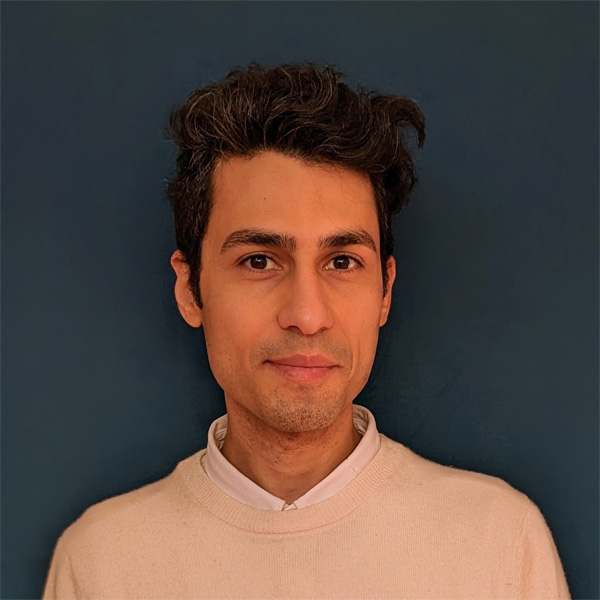
Pak-Wing Fok is a Professor in the Department of Mathematical Sciences at the University of Delaware, within the College of Arts & Sciences. M.Sci. - Imperial College Ph.D. - Massachusetts Institute of Technology Postdoctoral - California Institute of Technology Postdoctoral - University of California, Los Angeles As an applied mathematician, Dr. Fok uses mathematical models to gain insight into complex problems from biology and the physical sciences, with a particular focus on cardiovascular diseases. His research spans multiple areas: Mathematical Modeling of Cardiovascular Systems : He investigates atherosclerosis and diabetes-related vascular complications, focusing on how mechanical properties and geometry of arteries change in these diseases. His work helps understand how plaque formation and rupture can lead to myocardial infarction or stroke. Mechanics of Growth : This research involves modeling biological systems where growth is a dominant feature, such as diseased blood vessels and bacterial chains. He studies how tissues undergo volumetric growth or resorption under mechanical deformation. MRI Parameter Estimation : He develops algorithms to improve parameter estimation in magnetic resonance imaging, addressing the challenge of inferring parameters from noisy signals in multi-component exponential functions. Dr. Fok's recent publications reflect his interdisciplinary approach, combining mathematics, biology, and biomedical engineering. His work includes computational modeling of vulnerable plaques, stochastic processes in biophysics, and mathematical approaches to understanding vascular disease progression. Dr. Fok has supervised numerous graduate students whose theses have focused on topics including: Simulation of Intimal Thickening Stochastic Modeling of Toxin Effects Finite Element Simulation of Atherosclerotic Plaque Estimation and Inference in Imaging and Biophysics Portfolio Theory Applications Analysis of Exit Time Problems His methodology combines partial differential equations, asymptotic methods, stochastic analysis, and simulations to tackle complex problems in both biological systems and operations research.
Dr. Michael Schlottke-Lakemper is a Professor of High-Performance Scientific Computing at the University of Augsburg, Faculty of Mathematics, Natural Sciences, and Materials Engineering. He previously held positions as an Interim Professor of Computational Mathematics at RWTH Aachen University (2022–2024) and led a research group at the High-Performance Computing Center Stuttgart (HLRS) from 2021 to 2024. His career includes postdoctoral roles at the University of Cologne and RWTH Aachen University/FZ Jülich. Education: Ph.D. in Mechanical Engineering, RWTH Aachen University (2017) Diplom in Aerospace Engineering, University of Stuttgart (2011) His research focuses on adaptive multi-physics simulations, research software engineering for high-performance computing (HPC), and scientific machine learning. Applications span fluid mechanics, aeroacoustics, and astrophysics, with recent work emphasizing robust high-order summation-by-parts methods and Julia-based computational frameworks like Trixi.jl and TrixiParticles.jl. His publications highlight advancements in discontinuous Galerkin methods, entropy stable schemes, and HPC optimization for compressible flows. Scientific contributions include Developing dynamic load balancing algorithms for multiphysics simulations Creating hybrid computational aeroacoustics methods Advancing Julia's adoption in HPC communities Improving error-based step size control in numerical solvers Current teaching activities include graduate seminars on Maschinelles Lernen in Theorie und Praxis and undergraduate courses in Numerische Lineare Algebra . He leads a research team at the University of Augsburg with collaborators across Germany, including Simon Candelaresi, Valentin Churavy, and Niklas Neher.
PD Dr. Sigrun Ortleb is an Associate Professor at the Institute of Mathematics, University of Kassel , Germany. Her academic affiliation spans over two decades at the same institution. Current Position: Associate Professor (Privatdozentin) since 2021 Academic Background: Habilitation (2021), PhD (2011), Diplom (2006) from TU Braunschweig Research Focus: Sigrun Ortleb specializes in advanced numerical methods for partial differential equations, with particular emphasis on: Discontinuous Galerkin (DG) methods for conservation/balance equations (Euler, Navier-Stokes, shallow water) Positivity-preserving time integration techniques Summation-by-parts operators for high-order accuracy IMEX and multi-rate time integration Efficient shock filters for DG processes Image processing methods for numerical solution post-processing Publication Trends: Her work primarily addresses computational fluid dynamics challenges through: Development of stable, high-order DG schemes IMEX time integration for stiff systems Geometric conservation laws in FSI Adaptive filtering techniques Positivity preservation in shallow water equations Summation-by-parts operators for conservation Teaching Contributions: Dr. Ortleb has taught advanced mathematics courses for mechanical engineers since 2007, including: Higher Mathematics I & II Numerics of Stiff Problems Fluid-Structure Interaction Numerical Analysis of ODEs/PDEs Mathematical Modeling Discontinuous Galerkin Methods Key Collaborations: She has collaborated with experts in: Computational mechanics (J. Boungard, J. Wackerfuß) Exponential integrators (V. Straub, P. Birken, A. Meister) Geometric conservation laws (S. Bremicker-Trübelhorn)
Manuel Torrilhon serves as Professor and head of the Research Lab for Applied and Computational Mathematics (ACoM) at RWTH Aachen University, where he has held a full professorship since 2010. He currently leads the Department of Mathematics as its elected Speaker for the 2024-2026 term, overseeing academic strategy and research initiatives within the Faculty of Mathematics, Computer Science and Natural Sciences. His academic foundation includes: Diplom-Ingenieur in Engineering Physics from TU Berlin (1994-1999) PhD in Applied Mathematics from ETH Zurich (2004) Postdoctoral research at HKUST (2004/05) and Princeton University (2005/06) Research Assistant Professor at ETH Zurich (2007-2010) Professor Torrilhon's research pioneers mathematical modeling in continuum physics and kinetic gas theory , with seminal contributions to the Boltzmann equation, rarefied gas dynamics, and magnetohydrodynamics. His work develops advanced numerical methods for nonlinear hyperbolic systems , particularly entropy-stable high-order schemes and multi-scale time integrators. The ACoM lab under his direction bridges theoretical mathematics with engineering applications through computational frameworks like fenicsR13 for moment equation solvers. His methodologies enable high-fidelity simulations of micro-flows, plasma instabilities, and electron transport phenomena critical to aerospace and materials science. Analysis of his 2025-2024 publications reveals dominant trends in entropy-conservative numerical schemes for kinetic equations, multirate time integration for stiff systems, and moment-method extensions to polytropic gases and shallow flows. These works consistently address computational challenges in rarefaction effects, non-equilibrium thermodynamics, and high-enthalpy regimes, demonstrating cross-cutting applications from microfluidics to plasma physics. Scientific recognition includes: EURYI Award (Pre-ERC) from European Science Foundation (2006) As director of ACoM, Professor Torrilhon secures research funding for computational mathematics projects and mentors graduate students in numerical analysis and kinetic theory. His lab maintains strong collaborations with engineering departments for applied validation of mathematical models, particularly in micro-flow devices and plasma containment systems. Current grants focus on adaptive solvers for multi-scale kinetic problems and inverse methods for electron probe microanalysis. The Research Lab for Applied and Computational Mathematics (ACoM) operates as an interdisciplinary hub developing open-source computational tools like fenicsR13. The team specializes in tensor-based numerical methods for moment equations, with ongoing projects in X-ray emission modeling, Richtmyer-Meshkov instability simulations, and thermodynamically consistent electrolyte solvers. ACoM maintains strategic partnerships with aerospace research institutes for hypersonic flow validation and with materials science centers for nanoscale transport studies.
Arash Sarshar is an Assistant Professor at the Computer Engineering and Computer Science Department of California State University, Long Beach. Previously, he served as a postdoctoral associate in the Department of Computer Science at Virginia Tech, where he also earned his Ph.D. His academic background includes Master's and Bachelor's degrees in Electrical Engineering. Education : Ph.D. in Computer Science (Virginia Tech), M.S. and B.S. in Electrical Engineering. Sarshar's research focuses on the intersection of machine learning and numerical methods for scientific simulations. He explores physics-informed neural networks, deep operator learning, and time-stepping strategies to enhance computational models, particularly for partial differential equations (PDEs) and stiff systems. His work also extends to applying data science techniques for public health and policy analysis, including studies on diabetes lifestyle interventions. His recent publications highlight trends in PDE-constrained optimization, Bayesian parameter estimation, multirate integration schemes, and parallel computing for numerical methods. Key topics include physics-informed machine learning, time-stepping algorithms, and computational modeling for multiphysics problems.
Hendrik Ranocha is a Professor in Numerical Mathematics at Johannes Gutenberg University Mainz, Germany. His research focuses on the analysis and development of numerical methods for partial and ordinary differential equations, with particular emphasis on stability and structure-preserving techniques that transfer results from continuous to discrete levels. His educational background includes: PhD in Mathematics from TU Braunschweig (2016-2018), advised by Thomas Sonar MSc in Mathematics from TU Braunschweig (2014-2016) BSc in Mathematics from TU Braunschweig (2011-2014) Exchange student at Yonsei University, Seoul (2013) BSc in Physics from TU Braunschweig (2010-2013) Hendrik Ranocha's research spans Numerical Analysis and Scientific Computing . His work focuses on developing numerical schemes for hyperbolic balance laws and dispersive-dissipative equations, including Discontinuous Galerkin methods, spectral element methods, finite difference schemes, and flux reconstruction. He specializes in structure-preserving methods that conserve entropy/energy, utilizing summation by parts operators and mimetic properties. His research also encompasses Runge-Kutta methods, stability of time integration schemes, adaptivity in time and space, data-driven approaches, and uncertainty quantification. His recent publications demonstrate a strong focus on entropy-stable numerical methods, structure-preserving discretizations, and high-performance computing implementations in Julia. The research trends show increasing emphasis on practical software implementations (Trixi.jl, SummationByPartsOperators.jl), applications to physical systems like compressible Euler equations and shallow water equations, and addressing fundamental numerical challenges in stability and convergence. Hendrik Ranocha leads a research group at Johannes Gutenberg University Mainz with several PhD students and postdocs, including Louis Petri, Marco Artiano, Sebastian Bleecke, Saurav Samantaray, Arpit Babbar, and Valentin Churavy. He collaborates extensively with researchers such as Gregor Gassner, Andrew R. Winters, Michael Schlottke-Lakemper, and Jesse Chan on numerical methods and software development. He is actively involved in open-source scientific computing, contributing to projects like Trixi.jl (a Julia package for adaptive high-order numerical simulations of conservation laws), SummationByPartsOperators.jl, OrdinaryDiffEq.jl, NodePy, and RK-Opt. He is part of the SciML organization, which develops high-performance Julia libraries for scientific machine learning and computational science.
Prof. Robert Staszewski is a Full Professor at the School of Electrical and Electronic Engineering, University College Dublin (since 2014) and a Visiting Full Professor at Delft University of Technology (since 2009). His academic journey began with a PhD from University of Texas at Dallas (2002), preceded by MSEE (1992) and BSEE (1991) degrees. He previously worked at Alcatel (1991–1995) and Texas Instruments (1995–2009), where he co-founded the Digital RF Processor (DRP) group and served as CTO (2007–2009). Research Focus : Nanoscale CMOS architectures, quantum computing hardware, millimeter-wave PLLs, and low-power IoT RF circuits. Recent Publications : 15 most recent works span quantum dots in 22nm FDSOI, harmonic predistortion in ADPLLs, ultra-low-jitter charge-sharing PLLs, and RF reuse strategies for IoT. Scientific Contributions include 6 books, 11 book chapters, 150+ journal papers, and 210 US patents. His Equal1 Labs co-founded in 2014 aims to build the first single-chip CMOS quantum computer. Awards: 2012 IEEE Circuits and Systems Industrial Pioneer Award IEEE Fellow (2009) Teaching Leadership : Coordinates advanced modules in Analogue Integrated Circuits , Mixed-Signal Circuits , and Quantum Computing (2014–2025). Supervises PhD thesis projects in nanoscale RF and quantum systems.
Benjamin Rüth (also known as Benjamin Rodenberg) is a doctoral candidate and Research Associate (Wissenschaftlicher Mitarbeiter) at the Chair of Scientific Computing in Computer Science (SCCS) at the Technical University of Munich (TUM). He is affiliated with the TUM School of CIT and the Department of Computer Science. His research focuses on fluid-structure interaction (FSI), multiphysics coupling, blackbox coupling, multiscale simulation, and time integration schemes, with a strong emphasis on research software engineering and sustainability. He is a core contributor to the preCICE coupling library, developing tools for partitioned multiphysics simulations. Education: M.Sc. (hons) in Computational Science and Engineering (2017, TUM) and B.Sc. in Engineering Science (2014, TUM). He advises numerous students on projects related to preCICE, FEniCS, and multiphysics modeling. He teaches courses such as Numerischer Programmieren and Computational Fluid Dynamics, and has coordinated the CSE Master's program. His work includes advancing higher-order time stepping schemes, waveform iteration methods, and integration of physics-informed neural networks. Research contributions span publications in conferences like SIAM CSE and journals like International Journal for Numerical Methods in Engineering. He co-developed web tools for teaching in mechanics and mathematics and contributed to open-source software ecosystems like preCICE. His activities include organizing workshops and advising on projects that bridge simulation software and real-world applications.
Simone Pezzuto is an Assistant Professor in the Department of Mathematics at the University of Trento, specializing in computational cardiac electrophysiology and mathematical biology. His research integrates mathematical modeling, numerical analysis, and biomedical applications. Research focuses on inverse problems in electrocardiography, arrhythmia mechanisms, and cardiac digital twins. Recent work (2024-2025) develops novel methods for Purkinje network reconstruction, atrial fibrillation source localization, and fibrosis-based inducibility prediction. Computational approaches include physics-informed neural networks, multirate schemes, and eikonal modeling for efficient simulations. Key innovations address cardiac conduction system identification from surface ECGs, ablation strategy optimization, and anatomically-accurate atrial modeling. Methodological contributions span regularization techniques for ill-posed problems and parallel-in-time algorithms for large-scale electrophysiology simulations.
Gregor Gassner is a Professor at the University of Cologne's Mathematical Institute, specializing in numerical methods for fluid dynamics and high-performance computing. He leads research in entropy-stable discontinuous Galerkin (DG) methods, focusing on robust and efficient simulations of multi-scale problems governed by conservation laws. His work includes adaptive algorithms for compressible flows, magnetohydrodynamics (MHD), and oceanography, supported by an ERC Starting Grant targeting 'un-crashable' solvers. Key research areas: Non-linear multi-scale simulations High-order DG methods Entropy stability and robustness Exascale computing (e.g., SCALEXA project) Adaptive mesh refinement Subcell limiting techniques Publications emphasize advancements in DG schemes, split-form discretizations, and applications to aerodynamics, plasma physics, and geophysical flows. His ERC grant aims to unify efficacy and robustness in numerical methods. Grants/Awards: ERC Starting Grant for developing robust numerical solvers. Labs/Teams: Core scientist at the Center for Data and Simulation Science, leading the NumSim group.
Francois Xavier COUDOUX is a Professor in the Digital Communications group at IEMN DOAE and currently serves as Director of the Electronics Department at INSA Hauts-de-France since 2020. His academic career has been primarily associated with institutions in the Hauts-de-France region, including significant roles at the University of Valenciennes and now INSA Hauts-de-France. Within IEMN, he has held leadership positions including Deputy Director of IEMN-DOAE (2010-2018), member of the IEMN Laboratory Council (2001-2011), and current member of the Scientific Council of the IEMN (2019-present). His educational background includes a Doctorate in Electronics from the University of Valenciennes (1994), Magistère in Image Engineering (1991), DEA in Electronics: imaging and ultrasound (1991), Master's in Audiovisual Communication (1990), and DEUG in Sciences (1988). Professor COUDOUX's research focuses on four main areas: end-to-end optimization strategies for multimedia transmissions over wired or wireless networks; robust MIMO-OFDM transmission of video streams; video pre- and post-processing systems; and data transmission over electrical networks. His work integrates expertise in image/video processing with telecommunications to optimize quality of service in video communication systems. He has contributed significantly to the reduction of blocking artifacts in DCT-coded images and videos, developing perceptual approaches to enhance visual quality in compressed video. His scientific contributions have been recognized through numerous publications since the early 1990s, with consistent output in prestigious journals and conferences. His research shows a clear evolution from foundational work on blocking artifact reduction to more complex systems involving MIMO-OFDM transmission and cross-layer optimization approaches. The publications demonstrate expertise spanning signal processing, image/video coding, telecommunications, and perceptual quality assessment. Among his notable achievements are leadership of the ANR TOSCANE project (2007-2010), participation in the CPER 2009-2013 CISIT research program, and two research contracts with Philips Electronics Laboratories. He has also served as a scientific expert for the ANR, AERES, and for both Walloon and Flemish regions of Belgium. Professor COUDOUX has supervised 8 PhD theses throughout his career and has been actively involved in academic service, including organizing conferences like ISIVC 2012, serving on program committees for CISST and ITST conferences, and reviewing for journals including IEEE Communications Letters and IEEE Transactions on Broadcasting. His teaching responsibilities focus on telecommunication systems, digital communications, and signal processing, particularly in image and video domains.