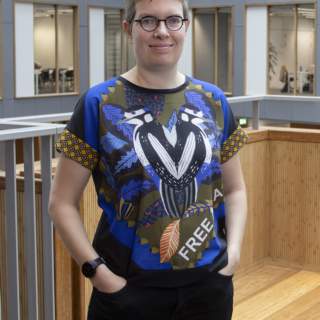
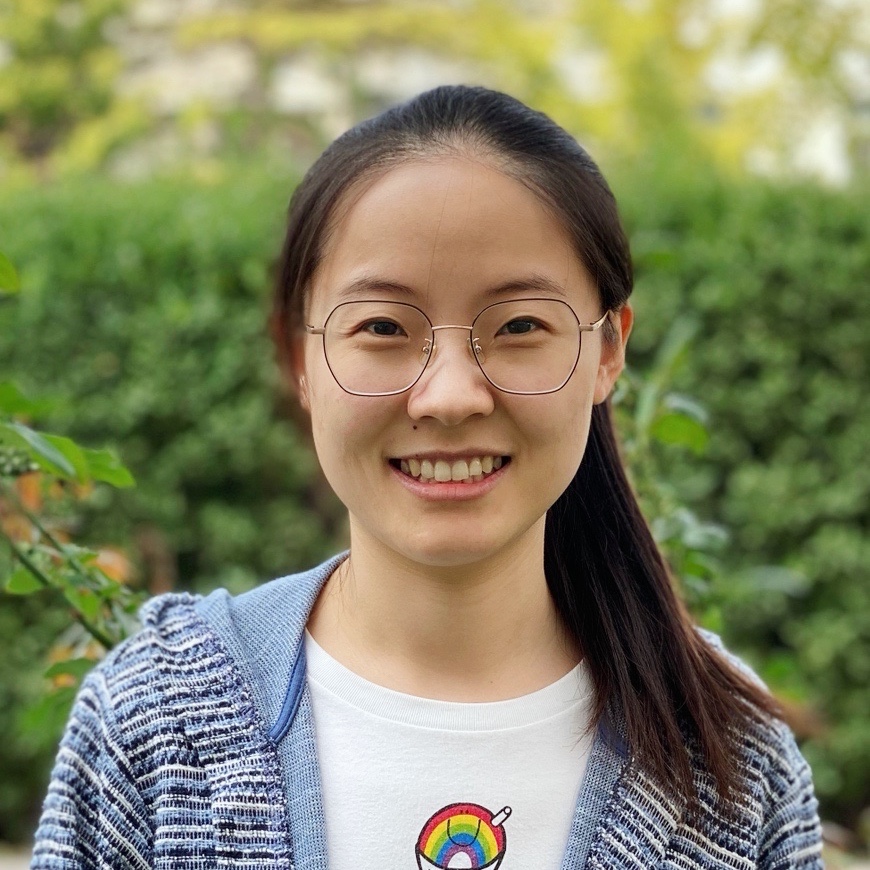
Anna Gottard is an Associate Professor of Statistics at the University of Florence, where she leads the Department of Statistics, Computer Science, and Applications. She directs the Florence Center for Data Science (FDS) and participates in the Technical Scientific Committee of the Tuscan Center for Big Data, Data Science, and AI (CBDAI). Her research focuses on multivariate statistical models, particularly graphical models, and extends to statistical machine learning, fair models, and directional data analysis. She is an Associate Editor for the Journal of the Royal Statistical Society Series A (JRSSA) and Statistical Methods & Applications (SMA). Her recent work includes Bayesian approaches for mixed graphical models, uncertainty-aware classification trees, and methodological advancements in latent uncertainty models. Her contributions span theoretical developments and applied research in interdisciplinary areas like biostatistics and sustainability. Her research interests emphasize bridging statistical theory with practical applications, including fairness in machine learning, interpretable models, and tree-based methodologies. She has actively contributed to open-source software, notably the Mix3Trees R package for mixed-effect tree models. Her work addresses challenges in variable selection, graphical model inference, and ethical AI practices. Current projects explore Bayesian frameworks for complex data structures and methodological improvements in graphical model interpretability. Anna has advised on interdisciplinary collaborations, such as studies on GDPR compliance in biobanking and epidemiological modeling of the SARS-CoV-2 pandemic in Tuscany. She collaborates with institutions like the CBDAI to advance data science applications in regional policy and healthcare. Her research trajectory reflects a commitment to both foundational statistical theory and real-world problem-solving across diverse domains.
Rina Foygel Barber is the Louis Block Professor in the Department of Statistics at the University of Chicago, where she also serves as Co-chair of the Committee on Community, Diversity, and Inclusion (CCDI) and is a member of the Committee on Computational and Applied Mathematics (CCAM). Her educational background includes: PhD in Statistics, University of Chicago (2012), advised by Mathias Drton and Nati Srebro MS in Mathematics, University of Chicago (2009) ScB in Mathematics, Brown University (2005) NSF postdoctoral fellow, Stanford University Department of Statistics (2012-13), supervised by Emmanuel Candès Professor Barber's research focuses on the theoretical foundations of statistical problems in estimation, prediction, and inference, particularly in high-dimensional settings where classical methods may not be reliable. She specializes in distribution-free inference methods such as conformal prediction, multiple testing methods, algorithmic stability, and shape-constrained inference. Her work also extends to modeling and optimization problems in medical imaging reconstruction. Her recent publications demonstrate a strong focus on distribution-free inference, with particular emphasis on conformal prediction, false discovery rate control, and algorithmic stability. Her work bridges theoretical statistics with practical applications, especially in the medical imaging domain. Professor Barber has received numerous prestigious awards: Elected to National Academy of Sciences (2025) MacArthur Fellowship (2023) IMS Fellow (2023) COPSS Presidents' Award (2020) Peter Gavin Hall Early Career Prize (2020) She actively mentors students and collaborators, with many co-authored publications across statistics, machine learning, and medical imaging. Her research has been supported by significant grants that enable her work on theoretical foundations of statistical inference and practical applications in medical imaging. Professor Barber also co-organizes the International Seminar on Selective Inference. Her research group focuses on developing and analyzing estimation, inference, and optimization tools for structured high-dimensional data problems. They work on false discovery rate control, distribution-free inference, and applications in medical imaging reconstruction.
Axel Gandy is a Professor of Statistics at the Department of Mathematics, Imperial College London. He serves as Director of the EPSRC CDT in Modern Statistics and Statistical Machine Learning , overseeing PhD supervision and advanced statistical training.
Lucas Janson is an Associate Professor of Statistics and Affiliate in Computer Science at Harvard University. He leads the Harvard Statistical Consulting Service, supervising PhD students advising hundreds of researchers annually. His research focuses on high-dimensional inference, statistical machine learning, and applications in genetics, political science, and climatology. He teaches courses such as Statistical Inference I, Reinforcement Learning, and Statistical Machine Learning. His work bridges theoretical advancements with practical applications, including contributions to robotics motion planning and microbiome data analysis. Key research areas include variable importance inference, safe reinforcement learning, compositional data analysis, and robust paleoclimate reconstructions. His methodologies are implemented in software packages like Floodgate, EigenPrism, and Fast Marching Tree (FMT*). He advises a dynamic group of PhD students and has mentored alumni now in academia and industry roles. Notable contributions include the development of model-X knockoffs for controlled variable selection, conditional randomization tests, and optimization algorithms for adaptive control systems. His work emphasizes statistical rigor while addressing real-world challenges in healthcare, environmental science, and robotics.
Bin Nan serves as Chancellor's Professor in the Department of Statistics at the University of California, Irvine, where he develops statistical and machine learning methodologies to advance biomedical research and improve human health outcomes through rigorous data analysis. His educational credentials demonstrate a strong quantitative foundation: Ph.D. in Biostatistics, University of Washington (2001) M.S. in Biostatistics, University of Washington (1999) M.S. in Statistics, Virginia Commonwealth University (1997) M.S. in Aerospace Engineering, Beijing University of Aeronautics & Astronautics (1987) B.S. in Aerospace Engineering, Beijing University of Aeronautics & Astronautics (1984) Nan's research program focuses on developing cutting-edge statistical methods for survival analysis, longitudinal data, high-dimensional inference, and machine learning, with direct applications to epidemiology, bioinformatics, and brain imaging. His work addresses critical challenges in biomedical data such as temporal dependence in neuroimaging sequences, estimation of large correlation matrices, and analysis of disease onset with terminal events, all aimed at identifying biomarkers for earlier disease diagnosis. Analysis of his recent publications (2015-2023) reveals a consistent trajectory toward methodological innovation in handling complex biomedical data structures, particularly through de-biased lasso techniques for survival models, neural network applications to censored data, and specialized approaches for longitudinal data with terminal events. These advances predominantly support Alzheimer's disease research and transplant outcome studies. No specific scientific awards were documented in the source material. His research program maintains continuous funding through National Science Foundation and National Institutes of Health grants, including a recent $1.8 million award for Alzheimer's disease methodology development. Nan actively collaborates with the UCI Alzheimer's Disease Research Center and UCI Center for the Neurobiology of Learning and Memory, though student advising details were not provided. His teaching portfolio includes advanced graduate courses in probability theory, survival analysis, and high-dimensional inference. Nan operates within interdisciplinary biomedical research teams focused on translating statistical innovation into clinical applications, particularly through brain imaging analysis and biomarker identification for neurodegenerative diseases.
Dr. George C Tseng serves as Professor and Vice Chair for Research in the Department of Biostatistics at the University of Pittsburgh School of Public Health, with secondary appointments in Human Genetics and Computational and Systems Biology. His educational background includes a BS (1997) and MS (1999) in Mathematics from National Taiwan University and an ScD (2003) in Biostatistics from Harvard School of Public Health. Dr. Tseng's research focuses on developing statistical methodologies for genomic and bioinformatic applications to advance precision medicine. His work spans multiple high-impact areas including multi-omics data integration, machine learning for high-dimensional data, cluster analysis for disease subtyping, and statistical methods for experimental design in omics studies. His approach emphasizes close collaboration with biological and clinical researchers to ensure methodological relevance to real-world problems. His publication record demonstrates consistent contributions to top statistical and bioinformatics journals, with recent work focusing on congruence analysis between animal models and humans, outcome-guided clustering methods, and high-dimensional causal mediation analysis. Elected Fellow, American Statistical Association (2017) Statistician of the Year, ASA Pittsburgh Chapter (2017) Provost's Award for Excellence in PhD Mentoring, University of Pittsburgh (2019) Clinical Research Scholar (K12) Award, NIH (2007-2009) Elected Member, International Statistical Institute (2012) Dr. Tseng has successfully mentored over 25 PhD students who have secured positions in academia, industry, and government agencies. His laboratory has maintained continuous NIH funding as principal investigator since 2012, including current grants R01CA285337 (2025-2030) and R01LM014142 (2023-2026). The Tseng Lab operates as a collaborative research environment focused on translating statistical innovations into practical solutions for biological and medical challenges, with strong connections to multiple research centers and clinical departments at the University of Pittsburgh.
Lexin Li is a Professor in the Department of Biostatistics and Epidemiology at the University of California, Berkeley School of Public Health, with additional affiliations at the Helen Wills Neuroscience Institute, the UC Berkeley-UCSF Joint Program on Computational Precision Health, and the Center for the Theoretical Foundations of Learning, Inference, Information, Intelligence, Mathematics and Microeconomics at Berkeley (CLIMB). He received his BE in Electrical Engineering from Zhejiang University (1998) and PhD in Statistics from the University of Minnesota (2003), followed by postdoctoral training at UC Davis School of Medicine. He joined North Carolina State University as Assistant Professor in 2005, was promoted to Associate Professor in 2011, and served as visiting faculty at Stanford University and Yahoo Research Labs (2011-2013) before joining UC Berkeley as Associate Professor in 2014, where he was promoted to Full Professor in 2018. Dr. Li's research spans statistical methodology development for neuroimaging data analysis, tensor statistics, and machine learning applications to biomedical problems. His work focuses on brain connectivity and network analysis, imaging causal inference, tensor regression, dimension reduction, and statistical machine learning with applications to Alzheimer's disease, Parkinson's disease, and other neurological disorders. His methodological innovations bridge theoretical statistics with practical neuroscience applications, particularly in multimodal neuroimaging analysis and brain network modeling. His recent publications demonstrate a strong trajectory in integrating deep learning with classical statistical inference, particularly in tensor analysis, functional data modeling, and causal inference. The research shows increasing sophistication in handling high-dimensional, complex neuroimaging data while developing rigorous statistical frameworks for inference. His work increasingly focuses on multimodal data integration and developing methods that can handle the complexity of real-world neurological data. Dr. Li has received numerous prestigious honors including being elected as a Fellow of the American Statistical Association (2017), Fellow of the Institute of Mathematical Statistics (2021), Elected Member of the International Statistical Institute, and Fellow of the American Association for the Advancement of Science (2024). Fellow, American Statistical Association (2017) Fellow, Institute of Mathematical Statistics (2021) Elected Member, International Statistical Institute Fellow, American Association for the Advancement of Science (2024) Editor-in-Chief, Annals of Applied Statistics (2025-2027) As an academic leader, Dr. Li serves as Co-Director of the Biostatistics Program (2019-) and Director of Graduate Admissions (2015-) at UC Berkeley. He is an active editor, currently serving as Editor-in-Chief of the Annals of Applied Statistics (2025-2027), and has held associate editor positions at multiple top statistical journals including the Journal of the American Statistical Association and Journal of Computational and Graphical Statistics. He also serves as a Standing Member of the NIH Emerging Imaging Technologies in Neuroscience Study Section (2023-2027). His research has been supported by various NIH grants focused on statistical methodology for neuroimaging analysis. Dr. Li leads a vibrant research group focused on statistical neuroimaging and machine learning methodology, with strong connections to the Helen Wills Neuroscience Institute and collaborations across multiple departments at UC Berkeley. His team develops innovative statistical methods that address real challenges in neuroscience research while maintaining rigorous theoretical foundations. The group maintains active collaborations with neuroscientists and clinicians working on Alzheimer's disease, Parkinson's disease, and other neurological conditions.
Will Fithian is an Associate Professor in the Department of Statistics at the University of California, Berkeley. He holds a position in the College of Letters & Science, specializing in theoretical and applied statistics. His research focuses on post-selection inference, scalable algorithms for big data, high-dimensional data analysis, and ecological statistics. Fithian has taught courses such as Theoretical Statistics (Stat 210A), Forecasting, and industry-relevant statistical methods. His work bridges statistical theory with applications in fields like genomics, ecology, and machine learning. Education and Career: While specific educational details are not explicitly provided, his academic rank and research focus suggest advanced training in statistics. He previously taught at Stanford University and has held roles such as Assistant Professor before his current position at Berkeley. Research Interests: His interests include developing robust statistical methods for handling modern data challenges, including false discovery rate control, selective inference, and computational efficiency in high-dimensional settings. He collaborates across disciplines, applying statistical tools to ecological and biomedical problems. Awards: Fithian received the Teaching Award from the Berkeley Statistics Department in 2012 and the Centennial Teaching Award (University-wide) in 2015, reflecting his dedication to pedagogy. His research contributions have been recognized through publications in top journals and conferences. Teaching and Service: He leads advanced courses like Stat 210A, a core PhD-level theoretical statistics course. His teaching emphasizes foundational concepts while addressing contemporary challenges. He also contributes to Berkeley’s Industry Alliance Program, fostering academic-industry partnerships.
Xianyang Zhang is a Professor in the Department of Statistics at Texas A&M University, affiliated with the College of Arts & Sciences. He holds a Ph.D. from the University of Illinois at Urbana-Champaign (2013) and a B.S. from the University of Science & Technology of China (2008). His research focuses on high-dimensional statistics, functional data analysis, kernel methods, and genomics, supported by grants from NIH, NSF, and Texas A&M. Education: Ph.D., Statistics, University of Illinois at Urbana-Champaign, 2013 B.S., Statistics, University of Science & Technology of China, 2008 Research Interests: Xianyang Zhang develops statistical theories and methodologies for complex data structures, including high-dimensional inference, kernel-based testing, change-point detection, and microbiome analysis. His work bridges computational and theoretical statistics, addressing challenges in genomics, omics-wide studies, and spatial statistics. Key Contributions: Developed KDist , a package for kernel and distance-based statistical inference Authored fastcpd for efficient change-point detection Advanced covariate-adaptive FDR control methods for omics studies Contributed to microbiome analysis tools like MicrobiomeStat and LinDA Advising & Grants: Advises multiple Ph.D. students in statistics and interdisciplinary projects Recipient of NIH and NSF grants for high-dimensional statistical research Collaborates with institutions like Mayo Clinic and Chinese University of Hong Kong Labs/Teams: Leads research groups focused on statistical methodology development, software implementation, and applications in computational biology and genomics.
Sanat K. Sarkar serves as a Professor in the Department of Statistics, Operations, and Data Science at Temple University's Fox School of Business and Management. An internationally renowned expert, he has pioneered foundational work in multiple testing theory with applications spanning genomics, neuroimaging, and high-dimensional data analysis. His methodological innovations address critical challenges in false discovery rate control under complex dependency structures. Research Interests: Dr. Sarkar specializes in Multiple Testing, Statistical Methodologies, High-Dimensional Statistical Inference, and Multivariate Statistics. His work develops rigorous frameworks for hypothesis testing in modern scientific contexts where thousands of simultaneous tests are performed, ensuring reliable discoveries in fields like genetic association studies and brain connectivity mapping. Key contributions include adaptive FDR procedures and methods for structured hypothesis groups. Publication Trends: Over 2020-2025, his 11 publications demonstrate sustained leadership in refining false discovery rate methodologies. Recent work tackles correlated data (2025), knockoff variable selection (2022), and hierarchical hypothesis structures (2021-2024), reflecting his focus on real-world applicability in biomedical big data. His research bridges theoretical statistics with practical computational solutions. Honors and Awards: Fellow, Institute of Mathematical Statistics Fellow, American Statistical Association Elected Member, International Statistical Institute Musser Award for Research Excellence (Fox School) Multiple Dean's Research Honor Roll Inductions Research Support and Service: Funded continuously by NSF and NSA grants, Dr. Sarkar co-organized the NSF-CBMS conference on Multiple Comparisons and serves on editorial boards of Annals of Statistics , American Statistician , and Sankhya . He regularly delivers invited talks at international venues and mentors junior researchers in statistical methodology development.
Chiara Sabatti is a Professor of Biomedical Data Science and Statistics at Stanford University, with affiliations to the Stanford Center for Computational, Evolutionary and Human Genomics (CEHG), Bio-X, and the Stanford Cancer Institute. She serves as Associate Director for Stanford Data Science and has led the development of the Data Science Major curriculum since 2012. Research Focus: Statistical models for high-throughput genomics data, causal inference in genetic studies, false discovery rate control, and knockoff methods for variable selection. Key Leadership: Associate Chair for Education and Training (2020-present), Vice Chair of Biomedical Data Science (2018-2019). Her work bridges statistical genetics with data science education, emphasizing robustness and interpretability in scientific findings. Recent publications highlight innovations in genome-wide association studies (GWAS), causal variant localization, and cost-effective sequencing techniques for underrepresented populations. Current projects include developing knockoff-based methods to address population structure and multi-resolution hypothesis testing. Scientific Awards: Institute of Mathematical Statistics (IMS) Fellow (2022) NSF CAREER Award (2003-2008) She mentors doctoral and graduate students in Biomedical Data Science, collaborates with the Data Studio on interdisciplinary projects, and actively recruits curious researchers to her lab. Her outreach efforts focus on expanding data science education and increasing research participation from underrepresented groups.
Christophe Van den Bulte is the Gayfryd Steinberg Professor of Marketing at The Wharton School, University of Pennsylvania. He teaches Models for Marketing Strategy in the Undergraduate and MBA programs, and Data Analysis in the PhD program. His extensive teaching portfolio also includes MBA and Executive MBA core courses in Marketing Management, MBA and undergraduate courses in Channel Management, and PhD courses in Marketing Strategy, Mathematical Models in Marketing, and Social Network Analysis. Professor Van den Bulte received his PhD in business administration from the Pennsylvania State University and his MA and BA degrees in applied economics from the University of Antwerp, Belgium. This international academic background has informed his research approach across multiple domains. His research focuses on customer referral programs, new product diffusion, and intervention tournaments (mega-studies). He has made significant contributions to understanding how social networks influence consumer behavior and how companies can leverage these insights for marketing strategy. His work explores the dynamics of word-of-mouth marketing, status concerns in new product adoption, and the effectiveness of behavioral interventions. He has published extensively in top-tier journals including Management Science, Journal of Marketing Research, and Proceedings of the National Academy of Sciences. His recent publications demonstrate a strong focus on large-scale behavioral experiments, particularly "mega-studies" that test multiple interventions simultaneously across diverse contexts. His research spans quantitative marketing models, social network analysis, and field experiments in healthcare (vaccination behavior), education (student math achievement), and digital marketing (social media endorsements). A consistent theme in his work is applying rigorous experimental methods to identify effective marketing interventions with practical significance. Professor Van den Bulte has received numerous prestigious awards recognizing his contributions to marketing science: Management Science Distinguished Service Award (INFORMS), 2024 Frank M. Bass Award (INFORMS), 2023 Finalist, John D.C. Little Award (INFORMS), 2023 Excellence in Teaching Award, The Wharton School, 2022-2023 2019 Top Download Award (MSI), 2021 As an active researcher and educator, Professor Van den Bulte serves as Associate Editor at Management Science and the Journal of Marketing Research, and is on the Editorial Boards of the Journal of Marketing, the International Journal of Research in Marketing, and the Journal of Business-to-Business Marketing. His editorial leadership has shaped research directions in marketing science. His teaching excellence has been recognized with multiple awards at The Wharton School, reflecting his commitment to developing the next generation of marketing professionals. Professor Van den Bulte is a leading figure in quantitative marketing research, particularly known for his innovative work on social networks and mega-studies. His research bridges academic rigor with practical applications, influencing both scholarly understanding and real-world marketing practices across multiple industries.
Rianne de Heide is an Assistant Professor in the Statistics group (STAT) within the Department of Applied Mathematics at the University of Twente's Faculty of Electrical Engineering, Mathematics and Computer Science. She maintains collaborative arrangements with LUXs Data Science in Leiden, CWI, and VU Mathematics in Amsterdam as a guest researcher while working partly remotely during her family's relocation. Her academic journey includes a previous position as Assistant Professor at Vrije Universiteit Amsterdam. PhD Dissertation: 'Bayesian Learning: Challenges, Limitations and Pragmatics' (2020) MSc Thesis: 'The Safe-Bayesian Lasso' (2016) De Heide's research spans multiple interconnected domains within statistics and machine learning, with particular emphasis on developing mathematically rigorous frameworks that remain accessible to diverse audiences. Her work bridges theoretical foundations with practical applications, focusing on hypothesis testing with e-values, Bayesian learning methodologies, and best-arm identification problems in multi-armed bandit settings. She demonstrates exceptional interdisciplinary range, connecting statistical theory with philosophical inquiry and even theological discussions as evidenced by her publications on biblical authorship verification and mathematical beauty. Analysis of her publication trajectory reveals a clear evolution toward developing anytime-valid statistical methods, particularly through e-values and e-processes for multiple testing scenarios. Her recent work shows increasing focus on foundational questions in statistical inference while maintaining strong connections to practical machine learning applications. The 2024 'Safe Testing' paper in the Journal of the Royal Statistical Society represents a significant contribution that generated a formal discussion meeting. VENI project 'E-values for Multiple Testing' NWO M2 grant of €742,708 with Jelle Goeman (funding 2 PhD students and a scientific programmer) 2025 Bernoulli Society New Researcher Award De Heide actively supervises research through her VENI project and the NWO M2 grant, while also contributing to broader academic service through the 'Kindness and Excellence in Academia' initiative she co-founded. This initiative addresses critical cultural issues in academic environments through opinion pieces, resources, and community building around compassionate academic practices. She has organized specialized events like the E-Day meet-up for e-value researchers at CWI in Amsterdam, demonstrating leadership in her niche research community. Her research activities are centered around the Statistics group at the University of Twente, with significant external collaborations through the E-mailing list for e-value researchers and partnerships with institutions including CWI, VU Amsterdam, and Leiden's LUXs Data Science. The interdisciplinary nature of her work creates connections across mathematics, computer science, philosophy, and even religious studies.
Shuangning Li is an Assistant Professor of Econometrics and Statistics at the University of Chicago's Booth School of Business. He holds a Ph.D. from Stanford University's Department of Statistics, advised by Professors Emmanuel Candès and Stefan Wager, and a Bachelor of Science from the University of Hong Kong. Prior to his current role, he was a postdoctoral fellow in Statistics at Harvard University. His research focuses on causal inference, machine learning, and statistical methodology with applications in econometrics, networks, and genomics. **Education:** Ph.D. in Statistics, Stanford University (Advisors: Emmanuel Candès, Stefan Wager) Bachelor of Science, University of Hong Kong **Research Interests:** Causal inference in complex systems (e.g., networks, high-dimensional data) Statistical methods for experimental design and robustness Machine learning applications in genomics and reinforcement learning Randomization-based testing and knockoff filters **Recent Work Trends:** His articles emphasize methodological innovations in causal effect estimation, network interference modeling, and transfer learning. Recent work addresses challenges in stochastic congestion, multi-environment analysis, and cooperative learning frameworks. His 2024 paper advances covariate shift correction for conditional randomization tests, while his 2023 studies explore robustness in model-X inference and dyadic reinforcement learning dynamics. **Advising & Academic Background:** His doctoral training under Candès and Wager shaped his focus on rigorous statistical foundations. He has not yet listed advising relationships in available materials, but his research collaborations span academia and industry.
Dr. Dirk Nitzsche is an Associate Professor in Finance at Bayes Business School, part of City, University of London. He serves as Course Director for the Quants Masters Programmes and Associate Dean for International Relations. His academic career spans over 25 years, including roles at Imperial College London and Newcastle University. He holds a BA and PhD from the University of Newcastle. Dr. Nitzsche's research focuses on asset pricing, mutual fund performance, and financial markets, with a particular emphasis on European markets. He has authored/co-authored five textbooks, including Derivatives: Theory and Practice and Quantitative Financial Economics . His work examines performance persistence of mutual funds, particularly in the UK and Germany, using advanced statistical methods like bootstrapping and False Discovery Rate analysis. His recent studies highlight persistent skill-driven performance in small portfolios of top-performing UK mutual funds. He has also explored market timing, fund manager skill vs. luck, and carbon portfolio management. His research has attracted media attention and influenced policy discussions on fund transparency and competition. Dr. Nitzsche has supervised students like Pari Thirnchai and contributed to editorial roles at the European Journal of Finance . His work bridges academic rigor and practitioner relevance, addressing both theoretical and applied challenges in finance.