Joakim Ekman is a Professor of Political Science at the Centre for Baltic and East European Studies (CBEES) at Södertörn University . His work focuses on political participation and democracy development in Central and Eastern Europe, with particular emphasis on public opinion dynamics, political culture, and civic engagement in post-communist societies. Current affiliation: Centre for Baltic and East European Studies (CBEES), Södertörn University Research interests span multiple dimensions of democratic processes, including: Post-communist democratization Ethnic divisions and political integration Far-right politics and national identity Youth political engagement and education Public trust in institutions Impact of geopolitical crises on societal attitudes Publication trends show a consistent focus on Central and Eastern Europe , with recurring themes of political participation , public opinion shifts , and democratic resilience . Recent works examine professional identity among early-career academics in the Baltic region and geopolitical reorientations following the Ukraine war.
Marius R. Busemeyer is a Full Professor of Political Science specializing in Comparative Political Economy at the University of Konstanz, where he heads the Working Group on Comparative Political Economy and serves as Speaker of the Cluster of Excellence 'The Politics of Inequality'. He holds a doctorate in political science from the University of Heidelberg and studied at both Heidelberg and Harvard Kennedy School. His research focuses on comparative political economy, welfare state analysis, education policy, public spending, institutional change, and public opinion. Recent work examines perceptions of inequality, technological change impacts on welfare states, European social citizenship, and digitalization's effects on social/education policies. His approach combines quantitative surveys, experimental methods, and comparative case studies across Western European contexts. Research outputs demonstrate strong emphasis on: 1) Welfare state adaptation to technological/digital challenges 2) Education policy reforms and public opinion 3) Inequality perceptions and policy preferences 4) European social integration. His work consistently employs rigorous comparative methodologies across multiple policy domains and national contexts. Awards and fellowships include: Stein Rokkan Prize for Comparative Social Science Research (2015) European Research Council Starting Grant DFG Emmy Noether Program Grant Membership in Young Academy of Europe Visiting fellowships at Harvard, Oxford, WZB Berlin, and Sorbonne He leads major research initiatives including the EU Horizon 2020 project 'The Future of European Social Citizenship', the 'Inequality Barometer' survey, and projects on digitalization's impact on welfare states. As Cluster Speaker, he coordinates interdisciplinary inequality research across political science, sociology, economics, and education studies.
Eric R. Brisker is an Associate Professor and Department Chair at the University of Akron College of Business , specializing in Finance . With over 20 years of teaching experience, he instructs courses in Corporate Finance , Financial Analytics , and Investments , including advanced and internship programs. His research focuses on corporate finance , executive compensation , and capital structure dynamics. Education: PhD in Finance, Florida State University MA in Finance, Ohio University MBA in Finance, Ohio University BS in Finance, Shawnee State University Brisker's publications in journals like the Journal of Banking and Finance and Financial Management explore CEO inside debt, cash holdings, and financial literacy. His work connects to broader fields such as corporate governance , investment strategies , and behavioral finance . Recent articles examine corporate risk-taking in China and sin bond investments in the insurance sector. Scientific recognition includes the University of Akron College of Business Teaching Award , Research Award , and induction into Beta Gamma Sigma . He serves on editorial boards for journals like the Journal of Risk and Financial Management and has chaired multiple university and departmental committees, including Finance Department RTP Committee and Graduate/MBA Curriculum & Assessment . As a Derivative Analyst at Fifth Third Bank, he brings industry experience to academia. His grants include funding from the University of Akron Department of Finance Advisory Board and Florida State University for research travel.
Ashley B. Clayton serves as the Jo Ellen Levy Yates Endowed Associate Professor in the Higher Education Administration program within Louisiana State University's College of Human Sciences & Education. Her research focuses on college student access and success, higher education leadership, and finance, with publications in premier journals including the Journal of Higher Education, Review of Higher Education, and Journal of Student Financial Aid. Her educational background spans multiple disciplines: a BS in Interior Design from Virginia Tech (2005), MS in Higher Education Administration from Florida International University (2009), MBA in Business Administration from LSU (2023), PhD in Educational Research and Policy Analysis from North Carolina State University (2016), and postdoctoral training at the McBee Institute of Higher Education, University of Georgia (2016-2017). Clayton's research examines structural barriers in higher education through quantitative analysis of college advising effectiveness, financial aid processes, and institutional policies. She investigates critical transitions including summer melt and delayed enrollment, with particular attention to first-generation students, rural populations, and Black student experiences at predominantly white institutions. Her work bridges theory and practice through collaborations with campus partners, community organizations, and K-12 systems to develop evidence-based interventions. Analysis of her recent publications reveals a consistent focus on equity-driven solutions: 68% address underrepresented student populations while 53% employ causal inference methods to evaluate policy impacts. Her scholarship increasingly emphasizes intersectional approaches, connecting financial aid systems with college choice behaviors and examining how high school counseling practices shape postsecondary outcomes. Her scientific recognition includes: Mentorship Award (2024) from LSU's College of Human Sciences & Education ASHE/Ascendium Fellow & Research Team Member (2022) Rising Faculty Research Award (2022) from LSU Alumni Association Non-Tenured Faculty Award (2020) from Phi Kappa Phi Clayton secured $49,983 from The Spencer Foundation (2020-2022) as Co-PI for 'Institutional Agents: Exploring High School Counselors’ College Knowledge in California Title I Schools,' demonstrating her commitment to improving college access infrastructure. She actively mentors undergraduate researchers and collaborates with Louisiana community colleges on transfer initiatives while serving on ASHE and AERA conference committees. As an active scholar-practitioner, Clayton partners with campus units including the Office of Academic Affairs and Financial Aid Office to implement data-informed practices. Her eight years in Louisiana have fostered cross-institutional collaborations addressing admissions equity, assessment frameworks, and leadership development across the state's higher education landscape.
Malaika Brengman serves as a Senior Lecturer and postdoctoral researcher at the Free University of Brussels, specializing in consumer behavior within retail contexts. Her academic work bridges Communication Sciences, Business Studies, and Media Innovation through interdisciplinary research on digital retail environments. Her research focuses on consumer decision-making processes in physical and virtual retail spaces, with particular expertise in trust formation, digital signage effectiveness, and the psychological impact of emerging technologies. Key interests include: How virtual worlds influence retail appeal and consumer threat perception The relationship between store environment design and initial trust development Implicit measurement techniques for assessing service experiences Consumer responses to AI-driven personalization in retail settings Analysis of her recent publications reveals a strong emphasis on augmented reality applications, vaccine attitude segmentation, and social media addiction pathways, demonstrating methodological diversity across behavioral experiments and large-scale consumer surveys. Her scientific contributions have been recognized through multiple awards including the Best Conference Paper Award (2010), Best Extended Abstract Award (2020), and a Highly Commended Paper distinction (2016). These accolades highlight her impact in retail technology and consumer psychology research. Brengman actively supervises doctoral candidates and serves on PhD committees, with documented supervision of at least 153 academic works. She frequently engages with media as an expert on consumer finance topics, particularly regarding energy pricing impacts and savings behaviors during economic uncertainty. Her current projects include Brubotics (human-centered robotics) and SHALGO (algorithmic systems research). She maintains significant external engagement through advisory roles in consumer protection initiatives and regular media commentary on retail trends and consumer behavior patterns.
Dr. Fiona Hamilton is a Clinical Associate Professor at University College London's Primary Care & Population Health department, where she has been employed since March 2013. She holds a dual background in Public Health Medicine and General Practice, bringing clinical experience to her academic work. Hamilton works three days per week at UCL while maintaining additional professional commitments in public health and clinical practice. Associate Professor at UCL Primary Care & Population Health (2013-present) Public Health Consultant at Salford City Council (2022-present) Occasional volunteer locum GP at Hedena Health in Oxford NIHR Academic Clinical Lecturer followed by HEFCE-funded Clinical Lecturer at PCPH Promoted to Associate Professor in 2020 Hamilton's research centers on the evaluation of digital health interventions, with particular emphasis on health inequalities and the digital divide. Her PhD examined pay-for-performance schemes in primary care, including the Quality & Outcomes Framework (QOF), and their impact on prevention activities such as smoking cessation advice and alcohol screening. She has led significant work on the 'Living With Covid Recovery' intervention, a clinician-guided eHealth program for people with long Covid, where she headed the health inequalities work package within a large NIHR-funded multi-center study. Her publication record demonstrates consistent focus on digital health implementation across diverse populations, with recent work examining health inequalities in digital interventions for long COVID, menopause management, physical activity, and diabetes self-management. Hamilton's research consistently addresses how digital health tools can be designed and implemented to avoid exacerbating existing health disparities, particularly among vulnerable and marginalized populations. As an educator, Hamilton serves as module lead for Social Determinants of Health across all years of the MBBS curriculum and co-leads the Health Systems, Organisation, Economics and Policy module for UCL's online MPH program. She actively supervises PhD and Masters students in the field of digital health and health inequalities, contributing to the next generation of researchers in this critical area. Module lead for Social Determinants of Health (MBBS curriculum) Co-lead for Health Systems module (UCL online MPH) Supervisor for PhD and Masters students Teaching in digital health, primary care, and health inequalities Hamilton maintains an active dual career path, balancing her academic work at UCL with practical public health experience at Salford City Council and occasional clinical practice as a locum GP. This unique positioning allows her to bridge theoretical research with real-world implementation challenges in healthcare delivery, particularly regarding the integration of digital tools into everyday clinical practice while addressing equity concerns.
Kate Daunt is Professor of Marketing at Cardiff Business School and Co-Director of Cardiff University's Security, Crime and Intelligence Innovation Institute. She holds a PhD from Cardiff University (2008) and is a Fellow of the Higher Education Academy (FHEA). Her professional affiliations include the Chartered Institute of Marketing (MCIM) and Beta Gamma Sigma International Business Honour Society. Her research focuses on: Audience reception of disinformation in digital environments Dynamics of social media influencers and parasocial relationships Consumer misbehaviour and deviant service interactions Behavioural change through service design interventions Servicescape impacts on consumer experiences Her publication portfolio demonstrates consistent focus on consumer psychology in technology-mediated environments, with recent work exploring disinformation propagation, influencer marketing ethics, and robotic service interventions. Research frequently employs mixed-methods approaches across hospitality, retail, healthcare and digital contexts. Honors & Awards: Emerald Literati Award (2024) Martin Evans Teaching Excellence Award (2019) Cardiff University Research Fellowship (2016-2017) Multiple 'Best Paper' awards in service marketing She currently supervises doctoral candidate Katie Lloyd and previously served as Deputy Director of Doctoral Studies. As Co-Director of the Security, Crime & Intelligence Innovation Institute, she leads interdisciplinary research teams examining behavioral aspects of security and disinformation.
Marlon Ross is a Professor of English and American Studies affiliate at the University of Virginia. He earned his Ph.D. (1983) and M.A. (1979) from the University of Chicago and a B.A. from Southwestern University (1978). Research focuses on African American Literature, Gender and Sexuality Studies, and Romanticism, with particular emphasis on Black masculinity, queer theory, and critical race theory. His notable publications include Sissy Insurgencies (2022), Manning the Race (2004), and The Contours of Masculine Desire (1989). Key awards include the Guggenheim Fellowship (1992-1993), Michigan Humanities Fellowship (1998), and multiple teaching/research honors from the University of Michigan. He has delivered lectures at prestigious institutions, including Princeton, Yale, and the University of California, Davis.
Professor Bran Knowles is a Professor of Sociotechnical Systems at Lancaster University, appointed through the Data Science Institute with joint appointments to the School of Computing and Communication (50%) and the Lancaster Institute for the Contemporary Arts design group ImaginationLancaster (50%). Her multidisciplinary background spans psychology, sociology, anthropology, and design, with a PhD in Digital Innovation. Education Background: PhD in Digital Innovation Professor Knowles is a qualitative researcher focusing on trust, privacy, and ethical considerations surrounding data and data systems. Her work explores different aspects of trust through ethnographic case studies, develops conceptual models of trust for developing trusted data systems, and creates practitioner guidelines for trusted system design. She approaches socio-technical systems from a human perspective, applying real-world trust dynamics to technology design. Her research particularly emphasizes aging and technology, sustainable computing, and inclusive design principles that challenge simplistic approaches to accessibility. Analysis of Professor Knowles' recent publications reveals a strong focus on human-computer interaction with aging populations, trust in AI systems, and sustainable computing practices. Her work bridges multiple disciplines, connecting HCI with social justice, environmental sustainability, and ethical technology design. A significant portion of her recent research examines the intersection of aging and technology, highlighting how older adults navigate technology during the UK cost of living crisis and developing multidimensional approaches that go beyond chronological age metrics. Professor Knowles leads multiple research projects including DSI: Equity for the Older: Beyond Digital Access (2022-2025), DSI: Trustworthy and Accountable Decision-Making Frameworks for Biodiversity (2022-2026), and Future Places: A Digital Economy Centre on Understanding Place Through Pervasive Computing (2020-2026). Her research funding demonstrates a commitment to addressing critical issues in technology design, particularly regarding aging populations, environmental sustainability, and ethical AI systems. She is actively involved with the Artificial Intelligence Centre of Excellence in Environmental Data Science and the DSI - Society SCC (Pervasive Systems) research groups, contributing to Lancaster University's Data Science Institute initiatives focused on creating more responsible and trustworthy technology systems.
Tammy Parece is a Senior Lecturer in Geospatial Technologies at The Ohio State University's Department of Geography (College of Arts and Sciences). She holds a Ph.D. in Geospatial and Environmental Analysis from Virginia Tech, alongside advanced degrees in Geography and GIS. Her research focuses on urban agriculture, GIS applications, remote sensing, and water resource management. She has taught courses such as GEOG 2200, GEOG 5200, and GEOG 5210, emphasizing geospatial technologies and traditional geography topics. Education: Ph.D. (2016, Virginia Tech), M.S. (2010, Virginia Tech), Graduate Certificate in GIS (2008, Virginia Tech), B.S. (2006, Virginia Commonwealth University). Prior to Ohio State, she served as Assistant Professor at Colorado Mesa University and held various instructor roles at Virginia Tech and other institutions. Research interests include urban agriculture’s environmental impact, geospatial analysis for land-use planning, and sustainable water management. Her work integrates remote sensing and GIS to address urban resilience, as seen in studies on Roanoke, Virginia’s urban agriculture potential and water conservation strategies in university settings. Award highlights: 2016 ESRI Award for Best Scientific Paper, Outstanding Ph.D. Student (Virginia Tech), and multiple teaching and service recognitions. She has authored/co-authored over 20 peer-reviewed articles and book chapters, with a focus on interdisciplinary approaches to urban sustainability. Professional activities include K-12 outreach (e.g., National Geographic’s Giant Map program), faculty advising roles, and grants totaling over $100K. She also contributed to projects like Virginia Tech’s weather station installations in schools and ethics curriculum development at Colorado Mesa University. Her work bridges academic research with community engagement, emphasizing the societal applications of geospatial technologies and environmental stewardship.
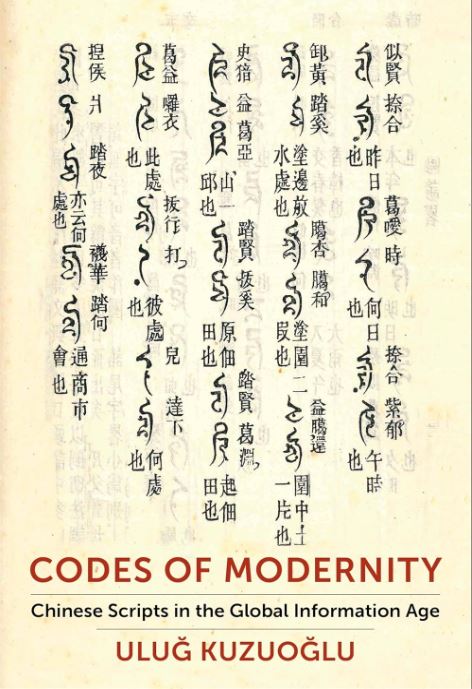
Uluğ Kuzuoğlu is an Associate Professor of History at Washington University in St. Louis, specializing in modern Chinese and global history with a focus on non-Western information and communication technologies. His academic journey includes degrees from Columbia University (PhD, 2018) and Boğaziçi University (BA and MA). He holds positions such as the MA Program Coordinator at Columbia University and has been actively involved in research and teaching since 2018. Education: PhD in History, Columbia University, 2018 (with distinction) MPhil in History, Columbia University, 2014 (with distinction) MA in History, Columbia University, 2013 MA in History, Boğaziçi University, 2010 BA in Sociology, Boğaziçi University, 2007 (with honors) Research Interests: Modern Chinese and global history, with a focus on the history of non-Western information and communication technologies Script reforms and their socio-political implications Emerging technologies like 3D, AI, and immersive tech in humanities research Virtual and augmented reality applications in academic and public contexts Publications Trends: His work explores the intersection of technology, language, and politics in modern China and Eurasia. Recent articles analyze Morse codes in Tibetan/Mongolian contexts, cognitive management through language reforms, and the global history of scripts like the Chinese Latin Alphabet. His research often bridges historical analysis with digital humanities methodologies. Scientific Awards: AY 2024-25 Luce/ACLS Early Career Fellowship in China Studies WUSTL Center for the Humanities Faculty Fellowship Multiple grants from institutions like the Center for Chinese Studies and Mellon/ACLS Advising and Grants: Advised senior thesis: Nkemjika Emenike on the Black Panther Party and CCP Recipient of grants including WUSTL's Arts & Sciences Faculty Research Grant and the Luce/ACLS Fellowship Involved in projects like the "Asia in St. Louis" app and the Immersive Technology Collective Labs/Teams: Co-leads the Immersive Technology Collective, exploring VR/AR in humanities Part of WashU's Center for the Humanities and Redefining Doctoral Education initiatives
Dr. Clara Rivera is a Lecturer in Language and Literacy at the University of Wollongong's School of Education, part of the Faculty of the Arts, Social Sciences and Humanities. She also serves as an Associate Investigator with the ARC Centre of Excellence for the Digital Child. Her research focuses on co-design methodologies involving children as active participants in digital technology development, emphasizing children's rights frameworks. Education: She holds a PhD from the University of Wollongong, where her doctoral work explored children's roles as co-designers and co-researchers in app development for preschoolers. This research earned the 2021 Beth Southwell Award and a Ray Debus Award nomination. Research Interests: Clara's work bridges Child-Computer Interaction (CCI) and early childhood education. Key themes include digital play contexts, participatory design with children, and evaluating digital technologies' impact on cognitive and psychosocial outcomes. Recent studies address digital footprint management and family perspectives on home technology use. Teaching & Leadership: She coordinates courses like Language and Learning and Early Childhood Contexts . Professional roles include convening the Children and Student Voice SIG for AARE and serving as NSW South Coast Local Council President for ALEA. Awards: Notable recognitions include the 2021 Beth Southwell Award for her thesis and multiple collaborative research publications addressing child-centered digital technologies. Labs/Teams: Active contributor to the ARC Centre of Excellence for the Digital Child, focusing on ethical digital technology design for children.
Steven Semken is a Professor of Geology and Education in the School of Earth and Space Exploration at Arizona State University (ASU). He holds affiliations with the Global Institute of Sustainability, the Humanities Research Institute, and the CRESMET center. His academic background includes a PhD from MIT (1989), an MS from UCLA (1984), and a SB from MIT (1980). Semken's research focuses on ethnogeology, place-based geoscience education, and cultural sustainability, particularly in Indigenous communities of the Southwestern U.S. and Latin America. He has pioneered work integrating Native American knowledge systems with mainstream geology. His career includes 15 years teaching at Diné College on the Navajo Nation, where he developed culturally responsive curricula. Current research collaborations involve the Grand Canyon National Park's Trail of Time interpretative project and virtual field experience development. Semken has authored over 140 scholarly works and secured $8.2M in grants, including NSF funding for natural hazards education and tribal partnerships. Awarded multiple teaching distinctions, including ASU's top natural science teaching honor and Geological Society of America Fellowship (2014), Semken emphasizes emotional engagement in science education. He advises numerous graduate students in geoscience education, field geology, and cultural sustainability. His work bridges geoscience with social justice, emphasizing land rights and Indigenous knowledge preservation. Key projects include the Global Futures Scientist role, leadership in the EarthScope National Office, and contributions to UNESCO geopark initiatives. Semken's outreach extends to public lectures, teacher workshops, and virtual field trips for diverse audiences, reflecting his commitment to democratizing geoscience access.
Dr. Gabi Kirk is an Assistant Professor in the Department of Geography, Environment & Spatial Analysis at California Polytechnic State University, Humboldt. Her research focuses on political ecology, feminist geography, and settler colonialism in Palestine and California. She holds a PhD in Geography from UC Davis with a designated emphasis in Feminist Theory and dual B.A. degrees in Environmental Studies and History from UC Santa Cruz. Her work examines how agriculture functions as both a tool of colonial dispossession and anti-colonial resistance, particularly in the Jenin governorate of the Occupied West Bank. Dr. Kirk’s teaching portfolio includes courses such as GEOG 100 (Human Geography), GEOG 319 (Emergence of the Modern Middle East), and GEOG 411 (Senior Field Research). She is actively engaged in scholar-activism, particularly as a Jewish member of Palestine solidarity organizations. Her research methodologies integrate archival work from multiple global sites including California, New York, London, and the Middle East. Her current book project explores connections between Palestinian and Californian agrarian systems, emphasizing sustainability and sovereignty. She has published in journals like Journal of Political Ecology and Historical Materialism , with a focus on decolonial frameworks and feminist critiques of militarism. Her work often bridges academic scholarship with public activism through walking tours and community engagement. Dr. Kirk maintains an active research agenda with grants supporting her fieldwork in Palestine and California. She emphasizes interdisciplinary approaches to environmental justice, combining political ecology with feminist and Indigenous studies methodologies. Her personal interests include outdoor activities and a notable passion for teen movies and romantic comedies.
Gregory Thompson is an Associate Professor of Linguistic Anthropology in the Department of Anthropology within the College of Family, Home, and Social Sciences at Brigham Young University. His academic work bridges anthropology, education, linguistics, and healthcare communication, with a particular focus on how language and interaction shape human experience in diverse contexts. Thompson's research interests center on linguistic anthropology, semiotics, education, and discourse analysis. He examines the processes of being and becoming as they happen in human pedagogical interactions, with particular attention to social actions that promote learning in small-scale human interactions such as tutoring or classroom settings. His ethnographic research spans diverse settings including tutoring programs for low-income African-American high schoolers in Chicago, elementary schools with Latino students in Provo, Utah, and elementary schools in Seoul, South Korea. He regularly teaches the ethnographic research methods sequence (courses 442 and 443) as well as a course in Linguistic Anthropology. Analysis of Thompson's publication record reveals consistent engagement with interactional dynamics across multiple contexts. His work demonstrates a progression from classroom settings to healthcare interactions, always maintaining a focus on how language, culture, and power dynamics shape human experience. A notable pattern in his research is the application of linguistic anthropological methods to practical problems in education and healthcare, particularly regarding cultural differences and communication patterns. His recent work increasingly addresses questions of equity and cultural competence, especially in educational and medical settings serving minority populations. Thompson's advising work, while not explicitly detailed in available sources, appears to focus on students interested in linguistic anthropology, ethnographic methods, and cross-cultural communication. His research collaborations span multiple institutions, suggesting an active mentoring role for graduate students and junior researchers. His laboratory and research team work appears to focus on ethnographic documentation of interactional practices, with particular attention to video ethnography methods. His publications suggest ongoing projects examining language use in educational settings, cultural differences in healthcare communication, and the semiotic dimensions of everyday interactions.