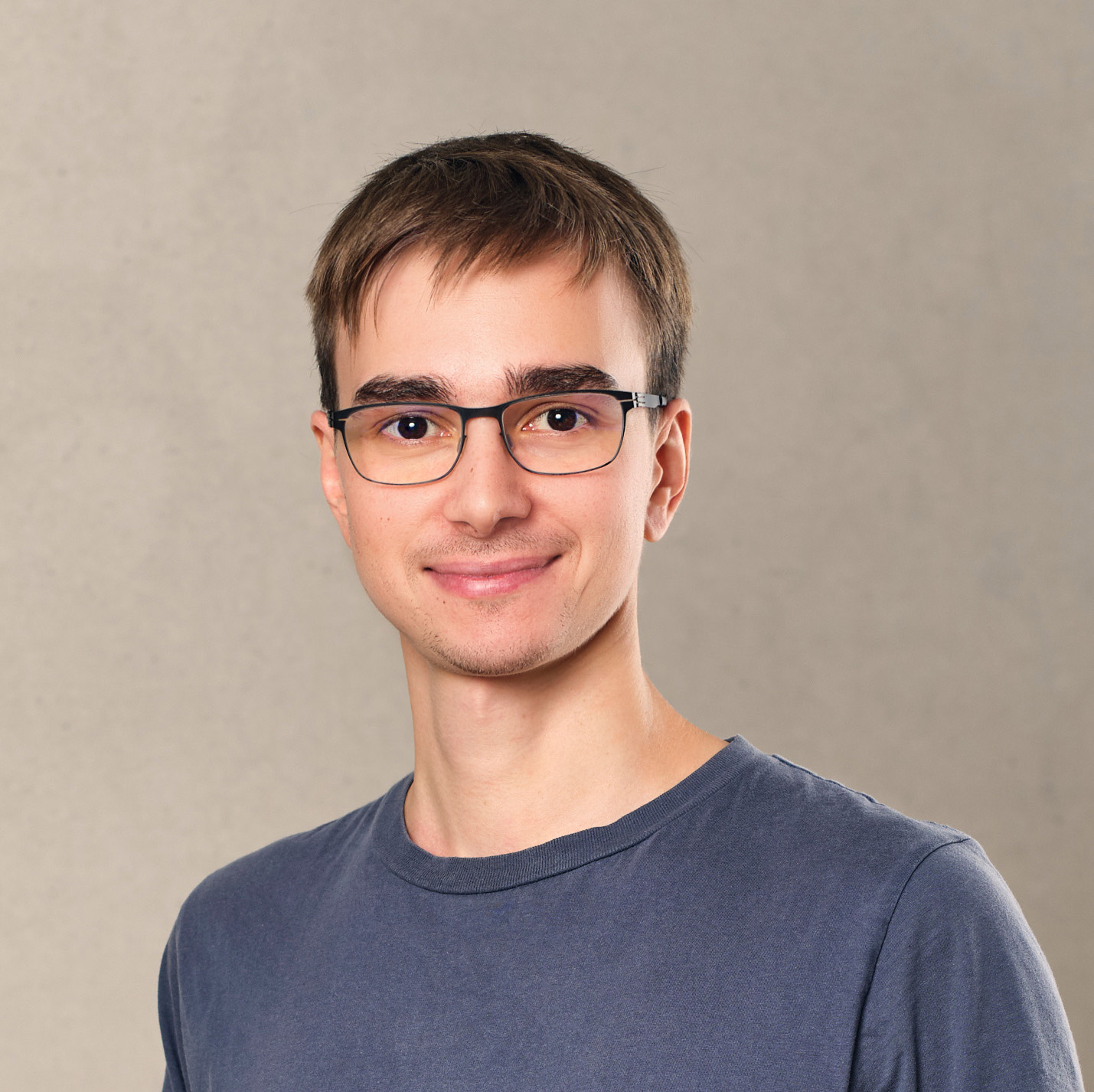
Mina Jamshidi Idaji is a Postdoctoral Researcher at the Machine Learning Group, BIFOLD – Berlin Institute for the Foundations of Learning and Data, Technical University of Berlin. Her research focuses on AI-driven healthcare applications, including computational pathology, ophthalmology, and biomedical sensing. She holds a Dr.-Ing. (PhD) in Machine Learning from TU Berlin and the Max Planck Institute CBS, Leipzig (2022), an M.Sc. in Biomedical Engineering from Sharif University of Technology (2016), and dual B.Sc. degrees in Electrical Engineering and Mathematics from Isfahan University of Technology (2014). Her research interests span AI for healthcare, computational pathology, and biomedical engineering. Recent work includes developing explainable AI frameworks for histopathology (xMIL), EEG/MEG simulation tools (MEEGsim), and methods for nonlinear interaction decomposition (NID). She has contributed to open-source projects like Harmoni and xMIL, addressing challenges in neural data analysis and clinical AI applications. Mina’s publications highlight advancements in brain-computer interfaces (BCI), motor imagery studies, and neuroimaging techniques. Her work bridges machine learning and clinical neuroscience, emphasizing translational research in healthcare AI.
Wotao Yin is a Professor of Mathematics at the University of California, Los Angeles, with a distinguished research career spanning over two decades in optimization theory and its applications. His work bridges theoretical mathematics with practical applications in machine learning, image processing, and signal analysis. As a leading researcher in optimization algorithms, he has made significant contributions to the development of methods like ADMM (Alternating Direction Method of Multipliers), proximal algorithms, and decentralized optimization techniques. Department: Department of Mathematics School: College of Letters and Science University: University of California, Los Angeles Yin's research focuses on developing efficient algorithms for large-scale optimization problems, with particular expertise in convex and nonconvex optimization, distributed and decentralized optimization, and mathematical foundations of machine learning. His work has profound implications for image reconstruction, signal processing, and modern machine learning systems. He has pioneered methods for handling sparse data, non-smooth objectives, and constrained optimization problems that arise in real-world applications. An analysis of his recent publications reveals a strong trend toward addressing optimization challenges in machine learning, particularly in federated learning, attention mechanisms, and nonconvex problem structures. His work demonstrates a consistent pattern of bridging theoretical optimization with practical machine learning applications, developing algorithms that balance computational efficiency with theoretical guarantees. Recent papers show increasing focus on heterogeneous data settings, large language model optimization, and fundamental limitations of optimization methods in complex learning scenarios. Throughout his career, Professor Yin has mentored numerous PhD students and postdoctoral researchers who have gone on to successful careers in academia and industry. His collaborative network spans multiple institutions worldwide, with particularly strong connections to researchers in China and across the United States. His work has been supported by various funding agencies recognizing the fundamental importance of optimization theory for advancing computational science. Professor Yin leads a vibrant research group focused on mathematical optimization and its applications, where students and collaborators work on cutting-edge problems at the intersection of mathematics, computer science, and engineering. The group maintains strong connections with both theoretical and applied research communities, participating in major conferences across optimization, machine learning, and computational mathematics.
Dr. Edzard Weber is a Researcher at the University of Potsdam's Faculty of Economics and Social Sciences, Department of Business Information Systems, where he serves as Research Speaker for Decision Management. He completed his doctorate in January 2015 on methodology development for system adaptability and currently leads the junior research group 'Entscheidungsmanagement' while representing the vacant 'Digital Government' professorship. His research spans multiple critical domains in business informatics including Decision Management , Process Modeling , Operations Research , Future Studies , and Digital Government . His work integrates theoretical foundations with practical applications, particularly evident in his leadership of the DiReBio project which developed formats for regional bioeconomic transformation through participatory workshops. Weber's publication record demonstrates consistent scholarly output since 2009, with recent work focusing on scheduling model standardization, circular economy processes in Industry 4.0 contexts, and haptic modeling approaches for digital transformation in bioeconomics. His research shows strong interdisciplinary connections between business informatics, systems engineering, and sustainable development. Key research projects: DiReBio (2017-2021): Discourse on bioeconomic transformation Job Scheduling (2015-2019): Systematic solution space navigation EUKRITIS II (2010-2011): Knowledge management for critical infrastructure protection Eukritis I (2008-2009): Change-capable protection structures IOSE-W2 (2006-2009): Interorganizational software development Weber maintains active collaboration with international institutions including University of California, Davis, Stellenbosch University, Tel Aviv University, University of Pretoria, and Hong Kong Polytechnic University, contributing to the global research community while addressing local and regional challenges in digital transformation.
Marco Lippi is a Professor affiliated with the University of Modena and Reggio Emilia (Italy) and the Einaudi Institute for Economics and Finance. His research spans artificial intelligence, machine learning, and their applications in domains like legal technology, transportation, and healthcare. He collaborates extensively with institutions globally, focusing on interdisciplinary projects that bridge technical innovation and societal challenges. Research Interests: Lippi's work emphasizes neuro-symbolic AI, argument mining, and ethical AI applications. He explores how AI can enhance consumer protection, improve urban transport systems, and contribute to medical diagnostics. His recent projects include autonomous systems development, causality learning in smart factories, and analyzing social media for disaster response. Publications Trends: His articles reflect a strong focus on AI ethics, legal informatics, and machine learning applications. Notable contributions include frameworks for detecting unfair contract clauses, causal modeling in industrial IoT, and human-robot interaction pipelines. His work often combines theoretical advancements with practical implementations in real-world settings. Affiliations & Collaborations: Collaborations span academia and industry, including projects with Università di Bologna and the Einaudi Institute. His team frequently addresses cross-disciplinary challenges, such as integrating legal reasoning with machine learning and optimizing smart city infrastructure through data-driven approaches.
Francis Engelmann is an incoming Assistant Professor at the University of Lugano (USI) Faculty of Informatics, currently completing his postdoctoral research at Stanford University working with Prof. Leonidas Guibas and Prof. Jeannette Bohg. Prior to Stanford, he was a postdoctoral research fellow at ETH Zurich with Prof. Dr. Marc Pollefeys and conducted his PhD in Computer Vision, Machine Learning and 3D Scene Understanding at RWTH Aachen University under Prof. Dr. Bastian Leibe. His research focuses on advancing 3D scene understanding through computer vision, machine learning, and robotics. Engelmann's work explores open-vocabulary 3D scene understanding, functional scene analysis, 3D reconstruction, and semantic segmentation. He has made significant contributions to open-vocabulary 3D instance segmentation, 3D scene graph construction, and language-augmented 3D vision. His research bridges theoretical computer vision with practical robotics applications, particularly in scene understanding for robotic manipulation. Analysis of his recent publications reveals a strong trajectory in developing methods for open-vocabulary 3D scene understanding, with increasing focus on functional understanding, language integration, and practical robotics applications. His work spans from foundational 3D representation learning to applied robotics systems, with a consistent emphasis on making 3D scene understanding more accessible, scalable, and semantically rich. ETH Zurich Career Seed Award (2022) Outstanding Reviewer for CVPR 2024 (top 2%) Top Reviewer for NeurIPS 2023 Best Paper Award at ICRA'24 MOMA.v2 workshop Multiple oral presentations at top-tier conferences (ICCV, CVPR, ECCV) Engelmann actively mentors PhD students and postdocs, with notable collaborations including Valentin Bieri, Rui Huang, Elisabetta Fedele, and Ayca Takmaz. He has received an NVIDIA Academic grant and serves as an area chair for major computer vision conferences including CVPR'25, WACV'26, and 3DV'25. He co-organizes the annual Open-Vocabulary 3D Scene Understanding Workshop, now in its fourth iteration at CVPR'25.
Thomas Schnake is a postdoctoral researcher at the Machine Learning Lab of the Technical University of Berlin and the Berlin Institute for the Foundations of Learning and Data (BIFOLD). He holds a Ph.D. in Machine Learning from TU Berlin and prior degrees in Mathematics and Scientific Computing from Humboldt University of Berlin. His research focuses on Explainable AI (XAI), Natural Language Processing, and the mathematical foundations of machine learning. He has also gained industry experience at ebuero AG and GFaI e.V. in Berlin. Education: B.Sc. Mathematics & Philosophy, Humboldt University Berlin (2014) M.Sc. Mathematics, Humboldt University Berlin (2018) M.Sc. Scientific Computing, Technical University Berlin (2018) Ph.D. Machine Learning, Technical University Berlin (2024) Research Interests include: Explainable AI for complex domains like quantum chemistry and histopathology Graph neural network interpretability through walk-based explanations High-resolution data synthesis with minimal input Unsupervised anomaly detection in text and energy systems His recent publications (2021-2025) demonstrate contributions to XAI frameworks, graph neural network explanations, and transformer model interpretability. He is affiliated with two prominent institutions and maintains active research in interdisciplinary areas combining mathematics and machine learning.
David M. J. Tax is a researcher affiliated with Delft University of Technology, Netherlands. His work spans machine learning, pattern recognition, and computer vision, with a focus on neural networks, anomaly detection, and medical image analysis. He has collaborated extensively with researchers like Marco Loog, Robert P. W. Duin, and Marcel J. T. Reinders on topics including multiple instance learning, dissimilarity-based methods, and physics-informed neural networks. Key research contributions include advancements in incremental learning for neural networks, personalized anomaly detection in biomedical signals, and frameworks for evaluating time-series anomalies. His recent work (2023–2025) emphasizes physics-informed neural networks, stochastic scheduling algorithms, and proximity-aware evaluation techniques. Tax’s publications reflect a strong emphasis on interdisciplinary applications, integrating computer science with biomedical engineering and operations research. His methodologies often address challenges in scalability, robustness, and interpretability, with applications ranging from healthcare monitoring to automated project scheduling. Tax maintains an active presence in top-tier conferences like AAAI, ICPR, and NeurIPS, contributing to both theoretical foundations and practical implementations of machine learning systems.
Anjith George is a researcher at École Polytechnique Fédérale de Lausanne (EPFL) in the School of Computer and Communication Sciences, working within the Biometrics Security and Privacy Laboratory. His research focuses on advancing face recognition systems with particular emphasis on security, efficiency, and cross-domain applications. He maintains a strong collaborative relationship with Professor Sébastien Marcel's research group at EPFL. George's research interests span multiple critical areas in modern biometrics including face recognition systems, face anti-spoofing techniques, heterogeneous face recognition across different modalities (such as visible to infrared), and efficient model deployment for edge devices. His work addresses fundamental challenges in biometric security by developing robust systems that can withstand presentation attacks while maintaining high accuracy across diverse conditions. He has made significant contributions to the field of synthetic data generation and utilization for improving face recognition systems, exploring how knowledge can be effectively transferred from synthetic to real-world domains. Analysis of George's recent publications reveals a clear research trajectory focused on solving practical challenges in face recognition. His work has evolved from fundamental eye tracking and gaze direction research in the early 2010s toward increasingly sophisticated face recognition systems addressing security vulnerabilities, efficiency constraints, and domain adaptation problems. A significant portion of his recent work explores the potential of synthetic data to overcome limitations in real-world training data, while also investigating how to bridge the gap between different face recognition modalities. His research demonstrates a strong emphasis on practical applications, particularly in resource-constrained environments where edge deployment is necessary. George has been actively involved in major biometrics competitions and challenges, including the FRCSyn Challenge and EFaR (Efficient Face Recognition) competition, contributing to community benchmarking efforts and advancing state-of-the-art solutions. His collaborative work spans multiple institutions globally, reflecting the international nature of biometrics research.
Shadi Albarqouni is a W2 Professor of Computational Imaging Research at the University Hospital Bonn, AI Young Investigator Group Leader at Helmholtz Munich, and Senior Research Affiliate at TU Munich. His roles include leading research in medical imaging, computational procedures, and artificial intelligence in healthcare. He holds a PhD in Informatics from Technical University Munich (2017) under Prof. Nassir Navab, with prior academic experience as a lecturer and postdoctoral researcher. Education: PhD Informatics (2013-2017), Technical University Munich M.Sc. Electrical Engineering (2005-2010), Islamic University of Gaza B.Sc. Electrical Engineering (2001-2005), Islamic University of Gaza Research Interests: Medical Image Analysis (e.g., segmentation, anomaly detection) Deep Learning applications in healthcare Generative models and computer vision Surgical robotics and augmented reality Federated learning for medical data Publications: Over 30 peer-reviewed articles focusing on medical imaging, including works on GANs for skin lesion synthesis, federated learning algorithms, and MRI anomaly detection. Recent trends emphasize interdisciplinary approaches combining AI with clinical challenges. Awards: Best Paper Award at MIAR 2016 Reviewer Commendation at MICCAI 2018 DAAD PRIME Fellowship Advising/Grants: Leads research groups focusing on AI in healthcare and collaborates internationally. Manages projects on federated learning and medical data challenges. His lab at University Hospital Bonn focuses on computational imaging and surgical data science. Labs/Teams: Director of labs at University Hospital Bonn (Department of Diagnostic and Interventional Radiology), Helmholtz Munich, and TU Munich. Active in interdisciplinary teams like RobUSt (Robotics and Ultrasound) and NARVIS (Navigation and Visualization).
Lin Xiong is a Professor at Xidian University's School of Artificial Intelligence, Department of Computer Science, with an extensive publication record spanning from 2008 to 2025. His research primarily focuses on computer vision, deep learning, and remote sensing applications, with significant contributions to SAR image processing, domain adaptation techniques, and environmental monitoring systems. Dr. Xiong's educational background includes advanced studies in computer science and artificial intelligence, though specific details of his degrees are not readily available in the publication record. His research interests span multiple domains including computer vision (particularly facial recognition and person re-identification), deep learning architectures, domain adaptation methods, and remote sensing applications for environmental monitoring. His publication trends reveal a strong focus on practical applications of deep learning, with recent work emphasizing class-incremental learning, SAR image registration, and environmental monitoring using lidar technology. The research spans both theoretical advancements in neural network architectures and practical implementations in fields ranging from renewable energy forecasting to coastal ecosystem monitoring. Knowledge distillation techniques for continual learning Advanced SAR image processing algorithms Domain adaptation methods for computer vision tasks Environmental monitoring using remote sensing technology Dr. Xiong has established significant collaborations with researchers from NASA (notably on mangrove ecosystem monitoring projects) and maintains strong connections within China's academic community, particularly with Xidian University colleagues. His work demonstrates both theoretical depth and practical applicability across multiple domains requiring advanced computer vision and machine learning solutions.
Benoît Macq is a distinguished professor at the ICTEAM Institute , Université catholique de Louvain, Belgium. With over 350 publications spanning 1990–2025, his work bridges signal processing , medical imaging , machine learning , and data security . Key collaborators: Christophe De Vleeschouwer Simon K. Warfield Jean-François Delaigle Mathieu De Craene Research interests include: Adaptive algorithms for real-time model deployment and domain adaptation 3D reconstruction and medical image segmentation for radiation therapy Security in blockchain-based distributed learning systems Transformers for EEG classification and proton radiography Recent publications focus on foundation models in cytology and remote sensing, holonic multi-agent systems for VR, and secure codestreams for UAV object detection. His work emphasizes scalable architectures and privacy-preserving techniques in dynamic environments. Advising: Dani Manjah Antoine Aspeel Maxime Zanella
Marius Lindauer is a Professor of Machine Learning at the Department of Artificial Intelligence , Leibniz University Hannover , and Deputy Head of the Institute since 2025. Previously, he served as Spokesperson of Computer Science Professors (2023-2025) and Head of the Institute (2022-2024). PhD (Dr. rer. nat, 2010-2015), Master (2008-2010), and Bachelor (2005-2008) in Computer Science from University of Potsdam His research focuses on democratizing AI through AutoML innovations, including: Green AutoML for sustainable deep learning Human-Centered AutoML for user-centric optimization Dynamic Algorithm Configuration in reinforcement learning Generalization techniques for production and health applications Recent publications show strong multi-objective optimization trends across medical imaging , protein design , and time series forecasting , with 15+ papers in 2024-2025 at venues like NeurIPS, AAAI, and IEEE TPAMI. Key scientific awards : ERC Starting Grant (2022), NeurIPS BBO-Challenge winner (2020), multiple AutoML/ML competition victories Advisory role in 140+ publications and leadership of LUHAI Institute
Dr. Nikita Araslanov is a Postdoctoral Researcher at the Technical University of Munich (TUM) in the School of Computation, Information and Technology, Department of Informatics 9 (Computer Vision Group). He also serves as a visiting faculty member at Google. His research focuses on semantic and 3D visual inference from video data, aiming to bridge perception and understanding in complex visual scenes. Dr. Araslanov earned his PhD in Computer Science from TU Darmstadt in the Visual Inference Lab, graduating with highest distinction. He holds a Master's degree in Computer Science from the University of Bonn, where he graduated with distinction in 2016. His research spans multiple areas of computer vision, with a particular emphasis on 3D reconstruction, semantic segmentation, and deep learning approaches for visual understanding. His work often combines theoretical insights with practical applications, addressing challenges in dynamic scene understanding, vision-language correspondence, and unsupervised learning paradigms. He has made significant contributions to bundle adjustment for dynamic scenes, hierarchical semantic segmentation using hyperbolic geometry, and novel approaches to unsupervised panoptic segmentation. Dr. Araslanov's research has been recognized with several prestigious awards, including being selected as a Best Paper Candidate at ICCV 2025 for his work on dynamic scene reconstruction, and having his Scene-Centric Unsupervised Panoptic Segmentation paper designated as a Highlight Paper at CVPR 2025 (top 3% of submissions). He has also received multiple oral presentation awards at major computer vision conferences including GCPR 2024, CVPR 2024, and ICLR 2024. Actively involved in the academic community, Dr. Araslanov serves as an Area Chair for CVPR 2025. He is committed to mentoring the next generation of researchers and regularly supervises master's theses, guided research projects, and research assistant positions (HiWi). His teaching includes courses on Deep Learning for Spatial AI (Summer Semester 2025) and Computer Vision 3: Segmentation, Detection and Tracking (Winter Semester 2024/25). As a member of the Computer Vision Group led by Prof. Dr. Daniel Cremers at TUM, Dr. Araslanov collaborates with a diverse team of researchers working on cutting-edge computer vision problems. The group maintains strong connections with industry partners and contributes significantly to the advancement of computer vision research through publications at top-tier conferences and journals.
Manfred Jaeger is a Professor in the Department of Computer Science at Aalborg University's Faculty of Engineering and Science. With an extensive publication record spanning over three decades from 1993 to 2025, he has established himself as a leading researcher in statistical relational learning and probabilistic reasoning. His collaborative work extends across multiple institutions, with frequent co-authorship with researchers from Aalborg University including Kim G. Larsen, Thomas D. Nielsen, and others. Professor Jaeger's research primarily focuses on the intersection of artificial intelligence, machine learning, and probabilistic modeling. His work centers on developing methods for learning and reasoning with relational and graph-structured data, with particular emphasis on Graph Neural Networks, Bayesian Networks, and Statistical Relational Learning. His contributions span both theoretical foundations and practical applications, addressing challenges in representation learning, knowledge extraction, and uncertainty modeling in complex relational domains. Analysis of his recent publications (2020-2025) reveals a strong trend toward integrating neural approaches with traditional probabilistic reasoning frameworks. His work increasingly focuses on explainable AI within graph learning contexts, meta-path learning for heterogeneous networks, and bridging theoretical guarantees with practical implementations. Jaeger has made significant contributions to understanding projectivity in statistical relational models and developing algorithms for learning from coarse or incomplete data. Professor Jaeger has maintained a highly productive research trajectory, with numerous publications in top-tier AI venues including JMLR, Artificial Intelligence journal, UAI, IJCAI, and ECML/PKDD. He has developed influential frameworks for relational Bayesian networks and statistical relational learning, with applications spanning knowledge graph reasoning, network analysis, and decision-making under uncertainty.
Laure Ciernik is a Doctoral Researcher at the Technical University of Berlin's Machine Learning Group, specializing in the application of machine learning to biomedical challenges. Her work bridges computational methodologies with healthcare applications, particularly in genomics and medical imaging. Her academic foundation includes: MSc in Data Science (2023) from ETH Zürich, with focus on ML for Healthcare and Bioinformatics BSc in Computer Science (2020) from ETH Zürich Laure's research centers on Biomedical Data Analysis , Computational Genomics , and Computational Pathology , with strong emphasis on Explainable AI techniques. Her work addresses the critical need for interpretable machine learning models in clinical settings, developing methods that balance accuracy with transparency. She combines deep expertise in computer science with domain knowledge in healthcare, enabling her to tackle complex problems at this interdisciplinary intersection. Her publication record reveals a clear trajectory toward solving real-world biomedical challenges through machine learning innovation. Her work spans histopathology analysis, genomic data interpretation, and material science applications, demonstrating both depth in healthcare AI and breadth across application domains. The consistent focus on interpretability and practical utility positions her research at the forefront of trustworthy AI development for medical applications. Her GitHub presence (username: lciernik) reflects active engagement with the research community, with repositories focused on similarity consistency and computational methods for cancer genomics. As a Doctoral Researcher, Laure contributes significantly to the Machine Learning Group's mission while maintaining collaborations with the Boeva Lab for Computational Cancer Genomics, where she conducted her master's thesis work. Her research integrates multiple data modalities to advance precision medicine approaches. Laure operates within the Machine Learning Group ecosystem at TU Berlin, contributing to a research environment that emphasizes both theoretical innovation and practical healthcare applications, with particular relevance to cancer diagnostics and treatment.