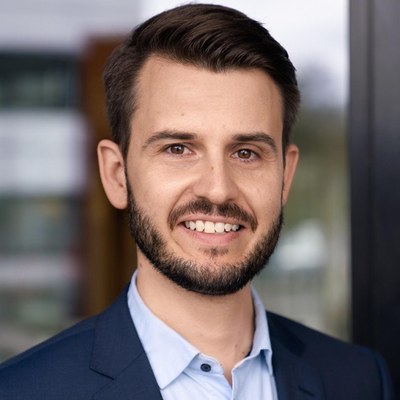
Dr. Karolina Grabowska is a researcher at the Faculty of Science and Technology, Jan Dlugosz University in Czestochowa. She specializes in Adsorption chillers Modeling Computational Fluid Dynamics Renewable energy systems Her work focuses on fluidized bed reactors , adsorption cooling systems , and desalination technologies . Recent publications demonstrate expertise in CFD-DEM modeling , heat transfer optimization , and machine learning applications for energy systems. Key collaborations include researchers from institutions such as Faculty of Energy and Fuels Faculty of Mechanical Engineering Strata Mechanics Research Institute
Nicholas Zabaras is a Professor of Uncertainty Quantification and the Director of the Warwick Centre for Predictive Modelling at the University of Warwick. He is a Hans Fischer Senior Fellow at the TUM Institute for Advanced Study (TUM-IAS), hosted by Phaedon-Stelios Koutsourelakis. His research focuses on advancing computational methods for uncertainty quantification, predictive modeling, and multiscale/multiphysics systems. Key areas include Bayesian methods, stochastic modeling, and data-driven approaches for complex materials systems. Education: He holds a diploma in Mechanical Engineering from the National Technical University of Athens (1982), an M.Sc. in Materials Science and Engineering from the University of Rochester (1983), and a Ph.D. in Theoretical and Applied Mechanics from Cornell University (1987). He has held academic positions at the University of Minnesota, Cornell University, and the University of Warwick, where he now leads the Warwick Centre for Predictive Modelling. Research Interests: His work integrates computational mathematics, statistics, and scientific computing to address challenges in materials science, computational physics, and engineering systems. Specific themes include Bayesian uncertainty quantification, high-dimensional modeling, information-theoretic coarse graining, and stochastic model reduction. Awards: He has received the Royal Society Wolfson Research Merit Award (2014), the Michael Tien’72 College of Engineering Teaching Award (2009), and is a Fellow of the American Society of Mechanical Engineers (2006). Labs/Teams: Director of the Warwick Centre for Predictive Modelling, and leader of the Scientific Computing and Artificial Intelligence (SCAI) Laboratory at the University of Notre Dame, focusing on interdisciplinary research in AI-driven predictive modeling and uncertainty quantification.
Dr. Vasanthan Devaraj is a PostDoc Group Leader at the Institute for Photonic Quantum Systems (PhoQS) in the University of Paderborn , leading the Ultrafast Nanophotonics group. His research focuses on plasmonics, 3D printing of nanostructured materials, biosensor development, and quantum emitter engineering. He specializes in self-assembly techniques, metallic nanostructure fabrication, and biohybrid systems. Research Interests : Plasmonic nanostructures and their optical properties 3D printing of metallic and biomaterial nanoarchitectures Smart biosensors for healthcare, environment, and agriculture Quantum dots and photonic devices Bio-inspired self-assembly using M13 bacteriophage Energy-efficient nanomaterials for solar cells Notable Contributions : Pioneered 3D printing of multi-material plasmonic nanostructures with sub-100 nm resolution. Developed biosensors for lung cancer detection, environmental pollutants, and fruit freshness analysis. Optimized plasmonic nanocavities with sub-5 nm gaps for enhanced light-matter interactions. Recent Work Trends : His articles emphasize plasmonic dimer assembly , 3D-printed metallic nanostructures , and biohybrid systems . Key themes include self-assembly optimization, plasmonic field enhancement, and biomaterial integration for diverse applications. Labs & Teams : Leads the Ultrafast Nanophotonics Group , collaborating on projects involving photonics, quantum materials, and bio-inspired engineering.
Prof. Dr. Britta Nestler serves as a Research Unit Chair at the Institute of Nanotechnology (INT) within the Karlsruhe Institute of Technology (KIT), Germany. Leading the Microstructure Simulations research group (INT-MSS), she focuses on computational modeling of mechanical and microstructural properties in materials, with significant contributions to phase-field methodologies for microstructure evolution and materials design. Her research spans computational materials science, phase-field modeling, and multiphysics simulations for energy storage systems. Key interests include chemo-mechanical coupling in multiphase systems, solid-state dewetting phenomena, battery electrode optimization, and microstructure-property relationships in polycrystalline materials. She integrates machine learning and data management frameworks to advance virtual materials design, particularly for post-lithium battery technologies. Recent publications reveal a strong emphasis on phase-field applications for energy materials, with 15+ 2025 articles addressing battery electrode design, structural optimization of porous materials, and multiphysics coupling in electro-chemo-mechanical systems. Her work bridges fundamental thermodynamics with industrial applications, notably in the POLiS Cluster of Excellence for post-lithium storage. Prof. Nestler actively shapes the field through leadership in the GAMM Workshop on phase-field modeling and the Materials/Microstructure Modeling conference. As part of KIT's Institute of Nanotechnology, her INT-MSS group collaborates on virtual materials design initiatives within the MaTeLiS Focus Field and NFDI4Ing research data infrastructure, driving digitalization in engineering sciences.
Stefanie Elgeti is Associate Professor and Private Lecturer at the Chair for Computational Analysis of Technical Systems (CATS), Faculty of Mechanical Engineering, RWTH Aachen University. She previously held a professorship in lightweight design at TU Vienna starting in 2019. Her research integrates computational mechanics with manufacturing process optimization, focusing on plastics extrusion, injection molding, and high-pressure die casting. Diploma in Mechanical Engineering, majoring in 'Manufacturing Techniques for Microsystems' PhD (2011): 'Free-Surface Flows in Shape Optimization of Extrusion Dies' Habilitation (2016): 'CAD-Conforming Finite Element Methods in Engineering Design' Her research centers on solving inverse problems in manufacturing through numerical simulation. She employs advanced techniques such as free-surface flow modeling, non-Newtonian material models, spline-based finite elements, and PDE-constrained shape optimization. Her group simulates entire process chains from filling to solidification and warpage prediction, enabling design optimization of cavities and cooling systems. The recent publications (2022–2024) reveal a strong trend toward integrating artificial intelligence—particularly physics-informed neural networks and Bayesian optimization—into traditional simulation workflows. There is increasing emphasis on warpage compensation, shape optimization of extrusion dies, and modeling of biomedical and environmental systems, showcasing a broadening scope from industrial manufacturing to interdisciplinary applications. She is actively involved in academic service, having served as vice-spokesperson of GAMM-Juniors (2013–2014) and currently co-chairing the ECCOMAS Young Investigator Group. While no formal awards are listed, her leadership roles and editorial contributions reflect significant recognition in the computational mechanics community. Prof. Elgeti advises students and leads multiple research initiatives at CATS, including work groups focused on production engineering, fluid-structure interaction, and INTERESST. Her team develops model hierarchies and digital twins for industrial processes, aiming to bridge simulation and real-world manufacturing through intelligent, adaptive systems.
Qi Shu is a Professor in the Compound Semiconductor Technology department at RWTH Aachen University . His research focuses on thermal engineering, fluid dynamics, and computational physics, particularly in advanced semiconductor technology applications. Current research interests include ferrofluid-based cooling systems, particle suspension mechanics, and heat transfer optimization in complex flows. His work combines experimental studies and numerical simulations to analyze thermal convection in particle-laden systems, non-spherical particle behavior, and shear flow effects on conductivity. Recent publications highlight trends in multiphysics modeling (LBM-DEM-FEM coupling), electromagnetic cooling systems using ferrofluids, and detailed investigations of particle rotation dynamics in nanofluids. These studies span disciplines including materials science, computational fluid dynamics, and applied thermal engineering. Based at the Central Laboratory for Micro- and Nanotechnology (ZMNT), his lab investigates semiconductor technology with a focus on thermal management solutions for high-performance electronic systems and nanoscale fluid dynamics.
Paul Manns is an Assistant Professor of Optimization at TU Dortmund University's Department of Mathematics, appointed in 2021. His research specializes in mathematical optimization involving partial differential equations and integer constraints, with emphasis on regularization techniques and trust-region algorithms. Education includes: Ph.D. in Mathematics, TU Braunschweig (2019) Computational Engineering studies, TU Darmstadt Prior research experience includes positions at Heidelberg University, TU Braunschweig, and Argonne National Laboratory (USA), including a James H Wilkinson Fellowship. Recent publications develop novel methods for mixed-integer control problems, domain decomposition, and convergence analysis in non-convex optimization spaces.
Miriam Schulte is a Professor at the University of Stuttgart’s Institute for Parallel and Distributed Systems, leading the Institute for the Simulation of Large Systems. She holds a Carl von Linde Junior Fellowship and has held academic roles since 2002, including heading the CFD Group at TUM. Her expertise spans computational fluid dynamics (CFD), high-performance computing (HPC), and numerical methods for PDE solvers. She earned her diploma (1997) and PhD (2001) in mathematics from TUM, followed by habilitation in Computer Science (2010). Her research focuses on optimizing algorithms for efficient simulation software, integrating mathematics and computer science. Key areas include fluid-structure interactions, multi-physics coupling, and scalable parallel computing. She has contributed to frameworks like Peano for adaptive Cartesian grids and developed methodologies for partitioned fluid-structure interaction simulations. Publications highlight advancements in HPC, multi-physics coupling, and parallel algorithms. Awards include the Bayerische Begabtenfoerderung (1993–1997). Her work bridges computational methods with real-world applications, emphasizing scalability and efficiency in large-scale simulations.
Dr. Lars Schütze is a researcher at the Chair for Compiler Construction within the Faculty of Computer Science at Dresden University of Technology (TU Dresden). Holding a PhD in Computer Science from TU Dresden, he currently serves as a PostDoc specializing in domain-specific compilers for verifiable Full Homomorphic Encryption (vFHE) and hybrid quantum-classical computing systems. His academic credentials from TU Dresden include: Bachelor's degree in Computer Science Master's degree in Computer Science PhD in Computer Science (awarded February 2025) Schütze's research centers on advanced compiler design for emerging computational paradigms. His foundational work explores context-oriented and role-based programming languages, focusing on runtime optimization and dispatch mechanisms. Recent efforts pivot toward post-quantum security through homomorphic encryption compilers and hybrid quantum-classical computing frameworks. His research bridges theoretical language design with practical compiler implementation, emphasizing verifiable security and performance efficiency in next-generation computing environments. Publication analysis reveals a clear evolution from context-oriented programming (2017-2020) toward cryptographic compiler development (2022-2025). Early work optimized role-based dispatch systems, while recent publications establish compiler frameworks for Fully Homomorphic Encryption using MLIR infrastructure. His research consistently addresses performance bottlenecks in dynamic language features while transitioning toward quantum-resistant cryptography solutions. Scientific Awards: No awards documented in source materials Dr. Schütze supervises student theses in Homomorphic Encryption and Quantum-Classical Computing frameworks, offering projects spanning Bachelor to Master levels. His research is funded through institutional projects including (verifiable) Full Homomorphic Encryption and Hybrid Quantum-Classical Computation, though specific grant details remain undisclosed. He actively develops compiler infrastructure for encrypted computation and quantum-classical orchestration. As core personnel in TU Dresden's Chair for Compiler Construction, Schütze contributes to the RoSI project (role-based software infrastructures) and leads current initiatives in vFHE. His team collaborates on building domain-specific compiler toolchains that address quantum computing threats through post-quantum cryptographic solutions while advancing hybrid execution models for emerging hardware architectures.
Prof. Dr.-Ing. Dennis Hohlfeld serves as Professor and Chair of Micro- and Nanotechnology of Electronic Systems at the University of Rostock's Institute of Device Systems and Circuit Technology. He holds key administrative roles as Study Advisor and Chairman of the Computational Science and Engineering (CSE) Examination Board, while actively contributing as a reviewer for research funding organizations and scientific publishers. His research spans five core domains: Silicon-based microsystem technology focusing on nanoscale material behavior for high-performance electronics Energy-autonomous systems leveraging environmental energy sources through harvesting techniques Energy-efficient circuit design for miniaturized applications Microoptics development for photonic integration Modeling and simulation techniques enabling system-level analysis of complex multiphysics phenomena Analysis of his 15 most recent publications reveals a dominant trend toward biomedical energy solutions, particularly thermoelectric generators for implantable devices. His work demonstrates strong interdisciplinary integration across electrical engineering, materials science, and neuroscience, with increasing emphasis on model order reduction for efficient simulation of MEMS devices and optogenetic applications. The publications consistently address miniaturization challenges while maintaining system-level performance. No scientific awards were documented in the provided materials. As Study Advisor and Examination Board Chairman for CSE, Prof. Hohlfeld oversees academic progression for computational science students. His research leadership encompasses: Technical Domains Energy harvesting systems for medical implants Photonic integration in microelectronics Multiphysics modeling frameworks Application Areas Autonomous environmental sensors Neuroprosthetic interfaces Power-efficient microsystems The Institute of Device Systems and Circuit Technology houses specialized laboratories for microsystem fabrication, energy harvesting characterization, and optical circuit development, supporting his research in silicon-based nanotechnology and energy-autonomous systems.
Dr. Jun Huang is an Assistant Professor at Forschungszentrum Jülich, leading the Helmholtz Young Investigator Group focused on the 'Theory of Electrocatalytic Interfaces.' He is affiliated with the Institute of Energy Technologies (IET), specifically in the department of Theory and Computer-Based Modelling of Materials in Energy Technology. His research centers on theoretical electrocatalysis and electrochemical interfaces, with expertise in: Electrical double layer phenomena and capacitance behavior Density-potential functional theory for metal-solution interfaces Multiscale modeling of electrochemical reaction environments Electrocatalyst design through computational methods Ion transport and interfacial structuring in energy systems His recent publications demonstrate a strong focus on developing fundamental theoretical frameworks for understanding electrocatalytic interfaces, with recurring themes in double-layer effects, reaction kinetics, and computational method development. The work bridges theoretical electrochemistry with applications in energy conversion and storage. Major recognitions include: Helmholtz Young Investigator Group Grant European Research Council Starting Grant Dr. Huang leads a computational research group developing advanced theoretical models to decipher electrocatalytic processes. His team focuses on creating predictive frameworks for interfacial reactions relevant to energy technologies.
Univ.-Prof. Dr.-Ing. Alexander Popp is a Full Professor of Computer-Based Simulation at the University of the Bundeswehr Munich, Germany, where he also serves as Vice Dean of the Department of Civil Engineering and Environmental Sciences. Additionally, he is the Vice Director of the DLR Institute for the Protection of Terrestrial Infrastructures in Sankt Augustin, Germany. His academic career spans prestigious institutions including TU Munich, Columbia University, and The University of Tokyo, demonstrating his international recognition in computational mechanics. Professor Popp's research spans the entire field of computational mechanics and numerical analysis, with a particular focus on computational contact dynamics, solid and structural dynamics, and multiphysics problems. His work encompasses fluid-structure interaction, non-conforming discretization methods, tribology, and computational plasticity. More recently, he has expanded his research into digital twins for critical infrastructure protection and biomedical applications, particularly in cardiovascular mechanics and stent graft modeling for endovascular repair. His group develops advanced finite element formulations for beams and shells, isogeometric analysis, and integrates machine learning techniques with traditional computational methods. Professor Popp has received numerous prestigious awards including the O.C. Zienkiewicz Award for Young Scientists from ECCOMAS (2018), the Top Teaching Trophy of the Munich School of Engineering (2018), and the ZD.B Junior Research Group Award (2017). His research is supported by significant funding from the Deutsche Forschungsgemeinschaft (DFG), the German Federal Ministry of Education and Research, and industry partners. He leads several major research projects including "AutoStent - An autonomous design assistant for aneurysm repair" and "Combination of data- and physics-based methods for hybrid digital twins" through the dtec.bw research center. As a leader in the computational mechanics community, Professor Popp serves on multiple editorial boards including Scientific Reports (Springer Nature) and Advanced Modeling and Simulation in Engineering Sciences. He is an Associate Editor for the Journal of Theoretical, Computational and Applied Mechanics and will serve as Co-Chairman for the 17th World Congress on Computational Mechanics (WCCM) and ECCOMAS Congress in 2026. His laboratory, the Institute for Mechanics of Components and Systems (IMCS), focuses on bridging fundamental research with real-world applications in civil engineering, infrastructure protection, and biomedical engineering.
Prof. Dr. Peter-Michael Kaul is a Professor of Physics, Statistics and Measurement Technology at the University of Applied Sciences Bonn-Rhein-Sieg (H-BRS), where he serves as Research Professor and Founding Director of the Institute for Security Research (ISF). He is also a member of the University Council and the Research Commission of H-BRS. His academic career spans over two decades at the university, with significant leadership roles including Vice Dean of the Department of Biology, Chemistry and Materials Engineering (1999-May 2002), Prorektor für Lehre (Vice President for Teaching and Studies) (May 2002-Oct 2005), and Dean of the Department of Applied Natural Sciences (Oct 2005-Nov 2007). Since November 2010, he has been deputy director of the Institute for Detection Technologies, and since January 2011, he has served as Director of the Institute for Security Research. Prof. Kaul's research interests focus on: Sensor technology and actuation systems Microsensors and mass-sensitive sensors Chemical and biosensors for gaseous and liquid media Sensor signal processing and multisensor systems Intelligent sensor systems Explosives detection technologies and Counter-IED methods Laser drilling and gas analytics for security applications Instrumental analytics for explosive and odor component detection His recent publications demonstrate a strong focus on advanced sensor technologies for security applications, particularly in the detection of explosives and hazardous materials. His work spans from fundamental sensor development (such as semiconductor gas sensors, Raman spectroscopy, and SERS substrates) to practical applications in security screening and explosives detection. A significant portion of his research involves the development of specialized detection systems for triacetone triperoxide (TATP) and other energetic materials, often using innovative approaches like laser initiation and acoustic monitoring. His team also works on improving the reliability of explosives detection dogs and developing algorithms for sensor data validation. Prof. Kaul has received funding for numerous research projects, including: TeamUP: Addressing CBRN-E events (Chemical, Biological, Radiological, Nuclear, and Explosive hazards) DigitalTwin-4-Multiphysics-Lab: Urban digital twins and multiphysics twins for industry NAkSU: New analysis methods for complex security and environmental data WireLife: Lifetime of new aluminum wires in power electronics SYNergie: Detection and inactivation of Synchytrium endobioticum in potatoes ReDeX: Reductive treatment method for removal of disinfection by-products from drinking water PräventinS: Prevention strategy for invasive pests like the Asian longhorned beetle ALBERO: Safe integration of alternative vehicles in roll-on/roll-off ferry traffic FHInvest: Field emission electron microscope with computed tomography for materials development Prof. Kaul leads the Institute for Security Research and has been instrumental in establishing security research as a key focus area at H-BRS. His work bridges fundamental sensor research with practical security applications, particularly in the areas of explosives detection and counter-terrorism technologies. He collaborates extensively with industry partners, government agencies, and international research institutions to develop innovative security solutions.
Sharan Roongta is a Researcher at the Max Planck Institute for Sustainable Materials, affiliated with the Department of Microstructure Physics and Alloy Design. His work focuses on computational materials engineering and multi-physics simulations, particularly within the DAMASK framework. He explores chemo-mechanical coupling, crystal plasticity, and machine learning applications in materials science. Research interests include developing simulation tools for advanced materials characterization, optimizing multi-physics models for real-world applications, and addressing challenges in collaborative software development. His contributions span the integration of chemo-mechanical damage modeling, machine learning-enhanced yield surface prediction, and high-performance computing strategies. Notable contributions include the DAMASK Python library for simulation processing and scalable multi-physics frameworks. His work emphasizes bridging theoretical models with practical applications in metallic systems and materials design.
Nicholas J. Zabaras is a Professor in the College of Engineering at the University of Notre Dame and serves as director of the Warwick Centre for Predictive Modelling at the University of Warwick. He holds a Hans Fischer Senior Fellowship at the Technical University of Munich Institute for Advanced Study (TUM-IAS) since 2014. His academic journey began with a diploma in Mechanical Engineering from the National Technical University of Athens (1982), followed by an M.Sc in Material Science and Engineering from the University of Rochester (1983), and a PhD in Theoretical and Applied Mechanics from Cornell University (1987). His research spans computational mathematics, computational statistics, and scientific computing with focus on predictive modeling of complex multiscale and multiphysics materials systems. Key research themes include Bayesian uncertainty quantification, high-dimensional problem modeling, information-theoretic coarse graining, stochastic model reduction, and optimization under uncertainty. His work has significant applications in materials science, particularly in uncertainty propagation from ab initio to continuum simulations and modeling of random microstructures. His recent publications demonstrate strong activity in Bayesian coarse-graining techniques, deep Gaussian processes, and uncertainty quantification for multiscale materials systems. The research shows consistent focus on developing computationally efficient methods for high-dimensional problems with applications across materials science and engineering disciplines. Major Awards and Recognitions: Royal Society Wolfson Research Merit Award (2014) Research Fellow, Isaac Newton School of Mathematical Sciences, University of Cambridge (2011) Michael Tien'72 College of Engineering Teaching Award, Cornell University (2009) Fellow, American Society of Mechanical Engineers (2006) Presidential Young Investigator Award (1991) Zabaras leads the Scientific Computing and Artificial Intelligence (SCAI) Laboratory and the Computational Science and Engineering (CSE) Laboratory at Notre Dame, where his team develops innovative mathematical and statistical approaches addressing unique challenges in predictive modeling. His research integrates computational mathematics, machine learning, and multiscale/multiphysics modeling to address problems in materials physics, geological sciences, and climate modeling.