
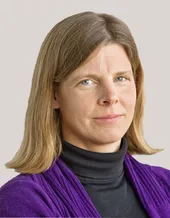
Miriam Schulte is a Professor at the University of Stuttgart’s Institute for Parallel and Distributed Systems, leading the Institute for the Simulation of Large Systems. She holds a Carl von Linde Junior Fellowship and has held academic roles since 2002, including heading the CFD Group at TUM. Her expertise spans computational fluid dynamics (CFD), high-performance computing (HPC), and numerical methods for PDE solvers. She earned her diploma (1997) and PhD (2001) in mathematics from TUM, followed by habilitation in Computer Science (2010). Her research focuses on optimizing algorithms for efficient simulation software, integrating mathematics and computer science. Key areas include fluid-structure interactions, multi-physics coupling, and scalable parallel computing. She has contributed to frameworks like Peano for adaptive Cartesian grids and developed methodologies for partitioned fluid-structure interaction simulations. Publications highlight advancements in HPC, multi-physics coupling, and parallel algorithms. Awards include the Bayerische Begabtenfoerderung (1993–1997). Her work bridges computational methods with real-world applications, emphasizing scalability and efficiency in large-scale simulations.
جستوجوی استاد و پژوهشگر
استاد راهنما، استاد دانشگاه یا پژوهشگر مناسب برای مسیر پژوهشیتان را پیدا کنید و با او ارتباط بگیرید.
نمایش ۷۶-۹۰ از ۲۴۴ استاد راهنما
اطلاعات این پروفایلها از صفحات عمومی دانشگاهها جمعآوری شده و ممکن است بهروز نباشد.
Nicolo' Abrateمشاهده پروفایل
پژوهشگر
Nicolo' Abrate is a Fixed-term Researcher at the Department of Energy (DENERG) at Polytechnic University of Turin. His scientific disciplinary sector is IIND-07/C - Nuclear Reactor Physics within Area 0009 - Industrial and Information Engineering. He serves as an invited member of both the College of Biomedical Engineering and the College of Electrical and Energy Engineering. Dr. Abrate's research focuses on nuclear reactor physics, neutron transport theory, and computational methods for nuclear applications. His work spans multiple areas including: Nuclear reactor physics and transport theory Monte Carlo methods for reactor analysis Nuclear safety and risk analysis Nuclear data uncertainty propagation Thermal-hydraulic analysis of advanced reactors Fusion reactor design and analysis His recent publications demonstrate expertise in lead-cooled fast reactors, molten salt reactors, and fusion reactor technologies, with a particular focus on computational methods and uncertainty quantification across multiple reactor systems. Dr. Abrate has received several prestigious awards: PhD Talent Award from the Italian Nuclear Association (AIN) in 2024 Annual ENEN PhD Prize from the European Nuclear Education Network Association in 2022 Outstanding Student Paper Award from the American Nuclear Society at the PHYSOR Conference in 2022 He actively supervises three PhD students working on advanced nuclear reactor technologies and serves as a course collaborator for multiple nuclear engineering courses across bachelor's, master's, and doctoral levels. His research is supported by competitive EU-funded projects including ENDURANCE, which focuses on molten salt reactor safety development and deployment (2024-2028). Dr. Abrate is a member of the NEMO Research Group within DENERG, contributing to cutting-edge research in nuclear engineering and energy systems through interdisciplinary collaboration with multiple institutions.
Michael Vynnycky is an Affiliated Professor at KTH Royal Institute of Technology , specializing in mathematical modeling and numerical analysis of industrial metallurgical processes. His research focuses on continuous casting , electromagnetic stirring , and fluid-structure interactions in manufacturing systems. Key Research Areas: Continuous casting of metals, fluid dynamics, heat transfer, computational methods (FEM, CFD), inverse Stefan problems, and oscillation mark formation. Collaborations: Frequent collaboration with researchers like H. Fredriksson, B. Glaser, and A. Safavi Nick. Applications: Steel production, die casting, redox flow batteries, and polymer electrolyte fuel cells. Recent publications highlight work on blast furnace dynamics , muon radiography for structural analysis, and asymptotic modeling of gas-solid flows. His methodologies emphasize mathematical rigor and industrial relevance , as seen in studies on macrosegregation and electromagnetic flow control. Techniques: Leverages asymptotic analysis multiphysics simulation finite element methods computational fluid dynamics boundary reconstruction algorithms experimental validation to solve complex industrial problems. Email Contact: michaelv@kth.se

Ahmad Ghassemiمشاهده پروفایل
دانشیار
Ahmad Ghassemi serves as the ONEOK Chair in Natural Gas Engineering and Management and Associate Professor of Petroleum and Geological Engineering at the University of Oklahoma's Mewbourne School of Petroleum & Geological Engineering. He directs the Natural Gas Engineering and Management Program and leads one of the largest academic reservoir rock mechanics groups in the United States. His educational background includes: B.Sc. in Geological Engineering from the University of Oklahoma M.S. in Engineering Geology from South Dakota School of Mines (1988) M.S. in Geomechanics from University of Minnesota (1990) Ph.D. in Geological Engineering from University of Oklahoma (1996) Ghassemi specializes in geomechanics for unconventional petroleum and geothermal reservoir development, with nearly 30 years of research on high-temperature reservoir rock mechanics, hydraulic fracturing, and wellbore stability. His work emphasizes thermo-poroelastic effects, induced seismicity, rock heterogeneity impacts on stimulated reservoir volume, reactive fluid flow in fractures, and constitutive modeling for chemically-active rocks. Current research integrates experimental and numerical analysis of hydraulic stimulation under in-situ stress conditions. His recent publications (2023-2025) demonstrate intense focus on the Utah FORGE geothermal project, with recurring themes in thermo-poroelastic modeling, fracture propagation in heterogeneous rocks, proppant transport dynamics, and advanced monitoring techniques using fiber optics. Key subfields include natural fracture interaction, temperature-dependent rock properties, and coupled thermal-hydraulic-mechanical-chemical processes. Notable recognition: Geothermal Resources Council Special Achievement Award (2012) for contributions to coupled process modeling Funded by federal agencies and industry for two decades, Ghassemi has led extensive research programs including experimental characterization and numerical modeling of reservoir stimulation. He has served on numerous national/international panels for geothermal systems, CO2 sequestration, and induced seismicity, including SPE Geomechanics Forums, DOE workshops, and EPA technical committees. His group maintains strong industry connections through specialized reservoir geomechanics courses. Experimental work occurs within OU's integrated geomechanics/petrophysics characterization program, while numerical efforts employ finite element and boundary element modeling of THM processes. Current activities focus on Utah FORGE stimulation modeling, proppant transport in fracture networks, and thermal cycling effects on reservoir rocks.
Marty Philippe is a Professor at Université Grenoble Alpes and a member of the Équipe Energétique within the LEGI (Laboratoire des Écoulements Géophysiques et Industriels). He collaborates extensively with the CEA-Grenoble on thermal energy intensification and hydrogen storage. His research focuses on heat storage, hydrogen storage in metal hydrides (in collaboration with the Institut Néel), and the influence of wettability on boiling heat transfer. He previously led the Master of Process Engineering at Université Joseph Fourier until 2015 and managed the Energy Team at LEGI until 2014. His work integrates Numerical simulations of boiling flows in concentrated solar plants, Hydrogen storage systems using magnesium hydride, Thermal energy storage with phase change materials (PCMs), and Experimental studies on heat transfer in microchannels and multiphase flows. Key research trends in his articles include advancements in thermal energy storage (e.g., LiBr/H₂O absorption systems), numerical modeling of phase change phenomena, and optimization of heat exchangers for industrial applications. His studies often bridge computational fluid dynamics with experimental validation, addressing challenges in renewable energy systems and thermal management. He has contributed to interdisciplinary projects, such as the development of a prototype for long-term solar heat storage and the design of hydrogen tanks with integrated heat management. His work also explores material science applications, including nanostructured MgH₂ for enhanced hydrogen absorption/desorption. Lab affiliations include the LEGI’s facilities like the tunnel hydrodynamique and soufflerie à bas niveau de turbulence , enabling experimental validation of his computational models.

Marta D'Eliaمشاهده پروفایل
استاد مدعو
Marta D'Elia is an Adjunct Professor at Stanford's Institute for Computational and Mathematical Engineering (ICME), specializing in Scientific Machine Learning and nonlocal modeling. Her research develops data-driven algorithms for multiscale/multiphysics simulations, integrating numerical analysis, uncertainty quantification, and fractional calculus. Core applications include subsurface transport, turbulence modeling, image processing, and materials science. She leads innovations in nonlocal operator regression, physics-informed neural networks, and fractional Laplacian formulations. Current work focuses on embedded machine learning for constitutive modeling, Bayesian uncertainty frameworks, and computational homogenization. D'Elia pioneered approaches for nonlocal-to-local model coupling and fractional Helmholtz decompositions, advancing simulation capabilities for anomalous transport phenomena. Her Ph.D. in Applied Mathematics (Emory University) underpins rigorous mathematical foundations, while collaborations with national labs address high-performance computing implementations. Research contributes to open-source scientific software and computational mathematics education through ICME courses on numerical methods and machine learning.
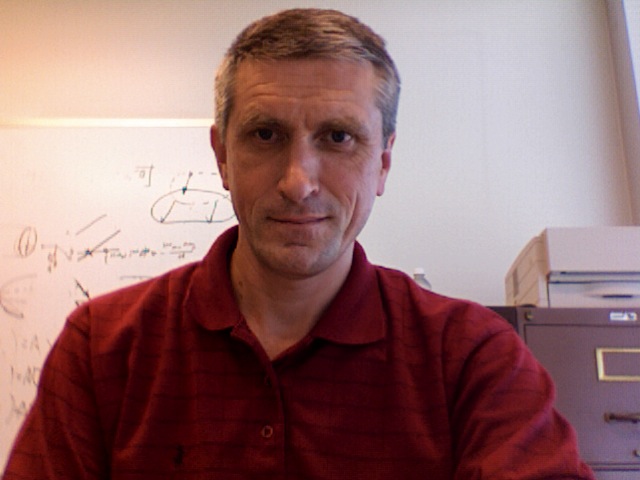
Peter D. Minev is a Professor in the Department of Mathematical and Statistical Sciences at the University of Alberta, Canada. His research specializes in computational fluid dynamics, numerical methods for partial differential equations (PDEs), and large-scale simulations for scientific and engineering problems. He develops advanced algorithms for incompressible Navier-Stokes equations, fluid-structure interaction, multiphase flows, and magnetohydrodynamics (MHD). Education: MSc and PhD from Sofia University, Bulgaria. Research Focus: Minev's work spans: High-order time-stepping schemes and splitting methods for complex PDEs Fictitious domain approaches for fluid-structure interaction Parallel algorithms for supercomputing applications Modeling of multiphysics phenomena (e.g., porous media flows, phase-field equations) He has created benchmark results for 3D lid-driven cavity flows and simulations of particle sedimentation/bubble dynamics. Publications: His recent articles (2014–2021) focus on: Efficient splitting schemes for stress/vorticity formulations High-order adaptive time integration Algorithms for spherical/heterogeneous geometries Applications in fuel cells, geophysics, and biomechanics A consistent theme is minimizing computational complexity while maintaining accuracy.
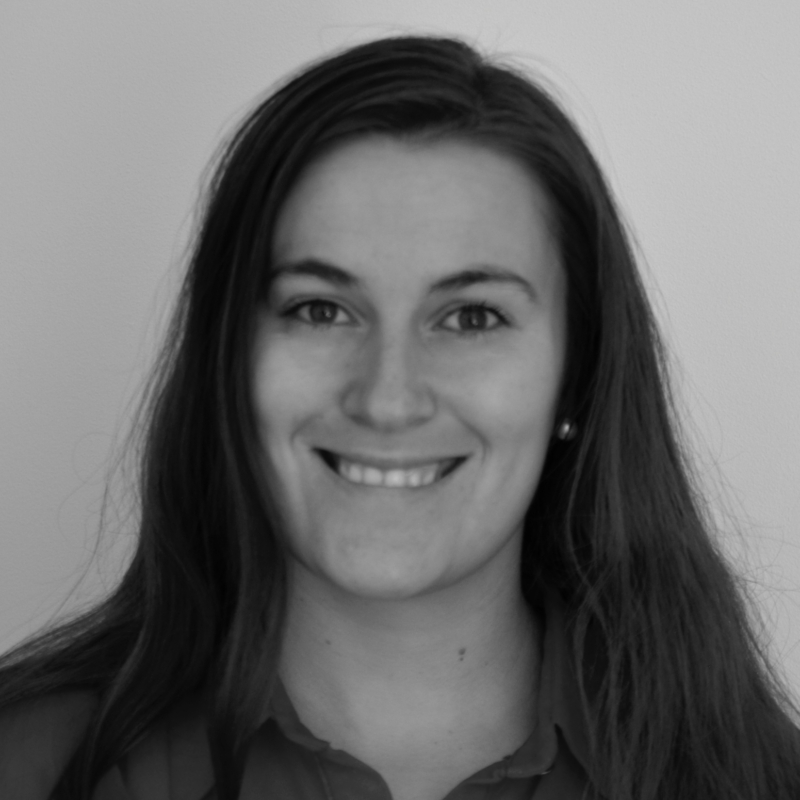
Trine Mykkeltvedt is a Researcher II at NORCE (formerly IRIS) specializing in numerical simulation and modeling of flow and transport in porous media. She earned her master's and doctorate in applied mathematics from the University of Bergen (2014) and joined NORCE in 2015. Affiliated with the "Computational Geosciences and Modelling" group Department of Energy and Technology Her research focuses on CO2 storage, hydrogen storage, and enhanced oil recovery (EOR) through reservoir modeling. Applications include carbon capture and storage (CCS), subsurface energy systems, and environmental flow dynamics. Recent publications highlight her work on convective mixing in CO2 storage (2025), pressure interference effects (2024), and hydrogen leakage quantification (2024). Her methodological expertise includes WENO schemes, unstructured grids, and multiphase flow modeling. She contributes to projects like HyPE (Hydrogen Storage) and CSSR (Sustainable Subsurface Resources) while applying computational methods to address climate challenges through subsurface energy solutions.
Dr. Sergio Felicelli is a Professor and Chair in the Department of Mechanical Engineering at the University of Akron's College of Engineering and Polymer Science. He holds a Ph.D. in Mechanical Engineering from the University of Arizona (1991) and B.S./M.S. in Nuclear Engineering from Instituto Balseiro (1985). His expertise spans Solidification Modeling, Transport Phenomena, and Computational Mechanics. Dr. Felicelli has authored pioneering works on computer modeling of freckle segregation during solidification and has directed projects on casting, additive manufacturing, and parallel simulations of microstructures. His research focuses on advancing computational methods for material processing, including dendritic solidification under microgravity conditions, multiphase flow dynamics, and large-scale parallel simulations. He has secured $15M in grants through 23 funded projects and is an ASME Fellow. His work integrates experimental validation with numerical modeling, particularly using lattice Boltzmann and phase field methods. Dr. Felicelli has led international collaborations on casting defects and serves in academic leadership roles. Education: Ph.D., Mechanical Engineering, University of Arizona, 1991 B.S./M.S., Nuclear Engineering, Instituto Balseiro, 1985 Dr. Felicelli's research trends emphasize computational modeling of materials under extreme conditions, with recent articles addressing microgravity solidification effects, multiphase interactions, and high-performance computing for microstructure prediction. His work bridges fundamental science and industrial applications in additive manufacturing and energy storage systems. Awards: ASME Fellow (prestigious honor in mechanical engineering) Grants & Funding: Over $15M secured through 23 grants, focusing on solidification science and advanced manufacturing technologies. He advises on courses such as Heat Transfer and Numerical Methods, and his lab explores cutting-edge techniques in computational materials science. Collaborations include NASA and international institutions, with a focus on solving complex industrial and aerospace material challenges.
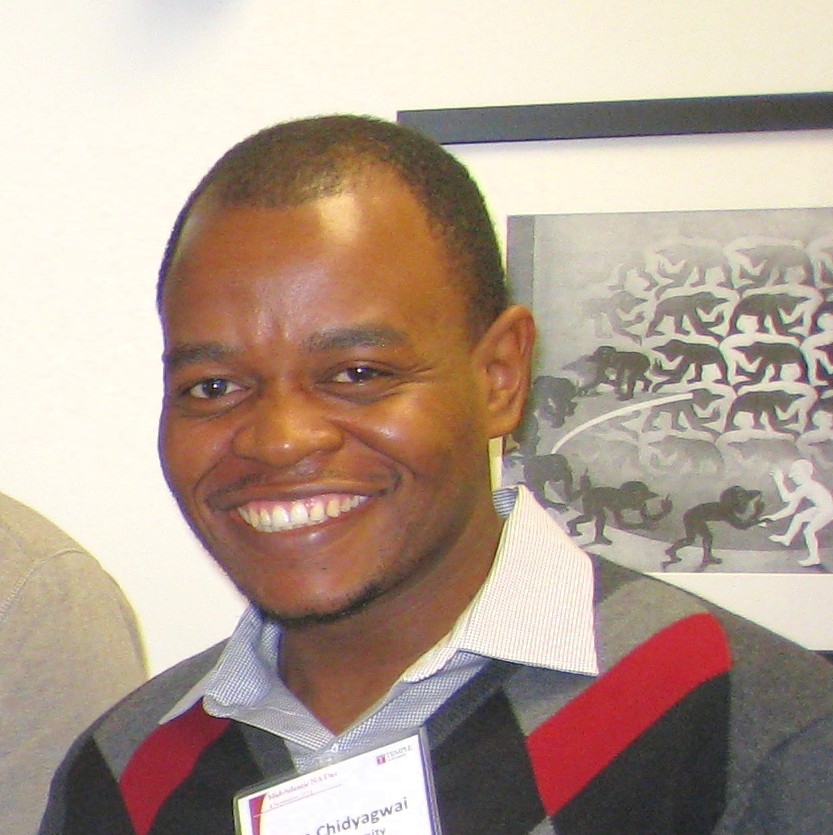
Prince Chidyagwai is an Associate Professor of Mathematics at Loyola University Maryland, specializing in Numerical Analysis and Scientific Computing. His primary affiliation is the Department of Mathematics and Statistics. He holds a Ph.D. in Computational and Applied Mathematics from Rice University (2010), an M.A. in Mathematics from the University of Pittsburgh (2006), and dual B.S./B.A. degrees in Mathematics (Honors) and Computer Science from Lafayette College (2005). His research focuses on advanced numerical methods for coupled flow systems, including discontinuous Galerkin (DG) methods, finite element methods, and finite volume techniques applied to problems in porous media, fluid dynamics, and radiative transfer. Key areas include Stokes-Darcy coupling, multiphase flow, and the development of efficient multirate and decoupling algorithms for complex systems. Chidyagwai's publications span topics such as multilevel decoupling methods, constraint preconditioning for coupled systems, and high-order schemes for radiation transport. His work emphasizes practical applications in reservoir simulation, environmental flow modeling, and industrial fluid dynamics. Despite his prolific output, no scientific awards are explicitly mentioned in the provided materials. Teaching responsibilities include courses like Ordinary Differential Equations and Programming in Mathematics. His academic contributions extend to collaborative projects at the interface of computational mathematics and engineering, though no specific lab affiliations or grant details are disclosed.
Laszlo Konozsyمشاهده پروفایل
دانشیار
- Advanced Casting Science and Technologies
- Computational Fluid Dynamics
- Computing, Simulation & Modelling
- +۹ مورد دیگر
Dr. Laszlo Konozsy is a Reader (Associate Professor) in Fluid Mechanics and Computational Engineering at the Centre for Computational Engineering Sciences, Cranfield University. He serves as Course Director for the MSc in Aerospace Computational Engineering, a top 5 UK program. His expertise spans computational fluid dynamics (CFD), turbulence modelling, and multiphysics simulations with industrial applications in aerospace, automotive, and energy systems. PhD in Engineering Sciences, University of Miskolc (2004) PhD in Computational Fluid Dynamics, Cranfield University (2006) His research focuses on anisotropic turbulence modelling , hybrid LES/RANS methods , micro/nanofluidics , and multiphysics simulations for aerospace and industrial processes. He pioneered acoustic streaming models for space applications and developed high-order numerical methods for incompressible flows. Dr. Konozsy has authored two Springer books on turbulence modelling, which received 72,000+ views on LinkedIn. He has over 100 publications, including 40+ peer-reviewed journals, and supervised 10+ PhD students. His work involves collaborations with the European Space Agency , Reaction Engines Ltd. , and Pangea Aerospace . Best Lecturer (Student Led Teaching Award) 2014/2015 Best Research Supervisor (Student Led Teaching Award) 2015/2016 9 awards for supervisory excellence Dr. Konozsy teaches 2500+ academic hours across institutions, emphasizing computational engineering and turbulence theory. He has established new educational frameworks and mentored award-winning students, including recipients of the Lord Kings Norton Medal and Vice-Chancellor's Prize .
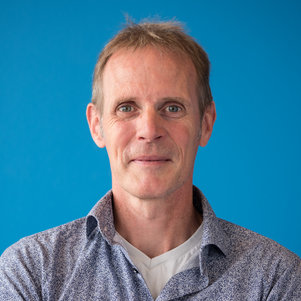
Mark Bakker is a Professor in the Water Management Department within the Civil Engineering and Geosciences faculty at Delft University of Technology. He obtained his engineering degree from the Civil Engineering Department in Delft in 1989 and his Ph.D. from the Department of Civil Engineering of the University of Minnesota in 1994. His research focuses on advanced groundwater modeling techniques and hydrological processes. His research interests include modeling groundwater dynamics with impulse response functions, analytic element modeling of multi-aquifer flow, seawater intrusion modeling, analytic element modeling of unsaturated flow, groundwater whirls, and transient groundwater flow in aquifers with periodic boundary conditions. He has developed computational tools like TimML for analytic computation of heads and velocities in aquifer systems. His recent publications reveal a strong focus on practical applications of groundwater modeling, including arsenic removal systems in Bangladesh, coastal aquifer management, and innovative measurement techniques using fiber optic cables. His work bridges theoretical hydrogeology with real-world water management challenges, particularly in developing regions and coastal environments. Groundwater modeling techniques Seawater intrusion processes Analytic element method applications Time series analysis for aquifer characterization Multi-aquifer system dynamics Unsaturated zone hydrology Professor Bakker has made significant contributions to groundwater science through both theoretical developments and practical applications, with his work appearing in leading journals such as Water Resources Research, Ground Water, and Advances in Water Resources. His research has important implications for water resource management in coastal regions and developing countries.

Florian De Vuyst is a Full Professor at the Department of Computational Engineering, University of Technology of Compiègne (UTC), where he conducts research at the Biomechanical Bioengineering Laboratory (BMBI UMR 7338). Previously affiliated with the Applied Mathematics Laboratory (LMAC), his work spans Fluid-Structure Interaction (FSI) , Scientific Machine Learning , GPU Computing , and Reduced-Order Modeling (ROM) . His research focuses on multimaterial flows , automotive crash dynamics , and bioengineering applications like microcapsule deformation in Stokes flows. His recent publications highlight machine learning integration with FSI simulations and GPU-accelerated solvers for compressible flows. Collaborations include Renault , Michelin , and ENS Paris-Saclay on projects like tsunami coastal impact modeling (DIGISCOPE EquipEx) and vehicle drag estimation . He has supervised 15+ PhD students, including Azzedine Tiba (non-intrusive ROM) and Vincent Mahy (multimaterial methods). Scientific Awards: Recipient of the Best Applied Paper Award at EGC 2008 Grants & Collaborations: Involved in CNRS Editions' interdisciplinary volume on tsunamis, ERCOFTAC symposia, and industrial partnerships
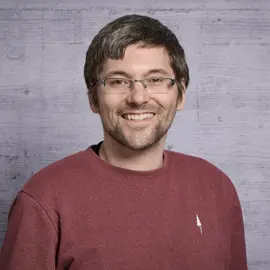
Philip Marmetمشاهده پروفایل
پژوهشگر
Dr. Philip Marmet is a Researcher and Lecturer at the Institute of Computational Physics (ICP) within the School of Engineering at Zurich University of Applied Sciences (ZHAW). His work focuses on Multiphysics and Multiscale simulations, characterization and stochastic modeling of microstructures, with particular expertise in solid oxide fuel cell electrode design. His educational background includes a PhD in Physics/Modeling and Simulation from the University of Fribourg (2019-2023), an MSc in Physics/Soft Matter Theory from the same institution (2013-2016), and an MSc in Engineering from Bern University of Applied Sciences (2011-2013). PhD in Physics / Modeling and Simulation, Solid Oxide Fuel Cells, University of Fribourg (2019-2023) MSc in Physics / Soft Matter Theory, University of Fribourg (2013-2016) MSc in Engineering BFH / Industrial Technologies, Bern University of Applied Sciences (2011-2013) BSc in Mechanical Engineering / Mechatronics, Bern University of Applied Sciences (2003-2007) Dr. Marmet's research spans Multiphysics Simulation, Multiscale Modeling, Microstructure Characterization, and Digital Materials Design. His work bridges theoretical modeling with experimental validation to optimize materials for energy applications. He has developed specialized methodologies for virtual microstructure variation and optimization of porous materials, particularly for solid oxide fuel cells and aerosol filters. His publication record shows a clear progression toward increasingly sophisticated multiscale modeling approaches, with recent work focusing on stochastic microstructure modeling using pluri-Gaussian methods. His research demonstrates strong integration of computational techniques (including GeoDict, Comsol Multiphysics, ANSYS, OpenFOAM, and Matlab/Simulink) with experimental validation. Best graduation results of 2013 "Gold", Master of Science in Engineering Dr. Marmet supervises student projects and lectures Analysis 1 and 2 for bachelor courses. His research has received funding from the Swiss Federal Office of Energy (SFOE) and Eurostars program. He has developed practical software tools including the Python app for stochastic microstructure modeling of SOC electrodes and the Characterization-app for standardized microstructure analysis, demonstrating his commitment to translating research into practical engineering solutions. His work is organized around the Digital Materials Design workflow, connecting virtual microstructure generation, automated characterization, and multiphysics simulation to enable data-driven optimization of energy materials without extensive experimental iteration.

Sebastian Deheمشاهده پروفایل
پژوهشگر
- Fluid Mechanics
- Microfluidics
- X-ray Science
- +۳ مورد دیگر
Sebastian Dehe is a Project Scientist in the Biology Department at the Linac Coherent Light Source (LCLS) within SLAC National Accelerator Laboratory, operated by Stanford University. He joined LCLS in 2022 as a research associate after completing his PhD at TU Darmstadt, bringing expertise in fluid mechanics and X-ray science to develop advanced sample delivery methods for time-resolved experiments. His educational background includes a Dr.-Ing. (PhD equivalent) in Mechanical Engineering - Nano- and Microfluidics from TU Darmstadt (2021), an M.Sc. in Mechanical and Process Engineering (2017), and a B.Sc. in Mechanical and Process Engineering (2014). These degrees provided the foundation for his current research at the intersection of engineering and physical sciences. Dr. Dehe's research focuses on electrokinetic phenomena in fluid flow and the development of droplet-on-demand sample delivery systems for X-ray experiments. His work combines theoretical understanding with practical implementation, advancing methodologies for time-resolved studies at large-scale facilities like LCLS. His expertise spans microfluidics, superhydrophobic surfaces, and X-ray based measurement techniques. His publication record demonstrates progression from fundamental fluid dynamics to applied X-ray science, with recent work focusing on electrostatically forced Faraday waves, oil-water interface deformation, and wetting phenomena on hierarchical surfaces. These studies contribute to both theoretical understanding and practical applications in sample delivery for X-ray experiments. Dr. Dehe possesses extensive technical capabilities including microfluidic equipment control, high-speed imaging (brightfield and fluorescence), X-ray scattering and spectroscopy techniques, and computational modeling using COMSOL Multiphysics. His skills enable him to bridge theoretical concepts with experimental implementation in complex research environments.