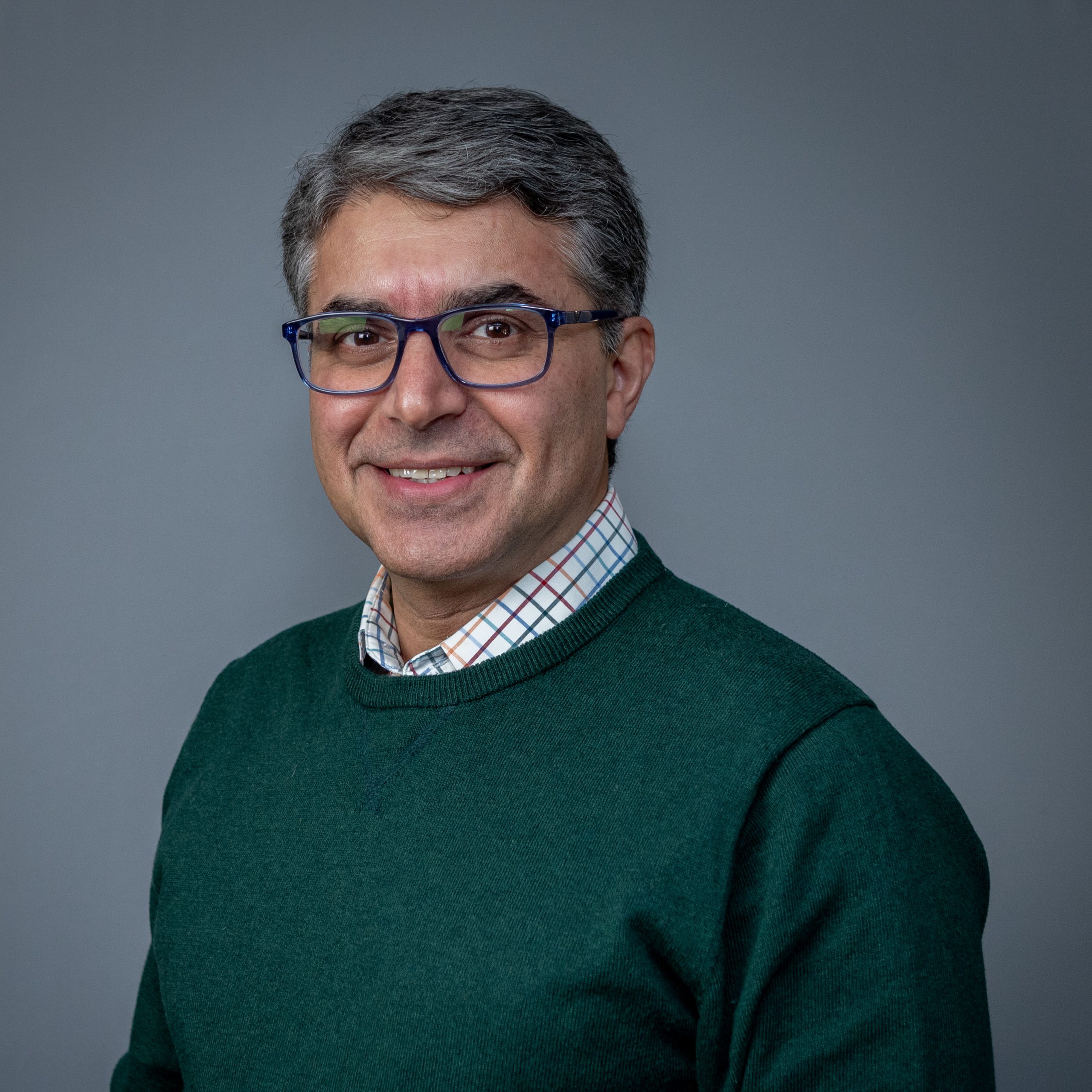
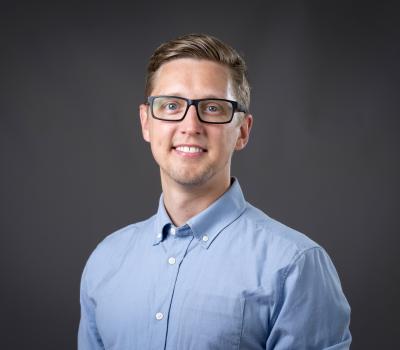
B. V. Rathish Kumar is a Professor at the Department of Mathematics and Statistics , Indian Institute of Technology Kanpur, with a PhD from SSSIHL, Prasanthinilayam. His research spans Numerical Analysis , Computational Fluid Dynamics , Finite Element Methods , and Biomedical Image Processing . Education: PhD in Applied Mathematics (SSSIHL, Prasanthinilayam) His research interests include Wavelet Methods for PDEs , Cardiac Electrophysiology Modeling , Convection in Porous Media , and AI/ML for Differential Equations . He has pioneered courses like Finite Element Error Estimation and AI/ML Methods for PDEs . His recent publications focus on convection dynamics , image processing , and singularly perturbed equations , contributing to fields like Biomedical Engineering and Thermal Systems . Scientific Awards: Fellow of Indian Association of Mathematical Modelling and Simulation (2018) Fellow of National Academy of Sciences (2009) Erasmus Mundus Fellowship (2004) University Gold Medal (1987)
Bojan Niceno serves as Lecturer at ETH Zurich and leads the Computational Fluid Dynamics group at Paul Scherrer Institute. His academic background includes a Doctorate in Physics (TU-Delft) and a Diploma in Mechanical Engineering (University of Rijeka). Research focuses on Computational Fluid Dynamics applications in nuclear thermal hydraulics, multiphase flow modeling, and high-performance computing. Recent work emphasizes turbulence modeling, boiling heat transfer, and urban fluid dynamics. Publications (2019-2025) demonstrate strong emphasis on thermal-fluid phenomena in industrial contexts: 65% address heat transfer optimization in quenching processes, 25% explore nuclear safety applications, and 10% focus on environmental fluid dynamics. Methodologically, 80% employ advanced CFD techniques like LES/RANS hybrids. Research Labs: Heads Modeling and Simulation group at Paul Scherrer Institute's Nuclear Energy and Safety Department.
Dr. Reza Sheikhi is a Professor In Residence and Associate Director at the School of Mechanical, Aerospace and Manufacturing Engineering at the University of Connecticut. He joined the Mechanical Engineering Department in 2018 and brings extensive expertise in computational fluid dynamics, turbulence modeling, and combustion simulation. Dr. Sheikhi's educational background includes: Ph.D. in Mechanical Engineering from University of Pittsburgh M.S. in Mechanical Engineering from State University of New York at Buffalo B.S. in Mechanical Engineering from Sharif University of Technology, Iran Dr. Sheikhi's research focuses on computational modeling of complex fluid flows and combustion processes. His work integrates advanced numerical methods with physics-based modeling to address challenges in turbulent reacting flows, particularly under extreme conditions such as supercritical pressures. He has made significant contributions to the development of filtered density function methods for large eddy simulation, entropy transport analysis in turbulent combustion, and the application of machine learning techniques to accelerate chemical kinetics computations. His research has broad applications in energy systems, propulsion, and environmental technologies. Analysis of Dr. Sheikhi's recent publications reveals a strong trend toward integrating machine learning with traditional computational fluid dynamics methods. His work increasingly focuses on developing data-driven frameworks for computationally efficient integration of chemical kinetics, applying deep learning to filtered density functions, and assessing neural ordinary differential equations for combustion simulations. These innovations address the longstanding challenge of balancing computational efficiency with accuracy in modeling complex turbulent reacting flows. Dr. Sheikhi has received significant recognition for his contributions to the field: Students Speak Outstanding Teachers of the College of Engineering at Northeastern University Fellow of the American Society of Mechanical Engineers (ASME) Associate Fellow of the American Institute of Aeronautics and Astronautics (AIAA) Dr. Sheikhi serves as an Associate Editor for the ASME Journal of Energy Resources Technology and is an active member of several professional organizations including the American Physical Society (APS), American Society for Engineering Education (ASEE), and the Combustion Institute. His academic career includes previous service as an Assistant Professor of Mechanical Engineering at Northeastern University before joining the University of Connecticut in 2018. Dr. Sheikhi's research group at UConn focuses on developing advanced computational methodologies for turbulent reacting flows, with particular emphasis on entropy generation analysis, supercritical fluid dynamics, and the integration of machine learning techniques with traditional CFD approaches. The team collaborates with researchers across multiple disciplines to address complex challenges in energy conversion systems and propulsion technologies.
Mina Karimi is a Postdoctoral Scholar Research Associate in the Department of Mechanical and Civil Engineering at California Institute of Technology (Caltech). She is part of the Bhattacharya group, advised by Professor Kaushik Bhattacharya. Her research focuses on computational mechanics, poromechanics, and Bayesian inference applied to porous media systems. Key areas include reactive flow modeling, multiscale simulations, and data-driven approaches for subsurface engineering challenges. Her work integrates advanced computational methods with geomechanical and materials science problems, emphasizing energy systems and environmental applications. Recent studies explore carbon sequestration mechanisms, chemo-poro-mechanical coupling, and high-dimensional parameter estimation using Bayesian frameworks. She also investigates crack-healing phenomena in shape memory alloy composites and develops accelerated micromechanical models for solute transport. Publications span topics from machine learning-enhanced groundwater modeling to Hessian-informed sampling techniques for high-dimensional inverse problems. Her research bridges theoretical developments with practical applications in subsurface energy storage, geological carbon sequestration, and material behavior under extreme conditions. Advising is conducted under the mentorship of Prof. Bhattacharya, with affiliations to the Resnick Sustainability Institute at Caltech. Current efforts emphasize computational tools for poromechanics and uncertainty quantification in complex multiphase systems.
Kyle E. Niemeyer is an Associate Professor at Oregon State University's School of Mechanical, Industrial, and Manufacturing Engineering. He leads the Niemeyer Research Group focused on computational modeling of combustion, reactive flows, and environmental systems. He also serves as Associate Head for Undergraduate Programs and Associate Editor-in-Chief of the Journal of Open Source Software (JOSS). Ph.D. in Mechanical Engineering, Case Western Reserve University (2013) M.S. and B.S. in Aerospace Engineering, Case Western Reserve University (2010, 2009) His research spans combustion modeling, GPU acceleration for chemical kinetics, ocean biogeochemical simulations, and open science practices. Key contributions include: Developing open-source tools like pyMARS and MC/DC Advancing GPU-based chemical kinetics integration algorithms Modeling smoldering combustion in biomass fuels Applying combustion-derived model reduction to ocean systems Recent publications focus on exascale Monte Carlo neutron transport, wildfire fuel modeling, and Cantera software optimization. Awards include AAAS Science & Technology Policy Fellowship and Welty Faculty Fellowship. AAAS Science & Technology Policy Fellow (2022–2023) Welty Faculty Fellow (2021–2024) Better Scientific Software Fellow (2019) His group actively engages in open-source software development and computational methods research for energy, aerospace, and environmental applications.
Dr. Turaj Ashuri is an Assistant Dean of Research Initiatives and Graduate Programs (interim) at the College of Engineering and Engineering Technology, Kennesaw State University. He previously held faculty positions at the University of Texas at Dallas and Arkansas Tech University, where he served in leadership roles such as Director of the Interdisciplinary Research Center and Graduate Program Director. Before academia, he accumulated over a decade of industry experience as a Structural Design Engineer, Research Engineer, and R&D Project Manager. PhD, Aerospace Engineering, Delft University of Technology MSc, Aerospace Engineering, Sharif University of Technology BSc, Mechanical Engineering, Tehran Azad University Postdoctoral Research Fellowship, University of Michigan - Ann Arbor Dr. Ashuri's research focuses on Multiphysics Modeling and Design Optimization , spanning theoretical and applied domains. His work develops numerical methods for unsteady flow fields, nonlinear composite structures, and machine learning algorithms, while applying these techniques to soft robots, unmanned aerial vehicles, and renewable energy systems. He actively explores Uncertainty Quantification and Optimal Control in energy systems, with particular emphasis on wind turbine technology and biomedical soft robotics. His recent publications demonstrate expertise in Wind Farm Optimization (2016-2018), Soft Robotics (2020), and Hydrogen Fuel Cell Vehicles (2019). These works intersect Computational Design , Control Theory , and Renewable Energy Systems , reflecting his multidisciplinary approach. Scientific recognitions include: Associate Fellow, American Institute of Aeronautics and Astronautics (AIAA) Chair, 2023 AIAA Aviation Forum Discipline Committee Dr. Ashuri's lab at KSU conducts research in Multidisciplinary Design Optimization and Machine Learning applications for intelligent mechanical systems. The lab receives funding from NASA and NIH , supporting work on soft robots, wind turbine engineering, and energy systems optimization.
Po-Ya Abel Chuang is a Professor and Vice Chair of Mechanical Engineering at the University of California, Merced. He leads the Thermal and Electrochemical Energy Laboratory (TEEL), focusing on advanced energy systems, transportation, and thermal management. Education: Executive MBA (2009, Rochester Institute of Technology), Ph.D. (2003, Pennsylvania State University), M.S. (1997, National Cheng Kung University), B.S. (1995, National Cheng Kung University) His research spans PEM fuel cells , thermal management , and electrochemical energy storage , with recent studies on lithium-ion batteries, anion exchange membranes, and CO2 electrolysis. Collaborations include KIT (Germany), University of the Philippines Diliman, and OCOchem. Key article trends reveal expertise in two-phase transport phenomena , catalyst layer optimization , and neutron radiography diagnostics . His work addresses fuel cell durability , electrolyzer design , and sustainable hydrogen production . Awards: KIT International Excellence Grant Professor Chuang advises Ph.D. students like Joy Marie Mora and Nitul Kakati, while managing the TEEL lab (SRE 316, 360). His DOE-funded projects and industry partnerships emphasize scalable energy solutions.
Francesco Creta serves as Associate Professor in the Department of Aeronautical and Space Engineering at Sapienza University of Rome's School of Engineering. His research focuses on advanced combustion phenomena with emphasis on hydrogen and ammonia fuels for decarbonization applications. His primary research interests include thermodynamic instability in premixed flames , turbulent combustion modeling , and rocket propulsion systems . Creta investigates fundamental flame behaviors through direct numerical simulation (DNS) and develops data-driven models for thermodiffusively unstable flames, particularly examining hydrogen-ammonia mixtures for sustainable energy applications. His work bridges theoretical combustion physics with practical engineering solutions for gas turbines and liquid rocket engines. Analysis of his 15 most recent publications reveals a strong trend toward hydrogen-ammonia combustion for decarbonization, with significant focus on flame instability mechanisms (particularly Darrieus-Landau and thermodiffusive effects), data-driven modeling approaches , and rocket engine applications . His research increasingly integrates machine learning techniques with traditional combustion modeling to address complex flame behaviors under high-pressure conditions. Creta maintains active research collaborations with leading combustion scientists across Europe, evidenced by co-authorship on high-impact publications in Proceedings of the Combustion Institute , Combustion and Flame , and Physics of Fluids . His work receives consistent recognition through publication in top combustion venues and presentation at major international conferences including the European Combustion Meeting and AIAA SciTech Forum. His research group conducts advanced numerical simulations of combustion systems, with particular expertise in liquid rocket engine modeling, transcritical flows, and flame instability analysis. Current projects focus on enabling hydrogen and ammonia combustion for gas turbine retrofitting and next-generation propulsion systems, addressing critical challenges in flame stability and pollutant formation.
Borello Domenico is a Full Professor in the Department of Industrial and Environmental Engineering at Sapienza University of Rome. His research focuses on renewable energy systems, fluid dynamics, combustion engineering, and environmental sustainability. He has contributed to advancements in hydrogen production, ammonia combustion, and sustainable waste-to-energy technologies through experimental and numerical methodologies. His work integrates computational fluid dynamics (CFD) and machine learning to optimize energy systems and reduce emissions. Key research areas include green hydrogen production via floating photovoltaic systems, cavitation prediction in hydrodynamic systems, and techno-economic analysis of energy transport. He has developed novel approaches for turbine design, compressor erosion assessment, and biofuel gasification processes. His studies address both technical challenges and policy implications of decarbonizing transportation and industrial sectors. Borello has collaborated on projects involving microbial fuel cells for environmental remediation, chemical looping cycles for carbon capture, and hybrid powertrain efficiency testing. His research emphasizes real-world applications, such as railway energy consumption modeling and microgrid integration of renewables.
Andrea Barbarulo is a researcher at the University of Paris-Saclay Mechanics Laboratory, specializing in computational mechanics and acoustics. His work focuses on advanced numerical methods such as Proper Generalized Decomposition (PGD), Variational Theory of Complex Rays (VTCR), and finite element methodologies applied to vibration analysis, acoustic modeling, and additive manufacturing. He has pioneered developments in mid-frequency vibration modeling for railway systems and 3D-printed synthetic materials. Key Expertise: PGD-based model order reduction, vibro-acoustic coupling, ultrasonic imaging, and computational material science Lab Affiliation: Paris-Saclay Mechanics Laboratory His research addresses challenges in railway track dynamics, noise propagation, and medical applications of 3D printing through innovative numerical frameworks. Recent work includes open-source software (pyTVRC) for medium-frequency simulations and high-fidelity models for patient-specific anatomy replication. Collaborative projects span disciplines including aeroelastic systems, laser powder bed fusion, and material characterization for biomedical applications. Current focus areas involve advancing digital twin technologies for additive manufacturing and improving accuracy in transient thermal simulations.
Dr. Amir Gharavi serves as a Lecturer (Teaching) in Energy and Data Analytics at University College London's Bartlett School of Environment, Energy, and Resources (BSEER), where he also directs the Energy System Data Analytics (ESDA) program. His academic journey spans petroleum engineering and data science, reflecting his interdisciplinary expertise. Education: PhD in Artificial Intelligence applications for oil reservoirs (University of Portsmouth) MSc in Petroleum Engineering BSc in Petroleum Engineering BSc in Genetics Dr. Gharavi's research bridges traditional energy systems with cutting-edge data analytics, focusing on four interconnected domains: Artificial Intelligence (deep learning for predictive modeling and evolutionary computation), Energy Transition (low-carbon strategies and socio-economic impacts), Renewable Energy (grid integration and lifecycle analysis), and Petroleum Reservoirs (AI-enhanced characterization and enhanced recovery techniques). His work demonstrates how machine learning transforms both conventional and renewable energy sectors. His publication portfolio reveals a clear trajectory from petroleum reservoir analytics toward broader energy system applications, with recent 2024 works expanding into collision avoidance systems - indicating strategic diversification into AI safety applications while maintaining core energy focus. This evolution showcases his ability to transfer domain expertise across technical contexts. As an educator, Dr. Gharavi leads the Energy Data Analytics and Advanced Machine Learning modules, leveraging industry experience from Halliburton and Baker Hughes to create practice-oriented curricula. His multidisciplinary background enables unique pedagogical approaches that connect petroleum engineering fundamentals with contemporary data science techniques. Dr. Gharavi maintains active industry connections through his previous roles as Data Scientist at major energy firms, though current lab affiliations aren't specified in available materials. His research direction suggests growing emphasis on AI applications for energy transition challenges, particularly in system optimization and sustainability metrics.
Methma Rajamuni is an Associate Lecturer at the School of Science, UNSW Canberra , with prior roles as Research Fellow (2023-2025) and Assistant Lecturer (2025-present). She holds a PhD in Mechanical Engineering from Monash University, an MSc in Applied Mathematics from Texas Tech University, and a BSc in Engineering from the University of Peradeniya. Her research spans computational fluid dynamics, fluid-structure interaction, and ember storm dynamics during bushfires, with expertise in numerical methods like immersed boundary and lattice Boltzmann techniques. Education: PhD, Mechanical Engineering (Monash University) MSc by Research, Applied Mathematics (Texas Tech University, USA) BSc, Engineering (University of Peradeniya, Sri Lanka) Research Interests: Methma specializes in fluid-structure interactions , particularly vortex-induced vibrations of bluff bodies and ember storm modeling in wildland-urban interfaces. Her work integrates bio-inspired insights with advanced numerical methods (immersed boundary, spectral element) to solve environmental and mechanical challenges. She has developed stable computational techniques for simulating complex systems like bushfire embers and vibrating cylinders. Recent Publications show a focus on boiling heat transfer , FSI acoustics , and microchannel cooling . Key trends include optimizing heat transfer via flow-induced vibrations and modeling ember storm dynamics using lattice Boltzmann methods. Scientific Awards: 2023: NCI Adaptor Allocation Grant ($12K) and UNSW Seed Funding ($27K) 2018: Monash Engineering Women's Leadership Award 2014: 1st Place in Annual Graduate Student Poster Competition 2010: Manamperi Engineering Award (Sri Lanka) Teaching & Supervision: Methma lectures in Rotorcraft Engineering , Fluid Mechanics , and Engineering Mathematics . She supervises PhD candidate Mohammed Ibrahim on microchannel boiling enhancement projects.
SeonHong Na is an Adjunct Assistant Professor in the Department of Civil Engineering at McMaster University . Their research focuses on computational geomechanics, phase-field modeling, and multiphysics simulations of geomaterials. Key research areas include permafrost thawing, chemo-mechanical degradation of soils, and fracture mechanics in porous media. Recent work involves thermodynamic constitutive modeling, ice-rich material analysis, and machine learning applications for path-dependent plasticity. Notable trends in their publications include: Development of coupled thermo-hydro-mechanical frameworks for geotechnical simulations Phase-field models for rock salt, crystalline rocks, and chemo-assisted cracking Integration of machine learning with finite element methods for heterogeneous materials Teaching activities include courses on foundation engineering, geotechnical engineering, and computational methods in civil engineering.
Dr. Travis Mitchell is a Lecturer at the School of Mechanical and Mining Engineering , The University of Queensland , and an affiliate of the Centre for Multiscale Energy Systems . He holds a PhD in Multiphase Computational Fluid Dynamics and dual degrees in Mechanical Engineering (BE Hons) and Mathematics (BSc). Education: PhD in Multiphase Computational Fluid Dynamics, The University of Queensland BE (Hons) in Mechanical Engineering, The University of Queensland BSc in Mathematics, The University of Queensland Research Interests focus on numerical modeling of multiphase fluid dynamics in porous media , with applications spanning CO2 electrolysis , hydrogen production via methane pyrolysis , biomedical fluid-structure interaction , and geomechanical fracture analysis . His methodological expertise includes Lattice Boltzmann techniques and high-performance computing . Recent Work Trends encompass multiphase transport in fractured media , gas diffusion electrode optimization , fiber-based air filter design , and thermocapillary flow modeling , reflecting his interdisciplinary impact in energy, health, and resource engineering. Scientific Recognition includes the ICMMES-CSRC Award for multiphase lattice Boltzmann research and an EAIT Citation for Excellence in Student Learning (2023) . Teaching Portfolio includes coordination of MECH2700: Computational Engineering and Data Analysis and lectures in MECH3780: Computational Mechanics and MECH6480: Computational Fluid Dynamics .
Prof. Gil Marom is an Associate Professor at the School of Mechanical Engineering within Tel Aviv University's Iby and Aladar Fleischman Faculty of Engineering. He leads the Marom Research Group, focusing on computational multiphysics models and biomechanics to address cardiovascular diseases, spinal cord injuries, and innovative ventilation systems. His research spans: Cardiovascular biomechanics (heart valves, circulatory systems) Computational fluid dynamics and fluid-structure interaction Spinal cord injury mechanisms Biomimetic ventilation systems inspired by biological transport Current projects include mitral valve treatment optimization, placental hemodynamics modeling, and bioinspired ventilation for indoor spaces. Prof. Marom's publications demonstrate consistent focus on computational biomechanics with recent emphasis on: Cardiac device optimization (ventricular expanders, annuloplasty devices) Patient-specific modeling of valvular pathologies Multiphysics approaches to spinal cord injuries Translational applications of fluid dynamics in medical contexts He advises numerous graduate students on projects including: Mitral valve biomechanics Cerebral aneurysm morphology Placental hemodynamics Spinal cord injury multiphysics Biomimetic ventilation systems His laboratory develops advanced computational frameworks to investigate disease mechanisms and therapeutic innovations.