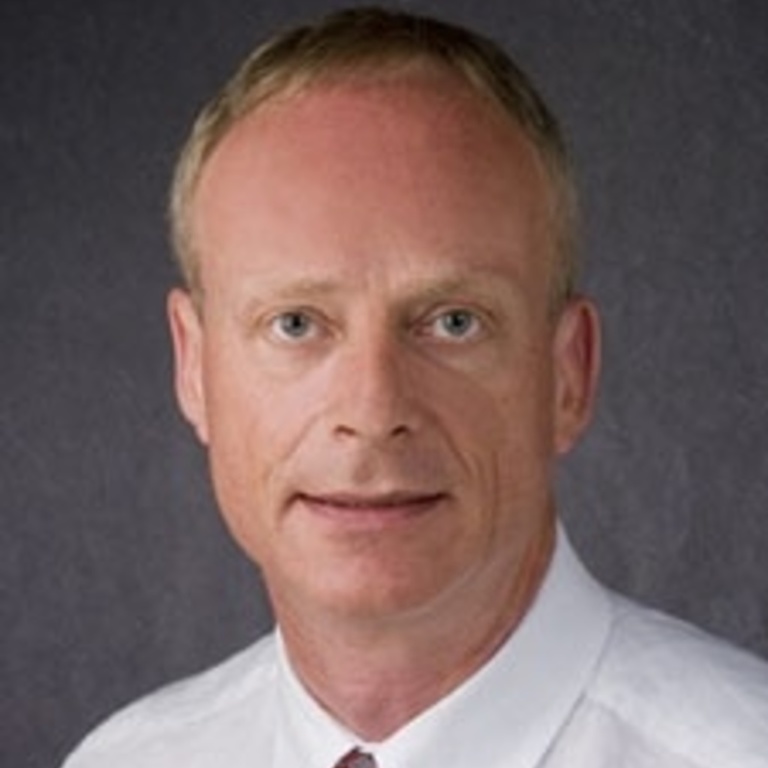
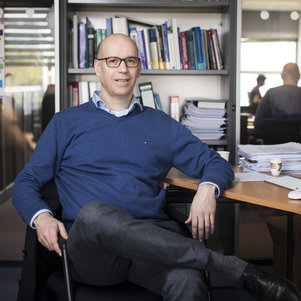
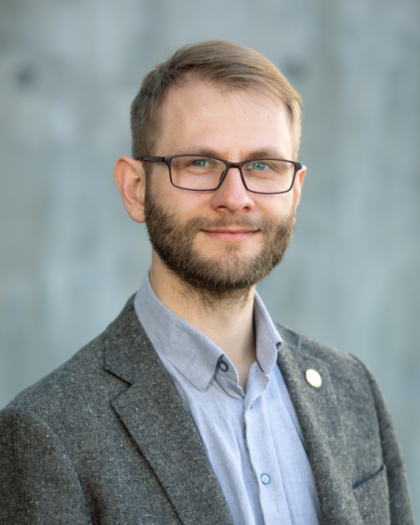
Srikanth Derebail Muralidhar is a researcher at the Laboratory of Fluid Mechanics and Acoustics (LMFA) in École Centrale de Lyon, France. His work focuses on turbulence modeling, flow instabilities, multiphase flows, and numerical simulations in fluid mechanics. Affiliation: LMFA - UMR 5509, École Centrale de Lyon Contact: srikanth.derebail-muralidhar@ec-lyon.fr Research Interests include: Geophysical fluid dynamics and astrophysical flows Magnetohydrodynamics (MHD), plasmas, and superfluids Particle transport in complex flows Multiscale and multiphysics fluid dynamics Experimental and numerical turbulence studies
Academic Profile Dr. Adnan Sufian is a Senior Lecturer in Geotechnical Engineering at the School of Civil & Environmental Engineering, University of New South Wales (UNSW Sydney). He holds a PhD (2017) and BE (2012) in Civil Engineering from UNSW, with research visits to MIT. Prior academic roles include positions at Imperial College London and the University of Queensland. He also has industry experience at SMEC Australia on major infrastructure projects. Research Focus Dr. Sufian specializes in multi-scale mechanics of granular materials, investigating fluid-particle interactions through computational (DEM, CFD-DEM), experimental, and theoretical approaches. His work addresses geotechnical challenges including erosion, landslides, and contaminant transport, with applications in infrastructure, environmental management, and industrial processes. Current projects focus on internal erosion in dams, particle migration, and climate-resilient infrastructure. Publications & Trends Recent articles (2019-2025) demonstrate strong emphasis on granular material behavior under hydraulic/mechanical stresses, featuring advanced computational techniques like pore-network modeling and coupled CFD-DEM. Key themes include internal erosion mechanisms, filtration dynamics, soil-fluid interactions, and microstructural analysis. Publications consistently appear in top geotechnical journals including Geotechnique and Computers and Geotechnics . Awards & Recognition Best Paper Award (Early Career Researcher), Australasian Conference on Computational Mechanics (2019) Best Paper Award (Postgraduate Student), Australasian Conference on Computational Mechanics (2015) UNSW Geotechnical Discipline Prize (2011) Grants & Projects ARC Discovery Early Career Researcher Award (2024-2026): Predicting internal erosion in dams using real-time coupled experiments ARC Early Career Industry Fellowship (2023-2026): Safeguarding dams/levees from internal erosion NSERC Alliance Award (2023-2024): Internal erosion in hydroelectric dams (with Zheng) Research Leadership Supervises HDR projects on transport processes in granular media, particle shape effects on erosion, and flood-impacted infrastructure. Collaborates with physicists and mathematicians to study emergent granular phenomena. Co-organizes the European Working Group on Internal Erosion Symposium and holds memberships in the Australian Geomechanics Society and Engineers Australia.
Christoph Beckermann is the University of Iowa Foundation Distinguished Professor of Mechanical Engineering and Director of the Solidification Laboratory at the University of Iowa's College of Engineering. He has been a faculty member since 1987, progressing from Assistant to full Professor in 1996, and holds one of the highest academic honors at the university. His educational background includes a Vordiplom from the University of Hannover and M.S. and Ph.D. degrees in Mechanical Engineering from Purdue University. He served in the German military before pursuing higher education. Beckermann's research focuses on solidification science, metal casting, thermal and fluid sciences , with strong emphasis on computational modeling of multiphase systems, heat transfer, and materials processing. His work spans from fundamental phase-field simulations to industrial-scale casting and additive manufacturing. He integrates numerical methods with experimental validation to understand microstructure evolution, inclusion dynamics, and macrosegregation. The 15 most recent publications reflect a consistent trend in multiscale and multiphysics modeling of solidification phenomena, combining phase-field methods with fluid dynamics, thermomechanics, and granular flow. Keywords include solidification, materials processing, computational modeling, and transport phenomena, with subfields ranging from dendritic growth to residual stress prediction in additive manufacturing. Fulbright Award (1982–84) NSF Presidential Young Investigator Award (1989) Bruce Chalmers Award, TMS (2010) Heat Transfer Memorial Award, ASME (2017) Nagy El-Kaddah Award, TMS (2021) Founders' Choice Award, SFSA (2022) Beckermann has supervised 25 Ph.D. and 23 M.S. students , along with 12 postdocs and 20 visiting scholars. He has secured approximately $20 million in external research funding from federal and industrial sources. His editorial roles include long-term service on Metallurgical and Materials Transactions and the International Journal of Cast Metals Research . He has delivered over 60 invited seminars and 13 plenary lectures globally. He leads the Solidification Laboratory at the University of Iowa, which focuses on computational and experimental studies of solidification processes. The lab develops advanced models for inclusion transport, grain motion, and macrosegregation, with applications in steel casting, additive manufacturing, and aerospace materials.
Danny Lathouwers is an Associate Professor at the Delft University of Technology within the Faculty of Applied Sciences and the Department of Radiation Science and Technology . His research focuses on computational techniques for nuclear reactor physics and proton therapy, particularly using adaptive numerical methods to simulate reactor systems and charged particle transport for high-quality dose distribution in patient geometries. Academic Affiliation : Delft University of Technology, Faculty of Applied Sciences, Department of Radiation Science and Technology Contact : Mekelweg 15, 2629JB Delft, The Netherlands | +31 15 278 3148 | d.lathouwers@tudelft.nl His research areas include: Nuclear Reactor Physics : Numerical methods, modal analysis of neutron transport, multi-physics simulations for Generation-IV reactors Proton Therapy : Deterministic dose calculation, uncertainty quantification, robust treatment planning Adaptive Radiation Transport : Spatial/angular refinement techniques, discontinuous Galerkin methods Recent publications highlight his expertise in: Proton therapy range verification systems Deterministic low-rank transport methods Deep learning applications for anatomical variability Multiphysics reactor modeling He actively supervises MSc and BSc student projects in computational reactor physics and proton therapy.
Amirfarhang Mehdizadeh is an Associate Professor in the Department of Mechanical Engineering at the University of Missouri–Kansas City (UMKC), School of Science and Engineering. He leads the Mehdizadeh Research Group, which focuses on fundamental and applied research in fluid dynamics, heat transfer, and computational modeling. Education: Dr.-Ing. in Mechanical Engineering, Darmstadt University of Technology, Germany, 2010 M.S. in Computational Mechanical and Process Engineering, Darmstadt University of Technology, Germany, 2007 B.S. in Mechanical Engineering, University of Tehran, Iran, 2002 His research interests include Advanced Turbulence Modeling, Turbulent Heat Transfer, Multi-Phase Flows, Turbulent Dispersed Flows, and Stochastic Systems . His group applies computational and theoretical methods to study high Reynolds number turbulent flows, deposition dynamics, and ERG signal modeling. A significant focus is on developing reliable, computationally efficient models for non-isothermal turbulent flows and machine learning–based approaches for medical signal analysis. The recent publications reflect a strong trend in turbulence modeling (especially hybrid RANS-LES and SAS), thermal field prediction in shear flows, nanofluid heat transfer, and interdisciplinary applications in medical CFD and microreactors . His work bridges mechanical, chemical, and biomedical engineering domains. Scientific Awards: American Chemical Society/Petroleum Research Fund New Directions Award (2020) ONR Summer Faculty Research Fellowship (2017) DFG Research Fellowship at Penn State (2013–2015) Marie Curie Research Award (2012) Dr. Mehdizadeh has advised several graduate students, including PhD candidates Rohit Saini and Mohan Kumar Gajendran , and has successfully mentored alumni such as Dr. Matthias Ziefuss (PhD, 2020) and Vincent Kent (MSc, 2021). He has secured competitive research grants, including from the ONR and ACS-PRF. His laboratory, the Mehdizadeh Research Group, operates at the intersection of theoretical fluid mechanics, high-performance computing, and applied machine learning.
Anne Marie Elisabeth Gosset is a faculty member at the Universidade da Coruña, affiliated with the Ferrol Engineering Polytechnic University College, Department of Naval and Industrial Engineering. Her expertise lies in Fluid Mechanics, with a strong focus on computational modeling and industrial applications. Research Interests: Her research spans computational fluid dynamics (CFD), multiphysics modeling, cavitation, industrial drying processes, 3D printing, galvanization, and hydrodynamic analysis. She applies numerical methods to optimize industrial systems such as wood drying kilns, control valves, and coating processes. Publications and Research Trends: Her recent work emphasizes the application of CFD in both academic and industrial contexts, particularly in energy efficiency, process optimization, and fluid-structure interactions. Collaborative research with institutions like ONERA, ESA, and IVKDF highlights her international engagement in fluid dynamics and aerospace applications. Scientific Awards: No awards explicitly mentioned. Advising and Grants: She has supervised multiple master's and final-year theses, including David Barreiro Villaverde’s dissertation. She has been involved in numerous research projects funded by the Ministerio de Ciencia e Innovación, Xunta de Galicia, ESA, Arcelor-Mittal, and others, often as a principal investigator or co-investigator. Labs and Teams: She is associated with research groups at UDC and has collaborated with the CITIC research center and international institutions like the Institut von Karman de Dynamique des Fluides (IVKDF), reflecting her integration into both national and international research networks.
Xincai Cato Tan is a Senior Research Fellow at De Montfort University, affiliated with the School of Computer Science and Informatics within the Faculty of Computing, Engineering and Media. He is a member of the De Montfort University Interdisciplinary Group in Intelligent Transport Systems (DIGITS), contributing to multidisciplinary engineering research. His academic foundation includes a Ph.D. in Mechanical Engineering from the Technical University of Denmark, an M.Phil. in Materials Engineering, and a B.Eng. (Hons.) in Materials Engineering from Chinese institutions. He also holds a PGCertHE from DMU, reflecting his commitment to teaching excellence. His research interests are centered on Finite Element Analysis , Multiphysics Simulation , Tribology , Materials Processing , and Engineering Design . He has developed innovative life cycle cost models adopted by Airbus and QinetiQ, and numerical analysis tools utilized by Shell. His work bridges industrial application and academic research, focusing on cost-efficiency, energy absorption in composites, and friction modeling in manufacturing processes. The 15 most recent publications highlight a consistent focus on lifecycle costing , composite materials , and computational modeling in aerospace and mechanical systems. They span disciplines including mechanical engineering, materials science, and systems engineering, with recurring themes in sustainability, cost-benefit analysis, and structural performance under impact. The work demonstrates strong international collaboration, especially between European and Asian institutions. Dr. Tan has served as a referee for numerous high-impact journals such as Computational Materials Science , Journal of Tribology , and Journal of Materials Processing Technology . He was a member of the American Institute of Aeronautics and Astronautics (2007–2009) and the Chinese Materials Research Society (1994–1999). He has taught modules in Finite Element Analysis , Product Development , Materials Processing , and Numerical Analysis , contributing to both undergraduate and postgraduate education. While no formal students are listed, his leadership in research projects and EU-funded networks indicates a supervisory and mentoring role. He has led international research initiatives, including EU projects fostering Euro-Asia collaboration in engineering education and design. Dr. Tan is actively involved in the De Montfort University Interdisciplinary Group in Intelligent Transport Systems (DIGITS) , where his expertise in multiphysics and lifecycle modeling supports smart and sustainable transport solutions. His work continues to influence both academic research and industrial practices in materials and systems engineering.
Jakub Wiktor Both is a permanent researcher at the Department of Mathematics, University of Bergen (UiB). He is affiliated with the Porous Media Research Group and the Center for Modeling of Coupled Subsurface Dynamics. His research focuses on numerical methods for multiphysics problems in porous media, including image-based data analysis for laboratory experiments and mathematical modeling of CO2 storage. His work involves developing tools like the DarSIA (Darcy Scale Image Analysis) toolbox for fluid displacement analysis and PorePy, a Python simulation framework for fractured porous media. He leads projects on CO2 storage validation and has been awarded an NFR FRIPRO grant for his TIME4CO2 initiative, aiming to enhance CO2 storage capacity through mathematical modeling. Key research themes include optimal transport metrics, robust numerical solvers for coupled systems, and gradient flow structures in dissipative systems. His contributions span experimental validation frameworks (e.g., FluidFlower), digital twins (PoroTwin), and open-source software for subsurface dynamics. Notable awards include election as Chair of the Board of InterPore Norway (2024) and leadership in international projects like ERC CoG MaPSI and NFR Petrosenter CSSR. His interdisciplinary approach bridges mathematics, geoscience, and engineering for sustainable subsurface resource management.
Dr. Junling Joyce-Hu is a Professor and Chair at the School of Engineering within the University of Bridgeport. Her research focuses on transport phenomena, welding engineering, and multiphysics modeling applied to manufacturing, electronics cooling, and drilling operations. Education: Ph.D. in Mechanical Engineering (Missouri University of Science and Technology, 2005) Key Research Areas: Computational Fluid Dynamics, Thermal Stress Analysis, Welding Process Simulation Labs Directed: Applied Computational Fluid Dynamics (CFD) Laboratory, Computer Aided Engineering (CAE) and Rapid Prototyping Laboratory Her publications address gas metal arc welding, plasma dynamics, and thermal management, with a focus on aerospace and drilling applications. She has received honors including recognition as an Excellent Reviewer for Metallurgical and Materials Transactions and Advanced Communicator Bronze from Toastmasters International.
Ivana Vinkovic is a full Professor in the Department of Mechanical Engineering at the Faculty of Science and Technology, University of Lyon 1. She is affiliated with the Fluid Mechanics and Acoustics Laboratory (LMFA - UMR 5509), focusing on aeroacoustics of rotating machines and multiphysical/multiscale flows. Her research centers on direct numerical simulation (DNS) of wall-bounded turbulence, particularly solid particle transport mechanisms in environmental contexts like atmospheric pollen/dust dispersion. She has developed expertise in Lagrangian particle tracking and immersed boundary coupling for finite-sized particles. Administratively, Vinkovic has served as Real Estate Heritage Officer at LyonTech la Doua (2016-2018) and chaired the Master's in Mechanics program (2016-2018) and its Professional Mechanical/Energy Engineering specialty (2007-2016). She remains active through multiple council memberships, including the Faculty of Science and Technology Council (2013-2018) and University Scientific Council (2012). Her teaching portfolio spans foundational and advanced mechanics courses, including CM/TD/TP instruction in continuous media mechanics (L2/L3), advanced fluid mechanics (L3), and graduate-level fluid mechanics with heat transfer. She has also supervised project-based learning at L3 and M1 levels.
Hadi Hajibeygi is a Professor of Geo-Energy Solid and Fluid Mechanics at Delft University of Technology, leading subsurface storage research and multiscale modeling initiatives. He serves as the Subsurface Storage Theme Lead (2016–present) and Energi Simulation Chair holder (2022–present), with a focus on underground hydrogen storage, CO2 sequestration, and geothermal energy systems. His research integrates multiphase flow in porous media , multiscale simulation , and geomechanical stability , supported by NWO-Vidi and Interpore awards. He leads the DARSim and ADMIRE projects, developing frameworks like Adaptive Dynamic Multiscale Integration and pEDFM-U for fractured reservoirs. Key awards include: Interpore Award for Porous Media Research (2021) NWO-Vidi Laureate (2019) Interpore Rosette (2017) ETH Zurich PhD Medal (2012) TU Delft Innovative Teaching Talent (2018) His teaching portfolio spans Dynamics of Solids and Fluids , Numerical Methods for Subsurface Simulation , and Multiscale Modeling , while advising a team of postdocs and PhD candidates on projects spanning induced seismicity, microbial interactions, and fractured reservoir mechanics.
Denis Voskov is an Associate Professor at Delft University of Technology (Faculty of Civil Engineering and Geosciences, Department of Geoscience & Engineering). He also holds an Adjunct Professor position at Stanford University (Department of Energy Resources Engineering, USA). His academic career spans roles as Senior Researcher (2007-2015) and Research Associate (2005-2007) at Stanford, CTO of Rock Flow Dynamic (2005-2008), and engineering positions in oil companies and research institutions in Russia (2000-2005). Current: Head of Reservoir Engineering Section (2024-present) Current: Associate Professor at TU Delft (2015-present) Current: Adjunct Professor at Stanford University (2016-present) Voskov specializes in modeling complex subsurface systems , focusing on reactive flow and transport in altering porous media, scale translation for physical processes, high-performance computing for forward/inverse problems, thermal/geothermal process simulation, CO2 sequestration, and nonlinear solver analysis. His work bridges computational methods (finite volume frameworks, augmented flash calculations, operator-based linearization) with energy transition applications like geological carbon storage and geothermal resource management. Key trends in his recent publications (2024-2025) include: advanced CO2 storage mechanisms (capillary pinning, halite precipitation), multiphysics simulation frameworks (thermal-hydro-mechanical-compositional models), data assimilation for geothermal reservoirs, physics-informed neural networks for subsurface problems, and open-source tools like DARTS-well. Topics frequently intersect with energy transition, reservoir heterogeneity, and numerical robustness. Voskov's lab and team activities center on subsurface energy systems at TU Delft, including the campus geothermal project for direct-use heating and digital twin development for geothermal reservoirs. He collaborates internationally, particularly with Stanford University, and leads initiatives in GPU-based Monte Carlo simulations for uncertainty quantification.
Hui-Chia Yu is an Associate Professor in the Department of Computational Mathematics, Science and Engineering at Michigan State University. Their research focuses on computational modeling of electrochemical systems, particularly battery electrodes, using advanced numerical methods like the smoothed boundary method and phase-field simulations. Recent work involves simulating electrode microstructures to analyze electrochemical impedance, phase transformations, and transport dynamics. Applications include optimizing battery performance and understanding wetting behavior in ceramic-metal interfaces. Scientific awards: None listed. Contact: hcy@msu.edu
Dr. Lukas Keller is a Researcher at the Zurich University of Applied Sciences (ZHAW), School of Engineering, within the Department of ICP Multiphysics Modeling and Imaging. He leads multiple projects focused on clay rock characterization, including ongoing work on fracture sealing in clay rock and completed studies on gas transport mechanisms in clay materials. His research centers on the geophysical and mechanical properties of clay formations, particularly Opalinus Clay. Key interests include 3D microstructure analysis using X-ray computed tomography (XCT), hydromechanical behavior of fractures, permeability modeling, and pore-scale simulations. His work bridges experimental data with computational approaches to understand fluid flow, elastic properties, and transport phenomena in geological materials. Keller's publications (2014-2023) demonstrate consistent focus on clay microstructure, digital rock physics, and multiscale modeling. Recent articles explore pore geometry effects on rock elasticity, anisotropy in shale mechanics, and advanced tomography techniques. His research provides critical insights for applications in nuclear waste containment and geotechnical engineering.
Sang-Joon Lee is an Associate Professor in the Department of Mechanical Engineering at San José State University. His research focuses on microfluidics for biomedical engineering and electronic displays, with emphasis on fabrication processes and fluid-structure interaction. He teaches courses in dynamics, fluid mechanics, microfluidics (ME 168), MEMS (ME 169), and biomechanics (ME 267). Education: Ph.D. and M.S. in Mechanical Engineering from MIT, B.S. from Stanford Industry Experience: Semiconductor systems engineering at Applied Materials, micro fuel cell research at Stanford His lab (http://www.sjsu.edu/mems/) explores multiphysics interactions in materials, focusing on microscale prototyping and experimental validation . Research advisees typically commit 16+ weekly hours including on-campus lab work. He previously served as Director of the Microscale Process Engineering Laboratory and Associate Director of the Materials Characterization and Metrology Center.