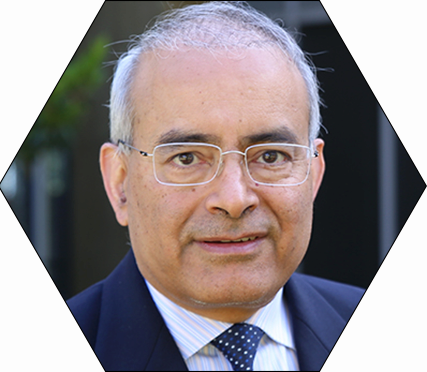
Ole Sigmund is a Professor at the Technical University of Denmark within the Department of Civil and Mechanical Engineering. He is affiliated with the NanoPhoton – Center for Nanophotonics and actively involved in research related to topology optimization, structural mechanics, and nanophotonics. Accepting PhD Students ORCID: 0000-0003-0344-7249 Research Interests: His work spans structural design, inverse methods, and multiphysics systems. Key areas include metamaterials, additive manufacturing, and photonic device optimization. Recent Publications (2021-2025): Focus on topology optimization for mechanical stability, nanophotonics, and multi-physics applications. Projects: Over 80 projects, including vibroacoustic systems, nanocavity design, and thermo-mechanical regulators. Collaborates with researchers like J.P. Groen and F. Wang.
Konstantin Nikolic is a Professor of Computer Science specializing in Artificial Intelligence, Machine Learning, and Data Management at the University of West London's School of Computing and Engineering. Previously, he served as Senior Research Fellow and Principal Investigator at Imperial College London's Institute of Biomedical Engineering (2006–2020) and held roles as Assistant Professor and Associate Professor at the University of Belgrade's Faculty of Electrical Engineering. He holds a PhD in Physics from Imperial College London and degrees in Applied Physics from the University of Belgrade. His research spans computational neuroscience, neuromorphic engineering, neuroprosthetics, and biomedical systems. Key areas include developing AI-driven drug discovery methods, neuromorphic robotics platforms, and optogenetic models for neural interfaces. Recent work explores emergent quantum phenomena in complex adaptive systems and integrates machine learning with biosensors for medical applications. Publications emphasize interdisciplinary approaches, including neuromorphic hardware implementations, optogenetic device modeling, and biophysical simulations. Collaborations include institutions like Imperial College and the University of Belgrade, with a focus on applying computational models to real-world biomedical challenges.
Barbara REGGIANI is an Associate Professor at the University of Modena and Reggio Emilia, affiliated with the Department of Engineering Sciences and Methods. Her research focuses on advanced manufacturing processes, particularly extrusion of aluminum alloys, FEM simulation of material behavior, and optimization of industrial processes. She teaches courses in Management Engineering, including Manufacturing Processes and Methods for Product Development and Industrial Technologies and Plants . Her research interests include die design optimization, nitrogen cooling strategies for extrusion dies, and polymer processing. She has extensively studied grain structure evolution, recrystallization modeling, and defect prediction (e.g., PCG formation, charge welds) using FEM tools like Qform and Moldflow. Recent work addresses material characterization (e.g., AA6082/6063 alloys) and surface functionalization for biomedical applications. Dr. REGGIANI collaborates on projects involving additive manufacturing for die cooling channels and laser-based surface treatments. Her work bridges experimental methods (hot torsion tests, micro-CT analysis) with numerical modeling to enhance process efficiency and material performance.
YUE MEI is an Associate Professor at Dalian University of Technology's School of Mechanics and Aeronautics. He holds a doctoral degree in Mechanical Engineering from Texas A&M University and has postdoctoral experience at Swansea University (UK) and Saint-Etienne Mines (France). His research focuses on computational mechanics, biomedical applications, and CAE software development, particularly addressing national needs in industrial software autonomy. He leads major national projects including National Key R&D Programs and National Natural Science Foundation grants. Awards include the Liaoning Provincial Talent Aggregation Plan and Dalian High-level Talents designation. His work spans mechanical inversion methods, multi-physics finite element analysis, and structural nondestructive testing. Education: PhD in Mechanical Engineering, Texas A&M University (2013-2017) MSc in Solid Mechanics, South China University of Technology (2010-2013) BSc in Engineering Mechanics, China University of Petroleum (2006-2010) Research Interests: Integrating computational mechanics with biomedical and advanced materials fields. Key areas include: Mechanical inversion techniques for medical/industrial applications Multiphysics finite element methods (fluid-structure, electromagnetics) Development of autonomous CAE software tools Grants & Projects: Leads 7+ ongoing projects including 'Jointly Driven Cross-Scale Mechanical Analysis' (Liaoning Provincial) and 'General CAE Implicit Solver Engine' (National Key R&D). Recent papers focus on topology optimization in biomechanics, soft tissue characterization, and energy harvesting.
Yogendra Joshi is the John M. McKenney and Warren D. Shiver Distinguished Chair in Building Mechanical Systems and Professor at the Georgia Institute of Technology's College of Engineering, Department of Mechanical Engineering. His research focuses on thermal management of electronics, combustion, energy systems, and microthermal systems. He holds a Ph.D. from the University of Pennsylvania (1984), M.S. from SUNY Buffalo (1981), and B.Tech. from IIT Kanpur (1979). Prior to joining Georgia Tech in 2001, he held positions at the University of Maryland and Naval Postgraduate School. His research addresses transport phenomena in emerging technologies, including compact thermal management devices for high-heat-flux electronics, conjugate transport mechanisms in multi-scale systems, and energy-efficient data center thermal management. Key innovations include microfabricated thermosyphons, computational modeling for thermal design, and embedded evaporative cooling systems. Dr. Joshi has received awards such as IEEE Fellow (2012), IIT Kanpur Distinguished Alumnus (2010-2011), and IBM Faculty Award (2008). His lab (METTL) explores microelectronics thermal challenges and eco-friendly cooling solutions. Advising includes students like Adya Ali, and he has contributed to over 150 publications and patents. His work bridges thermal sciences, materials, and semiconductor engineering to enable next-gen electronics and sustainable energy systems.
Dr. Jasmin Smajic is Professor at ETH Zürich's Department of Information Technology and Electrical Engineering, leading theoretical and simulation research in electromagnetics. His work bridges computational methods with applications in plasmonics and photonics. Research expertise includes: Plasmonic device design and modeling High-frequency semiconductor structures Sub-terahertz communication systems Computational electromagnetics Multiphysics simulation techniques Recent innovations include plasmonic hybrid receivers, terahertz wireless links, and ultra-wideband modulators. Dr. Smajic has received multiple FUTUR Technology Transfer Awards for industrial applications of electromagnetic simulation tools.
Dr. Baoxing Xu is an Associate Professor in the Department of Mechanical and Aerospace Engineering at the University of Virginia. He holds a PhD in Mechanics and Materials from Columbia University (2012) and was a Beckman Postdoctoral Fellow at the University of Illinois at Urbana-Champaign (2012–2014). His research focuses on multiscale-multiphysics mechanics-driven design of functional materials for wearable electronics and biomedical devices, including nanomanufacturing, soft-hard material integration, and thermal transport in nanomaterials. His research group explores applications such as transfer printing in liquids, solution shearing, and bioinspired devices. Key areas include nanomechanics under extreme conditions, nanofluidics, and thermal transport in mechanically deformed materials. Education: PhD in Mechanics and Materials, Columbia University (2012) Dr. Xu’s work has been recognized with awards including the Young Investigator Medal (SES, 2023), Sia Nemat-Nasser Early Career Award (ASME, 2020), and a YIP Award from the Office of Naval Research (2020). He teaches courses like Engineering Mechanics-Statics and The Theory of Elasticity. His lab, the Xu Research Group, pioneers innovations in nanofluidics, wearable sensors, and energy-dissipative materials.
Thomas Roth is an Assistant Professor of Electrical and Computer Engineering at Purdue University , specifically within the Elmore Family School of Electrical and Computer Engineering . His research focuses on quantum and classical electromagnetic systems, with expertise in multiscale modeling and applied electromagnetics. He holds a Ph.D. in Electrical Engineering from the University of Illinois at Urbana-Champaign (2020), following B.S. and M.S. degrees from Missouri University of Science & Technology and Illinois, respectively. Education: B.S. in Electrical Engineering, Missouri University of Science & Technology, 2015 B.S. in Computer Engineering, Missouri University of Science & Technology, 2015 M.S. in Electrical Engineering, University of Illinois at Urbana-Champaign, 2017 Ph.D. in Electrical Engineering, University of Illinois at Urbana-Champaign, 2020 Research Interests: Roth’s work bridges quantum mechanics and electromagnetic theory, emphasizing computational methods for superconducting circuits and quantum devices. His lab develops numerical frameworks for modeling transmon qubits, Josephson parametric amplifiers, and multiphysics systems. Recent efforts include analytical solutions for multi-qubit interactions and robust finite-element methods for quantum systems. Publications: His 2024-2025 work highlights advancements in quantum full-wave solutions, parametric amplifiers, and hybrid modeling techniques. Key themes include improving numerical stability for quantum systems and exploring dielectric loading for optical qubits. Awards/Grants: No specific awards listed, but his work aligns with emerging quantum engineering priorities at Purdue. Lab/Teams: His research group focuses on computational quantum electromagnetics, collaborating on projects involving superconducting circuits and quantum device optimization.
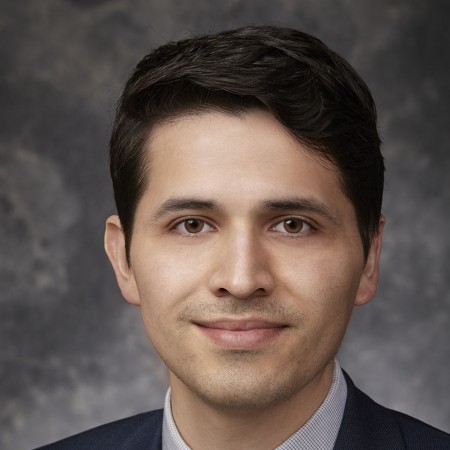
Rodrigo Bernal is an Associate Professor in the Department of Mechanical Engineering at the University of Texas at Dallas' Erik Jonsson School of Engineering and Computer Science. He leads the Nanomechanical Multiphysics Lab , focusing on advanced nanomaterial characterization and multiphysics phenomena. His work integrates experimental techniques like in-situ transmission electron microscopy (TEM) with computational modeling to study nanoscale mechanical properties and failure mechanisms. Education: Ph.D. in Mechanical Engineering, Northwestern University (2014) Postdoctoral Fellowship in Mechanical Engineering, University of Pennsylvania (2016) Research interests include nanomechanical behavior of materials, MEMS/NEMS device mechanics, and additive manufacturing of nanoscale structures. His lab specializes in high-resolution imaging and mechanical testing of nanomaterials, particularly silver, gold, and diamond-like carbon systems. Recent work emphasizes electromigration in flexible electronics, adhesion mechanisms at 2D material interfaces, and high-throughput nanomaterial testing. Advising: Currently accepting undergraduate and graduate students Focus areas: nanomaterials, in-situ TEM, and multiphysics modeling Laboratory: Nanomechanical Multiphysics Lab (ECSW 4.355E) Equipment: advanced TEM setups, nanoindentation systems, and localized pulsed electrodeposition tools
Prof. Christophe Geuzaine is a Full Professor in the Department of Electrical Engineering and Computer Science at the University of Liège , Belgium. He previously held academic positions at Case Western Reserve University (Assistant Professor of Mathematics) and California Institute of Technology (Postdoctoral Scholar in Applied and Computational Mathematics). Research Focus: Computational electromagnetism, biomedical/geophysical modeling, and open-source software development (Gmsh, GetDP) Teaching: Courses in electromagnetic energy conversion, scientific computing, and multiphysics projects Location: Montefiore Institute B28, Quartier Polytech 1, Liège, Belgium His research employs ONELAB tools for high-temperature superconductivity ( Life-HTS ), photonics ( ONELAB-Photonics ), and domain decomposition ( GetDDM ). Current work emphasizes large-scale time-harmonic wave simulations and quantum computing applications.
Dr. Abel Chuang is an Associate Professor in Mechanical Engineering at the University of California, Merced. His research focuses on advanced electrochemical energy technologies including fuel cells, electrolyzers, and battery systems, with emphasis on multiphysics modeling, materials development, and performance optimization. Chuang's work integrates experimental characterization techniques like neutron radiography with computational modeling to understand fundamental transport phenomena and reaction mechanisms in electrochemical devices. His recent investigations center on green hydrogen production, lithium-ion battery safety, and catalyst design for sustainable energy conversion. Publications demonstrate consistent focus on improving energy device efficiency through innovations in electrode architecture, membrane engineering, and system integration. Current projects address critical challenges in renewable energy storage, CO2 utilization, and sustainable materials recycling for circular economy applications.
Xiang Li is a researcher specializing in renewable energy systems, with a focus on wave energy converters, computational fluid dynamics, and offshore engineering. His work integrates multiphysics approaches to study flexible materials and their applications in ocean energy systems. He has contributed to projects involving semisubmersible platforms, floating offshore wind turbines, and novel wave energy converter designs. Key research interests include hydrodynamic analysis, structural dynamics, and the optimization of energy harvesting systems. His PhD thesis, completed in 2024, explored fluid-structure interaction in offshore wave and wind energy devices under the supervision of Prof. Xiao Q. and Prof. Incecik A. Collaborative projects include studies on flexible material applications in ocean renewable energy and the development of direct power generators for wave energy systems. His research outputs address challenges in multiphysics modeling, energy array optimization, and the interaction between wave/current forces and marine structures.
David Nash is a Professor in the Department of Mechanical & Aerospace Engineering at the University of Strathclyde, part of the Faculty of Engineering. He holds professional qualifications including BSc(Hons), MSc, PhD, CEng, FIMechE, and FIES. His expertise spans Finite Element Analysis, Pressure Vessels, Bio-mechanics, and Medical Device Design. He has led numerous projects, including the ICF Mechanical Property Optimisation of Magnesium Alloy Wires (2024-2025) and research on bioresorbable materials for vascular scaffolds. He has collaborated on initiatives like Boiler Technologies and contributed to the Doctoral Training Partnership (2017-2022). Nash's research focuses on structural analysis, stress optimization, and materials science with applications in aerospace, biomedical engineering, and renewable energy. His work addresses challenges in wind turbine blade erosion, composite material behavior, and pressure vessel integrity. Over 150 publications and patents highlight his contributions to fields like metal-to-metal seals, cold-formed steel structures, and finite element modeling. Awards and recognitions are not explicitly listed in the provided texts.
Dr Alison Williams is a Senior Lecturer in Mechanical Engineering at Swansea University, affiliated with the School of Aerospace, Civil, Electrical and Mechanical Engineering. She specializes in multiphysics modeling of complex flows, particularly in renewable energy systems such as tidal turbines and marine energy devices. As a member of the Marine Energy Research Group, her work focuses on computational modeling to assess marine energy device performance and environmental interactions. She collaborates with Welsh SMEs to evaluate marine renewable energy feasibility. Her research interests include multiphysics modeling, non-Newtonian flows, and renewable energy systems. Notable projects involve tidal turbine array optimization, CFD validation using experimental facilities like FloWave, and techno-economic evaluations of tidal energy deployment. She has supervised PhD and EngD students in tidal energy and computational modeling. Dr. Williams has published extensively in journals like Renewable Energy, Ocean Engineering, and Energy, with a focus on tidal energy systems, computational fluid dynamics, and turbine performance analysis. Her work bridges academic research with industrial applications, contributing to sustainable energy solutions.
Sam Raymond is an Adjunct Assistant Professor of Engineering at Dartmouth College and a Machine Learning Engineer at Databricks. He holds a BEng (2012) and MEng (2015) from Monash University, Australia, and a PhD in Engineering from MIT (2020). His research focuses on physics-informed machine learning, computational mechanics, and particle-based simulation methods. Raymond leads the Raymond Lab, which emphasizes leveraging data-driven approaches to solve complex engineering challenges. Education: BEng (Monash, 2012), MEng (Monash, 2015), PhD (MIT, 2020) Key research interests include integrating physical laws into deep learning frameworks, synthetic data generation for inverse problems, and pre-training neural networks using simulation data. His work spans applications from biomedical engineering to environmental science. Raymond teaches courses such as ENGS 15.08: AI Demystified and ENGM 204: Data Analytics Project Lab at Dartmouth. Recent collaborations include developing a novel ventilator for pandemic response and partnering with NVIDIA on generative AI educational tools. He holds a patent for an emergency ventilator design and publishes widely in journals like Nature Communications and IEEE Transactions on Biomedical Engineering .