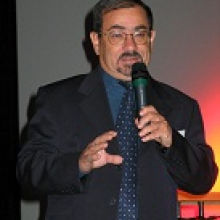
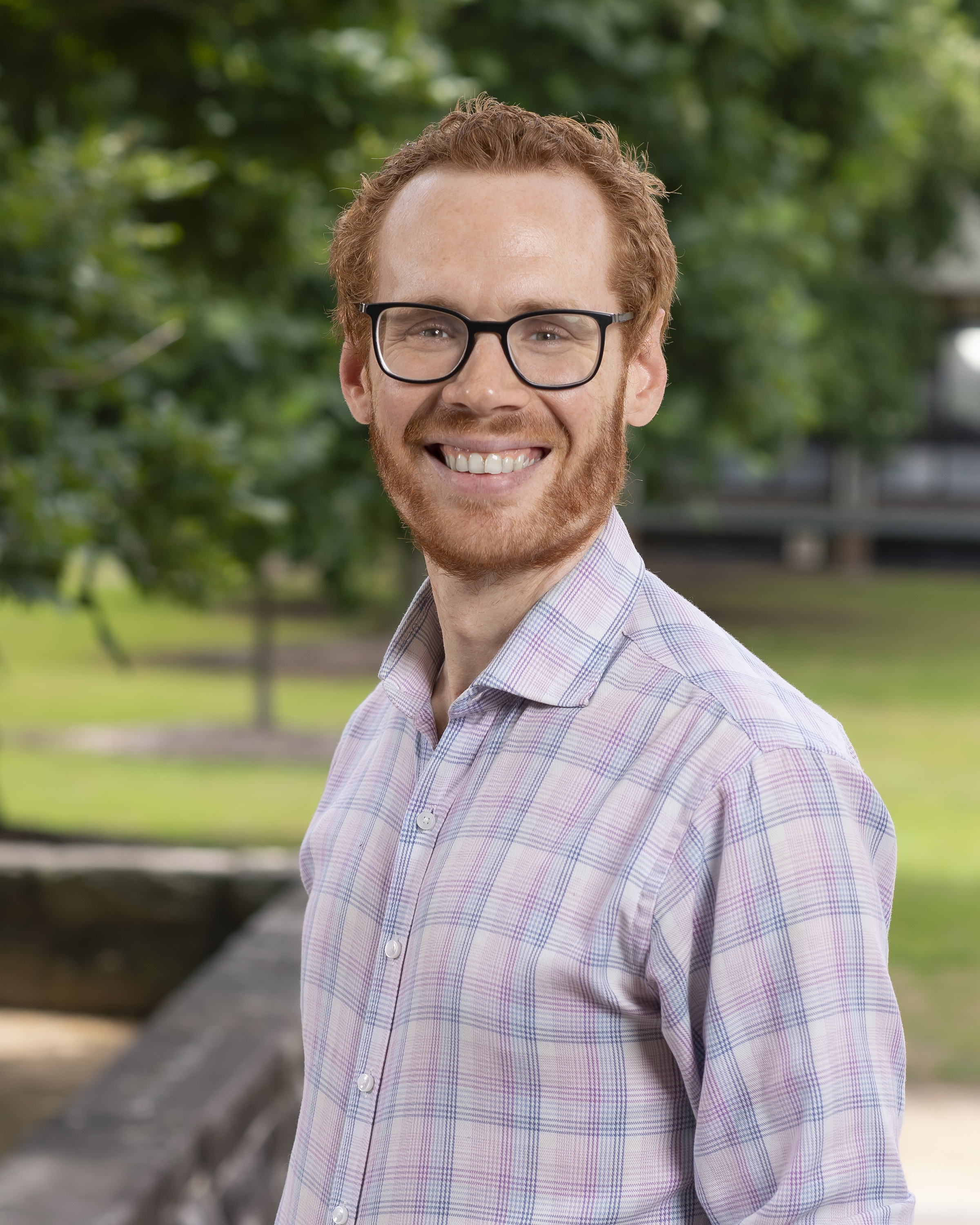
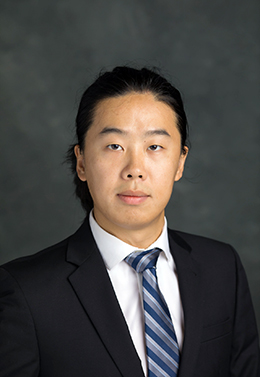
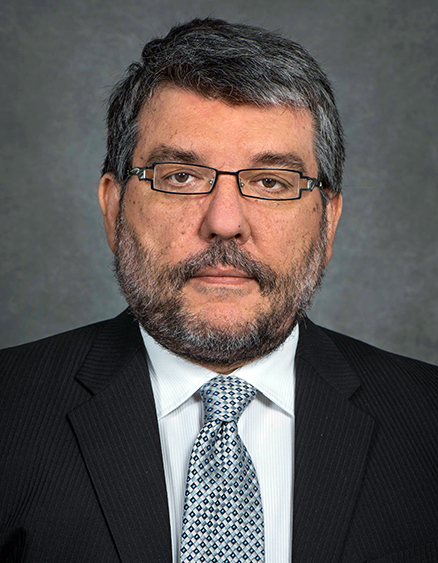
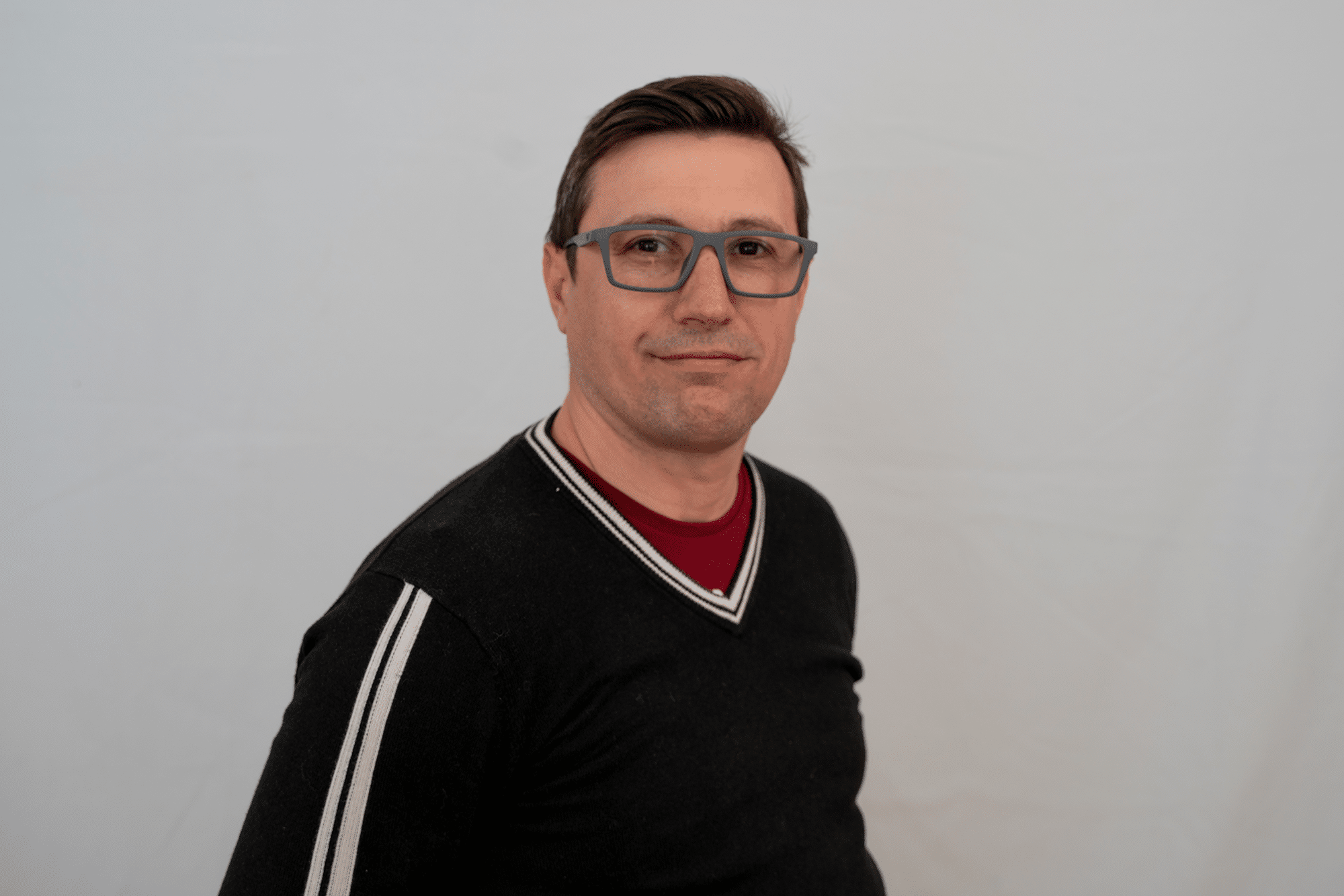
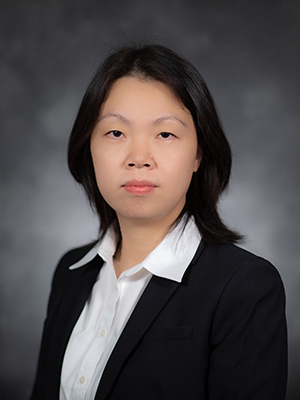
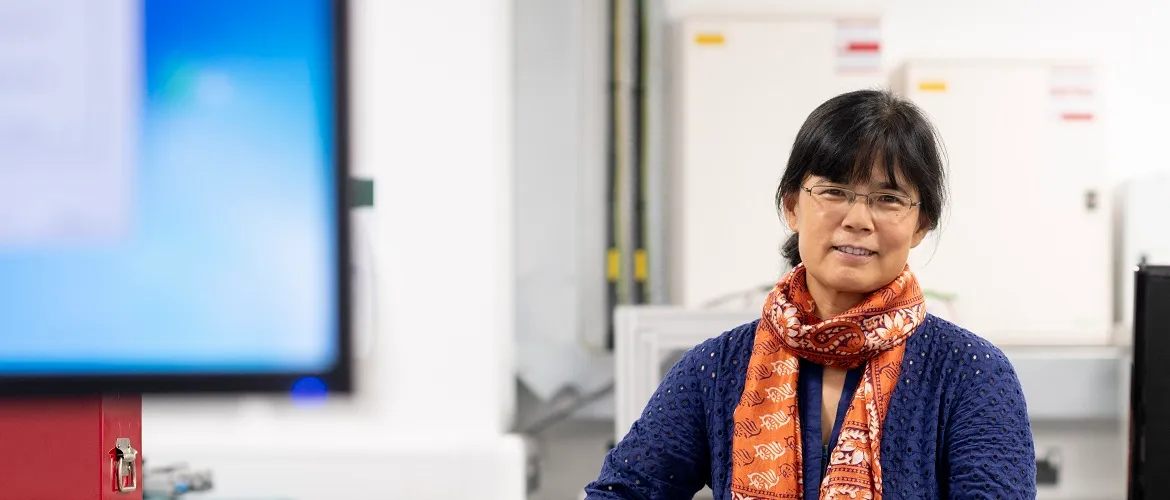
Wagdi George Habashi is a Professor and NSERC-Industrial Research Chair at McGill University's Faculty of Engineering, Department of Mechanical Engineering. He leads the Computational Fluid Dynamics (CFD) Lab, focusing on aerodynamics, fluid mechanics, and icing-related simulations. His research emphasizes in-flight icing prediction, computational wind engineering, and CFD-driven optimization of aircraft and jet engine systems. Education: Ph.D., Cornell University M.Eng., McGill University B.Eng., McGill University Research Interests: Habashi's work bridges analytical and computational methods to address multi-physics/multi-scale engineering challenges. Key areas include in-flight ice crystal ingestion in jet engines, ice surface roughness modeling, supercooled droplet dynamics, and CFD-based risk management for icing. His team develops tools like FENSAP-ICE for real-time aero-icing simulations and explores mesh adaptation, parallel computing, and reduced-order modeling. Labs/Teams: Computational Fluid Dynamics Lab (CFD Lab).
Dr. Michael Stevens is a Senior Lecturer at University of New South Wales (UNSW) Canberra , where he focuses on advanced manufacturing and biomedical device control systems . His work bridges digital manufacturing for SMEs with smart artificial heart technologies , emphasizing industry collaboration and translational research. Specializes in physiological control systems for rotary blood pumps Develops unobtrusive fall detection systems for dementia patients Leads international projects on total artificial heart development Education : B.Eng (Medical - First Class Honours), Queensland University of Technology (2010) PhD in Physiological Control for Biventricular Assist Devices, University of Queensland (2014) Research Trends show consistent focus on: Machine learning for biomedical diagnostics (2018–2025) mmWave radar and thermal sensors in patient monitoring (2021–2024) Computational fluid dynamics in artificial heart modeling (2016–2024) Physiological control algorithms for rotary blood pumps (2011–2025) Scientific Awards : UNSW Scientia Education Award (2021) for contextual teaching Heart Foundation Runner-up for "Smart Artificial Hearts" pitch (2021) ARC PGC Supervisor Award (2017) for mentoring Grants & Supervision : Holds over $6 million in competitive funding including MRFF and ARC grants. Currently supervises 4 PhD students while maintaining industry partnerships with VitalCare and BiVACOR. Labs & Facilities : Works across UNSW Engineering labs and Graduate School of Biomedical Engineering platforms, including mock circulation loops and high-performance computing clusters for CFD simulations.
Dr. Kibret Mequanint is a full Professor at Western University's Department of Chemical and Biochemical Engineering, with cross-appointments in Biomedical Engineering. Holding a PhD from University of Stellenbosch and postdoctoral experience at Technical University of Darmstadt and McMaster University, his research bridges polymer science, materials engineering, and life sciences with applications in Biomaterials , Tissue Engineering , and Regenerative Medicine . His work spans both fundamental and translational research in cell-material interactions , polymer biomaterial design , and therapeutic radiation dosimeters , with technologies transferred to commercial applications. Leading scholar and educator with awards from NSERC, CIHR, and Western University Fellow of: American Institute for Medical and Biological Engineering (AIMBE), Ethiopian Academy of Sciences, International Union of Societies for Biomaterials Science and Engineering, Canadian Academy of Engineering Extensive editorial and panel service for NSERC, CIHR, and international journals His research program has produced over 170 refereed publications, focusing on conductive hydrogels , bioadhesives , and vascular tissue engineering . Recent work on endoscopy-deliverable bioadhesives and snake venom-derived hemostatic gels has attracted global media attention. He has served in leadership roles at the Canadian Biomaterials Society and university governance bodies including Senate and Board of Governors.
Dr. Kidambi Sreenivas is an Associate Professor in Mechanical Engineering at the University of Tennessee at Chattanooga (UTC), affiliated with the College of Engineering and Computer Science. He holds a PhD in Mechanical Engineering and specializes in computational fluid dynamics (CFD), with a focus on unstructured multi-physics flow solvers and applications in aerospace, environmental systems, and biomedical engineering. His research bridges academia and industry, collaborating with NASA, the U.S. Navy, Department of Energy, and private companies. Dr. Sreenivas' research interests include rotating machinery simulations, pre-conditioners for non-ideal fluids, and real-world applications such as submarine hydrodynamics, wind farm optimization, aerodynamic efficiency of vehicles, and contaminant dispersal modeling. He has pioneered methods for simulating complex geometries and physics, including high-fidelity simulations of hypersonic vehicles, weapons bay cavities, and shock-wave interactions. Recent work emphasizes advanced CFD methodologies for high-speed flows, thermal effects on turbulence, and aerothermal characteristics of hypersonic test articles. His collaborations have led to practical solutions for drag reduction on Class 8 trucks and improved accuracy in wind turbine modeling. Dr. Sreenivas also contributes to educational initiatives, such as developing PIV systems for undergraduate fluid mechanics labs. His advising and grants reflect partnerships with federal agencies and private sectors, focusing on projects like microplastic sampling devices for stormwater management. These projects highlight his interdisciplinary approach to solving real-world engineering challenges through cutting-edge computational methods.
Haochen Li is an Assistant Professor in the Department of Civil and Environmental Engineering at the University of Tennessee, Knoxville, within the College of Engineering. He leads the multidisciplinary Water Infrastructure Laboratory (Ψ Lab), which focuses on advancing urban water infrastructure through high-fidelity computational fluid dynamics (CFD), physical modeling, and physics-informed machine learning (ML). Education: PhD in Environmental Engineering, University of Florida, 2019 MS in Mechanical Engineering, University of Florida, 2019 MS in Civil Engineering, University of Florida, 2015 BS in Coastal Engineering, Hohai University, 2013 His research centers on environmental fluid dynamics , particularly multiphase and multiphysics flows in urban water systems. He investigates turbulence, particulate matter transport, pathogen fate, and chemical dynamics using advanced CFD simulations, volumetric particle image velocimetry (PIV), and AI-driven models. His lab develops open-source tools like InterAdsFoam for adsorption systems and integrates ML with CFD to optimize infrastructure design, retrofit, and regulatory frameworks. The recent publications reflect a strong trend toward hybrid CFD-ML frameworks for water infrastructure, with applications in clarifier design, stormwater basin optimization, and real-time sensing. His work emphasizes model validation, scalability, and practical deployment, including web-based tools for engineers. Scientific Awards: Rudolph Hering Medal, ASCE, 2023 Editor choice, Journal of Environmental Engineering ASCE, 2021 Editor choice, Journal of Environmental Engineering ASCE, 2020 Graduate School Fellowship, University of Florida, 2015 Academic Achievement Award, University of Florida, 2013 Haochen Li actively advises researchers and students in his lab, including Kai Liu, Mohamed Shatarah, and Ahmed Abdelmeguid. His team works on AI-empowered reactive flows, physics-informed ML, and CFD applications in energy and environmental systems. He has served as a reviewer for top journals and is a member of the ASCE/EWRI Computational Fluid Dynamics Committee. His lab is equipped with state-of-the-art HPC platforms and physical modeling facilities for experimental validation.
Talhah Shamshad Ali Ansari is a Research Associate at the Chair of Structural Analysis and Dynamics at the Technical University of Munich (TUM) . He works on advanced computational methods, focusing on digital twins, adjoint-based system identification, and multiphysics simulations. His research addresses structural optimization, wind engineering, and robust meshing techniques. Research Highlights : Digital Twin technology for structural analysis Adjoint-based methods for system identification Multiphysics simulations in wind engineering Structural optimization for additive manufacturing Teaching : Contributed to courses in Theory of Plates and computational mechanics curricula Publications (2025): Developed adjoint-based thermal field recovery methods Analyzed algorithms for digital twin system identification Advanced high-fidelity simulations for structural weaknesses
Pooya Davari is a Professor and Head of the Section for Applied Power Electronic Systems at Aalborg University , Denmark. He leads the EMI/EMC in Power Electronics Research Group and serves as Vice Chair of the Energy Efficiency Mission. His research focuses on electromagnetic interference (EMI) and harmonic mitigation in power electronic systems, with over 200 publications and significant contributions to renewable energy integration. Education: B.Sc. and M.Sc. in Electronic Engineering (2004, 2008), Ph.D. in Power Electronics from Queensland University of Technology (2013) Prior Roles: Lecturer at QUT (2013–2014), Postdoc at AAU (2014) Research Interests: Harmonic and EMI analysis in grid-tied converters High power density converter design Signal processing for converter modeling Reliability of power electronic systems Article Trends: Recent work emphasizes EMI/EMC in renewable energy systems, wide bandgap semiconductors (SiC/GaN), and reliability modeling for EVs and hydrogen production via electrolysis. Sub-fields include converter topologies, grid integration challenges, and AI-driven diagnostics. Scientific Awards: Equinor 2022 Prize (Denmark’s oldest engineering award) IEEE EMC Society Young Professional Award (2020) World’s Top 2% Highly Cited Scientist (Stanford, 2021–2025) Multiple best paper awards (IEEE, Applied Sciences, etc.) Grants & Editorial Roles: Recipient of grants from Innovation Fund Denmark (Supra-EMC project), Horizon Europe (SOLARIS), and industry partnerships. Serves as Area Editor for IEEE Transactions on Transportation Electrification , Associate Editor for IEEE Transactions on Power Electronics , and Editor-in-Chief of Circuit World Journal (2020–2025). Labs & Standards: Coordinator of the EMC Laboratory at Aalborg University. Member of IEC standardization Working Groups 6 and 8 (TC77A), focusing on EMC strategies for power grids.
George Moridis is a Professor in the Harold Vance Department of Petroleum Engineering at Texas A&M University, holding the Robert L. Whiting Chair in Petroleum Engineering. He specializes in advanced numerical methods for reservoir engineering, with a focus on unconventional gas resources, gas hydrates, and coupled process modeling. His work integrates thermal operations, enhanced oil recovery, and high-performance computing. Education: Ph.D., Reservoir Engineering, Texas A&M University (1987) M.S., Agricultural Engineering, Texas A&M University (1982) M.Eng., Chemical Engineering, National Metsovion Technical University (1980) B.Sc. (honors), Chemical Engineering, National Metsovion Technical University (1979) His research interests include analytical modeling techniques, coupled flow-geomechanical systems, and thermal operations in reservoirs. He has pioneered methods for simulating gas production from hydrate deposits and tight/shale gas reservoirs. His work emphasizes real-world applications in energy resource optimization and environmental impact mitigation. Notable awards include the Karen E. Olson Excellence in Research Award (2019), John Franklin Carll Award (2019), and recognition as a Distinguished Member of the Society of Petroleum Engineers (2010). He has led projects at Lawrence Berkeley National Laboratory and collaborated with the U.S. Department of Energy. His research group focuses on high-performance computing frameworks for multiphase reservoir simulation. He advises on federal energy initiatives and maintains an active Google Scholar profile with over 150 publications.
Prof. Aswin Gnanaskandan is an Assistant Professor in the Department of Mechanical & Materials Engineering at Worcester Polytechnic Institute (WPI), where he joined in August 2020. He directs the Computational Multiphase Transport Laboratory, focusing on developing high-fidelity models for multiphase flows with applications in engineering and biomedical fields. His research is funded by NSF, Office of Naval Research, NIH, and the Center for Advanced Research in Drying. Education: PhD, Aerospace Engineering & Mechanics, University of Minnesota (2015) MS, Aerospace Engineering & Mechanics, University of Minnesota (2012) BS, Aeronautical Engineering, Madras Institute of Technology (2006) Research Interests: Computational Fluid Dynamics (CFD), Multiphase Flow Modeling, Biomedical Acoustics, High-Performance Computing, and applications in underwater transportation, propulsion, and biomedical acoustics. His work bridges fundamental fluid mechanics with real-world challenges in energy, health, and environmental systems. Recent Research Trends: His articles focus on microbubble-enhanced ultrasound therapy, cavitation dynamics in propulsion systems, and multiphase flow modeling across scales. Key themes include improving thermal ablation precision in medical treatments and optimizing industrial processes like spray drying through advanced numerical techniques. Awards: Excellence in Research Award (WPI, 2024) NSF Engineering Research Initiation Award (2023) James Nichols Heald Research Award (WPI, 2022) Teaching & Advising: Teaches undergraduate/graduate courses in Fluid Mechanics, Thermodynamics, and Numerical Methods. Advises multiple Major Qualifying Projects and fosters interdisciplinary collaboration through lab activities. His lab actively engages with industry and academic partners on projects like HIFU therapy and sustainable energy solutions. Labs & Teams: Leads the Computational Multiphase Transport Lab, which collaborates on projects involving CFD solver development (MFC 5.0), exascale computing, and biomedical acoustics. Aligns research with UN Sustainable Development Goals (SDG 7, 9, 13).
Olivier FARGES is a Senior Lecturer and HDR (Habilitation à Diriger des Recherches) holder at the University of Lorraine, affiliated with ENSGSI (École Nationale Supérieure de Géologie et Sciences Industrielles) within the Groupe INP. He serves as Director of Industrial Partnerships at ENSGSI and is part of the LEMTA Laboratory (CNRS-University of Lorraine), focusing on multiphysics and multiscale modeling of heat transfer in complex environments. His academic roles include teaching courses such as Heat and Mass Transfer, Fluid Mechanics, Scientific Computing Modeling, and Renewable Energy. Dr. FARGES holds a Ph.D. in Energy and New R&D (2014) and an Engineering degree in Energy Engineering (2010), both from the École de Mines Albi. His research emphasizes coupled conductive-radiative heat transfer in porous media, thermal property characterization of heterogeneous materials, and Monte Carlo-based computational methods for energy systems. He has contributed to advancements in photovoltaic system modeling, solar thermal power optimization, and urban climate studies. His work bridges theoretical and applied thermal engineering, with applications in sustainable energy systems, material science, and industrial partnerships. Key research themes include radiative transfer modeling, multiphysics simulation frameworks, and the development of innovative tools for thermal property measurement and energy performance assessment.
Dr. Jingjing Qiu is an Associate Professor in the Department of Mechanical Engineering at Texas A&M University (TAMU), leading the Advanced Materials & Manufacturing (AM²) Lab. Her research focuses on advanced manufacturing, nanomaterials, multifunctional composites, sustainable materials, energy harvesting, and healthcare applications. She holds a Ph.D. in Industrial & Manufacturing Engineering from Florida State University (2008), and M.S./B.S. degrees in Materials Science from Beihang University (2004/2001). Prior to academia, she gained 1 year of industrial experience as a Quality Engineer at SAIC Motor. Research interests include AI-driven nanomaterials synthesis, low-carbon manufacturing processes, and biomedical innovations such as drug delivery systems for brain tumors. The AM² Lab emphasizes interdisciplinary collaboration in materials science, data science, and sensor integration for energy and medical devices. Recent work highlights include AI-assisted microplastics removal, thermoelectric energy harvesting via graphene aerogels, and neuromorphic computing systems. Her team actively pursues postdoctoral and PhD candidates for research in energy/healthcare materials, requiring expertise in nanomaterials characterization (e.g., SEM, XPS, electrochemical techniques) and interdisciplinary problem-solving. Lab facilities support cutting-edge fabrication and testing of functional materials. Publications span over 15 years, with recent trends in sustainable manufacturing, soft robotics, and bio-inspired materials. Ongoing projects include DOE-funded initiatives on rare earth recycling and low-carbon ceramic production. No scientific awards are explicitly listed in the provided texts.
Thijs Defraeye is a Senior Scientist at Empa (Swiss Federal Laboratories for Materials Science and Technology) and Adjunct Professor at Dalhousie University. He holds a PhD in Building Physics from KU Leuven (2011) and a Master's in Civil Engineering (2006). His work focuses on optimizing food supply chains through multiphysics simulations and digital twins, addressing challenges in refrigerated transport, postharvest quality preservation, and energy-efficient food processing. He leads the SimBioSys group, developing solutions for perishable goods logistics and electrohydrodynamic technologies. Research interests include: Biophysics of food systems Digital twin applications in agriculture Electrohydrodynamic drying Thermal management in cold chains Sustainable food technologies Recent work emphasizes reducing food loss through physics-based modeling of refrigerated containers, ventilated packaging optimization, and scalable evaporative cooling systems. His studies bridge engineering principles with biological processes, aiming to enhance global food security and environmental sustainability.
Dr. Xinying Liu is a Researcher at the University of Sydney's School of Chemical and Biomolecular Engineering, specializing in Computational Fluid Dynamics (CFD), Fluid-Structure Interaction (FSI), and biomedical engineering applications. She is a member of the University of Sydney Nano Institute and holds a PhD (2023) and bachelor's degree (2017) from the same institution. Education: Bachelor's Degree: The University of Sydney (2017) PhD in Chemical and Biomolecular Engineering: The University of Sydney (2023) Research Focus: Dr. Liu's work addresses biomedical challenges through advanced modeling techniques, including cardiovascular hydrodynamics, gastric flow systems, and bioinspired polymeric heart valve design. She bridges engineering and medicine to develop personalized healthcare solutions and non-thermal plasma technologies for PFAS remediation. Her projects emphasize multiphysics simulation and interdisciplinary collaboration. Current Projects: Polymeric heart valve replacements with growth capability Non-Thermal Plasma applications for PFAS remediation Advising & Collaborations: Dr. Liu advises Parham VATANKHAH on flow dynamics in human aortas. Her collaborations span computational modeling, experimental validation, and industry partnerships for healthcare innovation. Labs & Affiliations: Member of the University of Sydney Nano Institute, actively contributing to bioengineering and materials science research.
Professor Jihong Wang is a faculty member at the University of Warwick's School of Engineering, where she has held the position since January 2011. She previously served as a Professor of Control and Electrical Power at the University of Birmingham and held academic roles at the University of Liverpool from 1998 to 2007. As the Head of the Power and Control Systems Research Laboratory, her research focuses on power system modeling and control, energy storage integration, and energy-efficient actuators. Her work has led to over 100 journal publications and several industry collaborations, including a smart voltage controller and a clean pneumatic UPS. She led the EPSRC-funded IMAGES project, developing an open-source software tool for energy storage systems. Professor Wang actively contributes to energy storage initiatives, including co-leading the Supergen Energy Storage Hub and the Joint UK-India Clean Energy Centre (JUICE). Her funded projects span compressed air energy storage (CAES), grid-tied photovoltaic inverters, and net-zero engineering innovation. She advises on energy policy and has pioneered innovations in thermal storage, grid decarbonization, and renewable energy integration. Her research bridges academic rigor and practical applications, addressing critical challenges in sustainable energy systems. Her professional engagement includes roles like Deputy Director of the Supergen Energy Storage Network+ and collaborations with global institutions. Her work emphasizes interdisciplinary approaches to energy challenges, combining control systems, thermal engineering, and policy analysis. Professor Wang’s contributions have been recognized through best paper awards and leadership in major energy storage consortia.
Christopher Bailey is a Professor of Advanced Semiconductor Packaging and Director of the Centre for Advanced Semiconductor Packaging at Arizona State University (ASU). He previously served as Professor of Computational Mechanics & Reliability and Associate Dean for Research at the University of Greenwich, UK. At ASU, he leads research on advanced semiconductor packaging, including roles as Principal Investigator (PI) and Co-Investigator (Co-I) on major projects such as the SRC-funded Thermo-Mechanical Modelling and US Chips Act initiatives (e.g., SWAP-Hub, SHIELD, ITSI). His research focuses on semiconductor packaging reliability, thermal management, co-design methodologies, and multiphysics modeling. Education: MBA (Technology Management), Open University, UK PhD, Thames Polytechnic, UK Research Interests: Advanced Semiconductor Packaging Thermal Management Solutions Co-Design and Multiphysics Modeling Reliability of Electronic Components His work integrates computational mechanics, materials science, and engineering to address challenges in high-reliability electronics. Recent projects emphasize predictive modeling for semiconductor packaging failures under thermal-mechanical stress. Awards: IEEE Region 8 Europe Award (2024) IEEE David Feldman Award (2022) Visiting Professorships at IIT Kharagpur (2018/2022) and Hong Kong (2018) Service & Leadership: Former President of IEEE Electronics Packaging Society (2020–2021) Associate Editor for IEEE Transactions on Components, Packaging, and Manufacturing Technology Conference Leadership (e.g., Program Chair for IEEE PAINE 2024) He has secured over $40M in research funding and authored 400+ archival papers, with expertise spanning industry collaborations (e.g., BAe Systems, Rolls Royce) and government advisory roles (EPSRC Peer Review College, UK Research Excellence Framework).