Dr. Holger Götz is a Researcher affiliated with Friedrich-Alexander University Erlangen-Nuremberg (FAU), located at Cauerstraße 3, Room 03.140 in Erlangen. His research focuses on granular matter dynamics, computational mechanics, and metamaterials design. Utilizing advanced simulation techniques like the Discrete Element Method (DEM), he investigates phenomena such as granular jamming, elastic membrane interactions, and robotic gripper optimization. Recent work includes studies on structural features of jammed metamaterials and the dynamic response of granular meta-materials. Götz collaborates with institutions like FAU's physics and engineering departments, contributing to interdisciplinary projects in materials science and robotics. Publications Highlights: His 2024 paper in Physical Review Research explores metamaterial structural features, while 2023 contributions to Granular Matter and Mathematics in Computer Science address DEM simulations and software advancements. A 2022 study in Granular Matter demonstrates how soft particles enhance robotic gripper performance through granular jamming principles. Affiliations: Active in FAU's physics and engineering communities, his work intersects computational modeling, material design, and robotics applications. Contactable at holger.goetz@fau.de.
Dr. Hoang Nguyen is a Research Fellow in the School of Earth and Planetary Sciences (EPS) at Curtin University, affiliated with the Faculty of Science and Engineering. His work focuses on geophysical instrumentation, electromagnetic systems, medical device modeling, and materials science applications. He contributes to the Office of the Provost, demonstrating interdisciplinary engagement in academic governance. Research interests include seismic data acquisition systems, electromagnetic vibrator development, medical catheter modeling, and luminescent solar concentrators. His work bridges geophysics with engineering innovations, emphasizing cost-effective solutions for field applications. Recent studies involve CO₂ gas monitoring and high-power seismic source design. Publications highlight technical advancements in seismic instrumentation, medical physics, and materials engineering. Though no awards are listed, his prolific output (8+ publications since 2015) underscores active research engagement. No student advisement or grant details are provided in the profile. Dr. Nguyen's portfolio includes roles in both technical research and institutional support, reflecting a dual commitment to scientific innovation and academic administration.
Dr. Stephan Simonis is a Research Fellow at the Karlsruhe Institute of Technology (KIT), working within the Department of Mathematics and specifically with the Institute for Applied and Numerical Mathematics (IANM2). He leads the LBRG Mathematical Modeling and Numerics Lab since 2023 and serves as an associate editor for the Elsevier journal Examples and Counterexamples since 2024. He is also a member of the steering committee for the EU-funded FALCON project (doi: 10.3030/101138305). Dr. Simonis completed his education as follows: BSc and MSc in Mathematics at KIT, Germany and KTH, Sweden (2011-2018) PhD in Mathematics at KIT (2023), with research visits at UFRGS, Brazil and ETH Zürich, Switzerland Dr. Simonis's research focuses on Applied and Computational Mathematics, particularly in developing and analyzing numerical methods for partial differential equations. His work centers on lattice Boltzmann methods for multi-physics simulations, including applications to fluid flow, blood flow, and solid mechanics. He integrates robust numerical schemes with uncertainty quantification and machine learning, leveraging high-performance computing to explore complex parameter spaces. His research has significant applications in engineering and scientific computing. His publication record demonstrates a strong focus on numerical analysis of lattice Boltzmann methods, with recent work expanding into uncertainty quantification, machine learning integration, and applications to complex fluid dynamics problems. The breadth of his work spans theoretical analysis, algorithm development, and practical implementation in the OpenLB library, with publications in top journals across mathematics, physics, and engineering disciplines. Dr. Simonis has received numerous accolades for his work: ERASMUS+ EQF7 scholarship (2016-2017) DAAD PPP mobility funding (2019) KIT Faculty Teaching Award (2021) KHYS Networking Grant (2022) KHYS ConYS Grant (2024) Oberwolfach Leibniz Graduate Student (2024) NHR Starter project (2024) DAAD PRIME fellowship (2025) Dr. Simonis actively mentors students through various thesis projects in mathematics, fluid dynamics, and high-performance computing. His current open thesis topics focus on lattice Boltzmann methods, relaxation schemes, and stability analysis. He has secured significant research funding including the DAAD PRIME fellowship and NHR Starter project, demonstrating strong support for his research program. His teaching portfolio includes Computational Fluid Dynamics and Simulation Lab, Parallel Computing, and Project-centered Software Lab across multiple semesters. As leader of the LBRG Mathematical Modeling and Numerics Lab since 2023, Dr. Simonis oversees a research group focused on developing advanced numerical methods. His involvement in the EU-funded FALCON project and as associate editor for Examples and Counterexamples further demonstrates his growing leadership in the computational mathematics community.
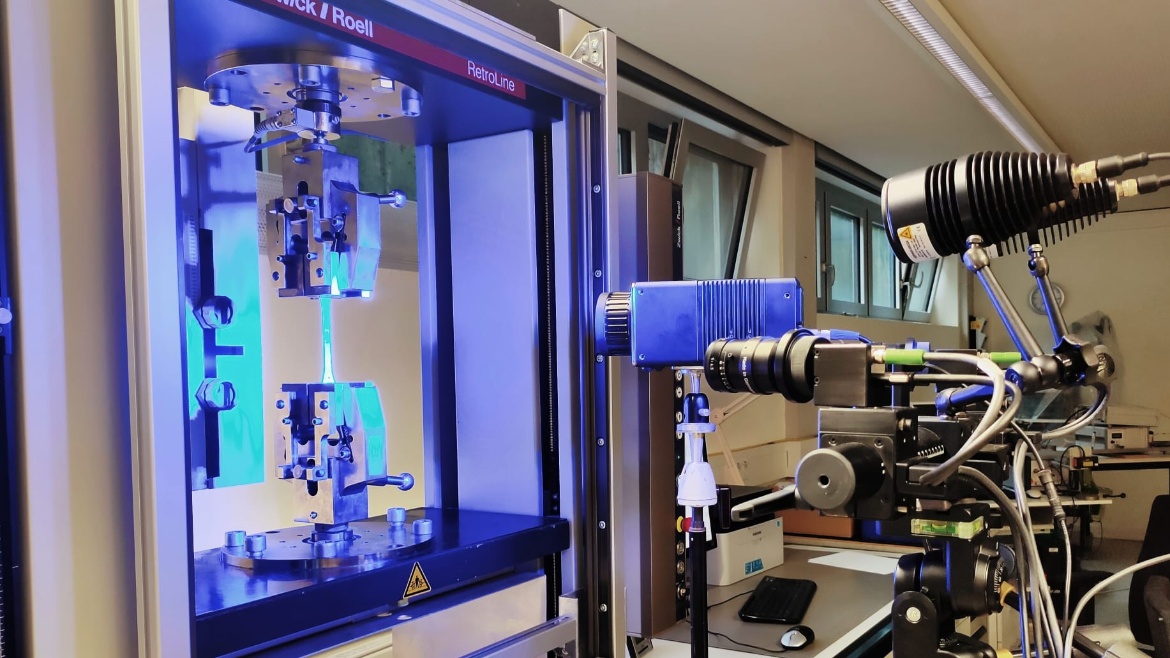
Prof. Tim Ricken serves as Dean of Studies for Aerospace Engineering and leads the Institute of Statics and Dynamics of Aerospace Structures at the University of Stuttgart. His research focuses on structural mechanics, finite element methods, environmental mechanics (particularly sea ice modeling), biomechanics, and AI-driven computational frameworks. He oversees state-of-the-art experimental labs for material fatigue analysis and collaborates with high-performance computing resources like Vulcan and Hawk clusters. Key research areas include multiphase modeling, porous media mechanics, and multiphysics simulations. His team addresses challenges in aerospace structures, biomedical engineering (e.g., liver and tumor modeling), and climate-related systems such as Antarctic sea ice dynamics. Current projects involve DFG-funded initiatives (e.g., SimLivA for liver injury modeling) and the Cluster of Excellence SimTech. Grants include SPP 1886, SPP 2311, and FOR 5151 (QuaLiPerF). Notable innovations include the FE2M multiscale framework, physics-informed neural networks (e.g., DeepONet), and the Onco* tumor modeling platform. He emphasizes model adaptation via equilibrated fluxes and stress-driven finite element methods. Experimental work spans laser therapy optimization, auxetic material analysis, and biomaterial testing in rolling suitcase labs.
Jan Liedmann is a Professor at the Institute for Statics and Dynamics of Aerospace Structures (ISD) within the Faculty 6: Aerospace Engineering and Geodesy at the University of Stuttgart. His research focuses on structural mechanics, dynamics, environmental mechanics, and biomechanics with methodological emphasis on finite element analysis, machine learning integration, and high-performance computing (HPC). He leads projects involving uncertainty quantification, porous media simulation, and methane oxidation studies. Affiliations: DFG Cluster of Excellence SimTech, SPP 1886, SPP 2311, and FOR 5151 HPC Resources: Vulcan cluster, Hawk supercomputer, bwUniCluster 2.0 Key research areas include experimental mechanics, carbon fiber composite durability, and sea ice modeling. Recent work emphasizes physics-informed machine learning and adaptive finite element methods. The ISD operates advanced labs for static/dynamic fatigue testing and biomaterial analysis, supported by institutional GPU servers. His team collaborates with the Alfred Wegener Institute (AWI) on Antarctic projects and participates in EU initiatives like DigiTain for sustainable aerospace design. Recent publications highlight innovations in separable DeepONet architectures and multiphysics modeling frameworks.
Prof. Dr.-Ing. Robert Flassig is a Research Professor for Technical Energy Efficiency at the Brandenburg University of Applied Sciences , focusing on interdisciplinary research at the intersection of energy systems, process engineering, and computational methods. With extensive collaborations across institutions like the Max Planck Institute and TU Berlin, his work emphasizes methodological innovation in mathematical modeling, machine learning, and optimization for industrial applications. Research Highlights: Technical Energy Efficiency and Resource Management Machine Learning for Biological and Engineering Systems Reactor Network Synthesis via Flux Analysis Stochastic Modeling of Actomyosin Dynamics Scientific Recognition: 2017 DECHEMA Young Talent Award 2013 Sbv Improver 1st Place (Nature) 2009 DREAM 4 In Silico Challenge 3rd Place Key Collaborations: Rolls-Royce Deutschland, Max Planck Institute, TU Berlin, and Fraunhofer IPK. His recent projects ( VITVI , AutoBlisk ) integrate AI for virtual engine development and multidisciplinary design optimization, securing 1.5M€ in research funding.
Professor Georg Klepp is a Board Member and head of the Fluid-Flow Machines and Fluid Dynamics Lab at the OWL University of Applied Sciences and Arts since September 2011. His work bridges industrial engineering and computational modeling. Academic Education : Doctorate (1999) in Mechanical Engineering from Otto von Guericke University Magdeburg Research Focus : Klepp’s research centers on energy efficiency improvements in industrial plants, particularly turbomachinery and heat transfer processes. Key areas include: Numerical simulation of fluid dynamics Optimization of cooling systems Energy storage solutions (e.g., adsorption storage for gases) Flow modeling in real-time applications Publication Trends : His recent work (2018–2024) focuses on integrating digital twin technology into gas storage systems, optimizing radial/axial fans, and advancing impingement cooling methods. Earlier studies (2012–2017) emphasize industrial drying and HVAC applications. Advising : Supervised PhD candidates Markus Filippi and Ali Chitsazan , focusing on reversible fan profiles and jet impingement heat transfer. Labs & Collaborations : Leads the Fluid-Flow Machines Lab , collaborating on projects like MonoCab OWL (autonomous rail shuttles) and FES FIELD LAB (fluid energy storage).
Julia Kowalski serves as Professor and Chair of the Department of Methods of Model-Based Development in Computational Engineering at RWTH Aachen University's Faculty of Mechanical Engineering. She holds dual appointments on the Steering Committees for the university's Profile Areas in Production Engineering (ProdE) and Modeling & Simulation Sciences, operating from the Collective Building of Mechanical Engineering in Aachen, Germany. Her research integrates computational engineering with geohazard prediction and cryorobotics, developing advanced numerical methods for multiphysics problems including ice-penetration probes, landslide susceptibility mapping, and wind-energy systems. She pioneers machine learning applications that bridge physical models with engineering design while championing FAIR data principles across cryosphere and geohazard research domains. Current projects focus on model coupling techniques for environmental flows and space exploration technologies. Analysis of her 15 most recent publications reveals dominant trends in surrogate modeling for geotechnical stability, cryorobotic exploration systems, and FAIR data frameworks for environmental science. Her work consistently bridges machine learning with physical modeling across renewable energy, planetary science, and natural hazard mitigation through international collaborations like the TRIPLE project. Scientific awards are not documented in provided materials, though her leadership in DLR-funded space exploration initiatives and editorial roles in topical collections indicates significant recognition. As department chair, she oversees graduate advising and research direction within her computational engineering group, with active grant funding evidenced by German Space Agency collaborations and multi-institutional projects targeting geohazard prediction and cryosphere exploration. Her work demonstrates strong industry-academia-government partnerships. Kowalski leads the Methods of Model-Based Development research group, which operates as an integrated lab for numerical simulation, model coupling, and data-driven engineering solutions. Future work focuses on enhancing uncertainty quantification in geohazard models, advancing cryorobotic technologies for extraterrestrial environments, and developing robust frameworks for FAIR geoscientific data.
Folke Schwinning, M.Sc. is a Researcher at the Institute of Mechatronics in Mechanical Engineering (M-4) of Hamburg University of Technology. Since September 2023, he has focused on the design and optimization of electrical machines, particularly axial-flux synchronous machines for electromobility and electric flight applications. His work involves electromagnetic and thermal modeling, experimental testing, and the development of metamodels to accelerate simulation processes.
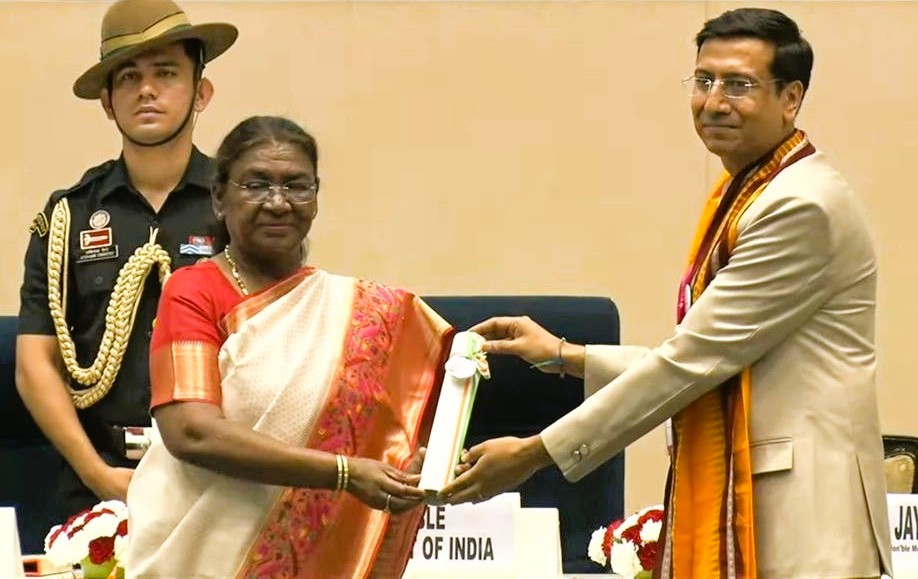
Prof. Kapil Ahuja is a Full Professor in the Department of Computer Science & Engineering at the Indian Institute of Technology Indore (IIT Indore), where he heads the Mathematics of Data Science and Simulation (MODSS) research lab. After completing dual Master's degrees and a Ph.D. from Virginia Tech (USA) followed by postdoctoral work at the Max Planck Institute in Germany, he has held visiting positions at UT Austin, IMT Atlantique, Sandia National Labs, TU Dresden, and TU Braunschweig. His administrative roles include founding Dean of International Affairs and former Head of Computer Science & Engineering at IIT Indore. Education: Ph.D. in Mathematics, Virginia Tech (2011) M.S. in Mathematics, Virginia Tech (2009) M.S. in Computer Science, Virginia Tech (2007) B.Tech. in Mechanical Engineering, IIT (BHU) Varanasi (2001) Research Focus: Prof. Ahuja's work bridges theoretical advances with real-world applications, emphasizing machine learning algorithms for plant/cancer studies, game-theoretic poverty reduction models, exascale climate modeling solvers, and drone trajectory optimization. His interdisciplinary approach integrates numerical linear algebra with network science to solve complex systems problems across healthcare, agriculture, and climate science, supported by 4.85 Crores INR in external funding. Publication Trends: Recent work demonstrates growing emphasis on AI-driven optimization for physical systems (drones, climate models) and biomedical applications (cancer classification). His publications increasingly feature cross-disciplinary collaborations between computer science, biology, and economics, with notable contributions in explainable AI for healthcare and resource allocation algorithms for social networks. Scientific Recognition: National Teacher's Award (2024) from the President of India Five-time recipient of IIT Indore's Best Teacher Award (2013-2023) Best Poster Award at International Workshop on Game Theory & Networks (2019) Steeneck Graduate Research Fellowship (Virginia Tech, 2011) Multiple SIAM travel awards for international conferences Mentorship & Service: Prof. Ahuja has graduated 5 Ph.D. and 4 M.S. (Research) students while mentoring 75 B.Tech. projects. He serves as Associate Editor for Applied Intelligence Journal (Springer Nature) and Knowledge and Information Systems, organizes international conferences, and reviews for 35+ academic sources. His administrative leadership significantly expanded IIT Indore's global partnerships through the Research Park initiative. Research Infrastructure: The MODSS lab maintains active collaborations with Oak Ridge National Lab, Sandia National Labs, and European institutions. Current projects include AI-optimized drone swarms for agricultural monitoring and game-theoretic models for poverty intervention, utilizing high-performance computing resources for large-scale simulations.
Quirin Aumann is a postdoctoral researcher at the Max Planck Institute for Dynamics of Complex Technical Systems , where he focuses on robust model order reduction (MOR) and surrogate modeling for complex dynamical systems. He holds a PhD (2022) and M.Sc. in Computational Mechanics from the Technical University of Munich (TUM) , with earlier B.Sc. training in Civil Engineering at the same institution. Key affiliations : Max Planck Institute for Dynamics of Complex Technical Systems (2022–present) Chair of Structural Mechanics, TUM (2017–2022) Research focus : Preservation of system characteristics in MOR Integration of data-driven methods into engineering workflows Software contributions : Kratos Multiphysics (parallel multi-disciplinary simulation framework) vibro-acoustic-mor (MATLAB-based MOR project) RBF (radial basis function tools) Professional ethos : Advocacy for open data and open-source software Active presence on GitHub, Google Scholar, and ORCID
Rodrigo Castedo-Hernandez is a Research Associate at the Chair of Structural Analysis, Technical University of Munich. His work focuses on Wind Engineering and Computational Mechanics, with expertise in Isogeometric Analysis, Multiphysics simulations, and Structural Optimization. Education M.Sc. Computational Mechanics (2021-2024), Technical University Munich B.Sc. Mechanical Engineering (2016-2020), Universidad de Valladolid Professional Experience 2020-2021: Mechanical Engineer at Renault España SA His research interests include advanced computational methods for offshore engineering, lightweight design, and reliable simulations in wind engineering. He is affiliated with the Chair of Structural Analysis led by Prof. Roland Wüchner, contributing to projects like WINSENT and FlexWing.
Stefan Grabke, Dr.-Ing., is a postdoctoral researcher at the Chair of Structural Analysis within the Department of Civil Engineering , Technical University of Munich (TUM) . His work focuses on structural health monitoring, concrete damage detection, and sensitivity-based model updating using advanced wave propagation techniques. Research Focus Damage assessment of concrete structures using coda waves Sensitivity-based model updating for structural diagnostics Integration of experimental measurements with finite element simulations Structural optimization for additive manufacturing applications Multiphysics simulations in civil engineering Publications Trends Stefan's research outputs (2021-2024) demonstrate expertise in coda wave interferometry , non-destructive testing , and concrete damage localization . His work bridges experimental validation with computational modeling, emphasizing structural health monitoring and ultrasonic signal analysis . Teaching & Supervision Advised 4 theses (2020-2024) on model reduction techniques, digital twins, and structural monitoring Active in teaching civil engineering at both B.Sc. and M.Sc. levels
Prof. Dr. Michael Rademacher is a full-time Professor of Embedded Systems and Networks at Hochschule Bonn-Rhein-Sieg (H-BRS) and Research Group Leader of 'Secure Mobile Communication' at Fraunhofer FKIE. His dual affiliation bridges academic research and applied industry solutions, focusing on wireless networks and cybersecurity. Research Focus: Rademacher's work spans wireless communication (5G, LoRaWAN), IoT security, and network protocol optimization. He leads projects like HiLeit, developing satellite-5G hybrid networks for emergency services, and DigitalTwin-4-Multiphysics-Lab for industrial simulations. His lab investigates vulnerabilities in mobile systems while creating tools like Katti for automated web threat detection. Awards & Recognition: VDI Köln Promotion Prize, 1st Place (2014) Best Master's Thesis in Computer Science, H-BRS (2014) AFCEA Bonn Study Award, 1st Prize (2014) Projects & Grants: He directs multiple funded initiatives, including HiLeit (resilient disaster communication) and Cyber Security Learning Lab. His teams develop open-source frameworks like open5Gcube for network testing and publish extensively on TLS optimization and spectrum management.
Prof. Dr. André Hinkenjann is the Founding Director of the Institute for Visual Computing and holds a Research Professorship in Computer Graphics and Interactive Systems at Bonn-Rhein-Sieg University of Applied Sciences. His research spans computer graphics, interactive environments, and visualization, with applications in VR/AR, digital twins, and scientific data analysis. He leads multidisciplinary projects funded by institutions like BMBF and Zukunftsfonds NRW. His research integrates: Computer Graphics : Real-time global illumination, foveated rendering, and GPU optimization Interactive Systems : Haptic interfaces, large-display collaboration, and spatial interaction techniques Applied VR/AR : From trauma therapy to industrial training and cultural heritage preservation Recent publications emphasize mixed-reality interaction, neural rendering, and perceptual optimization, reflecting a consistent focus on bridging theoretical graphics with human-centered applications. His lab frequently contributes to high-impact venues like ACM SIGGRAPH, IEEE VR, and Eurographics. Notable projects under his direction include: PInBiM: Gamified citizen science for museum-based insect research DT4MP: Digital twins for urban/industrial multiphysics simulations GTN: State-wide network advancing game technology in NRW Witality: VR for sensory wine analysis