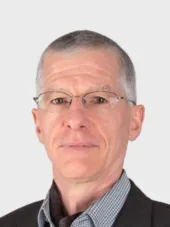
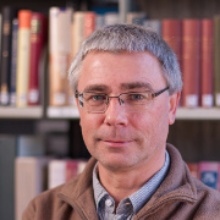
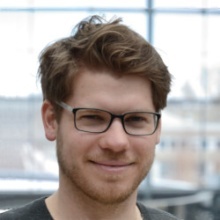
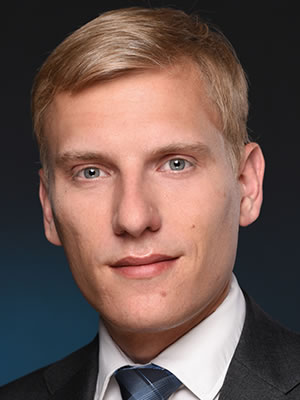
Prof. Dr. Martin Kronbichler is a faculty member at the Faculty of Mathematics , Ruhr University Bochum , leading the Numerics group. His research focuses on higher-order finite element methods, multigrid techniques, and high-performance computing for complex fluid and solid mechanics problems. Key Research Areas: Higher-order finite element methods, iterative solvers, multigrid algorithms, exascale mathematical software, and computational fluid dynamics. Notable Projects: EU-funded dealii-X (exascale digital twins), BMBF PDExa (optimized PDE solvers for exascale), and DFG grants for cut-discontinuous Galerkin methods and geometric multigrid. Publications Trends: Recent works emphasize matrix-free operators for hyperelasticity, diffuse-interface models for additive manufacturing, and multigrid smoothers for higher-order elements. Scientific Awards: Recipient of the Humboldt Research Award for his contributions to numerical methods and HPC. Team: Collaborates with researchers like Dr. Shubham Kumar Goswami, Dr. Richard Schussnig, and Natalia Nebulishvili.
Talhah Shamshad Ali Ansari is a Research Associate at the Chair of Structural Analysis and Dynamics at the Technical University of Munich (TUM) . He works on advanced computational methods, focusing on digital twins, adjoint-based system identification, and multiphysics simulations. His research addresses structural optimization, wind engineering, and robust meshing techniques. Research Highlights : Digital Twin technology for structural analysis Adjoint-based methods for system identification Multiphysics simulations in wind engineering Structural optimization for additive manufacturing Teaching : Contributed to courses in Theory of Plates and computational mechanics curricula Publications (2025): Developed adjoint-based thermal field recovery methods Analyzed algorithms for digital twin system identification Advanced high-fidelity simulations for structural weaknesses
Rainald Loehner is a Distinguished Professor of Fluid Dynamics at George Mason University's Center for Computational Fluid Dynamics. Since 2003, he has led the Center for Computational Fluid Dynamics at George Mason University. He is currently a Hans Fischer Senior Fellow at the Technical University of Munich's Institute for Advanced Study (TUM-IAS) for 2023, hosted by Professors Kai-Uwe Bletzinger and Roland Wüchner in the 'Adjoint-Based System Identification of Large-Scale Structures' Focus Group. Loehner received his Diplom Ingenieur (Maschinenbau) degree from the Technical University of Braunschweig, and his PhD and a DSc in civil engineering from the University College of Swansea, Wales. After teaching at Swansea for a year, he worked at the Naval Research Laboratory in Washington, DC, followed by a research professorship at George Washington University. He joined George Mason University as an associate professor and was promoted to full professor in 1995 and distinguished professor in 2004. With over 35 years of experience, Professor Loehner's research spans the complete pipeline of numerical solvers and simulation tools. His expertise includes pre-processing, grid generation, numerical methods, field solvers, parallel computing, adaptive mesh refinement, fluid-structure interaction, shape optimization, system identification, and computational crowd dynamics. His current work focuses on developing advanced field solvers for compressible and incompressible flows, acoustics, electromagnetic wave propagation, heat and mass transfer, structural mechanics, and fluid-structure interaction. Key application areas include blast mitigation, ship hydrodynamics, blood flow, contaminant transport, and pedestrian safety. Loehner's recent research output (2020-2024) shows a strong trend toward digital twin technology and adjoint-based methods for structural analysis and optimization. His publications focus on high-fidelity digital twins for detecting structural weaknesses, risk assessment in engineering systems, and optimization of sensor placement. His work bridges computational mechanics with machine learning approaches, particularly in system identification and inverse problems, demonstrating how computational methods can solve complex real-world engineering challenges. 2020: Ranked #15119 in the Stanford List of Most Influential Scientists of the World; #8 in Aerospace and Aeronautics 2010: Distinguished International Career Award, Argentine Association of Computational Mechanics 2008: Fellow, International Association for Computational Mechanics 2006: Associate Fellow, AIAA 2005: Honorary Professor, University of Wales Swansea 2005: Advisory Professor, Shanghai Jiao Tong University 2004: Distinguished Professor of Fluid Dynamics, George Mason University 1999: Computational Mechanics Achievements Award, Japan Society of Mechanical Engineering 1993: Doctor of Science in Civil Engineering, University College of Swansea 1979-1983: Studienstiftung des Deutschen Volkes (Top 1% of German Students) Professor Loehner has mentored numerous students through his work at George Mason University and has supervised research in computational fluid dynamics, structural mechanics, and related fields. His research has been supported by various grants from government agencies and industry partners, enabling the development of advanced simulation tools applied in aerodynamics, hydrodynamics, shock-structure interaction, and medical applications. His codes and methods have been widely adopted in industry and academia for applications ranging from aircraft and ship design to medical simulations and urban pathogen transmission modeling. Loehner leads the Center for Computational Fluid Dynamics at George Mason University, which focuses on developing cutting-edge computational methods for fluid dynamics and related multiphysics problems. The center works on strategic application areas including blast mitigation, ship hydrodynamics, blood flow simulation, and pedestrian movement modeling. As a TUM-IAS Fellow, he collaborates with the Chair of Computational Modeling and Simulation at TUM on adjoint-based system identification of large-scale structures, bringing together expertise in computational mechanics and digital twin technology to address complex engineering challenges.
Jens von Wolfersdorf is a Professor at the University of Stuttgart's Faculty of Engineering, Department of Mechanical Engineering. His research focuses on advanced thermal management systems for high-speed aerospace applications, particularly in the areas of heat transfer, fluid dynamics, and combustion. He specializes in experimental and numerical methods for analyzing complex flows in rotating and stationary cooling channels, transpiration cooling for rocket engines, and turbulence modeling. His work integrates cutting-edge techniques such as thermochromic liquid crystal (TLC) measurements, particle image velocimetry (PIV), and computational fluid dynamics (CFD) to validate novel cooling configurations. Key projects include the COOREFLEX-Turbo initiative and contributions to the European ATLLAS-II program for high-speed vehicle materials. Recent studies emphasize rotational heat transfer effects in two-pass cooling channels, additive manufacturing of ribbed cooling structures, and validation of coupled FEM-CFD frameworks. His research addresses challenges in aerospace thermal protection, turbine blade cooling, and scramjet combustor efficiency. Publications span over 15 years, with a focus on transient heat transfer, flow visualization, and material characterization for transpiration-cooled systems. Collaborations involve experimental facilities for high-speed flows and advanced thermal measurement systems.
Prof. Thomas Weiland is a Full Professor of Computational Electromagnetics at the Technische Universität Darmstadt since 1989. His research focuses on numerical methods, computational engineering, and multiphysics simulation techniques, particularly in accelerator physics and beam dynamics. He holds a Dr.-Ing. from TU Darmstadt and has held postdoctoral and research positions at CERN and TU Darmstadt. His work includes pioneering contributions to electromagnetic field simulations, including advanced finite element methods, discontinuous Galerkin techniques, and boundary element approaches. Education highlights include his Diplom in Electrical Engineering from TU Darmstadt (1975) and a Habilitation in Experimental Physics from the University of Hamburg (1984). His research spans computational electromagnetics, accelerator physics, and numerical methods for electromagnetic field problems. Notable areas of innovation include transparent boundary conditions, eigenmode calculations, and high-performance simulation frameworks for rotating systems and particle accelerators. His publications emphasize advancements in electromagnetic simulation tools, such as the MagPEEC method and Trefftz-discontinuous Galerkin approaches. Collaborative projects include modeling RF photoinjectors for light sources and electrohydrodynamic droplet dynamics. Technical contributions also extend to wake field analysis in particle accelerators and SAR distribution studies in bioelectromagnetics. Research interests further include multiphysics coupling (thermal-electromagnetic effects in surge arresters), stochastic modeling of electromagnetic systems, and field-circuit co-simulation techniques. His work addresses challenges in large-scale eigenvalue problems, adaptive mesh optimization, and high-precision numerical methods for complex geometries.
Benjamin Uekermann is a Jun.-Prof. (Assistant Professor) at the University of Stuttgart's Institute for Parallel and Distributed Systems (IPVS), part of the Faculty of Computer Science, Electrical Engineering, and Information Technology. His work focuses on sustainable simulation software ecosystems , particularly advancing the preCICE coupling library for multi-physics and multi-scale simulations. He leads research in partitioned simulation coupling , reproducible software practices, and high-performance computing tools. His research interests include Parallel computing and distributed systems Numerical methods for coupled PDE-based simulations Scientific software sustainability and open-source frameworks Data-driven adaptive algorithms Validation and testing of simulation ecosystems Recent work emphasizes reproducibility via NixOS integration, user-friendly tools like MetaConfigurator and ASTE, and multi-X coupling across scales and physics domains. His preCICE library enables seamless integration of solvers like OpenFOAM and FEniCS for fluid-structure interaction, CFD/CSD, and thermohydraulics. Key contributions include scalable radial-basis interpolation methods, quasi-Newton acceleration schemes, and geometric multi-scale coupling frameworks. He actively develops educational materials on open-source scientific computing and advocates for sustainable research software practices.
Prof. Simon Adrian holds the Chair of Theoretical Electrical Engineering at the Institute of General Electrical Engineering, University of Rostock, Germany. His research focuses on computational electromagnetics with critical applications in antenna design, electromagnetic compatibility, and medical technology. He serves as Associate Editor for the IEEE Transactions on Antennas and Propagation and contributes to the IEEE Antennas and Propagation Society Education Committee, demonstrating significant academic leadership in the global electromagnetics community. His primary research addresses low-frequency instability challenges in electromagnetic integral equations through innovative numerical techniques. Key areas include Calderón preconditioners, quasi-Helmholtz projectors, B-spline discretizations, and adaptive cross approximation methods. These approaches enable robust simulations across diverse applications from radar systems and antenna design to biomedical problems like deep brain stimulation and electroencephalography. Recent work emphasizes broadband stability and efficient solvers for multiply-connected geometries. Analysis of Prof. Adrian's publication trends (2023-2025) reveals a concentrated effort on overcoming fundamental limitations in electromagnetic modeling. His work consistently targets low-frequency regimes where traditional methods fail, developing mathematically rigorous stabilization techniques while expanding into biomedical applications. The integration of isogeometric analysis with specialized discretization strategies represents a cutting-edge direction in computational electromagnetics. Professional engagement includes active membership in the Institute of Electrical and Electronics Engineers (IEEE), IEEE Antennas and Propagation Society, and Union Radio-Scientifique Internationale (URSI), reflecting his commitment to advancing the field through collaborative research and scholarly communication.
Professor Siegfried Müller is a full professor at the Institute for Geometry and Practical Mathematics within the Faculty of Mathematics, Computer Science and Natural Sciences at RWTH Aachen University. His research focuses on developing advanced numerical methods for solving complex fluid dynamics problems, with particular expertise in conservation laws, adaptive multiscale techniques, and multiphase flow modeling. He maintains an active research program with numerous publications in leading computational mathematics journals and collaborates extensively with researchers across multiple institutions. Professor Müller's research interests span a wide range of computational mathematics topics including Conservation Laws, Finite Volume Schemes, Discontinuous Galerkin Methods, Adaptive Multiscale Techniques, and specialized applications in Fluid Dynamics. His work demonstrates particular strength in developing numerical methods for two-phase flow systems, transpiration cooling applications, and surface lubrication phenomena. His research bridges theoretical mathematical analysis with practical engineering applications, particularly in aerospace and mechanical engineering contexts. His recent publications reveal a strong focus on advancing numerical techniques for hyperbolic conservation laws, with increasing emphasis on stochastic methods, multilevel approaches, and coupled system modeling. His work spans both theoretical developments in numerical analysis and practical applications in fluid dynamics, with particular attention to multiphase flow systems and cooling technologies. The publications show a clear progression toward more complex, high-dimensional problems and increasingly sophisticated numerical techniques to address computational challenges. Professor Müller has led and participated in numerous research projects funded by German research organizations including DFG Priority Programmes, BMBF projects, and DFG Research Training Groups. His projects have focused on hyperbolic balance laws, adaptive numerical methods, transpiration cooling, and textured surface lubrication. He has organized multiple workshops on multiresolution methods and active drag reduction, demonstrating leadership in his research community. Professor Müller's research group at RWTH Aachen collaborates closely with engineering departments and industry partners to apply advanced numerical methods to practical engineering challenges. His team has developed specialized computational tools for simulating complex fluid phenomena, particularly in aerospace applications where cooling technologies and fluid-structure interactions are critical. The group maintains strong connections with international research communities in computational mathematics and fluid dynamics.
Prof. Mario Kupnik is a Full Professor at the Technische Universität Darmstadt , leading the Measurement and Sensor Technology Group within the Department of Electrical Engineering and Information Technology. His academic career includes roles at Stanford University (2005–2011) and Brandenburgische Technische Universität Cottbus (2011–2014). He holds a doctorate from Montanuniversität Leoben (2000–2004) and a master's in Telematics from Graz University of Technology. His research focuses on micromachined sensors and actuators , ultrasonic and electroacoustic systems , and non-destructive testing . He pioneers innovations in wearable sensors, biomedical applications, and additive manufacturing for sensor integration. Notable contributions include air-coupled ultrasonic transducers, 3D-printed ferroelectret sensors, and robotics for STEM education. Recent work emphasizes biodegradable sensors , acousto-optic modulation , and multi-parameter medical measurement systems . His projects span from fundamental material science to applied engineering solutions, often leveraging open-source hardware. Kupnik’s labs integrate interdisciplinary approaches, combining electrical engineering, materials science, and biomedical engineering.
Dr. Carsten Lange is a faculty member at the Chair of Hydrogen and Nuclear Energy within the Institute of Process Engineering and Environmental Technology at Technische Universität Dresden . Since 2010, he has led the Reactor Dynamics workgroup and has served as Head of the nuclear training reactor AKR-2 since 2015. His research focuses on nonlinear stability analysis of boiling water reactors (BWR) , model order reduction techniques , neutron noise analysis , and non-invasive reactor monitoring . Dr. Lange earned his PhD in 2009 from Technische Universität Dresden with a dissertation titled Advanced nonlinear stability analysis of boiling water nuclear reactors . He has contributed to projects like GRE@T-PIONEER and international initiatives such as the OECD/NEA Zero Power Reactors Task Force . His work includes experimental reactor physics , nuclear safety , and reactor instrumentation development. His research spans nuclear reactor stability , neutron imaging , and advanced simulation techniques . Key publications analyze PWR power fluctuations , coupled fuel assembly vibrations , and reduced-order models for online monitoring . Dr. Lange actively mentors students in reactor physics and reactor training assignments.
Dr. Karolina Grabowska is a researcher at the Faculty of Science and Technology, Jan Dlugosz University in Czestochowa. She specializes in Adsorption chillers Modeling Computational Fluid Dynamics Renewable energy systems Her work focuses on fluidized bed reactors , adsorption cooling systems , and desalination technologies . Recent publications demonstrate expertise in CFD-DEM modeling , heat transfer optimization , and machine learning applications for energy systems. Key collaborations include researchers from institutions such as Faculty of Energy and Fuels Faculty of Mechanical Engineering Strata Mechanics Research Institute
Stefanie Elgeti is Associate Professor and Private Lecturer at the Chair for Computational Analysis of Technical Systems (CATS), Faculty of Mechanical Engineering, RWTH Aachen University. She previously held a professorship in lightweight design at TU Vienna starting in 2019. Her research integrates computational mechanics with manufacturing process optimization, focusing on plastics extrusion, injection molding, and high-pressure die casting. Diploma in Mechanical Engineering, majoring in 'Manufacturing Techniques for Microsystems' PhD (2011): 'Free-Surface Flows in Shape Optimization of Extrusion Dies' Habilitation (2016): 'CAD-Conforming Finite Element Methods in Engineering Design' Her research centers on solving inverse problems in manufacturing through numerical simulation. She employs advanced techniques such as free-surface flow modeling, non-Newtonian material models, spline-based finite elements, and PDE-constrained shape optimization. Her group simulates entire process chains from filling to solidification and warpage prediction, enabling design optimization of cavities and cooling systems. The recent publications (2022–2024) reveal a strong trend toward integrating artificial intelligence—particularly physics-informed neural networks and Bayesian optimization—into traditional simulation workflows. There is increasing emphasis on warpage compensation, shape optimization of extrusion dies, and modeling of biomedical and environmental systems, showcasing a broadening scope from industrial manufacturing to interdisciplinary applications. She is actively involved in academic service, having served as vice-spokesperson of GAMM-Juniors (2013–2014) and currently co-chairing the ECCOMAS Young Investigator Group. While no formal awards are listed, her leadership roles and editorial contributions reflect significant recognition in the computational mechanics community. Prof. Elgeti advises students and leads multiple research initiatives at CATS, including work groups focused on production engineering, fluid-structure interaction, and INTERESST. Her team develops model hierarchies and digital twins for industrial processes, aiming to bridge simulation and real-world manufacturing through intelligent, adaptive systems.
Dr. Lars Schütze is a researcher at the Chair for Compiler Construction within the Faculty of Computer Science at Dresden University of Technology (TU Dresden). Holding a PhD in Computer Science from TU Dresden, he currently serves as a PostDoc specializing in domain-specific compilers for verifiable Full Homomorphic Encryption (vFHE) and hybrid quantum-classical computing systems. His academic credentials from TU Dresden include: Bachelor's degree in Computer Science Master's degree in Computer Science PhD in Computer Science (awarded February 2025) Schütze's research centers on advanced compiler design for emerging computational paradigms. His foundational work explores context-oriented and role-based programming languages, focusing on runtime optimization and dispatch mechanisms. Recent efforts pivot toward post-quantum security through homomorphic encryption compilers and hybrid quantum-classical computing frameworks. His research bridges theoretical language design with practical compiler implementation, emphasizing verifiable security and performance efficiency in next-generation computing environments. Publication analysis reveals a clear evolution from context-oriented programming (2017-2020) toward cryptographic compiler development (2022-2025). Early work optimized role-based dispatch systems, while recent publications establish compiler frameworks for Fully Homomorphic Encryption using MLIR infrastructure. His research consistently addresses performance bottlenecks in dynamic language features while transitioning toward quantum-resistant cryptography solutions. Scientific Awards: No awards documented in source materials Dr. Schütze supervises student theses in Homomorphic Encryption and Quantum-Classical Computing frameworks, offering projects spanning Bachelor to Master levels. His research is funded through institutional projects including (verifiable) Full Homomorphic Encryption and Hybrid Quantum-Classical Computation, though specific grant details remain undisclosed. He actively develops compiler infrastructure for encrypted computation and quantum-classical orchestration. As core personnel in TU Dresden's Chair for Compiler Construction, Schütze contributes to the RoSI project (role-based software infrastructures) and leads current initiatives in vFHE. His team collaborates on building domain-specific compiler toolchains that address quantum computing threats through post-quantum cryptographic solutions while advancing hybrid execution models for emerging hardware architectures.
Prof. Dr.-Ing. Dennis Hohlfeld serves as Professor and Chair of Micro- and Nanotechnology of Electronic Systems at the University of Rostock's Institute of Device Systems and Circuit Technology. He holds key administrative roles as Study Advisor and Chairman of the Computational Science and Engineering (CSE) Examination Board, while actively contributing as a reviewer for research funding organizations and scientific publishers. His research spans five core domains: Silicon-based microsystem technology focusing on nanoscale material behavior for high-performance electronics Energy-autonomous systems leveraging environmental energy sources through harvesting techniques Energy-efficient circuit design for miniaturized applications Microoptics development for photonic integration Modeling and simulation techniques enabling system-level analysis of complex multiphysics phenomena Analysis of his 15 most recent publications reveals a dominant trend toward biomedical energy solutions, particularly thermoelectric generators for implantable devices. His work demonstrates strong interdisciplinary integration across electrical engineering, materials science, and neuroscience, with increasing emphasis on model order reduction for efficient simulation of MEMS devices and optogenetic applications. The publications consistently address miniaturization challenges while maintaining system-level performance. No scientific awards were documented in the provided materials. As Study Advisor and Examination Board Chairman for CSE, Prof. Hohlfeld oversees academic progression for computational science students. His research leadership encompasses: Technical Domains Energy harvesting systems for medical implants Photonic integration in microelectronics Multiphysics modeling frameworks Application Areas Autonomous environmental sensors Neuroprosthetic interfaces Power-efficient microsystems The Institute of Device Systems and Circuit Technology houses specialized laboratories for microsystem fabrication, energy harvesting characterization, and optical circuit development, supporting his research in silicon-based nanotechnology and energy-autonomous systems.
Dr. Jun Huang is an Assistant Professor at Forschungszentrum Jülich, leading the Helmholtz Young Investigator Group focused on the 'Theory of Electrocatalytic Interfaces.' He is affiliated with the Institute of Energy Technologies (IET), specifically in the department of Theory and Computer-Based Modelling of Materials in Energy Technology. His research centers on theoretical electrocatalysis and electrochemical interfaces, with expertise in: Electrical double layer phenomena and capacitance behavior Density-potential functional theory for metal-solution interfaces Multiscale modeling of electrochemical reaction environments Electrocatalyst design through computational methods Ion transport and interfacial structuring in energy systems His recent publications demonstrate a strong focus on developing fundamental theoretical frameworks for understanding electrocatalytic interfaces, with recurring themes in double-layer effects, reaction kinetics, and computational method development. The work bridges theoretical electrochemistry with applications in energy conversion and storage. Major recognitions include: Helmholtz Young Investigator Group Grant European Research Council Starting Grant Dr. Huang leads a computational research group developing advanced theoretical models to decipher electrocatalytic processes. His team focuses on creating predictive frameworks for interfacial reactions relevant to energy technologies.