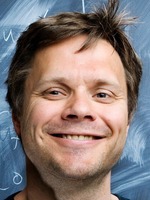
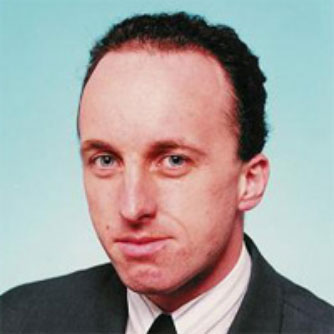
Cécile Daversin-Catty is a Research Scientist at Simula Research Laboratory in the Department of Numerical Analysis and Scientific Computing. Her work bridges computational mathematics and biomedical engineering through advanced finite element methods. Education: PhD in Applied Mathematics (2016, Université de Strasbourg), thesis titled 'Reduced basis method applied to large non-linear multi-physics problems: application to high field magnets design' Her research focuses on scientific computing , finite element methods , and mixed-dimensional coupling , with applications spanning fluid mechanics , cardiac electromechanics , and neurovascular modeling . Recent publications highlight her expertise in computational fluid dynamics for cardiac flow simulations, development of FEniCS-based tools for mixed-domain problems, and modeling of perivascular networks. Key trends in her work include: Development of robust numerical frameworks for multi-physics problems Advancing cardiac electromechanical modeling for heart failure studies Exploring glymphatic system dynamics via mixed-dimensional finite elements Software innovation in computational science tools She collaborates extensively with researchers across computational cardiology and neuroscience, contributing to open-source platforms like FEniCS.
Kent-Andre Mardal is a Professor at the Department of Mathematics , University of Oslo . He specializes in computational mechanics with a strong focus on biomechanical applications in medicine , particularly in modeling brain clearance mechanisms during sleep. His work integrates multi-physics modeling , fluid-structure interaction , and poroelastic couplings to advance understanding of the glymphatic system and cerebrospinal fluid dynamics. Education: PhD (2002) – Simula Research Laboratory Research Interests: Mardal's research spans a wide range of disciplines including: Computational Mechanics – developing robust numerical algorithms for complex physical systems Biomechanical Applications – particularly in neuroscience and medical imaging Brain Clearance During Sleep – modeling the glymphatic system and CSF flow dynamics Multi-Physics Modeling – integrating fluid dynamics, elasticity, and neural networks Finite Element Methods – for accurate and efficient simulations Neural Networks in Scientific Computing – exploring physics-informed neural networks Research Trends from Publications: Mardal's recent publications (2022–2025) demonstrate a clear focus on brain fluid dynamics , particularly the glymphatic system , CSF circulation , and neurodegenerative disease modeling . He employs advanced numerical techniques such as isogeometric analysis , physics-informed neural networks , and parameter-robust preconditioning to solve complex multi-physics problems. His work bridges medical imaging (MRI) with computational modeling to provide insights into brain clearance mechanisms and their impairment in diseases like Alzheimer's. Scientific Awards: No specific awards are mentioned in the provided text. Grants and Projects: Currently, Mardal is the Principal Investigator (PI) of three active research projects: Alzheimer's Physics – exploring the role of fluid dynamics in neurodegeneration Scientific Machine Learning – advancing numerical methods with AI Computational Hydrology – modeling subsurface fluid flow Affiliations and Teams: Mardal was previously a group leader at the Centre of Excellence “Biomedical Computing” at the Simula Research Laboratory. He has authored over 100 papers and several books, and his research homepage is available at https://kent-and.github.io/ .
Ricardo Camarero is an Associate Professor in the Department of Mechanical Engineering at Polytechnique Montréal. With a B.Eng., M.Eng., and Ph.D. from McGill University, he has established himself as a leading researcher in computational fluid dynamics and numerical methods for mechanical engineering applications. His research interests span geometric modeling, combustion and reactive flows, numerical simulation of fluid flows, aerodynamics using numerical methods, and turbomachinery design. Professor Camarero's work primarily focuses on developing and applying advanced computational techniques to solve complex engineering problems, particularly in the areas of fluid-structure interaction, high-voltage circuit breaker design, and turbomachinery flow analysis. With 166 publications spanning several decades, his research output demonstrates consistent contributions to the field of computational fluid dynamics. His recent work (2021-2024) shows continued activity in immersed boundary methods, mesh generation techniques, and applications to electrical engineering problems, indicating an active and productive research program. Professor Camarero has supervised 20 PhD students and 15 Master's students, reflecting his significant contribution to graduate education. His teaching responsibilities include courses in numerical methods and fluid mechanics, directly supporting his research areas. His research has strong practical applications, particularly in the electrical engineering sector where his work on circuit breaker design, arc extinction, and alternative insulating gases provides valuable insights for industry. The interdisciplinary nature of his work bridges mechanical engineering, electrical engineering, and computational mathematics.
Herbert Egger is a Professor of Numerical Analysis and Scientific Computing at Johannes Kepler University (JKU) Linz and heads the Institute of Numerical Mathematics. He is also a Group Leader at RICAM (Johann Radon Institute for Computational and Applied Mathematics) and Scientific Director at the Austrian Academy of Sciences. His research focuses on advanced numerical methods for partial differential equations, including structure-preserving discretizations, inverse problems, and computational electromagnetics. Current projects include SFB F90-N (CREATOR) for electric machine co-simulation, SPP 2256 for phase-field modeling in additive manufacturing, and TRR 146 on multiscale soft matter systems. Key research areas: mixed/hybrid finite element methods, energy-based modeling, model order reduction, radiative transfer, and inverse problem stabilization. His recent work emphasizes nonlinear magnetostatics, phase separation models, and efficient solvers for time-dependent systems. Egger collaborates internationally with institutions like TU Eindhoven and TU Darmstadt.
Andreas Almqvist is a Professor in Machine Elements at Luleå University of Technology (LTU), working within the Department of Engineering Sciences and Mathematics. He serves as the director and operations manager of the Center for Sports and Performance Technology (SPORTC) and is actively involved in research and teaching related to computational tribology. Almqvist has been affiliated with LTU since completing his Master's degree in 2001, progressing through academic ranks to his current professorship. Almqvist completed his Master of Science in Engineering at LTU in December 2001 and defended his PhD thesis in September 2006 titled 'On the Effects of Surface Roughness in Lubrication.' Following a 2-year postdoctoral position with Shell Global Solutions in England under the Marie Curie Transfer of Knowledge program (2007-2008), he returned to LTU in January 2009. He became Docent in November 2010, was appointed Associate Professor in January 2012, and was promoted to Professor in Machine Elements in May 2017. His research focuses on computational tribology, with particular emphasis on multiphysics and multiscale modeling and simulation of continuum mechanical problems in tribology and sports technology. His work spans contact mechanics, flows in thin gaps, and friction phenomena, with recent applications to skiing performance. Since fall 2021, he has been collaborating with the Swedish Olympic Committee's 'Olympisk Offensiv' research program alongside other prominent Swedish sports scientists. His research approach integrates applied mathematics with practical engineering challenges, often involving collaborations across departments including Fluid Mechanics, Mathematics, and Machine Learning. Analysis of Almqvist's recent publications reveals a strong trend toward applying tribological principles to winter sports performance, particularly skiing. His work bridges fundamental computational methods with practical applications, showing increasing interdisciplinary collaboration across engineering disciplines, sports science, and materials science. The research demonstrates both theoretical advances in modeling techniques and practical applications for performance enhancement in Olympic sports. ERC Grant Recipient Marie Curie Transfer of Knowledge Program Participant VR (Swedish Research Council) Grant Recipient for multiple projects including 'New Concepts in Thin Film Flow Modelling' (DNR 2014-4894) and 'Multiscale Topological Optimization for Lower Friction, Less Wear and Leakage' (DNR 2019-04293) Almqvist serves as Editor-in-Chief for 'The Proceedings of the IMechE Part J - Journal of Engineering Tribology' since 2019 and has been involved in numerous research projects funded by both academic and industrial partners. He has supervised student projects in collaboration with academic and industrial partners and has secured significant research funding from the Swedish Research Council. His educational leadership extends to serving as program director for the Engineering Physics and Electrical Engineering program at LTU. As director of the Center for Sports and Performance Technology (SPORTC), Almqvist leads the Ski and Snow Lab which focuses on physics at different scales related to friction in skiing. The center represents a strategic initiative at LTU to bridge engineering science with sports performance, creating a unique interdisciplinary research environment that brings together expertise from multiple departments including Machine Elements, Fluid Mechanics, and Mathematics.
Prof. Jonathan J. Wylie serves as a Professor at City University of Hong Kong, holding a PhD from King's College, University of Cambridge, UK. His academic trajectory includes a Junior Research Fellowship at King's College, followed by research appointments at Cornell University, Woods Hole Oceanographic Institution, and the University of Toronto prior to his current position. His research expertise spans fluid mechanics , granular materials , suspension mechanics , and mathematical modeling of geophysical systems , with seminal contributions to viscous thread dynamics and coupled partial differential equations. His interdisciplinary work bridges industrial applications with fundamental physics. Analysis of his recent publications reveals dominant research threads in granular flow intermittency , thermal effects in viscous filaments , and mathematical neuroscience . His methodology consistently combines asymptotic analysis with computational modeling to address complex multiphysics problems, demonstrating strong cross-disciplinary collaboration between physics, engineering, and life sciences. His distinguished scientific recognition includes: Junior Research Fellowship from King's College, Cambridge Wylie has secured major research funding from the National Science Foundation (USA), Australian Research Council, and Hong Kong's Research Grant Council. As associate editor of the IMA Journal of Applied Mathematics , he actively shapes scholarly discourse. His extensive publication record in high-impact journals like Journal of Fluid Mechanics and Physical Review E demonstrates sustained research productivity without explicit mention of advisees in available materials. While specific laboratory facilities aren't documented, his international collaborations with institutions across North America, Europe, and Asia indicate participation in global research networks addressing industrially relevant fluid dynamics challenges.