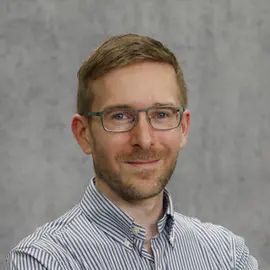
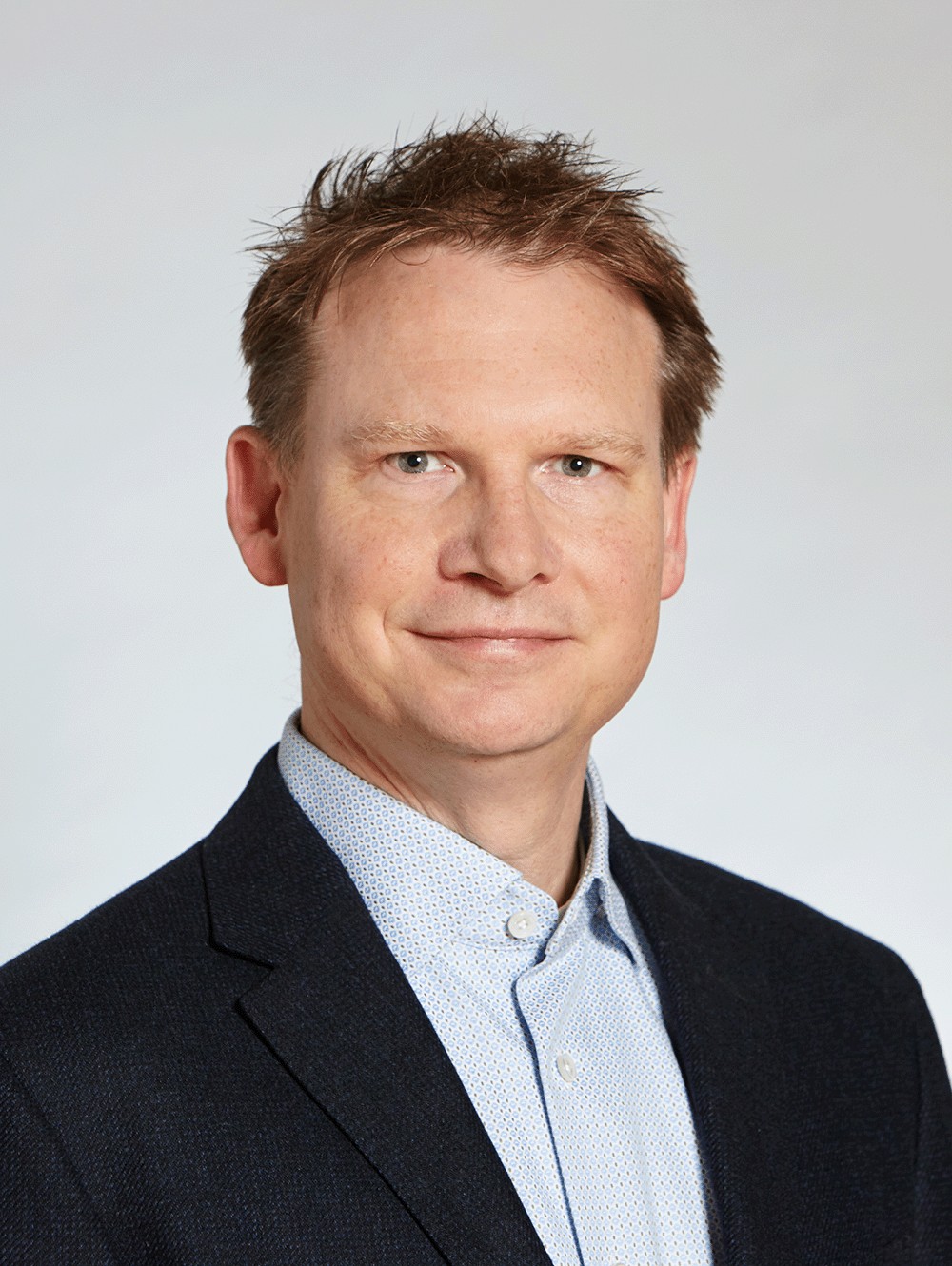
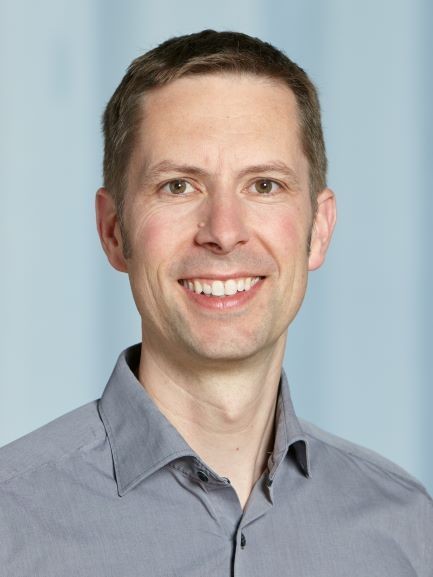
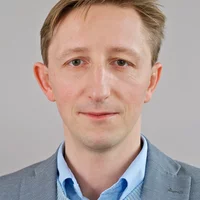
Roman Pascal Schärer is a researcher at the ZHAW School of Engineering, focusing on electrochemical cells and energy systems. His work spans flow battery modeling, porous electrode analysis, and organic synthesis applications for energy storage. Current projects include high-throughput screening of flow battery materials and pharmaceutical electrosynthesis research. Research Interests : Electrochemical energy systems Redox flow battery design Multi-scale modeling of porous electrodes Organic synthesis for energy storage Mathematical modeling of transport phenomena Performance prediction and degradation analysis
Dr. Xiang Kong is a Researcher affiliated with the Department of Materials at ETH Zurich, specifically within the Professorship for Soft Materials. His work focuses on fluid dynamics in porous media, geothermal energy systems, and carbon capture and storage (CCS). He leads experimental and numerical studies to understand subsurface processes, including fluid-rock interactions, CO2 sequestration, and fracture permeability evolution under thermal and mechanical stresses. His research integrates advanced computational methods like lattice-Boltzmann simulations and machine learning to address challenges in energy and environmental engineering. Key areas of investigation include optimizing CO2 storage in salt caverns, enhancing geothermal energy extraction through phase-transition fracturing, and modeling mineral precipitation dynamics during geothermal reinjection. Dr. Kong collaborates on projects such as ZoDrEx, aiming to improve zonal isolation and drilling techniques in enhanced geothermal systems (EGS). His experimental methods involve hydraulic tomography, laser-induced fluorescence (LIF), and 3D-printed fractured media to study solute transport and flow path evolution. Notable contributions include developing novel tracers (e.g., DNA-labeled nanoparticles) for subsurface monitoring and advancing physics-informed machine learning models for direct inversion of subsurface flow systems. His work bridges fundamental materials science with applied geoscience, addressing critical global challenges in energy transition and climate mitigation.
Research Associate at EPFL's Soil Mechanics Laboratory and Lecturer in Civil Engineering. Vice-Chair of ISSMGE Technical Committee on Energy Geotechnics. Research focuses on multiphysical behavior of geomaterials for nuclear waste containment and CO2 storage. Co-director of the Winter School on Geomechanics for Energy and the Environment. Investigates hydro-mechanical properties of shales, bentonite barriers, and clay-sulfate rocks using advanced laboratory testing and machine learning models. Recent projects analyze gas migration in repository host rocks and swelling damage mechanisms. Editorial roles include Editor-in-Chief of Geomechanics for Energy and the Environment. Leads multinational collaborations on radioactive waste disposal safety assessment, including experimental work at Mont Terri Rock Laboratory. Swiss representative for ISSMGE technical committees on laboratory testing and unsaturated soils.
Prof. Martin O. Saar is a Full Professor at ETH Zürich's Department of Earth and Planetary Sciences, leading the Geothermal Energy and Geofluids research group, funded by the Werner Siemens Foundation. His work focuses on geophysical fluid dynamics, subsurface multiphase fluid processes, and geothermal energy innovation. Key research areas include CO2-Plume Geothermal (CPG) systems, numerical modeling of geodynamic processes, and CO2 storage integration. His research group develops advanced numerical codes like I2(EL)VIS and I3(EL)VIS for simulating tectonic and planetary processes, incorporating fluid-rock interactions, melt transport, and seismic dynamics. Recent projects address the techno-economic feasibility of CPG systems, plasma-pulse drilling (PPGD), and subsurface energy utilization. Notable contributions include advancing geothermal heat pump systems, optimizing CO2 storage-geothermal energy co-production, and assessing geothermal potential in regions like the Ethiopian Rift and Switzerland. His work bridges fundamental geoscience with applied energy solutions, emphasizing sustainability and climate mitigation. Current initiatives include the BedrettoLab underground research facility, exploring subsurface processes, and policy briefs for fossil-fuel independence in Switzerland. His research portfolio reflects a commitment to transformative geothermal and carbon management technologies.
Christian Franck is a Full Professor at the Swiss Federal Institute of Technology (ETH) Zurich , leading the Power Systems and High Voltage Lab within the Department of Information Technology and Electrical Engineering. His career spans academic and industrial roles, including prior positions at ABB Research Center and Max-Planck-Institute for Plasma Physics. Education: Physics (Diploma, 1999) from University of Kiel, with studies at Bonn and Edinburgh PhD: Experimental Physics (2003) from Max-Planck-Institute Research focuses on technologies for future electric energy transmission systems , emphasizing high-voltage gaseous and solid insulation, current interruption, and SF6-free gas mixtures. His work combines experimental methods with multiphysics simulations to address classical high-voltage engineering challenges through novel approaches. 2025 publications highlight advancements in eco-friendly insulation gases , arc modeling for HVDC breakers, and AI-driven fault diagnostics. Key journals include Journal of Physics D: Applied Physics , Reliability Engineering & System Safety , and IEEE Transactions series. Teaching responsibilities include courses like High Voltage Engineering , Electric Power Transmission , and Ethics in Scientific Integrity . Lab activities involve experimental platforms for gas discharge studies, corona mitigation, and hybrid AC/DC transmission line analysis.
Jean-Marie Drezet is a Teaching Professor at École Polytechnique Fédérale de Lausanne (EPFL), working within the School of Engineering's Institute of Materials (IMX). He holds multiple positions including Maître d'enseignement et de recherche at IMX-Gestion, SMX-Enseignement, and the Laboratory of Mechanical Metallurgy (LMM). His office is located at MXG 330 building on the EPFL campus in Lausanne, Switzerland. Drezet's research focuses on thermomechanical effects in cast metal parts, particularly aluminum alloys. His expertise includes residual stress measurements using neutron diffraction at facilities like PSI-Villigen and ILL-Grenoble, hot cracking phenomena during solidification processes, and the influence of precipitation on residual stresses during quenching of thick aluminum components. His work combines experimental characterization with advanced finite element modeling. Analysis of his recent publications reveals a consistent focus on residual stress measurement and prediction in aluminum alloys, particularly during casting, welding, and heat treatment processes. His research group extensively uses neutron diffraction for experimental validation and develops computational models to predict stress generation during manufacturing processes. The work spans from fundamental solidification phenomena to industrial applications in aluminum casting and welding. Drezet has been actively involved in supervising PhD students, with completed theses covering topics such as residual stresses in welded tubular joints, ventricle dilation in hydrocephalus, hot tearing simulation using granular models, and stress generation during quenching of aluminum forgings. He serves on several committees including the Master admission committee for the Materials section, the IMX library committee, and the editorial committee of Metallurgical Research and Technology journal.
Hannes Freiße is an Assistant Professor at the Geneva School of Landscape, Engineering and Architecture (HES-SO), specializing in Mechanical Engineering . His research focuses on Additive Manufacturing , Laser Machining , Welding , and Surface Treatment technologies. Education: BSc HES-SO in Mechanical Engineering from Geneva School of Landscape, Engineering and Architecture Key Competencies: Additive Manufacturing, Laser Machining, Industrial Welding, Quality Control, Surface Treatment Recent research highlights include: 2025: Development of a deep-learning segmentation model for automated detection of surface porosity defects in laser-deposited bronze coatings 2024: 3D COMSOL Multiphysics simulation of bimetallic alloy cooling processes tracking solidification dynamics and residual stresses 2024: Comparative studies on laser cladding techniques for tribological applications and bronze-on-steel deposition His work addresses critical challenges in metallurgical bonding , wear resistance , and process optimization across multiple manufacturing domains.
Dr. Simon Iwan Stingelin is a Lecturer in Mathematics at the Institute of Applied Mathematics and Physics (IAMP) within the School of Engineering at Zurich University of Applied Sciences (ZHAW). His work focuses on scientific computing and algorithmics, with particular expertise in numerical methods and mathematical modeling. Dr. Stingelin's research interests span multiple domains of applied mathematics and computational science. He specializes in modeling and numerical simulation with emphasis on electrodynamics, fluid dynamics, and mechanics. His work also encompasses optimal control of partial differential equations and model reduction techniques. As an educator, he teaches advanced courses in numerical analysis and higher mathematics, with a focus on practical applications in engineering. His publication record demonstrates expertise across computational mathematics, fluid dynamics, and control theory. Recent work includes Bayesian analysis of NMR spectra, modeling of peristaltic pumps considering viscoelastic materials, and teaching methodologies for finite element methods using NGSolve. His research shows a consistent trajectory from theoretical mathematical problems to practical engineering applications, with publications spanning from foundational mathematical problems to applied engineering solutions. Dr. Stingelin leads and contributes to multiple research projects including Raman for Process Analytics (Deputy Project Leader, ongoing) Automatic Counting of Varroa Mites in Bee Colonies (Project Leader, completed) Position Error Correction Algorithm (Team Member, completed) SCIS Simulation Based Calibration of Infusion Systems (Team Member, completed) Optical Gas Sensor with Ceramic Cell (Team Member, completed) His teaching approach emphasizes hands-on computational methods, particularly through the use of NGSolve for finite element analysis. He has developed course materials that integrate Jupyter notebooks and interactive learning environments to teach Higher Analysis and Numerics to engineering students across multiple disciplines including Computer Science, Mechanical Engineering, Electrical Engineering, Systems Engineering, and Aviation.
Tailin Wu is an Assistant Professor at Westlake University in the Department of AI within the School of Engineering . He leads the AI for Scientific Simulation and Discovery Lab , focusing on integrating machine learning with fundamental scientific domains. Previously, he conducted postdoctoral research at Stanford Computer Science (2020-2023) under Jure Leskovec , earned his PhD in Physics from MIT (2019) under advisors Isaac Chuang and Max Tegmark , and completed his BSc in Physics at Peking University (2012). Research Interests : Generative AI for scientific simulation (diffusion models, flow matching), AI agents for automated discovery (neural-symbolic integration), representation learning with graph models and information theory His work spans physics-informed machine learning, with applications in fluid dynamics, energy systems, and life sciences. Key contributions include developing methods for safe PDE control with conformal prediction and creating interpretable theory-learning frameworks through the AI Physicist paradigm. Scientific Awards : Best Poster Award, ICML Time Series Workshop (2019) Outstanding Postdoc, Westlake University (2024) Nominated for Outstanding Youth Paper Award, China Embodied AI Conference (2025) As an educator, he teaches Frontiers in Computer Science and Technology at Westlake University and has guest-lectured at Caltech and MIT. His lab actively recruits postdocs, PhD students, and interns.
Dr. Alexander Heinlein is an Assistant Professor in the Numerical Analysis group at the Delft Institute of Applied Mathematics (DIAM), Faculty of Electrical Engineering, Mathematics & Computer Science (EEMCS), Delft University of Technology (TU Delft). His work bridges scientific computing and machine learning through scientific machine learning (SciML) , focusing on domain decomposition methods and multiscale approaches for solving complex partial differential equations on modern hardware like GPUs. Research interests include: Developing high-performance computing algorithms for nonlinear PDEs with applications in fluid-structure interaction and photonic crystals Advancing physics-aware machine learning techniques for groundwater heat transport and post-burn contraction prediction Creating parallel preconditioners like FROSch for challenging problems in computational mechanics Building hybrid numerical-ML frameworks with domain decomposition for multi-physics applications His recent publications highlight a 128-235x speedup in biomedical simulations through deep operator networks , and keynote presentations on geometric challenges in machine learning-based surrogate models at international conferences like CASML 2024. Scientific awards include: 2025 NWO Open Technology Programme grant for the RAPID-Wind project on offshore wind turbine foundations Students and collaborations involve: Yuhuang Meng (PhD candidate, 2024) Jing Zhao (co-supervisor) Prof. Jun Zou (Chinese University of Hong Kong collaboration, 2024) He leads software development for COMSOL and Trilinos extensions while maintaining open-source reproducibility standards.
Prof. Dr. Jürg Küffer serves as Head of the Institute of Product and Production Engineering at the University of Applied Sciences and Arts Northwestern Switzerland (FHNW), School of Engineering and Environment. He teaches Finite-Element Simulation and Plastics Engineering in the BSc Mechanical Engineering program, Computational Structural Mechanics in the MSE program, and supervises bachelor's projects and master's theses. Education: 1989–1995: Doctorate at Institute of Fluid Dynamics, ETH Zürich 1986–1988: Mechanical Engineering, ETH Zürich 1982–1985: Mechanical Engineering, HTL Brugg-Windisch 1978–1982: Apprenticeship as a Toolmaker 1995–1996: Postgraduate Studies in Plastics Engineering, HTL Brugg-Windisch 1993–1995: Didactics Certificate for Mechanical Engineering, ETH-Zürich Prof. Küffer's research centers on advanced computational mechanics methodologies, with emphasis on nonlinear finite-element simulations and multiphysics structure-thermal-fluid coupled FE analyses. His work bridges theoretical modeling with industrial applications in mechanical engineering, particularly in plastics engineering and structural integrity assessment. These simulation techniques address complex real-world engineering challenges in product development and manufacturing processes. Scientific Awards: No awards documented in source materials. As an academic advisor, Prof. Küffer supervises bachelor's student projects and master's theses in mechanical engineering. His professional trajectory includes leadership roles as Development Engineer and Project Manager at Helbling Technik AG (1995-2002) and Lecturer at Fachhochschule beider Basel (2002-2005) prior to his current directorship. While specific research grants aren't detailed, his institute drives applied R&D partnerships with industry. Leading the Institute of Product and Production Engineering, Prof. Küffer oversees interdisciplinary teams focused on advancing product design methodologies and production engineering solutions. The institute operates as a nexus for academic-industry collaboration, translating research into practical manufacturing innovations while maintaining strong ties to Switzerland's engineering sector.
Prof. Dr. Norbert Hofmann is a Lecturer in thermo-mechanical and casting simulation at the Institute of Thermal and Fluid Engineering within the School of Engineering and Environment at the University of Applied Sciences and Arts Northwestern Switzerland (FHNW) . His career spans over 25 years of research and teaching in computational mechanics and advanced manufacturing processes. Roles : Lecturer, Researcher, Conference Organizer Expertise : Numerical simulation, casting optimization, thermal analysis Collaborations : Swiss Nanoscience Institute, ETHZ, international automotive/energy sectors Research Interests focus on: Thermo-mechanical simulation of industrial casting processes Advanced solidification modeling with finite element methods Process optimization using automated systems Thermal management in electronics packaging Microspecimen mechanical testing at extreme temperatures Publication Trends show consistent contributions to casting technology innovation, spanning from aerospace turbine blades (1990s) to modern nanoscale bonding applications. His work bridges computational modeling with experimental validation across disciplines. Scientific Awards : Best Paper Award (2000) for innovative casting process development Outstanding ranking for thermophysical property data contributions As educator, he has mentored numerous students in Computational Mechanics and Advanced Manufacturing through hands-on simulation projects. His research has been supported by collaborations with ABB Turbo Systems AG , Honda Research Center , and Ford Research Center . Labs & Teams : Active participant in the Final COST526 Workshop and APOMAT research consortium. Maintains close ties with Foundry Center FHNW and Swiss NanoScience Institute at Basel University.
Dr. Athanasios Mokos is a researcher at the Paul Scherrer Institute (PSI) in Switzerland, specializing in computational physics and fluid dynamics. His work bridges nuclear engineering, geochemistry, and environmental engineering through advanced numerical simulations. Expertise in SPH (Smoothed Particle Hydrodynamics) Focus on reactive transport and multiphase flow Key applications in nuclear reactor safety and subsurface processes Research spans pore-scale modeling of cement-clay interactions, gas transport in geological media, and GPU-accelerated simulations for multiphysics problems. His publications emphasize machine learning integration, environmental remediation, and coastal/coastal structure hydrodynamics. Current trends in his work include Digital Twin frameworks for carbonate precipitation, CRUD analysis in nuclear fuel assemblies, and validation of surface wetting models via lattice Boltzmann methods. His position at PSI involves high-performance computing and multiphase flow simulations, with contributions to desalination membrane design and sediment grain dynamics.
Prof. Sergey Churakov is a Full Professor of Mineralogy at the University of Bern and Head of the Laboratory for Waste Management at the Paul Scherrer Institute (PSI) in Switzerland. His research integrates computational and experimental approaches to address geochemical processes, nuclear waste safety, and material science challenges. Education: PhD in Physical-Chemical Properties of Complex Natural Fluids (TU Berlin, 2001) M.S. in Applied Mathematics (Moscow State University, 1997) M.S. in Geochemistry (Moscow State University, 1996) Research Focus: Churakov's work spans multi-scale geochemical modeling, atomistic simulations of fluid-solid interfaces, thermodynamic equilibrium in high-pressure systems, and machine learning applications in geochemistry. His lab investigates mineral reactivity, radionuclide transport, and sustainable material design for environmental and industrial applications. Publication Trends: Recent articles (2024-2025) emphasize machine learning-enhanced material discovery, nuclear waste containment mechanisms, and atomistic studies of mineral surfaces. His interdisciplinary output bridges geochemistry, materials science, and computational physics. Awards: No specific scientific awards are listed in the provided text. Labs & Teams: Leads the Laboratory for Waste Management at PSI, focusing on geochemical barriers for nuclear waste, reactive transport modeling, and collaborative projects like EURAD on nuclear safety digitalization.
Willy Villasmil is a Professor at the Lucerne School of Engineering and Architecture (HSLU), leading the Research Group on District Heating and Cooling (DHC) and serving as Program Head of the CAS Thermal Networks program. He specializes in optimizing DHC networks for decarbonization through modeling, simulation, and adaptive energy systems. His research focuses on low-temperature anergy networks, thermal storage integration, and climate-resilient energy infrastructure. Education: BSc Mechanical Engineering (Universidad Simón Bolívar, 2006); MSc (ETH Zurich, 2010) and PhD (ETH Zurich, 2013) in Thermochemical Energy Storage. Postdoctoral work at the Paul Scherrer Institute (Switzerland) and industry experience at Flow Products Ltd. (UK). Key research areas include: Thermal energy storage systems (seasonal, geothermal) Integration of renewable energy into DHC networks Building energy efficiency and autonomous systems Smart control strategies for energy systems Notable projects include SWEET PATHFNDR (DHC optimization), DeCarbCH (sector decarbonization), and development of 3D directed borehole storage. He leads the Institute of Building Technology and Energy (IGE) and is a board member of Thermische Netze Schweiz. Publications focus on thermal storage innovation, DHC network archetypes, and solar thermochemical fuel production. Recent work emphasizes exergy-based modeling and cost optimization of renewable energy systems.