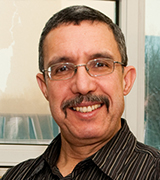
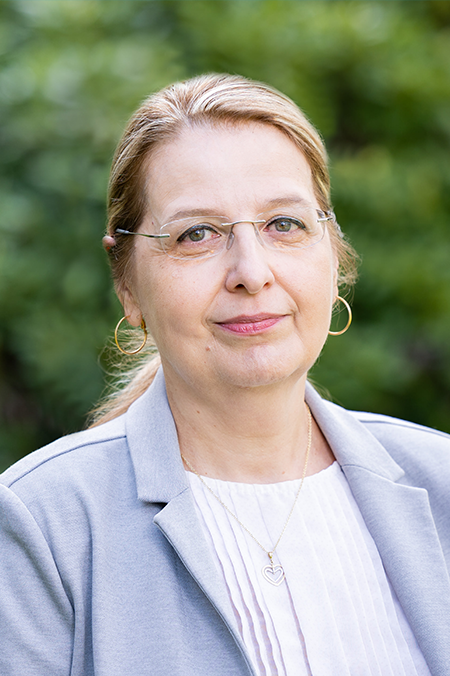
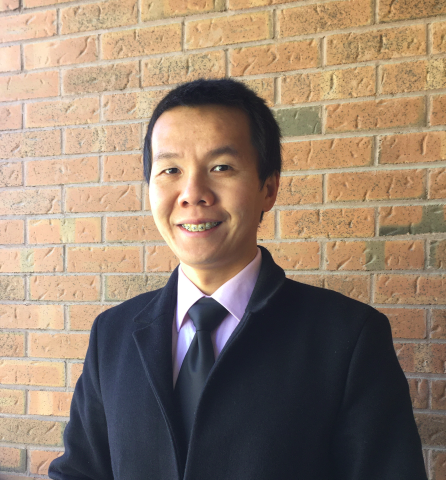
Khaled Arfa is a Lecturer in the Department of Electrical Engineering at Polytechnique Montréal. His work focuses on integrating high voltage engineering with food processing technologies, particularly through pulsed electric field applications. Education: Ing. (Algiers), Ph.D. (Moscow) Contact: (514) 340-4711 Ext. 4866, Room M-5420, khaled.arfa@polymtl.ca Research interests center on non-thermal preservation methods for tropical liquid foods, combining electrical engineering principles with industrial processing challenges. His publications highlight innovative hardware experimentation laboratories and electromagnetic field modeling. Key article trends include: 1) Development of multifunctional educational labs (2013); 2) Pulsed electric field generator design for food sterilization (2010); 3) Modeling techniques for optimizing tropical food processing (2010). Collaborations with researchers like G. Roy, G.-É. April, and F. Sirois demonstrate interdisciplinary engagement across engineering domains.
Sander Rhebergen is an Associate Professor at the University of Waterloo conducting research in numerical analysis and scientific computing. He holds a PhD from the University of Twente in the Netherlands and is based in the Mathematics and Computer Science building (MC 6134). His doctoral education was completed at the University of Twente, The Netherlands. Rhebergen's research centers on advanced numerical methods for partial differential equations with emphasis on: Discontinuous Galerkin methods Space-time finite element formulations Preconditioning techniques for multiphysics systems Analysis of his 2023-2025 publications reveals sustained focus on hybridizable discontinuous Galerkin (HDG) methods for coupled problems including Navier-Stokes/Biot systems, dual-porosity-Stokes models, and advection-diffusion on deforming domains. His work consistently addresses mathematical rigor through error analysis, conservation properties, and robust preconditioning strategies. No scientific awards were documented in the provided information. The available text does not list any graduate students or research grants associated with his position.
Dr. Dana Grecov is a Professor and Associate Head of Research & Graduate Studies in the Department of Mechanical Engineering at the University of British Columbia (UBC). She holds a B.Eng. from the University Politehnica of Bucharest and a PhD in Fluid Mechanics from the Institut National Polytechnique de Grenoble, France. Her postdoctoral research was conducted at McGill University. Dr. Grecov’s research focuses on interdisciplinary areas including liquid crystals, nanomaterials, biofluid mechanics, and non-Newtonian fluid dynamics. She has over 25 years of experience in complex fluids research and has published over 150 peer-reviewed articles. Her work integrates experimental, analytical, and numerical methods to address challenges in biomedical engineering, tribology, and sustainable materials. Dr. Grecov has received prestigious awards such as the CFI Leaders Opportunity Award (2007), Peter Wall Early Career Scholar Award (2007), and NSERC Discovery Accelerator Award (2016). She actively chairs sessions at international conferences and has advised over 70 graduate and undergraduate students. Her laboratory, the Industrial and Biological Multiphysics Laboratory, explores innovations in bio-lubricants, rheological characterization of synovial fluid, and hemodynamics of artificial heart valves. She collaborates across disciplines, including material science, computer science, and clinical medicine, to advance healthcare solutions. Her research spans from fundamental studies of liquid crystal microstructures to applied work in medical device design and sustainable engineering. Dr. Grecov’s contributions to fluid dynamics modeling and nanomaterials have significant implications for industrial processes and biomedical applications.
Krishna Challagulla serves as an Associate Professor at the Bharti School of Engineering and Computing, Laurentian University, specializing in advanced composite materials research with applications in mining engineering and renewable energy systems. His academic credentials include: Postdoctoral Fellowship in Mechanical Engineering from McGill University Ph.D. in Mechanical Engineering from Dalhousie University M.A.Sc. in Mechanical Engineering from Dalhousie University B.Eng. from Manipal Institute of Technology, India Research expertise spans: Composite structures and multifunctional materials characterization Piezoelectric and magneto-electro-thermo-elastic composites Natural/biocomposites with biomimetic applications Smart materials design for mining industry challenges Numerical simulation of underground mine support systems Battery safety modeling for electric mining equipment Renewable energy harvesting and additive manufacturing Current projects focus on AI-enhanced numerical modeling of smart composite materials and finite element analysis for battery pack safety in underground mining operations, addressing critical industry safety concerns through advanced material science. Administrative leadership includes serving as International Affairs Coordinator for the Faculty of Science, Engineering and Architecture, with prior roles as Graduate Program Coordinator, M.Eng. Program Coordinator, and Mechanical Engineering Program Coordinator. His laboratory integrates experimental characterization of composite materials with computational modeling, supporting both fundamental research and practical mining industry applications through numerical simulation and material testing facilities.
A.D. Price is an Associate Professor at the Department of Mechanical and Materials Engineering at Western University. His primary research focuses on smart materials, mechatronics, and additive manufacturing, with applications in biomedical engineering and industrial automation. He leads the Organic Mechatronics & Smart Materials Laboratory and collaborates with the Biomedical Engineering program, Western’s Bone & Joint Institute, and the Western Cluster for Musculoskeletal Health. Dr. Price holds a Ph.D. from the University of Toronto and M.A.Sc. and B.A.Sc. degrees from the University of Ottawa. His research explores advanced materials like electroactive polymers, magnetic shape memory alloys, and conductive composites. Current projects include 3D printing nanoscale actuators, biodegradable packaging materials, and smart drug delivery systems. Education: Ph.D., Mechanical Engineering, University of Toronto (2012) M.A.Sc., Mechanical Engineering, University of Ottawa (2006) B.A.Sc. Mechanical Engineering + B.Sc. Computing Technology, University of Ottawa (Completed) His research publications emphasize novel fabrication techniques for smart materials, with a focus on additive manufacturing and biomedical applications. Key areas include pH-responsive drug delivery, conductive polymer actuators, and wearable sensors for healthcare. Dr. Price teaches courses in product design, mechanical components, and global advanced manufacturing. He actively engages in industry partnerships, particularly through ABB’s research initiatives in industrial actuation technologies.
Dr. Xingqi Zhang is an Associate Professor in the Department of Electrical and Computer Engineering at the University of Alberta, Canada. He holds adjunct professorships at University College Dublin (Ireland) and has held visiting positions at the University of Toronto and Queen Mary University of London. His research focuses on applied electromagnetics and wireless communications, emphasizing high-performance computational models for 5G/6G/THz systems, intelligent transportation, underwater communications, IoT, and biomedical applications. Education: B.Sc. (Honors) from Harbin Institute of Technology, M.A.Sc. and Ph.D. from the University of Toronto. Research interests include physics-based wireless channel modeling, radio wave propagation in diverse environments, multiphysics modeling for electromagnetic and biomedical systems, reconfigurable intelligent surfaces (RIS), antenna design, and machine learning applications in communications. He leads a Horizon 2020-funded project on future wireless networks and collaborates with global academia and industry. Awards: ACES Early Career Award, RIA Charlemont Award, and multiple best paper awards. He serves as an associate editor for IEEE journals and technical committee roles in flagship conferences. Teaching: Currently teaches ECE 209A/B (Fundamentals of Electrical Engineering) in 2025 terms. His group oversees projects in channel modeling, integrated sensing/communication, and machine learning-based parametric modeling.
Tao Jin is an Assistant Professor in the Department of Mechanical Engineering at the University of Ottawa. He holds a Ph.D. from Rice University (2016) and Master of Engineering (ME) and Bachelor of Engineering (BE) degrees from Tongji University. Prior to his academic role, he served as a Postdoctoral Research Associate at Los Alamos National Laboratory (2016–2019) and Lawrence Livermore National Laboratory (2019–2021). His research focuses on developing numerical techniques and computational strategies to model complex material and engineering systems, integrating physics-based methods with machine learning. Education: Ph.D., Mechanical Engineering, Rice University, Houston, TX, USA (2016) ME, Mechanical Engineering, Tongji University, Shanghai, China BE, Mechanical Engineering, Tongji University, Shanghai, China Research Interests: Multiscale modeling of biomaterials and soft materials Fracture propagation in porous media and hydraulic systems Machine learning integration for material design and optimization Computational geoscience and subsurface energy systems Crystal plasticity and deformation twinning Labs & Teams: JinLab develops open-source computational tools for material systems (hosted on GitHub ). Focus areas include finite element methods, phase-field modeling, and multiphysics simulation frameworks.
Luc Mongeau is a Professor in the Department of Mechanical Engineering at McGill University, with associate appointments in Bioengineering and Biomedical Engineering. His research spans interdisciplinary domains, integrating mechanical engineering principles with biomedical applications to address challenges in vocal fold tissue engineering and aeroacoustic noise reduction. Department of Mechanical Engineering Associate Member, Department of Bioengineering Associate Member, Department of Biomedical Engineering Research Focus: Specializing in biomechanics, tissue engineering, and aeroacoustics, Mongeau's lab develops innovative solutions for vocal fold regeneration and jet engine noise control. Techniques include finite element modeling (FEM), nonlinear laser scanning microscopy (NLSM), atomic force microscopy (AFM), and computational fluid dynamics (CFD). Recent Trends: Mongeau's work emphasizes hydrogel-based tissue engineering for vocal fold repair, combining hyaluronic acid with other polymers. Parallel research explores synthetic jet actuator optimization for aerodynamic efficiency and noise suppression, often leveraging computational tools like COMSOL Multiphysics and lattice Boltzmann methods. Labs & Teams: The lab operates at the intersection of engineering and medical sciences, collaborating with clinicians to translate findings into improved diagnostic and therapeutic approaches for vocal cord pathologies and laryngeal cancer. Their work integrates biological modeling with advanced computational and experimental techniques.
Bruno Blais is an Associate Professor at the Department of Chemical Engineering, Polytechnique Montréal. His research focuses on computational fluid dynamics (CFD), multiphase flows, and high-performance computing. He leads the development of Lethe, an open-source CFD software built on deal.ii, and contributes to discrete element method (DEM) simulations. His expertise spans granular flows, topological optimization, and process intensification. Recent work integrates machine learning with CFD for industrial applications. He has supervised numerous graduate students, including Victor Oliveira Ferreira (postdoc), Laura Prieto Saavedra (PhD), and Amishga Alphonius (MSc). Blais has received prestigious awards including the Governor General's Gold Medal, Vanier Scholarship, and the 2025 Applied Mathematics Prize. His research is supported by NDRIO and collaborations with Canada Research Chairs. Vanier Canada Graduate Scholarship (2012-2016) Governor General's Gold Medal Roger A. Blais Thesis Award North American Mixing Forum Best Thesis Award 2025 Applied Mathematics Prize
Antoine Jacquey is an Assistant Professor in the Department of Civil, Geological and Mining Engineering at Polytechnique Montréal. He focuses on rock mechanics and fault dynamics with applications in sustainable geoenergy technologies. PhD in Geomechanics (RWTH Aachen University, 2017) Engineering Degree (École des Mines de Saint-Étienne, 2014) His research explores the multiphysics coupling of porous reservoir rocks and geological faults, particularly for geothermal energy, CO2 storage, and hydrogen storage. He develops numerical simulators like GOLEM and lynx to model these processes. Recent work emphasizes fluid-induced seismicity and strain localization in rate-dependent materials. His publications span journals in rock mechanics, solid mechanics, and applied geophysics. He supervises 7 graduate students across doctorate, research master's, and professional master's programs. His affiliations include the Geotechnical Research Group at Polytechnique Montréal.
Ahmad Shakibaeinia is a Full Professor at the Department of Civil, Geological and Mining Engineering in Polytechnique Montréal , holding the Tier 2 Canada Research Chair in Digital Hydrosystems . He serves as a researcher in the Experimental and Digital Water Flow Engineering Group (GENIE EAU) and is affiliated with the Interuniversity Study Center for Structures under Extreme Loads (CEISCE) . Research Domains : Computational fluid mechanics, multiphase flows, granular flow dynamics, cold-region hydraulics, fluvial mechanics Methodologies : Specializing in mesh-free particle methods (SPH, MPS) for simulating complex hydro-environmental flows His work focuses on multi-physics hydro-environmental flows involving water-air-sediment-ice interactions, with applications in flood risk assessment , tailings dam breach modeling , and cold-region river dynamics . Recent publications demonstrate expertise in floating breakwater systems , microbial risk assessment , and ice-structure interaction simulations . Key scientific contributions include: Developing enhanced weakly-compressible MPS/SPH methods for free-surface and granular flows Pioneering fully Lagrangian DEM-MPS models for ice-wave dynamics Creating integrated numerical frameworks for cold-region water quality assessment He has supervised 12 graduate students (3 PhD, 9 Master's) and secured multiple NSERC Alliance Grants for projects on climate change impacts and critical infrastructure vulnerability . His 74 publications span topics from sediment transport to particle method development , with significant contributions to oil sands tailings dam failure and transboundary river pollution understanding.
Dr. Mostafa Yakout serves as an Assistant Professor in the Department of Mechanical Engineering within the Faculty of Engineering at the University of Alberta. A Professional Engineer (P.Eng.) licensed in Alberta and Ontario, he also holds an Adjunct Research Professor position at Western University (2022-2025). Previously, he served as a Sessional Instructor at McMaster University and an Assistant Lecturer at Alexandria University. His educational background includes: Postdoctoral Fellowship, McMaster University, Canada, 2019-2022 Ph.D. Mechanical Engineering, McMaster University, Canada, 2015-2019 M.Sc. Production Engineering, Alexandria University, Egypt, 2011-2013 B.Sc. Production Engineering, Alexandria University, Egypt, 2005-2010 Dr. Yakout's research focuses on developing process-driven solutions for additive manufacturing of next-generation materials, including alloys containing rare-earth metals, high-performance metal alloys, and high-temperature materials. His group employs numerical, analytical, and experimental methods to establish critical process-structure-property-performance relationships. This work directly supports clean technology development and industrial transformation toward net-zero emissions in Canadian manufacturing. Analysis of his recent publications (2021-2025) reveals dominant themes in laser powder bed fusion (LPBF), particularly Inconel 617 applications for small modular reactors, rare earth element-doped coatings, and magnetic alloy optimization for electric motors. His research consistently integrates multiphysics modeling, in-situ process monitoring, and microstructure-property relationship studies targeting aerospace, nuclear energy, and biomedical engineering applications. No specific scientific awards or fellowships are documented in the provided materials. Dr. Yakout currently accepts undergraduate students for research supervision. His group collaborates extensively with industry, government agencies, and academic institutions across Canada and internationally. As CARDD-Tech Research Lead, he focuses on critical minerals and rare earth elements to advance sustainable manufacturing solutions aligned with national clean technology initiatives. He leads the ANGAM Group, which specializes in additive manufacturing process development for advanced materials. The team's work emphasizes hybrid additive manufacturing techniques and design optimization for industrial applications requiring high-performance material solutions.
Jeff Gostick is the Azzam-Dullien Endowed Chair & Professor in the Department of Chemical Engineering at the University of Waterloo, serving as Associate Chair for Graduate Studies. His research focuses on porous materials engineering, multiphase flow dynamics, and electrochemical energy conversion, with applications in batteries and fuel cells. He leads the Porous Materials Engineering & Analysis Lab (PMEAL), which develops novel characterization tools and pore network models to optimize material performance. Education: 2008 – Doctorate in Chemical Engineering, University of Waterloo 2002 – Master of Applied Science in Chemical Engineering, University of Waterloo 2000 – Bachelor of Engineering in Chemical Engineering, Ryerson University Research Interests: Porous media and multiphase flow phenomena Pore network modeling for energy storage systems Electrode design and optimization for redox flow batteries X-ray tomography and image-based analysis Computational multiphysics simulations Notable Awards: Azzam-Dullien Professorship (2023) Waterloo Engineering Research Excellence Award (2023) Canadian Society for Chemical Engineering 'Emerging Leader' (2021) Teaching & Advising: Recent courses include CHE 181, CHE 200, CHE 331, and NE 111 Focus on active learning pedagogy Labs/Teams: PMEAL lab specializes in advanced materials characterization and computational modeling, with collaborations across academia and industry. Ongoing projects include graphene oxide membranes, 3D-printed electrodes, and CO2 conversion systems.
Syed Imtiaz is a Professor and Department Head of Process Engineering at the Faculty of Engineering, Memorial University of Newfoundland . Holding a PhD in Process Control from the University of Alberta and professional engineering credentials (P.Eng.), he specializes in Process System Safety, Risk Simulation , and Advanced Monitoring Tools for industrial applications. B.Sc., M.Sc. (BUET), M.Sc. (University of Calgary), PhD (University of Alberta) P.Eng. certification Joined Memorial University in March 2010 Research focuses on multivariate statistical tools and Bayesian belief networks for process fault diagnosis , particularly in offshore oil & gas and mineral processing industries. His work includes modeling Hydrogen Desulfurization processes and automating Managed Pressure Drilling (MPD) systems. Key article trends include: Advancing machine learning for fault detection in harsh industrial environments Developing Bayesian networks for risk assessment in offshore operations Optimizing reservoir production using entropy generation minimization Improving dynamic positioning for autonomous marine systems Scientific contributions are recognized through university awards and >30 peer-reviewed publications.
Louis Gagnon is a Professor at Queen's University's Smith School of Business, specializing in financial economics and risk management. With a PhD from the University of Toronto, his research examines capital markets, derivatives, and international finance through both theoretical and empirical approaches. His primary research explores risk-assessment methodologies, market volatility, and financial instruments in global contexts. Recent work includes analyses of corporate governance impacts on equity markets and pandemic-related economic behaviors. Dr. Gagnon's publications demonstrate cross-disciplinary integration, spanning financial theory, aerodynamics, and public health. His aerodynamics research focuses on cycloidal rotor efficiency and computational fluid dynamics, while financial studies address governance structures and market behaviors. He maintains active industry engagement through consulting and executive education programs. Professional affiliations include editorial roles at the Canadian Journal of Administrative Services and investment committee membership at the Community Foundation of Greater Kingston.