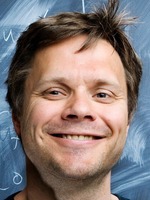
Claes Eskilsson is a researcher at Chalmers University of Technology , specifically in the Department of Mechanics and Maritime Sciences under the Marine Technology division. His work focuses on computational fluid dynamics (CFD) , wave energy converters , and mooring system dynamics for marine applications. Research Projects: MIDWEST: Multi-fidelity decision tools for wave energy systems (2015-2018) Assessment of tidal turbine noise pollution (2015-2016) Including nonlinear/viscous effects in wave energy modeling (2015-2017) Forankringslösninger for wave energy devices (2015-2017) SDWED: Structural design of wave energy devices (2013-2014) His research interests include: Computational modeling of marine systems Wave energy converter hydrodynamics High-order numerical methods (spectral/hp elements, Discontinuous Galerkin) Cavitation and erosion analysis in marine flows Multiphysics modeling of floating structures The publications span topics in wave energy converter dynamics, mooring system analysis, and CFD methodology. Key trends include 2013-2015 developments in spectral/hp element methods for coastal engineering, and 2015-2020 advancements in multi-fidelity modeling of ocean energy systems. He has collaborated extensively with institutions such as Royal Institute of Technology (KTH) , Lund University , and Technical University of Denmark (DTU) , with funding from agencies including the Swedish Energy Agency and Danish Energy Agency .
Hui-Chia Yu is an Associate Professor in the Department of Computational Mathematics, Science and Engineering at Michigan State University. Their research focuses on computational modeling of electrochemical systems, particularly battery electrodes, using advanced numerical methods like the smoothed boundary method and phase-field simulations. Recent work involves simulating electrode microstructures to analyze electrochemical impedance, phase transformations, and transport dynamics. Applications include optimizing battery performance and understanding wetting behavior in ceramic-metal interfaces. Scientific awards: None listed. Contact: hcy@msu.edu
Joaquin Baltasar Collazo Rodriguez serves as a full-time Professor at the University of Vigo's School of Industrial Engineering, affiliated with the Department of Mechanical Engineering, Machines and Thermal and Fluid Motors. He is actively engaged with the Research Center in Technologies, Energy and Industrial Processes (CITI) at the Vigo campus. His academic credentials include: Doctorate from University of Vigo (2009) for thesis "Contributions to the modeling and simulation of a low-power biomass boiler" supervised by Dr. Jacobo Porteiro Fresco and Dr. Enrique Granada Álvarez Dr. Collazo Rodriguez specializes in computational mechanical engineering with emphasis on energy systems. His research integrates: Numerical methods for thermal process optimization Biomass combustion system design Fluid-structure interaction modeling Sustainable energy conversion technologies Industrial equipment simulation Multiphysics computational approaches He leads research activities within the DSN group (Design and Numerical Simulation in Mechanical Engineering), focusing on practical engineering solutions for industrial energy applications through advanced computational techniques.
Dr. Lukas Keller is a Researcher at the Zurich University of Applied Sciences (ZHAW), School of Engineering, within the Department of ICP Multiphysics Modeling and Imaging. He leads multiple projects focused on clay rock characterization, including ongoing work on fracture sealing in clay rock and completed studies on gas transport mechanisms in clay materials. His research centers on the geophysical and mechanical properties of clay formations, particularly Opalinus Clay. Key interests include 3D microstructure analysis using X-ray computed tomography (XCT), hydromechanical behavior of fractures, permeability modeling, and pore-scale simulations. His work bridges experimental data with computational approaches to understand fluid flow, elastic properties, and transport phenomena in geological materials. Keller's publications (2014-2023) demonstrate consistent focus on clay microstructure, digital rock physics, and multiscale modeling. Recent articles explore pore geometry effects on rock elasticity, anisotropy in shale mechanics, and advanced tomography techniques. His research provides critical insights for applications in nuclear waste containment and geotechnical engineering.
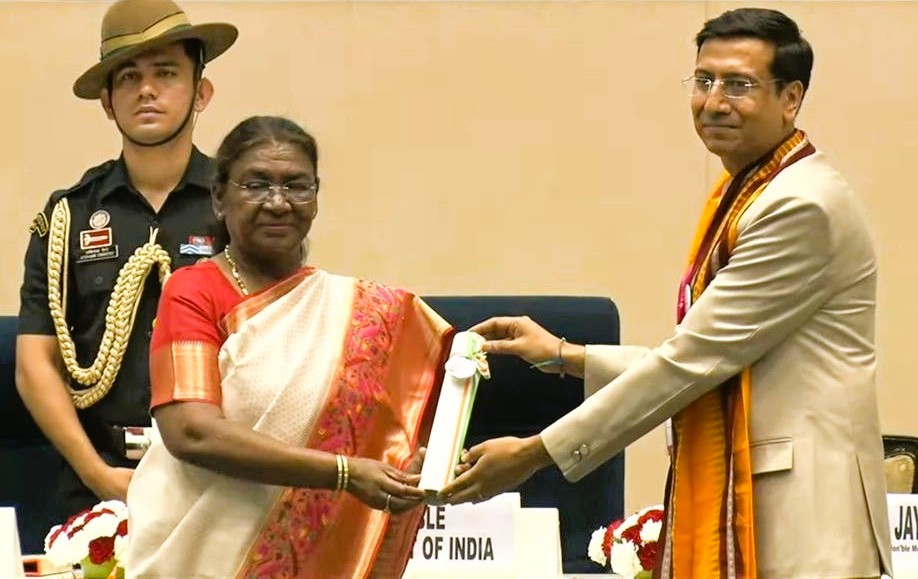
Prof. Kapil Ahuja is a Full Professor in the Department of Computer Science & Engineering at the Indian Institute of Technology Indore (IIT Indore), where he heads the Mathematics of Data Science and Simulation (MODSS) research lab. After completing dual Master's degrees and a Ph.D. from Virginia Tech (USA) followed by postdoctoral work at the Max Planck Institute in Germany, he has held visiting positions at UT Austin, IMT Atlantique, Sandia National Labs, TU Dresden, and TU Braunschweig. His administrative roles include founding Dean of International Affairs and former Head of Computer Science & Engineering at IIT Indore. Education: Ph.D. in Mathematics, Virginia Tech (2011) M.S. in Mathematics, Virginia Tech (2009) M.S. in Computer Science, Virginia Tech (2007) B.Tech. in Mechanical Engineering, IIT (BHU) Varanasi (2001) Research Focus: Prof. Ahuja's work bridges theoretical advances with real-world applications, emphasizing machine learning algorithms for plant/cancer studies, game-theoretic poverty reduction models, exascale climate modeling solvers, and drone trajectory optimization. His interdisciplinary approach integrates numerical linear algebra with network science to solve complex systems problems across healthcare, agriculture, and climate science, supported by 4.85 Crores INR in external funding. Publication Trends: Recent work demonstrates growing emphasis on AI-driven optimization for physical systems (drones, climate models) and biomedical applications (cancer classification). His publications increasingly feature cross-disciplinary collaborations between computer science, biology, and economics, with notable contributions in explainable AI for healthcare and resource allocation algorithms for social networks. Scientific Recognition: National Teacher's Award (2024) from the President of India Five-time recipient of IIT Indore's Best Teacher Award (2013-2023) Best Poster Award at International Workshop on Game Theory & Networks (2019) Steeneck Graduate Research Fellowship (Virginia Tech, 2011) Multiple SIAM travel awards for international conferences Mentorship & Service: Prof. Ahuja has graduated 5 Ph.D. and 4 M.S. (Research) students while mentoring 75 B.Tech. projects. He serves as Associate Editor for Applied Intelligence Journal (Springer Nature) and Knowledge and Information Systems, organizes international conferences, and reviews for 35+ academic sources. His administrative leadership significantly expanded IIT Indore's global partnerships through the Research Park initiative. Research Infrastructure: The MODSS lab maintains active collaborations with Oak Ridge National Lab, Sandia National Labs, and European institutions. Current projects include AI-optimized drone swarms for agricultural monitoring and game-theoretic models for poverty intervention, utilizing high-performance computing resources for large-scale simulations.
Sang-Joon Lee is an Associate Professor in the Department of Mechanical Engineering at San José State University. His research focuses on microfluidics for biomedical engineering and electronic displays, with emphasis on fabrication processes and fluid-structure interaction. He teaches courses in dynamics, fluid mechanics, microfluidics (ME 168), MEMS (ME 169), and biomechanics (ME 267). Education: Ph.D. and M.S. in Mechanical Engineering from MIT, B.S. from Stanford Industry Experience: Semiconductor systems engineering at Applied Materials, micro fuel cell research at Stanford His lab (http://www.sjsu.edu/mems/) explores multiphysics interactions in materials, focusing on microscale prototyping and experimental validation . Research advisees typically commit 16+ weekly hours including on-campus lab work. He previously served as Director of the Microscale Process Engineering Laboratory and Associate Director of the Materials Characterization and Metrology Center.
Håkan Nilsson is a Full Professor in Fluid Dynamics at Chalmers University of Technology. His research focuses on computational fluid dynamics (CFD) with applications in hydropower systems, particularly turbine flow analysis, cavitation modeling, and generator cooling air dynamics. He utilizes OpenFOAM for numerical simulations and develops advanced algorithms for mesh deformation and flow control. Academic Rank: Full Professor Institution: Chalmers University of Technology Primary Research: Hydropower Turbines, Cavitation, CFD, Machine Learning, Multiphase Flow His recent work integrates machine learning with CFD for optimizing turbine operations and predictive maintenance in hydropower plants. Key projects include ALPHEUS and investigations into contra-rotating pump-turbine systems for low-head energy storage. Collaborations span experimental validation with experts in PIV, laser Doppler velocimetry, and industrial partners in renewable energy. Research trends highlight 15+ years of publications on turbulence modeling, vortex dynamics, and fluid-structure interaction in hydraulic systems. Sub-fields include Francis turbine transients, Kaplan turbine rotor-stator interactions, and applications in biomedical fluid dynamics and welding processes. Scientific awards are not explicitly mentioned.
Cécile Daversin-Catty is a Research Scientist at Simula Research Laboratory in the Department of Numerical Analysis and Scientific Computing. Her work bridges computational mathematics and biomedical engineering through advanced finite element methods. Education: PhD in Applied Mathematics (2016, Université de Strasbourg), thesis titled 'Reduced basis method applied to large non-linear multi-physics problems: application to high field magnets design' Her research focuses on scientific computing , finite element methods , and mixed-dimensional coupling , with applications spanning fluid mechanics , cardiac electromechanics , and neurovascular modeling . Recent publications highlight her expertise in computational fluid dynamics for cardiac flow simulations, development of FEniCS-based tools for mixed-domain problems, and modeling of perivascular networks. Key trends in her work include: Development of robust numerical frameworks for multi-physics problems Advancing cardiac electromechanical modeling for heart failure studies Exploring glymphatic system dynamics via mixed-dimensional finite elements Software innovation in computational science tools She collaborates extensively with researchers across computational cardiology and neuroscience, contributing to open-source platforms like FEniCS.
Kent-Andre Mardal is a Professor at the Department of Mathematics , University of Oslo . He specializes in computational mechanics with a strong focus on biomechanical applications in medicine , particularly in modeling brain clearance mechanisms during sleep. His work integrates multi-physics modeling , fluid-structure interaction , and poroelastic couplings to advance understanding of the glymphatic system and cerebrospinal fluid dynamics. Education: PhD (2002) – Simula Research Laboratory Research Interests: Mardal's research spans a wide range of disciplines including: Computational Mechanics – developing robust numerical algorithms for complex physical systems Biomechanical Applications – particularly in neuroscience and medical imaging Brain Clearance During Sleep – modeling the glymphatic system and CSF flow dynamics Multi-Physics Modeling – integrating fluid dynamics, elasticity, and neural networks Finite Element Methods – for accurate and efficient simulations Neural Networks in Scientific Computing – exploring physics-informed neural networks Research Trends from Publications: Mardal's recent publications (2022–2025) demonstrate a clear focus on brain fluid dynamics , particularly the glymphatic system , CSF circulation , and neurodegenerative disease modeling . He employs advanced numerical techniques such as isogeometric analysis , physics-informed neural networks , and parameter-robust preconditioning to solve complex multi-physics problems. His work bridges medical imaging (MRI) with computational modeling to provide insights into brain clearance mechanisms and their impairment in diseases like Alzheimer's. Scientific Awards: No specific awards are mentioned in the provided text. Grants and Projects: Currently, Mardal is the Principal Investigator (PI) of three active research projects: Alzheimer's Physics – exploring the role of fluid dynamics in neurodegeneration Scientific Machine Learning – advancing numerical methods with AI Computational Hydrology – modeling subsurface fluid flow Affiliations and Teams: Mardal was previously a group leader at the Centre of Excellence “Biomedical Computing” at the Simula Research Laboratory. He has authored over 100 papers and several books, and his research homepage is available at https://kent-and.github.io/ .
Philipp Jakobs serves as a Research Associate at the Chair of Structural Analysis, Technical University of Munich since 2024, contributing to advanced computational research in structural engineering under Professor Roland Wüchner's leadership. His academic foundation includes: Master of Science in Computational Mechanics (2022-2024) Bachelor of Science in Engineering Science (2018-2022) Specializing in topology and shape optimization for additive manufacturing in construction, Jakobs develops computational frameworks to bridge 3D printing technologies with civil engineering applications. His work addresses critical challenges in material efficiency, structural integrity, and manufacturability constraints for large-scale construction projects, leveraging isogeometric analysis and finite-element methodologies to innovate building design processes. No scientific awards are documented in available sources. While mentoring activities aren't specified, his role within the Chair suggests involvement in guiding student theses. Third-party projects like Digital Building Kit and WINSENT indicate collaborative research funding within the department. As part of TUM's Structural Analysis Chair, Jakobs contributes to a multidisciplinary team advancing computational mechanics through software development (Carat++, Kratos Multiphysics) and research in wind engineering, fluid-structure interaction, and optimization algorithms for next-generation construction technologies.
Prof. Dr. André Hinkenjann is the Founding Director of the Institute for Visual Computing and holds a Research Professorship in Computer Graphics and Interactive Systems at Bonn-Rhein-Sieg University of Applied Sciences. His research spans computer graphics, interactive environments, and visualization, with applications in VR/AR, digital twins, and scientific data analysis. He leads multidisciplinary projects funded by institutions like BMBF and Zukunftsfonds NRW. His research integrates: Computer Graphics : Real-time global illumination, foveated rendering, and GPU optimization Interactive Systems : Haptic interfaces, large-display collaboration, and spatial interaction techniques Applied VR/AR : From trauma therapy to industrial training and cultural heritage preservation Recent publications emphasize mixed-reality interaction, neural rendering, and perceptual optimization, reflecting a consistent focus on bridging theoretical graphics with human-centered applications. His lab frequently contributes to high-impact venues like ACM SIGGRAPH, IEEE VR, and Eurographics. Notable projects under his direction include: PInBiM: Gamified citizen science for museum-based insect research DT4MP: Digital twins for urban/industrial multiphysics simulations GTN: State-wide network advancing game technology in NRW Witality: VR for sensory wine analysis
Evaggelos Kaselouris is an Assistant Professor at the Hellenic Mediterranean University's Department of Music Technology and Acoustics and a Researcher at the Institute of Plasma Physics and Lasers (IPPL). His affiliations include prior roles as a PostDoc at IPPL (2016–2023) and a Scientific Collaborator at the Technological Educational Institute of Crete (2011–2016). He holds a PhD from the Technical University of Crete and a degree in Applied Physics and Mathematics from the National Technical University of Athens. Dr. Kaselouris's research integrates multiphysics simulations across applied physics, plasma dynamics, and vibro-acoustics. Key areas include: Laser-generated acoustic waves and their applications in material characterization and musical instrument analysis. Finite element modeling of thermo-mechanical processes in laser machining and plasma instabilities. Development of crystalline undulators for narrowband gamma-ray radiation and optically shaped gas targets for ion acceleration. His computational work employs FEM/BEM to simulate phenomena ranging from nanostructured surface modifications to violin bridge dynamics. Recent studies emphasize laser-based interferometry for instrument diagnostics and ultrafast photoacoustic transduction in thin films. He actively collaborates on European projects (e.g., TECHNO-CLS) and contributes to the ESFRI infrastructure HiPER. No awards or supervised students are documented, but his lab leverages IPPL's high-power laser systems and advanced simulation tools for experimental validation.
Ricardo Camarero is an Associate Professor in the Department of Mechanical Engineering at Polytechnique Montréal. With a B.Eng., M.Eng., and Ph.D. from McGill University, he has established himself as a leading researcher in computational fluid dynamics and numerical methods for mechanical engineering applications. His research interests span geometric modeling, combustion and reactive flows, numerical simulation of fluid flows, aerodynamics using numerical methods, and turbomachinery design. Professor Camarero's work primarily focuses on developing and applying advanced computational techniques to solve complex engineering problems, particularly in the areas of fluid-structure interaction, high-voltage circuit breaker design, and turbomachinery flow analysis. With 166 publications spanning several decades, his research output demonstrates consistent contributions to the field of computational fluid dynamics. His recent work (2021-2024) shows continued activity in immersed boundary methods, mesh generation techniques, and applications to electrical engineering problems, indicating an active and productive research program. Professor Camarero has supervised 20 PhD students and 15 Master's students, reflecting his significant contribution to graduate education. His teaching responsibilities include courses in numerical methods and fluid mechanics, directly supporting his research areas. His research has strong practical applications, particularly in the electrical engineering sector where his work on circuit breaker design, arc extinction, and alternative insulating gases provides valuable insights for industry. The interdisciplinary nature of his work bridges mechanical engineering, electrical engineering, and computational mathematics.
Jean-Claude Roy is an Associate Professor in Fluid Mechanics and Thermodynamics at the Bourgogne Franche-Comté University , affiliated with the UFR STGI (Science, Technology, and Industrial Engineering Unit) and part of the Energy Department . He has been active in research since 1991, focusing on computational fluid dynamics (CFD) applications in agricultural and thermal engineering. PhD in Mechanical Engineering (1991) - Mixing of anisothermal flows Academic Appointments: Fluid Mechanics, Thermodynamics, and CFD modeling His research spans two primary domains: Greenhouse Micrometeorology - Modeling heat, water vapor, and CO2 transfers in greenhouse environments, with emphasis on climate distribution, natural ventilation, and crop transpiration. Magnetocaloric Heat Transfer - Investigating heat pumps using magnetocaloric regenerators, oscillating flows, and innovative composite materials for sustainable refrigeration. Key publication trends show expertise in: CFD modeling of magnetocaloric devices and regenerators Thermal and aerodynamic analysis of projectiles and transducers Climate control in agricultural facilities He collaborates extensively with researchers like Thierry Boulard, Yannick Bailly, and Stefan Giurgea, contributing to 58+ publications. His work bridges mechanical engineering principles with agricultural and environmental applications, focusing on both heat transfer and fluid dynamics challenges.
Andreas Almqvist is a Professor in Machine Elements at Luleå University of Technology (LTU), working within the Department of Engineering Sciences and Mathematics. He serves as the director and operations manager of the Center for Sports and Performance Technology (SPORTC) and is actively involved in research and teaching related to computational tribology. Almqvist has been affiliated with LTU since completing his Master's degree in 2001, progressing through academic ranks to his current professorship. Almqvist completed his Master of Science in Engineering at LTU in December 2001 and defended his PhD thesis in September 2006 titled 'On the Effects of Surface Roughness in Lubrication.' Following a 2-year postdoctoral position with Shell Global Solutions in England under the Marie Curie Transfer of Knowledge program (2007-2008), he returned to LTU in January 2009. He became Docent in November 2010, was appointed Associate Professor in January 2012, and was promoted to Professor in Machine Elements in May 2017. His research focuses on computational tribology, with particular emphasis on multiphysics and multiscale modeling and simulation of continuum mechanical problems in tribology and sports technology. His work spans contact mechanics, flows in thin gaps, and friction phenomena, with recent applications to skiing performance. Since fall 2021, he has been collaborating with the Swedish Olympic Committee's 'Olympisk Offensiv' research program alongside other prominent Swedish sports scientists. His research approach integrates applied mathematics with practical engineering challenges, often involving collaborations across departments including Fluid Mechanics, Mathematics, and Machine Learning. Analysis of Almqvist's recent publications reveals a strong trend toward applying tribological principles to winter sports performance, particularly skiing. His work bridges fundamental computational methods with practical applications, showing increasing interdisciplinary collaboration across engineering disciplines, sports science, and materials science. The research demonstrates both theoretical advances in modeling techniques and practical applications for performance enhancement in Olympic sports. ERC Grant Recipient Marie Curie Transfer of Knowledge Program Participant VR (Swedish Research Council) Grant Recipient for multiple projects including 'New Concepts in Thin Film Flow Modelling' (DNR 2014-4894) and 'Multiscale Topological Optimization for Lower Friction, Less Wear and Leakage' (DNR 2019-04293) Almqvist serves as Editor-in-Chief for 'The Proceedings of the IMechE Part J - Journal of Engineering Tribology' since 2019 and has been involved in numerous research projects funded by both academic and industrial partners. He has supervised student projects in collaboration with academic and industrial partners and has secured significant research funding from the Swedish Research Council. His educational leadership extends to serving as program director for the Engineering Physics and Electrical Engineering program at LTU. As director of the Center for Sports and Performance Technology (SPORTC), Almqvist leads the Ski and Snow Lab which focuses on physics at different scales related to friction in skiing. The center represents a strategic initiative at LTU to bridge engineering science with sports performance, creating a unique interdisciplinary research environment that brings together expertise from multiple departments including Machine Elements, Fluid Mechanics, and Mathematics.