Dr. Bin Yang currently holds the position of Marie Curie Postdoctoral Fellow in the Department of Materials and Processes within the School of Engineering . His research focuses on advanced composite materials, emphasizing structural analysis, lightning strike protection, and nanomaterial-enhanced material systems. He has contributed extensively to understanding damage mechanisms in composite laminates and honeycomb structures under extreme conditions such as impact, thermal stress, and electrical loads. Key research interests include: Composite materials and interfacial engineering Lightning strike protection and multiphysics modeling Additive manufacturing of composite structures Nanomaterials for enhanced mechanical and electrical properties Bio-inspired materials and sensor technologies Dr. Yang’s work bridges fundamental material science with practical engineering applications, particularly in aerospace and renewable energy sectors (e.g., wind turbine blade durability). His studies often integrate experimental approaches with computational modeling to address challenges in composite damage assessment and repair strategies.
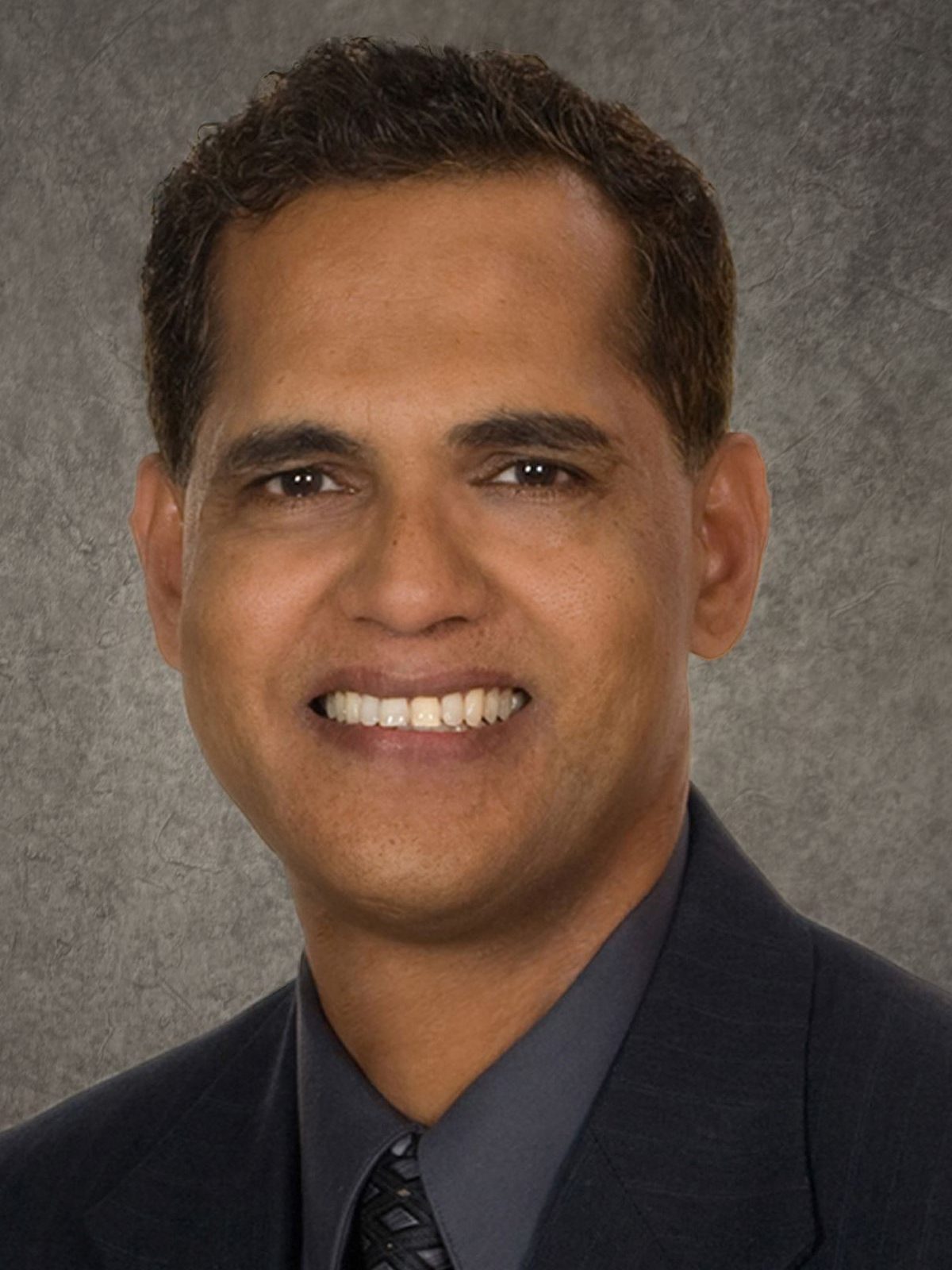
Dr. K. Chandrashekhara is a Curators’ Distinguished Professor of Mechanical and Aerospace Engineering at Missouri University of Science and Technology (Missouri S&T) and Director of the Composite Manufacturing Laboratory. He holds a Ph.D. in Engineering Science and Mechanics from Virginia Polytechnic Institute and State University (1985), M.S. in Aerospace Engineering from IIT Kanpur (1979), and B.S. degrees in Aerospace Engineering (Madras Institute of Technology, 1977) and Applied Mathematics (University of Mysore, 1974). Education: Ph.D., Virginia Tech, 1985 M.S., IIT Kanpur, 1979 B.S. in Aerospace Engineering, 1977 B.S. in Applied Mathematics, 1974 His research focuses on composite materials , additive manufacturing , finite element analysis , and experimental characterization . Key areas include polymer and metal composite structures, high-temperature composites, and advanced manufacturing processes. Recent work explores additive manufacturing of thermoplastic composites and metallic cellular structures, alongside computational modeling of material behavior under extreme conditions. His publications (over 175 journal articles) and funded projects span collaborations with NSF, ARO, NASA, and industries like Boeing and General Dynamics. Notable achievements include a U.S. patent, co-authorship of a composite materials textbook, and editorial roles in journals like Journal of Biobased Materials and Bioenergy . Awards: ISC Distinguished Investigator Award Academy of Mechanical Engineers Research Excellence Award Fellow of ASME Missouri S&T Faculty Excellence Awards His lab, the Composite Manufacturing Laboratory, drives innovation in composite fabrication and additive technologies. Research emphasizes practical applications in aerospace, automotive, and energy sectors. Current projects include microwave-cured composites, bio-composites, and failure analysis of composite structures under extreme loading.
Dr. Matthias Mayr is a Senior Researcher & Lecturer at the University of the Bundeswehr Munich, where he heads the Data Science & Computing Lab. He holds a permanent position at the Institute for Mathematics & Computer-Based Simulation and maintains affiliations with the RISK Research Center. Previously, he was a Postdoctoral Researcher at Sandia National Laboratories and TU München. His research focuses on coupled multiphysics problems including fluid-structure interaction, computational contact mechanics, and high-performance numerical methods. He develops monolithic coupling schemes, parallel solvers, and adaptive algorithms for large-scale simulations. Key application areas include biomedical engineering, cardiovascular mechanics, and materials science. His publications demonstrate consistent focus on computational mechanics innovations, particularly in developing efficient algorithms for multiphysics problems. Recent work emphasizes mortar methods, multigrid preconditioners, and HPC implementations for complex coupled systems. Scientific Awards: Robert J. Melosh Medal (Duke University, 2017) Multiple scholarships including Max-Weber-Programm (Bavaria, 2008-2010) Rudolf Diesel Award (TU München, 2009) He advises students in computational mechanics and HPC topics, supervising projects on multigrid methods, contact algorithms, and parallel FSI solvers. He contributes to major scientific software including Trilinos and 4C Multiphysics. He leads the Data Science & Computing Lab and participates in international research collaborations. He maintains memberships in GAMM, SIAM, IACM, and EUROMECH.
Suneth Warnakulasuriya is a Researcher at the Technical University of Munich , leading the Simulation Laboratory since 2024. His work spans Finite Element Analysis , Isogeometric Analysis , and Structural Optimization , with a focus on Digital Twins , Wind Engineering , and Multi-field Problems . PhD in Computational Mechanics (TUM 2015–2018) Bachelor of Mechanical Engineering (University of Moratuwa, 2009–2013) Postdoctoral Researcher at TU Braunschweig (2022–2024) His research includes adjoint-based sensitivity analysis , fluid-structure interaction , and shape optimization for additive manufacturing. Recent work explores high-fidelity digital twins for structural weakness detection and wind-induced vibration mitigation . Publications emphasize computational efficiency and multi-fidelity uncertainty quantification in wind engineering applications. Projects like CoDA , MistralWind , and FlexWing leverage his expertise in isogeometric B-Rep analysis and network regularization . He contributes to software tools such as Kratos Multiphysics and Kiwi!3D , with teaching engagements in Bauingenieurwesen and Computational Mechanics programs.
Luciana Tavares is an Associate Professor at the Institute of Mechanical and Electrical Engineering, University of Southern Denmark. Her research focuses on advanced capacitor technologies, dielectric materials, and additive manufacturing processes, with significant contributions to polymer electrolyte membrane fuel cells, nanocomposite thin films, and surface engineering. Institute of Mechanical and Electrical Engineering, University of Southern Denmark Center for Industrial Electronics Her research spans dielectric material optimization , metallized film capacitors , and additive manufacturing of metallic components , aiming to improve energy storage efficiency, mechanical integrity, and surface properties in power electronics. She explores the interplay between microstructure and performance in 316L stainless steel and develops surfactant-modified nanocomposite capacitors. Recent work includes helium-ion irradiation for dielectric enhancement , flow plate roughness in fuel cells , and high-voltage aluminum polymer capacitors . Her projects are supported by foundations like Norlys Vækstpulje and Villum Experiment. Scientific Awards : Villum Grant - Villum Experiment (2021) She supervises projects on dielectric properties , metallization ratios , and UV treatment of biaxially oriented polypropylene , while participating in conferences like PCIM Europe and Hydrogen & P2X. Collaborations include institutions in Germany and Denmark, with expertise in nanofibers, thin films, and surface science.
David Schmölz is a Researcher at the Chair of Structural Analysis, Technical University of Munich (TUM), where he has served as a Research Associate since 2020. His academic work bridges computational mechanics and structural engineering with practical applications in civil infrastructure and advanced manufacturing. Education: Research Associate, Chair of Structural Analysis, TUM (2020–present) M.Sc. in Civil Engineering, TUM (2017–2020) Semester Abroad, KTH Royal Institute of Technology, Stockholm (2016) B.Sc. in Civil Engineering, TUM (2013–2017) Abitur, Rudolf-Diesel-Gymnasium, Augsburg (2012) Schmölz specializes in node-based structural optimization using the Vertex Morphing method, with emphasis on thin-walled structures, bead pattern generation, and additive manufacturing applications. His research integrates wind engineering principles for membrane structures and addresses challenges in hydroforming constraints and discretization-independent parameterization. Key contributions include sensitivity filtering techniques and shape optimization frameworks for lightweight design in civil engineering contexts. His publication record (2021–2025) reveals a cohesive research trajectory focused on advancing node-based optimization methodologies. Dominant themes include engineering-constrained parameterization, bead feature generation for thin-walled systems, and hybrid approaches combining Vertex Morphing with rigid body mechanics. Recent work demonstrates increasing sophistication in handling manufacturing constraints for additive construction and hydroforming processes, while maintaining computational efficiency through discretization-independent formulations. David Schmölz has supervised four Master's theses at TUM covering truss optimization, infinite load-point scenarios, and extruded form optimization using Vertex Morphing. His research is funded through major third-party projects including CoDA, Mistralwind, WINSENT, FlexWing, and the Digital Building Kit, which target computational design advancements and wind engineering applications in civil infrastructure. As a core member of Prof. Roland Wüchner's Chair of Structural Analysis, Schmölz collaborates with a 15+ researcher team including Ann-Kathrin Goldbach and Suneth Warnakulasuriya. The group leverages advanced computational tools such as Carat++, Kratos Multiphysics, and Kiwi!3d for structural simulation, with ongoing development of the Vertex Morphing framework for industrial applications in offshore engineering and wind-excited structures.
Prof. Dr.-Ing. habil. Jörg Grabow is a Professor of Mechatronics at the Department of Mechanical Engineering, EAH Jena. He holds a diploma in Technical and Biomedical Cybernetics (1990) and a PhD in Parameter Identification (1995), both from TU Ilmenau, followed by habilitation in Radial Blowers (2004). His career spans roles at TU Ilmenau and EAH Jena since 2004. Research focuses on mechatronics, fluid mechanics, parameter identification, and biomedical engineering. Key contributions include books on generalized networks in mechatronics and collaborative work on nanopositioning systems, laser therapy, and acoustics. He holds patents on dynamic stiffness measurement and medical treatment systems. Publications span over three decades, emphasizing interdisciplinary applications in mechanical systems, laser Doppler velocimetry, and biomechanics. His work integrates theoretical models with practical engineering solutions, contributing to fields like HVAC systems, precision machinery, and medical devices.
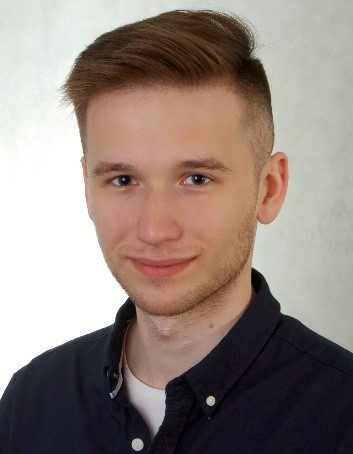
Michał Jędrzejczyk is a researcher at the National Centre for Nuclear Research (NCBJ) in Otwock, Poland, affiliated with the Division of Nuclear Energy and Environmental Studies. He completed his PhD in December 2023 under Prof. Tomasz Kozłowski, focusing on reducing nuclear data uncertainties for reactor safety simulations. His research centers on nuclear engineering and statistical methodologies, specifically targeting neutron cross-section uncertainty reduction through Approximate Bayesian Computation. Key interests include reactor criticality analysis, multiphysics modeling of systems like the HTTR reactor, and enhancing precision in nuclear reactor design through advanced data mining techniques. This work directly addresses safety margins in next-generation nuclear facilities. Scientific awards: None documented in source materials. As a recent PhD graduate, he has not yet advised students or secured independent research grants. His doctoral work was supported through NCBJ's infrastructure and the Graduate School of Physics and Chemistry. He operates within NCBJ's Division of Nuclear Energy and Environmental Studies, contributing to reactor safety analysis teams and participating in criticality experiment validation projects using high-performance computing resources at the Cyfronet facility.
Prof. Dr. Olaf Bruch serves as a full Professor at Hochschule Bonn-Rhein-Sieg within the Department of Engineering and Communication, specifically affiliated with the Institute of Technology, Resource and Energy-efficient Engineering (TREE). His academic base is located in Sankt Augustin at Grantham-Allee 20, where he maintains office B 203 and can be reached via telephone +49 2241 865 318. His research spans critical areas in engineering mechanics with particular emphasis on finite element methods and polymer materials. Key focus areas include the integrative simulation of plastic components considering manufacturing-specific characteristics, prediction of shrinkage and warpage in extrusion blow molding using advanced viscoelastic models, development of experimental-numerical methods for material parameter identification, fluid-structure coupling for liquid-filled containers, and structural optimization of generatively manufactured automotive components. This work directly addresses industrial challenges in resource efficiency and sustainable manufacturing. Prof. Bruch leads and contributes to multiple significant research initiatives including PAExSiDur (polymer aging for service life extension), DigitalTwin-4-Multiphysics-Lab (urban and industrial digital twins), TreeOpt (simulation-based lightweight product development), ROForm (resource-optimized forming), and TRE³L (energy lab for powder metallurgy and sustainable mobility). His publication record demonstrates consistent contributions to polymer processing simulation, with recent work focusing on VMAP interface standard implementation and crystallization effects in polyethylene systems. As co-affiliated with Dr. Reinold Hagen Stiftung, he bridges academic research with industrial applications through projects like SmartBlow (intelligent blow molding machines) and Fortissimo 2 (ultra-clean containers). His leadership in the Structural Analysis and Optimization Working Group demonstrates his commitment to advancing simulation methodologies for complex engineering challenges in polymer manufacturing and structural design.
Dr. Gang Wang is an Assistant Professor in the Institute for GeoEnergy Engineering at Heriot-Watt University, serving as Theme Lead for Underground Hydrogen Storage at the Net-Zero Global Research Institute (iNetZ+). He holds a PhD in CCUS and MSc in Reservoir Evaluation from Heriot-Watt, with prior experience as a Leverhulme Early Career Fellow and Reservoir Engineer at CNPC. His research focuses on numerical simulation of subsurface gas systems (H₂, CH₄, CO₂), addressing multiscale multiphysics processes. He collaborates with European/UK industries to develop field-scale hydrogen storage solutions. Key expertise includes reservoir engineering, geochemical interactions, and bio-geochemical modeling for reservoir selection. Notable contributions include studies on microbial activity impacts, cushion gas design for hydrogen storage, and CO₂-WAG displacement mechanisms. He serves on EAGE committees and delivers short courses on hydrogen storage reservoir engineering. Education: PhD in Carbon Capture and Storage (CCUS), Heriot-Watt University MSc in Reservoir Evaluation and Management, Heriot-Watt University Awards: Leverhulme Early Career Fellowship Dr. Wang has pioneered reservoir engineering strategies comparing hydrogen storage with CCS/natural gas systems, emphasizing heterogeneous reservoir effects and microbial-geochemical interactions. His datasets on compositional simulations are publicly available, advancing industry partnerships for net-zero energy transition solutions.
Erol Lale is a Lecturer in the Civil Engineering Department at Istanbul Technical University, specializing in Structural Mechanics, Reinforced Concrete Structures, and Numerical Modeling. He holds a PhD in Structural Engineering from the same institution, with prior academic roles including Research Assistant since 2005. His research focuses on advanced numerical techniques such as Lattice Discrete Particle Modeling (LDPM), Isogeometric Analysis, and High-Order Microplane Models to study concrete behavior under dynamic loading, size effects, and fracture mechanics. He has contributed to over 20 peer-reviewed publications, including works on reinforced concrete columns, damage localization algorithms, and multiscale analysis of geotechnical systems. Teaching responsibilities include courses like 'Reinforced Concrete II' and 'Prestressed Concrete' at the undergraduate level. His work integrates computational mechanics with experimental validation, addressing challenges in structural integrity and material failure under extreme conditions.
Jaap den Toonder is a Full Professor and Chair of the Microsystems research Section at Eindhoven University of Technology (TU/e). His research focuses on innovative microsystems, including microfluidic chips, biomedical microdevices, and soft microrobotics, inspired by biological principles. He leads the Microfab/lab, a state-of-the-art facility for microfluidic device fabrication and analysis. Den Toonder's work integrates engineering and biology, emphasizing applications in healthcare and technology. Education: MSc in Applied Mathematics (cum laude) and PhD (cum laude) from Delft University of Technology, followed by R&D roles at Philips Research. He was a part-time professor at TU/e from 2004–2013 before transitioning to full-time academia. Research Interests: Microfluidics, nature-inspired actuators, smart medical devices, and cancer-on-chip models. His group develops organs-on-chips to study cancer metastasis and vascular systems, leveraging biomimetic approaches and advanced fabrication techniques. Publications & Impact: Over 140 scientific papers, 45 patents, and ERC Advanced Grant (2019). He founded ARTIC Technologies and advises multiple startups. His work bridges academia and industry, with applications in diagnostics, drug development, and wearable health monitoring. Awards: 2023 Fellow of the Netherlands Academy of Engineering. Recognized for contributions to microsystem innovations and biomedical engineering. Teaching & Labs: Courses on microfabrication, heat/flow in microsystems, and hands-on lab work. Directs the Microfab/lab facility, enabling cutting-edge microfluidic research. Collaborates with hDMT (human organ and Disease Model Technologies Institute) on interdisciplinary projects.
Professor Jian Zhao is a faculty member in the Department of Civil & Environmental Engineering at Monash University, specializing in Rock Mechanics, Geophysics, and Geothermal Energy. He holds editorial roles in journals such as the International Journal of Rock Mechanics and Mining Sciences and has led significant research projects funded by organizations like the Australian Research Council. His work focuses on rock dynamics, underground construction, and advanced material testing techniques. Notable achievements include developing novel methods for rock fracturing via microwave treatment and pioneering numerical models for rock fracture under dynamic loads. Professor Zhao is an ISRM Fellow and has conducted collaborative research with global institutions. His projects address challenges in geothermal energy extraction and tunneling safety, with a strong emphasis on sustainability and engineering innovation. Research interests span across Dynamic rock behavior under multiaxial loading, Microwave-enhanced rock breakage, Fracture mechanics in heterogeneous rock formations, Advanced numerical modeling (FDEM, DEM), Geothermal energy applications, Seismic response of rock joints. Recent studies include innovations in automated excavation frameworks, thermal-stress-pore pressure coupled testing systems, and insights into induced seismicity through photoelastic techniques. Over 373 publications and active grants reflect his impactful contributions to civil and environmental engineering.
Christophe Eloy is a Professor of Fluid Mechanics at Centrale Marseille, conducting research at the IRPHE Institute in Marseille. His work focuses on fluid-structure interactions, hydrodynamic instabilities, animal locomotion, aeroelasticity, rotating flows, and plant biomechanics, combining analytical, experimental, and numerical methods. Affiliation : Centrale Marseille (IRPHE Institute) Research Themes : Fluid mechanics, biomechanics, turbulence, and computational physics at the intersection of biology and engineering. He leads the ERC-funded C0PEP0D project exploring fluid mechanics, AI, and biological systems. Collaborations include nuclear engineering (e.g., PWR fuel assembly dynamics), plant growth mechanics, and microorganism navigation strategies. His work spans experimental setups like ICARE facilities and theoretical models for optimal swimming and flow sensing. Recent studies address reinforcement learning for navigation, planktonic turbulence surfing, and seismic responses of cylinder assemblies. He actively mentors interns and PhD students in multidisciplinary projects.
Hamdi Tchelepi is the Max Steineke Professor at Stanford University and a Senior Fellow at the Precourt Institute for Energy. His academic work focuses on reservoir simulation, subsurface energy systems, and computational geosciences. He holds a Ph.D. in Petroleum Engineering from Stanford (1994), an M.S. from King Fahd University (1988), and a B.S. from the University of Petroleum and Minerals (1985). Research interests span reservoir simulation methodologies, CO2 sequestration, battery technology, and multiphase flow dynamics in porous media. His work integrates numerical methods, machine learning, and experimental validation to address challenges in energy systems and environmental engineering. Publications emphasize computational frameworks for flow-geomechanics coupling, pore-scale modeling, and data-driven approaches for subsurface processes. His articles frequently explore stability criteria, algorithmic efficiency, and scalability in reservoir simulation. Notably, Tchelepi has developed open-source tools like GEOS for multiphysics subsurface simulation and contributed to the FluidFlower benchmark study for CO2 storage validation. His research bridges microscale phenomena with macroscale reservoir engineering applications.