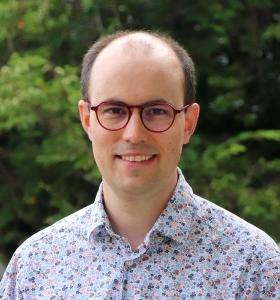
Alessandro Gabbana is a University Researcher at Eindhoven University of Technology, affiliated with the Applied Physics and Science Education school and the Computational Multiscale Transport Phenomena group. His research focuses on computational physics, particularly lattice-Boltzmann methods and fluid dynamics. He co-leads the HTCrowd project (2020–2026), developing high-tech platforms for human crowd flow monitoring and modeling. Research interests span: Advanced computational fluid dynamics (CFD) Turbulence subgrid modeling using data-driven approaches Pedestrian dynamics and probabilistic flow analysis Neural network integration with kinetic schemes His publications demonstrate strong emphasis on improving lattice-Boltzmann boundary conditions, turbulence closures, and large-scale pedestrian dynamics simulations.
Majid Sedighi is a Professor (Reader) in Geotechnical Engineering at the University of Manchester, leading the Geo-Environmental research theme. He is also the Head of Internationalisation (Africa and the Middle East) at the Faculty of Science and Engineering, and serves on the Editorial Board of Géotechnique . His research focuses on geoenvironmental engineering, multiphysics processes in soils, and sustainable technologies for energy and environmental challenges, including radioactive waste management and microplastics mitigation. Education: MSc and PhD in Geotechnical Engineering from Cardiff University, with prior experience as a UNESCO Research Fellow and Senior Design Engineer. He has supervised 16 PhD students since 2011 and leads projects on clay erosion, geothermal energy, and groundwater remediation. Research interests include coupled THCM processes, geo-material behavior under extreme conditions, and sustainable development goals. He has secured £10M in European funding and collaborates globally, including as an Adjunct Professor at Zhejiang University. Awards include the ICE Environmental Geotechnics Prize (2019) and Best Paper Awards. His work contributes to UN Sustainable Development Goals related to clean water, affordable energy, and responsible consumption. Active in professional roles: Discipline Lead at Nuclear Waste Services, member of the Centre for Crisis Studies, and organizer of international conferences on environmental sustainability. His lab, Geo-Environmental Engineering Group , offers PhD funding in multiphysics, reactive transport, and microplastics research.
Prof. Christian Stemmer is a Professor of High-Speed Aerodynamics at the Technical University of Munich (TUM), affiliated with the TUM School of Engineering and Design and the Department of Aerodynamics and Fluid Mechanics. His research focuses on hypersonic flows, boundary layer transition, thermal and chemical nonequilibrium phenomena, and research data management. Stemmer holds a Dr.-Ing. habil. and has extensive international experience, including postdoctoral work at Stanford University and NASA Ames. Career highlights: Appointment as extraordinary professor in 2019, leadership roles in the Collaborative Research Center TRR40 (SFB/TRR40), and membership in editorial boards such as Advances in Aerodynamics . Awards: 2020 NATO AVT Panel Excellence Award for contributions to hypersonic flow research. Key projects: Investigation of hypersonic boundary layer transition under high-enthalpy conditions, development of numerical models for rocket combustion chambers, and leadership in national and international research consortia. His work bridges fundamental fluid mechanics with aerospace engineering applications, emphasizing high-performance computing and data-driven methodologies. Recent contributions include studies on roughness-induced instabilities, shock-wave interactions, and metadata extraction frameworks for HPC workflows.
Avo Reinap is a Senior Lecturer at the Division for Industrial Electrical Engineering and Automation within the Faculty of Engineering at Lund University. With over 25 years of research experience, his work focuses on design for manufacturability of electrical machines, actuators, and transformers, integrating finite element modeling, thermal analysis, and system reliability. Core expertise in electromagnetics, fluid dynamics, and high voltage engineering Contributing to UN Sustainable Development Goals: Affordable Energy (SDG 7), Industry Innovation (SDG 9), Climate Action (SDG 13) Active in experimental validation and simulation of electric drive systems His research output includes 87 publications with 10 supervised works, focusing on permanent magnet synchronous motors, core loss modeling, and cooling systems optimization. Collaborations span multiple engineering disciplines including mechanical, electrical, and energy systems.
Pierre Haessig is a researcher and teacher at CentraleSupélec's Rennes campus, part of the Automation Team within the Rennes Institute of Electronics and Telecommunications (IETR). His work focuses on optimal energy management of storage systems (batteries) integrated with renewable energy sources like wind and photovoltaic. Research addresses uncertainties in energy inputs, such as solar variability and load fluctuations, using stochastic optimization techniques. He teaches Automation and Electrical Engineering in engineering programs. Affiliations: CentraleSupélec, IETR (Rennes) Key Research Areas: Energy Management, Stochastic Optimization, Renewable Integration, Battery Aging Models His publications (36+) explore topics like microgrid optimization, Kalman filter-based battery state estimation, and the impact of uncertainties on energy systems. He has contributed to open-source benchmarks like Solar Home 2020 and collaborated on projects involving hardware-in-the-loop testing for power electronics. His research emphasizes real-world applications in resilient energy systems and control strategies. Notable contributions include developing convex models for battery aging and advancing methods for anticipative/non-anticipative microgrid sizing. His work bridges theoretical optimization with practical implementations in energy storage and renewable integration.
Giuseppe Castaldi is an Associate Professor in Electromagnetic Fields (ING-INF/02) at the University of Sannio, affiliated with the Faculty of Engineering and the Department of Engineering (DING). His office is located in the Bosco Lucarelli Palace. He holds a Laurea degree in Electronic Engineering from the University of Naples Federico II (1993, summa cum laude ) and a Ph.D. in Applied Electromagnetics from the University of Salerno (1999). His career includes postdoctoral research at the University of Sannio (1999) and TNO Physics and Electronics Laboratory in the Netherlands (2001). His research focuses on electromagnetic theory, transformation optics, metamaterials, and gravitational wave detection. He collaborates with major projects like LIGO and AURIGA, with work spanning antenna diagnostics, cloaking devices, and γ-ray burst analysis. His publications show strong emphasis on wave manipulation, sensor design, and astrophysical data analysis. He teaches courses including Wireless Applications for Automation and Multiphysics Modeling for Electronics Engineering programs. Office hours are held on Wednesdays from 11:00 to 13:00.
Victorita Dolean Maini is a Visiting Professor in the Department of Mathematics and Statistics at the University of Strathclyde, Faculty of Science. She is actively engaged in research and supervision, with a focus on computational science and numerical methods for partial differential equations. Her work bridges applied mathematics, high-performance computing, and interdisciplinary applications in geophysics, biomedical engineering, and pharmaceutical modeling. University: University of Strathclyde School: Faculty of Science Department: Mathematics and Statistics Academic Rank: Visiting Professor Her research interests center on computational science, particularly in developing mathematical models and algorithms for complex physical systems governed by partial differential equations. She specializes in domain decomposition methods, iterative solvers, and high-performance computing, with recent extensions into scientific machine learning and physics-informed neural networks. Her work emphasizes rigorous analysis and validation of numerical results. The most recent publications highlight a strong trend in robust and scalable numerical methods for multiscale and multiphysics problems. Topics include domain decomposition with GenEO coarse spaces, optimized transmission conditions for diffusion, wave propagation in anisotropic media, and computational epidemiology. These works span disciplines such as applied mathematics, computational physics, geophysics, and biomedical modeling, reflecting a highly interdisciplinary approach. There is a clear emphasis on industrial and real-world applications, including seismic imaging, crystallization processes, and hemodynamic simulations. Scientific awards include: Fellow (awarded 7 September 2020) Prix Bull-Joseph Fourier 2015 (awarded 12 April 2016) She has been a co-investigator and principal investigator on multiple research grants, including projects like PharmaCrystNet, Fast solvers for frequency domain wave-scattering, and Blood flow dynamics in pulmonary hypertension. She actively supervises PhD students and collaborates internationally. She has organized key seminars and workshops, particularly in scientific machine learning and physics-informed learning, contributing significantly to academic community building. She leads and participates in research teams focused on computational modeling, numerical linear algebra, and interdisciplinary applications. Her group collaborates with institutions in physics, engineering, and life sciences, leveraging high-performance computing for large-scale simulations. She is also involved in promoting diversity through initiatives like the Women in Data Science and Mathematics Seminar Series.
Luis E. Zerpa is the Harry D. Campbell Endowed Chair in Petroleum Engineering, Associate Department Head, Associate Professor, and Director of the Center for Rock & Fluid Multiphysics at Colorado School of Mines. He joined the institution in April 2013 after serving as an assistant professor at the University of Zulia, Venezuela. His industrial experience includes leading reservoir simulation studies for an offshore chemical EOR pilot project by PDVSA (Venezuelan National Oil Company). Education: PhD in Petroleum Engineering, Colorado School of Mines (2013) M.S. in Mechanical Engineering, University of Zulia (2004) B.S. in Mechanical Engineering, University of Zulia (2001) Research Focus: Dr. Zerpa investigates energy-related subsurface challenges, specializing in reservoir engineering, multiphase fluid behavior in porous media, enhanced hydrocarbon recovery strategies, flow assurance for production systems, and natural gas hydrates as a potential energy resource. His work bridges theoretical modeling and industrial applications. Leadership: He directs the Center for Rock & Fluid Multiphysics, facilitating interdisciplinary research on subsurface processes. Professional Affiliations: Member of the Society of Petroleum Engineers (SPE), American Chemical Society (ACS), and American Society of Mechanical Engineers (ASME).
Antonio Huerta is a Professor of Applied Mathematics at the Universitat Politècnica de Catalunya (UPC) and Director of ICREA. He leads the Laboratori de Càlcul Numèric (LaCàN) , focusing on numerical methods for scientific and engineering problems governed by mechanics and interdisciplinary principles. His research spans applied mathematics, computational science, and fluid dynamics. Education : Ph.D. from Northwestern University (1987), preceded by studies at the Escuela Técnica Superior de Ingeniería de Caminos, Canales y Puertos de Barcelona (1983). His work emphasizes numerical methods , particularly hybridizable discontinuous Galerkin (HDG), finite volume methods, and proper generalized decomposition (PGD), applied to problems in incompressible/compressible flow simulation , fluid-structure interaction , and magneto-mechanical coupling . Recent projects include data-driven design for automotive battery optimization ( GREEN ) and MATLAB-based open-source tools. Key collaborations include co-authoring the textbook Finite Element Methods for Flow Problems with Jean Donea and developing error estimation frameworks for finite element solutions. His publications highlight interdisciplinary applications in mechanics, mathematics, and computer science.
Dr. Shirsendu Sikdar (PhD, MRAeS, FHEA) is a Lecturer in Mechanical Engineering at the School of Computing and Engineering, University of Huddersfield, UK. He holds a PhD in Structural Health Monitoring from IIT Bombay and has held research positions at Cardiff University, Ghent University, and Polish Academy of Sciences. Education: PhD (IIT Bombay), MEng (IIT Kharagpur), BEng (Jadavpur University) Research Interests: • Structural Health Monitoring (SHM) for aerospace, automotive, and wind-energy systems using guided waves and acoustic emission. • Cyber-physical systems and digital twins for real-time structural simulation. • NetZero technologies for sustainable monitoring and renewable energy systems. • Active vibration and noise control under variable operational conditions. • Computational modeling of smart materials and composites. Publications & Expertise: With 50+ peer-reviewed publications and an h-index of 18, his work focuses on SHM strategies for composite structures, smart sensing systems, and reduced-order modeling. He has contributed to journals like Scientific Reports and Smart Materials and Structures . Scientific Awards & Roles: Recipient of Marie Curie and EPSRC fellowships, he serves as Associate Editor for ASME Journal of Nondestructive Evaluation and Lead Guest Editor for Buildings and Signals journals. Collaborations & Grants: Active in cross-disciplinary collaborations across Europe, he has secured £0.5M+ in research grants and reviewed for over 20 journals including Nature and IEEE Transactions .
Prof. Sebastian Schöps is an Associate Professor in the Department of Electrical Engineering and Information Technology at Technische Universität Darmstadt. He leads the Computational Engineering Group, focusing on coupled multiphysical simulations and high-performance computing. His work bridges computational electromagnetics with advanced numerical methods like isogeometric analysis and reduced-order modeling. Education: Joint PhD in Physics (KU Leuven, Belgium) and Mathematics (University of Wuppertal) MSc and BSc in Business Mathematics (University of Wuppertal) Research Interests: Coupled systems involving electromagnetism, thermodynamics, and structural mechanics High-performance parallel algorithms for industrial-scale simulations Uncertainty quantification in engineered systems Optimization of electric machines using isogeometric analysis His work frequently involves developing novel finite element formulations and collaborating with CERN on accelerator magnet simulations. Publications Trends: Recent work emphasizes machine learning integration with physics-based models, optimization under uncertainty, and scalable simulation techniques for superconducting devices. Key applications include electric machine design, particle accelerator magnets, and medical device modeling. Labs & Projects: Leads the PASIROM project (Parallel Simulation and Robust Optimization of Electro-Mechanical Energy Converters), and contributes to CERN's quench protection system research. Active in open-source tool development for multiphysics simulation.
Professor Alfred Akisanya is a Personal Chair in the School of Engineering at the University of Aberdeen, where he conducts research and teaches in solid mechanics, structural integrity, and materials engineering. He holds a PhD from the University of Cambridge and is a Chartered Mechanical Engineer and Fellow of the Institution of Mechanical Engineers (IMechE). His research is highly applied, focusing on oil and gas well integrity, corrosion, and mechanical behavior of materials under extreme conditions. Education: BSc (Honours) Mechanical Engineering, University of Ibadan, Nigeria (1985) MSc Mechanical Engineering, University of Ibadan, Nigeria (1987) PhD Solid Mechanics, University of Cambridge, UK (1992) His research interests include micromechanics, fracture of bonded joints, structural integrity, corrosion, mechanics of powder compaction, and deformation of energy-absorbing structures. He has led and participated in numerous funded projects with industry partners such as Shell, Chevron, Total, and PTDF. His recent work explores chemo-thermo-poromechanical modeling, pipeline integrity, and microbiologically influenced corrosion. The trends in his recent publications indicate a strong focus on offshore infrastructure longevity, corrosion mechanisms in marine environments, geomechanics of reservoir rocks, and advanced modeling techniques for structural reliability. His work integrates experimental, computational, and field-relevant approaches to solve industrial challenges in energy and materials sectors. Scientific Awards and Recognitions: Fellow of the Institution of Mechanical Engineers (FIMechE) Chartered Mechanical Engineer (CEng) He has served as an external PhD examiner for leading universities including Cambridge, Oxford, and NTU Singapore, and is an Associate Editor for the International Journal of Mechanical Engineering Education . He has supervised multiple KTP and industry-funded projects, demonstrating strong academic-industry collaboration. He also contributes as a referee for top journals and grant proposals for EPSRC. Professor Akisanya is actively involved in teaching, delivering courses in stress analysis and solids and structures. He is currently accepting PhD students and continues to lead cutting-edge research in mechanical and petroleum engineering domains. His laboratory and research group collaborate with institutions and companies worldwide, focusing on real-world applications in energy and infrastructure.
Davide Mencarelli is a Researcher at the Department of Information Engineering (DII) of the University of Ancona and Marche Polytechnic (UNIVPM), Italy. His research focuses on nanoelectronics, quantum transport phenomena, and advanced materials for energy harvesting and optoelectronics. He is affiliated with the Faculty of Engineering and contributes to interdisciplinary projects involving metamaterials, graphene-based devices, and computational materials science. His work spans experimental validation, theoretical modeling (e.g., density functional theory), and device design. Key areas include geometric diodes for THz rectennas, nanoscale ferroelectrics, and biosensors leveraging graphene field-effect transistors (FETs). He collaborates on projects funded by EU initiatives and has developed novel techniques for microwave energy harvesting and nanoscale characterization using inverted scanning microwave microscopy. Recent trends in his publications emphasize quantum effects in nanomaterials, tunable optical properties of 2D materials, and multiphysics modeling of nanoelectronic components. His research bridges fundamental physics and applied engineering, addressing challenges in renewable energy systems, biomedical diagnostics, and high-frequency electronics.
Dr. Yuan Tian is a VC2020 Senior Lecturer at De Montfort University (DMU) within the School of Engineering and Sustainable Development, Faculty of Computing, Engineering and Media. He is affiliated with the Institute of Energy and Sustainable Development (IESD), where he conducts research in thermal energy systems and sustainable engineering. Current Position: VC2020 Senior Lecturer, De Montfort University (2018–present) Previous Roles: Lecturer at Aston University (2017–2018), Diamond Jubilee Lecturer at University of Hertfordshire (2013–2017), Research Associate and PhD Student at University of Warwick (2008–2013) Dr. Tian holds a PhD from the University of Warwick, a PgCert in Teaching in UK Higher Education from the University of Hertfordshire, and a BEng (Distinction) from Xi’an Jiaotong University (XJTU). His research focuses on thermal energy storage , phase change materials (PCM) , energy-efficient buildings , waste heat recovery , and battery thermal management . He employs computational fluid dynamics (CFD) and experimental methods to enhance heat transfer in porous media such as metal foams. His work bridges fundamental thermal science with practical applications in renewable energy and smart grids. The 15 most recent publications reflect a consistent focus on thermal performance in energy storage systems, particularly in PCMs and battery thermal management. His research spans experimental, numerical, and review studies, published in high-impact journals like Applied Energy and International Journal of Heat and Mass Transfer . Key themes include heat transfer enhancement, multiphysics modeling, and system-level optimization. EPSRC PhD Scholarship (2008–2012) Henry Lester Scholarship (2012) Outstanding PhD Completion Award, University of Warwick (2012) Great Britain–China Scholarship (2012) Chinese Government Award for Outstanding Self-financed Students Abroad (2012) Most Downloaded Article of the Year, Applied Energy (2014) Dr. Tian has been actively involved in research funding and peer review, serving in the EPSRC Peer Review College and ranked among the Top 5% Grants Reviewers (2017–18). He regularly reviews for over 85 international journals and has served on the Science Board of the UK Energy Storage Research Hub and the IEA Energy Storage Experts Panel. He led the successful accreditation of DMU's Mechanical and Mechatronics Engineering programs (2018–19). He is affiliated with the Institute of Energy and Sustainable Development (IESD) at DMU, a leading research center in sustainable energy technologies. His work includes consultancy with the Building Research Establishment (BRE) on fire spreading systems and ongoing collaborations with international institutions.
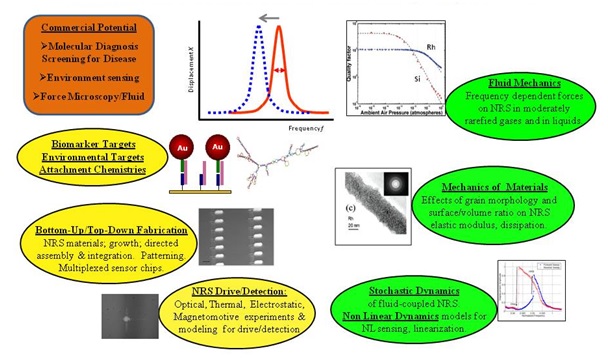
Rustom B. Bhiladvala is an Associate Professor in the Department of Mechanical Engineering at the University of Victoria. His expertise spans nanoscale materials, biomedical sensor development, and sustainable energy solutions. He holds degrees from IIT Kharagpur, the University of Iowa, and Yale University, and is a licensed Professional Engineer (P.Eng). Education: BTech (IIT Kharagpur), MS (University of Iowa), PhD (Yale) Affiliations: Faculty of Engineering, Mechanical Engineering Department, PRIMED Lab His research focuses on nanoresonators for early cancer detection, guard-heated thermal sensors for wind turbine optimization, and scalable nanostructure fabrication. Key projects include vibrating nanowire mass sensors and low-cost solar cell improvements. His work bridges fluid mechanics, materials science, and biomedical engineering. Notable contributions include developing field-directed nanowire assembly techniques and improving turbulent flow measurement accuracy. He teaches courses on energy systems and fluid mechanics at both undergraduate and graduate levels.