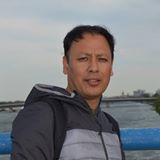
Santanu De is a Professor in the Department of Mechanical Engineering at the Indian Institute of Technology Kanpur (IIT Kanpur). His research specializes in Fluid and Thermal Sciences, with a focus on combustion dynamics, turbulence modeling, and computational fluid dynamics. He supervises multiple graduate students including PhD and M.Tech candidates. Education: PhD, Aerospace Engineering, IISc Bangalore (Thesis: Modeling and Computation of Turbulent Nonreacting and Reacting Sprays) M.Tech, Mechanical Engineering, IIT Kanpur B.Tech, Mechanical Engineering, Jalpaiguri Govt. Engineering College Research Focus: His work explores turbulent combustion, spray ignition, biomass energy systems, and advanced computational methods like Large Eddy Simulation and stochastic modeling. Research applications include sustainable energy and propulsion systems. Publication Trends: Recent articles emphasize computational fluid dynamics applied to combustion optimization, spray dynamics, and multiphase flows, using techniques like Conditional Moment Closure and lattice Boltzmann methods. Laboratory: Leads the CFD Laboratory at IIT Kanpur's Northern Laboratory (NL 302), focusing on experimental and computational combustion research.
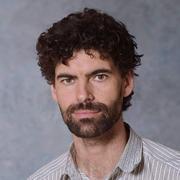
Luca Fiori is a Full Professor at the Department of Civil, Environmental and Mechanical Engineering, University of Trento. His work integrates chemical engineering principles with environmental applications, focusing on sustainable technologies for biomass conversion and waste valorization. Education: Laurea in Chemical Engineering (1998), PhD in Chemical Engineering (2003) Academic Career: Researcher (2004), confirmed faculty (2007) Research Interests: Specializing in two key areas: (1) Supercritical fluid extraction for food industry byproducts valorization, particularly grape seeds and agricultural waste; (2) Thermochemical conversion of biomass through pyrolysis and gasification. His work includes experimental setup of supercritical extraction labs and development of solid-gas equilibrium models for biomass conversion. Recent Research Trends: Focus on hydrothermal carbonization (HTC) for bioplastic disposal, wastewater treatment materials, and biofuel production. Collaborative projects bridge pulp&paper, waste treatment, and chemical industries through HTC integration. Scientific Awards: PAT-CRS 2007 funding for supercritical CO2 extraction research Labs & Infrastructure: Developed ex novo supercritical fluid extraction laboratory and experimental gasification/pyrolysis apparatus. Specialized in MATLAB/Cantera modeling and CFD simulations for reactor design.
Pierrette Guichardon is a Professor at Aix-Marseille University, affiliated with the M2P2 laboratory (Laboratory of Mechanics, Modeling and Clean Processes). She leads the Small-scale Processes and Mechanics research team, focusing on fundamental and applied chemical engineering research with emphasis on fluid mechanics and process engineering. Her primary research domains include: Membrane Technology (reverse osmosis, nanofiltration, fouling mechanisms) Microfluidics and microencapsulation systems Micromixing characterization and reaction engineering Thermodynamics of vapor-liquid equilibria Supercritical water oxidation processes Environmental applications in water treatment Her work consistently integrates sustainability principles, particularly in developing eco-friendly synthesis methods and green chemistry approaches for microcapsule production and water purification systems. Analysis of her 15 most recent publications (2016-2025) reveals three dominant research trajectories: 1) Advanced membrane processes with focus on concentration polarization, osmotic counter-effects, and fouling mechanisms; 2) Microfluidic synthesis of polyurea microcapsules using low-toxicity reagents and eco-friendly esters; 3) Fundamental studies in multiphase flows, micromixing kinetics, and thermodynamic modeling of complex mixtures. Her interdisciplinary approach bridges chemical engineering fundamentals with practical environmental applications. No scientific awards were documented in the provided source material. While the source material confirms active research leadership, specific details regarding graduate student advising, grant funding, or collaborative projects were not explicitly mentioned in the available information. Dr. Guichardon operates within the Small-scale Processes and Mechanics team at M2P2, a CNRS joint research unit (UMR 7340) involving Aix-Marseille University and École Centrale de Marseille. This laboratory environment supports her experimental and theoretical work in fluid mechanics, membrane processes, and microscale phenomena, with strong connections to industrial applications in water treatment and materials science.
Rajan Kumar Thapa serves as Professor in the Department of Process, Energy and Environmental Technology at the Faculty of Technology, Natural Sciences and Maritime Sciences, University of South-Eastern Norway. Based at the Porsgrunn campus, he holds dual responsibilities in advanced structural engineering education and cutting-edge renewable energy research. His research portfolio centers on sustainable energy systems with emphasis on: Biomass gasification optimization in fluidized bed reactors Computational modeling of multiphase fluid-particle interactions Thermochemical conversion processes for waste valorization Structural integrity analysis of industrial piping systems Professor Thapa's work bridges theoretical modeling with practical engineering applications, targeting efficiency improvements in renewable energy infrastructure. His doctoral research established foundational methodologies for flow behavior optimization in biomass conversion systems. He actively mentors PhD, Master's and Bachelor's students while teaching specialized courses in Pipe and Structure Material Engineering. Current supervision focuses on computational energy systems and structural reliability projects within Norway's sustainable technology framework.
Professor Mark Hlawitschka serves as Head of the Institute of Process Engineering at Johannes Kepler University Linz, where he leads research and teaching in chemical and process engineering. His academic position as a full professor reflects his significant contributions to the field of process engineering, particularly in multiphase systems and advanced measurement techniques. Professor Hlawitschka's research focuses on critical areas including Extraction , Digitalization in Process Engineering , CFD Simulation , Interfacial Phenomena , Three Phase Systems , Separator Technology , Bubble Column Reactors , and Membrane Separation . His work bridges fundamental research with industrial applications, addressing challenges in sustainable process engineering and environmental protection. His recent publications (2025) demonstrate a strong focus on advanced measurement techniques for multiphase systems, particularly using distributed acoustic sensing for process monitoring, bubble dynamics analysis, and groundwater vulnerability assessment. These works reflect his integration of traditional process engineering with digital technologies and machine learning approaches. Professor Hlawitschka has received notable recognition including: Best Poster Award (July 2025) GVT Forschungsprojekt des Jahres (July 2023) GVT Forschungsprojekt des Jahres (February 2022) Top Reviewer Award 2021 He actively supervises student research through multiple thesis seminars and has secured substantial funding for his research through FWF and FFG projects. His current leadership of the Institute of Process Engineering and multiple research projects demonstrates his significant role in advancing process engineering research and education at JKU. Professor Hlawitschka directs several major research initiatives including PFAS removal from groundwater, particle-bubble interactions for green processes, micro-coalescence cell development, and zero liquid discharge systems, creating numerous opportunities for student involvement and collaboration.
Dr. Thorsten Zirwes serves as Deputy Head of Institute at the Institute for Reactive Currents (IRST) at the University of Stuttgart, where he leads research in combustion engineering and reactive flows. With a strong background in chemical engineering from Karlsruhe Institute of Technology (KIT), where he completed his B.Sc., M.Sc., and PhD, Dr. Zirwes has established himself as a leading researcher in computational combustion. Deputy Head of Institute, Institute for Reactive Currents, University of Stuttgart (2023-present) DAAD PRIME Fellow & Visiting Postdoctoral Scholar, Stanford University (2022) PhD in Chemical Engineering and Process Engineering, Karlsruhe Institute of Technology (2016-2021) Dr. Zirwes' research focuses on advancing computational methods for understanding and modeling complex combustion processes, with particular emphasis on carbon-free fuels like hydrogen and ammonia. His work spans fundamental flame dynamics, turbulent combustion, and the development of efficient numerical algorithms for high-performance computing environments. He has made significant contributions to the understanding of thermodiffusion effects, flame instabilities, and porous media combustion for clean energy applications. His extensive publication record shows a clear trend toward sustainable energy solutions, with increasing focus on hydrogen and ammonia combustion as carbon-free alternatives. The research spans fundamental fluid dynamics, practical combustion applications, and computational method development, demonstrating both theoretical depth and practical relevance to energy transition challenges. Jürgen Warnatz Prize (German Section Combustion Institute, 2023) Distinguished Paper Award from the Combustion Institute (2023) Bernard-Lewis Fellowship of the Combustion Institute (2022) Most downloaded author of the Springer Journal FTaC (2022) Doctorate at KIT with summa cum laude (2021) Dr. Zirwes actively supervises research projects and collaborates with both academic and industrial partners. His group develops and maintains the EBI-DNS solver, an OpenFOAM extension for direct numerical simulation of combustion processes. Current research emphasizes carbon-free combustion technologies crucial for achieving climate goals, with strong connections to industry partners working on sustainable energy solutions. His research group maintains strong connections with international institutions, including Stanford University, and participates in major collaborative projects focused on advancing clean combustion technologies. The team combines expertise in fluid dynamics, numerical methods, and high-performance computing to tackle challenging problems in sustainable energy.
Dr. Herman Haustein is a Senior Lecturer at Tel Aviv University's School of Mechanical Engineering, where he heads the Micro Phase & Heat Transfer Laboratory . His research focuses on thermal management challenges in microelectronics through advanced heat transfer mechanisms. Education: B.Sc. with highest honors and direct Ph.D. from Technion Postdoctoral research at RWTH Aachen University, Germany Research Focus: Dr. Haustein investigates multiphase flow dynamics and phase-change phenomena, specializing in: Boiling mechanisms (nucleate pool, droplet) Impinging jet heat transfer (free-surface/submerged) Microscale convective enhancement Wavy film dynamics for cooling applications His work bridges experimental thermofluid dynamics with predictive modeling for electronic thermal management. Publication Trends: Recent articles (2012-2018) demonstrate consistent focus on experimental and theoretical analysis of boiling dynamics, jet impingement cooling, and reactive flows. Dominant methodologies include high-speed flow visualization, kinetic modeling of phase transitions, and optimization of thermal transport in constrained geometries.
Javier Davila Martin serves as a Professor in the Department of Aerospace Engineering and Fluid Mechanics at the Higher Technical School of Engineering, University of Seville. His academic career focuses on experimental and theoretical fluid dynamics with applications spanning renewable energy systems, environmental engineering, and industrial processes. His research expertise encompasses multiphase flow phenomena, turbulence-particle interactions, electrohydrodynamics, and vortex dynamics. Key investigation areas include micro-droplet/bubble generation mechanisms, particle settling in turbulent flows, Taylor cone electrospraying, and fluid dynamics in algae-based wastewater treatment systems. Current work emphasizes optimizing raceway pond designs and developing vortex-based mixing technologies for photobioreactors. Analysis of his 10 publications (1992–2005) reveals consistent focus on fundamental fluid mechanics principles applied to environmental challenges. Dominant themes include turbulence-enhanced particle coalescence (cloud physics applications), electrohydrodynamic scaling laws for electrospraying, and three-dimensional bubbly vortex structures. His work bridges theoretical modeling with experimental validation across solar thermal energy, microalgae cultivation, and industrial atomization processes. Davila Martin has secured extensive research funding as principal investigator for 15+ national and European projects. Notable initiatives include the H2020 INCOVER project for algae-based wastewater treatment, solar thermal steam generation systems (ENE2004-06907), and vortex-based devices for microalgae bloom control (BLOOM project). His patent portfolio includes 15+ inventions related to droplet generation, vortex reactors, and water treatment technologies. He leads the MPFlow (Multiphase Flows) research group at the University of Seville, which specializes in experimental and numerical analysis of complex fluid phenomena. Current team activities focus on developing high-efficiency mixing systems for raceway ponds, optimizing oxygen transfer in SBR wastewater reactors, and creating patented vortex technologies for industrial applications in desalination and biochip production.