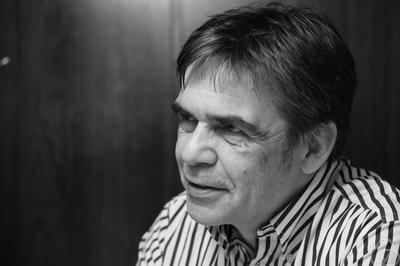
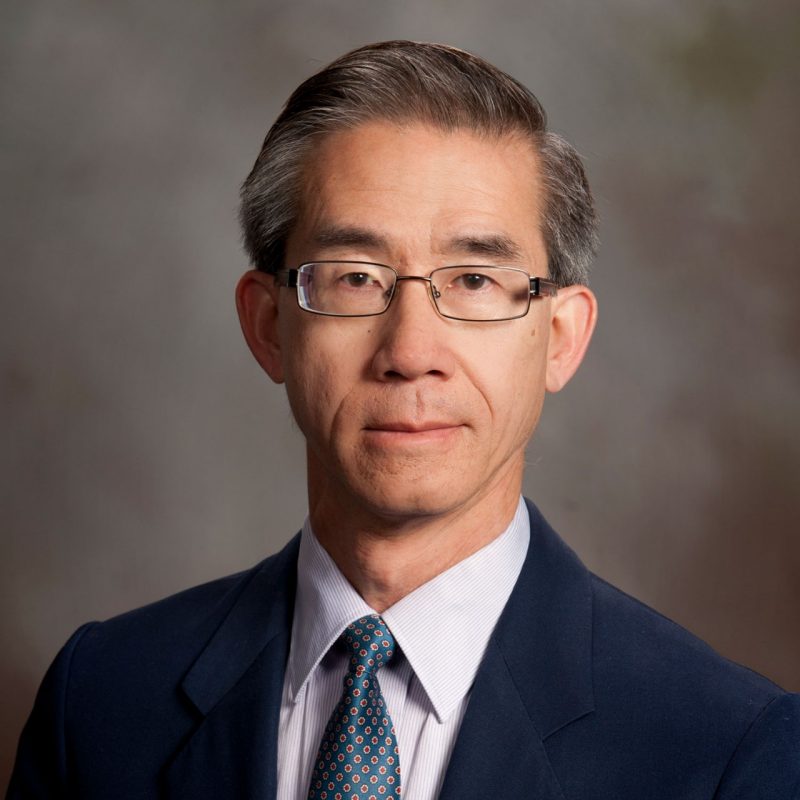
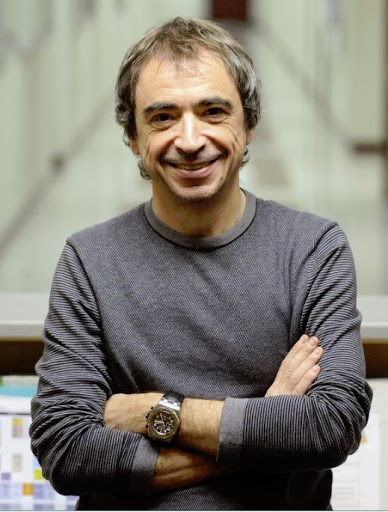
John F. Brady is the Chevron Professor of Chemical Engineering and Mechanical Engineering at the California Institute of Technology. He earned his B.S. from the University of Pennsylvania (1975), M.S. (1977) and Ph.D. (1981) from Stanford University, and has held academic roles at Caltech since 1985, including Executive Officer for Chemical Engineering (1993-99; 2013-19). His research focuses on fluid mechanics, transport processes, and complex/multiphase fluids. Elected to the National Academy of Sciences (20XX) Elected to the American Academy of Arts and Sciences (20XX) Brady's publications reveal expertise in active matter dynamics, microrheology, and non-equilibrium systems. His work spans fundamental fluid mechanics to applied biomedical device design, with a strong emphasis on computational modeling and experimental validation in colloidal and soft matter physics.
Dr. Sajjad Bigham is an Associate Professor in the Department of Mechanical and Aerospace Engineering at North Carolina State University and serves as an Adjunct Associate Professor at Michigan Technological University. He holds a PhD in Mechanical Engineering from the University of Florida and directs the Energy-X Lab (Energy eXploration Laboratory), which focuses on high-impact research in energy science and technology. His research interests encompass: Advanced thermal management solutions including microscale heat transfer, boiling/condensation phenomena, and interfacial transport Energy-efficient systems for HVAC&R, desalination, and clean water production Development of micro/nano-engineered materials and devices for energy conversion/storage Sorption-based gas management and multiphase systems under extreme conditions Recent publications demonstrate strong focus on thermal management innovations (45%), sustainable energy systems (30%), and advanced materials applications (25%). Dominant themes include heat transfer enhancement techniques, energy-efficient appliance design, desalination technologies, and microscale phase-change phenomena, with increasing emphasis on additive manufacturing approaches. Dr. Bigham leads the Energy-X Lab research group, which tackles high-risk, high-reward problems across four thrust areas: Terrestrial and space life support systems Advanced thermal management Clean energy production Clean water supply The lab's mission is to improve energy efficiency, reliability, and economy across defense, environmental, and energy sectors.
Thorsten Koch serves as Head of the Department of Applied Algorithmic Intelligence Methods within the Division of Mathematical Algorithmic Intelligence at Zuse Institute Berlin (ZIB). His research spans mathematical optimization, energy systems modeling, quantum computing applications, and scientometrics. Koch leads significant research projects including FAN (focusing on AI in scholarly communication), UNSEEN (energy scenarios), HPO-NAVI (research software visibility), and Multi-Energy Models for European Energy System Planning. Koch's research interests center on developing advanced optimization algorithms for complex systems, particularly in energy networks and scientific data analysis. His work bridges theoretical mathematics with practical applications in gas network optimization, wind farm design, portfolio management, and quantum computing. He has pioneered methods for large-scale mixed-integer programming, scenario generation, and the integration of machine learning with traditional optimization techniques. His recent publications demonstrate growing emphasis on quantum optimization, scientometrics, and the application of AI to scientific communication infrastructure. His publication trends reveal a strategic expansion from traditional mathematical optimization into quantum computing applications and scientific data infrastructure. Recent work shows increasing collaboration across disciplines - connecting energy systems analysis with financial modeling, integrating machine learning with optimization solvers, and applying computational methods to scientometrics. The 15 most recent articles highlight three major thrusts: quantum optimization (33%), energy systems modeling (27%), and scientific data infrastructure (40%), reflecting his leadership in both theoretical algorithm development and practical implementation for societal challenges. Koch actively contributes to research infrastructure through leadership roles in projects like KOBV (Berlin-Brandenburg Cooperative Library Network), HDC (Humanities Data Centre), and CIB (future library networks). His work on the DeepGreen initiative focuses on establishing legally secure workflows for implementing open-access components in scientific publication licensing agreements, demonstrating his commitment to open science principles and research data management.
Dr. Jean-Christophe Nave is an Associate Professor in the Department of Mathematics and Statistics at McGill University. He holds a PhD from the University of California, Santa Barbara (2004), under advisors Xu-Dong Liu and Sanjoy Banerjee. Prior to McGill, he served as a Lecturer and Instructor at MIT's Mathematics Department (2005-2010). His research focuses on numerical analysis, partial differential equations, fluid mechanics, and computational methods for interface problems. He has led research groups involving postdocs, PhD, and undergraduate students, collaborating on projects like the Correction Function Method for PDEs and the Characteristic Mapping Method for advection problems. Education: Ph.D. in Applied Mathematics from UCSB (2004). Affiliations include the Institut des Sciences Mathematiques Steering Committee, Centre de Recherches Mathematiques Applied Math Lab, and CNRS-UMI. Active in teaching courses like Numerical Analysis I/II and Non-Linear Dynamics at McGill, with sabbatical periods noted in recent years. Research interests span numerical methods for PDEs, fluid-structure interaction, and multi-phase flows. His work integrates computational geometry and invariant numerical techniques, addressing challenges in complex fluid dynamics and interface-driven phenomena. Over 40 peer-reviewed publications and continuous contributions to the field of computational applied mathematics. Scientific advising includes over 20 graduate and undergraduate students, with notable alumni now in academia and industry. Collaborations include projects on volcano dynamics, fiber drawing instabilities, and concentrated solar power systems. His methods have advanced numerical simulations for engineering and physical systems involving discontinuous coefficients and sharp interfaces.
Daria Camilla Boffito is a Full Professor in the Department of Chemical Engineering at Polytechnique Montréal , holding the Tier-2 Canada Research Chair in Intensified Mechano-chemical Processes for Sustainable Biomass Conversion. Her research spans process intensification , catalysis , sonochemistry , photocatalysis , and metal extraction , with a focus on sustainability. Education: B.Sc. and Ph.D. in Industrial Chemistry from the University of Milan, M.Sc. in Industrial Chemistry and Management Current Research: Developing ultrasound-assisted extraction , CO2 conversion , and floating photocatalysts for wastewater treatment Collaborations: Works with Canadian and international companies on sustainable chemical processes Scientific Awards include the Canada Research Chair Tier-2 (2016-2021), NSERC Banting Postdoctoral Fellowship (2013-2016), and FRQNT PBEEE Postdoctoral Fellowship (2013-2016). Advising has seen 5 Ph.D. and 9 Master's students graduate. She leads the Engineering Process Intensification and Catalysis (EPIC) Laboratory and is a member of the Institut de génie biomédical .
Jesse Capecelatro is an Associate Professor in the Departments of Mechanical Engineering and Aerospace Engineering at the University of Michigan. He leads the Computational Multi-phase/Multi-physics Flow Lab (CRG), focusing on numerical methods and data-driven models for complex flows in renewable energy, disease transmission, and space exploration. Ph.D., Mechanical & Aerospace Engineering, Cornell University (2014) M.S., Mechanical & Aerospace Engineering, Cornell University (2012) M.S., Mechanical Engineering, University of Colorado (2011) B.S., Mechanical Engineering, SUNY Binghamton (2009) His research spans fluid mechanics , multiphase flow , and high-performance computing , with applications in renewable energy systems , space exploration , and disease transmission modeling . Current projects include plume-surface interactions and turbulence modeling for particle-laden flows. Recent publications highlight advancements in multiphase flow instabilities and shock-particle interactions , reflecting his expertise in computational modeling of complex flows. CRG’s work often combines physics-based simulations with machine learning for predictive analysis. National Science Foundation CAREER Award Office of Naval Research Young Investigator Award ASME Pi Tau Sigma Gold Medal Capecelatro’s mentoring style emphasizes regular collaboration, with weekly meetings, annual progress reviews, and support for conference attendance (e.g., AIAA, APS DFD). His lab includes postdocs, doctoral students, and international collaborators, fostering interdisciplinary research in scientific computing and fluid dynamics . CRG develops open-source tools for multiphase flow simulation and contributes to textbook revisions like Fluid Mechanics, 7th Edition , co-authored with David Dowling. The team’s work bridges fundamental research and practical applications in energy and aerospace sectors.
Tim Colonius is the Frank and Ora Lee Marble Professor of Mechanical Engineering and Medical Engineering and holds the Cecil and Sally Drinkward Leadership Chair at the California Institute of Technology. He has been affiliated with Caltech since 1994 and currently serves as Executive Officer for Mechanical and Civil Engineering . Colonius earned his B.S. from the University of Michigan (Ann Arbor), and both his M.S. and Ph.D. from Stanford University. Research Interests: His work focuses on fluid dynamics (global instabilities, cavitation, aerodynamic sound), flow control (closed-loop control, reduced-order modeling), and biomedical applications (shock waves, lithotripsy, ultrasound). He also develops advanced numerical methods for interface capturing, immersed-boundary techniques, and high-order accuracy. Scientific Contributions: Recent publications highlight his research in multiphase flows, vortex ring collisions, turbulent jet analysis, GPU-accelerated simulations, and biomedical applications. His group uses computational and data-driven approaches to study turbulence, instabilities, and flow optimization. Scientific Awards: AIAA Aeroacoustics Award Fellow of the Acoustical Society of America Fellow of the American Physical Society (APS) NSF and DoD research grants
Outi Tammisola is a Professor at KTH Royal Institute of Technology, specializing in Fluid Mechanics within the Department of Mechanics. Her research focuses on non-Newtonian fluids, viscoelasticity, multiphase flows, and microfluidics. She is actively involved in teaching and course coordination for mechanics and fluid dynamics courses, including Mechanics I, Mechanics II, and Wave Motion and Hydrodynamic Stability. Her work bridges numerical methods, experimental validation, and industrial applications, with a strong emphasis on understanding complex fluid behaviors in both theoretical and applied contexts. Dr. Tammisola’s research interests span topics such as elastoviscoplastic fluids, particle migration in microchannels, and interfacial phenomena in viscoelastic systems. Her recent publications address challenges in multiphase flow dynamics, including droplet coalescence, bubble migration, and the rheology of non-Newtonian fluids. She contributes to advancements in numerical methods, such as phase-field modeling and immersed boundary techniques, to simulate complex fluid-structure interactions. Her articles highlight trends in understanding fluid behavior under extreme conditions, such as high aspect ratio microchannels and porous media. Collaborations with experimentalists and computational scientists ensure her work remains both innovative and grounded in real-world applications. While no scientific awards are explicitly mentioned, her extensive publication record reflects significant contributions to the field of fluid mechanics. Outi Tammisola is also engaged in academic leadership, overseeing degree projects and contributing to the development of educational programs at KTH. Her research group likely explores cutting-edge topics in microfluidics and viscoelastic turbulence, though specific lab or team affiliations are not detailed in the provided texts.
Mohsen Taheri Andani is an Assistant Professor in the Department of Mechanical Engineering at Texas A&M University. He holds a Ph.D. in Mechanical Engineering from the University of Michigan (2022), an M.Sc. in Materials Science and Engineering from the University of Michigan (2018), an M.Sc. in Mechanical Engineering from the University of Toledo (2015), and a B.Sc. in Mechanical Engineering from Isfahan University of Technology (2012). His research focuses on the processing-structure-properties relationships of advanced materials, additive manufacturing, physical/ mechanical metallurgy, and mechanical behavior of materials, with a particular emphasis on grain boundary engineering and crystallographic texture control in metals processed via additive manufacturing methods. Dr. Andani has received prestigious awards including the 2022 Robert M. Caddell Memorial Award for Research, the 2021 Richard and Eleanor Towner Prize for Outstanding Ph.D. Research, and the 2020 Ivor K. McIvor Award, all from the University of Michigan. His work bridges fundamental materials science with advanced manufacturing technologies, aiming to optimize material performance through multiscale control of microstructures. His research group, the Multiscale Manufacturing and Mechanics of Materials (M4) Lab, explores the interface between additive manufacturing and materials mechanics. Current projects include the Center for Scientific Machine Learning for Material Sciences (AFSOR), reducing qualification time in additive manufacturing (America Makes), and structural evaluation via non-contact sensors (DARPA). He actively seeks motivated Ph.D. students for Fall 2025 and welcomes undergraduate/master’s students to join his team. Dr. Andani’s publications emphasize experimental and computational studies of microstructural evolution in additively manufactured metals, including grain boundary effects on dislocation dynamics, crystallographic texture control in NiTi alloys, and thermomechanical property optimization of materials like 316L stainless steel and Cu-Cr-Zr alloys. His work integrates in situ characterization techniques with advanced modeling to predict and enhance material performance.
Professor Michael Manhart is affiliated with the Technical University of Munich (TUM) as an Extraordinary Professor in the Department of Hydromechanics . His research focuses on fluid mechanics, turbulent flow dynamics, and computational fluid dynamics (CFD) simulations, particularly in porous media and environmental fluid mechanics. Education: Not explicitly stated in the provided text. His recent publications investigate turbulent flow over random sphere packs, scalar transport at porous-turbulent interfaces, acoustic resonances in HVAC systems, and nonlinear oscillatory flow modeling. He employs advanced numerical techniques like direct numerical simulations (DNS) and large-eddy simulations (LES) to study flow structures, energy budgets, and particle transport mechanisms. Professor Manhart collaborates with researchers such as Yoshiyuki Sakai, Simon Wenczowski, and Daniel Quosdorf. His work addresses applications in environmental engineering, hydraulic modeling, and industrial fluid dynamics, with a strong emphasis on validating computational models against experimental data (e.g., PIV measurements). He leads the Professorship for Hydromechanics at TUM, conducting high-fidelity simulations and experimental studies on topics like wall shear stress estimation, sediment erosion around cylinders, and turbulence decomposition in complex flows.
Endre Süli is a Professor of Numerical Analysis at the University of Oxford, affiliated with Worcester College and Linacre College. He has held various academic roles since 1985, including Fellowships and Tutorships in Mathematics. University Education: B.Sc. in Mathematics, University of Belgrade (1974-1978) M.Sc. in Mathematics, University of Belgrade (1978-1980) Ph.D. in Mathematics, University of Belgrade (1985) M.A., University of Oxford (1985) British Council Visiting Student, Reading University and University of Oxford (1983/84) Süli's research focuses on numerical methods for partial differential equations (PDEs), with expertise in finite element methods, adaptive algorithms, error control, and computational modeling of fractures and non-Newtonian fluids. His work bridges mathematical theory and practical applications in fluid dynamics and material science. His recent publications emphasize finite element approximations, nonlinear PDEs, and stochastic models for polymer dynamics. Themes include multiscale methods, tensor-sparsity for high-dimensional problems, and compressible flow simulations. Scientific Awards: Fellow of the Royal Society (2021) London Mathematical Society Naylor Prize and Lectureship (2021) Pro Urbe Prize, City of Subotica (2021) SIAM Fellow (2016) Member, Academia Europaea (2020) Foreign Member, Serbian National Academy of Sciences and Arts (2009) IMA Service Award (2011) Fellow, European Academy of Sciences (EurASc) (2010) Fellow, Institute of Mathematics and its Applications (2007) London Mathematical Society/New Zealand Mathematical Society Forder Lecturer (2015) Professor Hospitus, Charles University, Prague (2012) Distinguished Visiting Chair Professor, Shanghai Jiao Tong University (2013) Invited Speaker, International Congress of Mathematicians, Madrid (2006) Süli has supervised numerous research projects and held visiting appointments globally. His contributions to numerical analysis span foundational work on error estimation, nonlinear stability, and advanced computational frameworks for complex physical systems.
Federico Toschi is a Full Professor at Eindhoven University of Technology (TU/e), holding joint appointments in Applied Physics and Mathematics and Computer Science departments. His research focuses on multi-scale transport phenomena, combining statistical physics, fluid dynamics, and computational methods. He leads projects in the 4TU Centre for Multiscale Phenomena and EAISI. Education: PhD in Physics (University of Pisa, 1998) and academic background at Scuola Normale Superiore di Pisa. Interdisciplinary expertise in fluid dynamics turbulence, Lagrangian turbulence, crowd dynamics, and Lattice Boltzmann methods. Recipient of APS Fellow (2015), Euromech Fluid Mechanics Fellow (2012), and Ig Nobel Prize for Physics (2021). Research emphasizes turbulence modeling, pedestrian dynamics, and active matter, with applications in environmental flows and crowd management. His work bridges computational innovations with experimental validations. Recent articles explore kinetic data-driven turbulence modeling, pedestrian flow optimization, and turbulence effects in biological systems. Projects include digital twins for seismicity modeling and rarefied gas dynamics. Teaches fluid mechanics, computational physics, and chaos theory courses. Founded Flow Matters Holding BV, applying research to practical solutions.
Torsten Berning serves as Associate Professor at AAU Energy within The Faculty of Engineering and Science at Aalborg University, Denmark. His research focuses on thermal engineering systems, hydrogen production technologies, and electro-fuels development, with significant contributions to fuel cell and electrolyzer innovation. His primary research domains include fuel cell engineering, electrolyzer technology, and computational fluid dynamics applied to energy systems. He investigates water management in proton exchange membrane fuel cells, heat and mass transfer in electrolysis cells, and efficiency optimization of hydrogen production systems. His methodology combines experimental validation with advanced CFD modeling to address durability and performance challenges in electrochemical energy conversion. Recent publications (2024-2025) demonstrate concentrated research on alkaline electrolysis systems and thermal management solutions. Key advancements include reducing gas crossover in electrolyzers, optimizing indirect evaporative coolers, and designing proton exchange membrane electrolyzers. His work leverages computational modeling to enhance efficiency and scalability of hydrogen production technologies while addressing multiphase flow and heat transfer complexities. Professor Berning actively supervises PhD candidates: H. D. Miller on Degradation Modeling and Lifetime Prediction of Electrolyzers D. L. Martinho on Computational Fluid Dynamics of Alkaline Electrolysis Cells W. Liu on Water Transport in Proton Exchange Membrane Fuel Cells His research is funded by multiple grants including EUDP's 'Boosting Economic Electrolyzer Stack Technology 2' (2022-2025) and the Danish Energy Agency's 'Degradation Modeling and Lifetime Prediction of Electrolyzers' project (2024-2027). He collaborates within AAU Energy's research ecosystem on hydrogen production systems and thermal management technologies, contributing to projects like the Adiabatic Cooling Systems for Decentralised Ventilation and advancing electrolyzer stack technology through industry partnerships.
Wing Ng serves as Alumni Distinguished Professor and Chris C. Kraft Endowed Professor in Virginia Tech's Department of Mechanical Engineering within the College of Engineering. His career spans over four decades with continuous contributions to aerospace thermal systems and fluid dynamics research since joining Virginia Tech in 1984. Dr. Ng's academic foundation includes: Ph.D. in Mechanical Engineering from Massachusetts Institute of Technology (1984) M.S. in Mechanical Engineering from Massachusetts Institute of Technology (1980) B.S. in Mechanical Engineering from Northeastern University (1979) His pioneering research focuses on aeroacoustics of drones and jet engines, where he develops advanced diagnostics for turbine flow measurements and investigates transonic turbine blade aerodynamics. Current work explores aerothermal particle interactions in gas turbines and clean energy applications for wind turbines. His experimental approach bridges fundamental fluid dynamics with practical aerospace engineering solutions, particularly in cooling systems for high-temperature components. Analysis of recent publications (2024-2025) reveals three dominant research thrusts: turbine cooling optimization (film/phantom cooling configurations), particle dynamics in gas paths (impact/rebound mechanics), and novel measurement techniques (strain sensors, multiphase flow diagnostics). These studies consistently target performance enhancement and durability improvement in turbomachinery through experimental validation. Dr. Ng's exceptional contributions are recognized through: Virginia Tech Faculty Entrepreneur Hall of Fame (2017) William E. Wine Award for teaching excellence (2014) Multiple Certificates of Teaching Excellence (1985,1988,2011,2014) Dean's Award for Research Excellence (2013) Consecutive Best Paper Awards from ASME/AIAA (2001-2013) Fellow of ASME (1996) and Associate Fellow of AIAA (1992) As director of the Ng Lab, he maintains active collaborations with industry partners through Techsburg, Inc. (where he serves as Chairman) to translate research into commercial applications. His work on drone aeroacoustics and turbine diagnostics directly informs next-generation propulsion systems while addressing critical challenges in particle ingestion and thermal management.
Jacob Fish is the Robert A.W. and Christine S. Carleton Professor and Chair of the Department of Civil Engineering and Engineering Mechanics at Columbia University. He directs the Multiscale Science and Engineering Center and leads Columbia's Computational Science and Engineering initiative (iCSE), coordinating 65+ faculty. With 35 years of pioneering research, he specializes in multiscale computational methods bridging aerospace, automotive, and healthcare industries. His research integrates multiscale computational science with applications in: Homogenization and reduced-order methods for complex materials Stochastic modeling of heterogeneous systems Coupled thermo-chemo-electro-mechanical processes Data-physics driven frameworks for industrial processes Recent work emphasizes AI-enhanced modeling for composites, porous media, and environmental systems. His 15 most recent publications (2023-2025) demonstrate strong trends toward: Data-physics integration in manufacturing (e.g., resin transfer molding) Multiscale environmental applications (canopy flows, CO2 mineralization) Advanced numerical methods (discontinuous Galerkin, solver-free homogenization) Digital twin development for composite lifecycle management Scientific Awards & Honors: 2018 JSCES Grand Prize 2010 IACM Computational Mechanics Award 2005 USACM Computational Structural Mechanics Award 2003 Rensselaer Research Award Fellowships: AAM, USACM, IACM Two Best Paper awards He founded the commercial Multiscale Designer software suite (250+ global clients) and secured major grants including an NSF-DFG collaboration on thermoplastic interfaces. His textbooks are used in 200+ universities worldwide. Leads the Multiscale Science and Engineering Center focusing on industrial-scale computational challenges and mentors researchers through Columbia's iCSE initiative. Former President of USACM and current IACM Vice-President for the Americas.