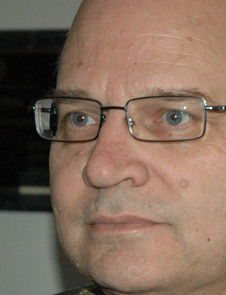
Federico Lanza is a Research Fellow at the University of Oslo, affiliated with the Porous Media Laboratory (SFF) within the Department of Physics. His research focuses on fluid dynamics in porous media, thermal instabilities, and geophysical flows, particularly simulating phenomena like viscous fingering and lava cooling dynamics. Lanza collaborates with experts such as Beatrice Baldelli, Gaute Linga, and Eirik Grude Flekkøy on projects involving computational modeling of multiphase flow and thermal-viscous interactions. Recent work explores transitions between viscous fingers and foam structures in heterogeneous media, as well as cooling-induced instabilities in Hele-Shaw systems. His contributions bridge geophysics and engineering through advanced numerical simulations and experimental analysis.
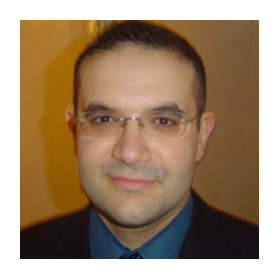
Prof. Yanzhong Li is a Professor at the Department of Refrigeration and Cryogenic Engineering, Xi'an Jiaotong University, China. He serves as Editor-in-Chief of the journal Cryo and leads research in Thermal Engineering, Cryogenic Engineering, and Fluid Dynamics. His work focuses on cryogenic fluid dynamics, hydrogen liquefaction systems, and phase change phenomena in energy systems. Key affiliations include the Department of Refrigeration and Cryogenic Engineering at Xi'an Jiaotong University, with additional collaborations across institutions such as the State Key Laboratory of Mining Response and Disaster Prevention (Anhui University) and the School of Hydrology and Water Resources (Nanjing University). Co-authored papers with 264 collaborators, including Bengt Sunden and Chengfeng Zhu. Research interests emphasize cryogenic applications in aerospace, thermal systems optimization, and multiphase flow dynamics. Editorial leadership in Cryo reflects his commitment to advancing cryogenic science.
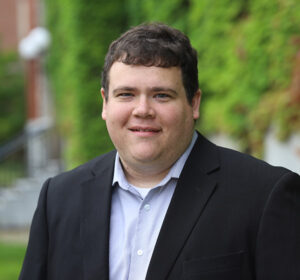
Roberto Verzicco is a Full Professor at the University of Twente's MESA+ Institute, specializing in the Physics of Fluids. His research focuses on fluid dynamics, thermal convection, and computational fluid dynamics (CFD), with particular emphasis on non-Newtonian fluids and turbulence. He has contributed to advancing numerical methods for simulating complex fluid systems, including porous media flows and phoretic particle dynamics. Key research areas include direct numerical simulation (DNS), heat and momentum transport, and rheological modeling. His work integrates computational approaches with experimental insights, addressing challenges in melting phenomena, multiphase flows, and parameter identifiability in fluid models. Collaborations with researchers like Detlef Lohse and Roberto Stevens highlight his engagement in international networks. His datasets and presentations underscore contributions to understanding rotating Rayleigh-Bénard convection and confined thermal systems. Supervision of 15 works reflects his academic mentorship.
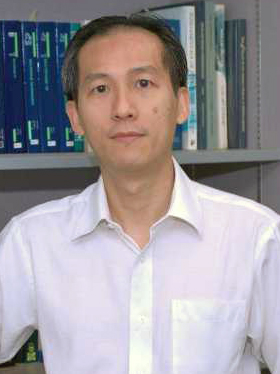
Duc Thach Son Vu is a Research Fellow in the Department of Earth & Planetary Sciences at Yale University. His work focuses on computational geosciences, numerical methods, and thermodynamics, with a particular emphasis on multiphase systems and deep learning applications. He is affiliated with the Eisaman Lab, contributing to interdisciplinary research at the intersection of mathematics, earth sciences, and computational tools. His research interests include developing novel algorithms for solving complex equilibrium problems in multiphase mixtures and creating computational frameworks like the SpinDoctor MATLAB toolbox for diffusion MRI simulation. His publications highlight advancements in numerical techniques, graph neural networks, and predictive modeling for geoscientific challenges. No formal awards or grants are listed in the provided materials, but his contributions to the Eisaman Lab and Yale’s research community are notable. He holds a personal email (thachsonnt94@gmail.com) and can be reached via ducthachson.vu@yale.edu for professional inquiries.
Stavros Tavoularis is a Professor in the Department of Mechanical Engineering at the University of Ottawa, cross-appointed in the Department of Physics. He holds the HPCVL-Sun Microsystems Chair in Computational Science and Engineering. His academic journey includes degrees from the National Technical University of Athens (Dipl.Eng., 1973), Virginia Tech (M.Sc., 1974), and Johns Hopkins University (Ph.D., 1978). He has served as Department Chair and Director of the Ottawa-Carleton Institute for Mechanical and Aerospace Engineering. Currently, he leads the uOttawa Fluid Mechanics Laboratory, supervising a multidisciplinary team of students and researchers. Education: Dipl.Eng., National Technical University of Athens (1973) M.Sc., Virginia Polytechnic Institute & State University (1974) Ph.D., The Johns Hopkins University (1978) Research interests span fluid mechanics, turbulence, vortex dynamics, aerodynamics, nuclear thermal hydraulics, and biofluid dynamics. His work emphasizes experimental and computational studies, including turbulence modulation, supercritical fluid heat transfer, and flow instrumentation. Notable projects involve CANDU reactor thermal hydraulics, mechanical heart valve fluid dynamics, and flow instability in eccentric channels. He has secured grants from NSERC, NRC, DND, and industry partners like Pratt & Whitney Canada. Publications reflect expertise in supercritical fluids, two-phase flow, and turbulence. Recent trends focus on flow instability mitigation, scalar dispersion optimization, and computational benchmarking for industrial flows. His work bridges fundamental fluid mechanics with engineering applications in energy systems and biomedical devices. Awards include Fellowships from the Canadian Academy of Engineering, Engineering Institute of Canada, and the American Physical Society, alongside the George S. Glinski Award. His advisory roles include supervision of over 50 graduate students and postdoctoral fellows. Current projects involve CFD simulations of nuclear reactor headers and biofluid dynamics in cardiovascular systems. Labs/Teams: Director of the uOttawa Fluid Mechanics Laboratory, collaborating with industry and government on experimental and computational flow analysis. Key facilities include supercritical fluid test loops and advanced PIV/PLIF measurement systems.
Professor Dimitrios I Gerogiorgis holds the Personal Chair of Process Systems Engineering at the University of Edinburgh's School of Engineering (Institute for Materials & Processes). His research focuses on pharmaceutical manufacturing optimization, biochemical processes, oil & gas systems, and high-temperature materials processing. He has contributed to over 50 peer-reviewed publications, including seminal works on continuous pharmaceutical manufacturing (CPM), smart drilling fluids, and beer fermentation dynamics. Education: PhD/MSc in Chemical Engineering (Carnegie Mellon University) and Diplomas in Chemical Engineering (Aristotle University) and Translation (Institute of Linguists). Professional memberships include AIChE, IChemE, TMS, and ASEE. Research emphasizes multi-objective optimization, techno-economic analysis, and CFD modeling. Key projects include: (1) CPM cost-benefit analyses for ibuprofen/artemisinin, (2) nanoparticle-enhanced drilling fluid rheology, and (3) beer fermentation temperature manipulation simulations. His work bridges fundamental process modeling with industrial-scale implementation.
Brian Peterson holds the position of Personal Chair of Advanced Laser Diagnostics within the School of Engineering at the University of Edinburgh, where he serves as a Professor in the Department of Mechanical Engineering. His research focuses on advanced experimental techniques for combustion and thermofluids, with particular emphasis on flame-wall interactions, turbulent flow dynamics, and pyrolysis processes. He actively supervises PhD students and leads multiple high-impact research projects funded by major international bodies. Research Expertise: Professor Peterson specializes in cutting-edge laser diagnostics including Particle Image Velocimetry (PIV), phosphor thermometry, and wavelet-based optical flow velocimetry (wOFV). His work investigates fundamental combustion phenomena in internal combustion engines, fire safety applications, and biomass combustion systems. Key contributions include high-speed measurements of flame-vortex interactions, pyrolysis front tracking in solid fuels, and surface temperature mapping during flame-wall quenching events. Publication Trends: Recent publications (2022-2025) demonstrate a strong focus on high-speed diagnostics for resolving transient combustion phenomena in narrow passages and turbulent boundary layers. His work integrates combustion science, fluid dynamics, and thermofluids to address challenges in engine efficiency, fire safety, and hydrogen combustion. The research consistently emphasizes experimental validation through advanced optical techniques capable of kHz-rate measurements. Research Leadership: Professor Peterson serves as Principal Investigator on multiple funded projects including: Unresolved fluid mechanics at liquid/gas interfaces for atomizing sprays (UKRI, 2023-2028) Premixed flame-wall interaction in turbulent boundary layers (EPSRC, 2021-2025) EPIC: Energy transfer Processes at gas/wall Interfaces under extreme Conditions (European Commission, 2017-2023) He has secured funding from EPSRC, UKRI, European Commission, and industry partners for combustion diagnostics and thermofluids research. Facilities and Collaborations: Based in the James Clerk Maxwell Building (Room 2.2415), he contributes to the Multiscale Thermofluids Research group and has developed specialized datasets on aerosol dispersion for virus transmission risk mitigation. His work involves international collaborations with institutions in Germany (Technical University of Darmstadt) and industry partners in automotive and energy sectors.
Matthew Erdman is an Assistant Teaching Professor at Syracuse University, specializing in Computational Fluid Dynamics, Heat and Mass Transfer, Multiphase Flow, and Hydropower. His research focuses on advancing computational models for multiphase systems and optimizing hydraulic turbine performance. Education: PhD, Pennsylvania State University: Improved multiphase mass transfer models using CFD software. M.S., Pennsylvania State University: Enhanced off-design efficiencies in hydraulic turbines. Research Interests: Erdman’s work bridges theoretical and experimental methods, addressing challenges in fluid dynamics, instrumentation, and hydropower systems. He has contributed to forensic analysis of sailing vessel incidents through interdisciplinary approaches. Publications: Erdman’s 2013 paper at the Chesapeake Sailing Yacht Symposium analyzed uncertainties in wind-heel dynamics of traditional sailing vessels, emphasizing maritime safety and forensic engineering. Awards: Hydro-Research Foundation Research Award (2014) Vice Admiral E.L. Cochrane Award (2014) Outstanding Mechanical Engineering Award, Penn State Behrend (2013) Teaching & Leadership: Coordinated the Measurement, Instrumentation, and Statistics lab course at Penn State for seven years, later leading its redesign into Circuit Analysis, Instrumentation, and Statistics.
Lin Ma is a Senior Lecturer at the University of Manchester, specializing in multi-scale imaging and characterization of rocks for geoenergy applications. She holds leadership roles including Head of International Student Recruitment in the Faculty of Science and Engineering (FSE) and Academic Lead for the Women@Manchester staff network (~800 members). Her research focuses on digital rock physics, subsurface energy storage, and machine learning-assisted analysis. She leads major grants totaling over £2M as Principal Investigator (PI) and £8M as Co-Investigator (Co-I) in UKRI/industrial projects. Notable roles include Deputy Editor-in-Chief of Marine and Petroleum Geology and Vice Chair of the Energy Group at The Geological Society. Education: PhD (Petroleum Geosciences, University of Manchester, 2012–2016), MSc (Petroleum Geology, Jilin University, 2009–2012), BSc (Petroleum Geology, Jilin University, 2005–2009). Research interests span shale gas, carbon storage, geothermal energy, and synchrotron-based imaging. She has secured >80 synchrotron beamtime days at facilities like Diamond Light Source and Stanford Synchrotron Radiation Lightsource. Research highlights include 4D imaging of porous material evolution under subsurface conditions (temperature/pressure/chemistry) and machine learning for upscaling microstructure analysis. Collaborations span global institutions, including the Brazilian Synchrotron Light Laboratory (LNLS) and European Synchrotron Radiation Facility (ESRF). Awards include NERC Independent Fellowship (2018) and STFC Rutherford Fellowship (2018). Teaching includes courses on subsurface modeling and engineering design. Current projects include the University of Manchester at Harwell campus and hydrogen storage feasibility studies. Supervised 10+ PhD students and postdoctoral researchers, with active labs focused on energy decarbonization and subsurface engineering.
Associate Professor LOH Wai Lam is affiliated with the Department of Mechanical Engineering at the National University of Singapore (NUS), part of the College of Design and Engineering. He coordinates the Offshore Oil & Gas Technology Specialisation and manages the Subsea Systems and Transportation Programme at the Centre of Offshore Research & Engineering (CORE). His qualifications include a PhD, MSc, and BEng from the University of Manchester, UK, with professional certifications as a Chartered Engineer (CEng) and memberships in the Royal Aeronautical Society (MRAeS) and the Society of Petroleum Engineers (SPE). His research focuses on subsea processing, multiphase flow systems, and oil/gas production optimization. Notable contributions include patented innovations in multiphase pumps, flow metering, and separation technologies. He has received prestigious awards such as the Royal Society Esso Energy Award (1998) and Hart’s Petroleum International Special Meritorious Award (1999) for engineering innovation. Before joining NUS in 2006, he spent 16 years in the UK working in R&D roles for Oil & Gas companies, leading multidisciplinary projects on production, processing, and transportation. His work emphasizes practical engineering solutions for industry challenges, blending academic research with industrial applications.
Dr. Kapil Chauhan is a Senior Lecturer in the School of Civil Engineering at the University of Sydney. He is affiliated with the Centre for Wind, Waves and Water and has been at the University since 2015. His research focuses on fluid dynamics, particularly turbulent boundary layers, with applications in sustainable transport, pollution dispersion, and urban infrastructure design. Research Interests: Dr. Chauhan's work examines fluid flow dynamics in air and water, emphasizing turbulence mechanisms in engineering and environmental contexts. Key areas include drag reduction in aircraft/ship design, pollutant dispersion modeling in urban environments, and natural ventilation strategies for energy-efficient buildings. His expertise spans experimental and numerical approaches to boundary layer analysis. Publications: His recent work includes studies on convective heat transfer in turbulent winds, pollution dispersion around buildings, and fluid-structure interaction in tall structures. Articles often bridge fundamental fluid mechanics with practical applications in urban planning and renewable energy systems. Affiliations: He collaborates with interdisciplinary teams in civil engineering, environmental science, and mechanical engineering. His lab facilities include access to advanced wind tunnel testing and computational fluid dynamics tools.
Sajjad Foroughi is a Senior Postdoctoral Researcher at the Department of Earth Science & Engineering , Faculty of Engineering , Imperial College London. He is affiliated with the Imperial-Shell Digital Rocks Program , where he focuses on pore-scale and continuum-scale modeling of multiphase flow in porous media. His research addresses critical challenges in energy transition technologies, including geological CO2 storage , hydrogen storage , electrochemical devices , and subsurface energy systems . Research Focus Dr. Foroughi's work bridges fundamental physics of porous media with applied energy systems. Key research areas include: Optimization of electrochemical devices (batteries, fuel cells) Hysteresis and trapping mechanisms in hydrogen storage Ostwald ripening effects on displacement processes Multiscale modeling of capillary pressure and relative permeability Applications in carbon capture and storage (CCS) and geothermal energy Technical Expertise His methodologies combine: Micro-CT imaging for pore-scale characterization Lattice Boltzmann simulations Network modeling of heterogeneous carbonates Deep learning for uncertainty quantification Image segmentation and contact angle measurement
Zhi Wang is a Professor of Hydrology and Soil Physics at California State University, Fresno's College of Science and Mathematics, Department of Earth and Environmental Sciences. He holds a Ph.D. from KU Leuven (Belgium) and has expertise in water resources management, hydrogeology, soil physics, GIS applications, and climate change impacts on hydrological systems. His research is funded by NSF, DoD, and California state agencies. Education: Postdoctoral Fellow, Soil Physics and Environmental Science, UC Riverside Ph.D., Hydrology and Soil Physics, KU Leuven, Belgium M.S., Irrigation Engineering, Northwest A&F University, China B.S., Civil Engineering, Xi’an University of Technology, China Research focuses on: Hydrology of arid/semi-arid regions (dew, dryland systems) Post-fire hydrology (soil hydrophobicity, erosion) GIS applications in geosciences Climate change impacts on water resources Unsaturated zone hydrology and preferential flow Current projects include studying winery wastewater effects on vineyards, F3 innovation initiative for water-saving agricultural practices, and cover crops in vineyards. Teaching includes courses like Environmental Science, Hydrogeology, Geostatistics, and GIS applications in geology. Research collaborations include NSF-funded REU programs and industry partnerships with UmidaAg and Corigin. His lab currently studies San Joaquin Valley hydrology, Sierra Nevada watersheds, and geo-spatial data science using Python/ArcGIS.
Jerome A. Neufeld is a Professor of Earth and Planetary Fluid Dynamics at the University of Cambridge, affiliated with the Centre for Environmental and Industrial Flows (CEIF) and the Department of Applied Mathematics and Theoretical Physics (DAMTP). He holds a joint appointment in the Department of Earth Sciences (DES). His research focuses on fluid dynamics in Earth and planetary systems, including glacial hydrology, magma oceans, carbon sequestration, and mountain-building processes. He teaches advanced courses such as 'Physics of the Earth as a Planet' and 'Fluid Dynamics of the Solid Earth' at the graduate level. Neufeld's work integrates mathematical modeling, laboratory experiments, and field observations. Key areas include tidal modulation of ice streams, solidification of planetary cores, and CO2 dissolution in porous media. He collaborates extensively, advising PhD students across DES and DAMTP. Recent projects involve modeling CO2 storage dynamics and dynamo generation in asteroids. His research has been published in top journals like Journal of Fluid Mechanics and Earth and Planetary Science Letters . Neufeld’s lab group spans multiple departments, reflecting interdisciplinary collaboration. Past students and postdocs now work at institutions like UCL, Leeds, and Tsinghua University. His work bridges fluid dynamics with planetary science, addressing global challenges from climate change to lunar evolution.
George W. Woodruff is a Professor at the Georgia Institute of Technology's Department of Mechanical Engineering, affiliated with the College of Engineering. He leads the Georgia Tech Cryo Lab and holds a Professional Mechanical Engineer license in California. His research focuses on heat transfer, combustion, nuclear reactor safety, and cryogenics. Key contributions include seminal work on two-phase flow in conventional and miniature systems. Education: Ph.D., University of California, Los Angeles (1983) M.Sc., Imperial College London (1978) B.S., Sharif University of Technology (1977) Research Interests: Dr. Woodruff specializes in multiphase flow phenomena, microscale heat transfer, and nuclear reactor thermohydraulics. His work bridges theoretical modeling and experimental validation, particularly in cryogenic systems and energy-efficient technologies. Recent efforts emphasize cryocooler optimization, pulsed flow dynamics in porous media, and safety modeling of advanced nuclear reactors. Awards & Recognition: Fellow of the American Society of Mechanical Engineers (since 2004) Executive Editor for Annals of Nuclear Energy (Asia/Australasia regions) Labs & Teams: Directs the Georgia Tech Cryo Lab, collaborating on cryocooler design and thermohydraulic safety research. Active in interdisciplinary projects involving nuclear engineering and materials science.