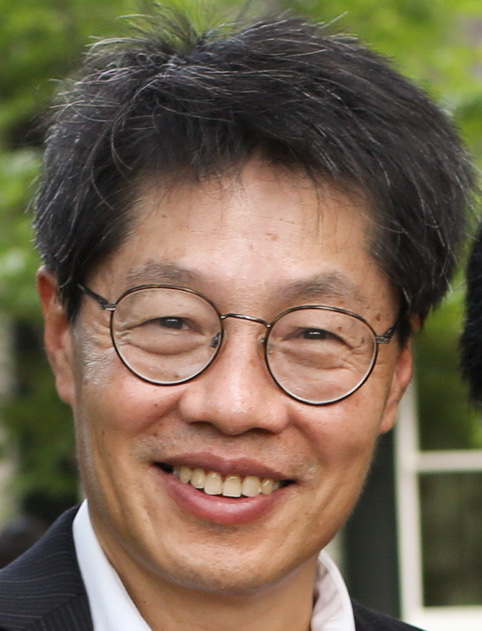
Renaud Toussaint is a Professor at the University of Oslo , affiliated with the Department of Physics within the Faculty of Mathematics and Natural Sciences . He leads research in the Porous Media Laboratory SFF , focusing on granular flows, geophysical phenomena, and fluid dynamics in disordered systems. His research interests include: Granular flow dynamics and seismic signal generation Porous media drainage and multiphase flow instabilities Earthquake mechanics and soil liquefaction Interstellar object modeling (e.g., 'Oumuamua) Fracture mechanics and thermal dissipation in materials Recent work emphasizes experimental and computational studies of granular media, with key contributions on drainage dynamics, seismic proxies for flow behavior, and interfacial fracture mechanics. Collaborations with institutions like the University of Oslo and international researchers highlight his interdisciplinary approach. Publications span Physical Review Letters , Nature Communications , and Journal of Geophysical Research , reflecting his impact in physics and geophysics. No awards or advisory roles are explicitly listed in the provided text.
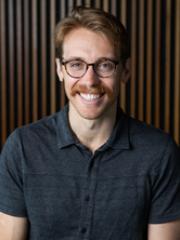
Sarah Cassie Burnett is a Hedrick Assistant Adjunct Professor at the University of California, Los Angeles (UCLA), Department of Mathematics. Her research focuses on fluid dynamics, machine learning, and data assimilation, with emphasis on experimental and computational studies of geophysical fluid dynamics, particularly in the context of the Three-Meter Spherical Couette experiment. She holds a PhD from the University of Maryland and has conducted post-baccalaureate research at Los Alamos National Laboratory. Her work integrates numerical methods, nonlinear modeling, and experimental validation in dynamo flows and particle-laden systems. Education: B.S. in Applied Math and B.A. in Physics from University of North Carolina at Chapel Hill (summa cum laude). PhD in Applied Mathematics, Statistics, and Scientific Computing from University of Maryland. Post-baccalaureate studies at Los Alamos National Laboratory and research collaborations at ISTerre (Grenoble, France) and Lathrop Lab. Research interests include: computational fluid dynamics, magnetohydrodynamics, granular flow modeling, and data-driven approaches for geophysical systems. She has pioneered studies on particle-laden thin-film flows, bidisperse system separation, and dynamo experiments simulating Earth's core dynamics. Recent work emphasizes fluid dynamics visualization through the APS Gallery of Fluid Motion and explores instrumentation optimization for spherical Couette experiments. Teaching includes programming courses (PIC series) and applied mathematics modules at UCLA. Awards: NSF Graduate Fellowship, L'Oréal For Women in STEM Postdoc Fellowship, George A. Snow Memorial Award Outreach: Directed Girls Talk Math summer program at UMD, promoting STEM equity through media and mentorship Grants: NSF GROW Award, Wylie Dissertation Fellowship Labs/Teams: Principal researcher in UCLA Mathematics Department's fluid dynamics group. Collaborator with Lathrop Nonlinear Dynamics Lab and ISTerre.
Dr. Zachary Paul Alcorn is an interdisciplinary reservoir engineer and geoscientist at the Department of Physics and Technology at the University of Bergen, where he serves as Research Director for the Norwegian Petroleum Research Center, NCS2030 (National Center for Sustainable Subsurface Utilization of the Norwegian Continental Shelf). His research bridges laboratory observations with field performance, focusing on multiphase fluid flow during CO2 injection processes in subsurface reservoirs. He teaches courses PTEK 211 and ENERGI 365 while leading multiple research projects including 'Optimizing CO2 Foam Mobility Control for Field Pilots' and 'In-situ Quantification of CO2 Flow and Mobility Control for Improved Carbon Utilization and Storage'. Dr. Alcorn's research interests center on CO2 foam applications for enhanced oil recovery (EOR) and carbon storage. He has developed expertise in special core analysis, reservoir characterization, geologic and reservoir modeling, numerical simulation, and field pilot design. His work specifically focuses on CO2 foam mobility control, investigating how foam can reduce gas mobility, improve CO2 utilization, and decrease gas-oil ratios in heterogeneous reservoirs. His research spans from pore-scale phenomena to field-scale implementation, with particular attention to how geological heterogeneity affects fluid flow behavior. His publication record shows a strong focus on CO2 foam technology, with research progressing from fundamental pore-scale investigations to field-scale implementation. The articles demonstrate an evolving research trajectory from basic foam characterization to practical field applications, with increasing attention to monitoring techniques and integration with carbon capture, utilization, and storage (CCUS) frameworks. Recent work emphasizes the relationship between rock properties and foam performance, surfactant formulations for challenging reservoir conditions, and methods for monitoring and interpreting field pilot results. Dr. Alcorn leads the NCS2030 research center and has been involved in multiple significant projects related to CO2 utilization and storage. His work has resulted in numerous field pilot implementations, particularly in heterogeneous carbonate reservoirs, with a focus on integrating laboratory findings with practical field applications. He actively collaborates with researchers across institutions and regularly presents findings at major industry conferences including SPE events and specialized CCUS conferences. His laboratory work focuses on pore-scale and core-scale investigations of CO2 foam behavior under reservoir conditions. He has developed methodologies for monitoring foam performance through pressure measurements and other techniques. His team works extensively with various rock types, particularly heterogeneous carbonates, to understand how geological properties affect foam generation, stability, and mobility control. Current research directions include nanoparticle-stabilized foams, surfactant formulations for high-salinity environments, and methods to quantify foam effects on CO2 storage capacity.
Francesca Orsola Alfano is a Researcher at the Department of Computer Engineering, Modeling, Electronics and Systems at the University of Calabria (UNICAL). She holds a research grant and contributes to academic programs in Chemical Engineering through her teaching activities. Current role: Research Grant Holder Teaching: Instrumentations and Analysis of Data, Chemical Process Dynamics and Control Her research focuses on computational modeling of particulate systems, particularly through Discrete Element Method (DEM) and CFD-DEM simulations . Key areas include: Triboelectric charging in powder handling Electrostatic interactions in fluidized beds Deagglomeration mechanisms in dry powder inhalers (DPI) Swirl-based particle dispersion Carrier-wall collision dynamics Polydisperse systems Recent publications highlight trends in pharmaceutical engineering applications (e.g., DPI optimization) and electrostatic modeling for industrial particulate systems. Her work bridges chemical engineering and computational physics , with technical implementations in DEM algorithms and fluid-solid interactions .
Rodrigo Ledesma Aguilar is a Reader in Chemical Engineering at the University of Edinburgh, School of Engineering, affiliated with the Institute for Multiscale Thermofluids. His research focuses on interfacial phenomena, including multiphase flows, wetting, capillarity, and engineered liquid-infused surfaces. He teaches undergraduate and postgraduate courses in Process Dynamics and Control and Chemical Engineering Research Projects. Education: PhD in Physics, University of Barcelona DEA in Physics, University of Barcelona Diploma in Chemical Engineering, National Autonomous University of Mexico Research Interests: His work centers on fundamental and applied aspects of fluid-surface interactions, particularly in engineered surfaces with tailored wettability. He investigates phenomena such as contact line dynamics, capillary imbibition, droplet snapping, and biofilm resistance, with applications in microfluidics, antifouling coatings, and heat transfer. His research combines experimental, theoretical, and computational approaches. Publication Trends: His recent publications (2019–2025) show a consistent focus on liquid-infused and slippery surfaces, with emphasis on stability, wettability control, droplet dynamics, and antibiofilm performance. Key journals include Langmuir , ACS Applied Biomaterials , and Physical Review Fluids , reflecting interdisciplinary work at the intersection of fluid mechanics, materials science, and chemical engineering. Scientific Awards and Memberships: Fellow of the Higher Education Academy Member of the Institute of Physics Member of the EPSRC College of Reviewers Member of the UK Consortium of Mesoscale Engineering Sciences Advising and Grants: Dr. Ledesma Aguilar supervises PhD students and postdoctoral researchers. He has served as Principal Investigator and Co-investigator on multiple research projects funded by the Leverhulme Trust, EPSRC, and UK government bodies. These projects focus on wettability-patterned liquid surfaces, biofilm-resistant coatings, and antiviral surfaces, with total funding spanning from 2019 to 2026. Labs and Teams: He leads a research group within the Institute for Multiscale Thermofluids, collaborating closely with Professors Glen McHale and Gary Wells. His team works on experimental and theoretical aspects of fluid-surface interactions, utilizing facilities in microfluidics, surface characterization, and materials synthesis.
Dr. Pavan Laxmipathy Veluvali is a Computational Materials Scientist currently working as a Postdoctoral Researcher at the Max Planck Institute for Dynamics of Complex Technical Systems in Magdeburg, Germany. He is a member of Prof. Dr. Peter Benner's group focused on Computational Methods in Systems and Control Theory. His work integrates numerical mathematics and materials science to advance computational workflows. His educational background includes: Ph.D in Computational Materials Science, Karlsruhe Institute of Technology, 2021 Master of Science (M.Sc) in Materials Science and Simulation, Ruhr Universitaet Bochum, 2016 Bachelor of Technology (B.Tech) in Metallurgical and Materials Engineering, Jawaharlal Nehru Technological University, 2013 Dr. Veluvali's research focuses on computational materials science, particularly phase-field modeling of solidification microstructures. His work investigates the role of diffusive-convective regimes on solidification phenomena including grain boundary grooves, dendritic growth, tip splitting, and poly-phase microstructures in binary alloys. He has expanded his expertise to include alloy solidification, electrochemistry, thin-film coatings, multiphase flows, and additive manufacturing. Recently, he has been working on computational workflows that integrate numerical mathematics and materials science, with a focus on FAIR (Findable, Accessible, Interoperable, Reusable) data principles. His publication record demonstrates a strong focus on phase-field modeling applications in materials science, with recent work shifting toward computational workflows and data infrastructure. The earlier publications (2018-2021) primarily address fundamental materials science questions using phase-field methods, while more recent work (2022-2025) shows increasing emphasis on computational frameworks, metadata abstraction, and FAIR data principles in computational science. Dr. Veluvali serves as a peer reviewer for several prestigious journals including Journal of Applied Physics, Journal of Phase Equilibria, and Journal of Physics: Condensed Matter. Currently, he is a Teaching Assistant for the Scientific Computing-I course at Otto-von-Guericke-Universität Magdeburg, where he guides students through practical implementation of numerical algorithms, shell scripting, and memory management. He is an active participant in the research community, regularly presenting his work at conferences including SIAM CSE, DMV Annual Meeting, and MaRDI workshops. His research is supported by the Max Planck Institute and likely through collaborative projects with academic and industry partners.
Dr. Ismael Himar Falcon-Suarez is a researcher at the University of Southampton, affiliated with the Faculty of Engineering and Physical Sciences and the School of Ocean and Earth Science. His work focuses on experimental and applied geophysics, particularly in the context of subsurface energy systems and environmental monitoring. Research Interests: Rock Physics and geophysical monitoring of subsurface processes Carbon capture and storage (CCS) and CO₂ sequestration Underground energy storage in salt and sedimentary formations Hydrate formation and methane bubble dynamics Transport and geomechanical properties of porous media Marine geophysics and submarine fluid escape systems His recent publications (2019–2025) demonstrate a strong focus on experimental methods, including X-ray micro-CT imaging, laboratory wave propagation, and flow-through experiments, applied to challenges in energy transition and environmental protection. Key themes include early detection of salt precipitation in CCS, CO₂ leakage monitoring using CSEM, and hydrate growth dynamics. Supervision: Currently supervising PhD student Eray Caceoglu (INSPIRE project). Collaborations: He works extensively with researchers such as Hector Marin-Moreno, Angus I. Best, Timothy A. Minshull, and Jonathan Bull, indicating strong integration within the geophysics and energy research community at Southampton.
Oscar Vento serves as a Fixed-term Assistant Professor in the Department of Energy (DENERG) at Politecnico di Torino, Italy, within the College of Mechanical, Aerospace, and Automotive Engineering. His academic responsibilities span teaching Computational Heat and Mass Transfer at the PhD level in Energetics and Fluid Machines across Bachelor's and Master's programs in Mechanical Engineering since the 2019/20 academic year through current 2025/26 offerings. Research Focus: Dr. Vento's work centers on fluid machinery and thermal systems, with emphasis on internal combustion engines, fuel injection technologies, and sustainable energy solutions. His expertise includes Gasoline Direct Injection (GDI) systems, cavitation phenomena, thermal-hydraulic performance analysis, and real-time control methodologies for fuel systems. Research aligns with UN Sustainable Development Goals 7 (Clean Energy), 9 (Innovation), 11 (Sustainable Cities), and 12 (Responsible Consumption). Publication Trends: Recent publications (2022-2025) demonstrate consistent focus on experimental and numerical investigations of fuel injection dynamics, with increasing emphasis on alternative fuels (ammonia), neural network applications, and transient flow measurement techniques. Research bridges fundamental fluid mechanics with practical automotive engineering challenges, particularly in emission reduction and energy efficiency. Advising and Intellectual Property: Co-supervises PhD candidate Carmelo Baronetto (Energetics program, 39th cycle, 2023-present) Holds national patent: System and method for measuring injected flow rate using a neural network (with Ferrari and Novara) Cod holds national/international patents: Control of the quantity injected into internal combustion engines (with Ferrari, Novara, Violante, Zhang) Research Context: Collaborates extensively within Alessandro Ferrari's research group, with publications spanning ENERGY, FUEL, ENERGIES, and Journal of Fluid Mechanics. Work addresses critical challenges in sustainable transportation through advanced diagnostics, control systems, and alternative fuel combustion research.
Yuri Leonenko is an Associate Professor at the University of Waterloo, with an office in EIT-2048 (ext. 32160) and email contact leonenko@uwaterloo.ca. His research centers on Climate Control technologies, particularly Carbon Capture and Storage (CCS). Key expertise includes modeling multiphase flow in porous media and fractures, CO 2 -reservoir fluid interactions, and novel in situ/ex situ CO 2 dissolution methods. His work integrates risk assessment and economic evaluation of CCS projects to advance sustainable climate solutions. Scientific Awards: No awards mentioned Advising and Grants: No student or grant information provided Labs and Teams: No laboratory or team affiliations specified
Mohammad Sedaghat is an Industry Fellow at the Gas and Energy Transition Research Centre at The University of Queensland. His research focuses on petroleum engineering, reservoir characterization, and energy transition technologies, with particular expertise in fluid flow mechanisms, carbon capture and storage, and enhanced resource recovery methods. Research Interests: Sedaghat's work spans geomechanics, reservoir simulation, and environmental sustainability in energy systems. Primary domains include: Fluid dynamics in fractured reservoirs and coal seams Hydraulic fracturing and permeability enhancement techniques CO₂ sequestration and injectivity modeling Wettability alteration and chemical flooding for oil recovery Mine methane emission mitigation strategies Publication Trends: Recent articles demonstrate a strong focus on numerical modeling of subsurface processes, with recurring themes in carbon storage optimization, unconventional resource recovery, and geomechanical influences on fluid flow. Computational studies frequently employ advanced simulation platforms to address challenges in energy transition and fossil fuel extraction. Collaborations: Actively collaborates on industry and research projects including the University of Queensland Surat Deep Aquifer Appraisal Project (UQ-SDAAP), investigating multiphase flow behavior and managed aquifer recharge systems.
Jian-Guo Liu is a Professor of Mathematics and Physics at Duke University, with primary affiliations in the Departments of Mathematics and Physics. His research encompasses applied mathematics, partial differential equations, kinetic theory, computational fluid dynamics, and stochastic algorithms. Professor Liu's work bridges theoretical modeling and numerical methods, particularly in complex systems involving nonlinear dynamics, fluid behavior, and emergent phenomena. Research interests focus on multiscale modeling of physical systems, including stochastic processes in chemical reactions, fluid-structure interactions, and materials science. Recent publications demonstrate strong emphasis on mathematical foundations of biological and physical systems, with recurring themes in Fokker-Planck dynamics, mean-field games, tumor growth modeling, and computational methods for interfacial phenomena. Publications showcase consistent focus on analytical and numerical solutions to high-dimensional problems, with applications ranging from medical imaging to electrochemistry. The work exhibits advanced techniques in asymptotic analysis, stochastic approximations, and geometric evolution equations.
Dr. Rui Shi is an Adjunct Lecturer at the School of Civil Engineering, The University of Queensland. His research focuses on hydraulic engineering, particularly air-water flow properties in turbulent systems like hydraulic jumps, breaking bores, and stepped spillways. He employs both intrusive and non-intrusive measurement techniques to study multiphase flows and turbulence statistics. Education: PhD in Civil Engineering (2022), The University of Queensland. Shi's research spans experimental fluid dynamics, with publications analyzing bubble convection, void fraction, and dam-break wave boundary layers. His work often involves collaborations with Hubert Chanson and Davide Wüthrich, contributing to journals like International Journal of Multiphase Flow and Coastal Engineering . He has presented at conferences including the IAHR World Congress and Australasian Fluid Mechanics Conference. Shi's recent publications emphasize air-water flow measurement methodologies, turbulence dynamics in unsteady flows, and hydraulic structure optimization. His technical reports and peer-reviewed articles provide insights into stepped spillway performance, probe sensitivity, and prototype-scale hydraulic modeling. Email: r.shi@uq.edu.au
Dr. Yuchen Dai is a Postdoctoral Research Fellow at the School of Chemical Engineering, University of Queensland (UQ), with expertise in computational fluid dynamics (CFD), microfluidics, and non-linear dynamic systems. He previously worked at Griffith University and the Queensland Micro&Nanotechnology Centre (QMNC) until 2023. PhD in Mechanical Engineering (2021), University of Queensland His research spans heat & mass transfer, fluid mechanics, and analytical methods, focusing on microfluidic devices for biomedical applications. Recent publications highlight innovations in droplet generation, cell separation, and viscoelastic fluid behavior. Dr. Dai has authored 10 journal articles (2018–2025) and 1 conference paper, covering topics like microfluidic particle manipulation , double emulsion stability , and liquid marble mixing . He is currently available for supervision.
Dr. Travis Mitchell is a Lecturer at the School of Mechanical and Mining Engineering , The University of Queensland , and an affiliate of the Centre for Multiscale Energy Systems . He holds a PhD in Multiphase Computational Fluid Dynamics and dual degrees in Mechanical Engineering (BE Hons) and Mathematics (BSc). Education: PhD in Multiphase Computational Fluid Dynamics, The University of Queensland BE (Hons) in Mechanical Engineering, The University of Queensland BSc in Mathematics, The University of Queensland Research Interests focus on numerical modeling of multiphase fluid dynamics in porous media , with applications spanning CO2 electrolysis , hydrogen production via methane pyrolysis , biomedical fluid-structure interaction , and geomechanical fracture analysis . His methodological expertise includes Lattice Boltzmann techniques and high-performance computing . Recent Work Trends encompass multiphase transport in fractured media , gas diffusion electrode optimization , fiber-based air filter design , and thermocapillary flow modeling , reflecting his interdisciplinary impact in energy, health, and resource engineering. Scientific Recognition includes the ICMMES-CSRC Award for multiphase lattice Boltzmann research and an EAIT Citation for Excellence in Student Learning (2023) . Teaching Portfolio includes coordination of MECH2700: Computational Engineering and Data Analysis and lectures in MECH3780: Computational Mechanics and MECH6480: Computational Fluid Dynamics .
Marica Pelanti is an Assistant Professor at the Department of Mechanical Engineering (UME) of ENSTA Paris , part of the Institut Polytechnique de Paris . She works on Computational Fluid Dynamics and Multiphase Compressible Flows , focusing on numerical modeling of liquid-vapor flows with phase transfer processes, particularly cavitation for industrial applications. Doctorate in Applied Mathematics (2005, University of Washington) Master in Aerospace Engineering (1999, Politecnico di Milano) Her research employs Finite Volume Schemes and advanced Riemann solvers like HLLC and Roe for low Mach number preconditioning. She leads funded projects on multiphase flow modeling and has extensive publication records in journals like J. Comput. Phys. and Int. J. Multiphase Flow .