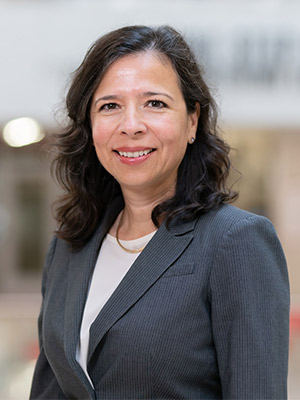
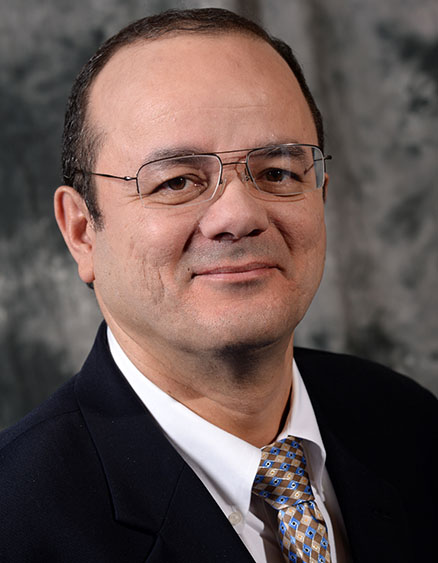
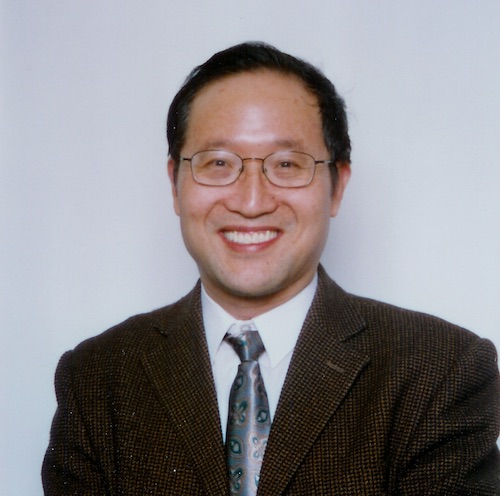
Ivett Leyva is the Department Head and Arthur McFarland Professor of Aerospace Engineering at Texas A&M University’s College of Engineering. Her research focuses on hypersonic aerodynamics, fluid dynamics, and combustion stability. She holds a Ph.D. (1999) and M.S. (1995) in Aeronautics, and a B.S. in Engineering and Applied Science (1994), all from the California Institute of Technology. Her honors include Fellowships from the American Institute of Aeronautics and Astronautics (2021), Air Force Research Laboratory (2019), and National Research Council (2011). Notable awards include the Meritorious Civilian Service Medal (Air Force, 2019-2020) and the Technology Rising Star Award (2015). Key research areas include boundary layer transition in hypersonic flows, coaxial jet instabilities, and combustion dynamics under cryogenic conditions. Her experimental work often employs shock tubes and advanced diagnostic techniques to study high-enthalpy environments. Labs/Teams: Hypersonic Aerodynamics Lab, Combustion Stability Research Group Grants: Active funding from Air Force Research Laboratory and NASA for hypersonic flight experiments
Ibere Alves is a Professor of Practice at Texas A&M University's Department of Petroleum Engineering. With extensive industry experience at Petrobras, he specializes in multiphase flow, artificial lift, and deepwater production systems. He holds a PhD from Tulsa University and BS/MS from Brazilian institutions. Alves' research develops models for temperature distribution, bubble dynamics, and annular flow behavior. Recent work evaluates economic impacts of deepwater field developments. Publications combine theoretical fluid dynamics with practical applications in wellbore design and production optimization. Teaching focuses on integrating industry perspectives into petroleum engineering education.
Zhilin Li is a Professor in the Department of Mathematics at North Carolina State University. He is affiliated with the College of Sciences and specializes in numerical analysis, scientific computing, and partial differential equations. His research focuses on developing numerical methods for interface problems, irregular domains, and complex fluid dynamics systems. Education: PhD in Applied Mathematics from the University of Washington (1994). Research interests include: numerical methods for PDEs with free boundaries, finite difference/element methods, computational fluid dynamics (CFD), and biological flow simulations. He has contributed to advancing high-order compact schemes, immersed interface methods, and adaptive finite element techniques. Recent work emphasizes solving anisotropic diffusion problems, moving contact line dynamics, and multiphase flow challenges in engineering and biomedical contexts. His methods address accuracy and stability in complex geometries and discontinuous coefficients. Key contributions include the Immersed Interface Method (IIM) for interface problems and novel finite difference schemes for irregular domains. His research spans applications from petroleum engineering (wellbore stability) to neuroscience (neuroregeneration). Grants and collaborations are implied through his publications, though specific funding details are not listed here. He is actively involved in interdisciplinary projects combining mathematics with engineering and life sciences.
Dr. You-Wei Ho is a Research Fellow at the Mathematics Institute, University of Warwick. His work focuses on aeroacoustics and fluid dynamics, employing advanced numerical methods such as finite-difference schemes, Runge-Kutta methods, and large-eddy simulations (LES) to study acoustic resonance in cavity flows. Recent research includes investigations into inclined deep cavities and the optimization of computational techniques for aeroacoustic applications. His research interests revolve around understanding noise generation mechanisms in complex fluid systems, particularly through computational modeling and high-fidelity simulations. He explores turbulence-noise interaction, flow-acoustic coupling, and flow control strategies to mitigate acoustic resonance effects in engineering contexts. Publications from 2021–2024 highlight his contributions to numerical aeroacoustics and LES applications, with recent work (2024) emphasizing comparative studies of optimized computational schemes. No scientific awards or grants are explicitly mentioned. He advises no known students and is affiliated with the Mathematics Institute at Warwick.
Dr. Estefania Lopez-Quiroga is an Associate Professor at the University of Birmingham's School of Chemical Engineering, specializing in Model-Driven Formulation Engineering. She leads the Centre for Doctoral Training in Formulation Engineering for Net Zero and coordinates Industry 4.0 modules for MSc programs. Her work integrates computational tools with process engineering to advance sustainable manufacturing in food, pharma, and FMCG sectors. Education: MEng in Mining Engineering, MSc in Mathematical Engineering, PhD in Applied Mathematics. She holds Fellow of the Higher Education Academy (FHEA) credentials. Research focuses on digital manufacturing, Industry 4.0 applications, and sustainable production. Key areas include model-based approaches for crystallization, freeze-drying, and production-scale optimization. Her work bridges soft matter physics with engineering solutions for product performance and process efficiency. Publications highlight sustainability assessments across production scales, energy-efficient processes, and computational modeling innovations. Awarded the IChemE Hutchison Medal 2020 for groundbreaking work on decentralized food manufacturing. Teaching responsibilities include undergraduate plant optimization and postgraduate Industry 4.0 modules. Supervises PhD/EngD students in formulation engineering, emphasizing real-world industrial collaboration. Labs/Teams: Active in the EPSRC Centre for Doctoral Training in Formulation Engineering, collaborating with industry partners on scalable and sustainable manufacturing solutions.
Carl Fredrik Berg is a Professor in the Department of Geosciences at the Norwegian University of Science and Technology (NTNU). His research focuses on porous media flow, subsurface reservoir modeling, and energy-efficient production strategies in petroleum engineering. Key areas include multiphase flow dynamics, CO₂ sequestration, phase-field modeling, and digital rock physics. Recent work emphasizes the interplay between material microstructure and macroscopic properties, particularly in porous media. Collaborations involve developing advanced computational methods for reservoir simulation, optimization algorithms for well placement, and energy policy analysis under CO₂ taxation frameworks. Publications highlight contributions to phase-field equations, permeability estimation from CT scans, and stochastic modeling for subsurface flows. His work bridges theoretical physics, applied mathematics, and engineering applications in oil recovery and environmental geoscience.
Curtis Hays Whitson is a Professor at the Institute of Geo Sciences, NTNU, affiliated with the Petroleum Technical Center. His research focuses on reservoir fluid characterization, CO2 sequestration, unconventional reservoirs, and enhanced oil recovery (EOR). He has advised numerous PhD students and contributed to over 100 peer-reviewed publications since 1980, including seminal works on PVT modeling, diffusion mechanisms, and shale gas optimization. His recent work emphasizes field-scale EOR optimization and CO2 injection in fractured systems. Whitson has supervised doctoral theses on topics like CO2-EOR in Iran’s Haft Kel field and gas-cycling benchmarking. His research integrates reservoir simulation, material balance analysis, and multiphase flow dynamics. Key research themes include: (1) CO2 injection in chalk and unconventional reservoirs, (2) diffusion-driven recovery mechanisms, (3) shale gas depletion performance, and (4) integrated field optimization. His articles span fluid property characterization, numerical modeling of transport phenomena, and production optimization strategies. Whitson collaborates widely with industry partners on projects involving experimental fluid analysis and reservoir-plant integration.
Dr. Alexander Badalyan is a Research Fellow at the Australian School of Petroleum, University of Adelaide. Previously, he held positions at Grozny State Oil Technical University (Russian Federation/USSR) and the University of South Australia. His research focuses on porous media dynamics, including CO2 storage, fluid flow in reservoirs, and fines migration mechanisms. He has contributed to over 67 peer-reviewed journal articles and 46 conference publications, with a particular emphasis on environmental and petroleum engineering applications. Research interests include suspension flow in porous media, manometric gas adsorption for solid characterization, thermophysical properties of fluids, and supercritical CO2 applications. He has developed computer-based systems for real-time process monitoring and control, and his work extends to dissolved gas analysis in power transformers and online water quality monitoring. His contributions to innovative technologies earned the 2002 University of South Australia Vice-Chancellor Award for Innovation. Current research trends span CO2 storage challenges, fracture network behavior, and formation damage mitigation. He collaborates on interdisciplinary projects combining experimental and mathematical modeling approaches, addressing critical issues in subsurface engineering and environmental sustainability.
Tak Shing Chan is a researcher in the Mechanics research group at the Department of Mathematics, University of Oslo. His work focuses on wetting dynamics, droplet behavior, capillarity, and micro-nano fluidics, with applications in soft matter physics and biophysics. He employs analytical and numerical methods to study phenomena such as viscoelastic perturbations, elastocapillary effects, and interfacial instabilities. His research contributes to understanding adhesive mechanisms in biological systems and optimizing fluidic systems in engineering contexts. Key projects include the Dynamic wetting on soft solids (DyWeSS) initiative. His publications span topics like capillary bridges, film deposition, and the physics of adhesive organs in animals. Collaborations with institutions like the Norwegian Geotechnical Institute and international universities highlight his interdisciplinary approach. His work bridges fundamental fluid mechanics with applied problems in materials science and biophysics.
Dr. Hassan Dehghanpour is a Professor in the Faculty of Engineering at the University of Alberta, specializing in Civil and Environmental Engineering with a focus on Petroleum Engineering. He holds a PhD from The University of Texas at Austin (2011), an MS from the University of Alberta (2008), and dual BSc degrees in Petroleum and Mechanical Engineering from Sharif University of Technology (2006). His research centers on fluid-rock interactions in unconventional reservoirs, including hydraulic fracturing, enhanced oil recovery (EOR), and hydrogen storage in salt caverns. Key projects include laboratory experiments on CO2 and natural gas interactions in tight rocks, flowback data analysis for fracture characterization, and hydrogen permeability studies in salt formations. He leads the Dehghanpour Lab, equipped with advanced facilities like HPHT visualization cells and spinning drop tensiometers. His work bridges experimental, analytical, and data-driven approaches to optimize energy extraction and storage technologies. Education: PhD, Petroleum Engineering, UT Austin; MS, University of Alberta; BScs in Petroleum and Mechanical Engineering, Sharif University. Research Interests: Enhanced Oil Recovery (EOR), Hydrogen Storage, Produced Water Treatment, and Energy Data Analytics. Notable projects include developing protocols for evaluating chemical additives in fracturing fluids and assessing the feasibility of storing hydrogen in salt caverns. His lab collaborates with industry partners on projects like cyclic solvent injection for bitumen recovery and AI-driven production optimization. Recent advancements include a workflow for estimating fracture volume using flowback data and studies on wettability alteration using nanoparticles. He advises on well productivity via flowback analysis and has contributed to understanding mechanisms in gas huff-n-puff processes. His work on salt cavern hydrogen storage received Alberta Innovates funding.
Renaud Toussaint is a Professor at the University of Oslo , affiliated with the Department of Physics within the Faculty of Mathematics and Natural Sciences . He leads research in the Porous Media Laboratory SFF , focusing on granular flows, geophysical phenomena, and fluid dynamics in disordered systems. His research interests include: Granular flow dynamics and seismic signal generation Porous media drainage and multiphase flow instabilities Earthquake mechanics and soil liquefaction Interstellar object modeling (e.g., 'Oumuamua) Fracture mechanics and thermal dissipation in materials Recent work emphasizes experimental and computational studies of granular media, with key contributions on drainage dynamics, seismic proxies for flow behavior, and interfacial fracture mechanics. Collaborations with institutions like the University of Oslo and international researchers highlight his interdisciplinary approach. Publications span Physical Review Letters , Nature Communications , and Journal of Geophysical Research , reflecting his impact in physics and geophysics. No awards or advisory roles are explicitly listed in the provided text.
Sarah Cassie Burnett is a Hedrick Assistant Adjunct Professor at the University of California, Los Angeles (UCLA), Department of Mathematics. Her research focuses on fluid dynamics, machine learning, and data assimilation, with emphasis on experimental and computational studies of geophysical fluid dynamics, particularly in the context of the Three-Meter Spherical Couette experiment. She holds a PhD from the University of Maryland and has conducted post-baccalaureate research at Los Alamos National Laboratory. Her work integrates numerical methods, nonlinear modeling, and experimental validation in dynamo flows and particle-laden systems. Education: B.S. in Applied Math and B.A. in Physics from University of North Carolina at Chapel Hill (summa cum laude). PhD in Applied Mathematics, Statistics, and Scientific Computing from University of Maryland. Post-baccalaureate studies at Los Alamos National Laboratory and research collaborations at ISTerre (Grenoble, France) and Lathrop Lab. Research interests include: computational fluid dynamics, magnetohydrodynamics, granular flow modeling, and data-driven approaches for geophysical systems. She has pioneered studies on particle-laden thin-film flows, bidisperse system separation, and dynamo experiments simulating Earth's core dynamics. Recent work emphasizes fluid dynamics visualization through the APS Gallery of Fluid Motion and explores instrumentation optimization for spherical Couette experiments. Teaching includes programming courses (PIC series) and applied mathematics modules at UCLA. Awards: NSF Graduate Fellowship, L'Oréal For Women in STEM Postdoc Fellowship, George A. Snow Memorial Award Outreach: Directed Girls Talk Math summer program at UMD, promoting STEM equity through media and mentorship Grants: NSF GROW Award, Wylie Dissertation Fellowship Labs/Teams: Principal researcher in UCLA Mathematics Department's fluid dynamics group. Collaborator with Lathrop Nonlinear Dynamics Lab and ISTerre.
Dr. Zachary Paul Alcorn is an interdisciplinary reservoir engineer and geoscientist at the Department of Physics and Technology at the University of Bergen, where he serves as Research Director for the Norwegian Petroleum Research Center, NCS2030 (National Center for Sustainable Subsurface Utilization of the Norwegian Continental Shelf). His research bridges laboratory observations with field performance, focusing on multiphase fluid flow during CO2 injection processes in subsurface reservoirs. He teaches courses PTEK 211 and ENERGI 365 while leading multiple research projects including 'Optimizing CO2 Foam Mobility Control for Field Pilots' and 'In-situ Quantification of CO2 Flow and Mobility Control for Improved Carbon Utilization and Storage'. Dr. Alcorn's research interests center on CO2 foam applications for enhanced oil recovery (EOR) and carbon storage. He has developed expertise in special core analysis, reservoir characterization, geologic and reservoir modeling, numerical simulation, and field pilot design. His work specifically focuses on CO2 foam mobility control, investigating how foam can reduce gas mobility, improve CO2 utilization, and decrease gas-oil ratios in heterogeneous reservoirs. His research spans from pore-scale phenomena to field-scale implementation, with particular attention to how geological heterogeneity affects fluid flow behavior. His publication record shows a strong focus on CO2 foam technology, with research progressing from fundamental pore-scale investigations to field-scale implementation. The articles demonstrate an evolving research trajectory from basic foam characterization to practical field applications, with increasing attention to monitoring techniques and integration with carbon capture, utilization, and storage (CCUS) frameworks. Recent work emphasizes the relationship between rock properties and foam performance, surfactant formulations for challenging reservoir conditions, and methods for monitoring and interpreting field pilot results. Dr. Alcorn leads the NCS2030 research center and has been involved in multiple significant projects related to CO2 utilization and storage. His work has resulted in numerous field pilot implementations, particularly in heterogeneous carbonate reservoirs, with a focus on integrating laboratory findings with practical field applications. He actively collaborates with researchers across institutions and regularly presents findings at major industry conferences including SPE events and specialized CCUS conferences. His laboratory work focuses on pore-scale and core-scale investigations of CO2 foam behavior under reservoir conditions. He has developed methodologies for monitoring foam performance through pressure measurements and other techniques. His team works extensively with various rock types, particularly heterogeneous carbonates, to understand how geological properties affect foam generation, stability, and mobility control. Current research directions include nanoparticle-stabilized foams, surfactant formulations for high-salinity environments, and methods to quantify foam effects on CO2 storage capacity.
Francesca Orsola Alfano is a Researcher at the Department of Computer Engineering, Modeling, Electronics and Systems at the University of Calabria (UNICAL). She holds a research grant and contributes to academic programs in Chemical Engineering through her teaching activities. Current role: Research Grant Holder Teaching: Instrumentations and Analysis of Data, Chemical Process Dynamics and Control Her research focuses on computational modeling of particulate systems, particularly through Discrete Element Method (DEM) and CFD-DEM simulations . Key areas include: Triboelectric charging in powder handling Electrostatic interactions in fluidized beds Deagglomeration mechanisms in dry powder inhalers (DPI) Swirl-based particle dispersion Carrier-wall collision dynamics Polydisperse systems Recent publications highlight trends in pharmaceutical engineering applications (e.g., DPI optimization) and electrostatic modeling for industrial particulate systems. Her work bridges chemical engineering and computational physics , with technical implementations in DEM algorithms and fluid-solid interactions .
Michael Arnold is a Professor in the Department of Materials Science and Engineering at the University of Wisconsin-Madison. He holds a B.S. in Electrical and Computer Engineering from the University of Illinois, Urbana-Champaign (2001), a Ph.D. in Materials Science and Engineering from Northwestern University (2006), and completed postdoctoral research in Electrical Engineering and Physics at the University of Michigan, Ann Arbor. Research Focus Professor Arnold's research centers on nanomaterials synthesis and applications, with emphasis on: Novel graphene production techniques and nanoelectronic device integration Carbon nanotube assembly for high-density arrays Epitaxial growth of 2D materials and semiconductors Advanced nanofabrication methodologies His recent publications (2023-2024) demonstrate strong focus on graphene derivatives, boron nitride CVD, and epitaxial control mechanisms. Key trends include scalable nanomesh fabrication, chiral photonic structures, and solution-processing innovations for carbon nanotubes. Awards and Honors Beckwith-Bascom Professorship (2019) Presidential Early Career Award (PECASE, 2011) NSF CAREER Award (2014) ECS Tobias Young Investigator Award (2018) Vilas Associate Award (2015) 3M Non-Tenured Faculty Award (2011) Academic Activities He teaches core courses including Transport Phenomena in Materials (MS&E 331) and Structure of Advanced Electronic Materials (MS&E 756), and supervises graduate research (MS&E 790/890/990).