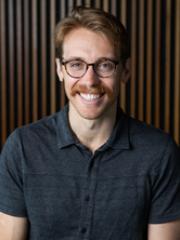
Dr. Rui Shi is an Adjunct Lecturer at the School of Civil Engineering, The University of Queensland. His research focuses on hydraulic engineering, particularly air-water flow properties in turbulent systems like hydraulic jumps, breaking bores, and stepped spillways. He employs both intrusive and non-intrusive measurement techniques to study multiphase flows and turbulence statistics. Education: PhD in Civil Engineering (2022), The University of Queensland. Shi's research spans experimental fluid dynamics, with publications analyzing bubble convection, void fraction, and dam-break wave boundary layers. His work often involves collaborations with Hubert Chanson and Davide Wüthrich, contributing to journals like International Journal of Multiphase Flow and Coastal Engineering . He has presented at conferences including the IAHR World Congress and Australasian Fluid Mechanics Conference. Shi's recent publications emphasize air-water flow measurement methodologies, turbulence dynamics in unsteady flows, and hydraulic structure optimization. His technical reports and peer-reviewed articles provide insights into stepped spillway performance, probe sensitivity, and prototype-scale hydraulic modeling. Email: r.shi@uq.edu.au
Dr. Travis Mitchell is a Lecturer at the School of Mechanical and Mining Engineering , The University of Queensland , and an affiliate of the Centre for Multiscale Energy Systems . He holds a PhD in Multiphase Computational Fluid Dynamics and dual degrees in Mechanical Engineering (BE Hons) and Mathematics (BSc). Education: PhD in Multiphase Computational Fluid Dynamics, The University of Queensland BE (Hons) in Mechanical Engineering, The University of Queensland BSc in Mathematics, The University of Queensland Research Interests focus on numerical modeling of multiphase fluid dynamics in porous media , with applications spanning CO2 electrolysis , hydrogen production via methane pyrolysis , biomedical fluid-structure interaction , and geomechanical fracture analysis . His methodological expertise includes Lattice Boltzmann techniques and high-performance computing . Recent Work Trends encompass multiphase transport in fractured media , gas diffusion electrode optimization , fiber-based air filter design , and thermocapillary flow modeling , reflecting his interdisciplinary impact in energy, health, and resource engineering. Scientific Recognition includes the ICMMES-CSRC Award for multiphase lattice Boltzmann research and an EAIT Citation for Excellence in Student Learning (2023) . Teaching Portfolio includes coordination of MECH2700: Computational Engineering and Data Analysis and lectures in MECH3780: Computational Mechanics and MECH6480: Computational Fluid Dynamics .
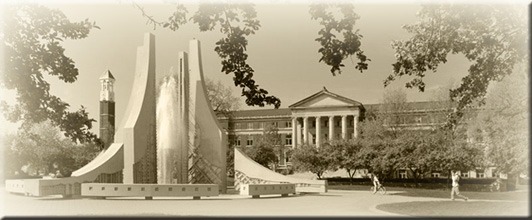
Jun Chen serves as Professor and Associate Head for Facilities and Operations at Purdue University's School of Mechanical Engineering. His career spans experimental fluid dynamics research, academic leadership, and global engineering initiatives focused on sustainable energy solutions for underserved communities. Education: PhD in Mechanical Engineering, Johns Hopkins University (2005) MS in Aerospace Engineering, Beijing University of Aeronautics & Astronautics (1997) BS in Aerospace Engineering, Beijing University of Aeronautics & Astronautics (1994) Professor Chen's research centers on experimental fluid dynamics with emphasis on flow diagnostic techniques including digital holography, tomographic PIV, and interferometry. His work spans fundamental turbulence studies in stratified environments and applied energy systems for wind, hydrokinetic, and cardiovascular applications. Key innovation areas include multiphase flow measurement, low-Mach-number aeroacoustics, and wind energy conversion systems. His 15 most recent publications reveal consistent focus on advanced optical diagnostics for complex flows, with growing emphasis on renewable energy applications (wind/hydrokinetic systems) and biomedical fluid dynamics . The research demonstrates methodological evolution from fundamental turbulence characterization toward practical implementations in energy and healthcare. Scientific Awards: 2018 ASCE Sustainable Development Award for African grain storage system 2016 EPA P3 YCOSST Award for off-grid wind energy in Africa 2014 ASME Robert T. Knapp Award for holography uncertainty quantification 2005 Measurement Science Outstanding Paper Award for PIV peak-locking elimination Professor Chen actively mentors graduate students (16 theses supervised) and leads global engineering initiatives through Purdue's GEPP program, having conducted multiple field deployments in Cameroon for rural energy solutions. His research portfolio includes significant grants from NSF, DOE, and industry partners focused on fluid diagnostics and sustainable energy. His laboratory work integrates optical diagnostics with field-deployable energy systems , maintaining strong industry partnerships while advancing fundamental fluid mechanics knowledge. Current projects emphasize scalable solutions for resource-constrained environments through the Purdue Global Design Teams.
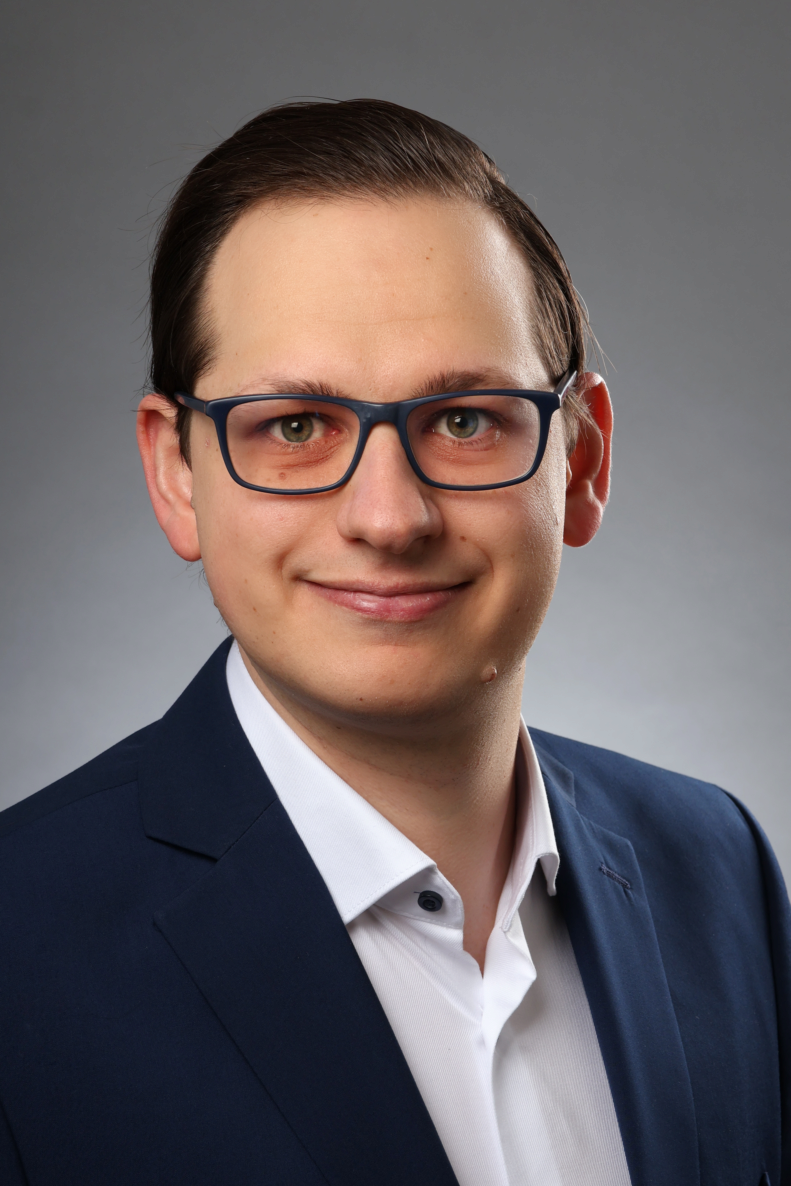
Dr. Benedikt Prifling is a Lecturer at Ulm University, specializing in computational materials science and electrochemistry. His research integrates advanced tomography, stochastic modeling, and machine learning to optimize materials for energy storage, particularly lithium-ion batteries. Research Focus: Prifling investigates microstructure-property relationships in porous media and battery electrodes. Key themes include: 3D microstructure modeling of battery components (anodes/cathodes) Synchrotron tomography for quantitative analysis of degradation Stochastic reconstruction of porous materials Data-driven prediction of mass transport phenomena His recent publications (2020-2024) demonstrate a strong emphasis on improving battery performance through computational design, manufacturing optimization, and electrochemical characterization. Common methodologies include lattice Boltzmann simulations, statistical learning, and digital twin generation.
Yuan Chen is a researcher at the Institute of Science Tokyo , focusing on advanced measurement techniques for nuclear engineering and environmental applications. Their work integrates Laser-Induced Breakdown Spectroscopy (LIBS) and Ultrasonic Velocity Profiler (UVP) for remote elemental analysis and flow visualization. Primary focus on nuclear reactor inspection and soil analysis Collaborations with Hiroshige Kikura, Hideharu Takahashi, and international teams Developing robotic systems for hazardous environments Research Trends : Recent publications (2022-2025) emphasize: Remote sensing for nuclear fuel debris analysis LIBS-UVP hybrid systems for multiphase flow measurement Soil elemental analysis for smart agriculture Robotic arms equipped with advanced sensors Key techniques: Laser spectroscopy, ultrasonic imaging, flow visualization algorithms, sensor fusion. Applications span nuclear decommissioning (e.g., Fukushima) and environmental monitoring.
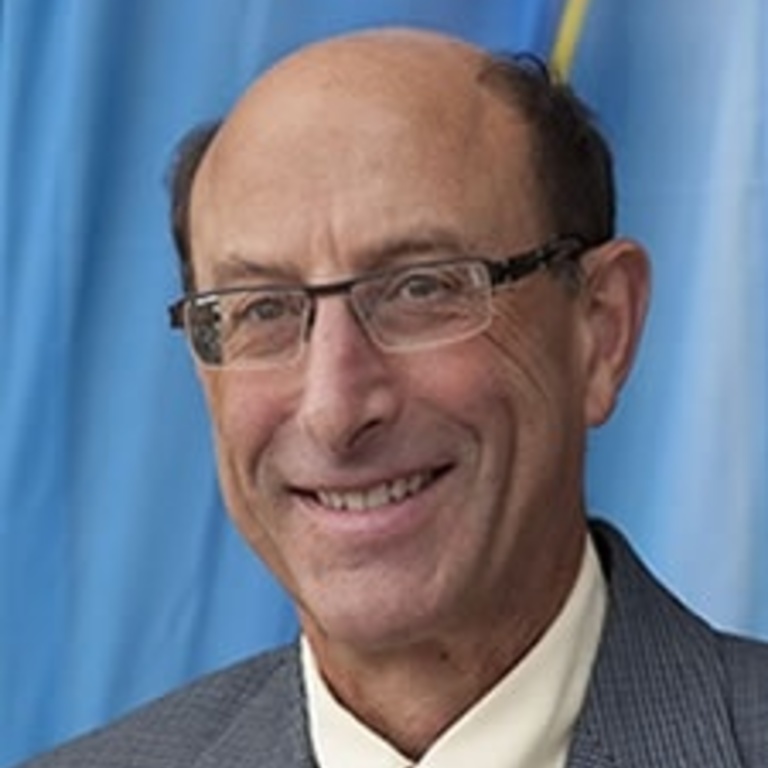
Frederick Stern serves as the George D. Ashton Professor of Hydroscience and Engineering and Professor in the Department of Mechanical Engineering at the University of Iowa's College of Engineering. He additionally holds a Faculty Research Engineer position at IIHR—Hydroscience and Engineering, where he directs the Stern Lab. With over 40 years of continuous service since joining the institution in 1983, Stern maintains active leadership in naval architecture and marine engineering research. Education PhD in Naval Architecture & Marine Engineering, University of Michigan, 1980 MSE in Naval Architecture & Marine Engineering, University of Michigan, 1977 BSE in Naval Architecture & Marine Engineering, University of Michigan, 1975 Research Focus Stern's work centers on computational and experimental fluid dynamics with specialized expertise in ship hydrodynamics , cavitation phenomena , and fluid-structure interaction . His research program bridges high-fidelity CFD simulations with physical towing tank experiments, particularly for high-speed craft and naval vessels. Significant contributions include 6DOF viscous ship hydrodynamics modeling , towing tank maneuvering test methodologies , and multi-criteria optimization for ship design . Stern actively integrates advanced simulation technologies into undergraduate engineering education. Publication Trends Recent publications (2022-2025) demonstrate three converging research trajectories: (1) Multi-fidelity modeling for weight reduction and performance optimization of high-speed small craft, (2) Advanced CFD techniques for free-running vessel simulations in waves including fluid-structure interaction, and (3) Data-driven approaches using machine learning (DMD, RNNs) for ship motion forecasting. These works consistently emphasize validation through experimental data and address practical naval architecture challenges. Professional Recognition Fellow of the American Society of Mechanical Engineers (ASME) Professional Engagement Stern maintains active memberships in the American Society for Engineering Education (ASEE) and Society of Naval Architects and Marine Engineers (SNAME). He serves as Secretary of the Maneuvering Committee for the 24th International Towing Tank Conference, reflecting his leadership in experimental hydrodynamics standardization. His research collaborations include major international workshops such as the Tokyo 2015 CFD Workshop for ship hydrodynamics. Research Infrastructure Stern directs the Stern Lab within IIHR—Hydroscience and Engineering, leveraging the university's Stanley Hydraulics Laboratory facilities including towing tanks and advanced measurement systems. His team develops integrated computational-experimental frameworks like the towing tank maneuvering test flow-map measurement system, supporting both fundamental research and practical naval design applications.
Rafid Al-Khoury is a Senior Researcher at the Faculty of Civil Engineering and Geosciences, Delft University of Technology. His work focuses on computational poromechanics, geothermal systems, and CO2 geosequestration, utilizing advanced finite element and spectral methods. He leads the Computational Mechanics chair within the Applied Mechanics section. Education: Ph.D. (Cum Laude) in Computational Mechanics, M.Sc. (Distinction) in Civil Engineering, and B.Sc. in Civil Engineering. Research: Specializes in mesh-independent finite element schemes, inverse problems, and spectral analysis for geothermal and CO2 storage applications. His publications address transient heat flow, fracturing porous media, and energy pile dynamics. Key contributions include books on Computational Modeling of Shallow Geothermal Systems (2012) and Computational Models for CO2 Geo-sequestration & Compressed Air Energy Storage (2014). He has chaired program committees for major conferences like InterPore.
Shumo Cui is an Assistant Professor in the Department of Mathematics at Southern University of Science and Technology (SUSTech), where he has been employed since September 2019. He is also affiliated with the International Center for Mathematics (Gelmanov Mathematical Center) at SUSTech. His educational background includes: Ph.D. in Mathematics from Tulane University (2015) B.S. in Applied Mathematics from Tongji University (2010) Dr. Cui's research focuses on computational mathematics with applications in traffic flow modeling and simulation, numerical solutions of partial differential equations, and computational finance. His work bridges theoretical mathematics with practical applications, particularly in the emerging field of autonomous vehicle traffic control. His research has led to significant contributions in understanding and mitigating traffic waves through the strategic deployment of autonomous vehicles, as well as developing advanced numerical methods for fluid dynamics and financial modeling. His publications demonstrate a strong interdisciplinary approach, combining mathematical rigor with real-world applications. The research spans from theoretical numerical methods for PDEs to practical implementations in traffic engineering and financial modeling. His recent work has particularly focused on applying mathematical models to traffic flow problems, with several publications on autonomous vehicle control in traffic systems. Dr. Cui teaches courses including MATLAB Programming and Application (MA1103) and Partial Differential Equations (MA303).
Daniel Rodriguez Alvarez is a Professor in the Department of Applied Mathematics to Aerospace Engineering at the School of Aerospace Engineering, Universidad Politécnica de Madrid. He earned his Aerospace Engineer degree (2007) and Ph.D. in Aerospace Engineering (Cum Laude, 2010) from UPM, followed by postdoctoral work at institutions including Caltech, Universidade de Sao Paulo, École Polytechnique, and Pontificia Universidade Católica do Rio de Janeiro. His career includes tenures as Assistant Professor (2019-2020), Associate Professor (2020-2022), and current Professor since 2022. His research focuses on numerical methods for computational fluid dynamics , combining theoretical/numerical stability analysis of complex flows, numerical modeling, and data-driven approaches. Key applications include separated flows in aerodynamics , jet noise , slat aeroacoustics , and pattern transitions in multiphase flows . He has collaborated with interdisciplinary teams leading to publications in Nature Protocols and PNAS . Marie Curie Postdoctoral Fellowship (2011-2014) CNPq Productivity Scholarship and FAPERJ Young Researcher Award (2016-2019) "Premio extraordinario de doctorado" (UPM, 2010) With 17 research projects (6 as Principal Investigator) and an international network spanning Europe, the U.S., Brazil, and Australia, he has also co-advised 3 Ph.D. theses and mentored 3 M.Sc. and 7 undergraduate Final Year projects.
Professor Saravanan B. is affiliated with the Indian Institute of Technology Hyderabad in the Department of Mechanical and Aerospace Engineering . His academic career spans from 2014 to 2024 at IIT Hyderabad, where he has progressed from Assistant Professor to full Professor. Education: PhD in Engineering from INSA of Rouen, France M. Tech in Mechanical Engineering from Indian Institute of Technology Madras B.E. in Mechanical Engineering from Bharathiar University His research focuses on combustion science , laser diagnostics , and alternative fuel applications in IC engines and gas turbines . Key themes include flame dynamics, droplet evaporation, and biofuel combustion analysis. Recent publications highlight experimental studies on hydrogen-LPG-methane flame blending, ethanol engine calibration, nanofluid droplet behavior, and biofuel development. These works demonstrate his expertise in combustion optimization , fuel alternatives , and fluid mechanics . He has led DST-SERB funded projects on flex-fuel engine mapping and turbulent dimethyl ether flames, aligning with his technical specialization in energy systems and combustion engineering . Contact: saravananb@mae.iith.ac.in | Office: Academic Block C, IIT Hyderabad, Telangana, India
Dr. Chaitanya Kumar Rao serves as an Assistant Professor in the Department of Aerospace Engineering at the Indian Institute of Technology Kanpur. His research focuses at the intersection of fluid dynamics, combustion science, and laser physics, with particular emphasis on droplet and bubble phenomena. His research interests include liquid atomization, evaporation and combustion, laser-fluid interaction, evaporation and combustion of fuel droplets, laser-induced evaporation and atomization of droplets, pulse laser-induced atomization of droplets, and femtosecond laser-induced bubble dynamics . His work bridges fundamental fluid mechanics with practical applications in propulsion and energy systems. Dr. Rao's recent publications demonstrate a consistent research trajectory in laser-induced droplet and bubble dynamics, with a focus on femtosecond laser applications. His work spans experimental fluid dynamics, combustion science, and laser-matter interactions, contributing significantly to the understanding of multiphase flow phenomena under extreme conditions. His professional journey includes postdoctoral positions at the Department of Physics, University of Gothenburg, Sweden (March 2021-July 2022) and the Department of Mechanical Engineering, Indian Institute of Science Bangalore, India (August 2018-March 2021). Dr. Rao's educational background includes a PhD in Aerospace Engineering from IIT Kharagpur (2018), an ME in Rocket Propulsion from BIT Mesra (2014), and a BTech in Aeronautical Engineering from the Institute of Aeronautical Engineering (2012).
Tanner Mills is a Postdoctoral Fellow at the Institute for Geophysics within the Jackson School of Geosciences at The University of Texas at Austin. His work focuses on sediment mechanics, geochemistry, geomicrobiology, and sedimentology, with emphasis on early diagenesis, microbe-sediment interactions, and subsurface fluid dynamics. He previously earned his PhD from Texas A&M University, where he studied microbial-clay sediment interactions during early burial processes. Education: PhD in Geosciences, Texas A&M University Research Interests: Tanner’s research integrates experimental and analytical methods to explore: Climate impacts on permafrost carbon emissions and geochemical changes Biogeochemical processes in methane hydrates and deep subseafloor sediments Microbial influence on sediment properties and pore fluid evolution Long-term continental weathering and geochemical cycling Publications Trends: His recent work highlights: Climate-driven permafrost thaw mechanisms and methane fluxes Machine learning applications in prokaryotic population analysis Experimental studies on synthetic and natural permafrost flow properties Global sedimentary geochemical data curation for earth history insights Scientific Awards: No awards explicitly mentioned in the provided texts. Advising & Grants: Details on advising roles and grants are not provided in the text. His current research is supported by collaborations at UTIG, particularly with Dr. Peter Flemings studying Alaskan permafrost and Gulf of Mexico methane hydrates. Labs/Teams: Currently affiliated with the Institute for Geophysics (UTIG), collaborating on multiphase flow studies in permafrost and biogeochemical methane research projects.
Hongsheng Wang is a Research Fellow at the Bureau of Economic Geology within the Jackson School of Geosciences at The University of Texas at Austin. His research focuses on advancing subsurface energy technologies through interdisciplinary approaches combining geoscience, engineering, and machine learning. Key areas include geological carbon storage, underground hydrogen storage, reservoir simulation, and fracture mechanics. His work emphasizes innovative applications of machine learning for challenges such as CO2 plume migration forecasting, parameterization of 3D saturation data, and fracture conductivity analysis. He also investigates leakage mitigation strategies in hydrogen storage systems and the role of permeability heterogeneity in subsurface processes. Publications highlight contributions to microfluidic experiments, porous media dynamics, and AI-driven reservoir modeling. Current projects involve surrogate models for large-scale simulations and dimension reduction techniques to enhance computational efficiency in carbon storage assessments.
Terrence R. Meyer is a Professor of Mechanical Engineering and Professor of Aeronautics and Astronautics (by Courtesy) at Purdue University's School of Mechanical Engineering. He leads the Advanced Diagnostics and Propulsion Research Laboratory within the Maurice J. Zucrow Laboratories, focusing on next-generation propulsion systems and laser diagnostics for extreme thermal-fluid environments. His research spans rotating detonation engines (RDEs), scramjet engines, and combustion diagnostics, with applications in hypersonics and propulsion efficiency. Education: BME (University of Minnesota, 1993), MS and PhD (University of Illinois, 1997/2001) His research interests include laser diagnostics development, thermal-fluid behavior in extreme conditions, and performance estimation using optical techniques. Meyer holds multiple fellowships and awards, including the 2025 Combustion Institute Fellowship and the 2023 Aerodynamic Measurement Technology Innovation Award. His work bridges fundamental combustion science with applied propulsion engineering, leveraging advanced diagnostics like burst-mode laser systems and X-ray tomography. Recent projects include the THOR Test Rig for turbine-integrated RDEs and studies on ammonia combustion for aviation. Publications highlight his contributions to detonation wave dynamics, high-speed imaging techniques, and multiphase flow analysis. Meyer is actively involved in academic leadership roles, including editorial boards and conference organization, and has mentored numerous students in propulsion and diagnostics research.
James E Gardner is a Professor in the Department of Earth and Planetary Sciences at the Jackson School of Geosciences, University of Texas at Austin, holding the Third Mr. and Mrs. Charles E. Yager Professorship. His research focuses on volcanic eruptions, magmatic processes, and experimental petrology, with emphasis on bubble nucleation in magmas and caldera-forming eruptions. He leads a state-of-the-art experimental laboratory capable of simulating high-pressure magma conditions (up to 1400°C and 5000 bars). Key research areas include studying active volcanic systems globally (USA, Mexico, Kamchatka), experimental determination of volatile solubility in magmas, and the role of pre-eruption degassing in eruption dynamics. Recent work addresses multi-component volatile solubility, bubble nucleation mechanisms, and magma ascent rates. His experimental setups include cold-seal and TZM pressure vessels for studying melt degassing under controlled conditions. Publications span 20+ years, emphasizing bubble nucleation kinetics, pyroclastic density currents, and silicic magma evolution. His work integrates field observations with laboratory experiments and numerical models to understand volcanic hazards and eruption processes. The experimental lab under construction will advance studies on magma-volatile interactions and ore body formation linked to magmatism. Notably, Dr. Gardner’s research bridges fundamental magma physics with applied volcanic hazard assessment, contributing to understanding explosive eruption triggers and conduit dynamics. His collaborative projects include NSF-funded studies on bubble nucleation models and lunar magma ocean processes.