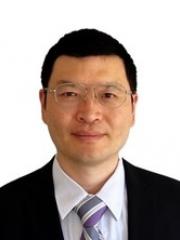
Dr. Mehdi Jafarian is a Senior Lecturer in the School of Chemical Engineering at the University of Adelaide . His work focuses on hydrogen production , CO2 capture , solar thermal energy , and chemical looping combustion . Key research areas include: Solar thermal integration in industrial processes Hydrogen generation via methane pyrolysis CO2 sequestration technologies Advanced water treatment systems Thermochemical energy storage Research Trends : Recent publications emphasize hydrogen production optimization , PFAS removal , and molten metal reactor systems . Sub-fields span flash reactor modeling , hydrodynamic cavitation , and membrane-free electrolysis . Contact : mehdi.jafarian@adelaide.edu.au
Dr Matthias Kramer is a Senior Lecturer at the UNSW Canberra , School of Engineering and Information Technology. He has previously worked at the University of Queensland and the University of Stuttgart. His research focuses on open-channel hydrodynamics with an emphasis on multiphase flows, hydraulic structures, and measurement instrumentation. Education: PhD from University of Stuttgart (2015) on 'Air demand of impulse turbines in counter pressure operation' His research interests include open-channel flow dynamics, multiphase flow analysis, and the development of innovative flow measurement technologies . He has extensively published on topics such as air-water flow properties , turbulent free-surface flows , and plastic pollution transport in fluvial systems. His recent publications demonstrate a focus on environmental engineering , with strong emphasis on fluid dynamics , instrumentation , and hydrological systems . These works include studies on air-water flow measurement , plastic transport modeling , and hydraulic structure design . Dr Kramer has received multiple scientific awards including: UNSW Rector Funded Visiting Fellowship Research Infrastructure Scheme (Combined open-channel/wave flume) Substantial merit-based startup grant (UNSW Canberra) Establishment award (UNSW Canberra) DFG research fellowship on 'Air-water mass transfer at hydraulic structures' He currently supervises PhD candidate Hanwen Cui (joint with Dr Stefan Felder) and Masters student Reilly Cox (UNSW Sydney). Dr Kramer is involved in hydro-environmental research infrastructure at UNSW and serves on the Editorial Panel of ICE Water Management .
Des Hill is a Senior Lecturer in the Department of Mathematics and Statistics at The University of Western Australia (UWA), within the School of Physics, Maths and Computing. His research focuses on differential equations, dynamical systems, and industrial mathematics, with a particular emphasis on fluid dynamics phenomena like Rayleigh-Taylor and Richtmyer-Meshkov instabilities. Education : No formal educational details provided in the text. Research Interests : Hill's work explores mathematical modeling of fluid instabilities, asymptotic analysis, and nonlinear dynamics. His studies often involve theoretical and computational approaches to understand interfacial shear, buoyancy effects, and mixing processes in complex fluid systems. Key areas include supernova remnant dynamics, boundary value problems, and group theory applications in fluid mechanics. Publications : Recent work concentrates on buoyancy-drag interactions in Rayleigh-Taylor dynamics, early/late-time instability evolution, and mathematical frameworks for astrophysical fluid systems. His research bridges applied mathematics and experimental physics, contributing to both theoretical understanding and practical modeling techniques. Supervision & Grants : Has supervised at least 2 academic works as noted in his profile, though specific student names or grant details are not listed. His collaborative projects involve international researchers in fluid dynamics and astrophysics. Labs/Teams : Affiliated with UWA's School of Physics, Maths and Computing research groups focusing on mathematical physics and computational fluid dynamics.
Prof Adrian Sheppard is a Professor in the Department of Materials Physics at The Australian National University (ANU). He holds a B.Sc. (Hons) from the University of Adelaide and a Ph.D. from ANU. His research focuses on porous media analysis, X-ray tomography, and carbon sequestration, with expertise in fluid dynamics, geologic storage, and advanced imaging techniques. He leads projects on CO2 geostorage, multiphase flow modeling, and high-resolution tomographic imaging. His work bridges materials physics, environmental science, and engineering, addressing challenges in energy storage and climate mitigation. He has supervised numerous research students and collaborates on initiatives like the ARC Training Centre for Multiscale 3D Imaging. Key research interests include pore-scale fluid dynamics, supercritical CO2 behavior, and X-ray microtomography applications. Over 200 publications highlight his contributions to understanding fluid trapping mechanisms, beam hardening correction in tomography, and multiscale imaging techniques. He has pioneered methods for analyzing heterogeneous materials and improving tomographic image quality. His projects span geologic carbon storage, additive manufacturing inspection, and environmental fluid dynamics. Prof Sheppard has secured 26 research grants, including projects on CO2 sequestration, X-ray source optimization, and advanced manufacturing. He advises on imaging technologies and leads ANU's efforts in multiscale materials characterization. His lab focuses on applying cutting-edge imaging tools to solve real-world problems in energy and environmental science.
David Fletcher is an Adjunct Professor at the University of Sydney's School of Chemical and Biomolecular Engineering. He holds a BSc and PhD in Mathematics from the University of Exeter (UK) and a Habilitation à Diriger des Recherches (HDR) from the Institut National Polytechnique de Toulouse (France). His expertise spans computational fluid dynamics (CFD), fluid-structure interaction (FSI), and multiphase flow modeling with applications in biomedical systems, pharmaceutical inhalers, and chemical engineering. Education: BSc Mathematics, University of Exeter (1979) PhD, University of Exeter (1982) HDR in Chemical Engineering, Université de Toulouse (2002) Research Interests: Coupled systems simulation (e.g., combustion, micro-flows, biomedical applications) CFD education and software development Bioinspired heart valve design for pediatric use PFAS degradation via CFD-optimized reactors Key Projects: Polymeric heart valve design collaboration with Cincinnati Children’s Hospital CFD modeling of pharmaceutical inhalers with Macquarie University Bubble column optimization for energy-efficient bioreactors Awards: Recognized among the Top 2% of global researchers in 2019, 2021, and 2023 (PLOS Biology ranking). International Collaborations: France (INP Toulouse), Malaysia (Universiti Malaysia Pahang), UK (University of Birmingham), USA (Ann & Robert H. Lurie Children’s Hospital). Students: Supervised PhD graduates now in academia (China, Saudi Arabia) and industry (Australia, India).
Professor Yiu-Wing Mai is a University Chair and Professor of Mechanical Engineering at The University of Sydney, affiliated with the School of Aerospace, Mechanical and Mechatronic Engineering. He is a globally recognized authority in fracture mechanics and advanced materials science, with contributions spanning four decades. His research focuses on nanocomposites, electromagnetic materials, and fracture mechanics models for composites and ceramics. Mai has pioneered methods for strengthening and toughening materials, including the crack-wake bridging model and essential work of fracture framework. His academic distinctions include Fellowships from the Royal Society, Australian Academy of Science, and Chinese Academy of Engineering. He has received prestigious awards such as the AA Griffith Medal (2016), AGM Michell Medal (2016), and ICCM21 Scala Award (2017). Mai’s work has practical applications in industries like green manufacturing and battery technology. Research interests include polymer nanocomposites, multifunctional materials (e.g., fire-retardant composites), and energy storage systems. His recent studies emphasize nanotechnology-driven advancements in Li-ion batteries and thermal management materials. Mai has authored over 500 publications and holds honorary professorships at institutions worldwide.
Dr. Francisco Tovar Lopez is a Lecturer at the School of Engineering, RMIT University. He holds a B.Eng in Mechanical Engineering from UNAM and a PhD in Biomedical Engineering from RMIT. His research focuses on advancing biomedical technologies through microfluidics, nanotechnology, and computational modeling. He has pioneered projects in artificial organs, blood clot detection systems, and lab-on-a-chip platforms. Dr. Tovar has secured notable awards including the ARC-DECRA fellowship and Mexico’s SNI-I recognition. His work bridges mechanical engineering with healthcare applications, emphasizing fluid dynamics and biomaterials. Education B.Eng in Mechanical Engineering (UNAM) PhD in Biomedical Engineering (RMIT University) Research Interests Lab-on-a-Chip technologies Micro/nanofabrication Blood flow dynamics and thrombosis Portable diagnostic systems Medical sensor development Recent Article Trends His 2023 work emphasizes ECMO oxygenator thrombosis detection and environmental sensor applications, reflecting growing focus on translational biomedical engineering. Key themes include microfluidic platforms for hematology and integration of nanoscale sensors. Awards DECRA-ARC Fellow (2012) VC Research Fellow (2012) National Research System Level 1 (Mexico, 2014) Advising Open to PhD supervision in areas like real-time medicine and lab-on-a-chip cancer detection. Active in industry collaborations through projects like Vitalmex Innovamedica.
Professor Andrew Bassom is a Professor of Applied Mathematics and Head of Discipline in Mathematics at the University of Tasmania's School of Natural Sciences. He holds a PhD and has held prior appointments at the University of Western Australia (UWA) and the University of Exeter (UK). His research focuses on fluid mechanics, differential equations, and mathematical modelling with applications to ocean flows, geophysics, and biomedical engineering (e.g., ventilation of premature babies). Research Interests: Applied mathematics, theoretical and applied mechanics, fluid dynamics, and nonlinear systems. Recent work involves magnetic bubble dynamics, climate system hyperbolicity, thermal convection patterns, and seismicity modelling in mining contexts. Grants & Projects: Key projects include: A$460,000 ARC Discovery Project (2019–2023) studying Antarctic ice-sheet collapse via seismic signals. A$15,000 ARC College of Experts 2023 nomination grant. Modelling mining-induced seismicity using the Material Point Method (MPM). Teaching & Supervision: Teaches third-year/honours applied mathematics units. Current doctoral supervision includes projects on climate system hyperbolicity, non-spherical bubbles, and ice-rock interface dynamics. Completed students include Earl Sullivan Lester (dark matter cosmology) and Gysbert Basson (MPM applications in mining). Publications: Over 228 peer-reviewed articles, emphasizing fluid mechanics innovations and interdisciplinary applications. Recent trends focus on geophysical fluid dynamics, climate modelling, and computational methods for complex systems.
Professor YuanTong Gu is the Pro Vice-Chancellor (Research Career Advancement) and Head of the School of Mechanical, Medical and Process Engineering at Queensland University of Technology (QUT). He holds an ARC Future Fellowship and leads the Laboratory for Advanced Modelling and Simulation in Engineering and Science. His research focuses on computational mechanics, biomechanics, and nanotechnology, with over $40M in secured research funding since 2000. He has supervised over 15 PhD students and collaborates with global institutions including Tsinghua University and the University of California. His awards include the International Computational Methods Award (2017) and ICACM Computational Mechanics Award (2017). Prof. Gu's work spans interdisciplinary projects in joint biomechanics, advanced materials, and AI-driven engineering solutions. Education: PhD (National University of Singapore), Graduate Certificate in Education (QUT). Research Groups: Leads a team of 3 academics, 2 ARC Future Fellows, and 15+ PhD students. Key projects include diamond nanothread composites, AI in biomedical devices, and fracture detection frameworks. His group collaborates with industry leaders and global universities to advance computational methods and materials science. Editorial Roles: Associate Editor of Engineering Analysis with Boundary Elements and Applied Mathematical Modelling , among others. Conference leadership includes chair roles in international computational mechanics conferences since 2012.
Dr. Jimmy Li is a Postdoctoral Research Fellow at the School of Mechanical and Mining Engineering, The University of Queensland, with expertise in geophysics and geomechanics for resource and geoenergy exploration. His career spans over a decade in industry roles at Halliburton Energy Services and academic research since completing his PhD in 2021. Bachelor of Petroleum Engineering (2007) from China University of Petroleum Doctor of Philosophy in Petroleum Engineering (2021) from Curtin University Dr. Li's research focuses on theoretical and experimental studies in rock mechanics and geotechnical engineering for underground mining and drilling applications. Key areas include: Machine Learning in Geoscience for tasks like CMRR and UCS prediction Rock Physics involving seismic, microseismic, and ultrasonic wave propagation Weathering in Sedimentary Rock through experiments on fluid-rock interactions Petrophysics and Formation Evaluation using core analysis and laboratory measurements Drilling Engineering in hostile environments (HPHT), geosteering, and borehole stability His recent publications highlight trends in coal geomechanics, shale permeability, CO2 sequestration modeling, and AI applications in upstream geoenergy. He has collaborated on multi-frequency sonic logging tools and established the NATA-accredited Quality Management System for rock mechanics at UQ. Dr. Li is available for supervision and has secured funding from industry partners like Origin Energy, Normet Asia Pacific, and Lihir Gold Limited for projects on coal strength, grout durability, and roadway stability. He contributes to developing machine learning methods for reducing subjectivity in mining safety assessments and optimizing drilling technologies.
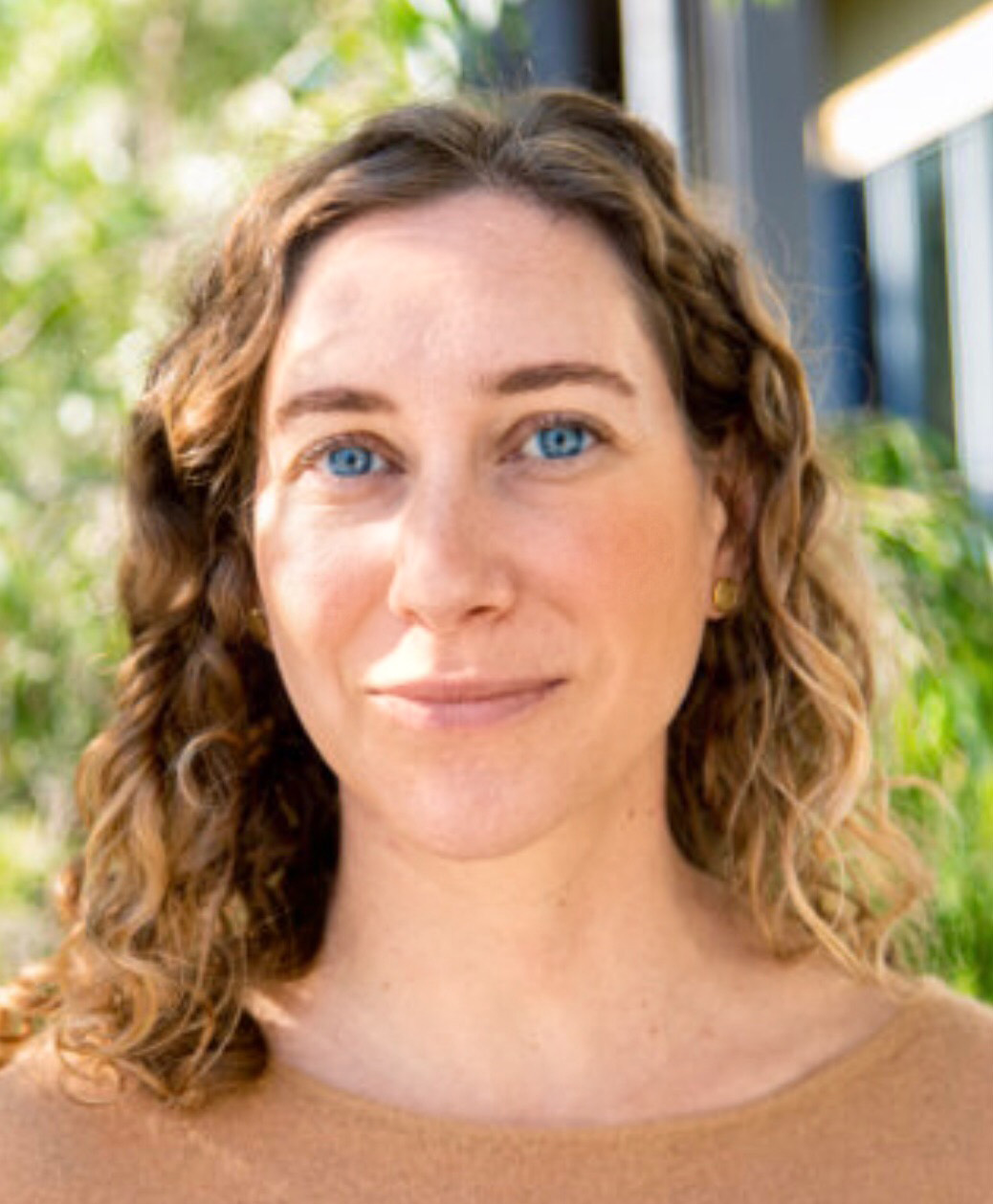
Ricardo Ruiz Baier is a Professor of Computational Mathematics at Monash University in Melbourne, Australia, where he also holds an ARC Future Fellowship. He is affiliated with the Victorian Heart Institute and the Monash Data Futures Institute, highlighting his interdisciplinary research bridging mathematical theory with biomedical applications. His research focuses on the design and analysis of numerical methods for partial differential equations, particularly those that preserve the physical properties of natural phenomena. His expertise includes fundamental topics in numerical analysis and scientific computing such as analysis of finite volume and finite element methods using mixed and augmented formulations, space-time adaptivity and error estimation, perturbed saddle-point problems, multiphase flow and transport in porous media, cardiac electrophysiology and electromechanics, and interface problems. His recent publications reveal a strong emphasis on virtual element methods, poroelasticity models, and cardiac mechanics applications. His work spans theoretical numerical analysis, computational methods development, and practical biomedical applications, particularly in cardiac modeling. The research demonstrates a consistent focus on multiphysics problems and the development of robust numerical schemes for complex coupled systems. Scientific Awards: ARC Future Fellowship FT22 for 'Next-generation methods for transport in poroelastic media with interfaces' Australian Research Council Discovery Project DP21 for 'Towards predictive 4D computational models for the heart' Ruiz Baier actively supervises a large research group with numerous PhD students and postdoctoral researchers working on diverse aspects of computational mathematics. His group has secured funding from multiple sources including Monash Mathematics, the Australian Research Council, IITB-Monash Doctoral Programme, and international government scholarships. He frequently organizes major conferences and workshops, including the Computational Techniques and Applications Conference (CTAC 2024) and MATRIX workshops on numerical analysis. His research group operates at the intersection of mathematics, computational science, and biomedical engineering, with particular focus on developing computational models for cardiac function and mechanics. The group collaborates with international institutions including the University of Oxford and University of Oslo.
Ganesh Veluswamy is a Research Fellow at the School of Engineering, RMIT University. His research focuses on sustainable engineering solutions, including biochar applications, thermal treatment of biosolids, and waste-to-energy systems. He explores environmental management strategies and renewable energy technologies to address challenges in chemical and environmental engineering. His work integrates experimental techniques with computational modeling, such as Aspen Plus simulations for techno-economic analysis and CFD modeling for fluid dynamics. Key areas include PFAS destruction during thermal processes, hydrogen production from biogas, and algal biomass systems. Veluswamy contributes to advancing circular economy principles through innovative approaches to waste valorization and resource recovery. His research also extends to fluid catalytic cracking units, multiphase flow optimization, and biohythane utilization in fuel cells. These efforts highlight a commitment to bridging engineering innovation with environmental sustainability.
Dr. Elham Doroodchi is an Associate Professor in the School of Engineering at the University of Newcastle, specializing in Chemical Engineering. Her research focuses on fluid mechanics, multiphase systems, and energy technologies, with notable contributions to microfluidics and industrial applications. She has secured $2.9 million in research funding and published extensively in peer-reviewed journals and conferences. Education : PhD, University of Newcastle (2005) Bachelor of Engineering (Chemical Engineering), University of Newcastle (1st Class Honours) Research Interests : Dr. Doroodchi’s work spans fluidized bed hydrodynamics, particle technology, and energy systems such as geothermal power and waste heat recovery. Her recent studies include novel power cycles for geothermal energy and microfluidic applications in medicine and engineering. Grants & Awards : $2.9M total funding secured ARC College of Experts member (assesses Discovery Projects) Awards: Newcastle University Dean’s Medal (2000), Institution of Chemical Engineers Prize (2000), and National Award (2005) for the Reflux Classifier development Labs & Teams : Active in collaborative projects with Behdad Moghtaderi and others, focusing on energy storage, microreactors, and multiphase flow modeling.
Stephanie Vialle is a Senior Research Fellow at Curtin University's School of Earth and Planetary Sciences (EPS), within the Faculty of Science and Engineering. She leads the Exploration Geophysics Group and serves on the WASM Diversity and Equity Committee. Her research bridges geophysical and geochemical disciplines, focusing on fluid-rock interactions, CO2 sequestration, and subsurface engineering challenges. She holds a PhD and MSc from the University of Paris and trained as a Physical Chemist at Université Paris-Sud and ENS Paris. Education: PhD in Geochemistry (University of Paris), MSc in Fundamental and Applied Geochemistry (University of Paris), Physical Chemistry training (Université Paris-Sud/ENS Paris). Research spans experimental rock physics, reactive transport modeling, and multi-scale subsurface processes. She collaborates with industry and government on carbon storage, groundwater contamination, and mineral exploration projects. Research interests include CO2 leakage mitigation, hydrogen storage impacts, and energy transition strategies. She leads digital rock physics workflows for reservoir property computation and has mentored HDR students. Notable contributions include the 2018 AGU monograph on caprock integrity and ENI Energy Transition nomination. Current collaborations involve Curtin’s rock physics team and international partners. She teaches applied geophysics courses and coordinates programs at Bentley and Miri campuses. Awards highlight her work’s impact on carbon storage science.
Dr Giang Nguyen is an Associate Professor at the School of Architecture and Civil Engineering, University of Adelaide. Their research focuses on constitutive modeling of engineering materials, computational solid mechanics, and micromechanics of failure. Nguyen's work bridges theoretical, experimental, and numerical approaches to understand material behavior across scales, particularly in soils, rocks, and cement-based materials. Their contributions include advancements in smoothed particle hydrodynamics (SPH) for modeling geomechanical processes and fracture mechanics. Research interests emphasize: Constitutive modeling under multi-axial loading conditions Failure mechanisms in quasi-brittle materials Hydro-mechanical coupling in partially saturated soils 3D printing applications in construction materials Large deformation analysis using SPH Publications span topics like earthquake-induced liquefaction, backward erosion pipelines, and energy-based fracture criteria. Nguyen has developed novel testing methods (e.g., AUSBIT) to capture snapback behavior in indirect tensile testing. Their work integrates experimental validation with advanced computational frameworks.