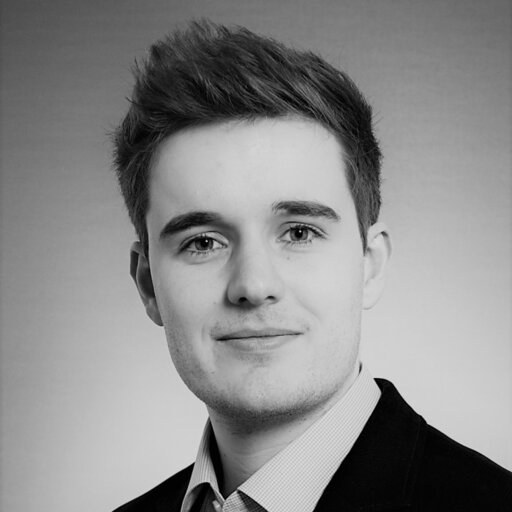
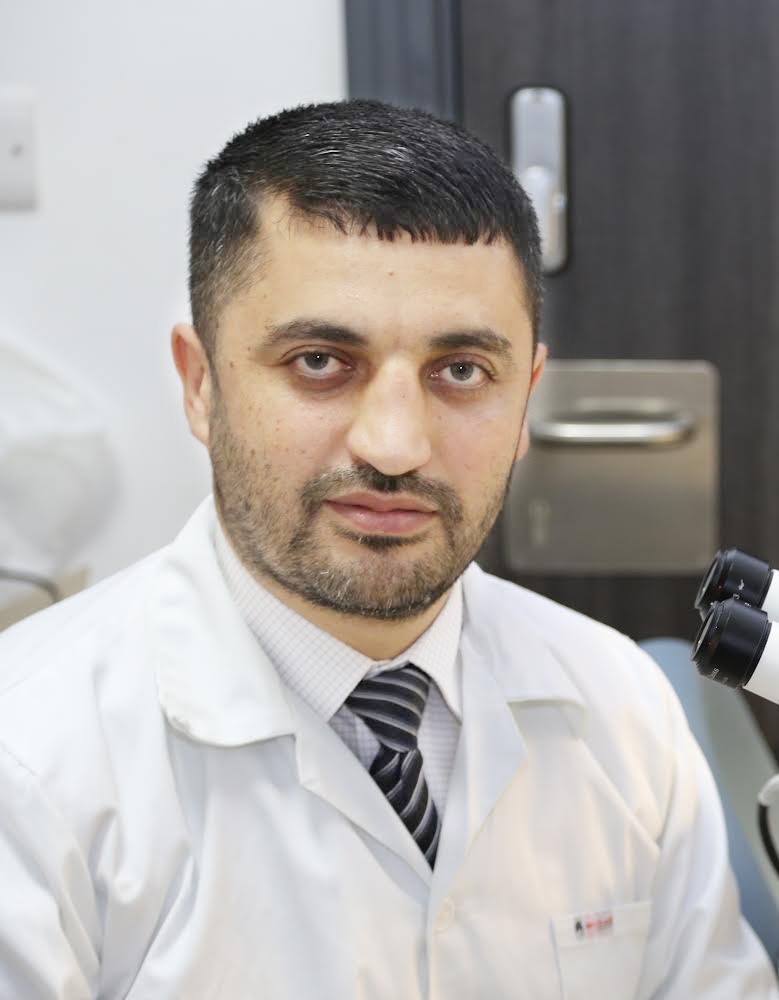
Dr. Steffen Dirkes is the Acting Group Lead for System Research at the Institute of Energy Technologies (IET), Research Center Jülich GmbH . His work focuses on electrochemical energy systems, particularly proton exchange membrane (PEM) fuel cell technologies for sustainable mobility and industrial applications. His research interests span Fuel Cell Technology Green Hydrogen Energy Systems Optimization Computational Modeling Hydrogen Mobility Sustainable Energy . He specializes in predictive maintenance, dynamic system modeling, and energy-water nexus solutions. Dr. Dirkes has contributed to 12 publications (2019–2025) on topics like DryHy project for water-positive hydrogen carriers, lifetime management frameworks for fuel cells, and adaptive energy management strategies for hybrid railway systems. His work combines advanced simulation techniques with real-world validation in transportation and heavy-duty applications.
Dr. Jun Yao serves as a Senior Lecturer in Aerospace Engineering at the School of Engineering, University of the West of England (UWE Bristol), within the Department of Engineering, Design and Mathematics. His research leverages computational fluid dynamics to address industrial flow challenges across renewable energy systems, turbomachinery, and aerospace applications, with significant contributions to REF2021 impact case studies. Education: PhD MPhil MSc BEng Dr. Yao specializes in multiphase flow dynamics, heat transfer phenomena, and aerodynamic optimization. His work pioneers flow control techniques for vertical axis wind turbines (VAWTs) using Gurney flaps, investigates hydrogen combustion and fuel cell electrocatalysts, and models thermal systems for building ventilation and turbine blade cooling. Recent publications demonstrate strong interdisciplinary focus on sustainable energy solutions through advanced CFD methodologies and experimental validation. Analysis of Dr. Yao's 2020-2025 publications reveals three dominant research thrusts: (1) VAWT performance enhancement via passive flow control devices across operational regimes, (2) multiphase flow modeling in industrial processes (laser cladding, sludge discharge, heat exchangers), and (3) turbulence simulation techniques for aerodynamic prediction. His work consistently bridges fundamental fluid dynamics with practical energy applications. Scientific Awards: Fellow of the Higher Education Academy (FHEA) Dr. Yao leads collaborations with Mitsubishi Electric R&D Centre (MERCE-UK) on hydrogen combustion and turbomachinery projects. His teaching portfolio spans Thermofluids, Fluid Mechanics, CFD, Sustainable Energy, Aerodynamics, and Aero-propulsion courses, integrating cutting-edge research into curriculum development for aerospace engineering students. His research group maintains experimental facilities for laser diagnostics in multiphase flows and computational resources for high-fidelity CFD simulations, supporting innovations in wind energy harvesting, thermal management systems, and clean combustion technologies through industry-academia partnerships.
Armin K. Silaen is a Research Associate Professor at Purdue University Northwest, affiliated with the Center for Innovation through Visualization and Simulation (CIVS) and holds a courtesy appointment as Associate Professor of Mechanical Engineering. His research focuses on multiphase reacting flow simulations, particularly in iron and steelmaking processes, with a specialization in continuous casting modeling at the Steel Manufacturing Simulation and Visualization Consortium (SMSVC). Education: Ph.D. in Mechanical Engineering from the University of New Orleans (2010). His applied research targets energy efficiency improvements, waste reduction, carbon emission mitigation, and process stability in industrial settings. Key publication trends include computational modeling of metallurgical processes, fluid dynamics in continuous casting, and sustainable energy applications in steel manufacturing. He contributes to engineering through simulation-based solutions for industrial sustainability, emphasizing the role of engineers in creating a safer and more eco-friendly world via technological innovation.
Dr Jie Li is an Associate Professor in the Department of Engineering at the University of Cambridge, specializing in computational fluid dynamics and numerical methods for multiphase flows. Expertise in interface tracking methods (e.g., Volume of Fluid) and adaptive mesh techniques Research applications include inkjet printing, cavitation, and droplet combustion His work focuses on modeling complex interfacial phenomena such as viscoelasticity, surface tension, surfactant dynamics, contact lines, triplet points, rarefied gas behavior, droplet collisions, and solid-wall impacts. Publications demonstrate extensive use of arbitrary Lagrangian-Eulerian (ALE) methods, finite element schemes, and smoothed surface stress approaches for simulating moving boundary problems in fluid mechanics.
Prof. Dr. Muhamed Hadžiabdić currently serves as the ME Program Coordinator at the International University of Sarajevo (IUS) Department of Engineering. He earned his PhD from TU Delft in 2006, focusing on Thermal and Fluid Sciences, and completed postdoctoral work at Kramers Laboratorium in Multi-Scale Physics. Research interests include: Turbulence modeling with RANS and hybrid LES/RANS Heat transfer in urban flows and pollutant dispersion Flow control via rotary oscillations Computational Fluid Dynamics (CFD) applications for microclimate and environmental quality Thermal energy storage and building energy management His 2019-2025 publications emphasize hybrid modeling techniques, urban fluid dynamics, and high-Reynolds-number thermal flows. Recent work includes UTES systems, pollutant dispersion in real urban settings, and Rayleigh-Bénard convection at extreme Rayleigh numbers. Contact: mhadziabdic@ius.edu.ba | Office: A F1.31
Amir Hossein Azimi serves as a Professor in the Department of Civil Engineering at Lakehead University, Ontario, Canada, and holds a dual appointment at the Centre of Excellence for Sustainable Mining & Exploration. His academic career centers on experimental and computational fluid dynamics with direct applications to environmental sustainability and industrial processes. His educational foundation includes: Bachelor of Science (BSc) in Civil Engineering from Azad University of Science and Technology, Iran Master of Science (MSc) in Civil Engineering from Iran University of Science and Technology, Iran Doctor of Philosophy (PhD) from the University of Alberta, Canada Dr. Azimi's research program investigates complex multiphase flow phenomena through integrated experimental and numerical approaches. His work focuses on sediment-bubble interactions in aquatic systems, mixing dynamics of slurry jets and plumes, erosion-deposition mechanics in natural channels, and hydraulic behavior of non-Newtonian mixtures in industrial applications. He pioneers advanced methodologies including high-resolution flow visualization, digital image processing of sediment transport, and fiber optic probe signal analysis, complemented by custom-developed numerical models for simulating turbulent multiphase flows. This dual experimental-computational framework addresses critical challenges in water resource management, mining operations, and environmental protection. His technical expertise spans both fundamental fluid mechanics research and practical engineering solutions for sustainable resource extraction, with particular emphasis on improving sediment control systems and spillway hydraulics in mining infrastructure.
Vit Dolejsi is a Professor at the Department of Numerical Mathematics , Faculty of Mathematics and Physics , Charles University in Prague . He holds a PhD in Mathematical Modeling and Mechanics from Charles University and Universite Mediterranee. His research focuses on Numerical methods for partial differential equations with applications in Fluid dynamics , particularly using Discontinuous Galerkin methods and Anisotropic mesh adaptation . Phone: [+420] 95155 3373 Email: vit.dolejsi@matfyz.cuni.cz Office: Sokolovska 83, 186 75 Praha 8 - Karlin, Czech Republic Research Interests : Numerical methods for nonlinear PDEs High-order adaptive DG schemes Error estimation and adaptivity Compressible and incompressible flow simulations Applications in porous media and atmospheric modeling Algebraic and discretization error control Publications & Contributions : Authored monographs on Anisotropic hp-Mesh Adaptation (2022) and Discontinuous Galerkin Method (2015) Published 15+ journal papers (2015-2025) on DG methods, mesh adaptation, and error analysis Developed freely available CFD software implementations Contributed to hp-adaptive algorithms and space-time DG for nonlinear problems
John Rudge is a Professor in the Department of Earth Sciences at the University of Cambridge. His research focuses on theoretical geophysics and geochemistry, with a strong emphasis on mantle convection, magma dynamics, and rock rheology. He employs mathematical modeling, numerical solutions of partial differential equations, and statistical techniques to study Earth and planetary interiors, collaborating closely with geophysicists, geochemists, and material scientists. Research Interests: Mantle convection and dynamic topography Magma ascent and extraction mechanisms Rheology of partially molten rocks Grain-scale modeling and upscaling to continuum laws Planetary interior dynamics and exoplanet habitability His recent publications span geodynamics, geochemistry, and interdisciplinary applications, including mantle rheology, melt transport, and hematologic oncology. Awards and grants are tied to his leadership in the Cambridge NERC Doctoral Landscape Awards (DLA) and collaborations in the C-CLEAR Doctoral Training Partnership.
Johan Gilchrist (a.k.a. Yoshi) is a National Science Foundation Earth Sciences Postdoctoral Fellow in the Department of Earth Sciences at the University of Oregon , affiliated with the College of Arts and Sciences . His research focuses on volcanology, glaciology, landslides, wildfires , and planetary geology , with expertise in multiphase turbulent flow and explosive eruption dynamics . Current research includes supraglacial landslides , wildfire plumes , and methane river flows on Titan . His work featured in Nature Geoscience (2023) connects terraced submarine caldera deposits to eruption source conditions and tsunami generation. Scientific Awards: NSF EAR Postdoctoral Fellowship Notable Contributions: Developed novel methods for analyzing volcanic plumes using thermal imagery and spectral clustering , and advanced understanding of sedimentation waves and eruption column stability through analog experiments and field studies.
Tian Ma is a Junior Group Leader at the Computational Fluid Dynamics Department of the Institute of Fluid Dynamics at the Helmholtz-Zentrum Dresden-Rossendorf (HZDR) . His work focuses on fundamental and applied problems related to turbulence and bubble transport in environmental and industrial flows, utilizing experiments and numerical simulations. Research Interests : Modeling of poly-disperse bubbly flows (iMUSIG), separated flows (AIAD), and GENTOP-concept for transitional flow morphologies. Applications include nuclear reactor safety, chemical reaction engineering, and multiphase flow optimization. Collaborations : Part of a Helmholtz European Partnering Program group with the Jožef Stefan Institute in Slovenia, focusing on advanced multiphase flow modeling. Contact : Located at Bautzner Landstraße 400, 01328 Dresden, Germany. Email: tian.ma@hzdr.de , Phone: +49 351 260 3805.
Anas Alazzam is a Full Professor in the Department of Mechanical & Nuclear Engineering at Khalifa University. He serves as Head of the Microfluidics Lab and Theme Leader in the System on Chip Lab (SOCL), focusing on advanced microsystem technologies. PhD in Mechanical Engineering, Concordia University M.Sc. in Mechanical Engineering, Jordan University of Science and Technology His research spans microfluidics, nanofluids, dielectrophoresis, MEMS, graphene-based materials, and phase change materials . Key applications include biomedical devices, energy systems, and self-powered electronics through iontronic and triboelectric technologies. Recent publications emphasize advanced nanofluids for solar energy absorption , biodegradable phase change materials , and self-powered electronic systems . His work integrates computational modeling with experimental validation in thermal systems and particle dynamics. Professor Alazzam teaches courses in fluid mechanics, MEMS theory, and micro/nanotechnology applications. His labs welcome graduate students for research in microfluidics, nanofluids, and microsystem design.
Maartje Boon is an Assistant Professor at the Institute of Mechanics (MIB) , University of Stuttgart , leading the Porous Media department. Her research focuses on subsurface energy systems, particularly hydrogen and CO2 storage in geological formations. Specializes in multiphase flow dynamics and rock heterogeneity Applies microfluidics and computational modeling Collaborates with institutions like Stanford and TU Delft Research Highlights : Experimental characterization of hydrogen/brine interactions in porous rocks (2024) Microbial-induced wettability alteration for storage optimization (2024) Dynamic contact angle analysis for subsurface flow modeling (2022) Publications (2016-2024) demonstrate expertise in: Multiphase flow in heterogeneous sandstones Anisotropic saturation functions for reservoir simulation Geochemical mixing and dispersion mechanisms
Jon Kleppe is a Professor in Petroleum Engineering at the Norwegian University of Science and Technology (NTNU) since 1981. He has held leadership roles such as Center Director of SFI IO (2007-2015), Department Head for ~20 years, and Dean of Earth Sciences (1990-96). He has also served as a Visiting Professor at Stanford University (1988-1989) and a Visiting Researcher at Elf (1996-1997). Education: Ph.D. in Petroleum Engineering, Texas A&M University, 1974 M.Sc. in Mechanical Engineering, South Dakota School of Mines and Technology (SDSMT), 1971 B.Sc. in Mechanical Engineering, SDSMT, 1970 Research Interests: Kleppe's work focuses on Petroleum Engineering , Reservoir Simulation , Enhanced Oil Recovery (EOR) , CO2 Storage , and Fractured Reservoirs . His recent publications emphasize surfactant flooding, single-well chemical tracer tests, and geochemical interactions in carbonate reservoirs. Scientific Awards: Oilman of the Year 2014 (SPE Norway) Regional Distinguished Achievement Award for Petroleum Engineering Faculty 2015 NTNU's Internationalization Award 2015 Advising & Grants: He has supervised numerous doctoral students, including Mkinga Oras Joseph (2020), Cheng Xiaoqian (2019), and Jahanbani Ghahfarokhi Ashkan (2012). His research has involved collaboration with institutions like Stanford University and Elf, as well as industry projects in Saudi Arabia and Norway.
Marcello Lappa is a Full Professor at the Department of Mechanical and Aerospace Engineering of the University of Strathclyde in Glasgow, UK. He serves as the Leader (main Programme Advisor of Studies) of the MSc courses in Mechanical Engineering and heads the James Weir Fluid Laboratory research team. Since 2021, he has been listed in Stanford University's 'World Ranking of Top 2% Scientists' database in the subfield Fluids & Plasmas. Professor Lappa's research spans fluid mechanics, thermal sciences, and computational techniques with applications across multiple engineering disciplines. His work focuses on fluid motion and stability behavior, computational fluid dynamics, incompressible and compressible fluid flows, organic and inorganic materials sciences, crystal growth, multiphase flows, solidification, high-temperature gas dynamics, particle dynamics, and microgravity science. A significant portion of his research involves studying particle self-assembly phenomena in thermovibrational flows and their applications in space environments. His publication record shows a clear progression toward space applications, particularly in microgravity environments. The most recent articles focus on particle accumulation structures under thermovibrational effects, lunar regolith manipulation, and hypersonic flow simulations for planetary entry. His work demonstrates a strong interdisciplinary approach, bridging fundamental fluid dynamics with practical space applications. World Ranking of Top 2% Scientists in Stanford University database Best Conference paper award (2021) ESA ISS Award (2008) Professor Lappa has supervised numerous PhD students both currently and in the past, with several now working in prominent aerospace companies. He has secured over £2.5 million as Principal Investigator from diverse funding sources including EPSRC, STFC, UKSA, ESA, NMIS, and industrial entities. His research group at Strathclyde includes Research Associates and several PhD students working on cutting-edge fluid dynamics problems. The James Weir Fluid Laboratory research team under Professor Lappa's leadership conducts experiments both on Earth and in space, including scientific experiments on board the International Space Station that have attracted attention from media outlets like THE TIMES and the BBC. The team's current focus includes developing novel techniques for particle manipulation in microgravity environments and studying fluid dynamics phenomena relevant to space exploration and materials processing.
Dr Jefferson Gomes , Senior Lecturer at the University of Aberdeen since 2023, is a computational physicist specializing in multi-fluid dynamics and nuclear engineering. His research spans energy technologies, environmental hazards, and geophysical systems. Education: PhD (Imperial College London, 2004), MSc (State University of Rio de Janeiro, 1999), BSc in Chemical Engineering (Federal University of Rio de Janeiro, 1996) Research Interests: Focus on computational multi-fluid dynamics (CMFD) and multi-physics modeling, with applications in nuclear reactor safety, unconventional shale gas, CO₂ migration, and geothermal energy. Expertise in finite element methods (FEM), machine learning, and reduced-order models. Recent Publications: 2025 work on multifluid reactor dynamics and shale gas adsorption; 2024 studies on CO₂ sequestration and corium flow during accidents. Earlier work includes nuclear reactor design optimization and granular flow modeling. Awards: Fellow of the Higher Education Academy (FHEA). Teaching: Offers courses in Chemical Thermodynamics, Process Engineering, and Computational Fluid Dynamics at undergraduate and postgraduate levels. Collaborations: Partnerships with Imperial College London, Federal University of Rio de Janeiro, and industry projects for BNFL, BP, and JAEA.