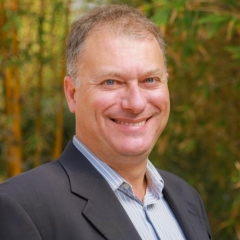
Yuri Leonenko is an Associate Professor at the University of Waterloo, with an office in EIT-2048 (ext. 32160) and email contact leonenko@uwaterloo.ca. His research centers on Climate Control technologies, particularly Carbon Capture and Storage (CCS). Key expertise includes modeling multiphase flow in porous media and fractures, CO 2 -reservoir fluid interactions, and novel in situ/ex situ CO 2 dissolution methods. His work integrates risk assessment and economic evaluation of CCS projects to advance sustainable climate solutions. Scientific Awards: No awards mentioned Advising and Grants: No student or grant information provided Labs and Teams: No laboratory or team affiliations specified
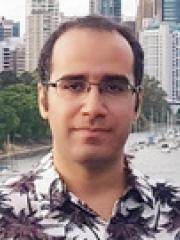
Mohammad Sedaghat is an Industry Fellow at the Gas and Energy Transition Research Centre at The University of Queensland. His research focuses on petroleum engineering, reservoir characterization, and energy transition technologies, with particular expertise in fluid flow mechanisms, carbon capture and storage, and enhanced resource recovery methods. Research Interests: Sedaghat's work spans geomechanics, reservoir simulation, and environmental sustainability in energy systems. Primary domains include: Fluid dynamics in fractured reservoirs and coal seams Hydraulic fracturing and permeability enhancement techniques CO₂ sequestration and injectivity modeling Wettability alteration and chemical flooding for oil recovery Mine methane emission mitigation strategies Publication Trends: Recent articles demonstrate a strong focus on numerical modeling of subsurface processes, with recurring themes in carbon storage optimization, unconventional resource recovery, and geomechanical influences on fluid flow. Computational studies frequently employ advanced simulation platforms to address challenges in energy transition and fossil fuel extraction. Collaborations: Actively collaborates on industry and research projects including the University of Queensland Surat Deep Aquifer Appraisal Project (UQ-SDAAP), investigating multiphase flow behavior and managed aquifer recharge systems.
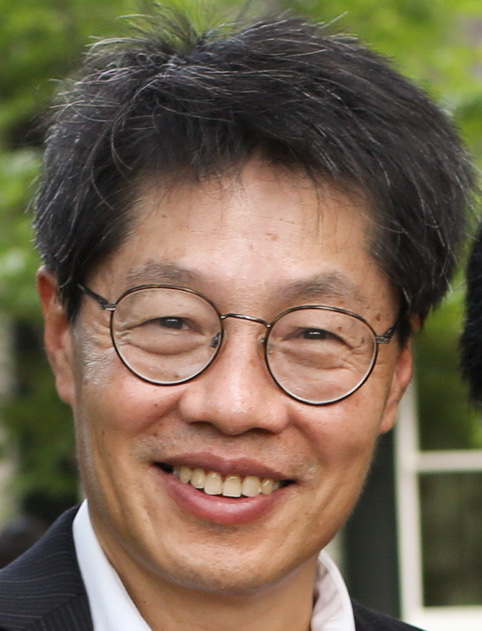
Jian-Guo Liu is a Professor of Mathematics and Physics at Duke University, with primary affiliations in the Departments of Mathematics and Physics. His research encompasses applied mathematics, partial differential equations, kinetic theory, computational fluid dynamics, and stochastic algorithms. Professor Liu's work bridges theoretical modeling and numerical methods, particularly in complex systems involving nonlinear dynamics, fluid behavior, and emergent phenomena. Research interests focus on multiscale modeling of physical systems, including stochastic processes in chemical reactions, fluid-structure interactions, and materials science. Recent publications demonstrate strong emphasis on mathematical foundations of biological and physical systems, with recurring themes in Fokker-Planck dynamics, mean-field games, tumor growth modeling, and computational methods for interfacial phenomena. Publications showcase consistent focus on analytical and numerical solutions to high-dimensional problems, with applications ranging from medical imaging to electrochemistry. The work exhibits advanced techniques in asymptotic analysis, stochastic approximations, and geometric evolution equations.
Dr. Yuchen Dai is a Postdoctoral Research Fellow at the School of Chemical Engineering, University of Queensland (UQ), with expertise in computational fluid dynamics (CFD), microfluidics, and non-linear dynamic systems. He previously worked at Griffith University and the Queensland Micro&Nanotechnology Centre (QMNC) until 2023. PhD in Mechanical Engineering (2021), University of Queensland His research spans heat & mass transfer, fluid mechanics, and analytical methods, focusing on microfluidic devices for biomedical applications. Recent publications highlight innovations in droplet generation, cell separation, and viscoelastic fluid behavior. Dr. Dai has authored 10 journal articles (2018–2025) and 1 conference paper, covering topics like microfluidic particle manipulation , double emulsion stability , and liquid marble mixing . He is currently available for supervision.
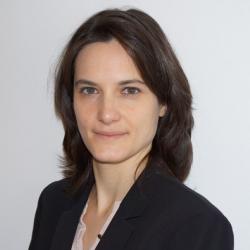
Marica Pelanti is an Assistant Professor at the Department of Mechanical Engineering (UME) of ENSTA Paris , part of the Institut Polytechnique de Paris . She works on Computational Fluid Dynamics and Multiphase Compressible Flows , focusing on numerical modeling of liquid-vapor flows with phase transfer processes, particularly cavitation for industrial applications. Doctorate in Applied Mathematics (2005, University of Washington) Master in Aerospace Engineering (1999, Politecnico di Milano) Her research employs Finite Volume Schemes and advanced Riemann solvers like HLLC and Roe for low Mach number preconditioning. She leads funded projects on multiphase flow modeling and has extensive publication records in journals like J. Comput. Phys. and Int. J. Multiphase Flow .
Michael Vynnycky is an Affiliated Professor at KTH Royal Institute of Technology , specializing in mathematical modeling and numerical analysis of industrial metallurgical processes. His research focuses on continuous casting , electromagnetic stirring , and fluid-structure interactions in manufacturing systems. Key Research Areas: Continuous casting of metals, fluid dynamics, heat transfer, computational methods (FEM, CFD), inverse Stefan problems, and oscillation mark formation. Collaborations: Frequent collaboration with researchers like H. Fredriksson, B. Glaser, and A. Safavi Nick. Applications: Steel production, die casting, redox flow batteries, and polymer electrolyte fuel cells. Recent publications highlight work on blast furnace dynamics , muon radiography for structural analysis, and asymptotic modeling of gas-solid flows. His methodologies emphasize mathematical rigor and industrial relevance , as seen in studies on macrosegregation and electromagnetic flow control. Techniques: Leverages asymptotic analysis multiphysics simulation finite element methods computational fluid dynamics boundary reconstruction algorithms experimental validation to solve complex industrial problems. Email Contact: michaelv@kth.se
Alexander Bußmann is a Researcher at the Chair of Aerodynamics and Fluid Mechanics at the Technical University of Munich . His work focuses on nanoshock phenomena and multiphase flow analysis , particularly through numerical simulations of cavitation dynamics and interface tracking. Research Highlights: Development of hybrid WENO5IS-THINC schemes for compressible multiphase flows Analysis of micro-jet formation via cavitation bubble interactions Investigation of particle deposition in thermal-spray gun nozzles Publications span topics in fluid mechanics, computational physics, and photonics, with a focus on cavitation dynamics, numerical methods, and multiphase flow modeling. Key collaborations include work with Stefan Adami and Nikolaus A. Adams .
Professor Laura Torrente Murciano leads the Process Integration and Catalysis Group at the University of Cambridge's Department of Chemical Engineering and Biotechnology. Her research focuses on sustainable chemical processes, particularly integrating reaction and separation steps for green technologies. Reaction engineering with 3D-printed microdevices Nanoparticle synthesis for catalytic applications Ammonia production as a hydrogen vector Low-temperature activation of methane and CO2 Her work spans multiphasic systems, metallic membranes, and nanostructured materials like ceria and titanate. Recent publications highlight techno-economic analyses of green ammonia, dynamic energy integration, and catalytic process innovations. Key themes across her research include: Process optimization for renewable energy storage Development of sustainable hydrogen production methods Design of tuneable nanoparticle catalysts Structure-property relationships in catalytic supports Life cycle analysis of green technologies Photocatalytic and electrochemical material applications
Assistant Professor Radojica Pešić is affiliated with the Department of Chemical Engineering at the Faculty of Technology and Metallurgy, University of Belgrade. With expertise in chemical engineering and environmental applications, his work focuses on reactor design, mass transfer, and sustainable process optimization. Research spans environmental remediation , process design , and transport phenomena Active in bubble column reactors , CO2 capture , and industrial water treatment Supervised 10+ final theses in chemical engineering processes and environmental systems Recent publications highlight trends in electrochemical pollutant degradation , fluidized bed thermal dynamics , and sustainable material design . His teaching involvement includes Chemical Engineering Laboratory and Process Design courses. Advised research on distillation process optimization (2021), industrial water quality (2020), and PINCH methodology for mass integration (2018) Key methodologies: linear mass balance models , absorption column design , and quality control systems Contact: rpesic@tmf.bg.ac.rs | Office 37, TMF Building | Phone: +381 11/3303611
Frédéric Gibou is a Professor in the Department of Mechanical Engineering, Department of Computer Science, and Department of Mathematics at the University of California, Santa Barbara. He is also a core faculty member in the Computational Science and Engineering program. His academic journey began with a PhD in Applied Mathematics from UCLA, followed by post-doctoral research in the Departments of Mathematics and Computer Science at Stanford University. PhD in Applied Mathematics, UCLA Post-doctoral research, Stanford University (Mathematics and Computer Science) Professor Gibou's research sits at the interface between Applied Mathematics, Computer Science and Engineering Sciences, focusing on the design of high resolution computational methods for large scale computations. His work spans Computational Materials Science, Computational Fluid Dynamics, and Computational Image Analysis. The common thread across these applications is that they involve complex/free boundaries and similar classes of nonlinear partial differential equations. His group develops computational strategies on spatially adaptive grids for massively parallel environments, increasingly incorporating Machine Learning algorithms to solve forward and inverse problems. His research output shows a clear trend toward integrating traditional numerical methods with machine learning approaches, particularly for solving partial differential equations with complex interfaces. The publications reveal a strong focus on developing sharp interface methods, adaptive grid techniques, and novel computational paradigms that can handle multiscale phenomena across various scientific domains. Alfred P. Sloan Fellowship in Mathematics Regent's Junior Faculty Fellowship NSF Mathematical Sciences Postdoctoral Fellowship Robert Sorgenfrey Distinguished Teaching award Professor Gibou leads a multidisciplinary research group called Computational Applied Science Laboratory (CASL), which has strong collaborations with experimentalists at UCSB and worldwide. His group has received substantial funding from various agencies, enabling them to tackle challenging problems in computational science. CASL focuses on designing computational methods on Quad-/Oc-trees grids in the level-set formalism for solving previously intractable problems in science and engineering. The group's work spans Computational Materials Science (including nanostructured polymeric materials and high temperature multicomponent alloys), Computational Fluid Dynamics (including flow over superhydrophobic surfaces, flow in reactive porous media, and multiphase flows), and Computational Image Analysis (including image guided surgery and image segmentation).
Professor Andrew Hrymak is a distinguished academic in the Department of Chemical and Biochemical Engineering at Western University, where he has been a faculty member since 2009. Prior to his appointment at Western, he served as Professor and Department Chair at McMaster University from 1985-2009. During his tenure at Western, he held the position of Dean of the Faculty of Engineering from July 1, 2009 to July 31, 2018. He currently serves as Deputy Director of the Fraunhofer Project Centre for Composites Research at Western and has held significant editorial roles including Editor of Computers and Chemical Engineering (2002-2010) and Editor-in-Chief of International Polymer Processing (2004-2016). His educational background includes: PhD in Chemical Engineering from Carnegie Mellon University (1985) B.Eng. in Chemical Engineering from McMaster University (1980) Professor Hrymak's research focuses on the modeling, design, and optimization of materials processing systems, with particular emphasis on composites processing, injection molding, compression molding, mixing liquid coating flows, and complex rheology. His work integrates computational methods with experimental approaches to address challenges in polymer processing operations. His research spans multiple scales, from microscopic fiber-matrix interactions to macroscopic process modeling. He has made significant contributions to understanding the behavior of complex fluids and multiphase systems, particularly in the context of polymer composites manufacturing. His work often combines computational fluid dynamics with experimental validation to develop predictive models for industrial applications. Professor Hrymak's extensive publication record demonstrates a consistent focus on advancing the science and engineering of polymer processing, with recent work incorporating machine learning approaches to model complex material behaviors. His research has practical applications in automotive, aerospace, and manufacturing industries where composite materials play a critical role. His scientific recognition includes: Fellow of the Canadian Academy of Engineering (2010) Fellow of the Chemical Institute of Canada (2005) Excellence in Process Development Research Award by the Process Development Division of the American Institute of Chemical Engineers (2005) As an academic advisor, Professor Hrymak has mentored numerous graduate students through their PhD and Master's research. His current research group includes students working on projects related to structural long-fiber thermoplastics for automotive applications, compression molding simulation, and dip coating processes. His research has been supported by various funding sources including NSERC, Greenfield Global Products, and the Chinese Scholarship Council. He has also served on important committees including the Fellowship Selection Committees of the Chemical Institute of Canada and the Canadian Academy of Engineering, and was past Chair of the Board of Directors of the Chemical Institute of Canada. Professor Hrymak is actively involved with the Fraunhofer Project Centre for Composites Research at Western, where he serves as Deputy Director. His research group collaborates with industry partners on various projects related to composite materials processing and characterization. He has also been instrumental in developing the virtual process chain concept for sheet molding compound composites, which integrates multiple simulation tools to predict final part properties based on processing conditions.
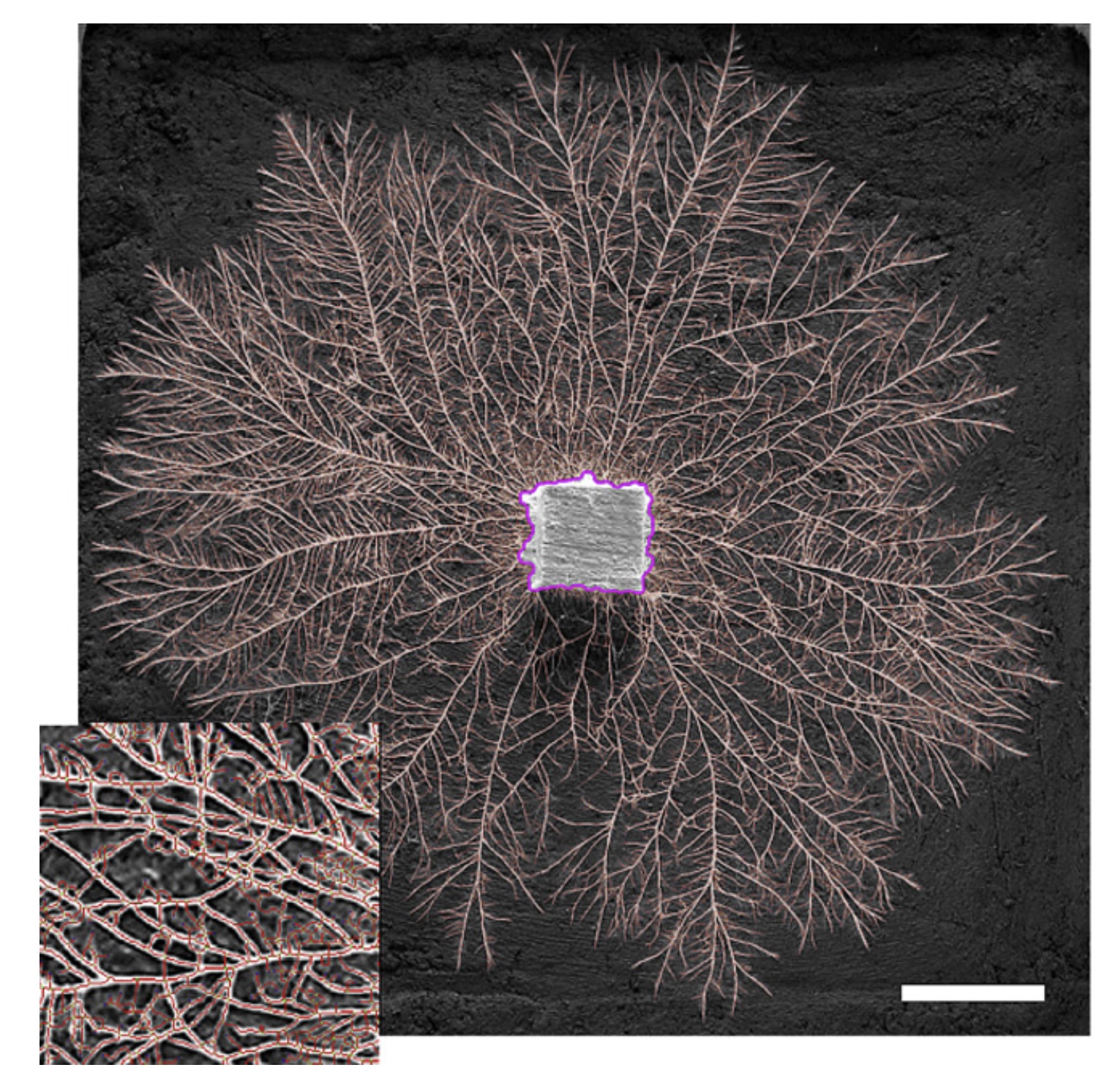
Dr. Vatsal Sanjay is an Assistant Professor at the Department of Physics , Durham University. He leads the Computational Multiphase Physics (CoMPhy) Lab, focusing on fundamental fluid dynamics research with applications in energy, manufacturing, and natural systems. Education: PhD in Physics (University of Twente, 2022) Research Areas: Soft Matter Singularities, Non-Newtonian Flows, Viscous Free-Surface Flows His work explores topological transitions in fluid systems through continuum simulations , collaborative experiments , and theoretical analysis , addressing phenomena like droplet impact , bubble bursting , and sheet fragmentation . Recent studies span microgravity fluid mechanics , viscoelastic jet formation , and mycofluidic transport in fungal networks. Articles reveal interdisciplinary trends combining fluid dynamics , materials science , and applied physics , with subfields spanning from Worthington jet dynamics to yield-stress fluid rupture . His Ammodo Science Fellowship enables research into fungal internal transport systems , bridging physics and biology. Supervision: Mentors PGR student Sam Walker Labs: Founder of CoMPhy Lab (moving to Durham in 2025) Open Science: Advocates code sharing and transparent research practices
Weimin Han is a Professor and Collegiate Fellow in the Department of Mathematics at the University of Iowa. He holds additional appointments in the Applied Mathematical & Computational Sciences (AMCS) program and the Iowa Technology Institute. His research focuses on numerical analysis, computational mechanics, and variational/hemivariational inequalities, with applications in fluid and solid mechanics. Han earned his Ph.D. in Mathematics from the University of Maryland (1991), following M.S. (1986) and B.S. (1983) degrees from the Chinese Academy of Sciences and Fudan University, respectively. He has served as Chair of the Department of Mathematics (2020–2022) and Director of AMCS (2007–2019). His honors include Fellow of the American Mathematical Society (2023), Simons Fellow (2012), and recognition as a top scholar in Numerical Analysis by Research.com and ScholarGPS. He has organized conferences like the Midwest Numerical Analysis Day 2024 and serves on editorial boards of journals such as Communications in Nonlinear Science and Numerical Simulation . Han’s research has led to groundbreaking work on nonsmooth problems, including contact mechanics and fluid dynamics governed by variational inequalities. His numerical methods address challenges in engineering and biomedical imaging.
Sheng Xu is Associate Professor at Southern Methodist University, specializing in computational fluid mechanics and aerodynamics. He holds a Ph.D. from Cornell University (2002) and previously worked at GE Energy on steam turbine aerodynamics, with postdoctoral research at Cornell and Princeton. Research develops computational methods for biological flows, supersonic turbulence, flow control, and insect/swimmer hydrodynamics. The immersed interface method—a core focus—models solids using singular forces and solves fluid flows with jump conditions. Current applications include dragonfly wing kinematics and particle collision dynamics. Publications in Journal of Computational Physics, SIAM Journal on Scientific Computing, and Journal of Fluid Mechanics address turbulent boundary layers, particle collisions, and biological flight mechanics. Recent work advances interface methods for non-smooth boundaries and manufactured solutions for code validation.
Marty Philippe is a Professor at Université Grenoble Alpes and a member of the Équipe Energétique within the LEGI (Laboratoire des Écoulements Géophysiques et Industriels). He collaborates extensively with the CEA-Grenoble on thermal energy intensification and hydrogen storage. His research focuses on heat storage, hydrogen storage in metal hydrides (in collaboration with the Institut Néel), and the influence of wettability on boiling heat transfer. He previously led the Master of Process Engineering at Université Joseph Fourier until 2015 and managed the Energy Team at LEGI until 2014. His work integrates Numerical simulations of boiling flows in concentrated solar plants, Hydrogen storage systems using magnesium hydride, Thermal energy storage with phase change materials (PCMs), and Experimental studies on heat transfer in microchannels and multiphase flows. Key research trends in his articles include advancements in thermal energy storage (e.g., LiBr/H₂O absorption systems), numerical modeling of phase change phenomena, and optimization of heat exchangers for industrial applications. His studies often bridge computational fluid dynamics with experimental validation, addressing challenges in renewable energy systems and thermal management. He has contributed to interdisciplinary projects, such as the development of a prototype for long-term solar heat storage and the design of hydrogen tanks with integrated heat management. His work also explores material science applications, including nanostructured MgH₂ for enhanced hydrogen absorption/desorption. Lab affiliations include the LEGI’s facilities like the tunnel hydrodynamique and soufflerie à bas niveau de turbulence , enabling experimental validation of his computational models.