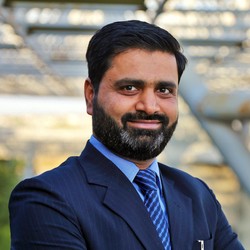
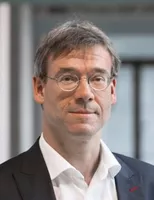
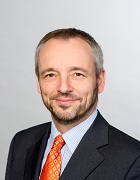
Matthias Liero is the acting head of the Partial Differential Equations Research Group at the Weierstrass Institute for Applied Analysis and Stochastics (WIAS) , Berlin, and a member of the Berlin Mathematical School (BMS) Postdoctoral Faculty. His research focuses on variational methods for evolution equations , continuum mechanics , modeling semiconductor devices , and optimal transport . He leads projects funded by MATH+, including strain engineering for functional heterostructures and modeling battery electrodes with mechanical interactions. Teaching responsibilities at Humboldt University include advanced courses on optimal transport , calculus of variations , and partial differential equations . He collaborates extensively on interdisciplinary projects, such as electrothermal modeling of organic LEDs and energy-based mathematical methods for multiphase flows. His work bridges applied mathematics, physics, and engineering, emphasizing thermodynamically consistent models and rigorous analytical methods. Notable contributions include developing p(x)-Laplace thermistor models for organic semiconductor devices and advancing the Hellinger-Kantorovich distance in optimal transport theory. Current research explores nonlinear PDEs, phase transitions, and material degradation in energy systems.
Dr. Matthias Schröter is an Adjunct Associate Professor at Duke Kunshan University and a consultant at Hypatia - Science Consulting. His research focuses on granular physics, statistical mechanics, and imaging techniques, with emphasis on granular packing structures, fluid dynamics, and material characterization. He holds a habilitation (postdoctoral qualification) and has conducted postdoctoral research from 2015-2018. His work spans experimental and theoretical studies, including analysis of granular shear bands, X-ray tomography of particle systems, and neutron tomography for porous media. He has contributed to understanding contact networks in frictional ellipsoid packs and coarsening mechanisms in granular mixtures. His expertise includes advanced imaging methods such as superresolution microscopy and neutron tomography. Research interests include granular matter dynamics, phase transitions in granular systems, and structural analysis of amorphous materials. His publications frequently address experimental methodologies for granular media characterization and fluid dynamics in porous systems. He has advised on projects involving granular segregation, fluid flow in porous media, and thermal characterization of granular systems. His consulting work bridges academic research with industrial applications in materials science and imaging technology.
Milovan Perić is a Professor at the Institute of Sustainable and Autonomous Maritime Systems (INAM) in the Faculty of Engineering at the University of Duisburg-Essen. He earned his PhD from Imperial College London (1985) and has held academic positions at the University of Erlangen-Nürnberg and visiting appointments at Stanford University and King's College London. His research focuses on computational methods for fluid dynamics, including parallel computing, turbulence modeling, multiphase flows, and fluid-structure interaction. He has extensive industry experience as Director of Technology at CD-adapco (2001-2013) and founder of CoMeT GmbH (2014-2024), contributing to the development of commercial CFD software including STAR-CD, STAR-CCM+, and Simcenter STAR-CCM+. Perić co-authored the influential textbook 'Computational Methods for Fluid Dynamics' and has published approximately 200 scholarly papers. He taught computational fluid dynamics at international institutions including the von Karman Institute and continues to supervise graduate research at Duisburg-Essen.
Anne Geppert is a Researcher at the Institute of Aerospace Thermodynamics at the University of Stuttgart, where she also serves as the Equal Opportunity Officer . Her work focuses on droplet impact dynamics, fluid-structure interactions, and multiphase flow phenomena, with applications in aerospace engineering, medical nebulization, and material science. Her research employs advanced experimental techniques such as micro-PIV and high-speed imaging, alongside numerical simulations, to study droplet-wall interactions, crown formation, and aerosol generation. She leads the International Research Training Group GRK 2160/2 (DROPIT) , a collaborative initiative exploring droplet interaction technologies. Key research areas include: Thermocapillary effects in droplet impacts Viscosity and surface wettability influences on droplet behavior Geometric effects of microstructured surfaces on splashing dynamics Development of analytical models for crown spreading and film thickness evolution Her recent work investigates droplet interactions with thixotropic liquids, vibrating mesh nebulization systems, and novel aerosol formation mechanisms. She has contributed to over 30 peer-reviewed articles since 2013, advancing the understanding of droplet-wall film interactions and their industrial applications.
Dr. Agnes Lamacz-Keymling is a researcher at the University of Duisburg-Essen in the AG Optimal Control of Partial Differential Equations. Her research focuses on analysis of PDEs, multiscale problems, homogenization, and wave phenomena. PhD in Mathematics (2011) and Diploma in Mathematics (2008) from TU Dortmund Her work spans homogenization of periodic structures, wave propagation in heterogeneous media, negative index meta-materials, and multiscale modeling. She has received third-party funding through a DFG project on wave propagation in periodic structures and negative refraction. Recent publications highlight trends in Bloch wave homogenization, dispersive wave models, and photonic crystal analysis. Her teaching includes Mathematics E3 and E4 in the winter semester 2021/22. Third-party funding: DFG project on wave propagation in periodic structures and mechanisms of negative refraction (2014)
Prof. Jens Harting leads the 'Modelling of Thin Films' research group at the Helmholtz-Institut Erlangen-Nürnberg für Erneuerbare Energien (HI ERN). His work focuses on fluid dynamics, thin film behavior, and computational modeling. Key research areas include reactive thin films, microfluidic systems, and nanoscale particle interactions. He has published extensively in top journals like Advanced Materials , Physical Review Letters , and Journal of Fluid Mechanics . Notable contributions include studies on inertial particle migration, bioinspired microswarm robotics, and lattice Boltzmann method optimizations. Current projects explore phase-field simulations for thin film evaporation and energy materials. No awards are explicitly listed, but his work is widely cited in nanotechnology and materials science.
Gerd Mutschke is a researcher at the Helmholtz-Zentrum Dresden-Rossendorf (HZDR) within the Fluid Dynamics division and the Resource Technology Processes department. His work focuses on advanced fluid dynamics and electrochemical processes, leveraging numerical methods and magnetic field control to address complex industrial and scientific challenges. Phone: +49 351 260 2480 Email: g.mutschke@hzdr.de Address: Bautzner Landstraße 400, Building/Office 250/217, 01328 Dresden Research Interests Multiphase flow and interfacial phenomena Gas evolution in electrochemical processes Control of electrochemical processes via magnetic fields Numerical methods: phase-field, spectral elements, VOF, Level-Set Magnetohydrodynamics in liquid metals and melts Electromagnetic boundary layer control Current Projects MADAGAS : Capillary and electrical effects on gas evolution in electrolysis SineWave/OxySep : Nucleation, growth, departure, and coalescence of gas bubbles ALKALIMIT : Euler-Euler modeling of alkaline electrolysis NanoCones : Electrodeposition of metal towards nano-structured surfaces Project Management Helmholtz Alliance LIMTECH (2012–2017) Helmholtz ENERGY Alliance (2012–2015) Research Field ENERGY of HZDR (2019) Student Engagement Dr. Mutschke actively encourages committed students to apply for project work, emphasizing hands-on research opportunities in computational fluid dynamics and electrochemical systems.
Dr. Niklas Jüngst is a Group Leader at the Institute for Energy and Materials Processes – Reactive Fluids, University of Duisburg-Essen. His research focuses on imaging techniques , statistical image analysis , and nanoparticle synthesis in multiphase combustion systems . PhD in Mechanical Engineering (2021), University of Duisburg-Essen Master of Science (2016), University of Bremen Research areas include in situ diagnostics , neural networks for image analysis , and droplet-particle interactions . Recent work emphasizes metal oxide nanoparticle visualization and combustion dynamics . His publications (2019–2025) span combustion physics , optical diagnostics , and machine learning applications for droplet breakup and soot analysis . Best presentation in 'Multiphase Flow' at DECHEMA (2023) Bremen Engineering Prize (2017) Research scholarship from Prof. Dr.-Ing. Erich Müller Foundation (2015) He develops measurement technologies for nanoparticle visualization and studies evaporation-condensation processes in reactive flows.
Amit Arora is an Associate Professor of Materials Engineering at Indian Institute of Technology Gandhinagar , leading the Advanced Materials Processing Research Group . His expertise spans numerical modeling of welding and joining processes, additive manufacturing, and friction stir welding/processing. PhD from The Pennsylvania State University (2011) M.Tech & B.Tech from IIT Kharagpur Research interests focus on: Numerical modeling of friction stir welding (FSW) and processing (FSWP) Tool wear analysis during FSW Dissimilar material joining Mechanical/electrochemical characterization of surface composites Additive manufacturing of titanium alloys Recent publications explore laser fusion additive manufacturing, friction stir channeling, and biocompatible composite development from biowaste. His work combines computational modeling with experimental validation across multiple domains. Scientific awards include: Young Scientist Research Award (Department of Atomic Energy, 2014–2017) Metallography Contest Winner (Indian Institute of Metals, 2019) Best Poster Awards at international workshops As an academic mentor, he has guided numerous PhD and M.Tech students, including: Mahesh V.P. (now Assistant Professor at VIT) Amit Kumar Singh (Post-doctoral Fellow at UNT Denton) Nishkarsh Srivastava (PhD Scholar at IIT Gandhinagar) The Advanced Materials Processing Research Group actively investigates: Friction stir welding of metals and polymers Surface composite fabrication Heat treatment of alloys CFD-DEM modeling for material behavior
Prof. Kai-Olaf Hinrichsen is a Full Professor and Chair of Technical Chemistry I at the Technical University of Munich (TUM), Department of Chemistry. His research bridges chemical engineering and natural sciences, focusing on catalyst design, reactor technologies (e.g., fluidized bed, spinning disc), and process modeling. Key areas include CO2 methanation, methanol-to-olefins (MTO), and additive manufacturing of catalyst supports. He leads interdisciplinary projects in energy supply and sustainable chemistry, leveraging computational fluid dynamics (CFD) and multiphase system analysis. Education: Diplomingenieur (TU Berlin, 1993), M.Ch.E. (University of Delaware, 1993), Dr.-Ing. (Max Planck Institute, 1996). Habilitation in Technical Chemistry (Ruhr University Bochum, 2002). Awards include the Young Scientist Prize (2000) and Jochen Block Prize (2003). His work emphasizes particle technology, process intensification, and reactor design. Research highlights include CO2 utilization, catalyst durability, and scalable processes for hydrogen and syngas production. Over 250 publications span catalysis, reactor engineering, and energy systems. Active in industrial collaborations and academic leadership, he guides students in chemical process engineering and sustainability.
Prof. Wolfgang A. Wall is a Professor of Numerical Mechanics at the Technical University of Munich (TUM), affiliated with the TUM School of Engineering and Design. He leads the Chair of Computational Mechanics, established in 2003, and serves as Rector of CISM (International Centre for Mechanical Sciences) in Udine, Italy. His research focuses on computational mechanics, including fluid-structure interaction, multi-field and multi-scale problems, and applications in biophysics and biomedicine. He has pioneered numerical methods for complex simulations, integrating modeling, algorithm development, and high-performance computing. Key achievements include ERC Advanced Grants, EUROMECH Fellow status, and membership in the Bavarian and Austrian Academies of Sciences. Educational background: Studied at the University of Innsbruck, earned his doctorate from the University of Stuttgart after a research stay at Princeton University. His work spans engineering disciplines, emphasizing uncertainty quantification and machine learning in computational frameworks. He has contributed to lung mechanics modeling, cardiovascular simulations, and tumor growth analysis, with over 300 publications. Current projects address additive manufacturing, solid-state batteries, and patient-specific medical modeling. Awards: ERC Advanced Grant (2021), Prandtl Medal (2016), Bavarian Academy Membership (2017) Grants: Extensive funding for computational mechanics and biomedical engineering projects Labs: Chair of Computational Mechanics lab at TUM, collaborating with CISM and international partners
Dr. Stephan Simonis is a Research Fellow at the Karlsruhe Institute of Technology (KIT), working within the Department of Mathematics and specifically with the Institute for Applied and Numerical Mathematics (IANM2). He leads the LBRG Mathematical Modeling and Numerics Lab since 2023 and serves as an associate editor for the Elsevier journal Examples and Counterexamples since 2024. He is also a member of the steering committee for the EU-funded FALCON project (doi: 10.3030/101138305). Dr. Simonis completed his education as follows: BSc and MSc in Mathematics at KIT, Germany and KTH, Sweden (2011-2018) PhD in Mathematics at KIT (2023), with research visits at UFRGS, Brazil and ETH Zürich, Switzerland Dr. Simonis's research focuses on Applied and Computational Mathematics, particularly in developing and analyzing numerical methods for partial differential equations. His work centers on lattice Boltzmann methods for multi-physics simulations, including applications to fluid flow, blood flow, and solid mechanics. He integrates robust numerical schemes with uncertainty quantification and machine learning, leveraging high-performance computing to explore complex parameter spaces. His research has significant applications in engineering and scientific computing. His publication record demonstrates a strong focus on numerical analysis of lattice Boltzmann methods, with recent work expanding into uncertainty quantification, machine learning integration, and applications to complex fluid dynamics problems. The breadth of his work spans theoretical analysis, algorithm development, and practical implementation in the OpenLB library, with publications in top journals across mathematics, physics, and engineering disciplines. Dr. Simonis has received numerous accolades for his work: ERASMUS+ EQF7 scholarship (2016-2017) DAAD PPP mobility funding (2019) KIT Faculty Teaching Award (2021) KHYS Networking Grant (2022) KHYS ConYS Grant (2024) Oberwolfach Leibniz Graduate Student (2024) NHR Starter project (2024) DAAD PRIME fellowship (2025) Dr. Simonis actively mentors students through various thesis projects in mathematics, fluid dynamics, and high-performance computing. His current open thesis topics focus on lattice Boltzmann methods, relaxation schemes, and stability analysis. He has secured significant research funding including the DAAD PRIME fellowship and NHR Starter project, demonstrating strong support for his research program. His teaching portfolio includes Computational Fluid Dynamics and Simulation Lab, Parallel Computing, and Project-centered Software Lab across multiple semesters. As leader of the LBRG Mathematical Modeling and Numerics Lab since 2023, Dr. Simonis oversees a research group focused on developing advanced numerical methods. His involvement in the EU-funded FALCON project and as associate editor for Examples and Counterexamples further demonstrates his growing leadership in the computational mathematics community.
Fabian Schlegel is a Researcher at the Helmholtz-Zentrum Dresden-Rossendorf (HZDR), where he leads the OpenFOAM modelling of multiphase flows group within the Computational Fluid Dynamics department of the Fluid Dynamics institute. His research focuses on: Multiphase Flows Computational Fluid Dynamics Numerical Simulation Dr. Schlegel specializes in applying OpenFOAM for computational modeling of complex fluid interactions involving multiple phases (e.g., gas-liquid systems), contributing to advancements in simulation methodologies for industrial and scientific applications. No scientific awards or honors were documented in the source material. Regarding academic mentoring and funding activities, the provided text contained no information about student supervision, grant acquisitions, or collaborative projects. He directs the OpenFOAM modelling of multiphase flows research group, operating from HZDR's Dresden campus (Bautzner Landstraße 400, Building 250/215), which focuses on developing and optimizing simulation frameworks for multiphase flow phenomena.
Dr.-Ing. Norbert Hosters is a Research Associate and Chief Engineer at the Chair for Computational Analysis of Technical Systems (CATS), Faculty of Mechanical Engineering, RWTH Aachen University. He has been active since 2020 and serves as General Secretary of the German Association for Computational Mechanics (GACM). His work bridges advanced computational methods with engineering applications. His research focuses on numerical methods for fluid-structure interaction , computational fluid and structural dynamics , isogeometric analysis , and aerothermoelasticity . He also explores applied quantum methods and physics-informed neural networks for solving complex PDEs and optimizing industrial processes. His interdisciplinary work spans mechanical, biomedical, and computational engineering. The recent publications (2023–2025) demonstrate a strong trend toward integrating machine learning with traditional simulation techniques, particularly in partitioned FSI , multiphase flow , shape optimization , and biomedical simulations such as LVAD modeling. His work appears in high-impact journals like Scientific Reports , Computers & Fluids , and International Journal for Numerical Methods in Engineering , as well as major conferences including GACM and CMBE. He is actively involved in teaching courses on Numerical Methods for Fluid-Structure Interaction , Isogeometric Analysis , and Simulation Methods in Mechanical Engineering . He offers student projects and supervises research, though no named advisees are listed. He has no listed scientific awards or fellowships. His research is conducted within the CATS chair, a leading group in computational mechanics, contributing to both fundamental methods and industrial applications. He plays a key role in academic service through GACM leadership.
Blanca Ferrer Fabon is a Research Fellow at the Chair for Computational Analysis of Technical Systems (CATS) within RWTH Aachen University's Institute for Computational Engineering Science. Since joining CATS in April 2021, she has contributed to the Collaborative Research Center 1120 "Precision Melt Engineering" (funded by the German Science Foundation) as a key member of subproject B5, focusing on adaptive computational grids for simulating moving phase boundaries in material processing. Her academic journey began with a B.Sc. in Aerospace Engineering (2014-2018) from Universitat Politècnica de Catalunya, where her thesis optimized gear transmission systems for the UPC ecoRacing Formula Student vehicle. She then completed an M.Sc. in Aerospace Engineering (2018-2020) at the same institution, including an Erasmus+ year at RWTH Aachen, with thesis work on visualizing non-crimp fabrics using hybrid Lagrangian/Eulerian methods. Ferrer's research integrates computational mechanics and numerical methods to tackle challenges in polymer processing. Her expertise includes finite element analysis of fluid-structure interactions, two-phase flow modeling via Level-Set methods, and crystallization dynamics in semi-crystalline polymers. This multidisciplinary approach bridges aerospace engineering principles with advanced manufacturing applications. As an educator, she conducts exercise sessions for "Finite Elements in Fluids", mentoring students in computational fluid dynamics techniques. Her research is supported by the German Science Foundation, and she collaborates within CATS' dynamic team housed in Aachen's Rogowski building since 2009.